DD
MM
YYYY

PAGES

DD
MM
YYYY

spot_img

PAGES

Home Blog Page 4

Major League Soccer Partners Polymarket for Covering Regular-season Games 

0

Major League Soccer (MLS) has entered a multi-year partnership with Polymarket. Polymarket, the world’s largest prediction market platform, becomes the official and exclusive prediction market partner for MLS, covering regular-season games, the MLS All-Star Game, MLS Cup presented by Audi, and Leagues Cup.

This deal, facilitated through Soccer United Marketing (SUM, MLS’s commercial arm), marks MLS as one of the first global soccer leagues to integrate prediction market insights into fan experiences. Plans for innovative digital content on MLS and Leagues Cup platforms, showcasing real-time collective fan sentiment via market odds around matches, key moments, and season-long storylines.

This aims to create more interactive, data-driven experiences, including second-screen features during live games starting in the 2026 season. To protect match integrity, the partnership includes independent monitoring of trading activities by firms like IC360 and Sportradar, collaboration on available markets, and prohibitions on trading by individuals with non-public information.

Quotes from the announcement:

Shayne Coplan (Polymarket Founder & CEO): “As soccer’s audience continues to grow and evolve in the U.S., fans are looking for new ways to engage more deeply with the game. Through our partnership with MLS and Leagues Cup, we can surface real-time collective sentiment… giving fans a more interactive, data-driven way to experience the game.”

Gary Stevenson (MLS Deputy Commissioner & President of SUM): “Partnering with Polymarket allows us to integrate prediction markets as a new fan engagement format and position MLS as an early leader among global soccer properties.”

This follows similar deals Polymarket has with leagues like the NHL and UFC, reflecting growing mainstream adoption of prediction markets in sports—despite ongoing regulatory scrutiny in some U.S. states. The partnership emphasizes fan interaction over traditional gambling, leveraging Polymarket’s availability in areas without full sports betting legalization.

It’s a significant step for both: MLS innovates engagement amid soccer’s U.S. growth especially with the 2026 FIFA World Cup approaching, while Polymarket gains legitimacy and official data access. Fans can expect enhanced MLS-related markets soon!

MLS positions itself as an early adopter among global soccer leagues by integrating real-time prediction market data (e.g., crowd-sourced odds on match winners, season outcomes, or key moments).

This enables interactive features like second-screen experiences during live games, displaying “collective fan sentiment” on apps/websites starting in the 2026 season. With soccer’s U.S. audience booming—especially ahead of the 2026 FIFA World Cup—this creates more immersive, data-driven interactions beyond traditional stats or betting lines.

Polymarket operates nationwide unlike many sportsbooks, allowing fans in states like California, Texas, Georgia, Minnesota, and Utah home to multiple MLS teams to engage without full sports betting legalization. This broadens reach and taps into untapped demographics.

By partnering directly, MLS gains influence over markets using official data, collaborating on offerings, banning easily manipulated props like yellow cards or insider-info prone ones like firings. Independent monitoring via IC360, Sportradar addresses risks, similar to sports betting safeguards.

This “lean-in” approach as MLS execs described helps regulate rather than ignore prediction markets already existing on MLS events. The exclusive deal via Soccer United Marketing (SUM) creates an “Authorized Prediction Market” framework, potentially opening doors for other platforms if they meet integrity standards.

It signals sponsorship revenue growth amid MLS’s cultural rise. Following NHL, UFC, and New York Rangers deals, this cements Polymarket’s sports push. Official status + league data access improves market accuracy and volume—Polymarket’s trading has surged recently, and sports could drive further growth.

As a crypto-based, no-house-edge platform, it emphasizes “collective wisdom” over gambling, appealing to regulators and fans wary of traditional sportsbooks. Amid challenges like Nevada’s recent actions against Polymarket/Kalshi for sports contracts, partnering with a league provides safeguards and credibility, though state-level scrutiny persists.

This accelerates adoption—MLS joins NHL/UFC in embracing them, while big four (NFL/NBA/MLB) remain cautious. It blurs lines between betting, information markets, and fan tools, potentially pressuring traditional operators.

Highlights crypto platforms entering mainstream U.S. sports despite ongoing regulatory debates, especially with Polymarket’s Trump family ties noted in some coverage though not central here. Some fan skepticism exists, Reddit concerns over Polymarket’s past practices or “gambling creep”.

Integrity breaches could damage trust, and it’s invite-only in the U.S. currently (waitlist required). It’s a forward-thinking move for MLS to modernize engagement during a growth phase, while giving Polymarket a major sports foothold. Expect visible integrations (odds displays, live sentiment trackers) soon—could redefine how fans “follow” MLS matches.


Copper’s AI-Fueled Rally Hits a Wall as Tariff Risks and Speculation Raise Correction Fears

0

Copper’s sharp pullback from record highs is forcing a broader reassessment of what has been driving the rally and how vulnerable it may be as policy risks, speculative positioning, and macro pressures converge.

The metal surged past $14,000 per metric ton this week, a level that would have seemed implausible not long ago for a commodity traditionally anchored to construction cycles and factory output. Within hours, prices reversed course, sliding to around $13,800 as gold and silver also retreated. The coordinated sell-off has reinforced a growing view among banks and economists that copper has been trading less on physical fundamentals and more as part of a wider commodities trade driven by fear, positioning, and geopolitics.

At the center of that reassessment is Washington. President Donald Trump’s decision in July 2025 to impose a 50% tariff on imports of semi-finished copper products and intensive copper derivative products reshaped the US market almost immediately. The policy encouraged aggressive stockpiling by traders and manufacturers seeking to secure supplies ahead of further restrictions. That surge in inventories tightened availability in the US, amplified price momentum, and helped push copper into record territory.

Goldman Sachs now argues that the next phase of US trade policy could have the opposite effect. The bank expects an update on refined copper tariffs by mid-2026 and warns that such a move would likely mark a turning point. Analysts say a refined copper tariff would reduce the incentive to hoard material inside the US and push the market’s focus back to global balances, where supply conditions appear far less constrained. In that scenario, prices would have to adjust to a market no longer propped up by artificial scarcity.

Goldman has already flagged a likely second-quarter correction, even as it maintains a constructive longer-term outlook and recently lifted its copper price target for the first half of 2026. That dual message underscores the tension in the market: strong structural narratives versus stretched near-term valuations.

Copper has also been swept up in a broader metals rally that has seen investors rotate into hard assets amid persistent geopolitical strain. US-China trade tensions, conflicts in key regions, and volatility in currency markets have encouraged capital flows into commodities. Gold and silver have been the most visible beneficiaries, but copper has increasingly traded in sympathy with them, moving more like a macro hedge than an industrial input.

This shift has been reinforced by the metal’s link to the artificial intelligence buildout. Copper is essential for data centers, power transmission, electric vehicles, and grid upgrades, all of which sit at the heart of the AI and electrification story. That narrative has given investors a powerful justification for betting on higher prices, even as near-term demand indicators send mixed signals.

José Torres, senior economist at Interactive Brokers, has cautioned that the enthusiasm is not purely about consumption. He said part of the rally is driven by nationalistic sentiment, particularly in China, where investors are keen to hold assets tied to strategic materials their country may need in a competitive technology race. That behavior, he argued, is less about immediate orders for copper wire and more about positioning for a perceived geopolitical advantage.

Evidence of heavy speculative activity supports that view. Analysts say traders in China have played a central role in driving prices higher, with futures positioning and short-term trades outpacing signals from the real economy. Capital Economics senior commodities economist Kieran Tompkins said it has become clear that speculation is doing much of the work. Indicators tied to construction, manufacturing, and broader demand in China point to softness rather than a boom, raising questions about how sustainable current price levels really are.

Goldman commodities analyst Eoin Dinsmore has been equally blunt, saying copper prices have overshot what fundamentals justify. In his assessment, a refined copper tariff announcement from Trump could be the moment that forces a reset, acting as a catalyst for a broader unwind of bullish positions. Torres echoed that concern, warning that supply-and-demand dynamics suggest copper is trading at extreme valuations.

The parallels with precious metals add another layer of risk. Gold and silver have both surged over the past year, and analysts have voiced concern that those rallies are being driven more by momentum and fear of missing out than by traditional drivers such as inflation expectations or industrial usage. Copper’s recent behavior suggests it has been pulled into the same dynamic, even though its end-use profile is very different.

What happens next may depend on how quickly policy uncertainty is resolved and how patient investors remain. If US stockpiling slows, speculative positions are trimmed, and global supply reasserts itself, copper could face a deeper correction in the coming months. That would not erase the long-term case tied to electrification, energy transition, and AI infrastructure, but it would challenge the idea that prices can continue rising unchecked.

Copper for now is still supported by a compelling strategic narrative, yet the near-term picture is clouded by tariff risks, stretched valuations, and signs that financial enthusiasm has outrun physical demand. The recent pullback may be only the first test of whether this rally can stand on fundamentals alone.

VanEck Avalanche ETF will Provide Directions Exposure to AVAX 

0

VanEck has launched the VanEck Avalanche ETF (ticker: VAVX), marking the first U.S.-listed spot ETF providing direct exposure to AVAX, the native token of the Avalanche blockchain.

The ETF began trading on Nasdaq on January 26, 2026. It offers spot price tracking of AVAX, with the added feature of potential staking rewards — a portion of the fund’s AVAX holdings is staked via third-party providers initially involving Coinbase Crypto Services, and rewards after fees accrue to the fund’s net asset value. This makes it unique compared to many other crypto ETFs.

VanEck is waiving sponsor fees for the first $500 million in assets under management (AUM) or until February 28, 2026 whichever comes first. After that, the standard sponsor fee is 0.20% some sources note variations like 0.30% in certain trackers, but official announcements point to 0.20%.

Supports cash and in-kind creation and redemption, with secure custody and no leverage or derivatives used. Designed to give investors including institutions, RIAs, and wealth managers regulated, easy access to AVAX without needing to handle wallets, staking infrastructure, or direct crypto custody.

This follows VanEck’s earlier filings starting around March 2025 and builds on their existing crypto ETF lineup like Bitcoin, Ethereum, Solana. It’s positioned as a step toward broader institutional adoption of Avalanche, which powers scalable, customizable blockchains with real-world use cases in DeFi, tokenization, gaming, and more partnerships with entities like Citi and FIFA.

Initial AUM was around $2.49 million shortly before/after launch. Some reports note muted inflows and weak demand in the early days, with AVAX price showing limited immediate reaction — trading around $11–$12 levels recently, flat or slightly up/down in the short term despite the news.

This has sparked discussion: while the launch boosts visibility and legitimacy for altcoin ETFs, broader market sentiment and competition from other crypto products may influence flows. It’s seen as a positive long-term signal for Avalanche’s ecosystem, especially with growing DeFi TVL.

This is part of a wave of altcoin spot ETFs following Bitcoin and Ethereum approvals. Competitors like Grayscale and Bitwise have also filed for AVAX products, but VanEck’s VAVX is currently the first and only live one in the U.S.

VAVX allows traditional investors via brokerage accounts, RIAs, wealth managers, and institutions to gain spot exposure to AVAX without dealing with crypto wallets, exchanges, custody risks, or staking setup. This bridges traditional finance and blockchain, similar to how Bitcoin and Ethereum ETFs opened doors for mainstream capital.

Unlike pure price-tracking ETFs, VAVX stakes a portion of its AVAX holdings through regulated providers like Coinbase Crypto Services. Rewards after ~4% service fees accrue to the fund’s NAV, potentially delivering 3–5% annualized yields based on Avalanche’s PoS model and historical benchmarks.

This positions VAVX as a hybrid: price appreciation + passive income, appealing to yield-seeking investors in a low-interest-rate environment. VanEck waived sponsor fees on the first $500 million in AUM or until February 28, 2026, with a post-waiver fee of 0.20% some sources note 0.30% in filings. This makes it cost-competitive and encourages early inflows.

As the first U.S.-listed spot AVAX ETF, it signals institutional validation for Avalanche as a scalable L1 platform (e.g., for DeFi, tokenization, gaming, and partnerships like FIFA or Citi). This could attract more developers, projects, and capital to the ecosystem, where DeFi TVL has grown significantly.

Staking locks up AVAX long-term, reducing circulating supply and speculative selling pressure. Distributed staking per VanEck’s statements avoids centralization risks, potentially enhancing network security and stability.

VAVX gives VanEck first-mover advantage over pending filings from Grayscale planning GAVX conversion and Bitwise. Success could accelerate altcoin ETF approvals. Trading started with low volume ~$330,000 on day one and zero or minimal net inflows initially. AUM hovered around $2.4–2.5 million shortly after launch, with some reports noting “muted” demand and investors “on the sidelines.”

AVAX traded around $11–$12 post-launch flat to slightly up/down, with minor gains (e.g., ~2% in some sessions) but no major breakout. This contrasts with bigger hype around BTC/ETH ETFs, reflecting broader altcoin sentiment, competition from other products, and factors like token unlocks.

Analysts see it as a positive structural catalyst for institutional inflows, reduced volatility, and ecosystem growth. However, crypto’s volatility remains high — AVAX is down significantly from its 2021 ATH (~$145), and near-term paths depend on broader market sentiment, regulatory clarity, and actual flows.

VAVX represents a milestone in crypto’s maturation: expanding beyond BTC/ETH to yield-bearing altcoins and integrating PoS economics into traditional wrappers. While immediate excitement has been tempered, it lays groundwork for greater adoption if inflows build.

As always, crypto investments carry substantial risk — high volatility, potential total loss, staking/lock-up uncertainties, and regulatory changes. Consult the official prospectus on VanEck’s site or SEC filings for full details.

ZKP Stage 2 Unleashes $190M Token Supply Daily as ETH Stalls and Pepe Loses Steam

0

Current market activity demonstrates cooling across established cryptocurrencies. ETH stays limited beneath closely monitored thresholds, and Pepe continues operating within tight boundaries absent meaningful continuation. This deceleration redirected attention from immediate valuation movements toward participation and distribution frameworks. Zero Knowledge Proof (ZKP) navigates this environment through Stage 2, where daily allocation follows predetermined schedules and engagement measures within individual 24-hour presale auction cycles.

While ETH and Pepe exchange without a clear trajectory, ZKP’s operational framework becomes comparison material. Transparent daily distribution, temporal structure, and engagement protocols provide alternative evaluation criteria when assessing Pepe price prediction, Ethereum price prediction, and the best crypto to buy today. During subdued market periods, token allocation and accessibility mechanisms carry equivalent importance to valuation behavior, explaining ZKP’s recurring appearance alongside stagnant major assets.

Pepe Stalls as Energy Weakens

PEPE registered minor weekly appreciation, yet wider indicators stay restricted. Exchanging around $0.0000048, valuation remains beneath critical weekly measurements, maintaining a downward-tilted longer-timeframe perspective. Momentum measurements continue indicating distribution dominance, with MACD displaying a negative signal and RSI approaching 40, reflecting fragile conviction. Transaction volume spiked periodically, though elevated activity accompanying declining market capitalization suggests rotation rather than genuine buying interest.

Valuation movement stayed trapped between approximately $0.0000046 and $0.0000053. Statistical models calculate below 20% probability for substantial upward movement absent momentum transformation, maintaining conservative expectations. This environment influences any Pepe price prediction, where lateral movement or minor decline constitutes the baseline scenario unless resistance breaks. Given persistent technical pressure, Pepe price prediction conversations emphasize boundary management instead of expansion efforts. Until momentum strengthens, Pepe’s price prediction remains connected to consolidation phases.

ETH Maintains Formation Yet Awaits Validation

ETH demonstrated stability without a breakthrough. Trading beneath $3,000, valuation repeatedly failed securing conclusive daily settlement beyond that threshold. Individual attempts encountered distribution resistance, reinforcing range-restricted conditions. Despite macro developments and unverified institutional selling reports, ETH protected support zones and prevented dramatic declines, emphasizing equilibrium rather than dominance.

Transaction volume during upward efforts stayed muted, indicating buyers remain uncommitted at present valuations. Strategists stress that only definitive daily closure above resistance would modify formation; incomplete penetrations haven’t accomplished this. This maintains Ethereum price prediction caution for immediate periods, focused on consolidation, carrying downside vulnerability should resistance persist. As a reference cryptocurrency, ETH’s conduct shapes wider market sentiment, establishing Ethereum price prediction as a measurement standard throughout markets. Presently, Ethereum price prediction depends on validation currently absent.

Why ZKP’s Framework Captures Market Interest

ZKP’s expanding significance within present conditions stems from participation organization. Stage 2 presale auction operates daily, blockchain-based proportional distribution resetting every 24 hours. Throughout this phase, a maximum of 190 million ZKP becomes available daily, with distributions calculated by individual participants’ proportion of aggregate daily contributions. The distribution lacks temporal consistency. Instead, quantities decrease throughout 17 sequential stages, establishing transparent progression regarding daily accessibility. Tokens remaining unallocated during specific windows undergo permanent removal, maintaining daily independence and establishing timing as an explicit procedural element.

This methodology influences behavior distinctly from predetermined-price frameworks. Participants avoid responding to preset valuations or exclusive access hierarchies. Individual presale auction cycles stand independently, and earlier stages function with expanded daily availability compared to subsequent ones, despite unchanging operational rules. That consistency emphasizes sustained engagement rather than singular entry, explaining ZKP’s presale auction mechanics’ frequent appearance when participants reconsider accessibility definitions.

Technical architecture introduces additional dimensions. ZKP constructs around privacy-maintaining authentication, utilizing cryptographic validation confirming blockchain activity without revealing confidential inputs. This infrastructure accommodates AI-focused operations where verification carries equivalent importance to outcomes, permitting systems to prove accuracy without compromising confidentiality. Concentration stays on authentication rather than trust presumptions.

Proof Pods integrate these components. These ready-to-deploy devices execute verifiable operations and produce cryptographic validation directly connected to the contribution. Compensation references the previous day’s presale auction completion, synchronizing motivations with current conditions. Collectively, the distribution framework, AI-centered authentication, and Proof Pods clarify ZKP’s continuous presence within conversations regarding the best crypto to buy today, structured around accessibility, organization, and quantifiable engagement instead of immediate momentum.

Closing Statement!

The divergence among cryptocurrencies appears obvious. Pepe stays restricted, and ETH continues hesitating beneath resistance barriers. Within that climate, systems constructed around transparent protocols gain significance. ZKP’s Stage 2 presale auction, AI-synchronized authentication, and Proof Pods deliver an alternative participation perspective. As Pepe price prediction maintains a range-centered focus and Ethereum price prediction awaits validation, attention expands toward platforms offering established accessibility and temporal structure.

This transformation explains why the best crypto to buy today progressively incorporates ZKP alongside established assets. Whether movements resolve upward or downward, current suspension emphasizes how organization shapes decision-making. Currently, Pepe price prediction and Ethereum price prediction retain conservative positioning, whereas the best crypto to buy today discussion continues evaluating engagement equally with valuation.

Explore Zero Knowledge Proof:

Website: https://zkp.com/

Buy: https://buy.zkp.com/

X: https://x.com/ZKPofficial

Telegram: https://t.me/ZKPofficial


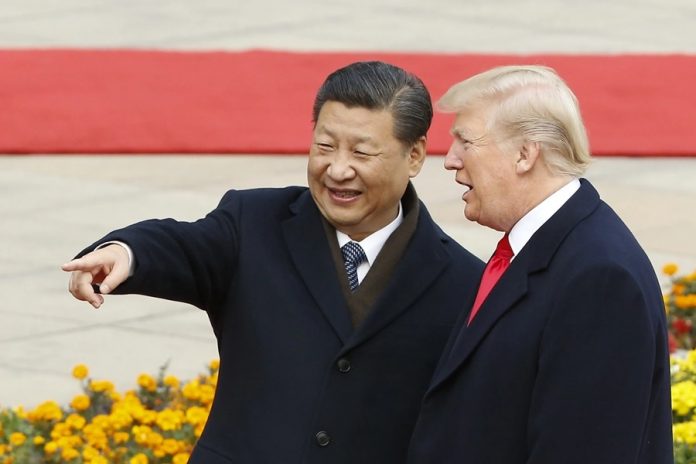
Trump Warns Britain Off China as Global Leaders Re-Engage Beijing, Amid Shifting Trade and Geopolitical Order

0

U.S. President Donald Trump has openly warned Britain against deepening business ties with China, sharpening a transatlantic divide at a moment when a growing number of U.S. allies are reassessing their economic and diplomatic strategies in response to Washington’s increasingly unpredictable trade posture.

Speaking to reporters in Washington ahead of the premiere of the film Melania at the Kennedy Center, Trump said it was “very dangerous” for Britain to be getting into business with Beijing. He offered no further explanation, but the remark landed as Prime Minister Keir Starmer was in China, publicly championing a reset in relations with the world’s second-largest economy.

Starmer’s visit, which included more than three hours of talks with Chinese President Xi Jinping, reflects a broader recalibration underway among Western and middle-power economies. Faced with Trump’s aggressive use of tariffs, threats against allies, and willingness to upend long-standing trade norms, governments that once kept Beijing at arm’s length are now reopening channels to China in search of economic stability, market access, and strategic optionality.

During his meeting with Xi, Starmer called for a “more sophisticated relationship” between London and Beijing, pressing for improved market access, lower tariffs, and new investment flows, according to Reuters. The discussions ranged from trade and visas to culture, touching on soccer and Shakespeare, underscoring Starmer’s effort to frame engagement as pragmatic rather than ideological.

Addressing the UK-China Business Forum in Beijing, Starmer described his meetings with Xi as “very warm” and said they had delivered “real progress.” He pointed to agreements on visa-free travel and reduced tariffs on British whisky as tangible outcomes, describing them as “really important access, symbolic of what we’re doing with the relationship.”

“That is the way that we build the mutual trust and respect that is so important,” Starmer said.

The British leader’s message was aimed as much at domestic audiences as at Beijing. Since taking office in July 2024, Starmer’s centre-left Labour government has struggled to deliver faster economic growth, and improving relations with China has become a central pillar of its strategy to attract investment and boost exports. Ahead of his departure for Shanghai, Starmer met senior Chinese executives, including Chery chief executive Yin Tongyue. During the visit, a Liverpool city official said Chery plans to open a research and development center for its commercial vehicle arm in the northern English city.

In London, Trump’s warning drew a sharp rebuttal. British trade department minister Chris Bryant said the U.S. president was “wrong” to describe the UK’s engagement with China as dangerous.

“Of course, we enter into our relationship with China with our eyes wide open,” Bryant told the BBC, emphasizing that Britain was capable of balancing economic interests with national security considerations.

Starmer himself has repeatedly argued that closer economic ties with China do not come at the expense of the UK’s alliance with the United States. Speaking to reporters on the plane to Beijing, he stressed Britain’s long-standing partnership with Washington across defense, security, intelligence, and trade, and insisted London did not have to choose between the two powers. He cited Trump’s own state visit to Britain last September, which unveiled £150 billion in U.S. investment commitments.

A British government official said Washington was given advance notice of Starmer’s objectives for the China trip, an attempt to avoid surprising the White House at a sensitive moment in global trade relations.

Even so, the episode highlights how Trump’s trade policies are increasingly reshaping alliances and geopolitics in ways that may ultimately benefit China. Since returning to the office, Trump has deployed tariffs not only against Beijing but also against close partners, including Canada and the European Union, while floating threats against Denmark over Greenland and pressing allies on defense and trade concessions.

That approach has injected uncertainty into the rules-based global trading system Washington once championed. Canadian Prime Minister Mark Carney captured that shift last week when he urged countries to accept that the old order was ending, explicitly citing U.S. trade policy. Shortly after Carney struck economic deals with Beijing, Trump threatened to impose tariffs on Canada, reinforcing the perception that engagement with China now carries political risk in Washington.

Trump’s Commerce Secretary, Howard Lutnick, echoed the skepticism toward Britain’s China outreach, telling reporters it was unlikely Starmer’s efforts would pay off.

“The Chinese are the greatest exporters and they are very, very difficult when you’re trying to export to them,” Lutnick said. “So good luck if the British are trying to export to China … it’s just unlikely.”

Asked whether Britain could face Canada-style tariff threats, Lutnick suggested that would depend on London’s tone toward Washington.

Despite Washington’s warnings, others are joining the fray. Countries that once distanced themselves from China during its trade war with the United States are now sending their leaders to Beijing in quick succession. In January alone, at least five national leaders, including Starmer and Carney, met Xi. Ireland’s prime minister visited China earlier this month for the first time in 14 years, while Uruguay’s President Yamandú Orsi is due in Beijing next week, marking the first South American presidential visit since Trump captured Venezuelan leader Nicolás Maduro and his wife in early January.

German Chancellor Friedrich Merz is expected to visit China soon, following French President Emmanuel Macron’s December trip, during which Xi accompanied him on a rare excursion outside Beijing.

Large business delegations have become a common feature of these visits, reflecting the enduring pull of China’s vast consumer market and its role in global manufacturing and supply chains.

Beijing, for its part, has seized the moment to present itself as a stabilizing force amid U.S. volatility, urging visiting leaders to provide fair treatment for Chinese companies and highlighting China’s push for technological self-sufficiency and global influence. Senior Chinese officials have framed the country’s modernization drive as an alternative to a “Western-centric” development model, a message that resonates with both developing economies and advanced nations seeking leverage in dealings with Washington.

Still, the balancing act is delicate. Against the backdrop of Washington’s warning that “China sells nothing but cheap products and cheap friendships,” European leaders, including Macron, have continued to signal willingness to impose tariffs or take defensive measures when Chinese trade practices clash with domestic industrial interests.

Starmer, who has traditionally avoided public confrontation with Trump, has nonetheless shown a greater willingness to push back in recent weeks. He called Trump’s remarks about NATO troops avoiding frontline combat “frankly appalling” and said he would not yield to U.S. pressure over Greenland, signaling a subtle but notable shift in tone.

With all these in view, it is now clear that a transactional approach to trade is accelerating a realignment in global diplomacy. While the United States remains the dominant economic and security power, its unpredictability is prompting allies to hedge, diversify, and reopen doors to China.