DD
MM
YYYY

PAGES

DD
MM
YYYY

spot_img

PAGES

Home Blog Page 4

Coinbase Adds DeepBook and WAL to its Listing Roadmap 

0

Coinbase has recently added DEEP from DeepBook and WAL from Walrus to its official asset listing roadmap. This update was announced via Coinbase’s blog and their CoinbaseMarkets account on X.

Both tokens are built on the Sui blockchain network. DeepBook (DEEP): Powers on-chain liquidity and order book functionality on Sui. Walrus (WAL): Focuses on decentralized storage solutions.

Adding tokens to the Coinbase roadmap means they’ve passed initial reviews including compliance, legal, and technical checks and are under consideration for full trading support. However, it’s not a guaranteed or immediate listing—trading availability depends on factors like sufficient market-making support and technical infrastructure readiness.

Coinbase will announce the specific trading start date separately once conditions are met. They also warn users not to send these assets to Coinbase until an official listing is confirmed. This news has generated buzz in the crypto community, especially for the Sui ecosystem, as it could bring more visibility and liquidity to these projects.

Many see it as a bullish signal for $SUI-related infrastructure tokens. The addition of DeepBook (DEEP) and Walrus (WAL) to Coinbase’s official asset listing roadmap carries several key implications for the projects, the Sui ecosystem, investors, and the broader crypto market.

For DEEP and WAL Tokens, Bullish Signal and Validation

Inclusion means both tokens have passed Coinbase’s initial due diligence on compliance, legal, security, technical, and other criteria. This acts as institutional-grade endorsement from one of the most regulated U.S. exchanges, boosting credibility and visibility.

Coinbase listings historically drive significant inflows from retail and institutional users, often leading to short-term pumps (sometimes 20-100%+ on announcement or listing day) due to hype and easier access. Past roadmap additions have frequently preceded price surges, though not guaranteed.

As of early February 2026, community chatter notes positive sentiment, with some tokens showing recovery or gains post-announcement. Trading isn’t live yet—launch depends on securing market-making support for tight spreads/liquidity and technical integration readiness.

Coinbase will announce the exact trading date separately. They explicitly warn: do not send DEEP or WAL to Coinbase wallets until confirmed, to avoid loss of funds. As Sui’s native decentralized central limit order book (CLOB) for on-chain liquidity, a Coinbase listing could accelerate adoption in DeFi, attracting more traders and volume to Sui’s orderbook infrastructure.

WAL (Walrus): Focused on decentralized storage (a growing niche like Filecoin/Arweave equivalents), this adds mainstream exposure and could drive usage for data-heavy apps on Sui. Both are core Sui infrastructure projects (built natively on Sui).

Coinbase spotlighting them highlights Sui’s maturing layer-1 status, especially in DeFi liquidity and decentralized storage—key for scaling real-world applications. This follows Sui’s push into high-performance chains. It signals broader validation, potentially attracting more builders, capital, and partnerships.

Community reactions emphasize this as a “big signal” for Sui’s core tech gaining global recognition. Easier access to DEEP/WAL on Coinbase could funnel more users/liquidity into Sui dApps, indirectly benefiting $SUI via higher TVL, transaction fees, or ecosystem growth.

Even in a mature market, Coinbase additions remain high-impact for altcoins—especially infrastructure tokens—due to the exchange’s U.S. user base and regulatory trust. It differentiates from hype-driven listings on less-regulated platforms.

Delays or non-listings happen if conditions aren’t met (e.g., insufficient liquidity providers). Short-term hype can lead to “sell the news” dumps post-listing. Crypto remains speculative; past performance isn’t indicative.

X discussions show excitement, with some users highlighting high APYs on Sui lending protocols for these tokens and viewing it as a long-term positive despite current market dips. This is a strong positive development for DEEP, WAL, and Sui—positioning them for greater adoption and liquidity—but treat it as a step toward (not confirmation of) full listing.


U.S. Private Hiring Stalls at Start of 2026, Deepening Concerns About a Softening Labor Market

0

The U.S. labor market opened 2026 on a notably weak footing, with private-sector hiring barely registering in January and reinforcing signs that the economy has settled into a prolonged slowdown rather than a sharp downturn.

New data from payroll processor ADP show that employers added just 22,000 jobs during the month, a figure that fell short of already muted expectations and underscored how narrow the sources of job growth have become.

The January gain was lower than December’s downwardly revised 37,000 increase and well below the Dow Jones forecast of 45,000. The headline number also masks a deeper fragility in the job market. Without a surge of 74,000 hires in education and health services, private employment would have declined outright. That concentration highlights the extent to which hiring momentum is no longer broad-based, but instead relies heavily on one structurally resilient sector.

Health care and education have been the primary engines of U.S. job growth for more than a year, driven by demographic pressures, persistent staffing shortages, and steady demand that is relatively insulated from interest-rate cycles. January’s data show that this dynamic has not changed. By contrast, most other sectors either grew marginally or contracted, suggesting that businesses remain cautious about expanding payrolls amid uncertainty around demand, borrowing costs, and global trade conditions.

Outside health-related roles, the gains were modest. Financial activities added 14,000 jobs, pointing to selective hiring in areas such as insurance, real estate, and financial services, even as parts of the sector face pressure from volatile markets. Construction employment rose by 9,000, likely reflecting ongoing infrastructure projects and pockets of resilience in non-residential building, despite higher financing costs. Trade, transportation, and utilities, along with leisure and hospitality, each added just 4,000 jobs, a subdued showing for sectors that typically benefit from consumer strength.

Losses, however, were more pronounced. Professional and business services shed 57,000 jobs, the steepest decline among all categories. That sector, which includes consulting, legal services, and corporate support functions, is often seen as a bellwether for white-collar confidence. The drop suggests companies are trimming discretionary spending and delaying expansion plans.

Manufacturing employment fell by 8,000, extending a period of weakness tied to soft global demand, elevated borrowing costs, and lingering effects of supply chain realignments. The “other services” category, which includes personal and repair services, lost 13,000 jobs, adding to evidence that parts of the consumer-facing economy are under strain.

In net terms, virtually all job creation came from the services sector, and even there it was narrowly concentrated. Goods-producing industries continued to lag, reinforcing concerns that the U.S. economy lacks the breadth of growth typically associated with a healthy labor market.

Company size data adds another layer to the picture. Mid-sized firms, employing between 50 and 499 workers, accounted for all of January’s net job gains. Small businesses were flat, while large employers cut 18,000 positions. This pattern suggests that big companies, which tend to be more exposed to capital markets, global trade, and shareholder pressure, are actively managing costs and headcount. Small firms, often more sensitive to financing conditions, appear reluctant to hire, likely reflecting tighter credit and uncertain demand. The totals do not add up precisely because of rounding, ADP noted.

Wage growth offered little new comfort as pay for workers who stayed in their jobs rose 4.5%, unchanged from December. While that pace is well below the peaks seen in the immediate post-pandemic period, it remains above levels typically associated with the Federal Reserve’s inflation target. For policymakers, this combination of weak hiring and still-firm wage growth complicates the outlook: the labor market is cooling, but not in a way that clearly alleviates underlying price pressures.

The January ADP report continues a trend that defined much of 2025: a low-hire, low-fire environment. Employers appear unwilling to expand aggressively, yet layoffs remain relatively contained. This stasis suggests companies are waiting for clearer signals on the economic trajectory, including the direction of interest rates, fiscal policy, and global growth.

ADP’s data usually precedes the more closely watched nonfarm payrolls report from the Bureau of Labor Statistics, which provides a fuller picture of employment, wages, and participation. That release, normally due Friday, has again been delayed by a partial U.S. government shutdown, leaving markets and policymakers without a timely official snapshot of the labor market.

Overall, the latest figures point to an economy entering 2026 with limited momentum. Hiring is narrow, confidence among employers appears subdued, and job growth depends heavily on health care and education. With manufacturing and professional services under pressure and wage growth still elevated, the labor market offers little clarity for policymakers debating whether current conditions warrant patience or a shift toward additional support.

LemFi Taps Australia’s Booming Remittance Market Following AUSTRAC Regulatory Approval

0

LemFi, a fintech company focused on low-cost, instant money transfers to Africa and Asia, has expanded its operations to Australia following formal authorization from AUSTRAC, the country’s financial intelligence and regulatory authority.

The approval allows LemFi to operate as an independent remittance dealer in Australia, marking a major step in its global expansion strategy. With this authorization, LemFi can now offer its remittance services directly to customers resident in Australia.

The company says the approval reflects regulatory confidence in its compliance and operational systems, while positioning it to serve Australia’s diverse migrant communities with cost-effective and reliable international payment services.

Commenting on the development, LemFi CEO Ridwan Olalere described the move as a significant milestone in the company’s mission to serve migrant communities worldwide.

He wrote,

“We are thrilled to announce that LemFi has received formal approval from AUSTRAC to operate as an independent remittance dealer in Australia. This isn’t just another market entry; it’s a major milestone in our mission to provide seamless financial services to the world’s migrant communities. Australia is one of the world’s most vital outbound remittance corridors, with over 8.6 million residents born overseas.”

Why Australia Expansion is Significant For LemFi

Australia’s migrant population has expanded rapidly in recent years and now represents 31.5% of the total population, or about 8.6 million people, following record net overseas migration over the past two years. Migrants also play a major role in the country’s economy, contributing an estimated USD $330 billion (AUD $480.5 billion).

Outbound remittances from Australia have also surged. In 2024 alone, USD $38.2 billion (AUD $56.6 billion) was sent overseas, making the country one of the world’s most important remittance corridors. Many of these funds flow into markets where LemFi already has a strong presence. India was the largest recipient of remittances from Australia in 2024, receiving USD $7.3 billion, followed by China at USD $5.35 billion. Other key corridors include Vietnam, the Philippines, Pakistan, Kenya, and Nigeria.

The Significance of AUSTRAC Approval

LemFi executives emphasized that AUSTRAC’s approval underscores the strength of the company’s regulatory and compliance framework. “Receiving AUSTRAC approval reflects the strength of our compliance framework and allows us to support Australia’s diverse migrant communities with secure, transparent, and accessible financial services,” said Rebeca Wignall, Chief Legal Officer at LemFi.

Australia’s growing migrant population continues to drive demand for reliable remittance services. “Australia is a critical remittance corridor, and demand continues to grow alongside migration,” said Mamadou Mareme Diop, VP of Remittance at LemFi. “This approval allows us to bring LemFi’s trusted, customer-first remittance experience to a market where these services are essential to millions of people.”

Building a Global Platform for Migrants

Founded in 2020 by Ridwan Olalere and Rian Cochran, LemFi is building a financial services platform designed specifically for immigrant communities. Beginning with payments and remittances, the platform allows users to open multi-currency accounts and send and receive money globally at low cost.

In 2023, the company raised $33 million to support its expansion into markets including China, India, and Pakistan. LemFi currently serves over 2 million customers across North America and Europe, enabling money transfers to more than 30 countries worldwide.

Australia now joins LemFi’s growing list of regulated markets, alongside the UK, Europe, the United States, and several key remittance corridors across Africa and Asia. The expansion aligns with the company’s broader ambition to create a full financial ecosystem for immigrants, covering remittances, savings, and credit, and tailored to the realities of global mobility.

Ben Horowitz Pushes Back on AI Job-Loss Fears, Says the Future of Work Is Far Less Predictable Than Critics Claim

0

Ben Horowitz is unconvinced by the growing chorus of warnings that artificial intelligence is on the verge of wiping out jobs at scale. Instead, the Andreessen Horowitz cofounder argues that the most confident predictions about AI-driven mass unemployment rest on a shaky assumption: that the future of work can be forecast with any real certainty.

Speaking on Tuesday on the Invest Like The Best podcast, Horowitz said the debate around AI and employment has become overly deterministic, with too many commentators treating job losses as an inevitable and linear outcome of technological progress.

“I think people are acting as though it’s very predictable when it’s not at all predictable,” Horowitz said. “Why are you so sure it’s going to happen next? And why are you so sure no jobs are going to be created? I don’t think it’s nearly as predictable as people are saying.”

His comments land at a moment when anxiety over AI’s economic impact is intensifying, even as adoption accelerates across industries. Governments are weighing regulation, companies are racing to integrate generative AI into workflows, and workers are trying to understand whether the technology represents an opportunity or an existential threat.

The debate has sharply divided the tech world. Some of the field’s most prominent voices have issued stark warnings. Geoffrey Hinton, often described as the “Godfather of AI,” has repeatedly cautioned that advanced AI systems could displace large numbers of workers. Similar concerns have been raised by UC Berkeley professor Stuart Russell, University of Louisville computer scientist Roman Yampolskiy, and Anthropic chief executive Dario Amodei, who has said AI could eliminate a significant share of white-collar jobs.

On the other side are executives who see AI less as a job killer and more as a force for reconfiguration. OpenAI chief executive Sam Altman and Nvidia boss Jensen Huang have both argued that while AI will disrupt existing roles, it is more likely to reshape work and create new categories of employment rather than erase work altogether.

Horowitz aligns more closely with the latter camp, but his argument goes beyond optimism about new roles. He frames AI as the latest phase in a much longer historical process, one in which automation has repeatedly transformed economies in ways that were impossible to foresee in advance.

To make his point, Horowitz drew on the most dramatic example of all: agriculture. In the early years of the US economy, he noted, farming accounted for roughly 95% of jobs. Today, those roles have almost entirely disappeared, replaced by work that would have been unrecognizable to earlier generations.

“We’ve been automating things since the agricultural days,” Horowitz said. “Almost all those jobs have been eliminated. And the jobs we have now, the people doing agriculture wouldn’t even consider jobs.”

For Horowitz, that history undercuts the confidence of today’s AI doomsayers. The error, he argues, is assuming that current job categories offer a reliable map of the future. Each major technological shift, from industrial machinery to computers and the internet, destroyed large numbers of existing roles while giving rise to entirely new forms of work that were difficult to imagine beforehand.

“The idea that we could imagine all the jobs that are going to come, sitting here now, that AI is going to enable, I think is low,” he said.

He also questioned the sense of urgency that often accompanies predictions of imminent mass displacement. Modern AI, he argued, did not appear overnight. Many of its core technologies have been under development for more than a decade.

Image recognition breakthroughs date back to around 2012, while advances in natural language processing gathered pace by 2015. Even ChatGPT, which ignited the current wave of public interest, was launched in 2022. Yet, Horowitz asked, where is the wave of job destruction that was supposed to follow?

“We’ve had AI going right — ImageNet was what, 2012 and then natural language stuff was like 2015, and then ChatGPT was 2022,” he said. “Where’s all the job destruction? Why hasn’t it happened yet?”

That skepticism does not mean Horowitz believes AI will leave the labor market untouched. He acknowledged that certain roles are likely to come under pressure, particularly jobs focused on processing or relaying information for others, tasks that AI systems are increasingly capable of performing faster and cheaper.

But he expects those losses to be offset by growing demand in other areas, especially work that leans on creativity, judgment, and the ability to define problems rather than simply execute them.

“I don’t really think that the door is going to close behind you,” Horowitz said. “I think the opportunities tend to multiply when you open up a new way of doing things.”

His view reflects a broader strand of thinking within Silicon Valley that sees AI less as an endpoint and more as a general-purpose tool, one that will alter how work is done rather than eliminate the need for people altogether. Still, the gap between that outlook and the more pessimistic warnings from parts of the AI research community underscores how unsettled the conversation remains.

Horowitz’s message is one of caution against certainty. History, he suggests, offers plenty of evidence that technology disrupts labor markets in messy, uneven, and often surprising ways. What it does not offer is a clear script for how AI’s story will unfold.

Extreme Fear Grips Crypto Market as Bitcoin Plunges to $73K

0

Bitcoin plunged sharply this week, sending shockwaves through the cryptocurrency market as fear and uncertainty spiked. The crypto asset dropped below its critical buy zone around $80,000 last week, trading as low as $72,889 on Tuesday.

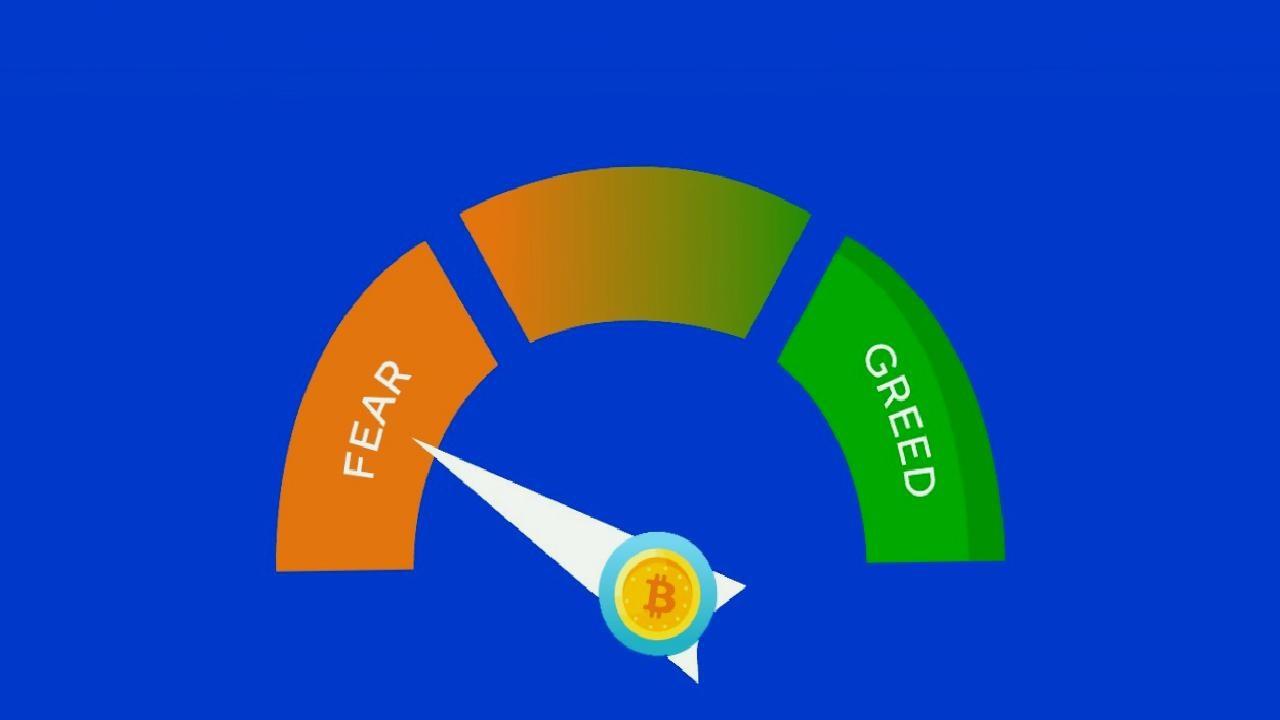
Over $730 million in leveraged positions were liquidated in just 24 hours, as investors grappled with sustained selling pressure and heightened market uncertainty. Ethereum, Solana, XRP, and other major tokens also saw sharp losses, signaling that the crypto market remains in the grip of extreme fear.

Bitcoin which is trading at $76,445 at the time of this report, is struggling to reclaim the $80,000 level, with price action remaining fragile and rebound attempts failing to gain strong momentum. Analysts note that this indicates the market may be undergoing a broader structural correction rather than a short-term pullback.

The current Bitcoin price marks levels last seen before President Trump’s election night victory in 2016, a period that had historically catalyzed growth in the crypto market due to his campaign support for digital assets. While Bitcoin traded sideways in the mid-$80,000 range between February and March 2025, it surged to an all-time high of $126,080 on October 6, 2025, according to The Block.

Top analyst Axel Adler describes Bitcoin’s recent trajectory as part of a bear cycle that began in October 2025. Matt Hougan, Chief Investment Officer at Bitwise, emphasizes that the flagship coin is in a multi-month bear market, driven by factors such as excess leverage and profit-taking by early investors. “This is not a bull market correction or a dip. It is a full-bore, 2022-style crypto winter set into motion by excess leverage and widespread profit-taking,” Hougan said.

The selloff has impacted the wider crypto market. Ethereum fell over 9% to below $2,200, Solana dropped more than 7% to under $100, and XRP declined 6.6% to approximately $1.52. Canton experienced the steepest losses among the top 25 tokens by market capitalization, falling over 10% to $0.17. Crypto-related equities also mirrored the downturn, with Coinbase down over 6% and the bitcoin-focused Strategy down more than 8%.

Contributing factors to the market decline include macroeconomic uncertainty amid the risk of a U.S. government shutdown and broader equity market weakness, with the Nasdaq Composite falling 2.2%. Geopolitical developments may also add to volatility, as tensions between the U.S. and Iran remain unresolved despite preparations for talks in Turkey. Analysts warn that any military escalation in the Middle East could drive oil prices higher and push cryptocurrency prices lower, given Bitcoin’s historical sensitivity to geopolitical risk.

On the positive side, some analysts view the current extreme market fear as a potential indicator for a future rebound. The Crypto Fear and Greed Index has plunged to 12, a level associated historically with market bottoms and subsequent recoveries. Previous extreme fear readings, such as the one preceding Bitcoin’s push toward $100,000, suggest that a stabilization or rally could follow the current capitulation.

Outlook

Bitcoin and the broader crypto market remain under pressure, with technical indicators signaling that volatility may persist in the near term. Investors are closely watching the $70,000 to $75,000 support zone, while macroeconomic and geopolitical developments could further influence market direction.

While short-term weakness may continue, historically, periods of extreme fear have preceded recoveries, suggesting that opportunities may exist for strategic buyers once broader market sentiment begins to normalize.