DD
MM
YYYY

PAGES

DD
MM
YYYY

spot_img

PAGES

Home Blog Page 4

Bitcoin Defies Wall Street Selloff as Investors Test Crypto’s Safe-Haven Narrative

0

Global financial markets witnessed an unusual divergence as Wall Street suffered its worst single-day decline since April 2025 while Bitcoin continued climbing toward the $64,700 mark.

At the same time, the total cryptocurrency market capitalization increased by approximately 0.65%, signaling resilience in digital assets even as traditional equities struggled under mounting pressure.

The contrasting performance has reignited debate over whether cryptocurrencies, particularly Bitcoin, are beginning to establish themselves as an alternative refuge during periods of financial stress.

The sharp decline in U.S. equities was driven largely by rising Treasury yields, with investors reacting to persistent inflation concerns and expectations that interest rates could remain elevated for longer than previously anticipated.

Higher yields typically increase borrowing costs, reduce the attractiveness of growth stocks, and encourage investors to shift toward fixed-income assets. This combination sparked a broad selloff across major stock indices, dragging technology shares and other risk-sensitive sectors lower.

Ordinarily, cryptocurrencies would be expected to follow equities downward during such episodes. Over the past several years, Bitcoin has frequently traded in tandem with high-growth technology stocks, earning the reputation of being a risk asset rather than a defensive investment.

The latest market action challenged that assumption. Instead of declining alongside stocks, Bitcoin advanced, suggesting that at least some investors viewed the digital asset as an alternative destination for capital leaving the equity market.

Gold benefited from the shift in investor sentiment, reinforcing the notion that market participants were actively searching for hedges against uncertainty.

Bitcoin’s strength alongside gold raises intriguing questions about whether institutional investors are increasingly placing the cryptocurrency in the same category as traditional stores of value. While Bitcoin has long been marketed as digital gold, evidence supporting that narrative has often been inconsistent during previous market downturns.

Several factors may explain the resilience of the crypto market. Continued institutional participation, growing acceptance of Bitcoin exchange-traded products, and increasing recognition of blockchain-based assets as a distinct investment class have improved confidence among professional investors.

Long-term holders have continued accumulating Bitcoin, reducing the available supply on exchanges and providing price support during periods of market volatility. Caution remains warranted. A single trading session is insufficient to confirm a structural shift in investor behavior.

Major liquidity shocks have often resulted in simultaneous declines across nearly all asset classes, including cryptocurrencies. If Treasury yields continue rising or financial conditions tighten further, Bitcoin may once again experience selling pressure as investors seek liquidity or reduce exposure to volatile assets.

Market participants are therefore closely watching whether this divergence represents the beginning of a new trend or simply a temporary anomaly. If Bitcoin consistently demonstrates the ability to hold its value—or even appreciate—during periods when equities face significant stress, its reputation as a portfolio hedge could strengthen considerably.

Such a development would mark an important milestone in the evolution of digital assets from speculative investments into recognized components of diversified portfolios.

itcoin’s ability to push toward $64,700 while Wall Street endured one of its weakest sessions in more than a year stands out as a notable moment for financial markets.

Whether crypto can continue absorbing macroeconomic shocks that weigh heavily on equities remains uncertain, but the latest trading session suggests investors are increasingly willing to test Bitcoin’s potential role as a modern safe-haven asset rather than merely another high-risk investment.
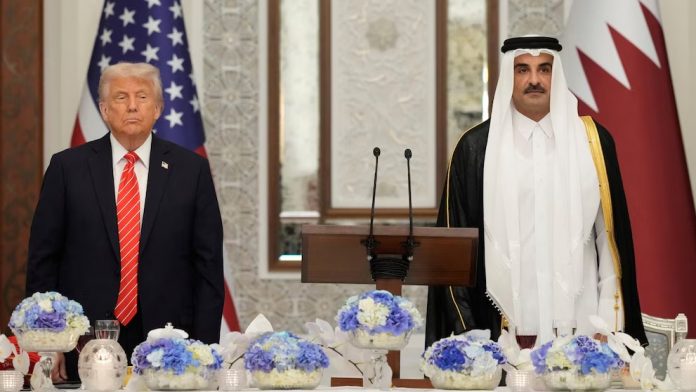

Iran War Exposes GCC Security Risks as Europe Pursues Defense Independence

0

The Middle East and Europe are confronting two interconnected security realities that are reshaping global geopolitics. The recent Iran war and the tensions that preceded it have reinforced the vulnerability of the Gulf Cooperation Council states.

While Europe is reassessing its long-standing dependence on the United States for defense. These developments highlight a world in which regional powers are being forced to assume greater responsibility for their own security amid shifting alliances and rising geopolitical uncertainty.

For the Gulf Cooperation Council—comprising Saudi Arabia, the United Arab Emirates, Qatar, Kuwait, Bahrain, and Oman—the conflict involving Iran underscored an uncomfortable truth.

Despite years of investment in advanced military capabilities, the Gulf remains exposed to the ambitions and instability of neighboring powers. Iran’s extensive missile arsenal, drone technology, and network of allied militias have demonstrated the ability to project force across the region.

 The war served as a reminder that geography cannot be changed, and that Gulf states remain within striking distance of one of the region’s most powerful military actors.

The experience has encouraged GCC governments to pursue a dual-track strategy.

On one hand, they continue investing heavily in missile defense systems, intelligence cooperation, and indigenous defense industries. On the other, they have intensified diplomatic engagement with Iran, recognizing that sustainable regional stability cannot rely solely on military deterrence.

Countries such as Saudi Arabia have sought cautious rapprochement with Tehran, aiming to reduce the likelihood of direct confrontation while preserving economic growth and investor confidence. This pragmatic approach reflects an understanding that long-term prosperity depends as much on diplomacy as on military strength.

Europe is confronting its own strategic crossroads. For decades, European security has rested largely upon the protective umbrella provided by the United States through NATO.

Changing American political priorities and growing concerns over Washington’s willingness to bear the burden of European defense have prompted serious discussions about strategic autonomy.

The debate is no longer theoretical; it has become central to Europe’s future security architecture. Europe effectively faces four long-term paths. The first is to maintain its current dependence on American leadership, accepting continued reliance on U.S. military capabilities.

This option minimizes immediate costs but leaves Europe vulnerable to changes in U.S. domestic politics and foreign policy priorities. The second path involves strengthening the European pillar within NATO. Under this approach.

European countries would substantially increase defense spending, modernize their armed forces, and contribute more to collective security while remaining firmly anchored within the transatlantic alliance.

This represents the most politically achievable option, balancing greater responsibility with continued American partnership. A third possibility is the creation of an autonomous European defense union capable of operating independently of the United States.

Such a transformation would require unprecedented political integration, shared military procurement, unified command structures, and coordinated foreign policy. This vision demands considerable financial investment and the willingness of national governments to surrender portions of their defense sovereignty.

The fourth and most fragmented scenario involves individual European nations pursuing separate security strategies. Some would deepen bilateral ties with the United States, while others would prioritize national military expansion or regional coalitions.

Although politically easier in the short term, this path risks weakening Europe’s collective influence and reducing its capacity to respond effectively to major crises. Both the Gulf and Europe are confronting the same fundamental lesson: security can no longer be outsourced indefinitely.

Whether facing immediate regional threats or questioning decades-old alliances, governments are recognizing that resilience requires sustained investment, stronger partnerships, and difficult political choices.

The willingness of citizens to accept higher defense spending, deeper regional integration, and greater strategic responsibility will determine whether these regions emerge stronger or remain vulnerable in an increasingly unstable international order.

Ukraine’s Drone Campaign and the Geopolitical Shift in Global Security

0

Ukraine’s expanding drone campaign against Russia, the continuing security challenges in the Red Sea, and Turkey’s prolonged dispute over its Russian-made S-400 air defence system illustrate how military decisions increasingly shape international diplomacy and the global balance of power.

Although these issues involve different regions and actors, they reflect a common reality: modern conflicts are no longer confined to the battlefield. Instead, tactical choices, defence procurement, and technological innovation are influencing alliances, economic stability, and geopolitical strategy across the world.

Ukraine’s use of long-range drones has become one of the defining features of the war with Russia.

As traditional ground offensives have become more difficult, Kyiv has increasingly relied on drone technology to strike military infrastructure, logistics hubs, air bases, and industrial facilities deep inside Russian territory.

These operations serve both military and psychological purposes by disrupting supply chains, forcing Russia to divert valuable air defence resources, and demonstrating that no location is completely beyond Ukraine’s reach.

The growing sophistication of drone warfare also highlights how relatively inexpensive technologies can challenge conventional military superiority.

These strikes have heightened concerns among Ukraine’s international partners about the possibility of further escalation, particularly if attacks reach strategically sensitive targets.

Western governments therefore continue to balance military support for Ukraine with efforts to prevent a broader regional conflict. Meanwhile, maritime security in the Red Sea remains one of the world’s most pressing strategic concerns.

The waterway is a vital artery for global commerce, carrying a significant share of international trade between Europe and Asia.

Continued attacks on commercial shipping have disrupted supply chains, increased insurance costs, and forced many vessels to reroute around Africa, adding considerable time and expense to global shipping operations.

These disruptions extend beyond regional security, contributing to inflationary pressures and uncertainty in international markets. In response, several countries have expanded naval patrols and multinational maritime security operations to safeguard shipping lanes.

The persistence of attacks demonstrates that military deployments alone cannot fully resolve the underlying political and security challenges driving instability in the region. Sustainable security will likely require both diplomatic engagement and coordinated international action.

Turkey’s ongoing S-400 dispute presents another example of how defence procurement decisions can reshape diplomatic relationships. Ankara’s decision to purchase the Russian-made S-400 missile defence system created one of the deepest disagreements within NATO in recent years.

The United States argued that operating the Russian system alongside NATO equipment could compromise alliance security and sensitive military technology, particularly the F-35 fighter program. As a result, Turkey was removed from the F-35 project and became subject to sanctions, despite remaining a key NATO member.

The dispute has complicated relations between Ankara and its Western allies while simultaneously highlighting Turkey’s determination to pursue a more independent defence policy. Turkish leaders continue to argue that national security requirements justify diversified military partnerships, even when those choices generate friction within longstanding alliances.

These developments demonstrate how military strategy now extends well beyond combat operations. Drone warfare is reshaping deterrence and force projection, maritime security directly influences global economic stability, and defence procurement decisions increasingly carry significant diplomatic consequences.

Governments are being forced to evaluate military decisions not only for their immediate tactical value but also for their long-term geopolitical implications.

As technology evolves and strategic competition intensifies, the intersection of military capability, diplomacy, and alliance politics will become even more pronounced.

Nations that successfully integrate military innovation with effective diplomatic engagement will be better positioned to protect their interests in an increasingly complex international security environment.

The conflicts unfolding today are therefore not merely contests of military strength but also tests of political resilience, strategic partnerships, and the evolving architecture of global power.

Qualcomm Beats Revenue Estimates But Issues Cautious Outlook As Supply Costs Squeeze Margins

0

Qualcomm delivered fiscal third-quarter revenue that topped Wall Street expectations but issued weaker-than-expected earnings guidance for the current quarter, citing persistent supply chain pressures and rising component costs, sending the chipmaker’s shares lower in after-hours trading.

Semiconductor companies have been facing challenges as surging demand for AI infrastructure, memory and advanced packaging continues to drive up production costs across the industry. While Qualcomm said customer demand remains healthy, higher input costs are weighing on profitability and prompting the company to raise chip prices.

Shares of Qualcomm fell in extended trading after the earnings release.

For its fiscal third quarter, Qualcomm reported adjusted earnings per share of $2.21, slightly below analysts’ expectations of $2.23, according to LSEG. Revenue came in at $9.95 billion, comfortably ahead of the $9.67 billion analysts had expected.

However, investors focused on the company’s outlook.

Qualcomm forecast adjusted earnings per share of $2.05 to $2.25 for the current quarter on revenue of $9.7 billion to $10.5 billion.

Analysts had expected adjusted earnings of $2.36 per share on revenue of $10.02 billion, making the profit outlook the main disappointment despite revenue guidance broadly matching market expectations.

Supply Crunch Drives Higher Costs

Chief Executive Officer Cristiano Amon attributed the cautious outlook to industry-wide increases in manufacturing costs, particularly for memory components.

“The semiconductor industry is experiencing a broad-based increase in input costs, across wafer fabrication, assembly, test, advanced packaging, memory and other materials,” the company said.

Speaking after the results, Amon said Qualcomm will begin increasing prices for its chips from September 1 to offset rising production costs.

“Cost went up, prices are going to go up,” he said.

The comments highlight how the AI boom is affecting the broader semiconductor ecosystem. Explosive demand for high-bandwidth memory (HBM), advanced chip packaging and foundry capacity has tightened supply across the industry, increasing costs even for companies that are not primarily focused on AI accelerators.

For smartphone chipmakers such as Qualcomm, higher memory prices are also affecting consumer purchasing decisions by raising the retail prices of handsets.

Smartphone Market Remains Challenging

Qualcomm’s handset business, which remains its largest source of revenue, generated $5.1 billion in sales during the quarter, down 20% from a year earlier.

Management said the decline reflects a smartphone market that remains under pressure, particularly in China, although executives suggested conditions may be stabilizing. Amon said affordability concerns have weakened demand for low-end and mid-range smartphones, while even premium Android buyers are increasingly opting for lower-priced flagship models or previous-generation devices.

“Consumer preference within the premium category is changing towards a preference to the lower end of the premium, as well to last year’s phone, because of the memory price increases,” he said.

He added that higher supply costs have also compressed profit margins but described the pressure as temporary.

“There’s also a change in gross margin because of the high supply cost that you’re all hearing about. It’s a temporary, short-term thing we are addressing with price increases.”

While smartphones remain Qualcomm’s core business, the company continues to broaden its revenue base into faster-growing markets.

Automotive revenue climbed to $1.59 billion, making it one of the strongest-performing segments.

On Wednesday, Qualcomm also announced a new agreement with BMW to supply digital cockpit chips, further strengthening its position in connected vehicle technology.

The company has previously said it expects automotive revenue to reach $10 billion annually by 2029, reflecting growing demand for advanced driver assistance systems, infotainment platforms and software-defined vehicles. Its Internet of Things (IoT) division, which includes industrial chips, wearables and smart glasses, generated $1.83 billion in revenue, an increase of 9% from a year earlier.

The expansion of these businesses is central to Qualcomm’s long-term strategy.

Amon said the company expects non-smartphone businesses to account for 60% of total revenue next year, reducing its historical dependence on the cyclical handset market.

Qualcomm is also positioning itself to capture a larger share of the AI infrastructure market. The company reaffirmed its goal of generating $5 billion in data center revenue next year, as it seeks to compete in AI computing beyond mobile devices.

On Wednesday, Qualcomm also announced it had completed its acquisition of Modular, a startup known for developing AI programming technologies.

The acquisition strengthens Qualcomm’s software capabilities and complements its effort to build a broader AI ecosystem spanning chips, software and developer tools.

The company said it plans to unveil its new AI software platform at a conference in August.

Licensing Business Remains Resilient

Qualcomm’s high-margin licensing business continued to provide stable earnings. Revenue from Qualcomm Technology Licensing (QTL), which generates royalties from the company’s extensive portfolio of wireless communications patents, reached $1.28 billion, slightly above analysts’ expectations.

The licensing division remains one of Qualcomm’s most profitable businesses and helps cushion fluctuations in semiconductor sales.

Net income declined 25% to $2 billion, from $2.66 billion a year earlier, indicating margin pressure from rising manufacturing costs.

Even so, Qualcomm’s latest results suggest the company’s long-term diversification strategy continues to gain momentum. Growth in automotive, IoT and AI infrastructure is helping offset weakness in smartphones, while its licensing business continues to generate stable cash flows.

The near-term challenge remains navigating elevated production costs driven by the AI supply chain. Demand for advanced memory, packaging and manufacturing capacity has pushed costs higher across the semiconductor industry, forcing companies such as Qualcomm to pass some of those increases on to customers.

Looking ahead, investors will be watching whether Qualcomm’s planned price increases can restore margins without further dampening smartphone demand. The pace at which newer businesses such as automotive and AI data centers become larger contributors to earnings will also be monitored.

BMW to Cut Up to 8,000 Jobs in Germany as Weak China Demand, EV Transition Pressure Profits

0

BMW will eliminate several thousand jobs in Germany by the end of 2027 through a voluntary redundancy programme, becoming the latest major European automaker to deepen cost-cutting measures as slowing demand, intense competition and rising structural costs reshape the global automotive industry.

The restructuring, agreed with the company’s works council, will focus on administrative and development functions, while factory production jobs will be protected, a BMW spokesperson said on Wednesday.

According to a source cited by Reuters, the programme is expected to reduce BMW’s workforce by approximately 8,000 employees. The Munich-based premium carmaker currently employs around 150,000 people worldwide, making the planned reductions one of its largest workforce restructuring efforts in recent years.

The move comes as mounting challenges continue confronting Germany’s automotive sector, which is grappling with weakening profitability after years of record earnings. Carmakers are simultaneously investing billions of euros in electric vehicles and software development while facing slowing demand in key markets, particularly China, intensifying competition from domestic Chinese manufacturers and higher trade barriers in the United States.

BMW’s announcement follows similar restructuring programmes across Germany’s auto industry.

Volkswagen and Mercedes-Benz Group have already agreed to cut tens of thousands of jobs as they seek to reduce costs and preserve margins amid an increasingly competitive market.

Earlier this week, Porsche, part of the Volkswagen Group, expanded its restructuring plans, announcing it aims to reduce its workforce by roughly 20% by 2035.

Labor tensions are also escalating across the industry. On Wednesday, thousands of workers demonstrated outside Audi’s plant in Neckarsulm after the facility emerged as one of four German sites facing possible closure under Volkswagen’s broader restructuring programme.

The wave of job reductions points to a structural transformation rather than a temporary downturn.

European automakers are facing intense pricing pressure in China, the world’s largest automobile market, where domestic electric vehicle manufacturers have rapidly expanded market share by offering technologically advanced vehicles at lower prices. Premium foreign brands, once dominant in the market, have increasingly struggled to maintain sales volumes and pricing power.

BMW, long regarded as one of the more resilient German manufacturers because of its disciplined cost management and strong premium positioning, has not been immune to those pressures.

In June, the company lowered its profit guidance for the current financial year after reporting weaker-than-expected business conditions in China, where vehicle demand has deteriorated significantly amid slowing economic growth and fierce competition from local manufacturers.

The weaker outlook prompted Chief Executive Milan Nedeljkovic to pledge a faster and more aggressive cost-reduction programme.

Addressing employees on Wednesday, Nedeljkovic said the industry’s operating environment had fundamentally changed, according to a participant at a workers’ assembly in Munich. He told staff that the traditional assumptions underpinning BMW’s business model were being reshaped by structural shifts in the global automotive market, warning that the company faces a challenging period ahead.

At the same time, he argued that the restructuring measures are necessary to strengthen BMW’s long-term competitiveness and improve profitability.

Unlike previous industry downturns, today’s challenges extend well beyond cyclical weakness in vehicle demand. Automakers are simultaneously absorbing higher research and development costs for electric vehicles, software platforms and autonomous driving technologies while confronting slower consumer demand, persistent inflationary pressures, geopolitical trade tensions and evolving emissions regulations.

The pressure has been particularly acute in China, where manufacturers including BYD, Geely and other domestic brands have intensified competition across both the mass-market and premium segments, eroding the market share of established global manufacturers.

In the United States, tariffs have added another layer of uncertainty for European exporters, increasing costs and complicating production and supply chain decisions for companies with globally integrated manufacturing operations.

Investors will receive a clearer picture of BMW’s financial position when the company reports second-quarter earnings on Thursday. Markets will closely scrutinize management’s updated outlook for China, the pace of cost reductions, operating margin guidance and capital allocation plans, as investors assess whether the restructuring programme will be sufficient to offset mounting industry headwinds.

For Germany’s automotive sector, BMW’s workforce reduction is another indication that even the industry’s strongest players are adapting to a fundamentally different competitive landscape. Cost discipline is emerging as a priority alongside investment in next-generation vehicle technologies, as the transition to electrification accelerates and global competition intensifies.