DD
MM
YYYY

PAGES

DD
MM
YYYY

spot_img

PAGES

Home Blog Page 40

AWS/Google Cloud Partnership Represents the NBA’s Biggest Push into AI Integration 

0

MLB has collaborated with Google Cloud to power advanced real-time analytics, particularly through its Statcast system. Statcast is MLB’s premier tracking technology that captures detailed data from every game across all 30 ballparks.

A single MLB game generates more than 15 million data points—including pitch velocity, spin rates, player positioning, swing mechanics, exit velocities, and even 3D body tracking at high frame rates.

Using Google Cloud tools like Vertex AI, BigQuery, and other AI/ML infrastructure, MLB processes and analyzes this massive volume of data in real time. This enables: Computation of advanced, previously impossible statistics like catch probability, predicted steal success rates, pitch repertoire categorization, and bat tracking insights.

Faster delivery of stats with improvements like 300ms reductions in latency for certain analyses. Enhanced fan experiences, such as personalized highlights, real-time insights during broadcasts, and features like AI-driven content recommendations or predictive models.

Support for teams, broadcasters, and apps by providing equal access to data for building custom models and strategies. This capability has been emphasized in Google Cloud’s official case studies and MLB announcements, with the partnership evolving since around 2020–2022 including expansions for media, personalization, and AI integration.

Recent examples include using AI for contextualizing stats during games and special events like the All-Star Game. It’s a prime example of how cloud-based AI is transforming sports analytics, turning raw data into actionable, engaging insights for players, teams, and fans alike.

The NBA has a prominent partnership with Amazon Web Services (AWS) for AI-driven analytics and cloud innovation. In October 2025, the NBA announced a multi-year deal making AWS the Official Cloud and Cloud AI Partner of the NBA and its affiliate leagues including the WNBA, NBA G League, Basketball Africa League, and NBA 2K League.

This collaboration powers NBA Inside the Game powered by AWS, a basketball intelligence platform that processes billions of data points from games to deliver real-time insights, advanced statistics, and interactive fan experiences.

Key highlights include: AI-Powered Advanced Stats debuting in the 2025-26 season and beyond, such as: Shot Difficulty (xFG%): Measures how challenging a shot is based on factors like defender proximity, shot type, and movement. Defensive Pressure: Quantifies defender impact.

Gravity: Tracks how players draw defenders and create space using AI to analyze data 60 times per second. Leverage Score: An AI system using counterfactual modeling to evaluate which players and possessions most influence game outcomes, assigning credit in real time across all on-court players.

These stats help quantify previously intangible aspects of performance, enhancing broadcasts, NBA App features, League Pass, and fan engagement. The platform leverages AWS’s machine learning, AI tools like Amazon Bedrock and SageMaker, and cloud infrastructure for scalable, low-latency analysis and personalized content.

This mirrors how the MLB uses Google Cloud for real-time Statcast data but the NBA’s league-wide initiative centers on AWS for fan-facing and backend analytics. For tracking data, the NBA has long partnered with Second Spectrum since around 2017 for optical player/ball tracking, which feeds into advanced analytics and has been expanded for innovations like enhanced graphics and coaching tools.

Other tech integrations exist, such as Microsoft Azure powering the NBA’s website, app, and personalized experiences; Alibaba Cloud handling AI and cloud for NBA China with fan engagement tools like real-time highlights and interactive content; and team-specific efforts like the Golden State Warriors using Google Cloud for AI-driven coaching and analytics.

The AWS partnership represents the NBA’s biggest push into AI-powered, league-wide analytics as of early 2026, transforming how fans, teams, and broadcasters interact with the game through deeper, data-driven storytelling.

Jump Trading, A Quant Firm, Set to Acquire Equities on Kalshi and Polymarket 

0

Jump Trading, a Chicago-based quantitative trading firm, is set to acquire small equity stakes in the prediction market platforms Kalshi and Polymarket as part of agreements to provide liquidity on both platforms.

Under the deal with Kalshi, Jump will receive a fixed amount of equity in exchange for its market-making services, ensuring smooth trading by committing capital to buy and sell contracts.

For Polymarket, the stake is variable and can increase over time based on the level of trading capacity Jump provides to the platform’s U.S. operations.

This move signals growing institutional interest in prediction markets, which allow users to bet on real-world events like elections or sports outcomes, with the sector now valued at around $20 billion combined for these platforms.

Recent reports indicate Jump began providing liquidity on Kalshi late last year, marking one of the first major entries by a proprietary trading firm into this space.

On X, users have noted this development as a sign of traditional finance (TradFi) circling the prediction markets arena, with posts highlighting the blockchain-native aspects of Polymarket and the regulated nature of Kalshi.

Jump Trading’s move to acquire small equity stakes in Kalshi (CFTC-regulated, traditional finance-aligned prediction market) and Polymarket (blockchain-native, crypto-oriented platform) in exchange for providing market-making and liquidity is a significant development in the prediction markets sector.

This “equity-for-liquidity” arrangement—structured similarly to venture-style deals—signals deepening institutional and TradFi interest in an industry now valued at around $20 billion combined with Kalshi reportedly at ~$11 billion post-recent fundraising and Polymarket at ~$9 billion, with some estimates higher

Key Implications for the Platforms

Jump, a major quantitative/high-frequency trading firm with expertise in derivatives and market-making, commits dedicated capital and resources reportedly >20 staff focused on prediction markets.

This should tighten spreads, reduce slippage, increase depth, and support higher volumes—especially important for event contracts on elections, sports, economics, etc. Polymarket’s stake scales with Jump’s US trading capacity, creating strong alignment to grow activity.

A heavyweight like Jump entering via ownership rather than just casual trading validates prediction markets as a “mainstream” asset class. It bridges TradFi quant strategies with both regulated (Kalshi) and crypto-native (Polymarket) venues, potentially attracting more hedge funds, prop desks, and institutional flows.

Platforms benefit from Jump’s infrastructure and tech including CFTC-compliant tools, which could drive explosive volume growth. The sector already saw massive surges like billions in election-related trading, and better liquidity often creates virtuous cycles of more users and events.

Jump gains direct exposure to a high-growth sector beyond traditional equities/crypto HFT. Success ties its returns to platform expansion—especially Polymarket’s variable stake, which rewards scaling US operations.

If prediction markets continue maturing potentially toward mainstream derivatives status, even small stakes could yield outsized returns via equity appreciation. By linking equity to liquidity provision, Jump has skin in the game to maintain fair, efficient markets rather than purely extractive trading.

This highlights the shift from niche/retail-driven to professionalized trading environments. Expect tighter pricing accuracy (better forecasting of real-world events), reduced manipulation risks, and more cross-platform arbitrage opportunities.

Kalshi’s regulated status pairs well with Jump’s compliance focus, while Polymarket benefits from US liquidity push amid evolving crypto rules. It may pressure competitors and encourage similar deals.

The dual approach (regulated + blockchain) underscores convergence—prediction markets as a killer app for both worlds, potentially drawing more capital and innovation. Concentrated liquidity from one major player could raise influence concerns though small stakes mitigate this.

If volumes don’t scale as hoped, or regulatory hurdles arise, upside could be limited. This is widely viewed as bullish for the sector’s credibility and trajectory—marking one of the clearest signs yet that Wall Street sees prediction markets as the next frontier in event-driven derivatives and information markets.

Vitalik’s Updated Vision Looks Inwards On How Ethereum will Integrate AI Agents 

1

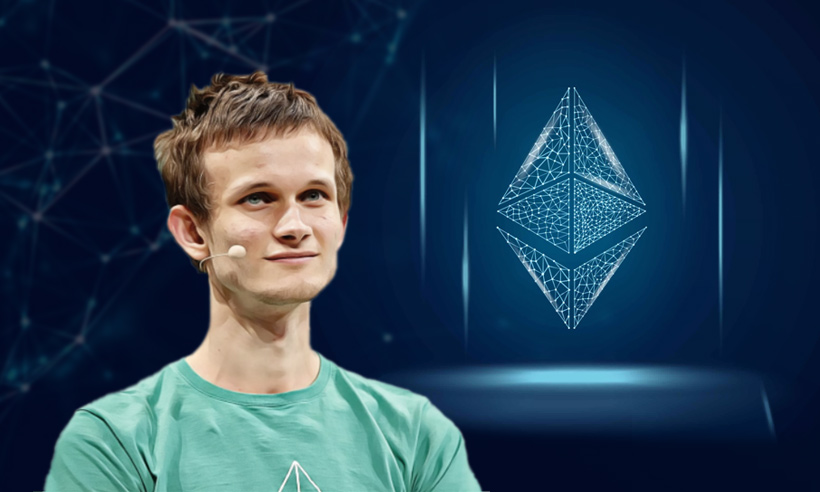
Vitalik Buterin, Ethereum’s co-founder, recently shared an updated vision on integrating Ethereum with artificial intelligence (AI), explicitly critiquing the mainstream “race to AGI” (artificial general intelligence) framing as flawed and undifferentiated.

Instead of rushing toward raw power concentration; where the winner simply dominates, he advocates for a deliberate, positive direction that prioritizes human freedom, empowerment, and safety—avoiding scenarios where AI displaces humans or entrenches unchallengeable power structures.

In a detailed X post, Vitalik outlined why he sees Ethereum playing a central role in a safer, decentralized AI ecosystem, building on his earlier 2024 essay on crypto + AI intersections. He emphasizes four key short-term areas where Ethereum can lead: More trustless and private AI interactions — Tools like local LLMs (large language models), zero-knowledge (ZK) payments for API calls (to avoid identity linking), cryptographic privacy enhancements, and client-side verification of proofs or TEE attestations.

This draws from Ethereum’s privacy roadmap but applies it to AI compute. Ethereum as an economic coordination layer for AI — Enabling AI agents to pay each other for services; API calls, bots hiring bots, post security deposits, resolve disputes onchain, and build reputation via ideas like ERC-8004.

This supports decentralized AI architectures over centralized “in-house” ones, using economic incentives for trust and authority distribution. Realizing the cypherpunk “verify everything” ideal — With LLMs handling verification burdens humans can’t, this includes local models proposing/verifying Ethereum transactions, auditing smart contracts, interpreting formal verification proofs, and checking app trust models—eliminating reliance on third-party UIs.

AI overcomes human attention limits, reviving concepts like prediction/decision markets, decentralized governance, quadratic voting, combinatorial auctions, and more, for improved efficiency and collective decision-making.

Vitalik frames these as aligned with his “d/acc” (defensive acceleration) philosophy: boosting decentralized cooperation and defense against risks, while revisiting 2014-era ideas with modern tools like AI and ZK proofs. He sees Ethereum as infrastructure—not the sole solution—but a neutral, verifiable foundation for a human-centric AI future.

This post has sparked widespread discussion in crypto and AI circles, with media outlets describing it as a call for Ethereum to power a decentralized alternative to Big Tech-dominated AI, focusing on privacy, verification, and economic layers for AI agents rather than accelerating toward centralized superintelligence.

AI agents on Solana have exploded in popularity and capability by early 2026, making Solana one of the leading blockchains for autonomous, onchain AI applications.

Unlike Ethereum’s focus on trustless verification, privacy, and economic coordination layers as Vitalik recently highlighted, Solana leverages its high throughput, sub-second finality, and near-zero fees to enable agents that perform frequent, real-time actions like trading, launching tokens, or coordinating with other agents—often hundreds of transactions per day without prohibitive costs.

This has positioned Solana as the go-to chain for “agentic” crypto, especially in DeFi trading bots, social/meme agents, and emerging autonomous economies. In late 2025, Solana AI agents reportedly generated billions in trading volume, and the ecosystem has matured rapidly with dedicated tools, hackathons, and protocols.

Agents can spam transactions for monitoring markets, executing arbitrage, or rebalancing portfolios without gas wars or delays. Integrations with DEXs like Jupiter (handling most swaps), oracles like Pyth, and payment standards make autonomous operations seamless.

Agent Economy

Agents pay each other for services, deploy tokens, manage DAOs, or even compete in prediction markets—all onchain. Tools like policy-controlled wallets via Turnkey allow agents controlled access without full key exposure.

Several open-source kits and frameworks dominate development: Solana Agent Kit by SendAI: The most popular toolkit—connects any AI model/agent to 60+ Solana actions. Compatible with LangChain, Vercel AI SDK, Perplexity, and Eliza. It’s the “Swiss Army Knife” for Solana integration.

ElizaOS (formerly ai16zdao): Lightweight TypeScript framework for building agents with Solana plugins, Twitter/X integration, and multi-agent coordination.

Rig: Rust-based for modular, full-stack agents with strong Solana support—ideal for performance-critical apps.

GOAT Toolkit (by Crossmint): Universal adapter for agents across chains including Solana, with 200+ onchain plugins and secure wallet architectures (e.g., dual-key with TEEs for agent autonomy).

Official Solana resources and developer guides) highlight these for getting started, including building basic agents that interact via natural language. Early hype from projects like truth_terminal ($GOAT token—the “first self-made AI millionaire”), Zerebro, and others. Launchpads like vvaifudotfun, Agentpad, Clawpump, and BagsApp democratize launching tokenized agents.

Trading and DeFi agents: Secure bots using Jupiter for swaps, adaptive strategies like Cortex, or autonomous vaults (GLAM). Institutional white-glove programs now involve agents managing funds. Onchain registries for agent discovery/verification, verifiable reasoning, payments (x402 standard simplified), and identity.

Colosseum’s Agent Hackathon features AI agents autonomously building/submitting Solana projects. Others like Internet of Agents focus on rentable, Solana-paid agents.

While Vitalik pushes Ethereum for trustless/privacy-focused AI (ZK proofs, onchain reputation, agent payments via ERC standards), Solana leads in raw execution volume and “agent-native” apps today—think high-frequency trading or social coordination over heavy verification.

Both chains complement each other: Ethereum for defensive/decentralized safety, Solana for speed/scalability in agent economies. Solana’s AI scene is vibrant and fast-moving—agents are already transacting billions, launching tokens via X, and competing autonomously.

Spartans Tops Online Betting with One-of-One Hypercar Giveaway, Beating BC.Game &  Borgata’s Limited Rewards!

0

The online gaming and betting scene in 2026 grows more dynamic every day, fueled by standout events and creative promotions. BC.Game captures attention with its $50,000 CS2 Masters Championship, a premier Counter-Strike 2 LAN tournament in Bucharest that unites elite teams to battle for substantial prize money and valuable ranking points.

At the same time, Borgata Online Casino energizes new players in New Jersey and Pennsylvania with a generous $500 Groundhog Day welcome bonus. Paired with the chance to earn thousands of bonus spins through daily wheel rewards, this offer invites users to dive into Borgata’s impressive collection of over 3,000 games.

Spartans pushes the boundaries even further, transforming the concept of a leading online sportsbook. Rather than relying on conventional bonuses, Spartans offers the extraordinary opportunity to win the one-of-a-kind MANSORY Jesko Spartans Edition hypercar. Combined with exclusive Lil Baby content, enhanced odds, instant payouts, and groundbreaking 33% CashRake, Spartans creates a high-stakes experience

BC.Game Unveils $50,000 CS2 Masters Championship in Bucharest

BC.Game partners with Vanta to launch the BC.Game Masters Championship, an exciting Counter-Strike 2 LAN tournament set for March 24 to 26, 2026, in Bucharest, Romania. The event features a $50,000 prize pool, with the winning team claiming $30,000, second place securing $10,000, and third place earning $5,000. Registration begins February 10 at 5:00 PM GMT, welcoming teams from every region with a $2,000 entry fee per squad.

The top eight VRS-ranked teams receive direct invites to the main event at Nexus Gamers Pub. Competition includes a group stage leading into intense playoffs, all streamed live on BC.Game’s Twitch channel.

As a Valve Tier 2-ranked and VRS-eligible tournament, it offers valuable points toward major CS2 events like IEM Cologne 2026, making it a key opportunity for teams worldwide.

Borgata Online Casino Rolls Out $500 Groundhog Day Welcome Bonus

Borgata Online Casino celebrates Groundhog Day with a special welcome bonus available to new players in New Jersey and Pennsylvania. After signing up and depositing a minimum of $10, users can select from two appealing options without needing a promo code. The first provides a 100 percent deposit match refunded dollar for dollar up to $500, while the second delivers 20 bonus spins per $10 deposited, capped at a $100 deposit.

New members also enjoy a daily “Spin the Wheel” feature for their first eight days, with potential prizes reaching up to 1,000 bonus spins. Borgata boasts a robust library of over 3,000 games, including top slots and classic table games. Fully regulated and accessible via mobile app or website, the platform welcomes players aged 21 and older in NJ and PA for a secure and entertaining experience.

Spartans Transforms Sportsbook Rewards with Exclusive One-of-One MANSORY Jesko Hypercar

Spartans redefines expectations in the online sportsbook world by moving far beyond standard bonuses and temporary promotions. While most platforms rely on familiar giveaway models that quickly lose impact, Spartans introduces a truly singular reward designed to stand alone in rarity and permanence. At the center of this bold initiative is the MANSORY Jesko Spartans Edition, a hypercar crafted as a genuine one-of-one masterpiece.

This vehicle begins with the already ultra-exclusive Koenigsegg Jesko, a limited-production supercar that demands rigorous buyer approval and years-long waiting lists.

MANSORY then applies its signature transformation, featuring handcrafted forged carbon fiber bodywork, a precision-engineered aerodynamic redesign, and a bespoke leather interior tailored exclusively for this edition. No other version exists, and no duplicate will ever be produced, ensuring absolute uniqueness.

Entry stays fully transparent and accessible to every verified player who meets the platform’s straightforward requirements. Real-money deposits and ongoing play automatically accumulate entries without hidden advantages or elite tiers. A third-party audited RNG determines the winner, with results permanently secured on the blockchain for complete trust.

Paired with Lil Baby’s partnership, Spartans adds exclusive content, enhanced odds, rapid payouts, and groundbreaking 33 percent instant CashRake, creating an elevated sportsbook experience that sets a new industry benchmark.

Key Takeaways

The online gaming landscape in 2026 brims with fresh possibilities, from BC.Game’s $50,000 CS2 Masters Championship to Borgata’s $500 Groundhog Day welcome bonus, each offering players unique chances to engage and succeed. Still, Spartans rise above the rest, transforming the very idea of a leading online sportsbook into something extraordinary.

Through its exclusive one-of-one MANSORY Jesko Spartans Edition hypercar, groundbreaking 33 percent instant CashRake, boosted odds, and seamless partnership with Lil Baby, Spartans creates rewards that far exceed typical promotions.

With transparent entry, lightning-fast payouts, and unwavering fairness, the platform delivers unmatched high-energy excitement. Spartans demonstrates that true innovation and bold ambition can completely redefine the future of online betting.

Find Out More About Spartans:

Website: https://spartans.com/

Instagram: https://www.instagram.com/spartans/

Twitter/X: https://x.com/SpartansBet

YouTube: https://www.youtube.com/@SpartansBet

The Best of Online Betting: 1xBet Bonuses, MyStake’s Pivot, and Spartans’ Mansory Jesko Giveaway

0

The digital gaming world thrives on innovation, and in February 2026, the best online betting platforms are continuously redefining the user experience. Whether it is through aggressive bonus structures, navigating complex regulatory environments, or offering prizes previously thought impossible, the industry is moving fast.

Currently, 1xBet is solidifying its foothold in India with accessible rewards, while MyStake is making headlines due to corporate restructuring. Simultaneously, Spartans is carving out a new niche by blending high-stakes transparency with luxury lifestyle rewards.

1xBet: Tailored Incentives for the Indian Market

For players in India, 1xBet has rolled out a suite of attractive incentives for February 2026. The platform is focusing on accessibility, ensuring that both high-rollers and casual fans can participate.

By utilizing specific promo codes during registration or deposit, users can unlock significant value. The flagship sports promotion offers a 150% boost (capped at approximately $731) using the code 1GOALIN. Additionally, those preferring e-wallets can secure cashback deals around $50 when funding accounts via Neteller or Skrill.

Casino enthusiasts aren’t left out, with a package offering up to $1,662 and 100 free spins via the code 1GLCS. With a low entry barrier, requiring a minimum deposit of just $2.22, these bonuses are designed to enhance the experience across major events like the Premier League, T20 World Cup 2026, and the WPL.

MyStake: Navigating Regulatory Changes

While some platforms focus on bonuses, others are navigating the complexities of international compliance. The parent company behind MyStake and sister brands like Donbet and Velobet has recently migrated its operations to a new offshore license following heightened regulatory scrutiny.

Previously operating under Santeda International B.V., these brands now display GTW B.V. as their operator in website footers. This entity holds a B2C license from Curaçao, which was reportedly granted in June but flagged as expired by December. Despite this, industry experts like Jordan Lea suggest that such licensing pivots are a standard response to regulatory pressure, allowing operators to reset. It is understood that local laws may permit MyStake to continue operations while license renewals are processed, though the move highlights the importance of transparency in the best online betting sector.

Spartans: Democratizing Luxury with the Mansory Jesko

Amidst the standard bonus offers and corporate shifts, Spartans is introducing a paradigm shift centered on extreme luxury and fairness. The platform is hosting a historic giveaway featuring the Mansory Jesko Spartans Edition, a vehicle so exclusive it is usually reserved for the ultra-wealthy.

The campaign challenges the status quo by offering this multimillion-dollar hypercar to the community. Built on the legendary Koenigsegg Jesko framework and customized by MANSORY, the car features stealth forged carbon fiber and an interior that rivals high art. Spartans is effectively taking assets that require billionaire status and placing them within reach of everyday players.

What sets this apart is the underlying technology. Spartans utilizes blockchain to ensure the draw is auditable and truly random. This commitment to “fair play” means every registered user has an equal shot at the prize, reinforcing the idea that best online betting should be built on trust, excitement, and tangible, life-changing opportunities.

Final Thoughts

The online wagering ecosystem is more diverse than ever. 1xBet continues to dominate the Indian market through low barriers to entry and generous promos. MyStake serves as a reminder of the shifting sands of global licensing and the need for player diligence.

However, Spartans is setting a new benchmark. By combining the thrill of gaming with the integrity of blockchain and the allure of a one-of-a-kind hypercar, they are proving that the modern player deserves more than just a bet, they deserve a shot at the extraordinary.


Find Out More About Spartans:

Website: https://spartans.com/

Instagram: https://www.instagram.com/spartans/

Twitter/X: https://x.com/SpartansBet

YouTube: https://www.youtube.com/@SpartansBet