DD
MM
YYYY

PAGES

DD
MM
YYYY

spot_img

PAGES

Home Blog Page 40

Dollar Slides To Four-Year Low After Trump Shrugs Off Decline, Underscoring His Export Policy Push

0

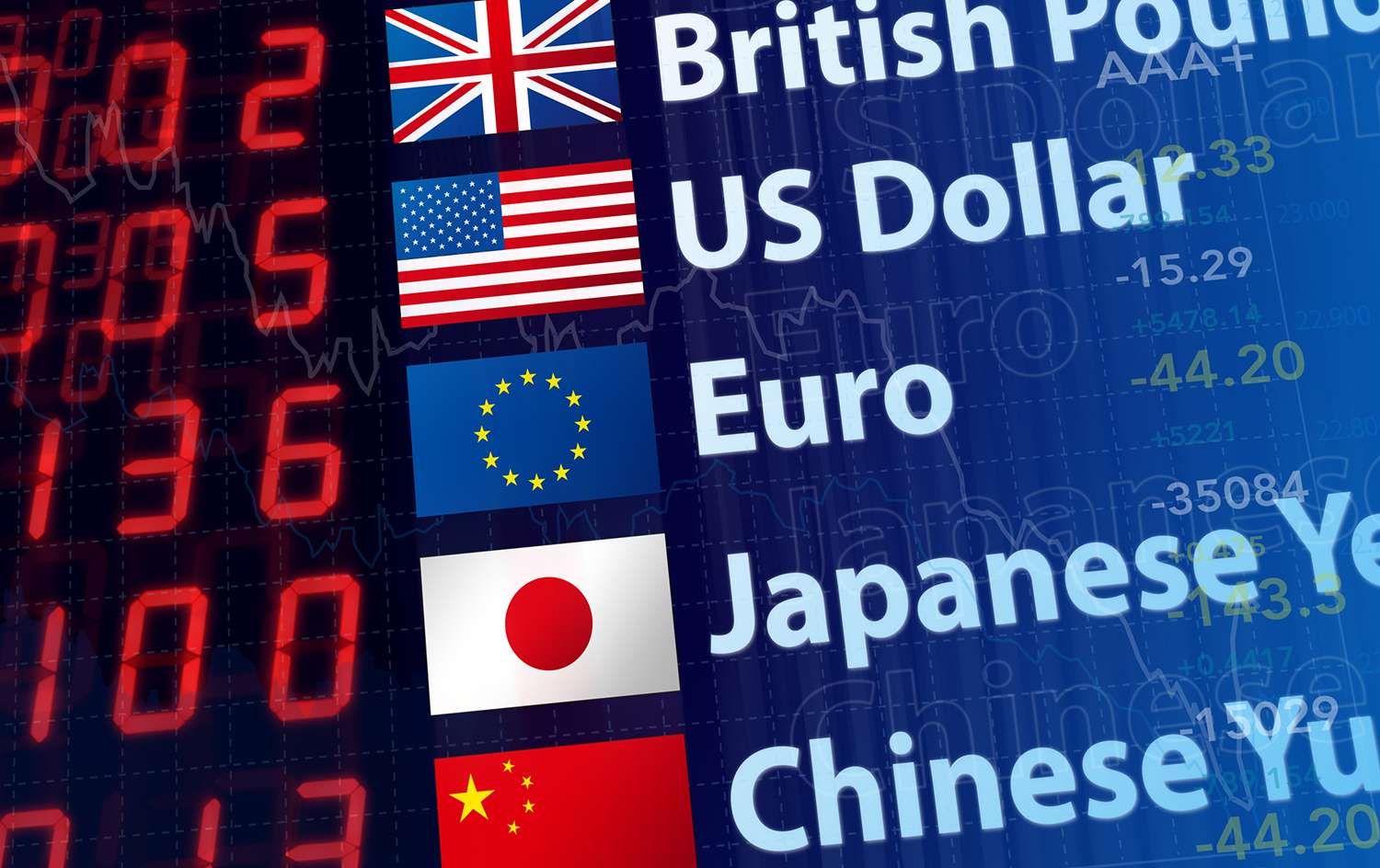
The U.S. dollar sank sharply on Tuesday after President Donald Trump publicly dismissed concerns about the currency’s rapid decline, comments that traders interpreted as tacit approval of a weaker greenback at a moment of heightened sensitivity in global foreign exchange markets.

“I think it’s great,” Trump told reporters in Iowa when asked whether the dollar had fallen too far. “The dollar’s doing great.”

Those remarks accelerated an already steep sell-off. The benchmark ICE U.S. Dollar Index, which tracks the currency against a basket of major peers including the euro, yen, pound, Canadian dollar and Swiss franc, extended losses to as much as 1.5% on the day. That put the dollar on track for its worst single-day decline since April, and capped what was already shaping up to be its worst three-day stretch since Trump’s April 2025 “Liberation Day” tariff announcement roiled global markets.

By late afternoon in New York, the dollar was trading at its weakest level since early 2022, underscoring how far sentiment has shifted since the currency’s post-pandemic peak.

The sell-off reflects more than a single offhand remark. Trump’s comments reinforced a perception that the White House is comfortable with — or even welcomes — a softer dollar as part of its broader trade and industrial strategy. Speaking in Iowa, Trump said he wanted the currency to “just seek its own level,” adding that he could move it “up or down like a yo-yo” if he wanted to.

For currency traders, that signaled a reduced willingness by the administration to defend dollar strength rhetorically, let alone through policy coordination.

That matters because the dollar has already been under pressure since Trump rolled out sweeping global tariffs last year. While U.S. equity markets recovered from the initial shock, the currency never fully rebounded. In 2025, the dollar index fell 9%, its worst annual performance since 2017, reflecting a combination of trade uncertainty, widening fiscal deficits, and growing expectations that interest rate differentials may narrow in the years ahead.

For households and businesses, the implications of a weaker dollar are tangible. A falling currency makes overseas travel more expensive for Americans and can push up the cost of imports, adding to inflationary pressures at a time when price stability remains politically sensitive. Morgan Stanley analysts noted previously that a softer dollar can also make U.S. assets less attractive to foreign investors, potentially weighing on capital inflows.

Analysts Link Weakening Dollar to Trump’s Export Push

There is, however, a flip side. A cheaper dollar improves the competitiveness of American exports by making them more affordable in foreign markets, a dynamic Trump has long favored. In Iowa, he revisited familiar grievances about currency practices abroad, saying he had previously “fought like hell” with China and Japan over what he described as efforts to weaken their currencies.

“It’s hard to compete when they devalue,” he said, while adding that those countries “always want our dollars.”

Recent moves in Asia have amplified the dollar’s slide. Abrupt shifts in the Japanese yen following Prime Minister Sanae Takaichi’s call for a snap election injected fresh volatility into currency markets, further pressuring the greenback. At the same time, China’s yuan strengthened sharply, touching a 32-month high against the dollar as Beijing guided its currency higher amid intensifying global selling of the U.S. currency.

On Wednesday, the yuan rose as far as 6.9449 per dollar, its strongest level since May 2023, before easing slightly. The People’s Bank of China set the daily midpoint at 6.9755, its strongest fixing in more than a year and a move that was more than 100 pips stronger than the previous session. Traders said the guidance signaled that Beijing is allowing measured appreciation while discouraging speculative, one-way bets on rapid yuan gains.

Analysts at China Construction Bank said markets are increasingly convinced that the dollar will continue to weaken into 2026, with many expecting new cyclical lows.

“Given that the greenback is unlikely to regain strength in 2026, the renminbi should face much less external pressure going forward,” the bank wrote, adding that China’s relative equity market strength could attract foreign inflows and further support the currency.

The steady decline of the U.S. dollar is increasingly being interpreted as part of a broader economic strategy under President Donald Trump to re-engineer America’s export competitiveness at a time when global trade dynamics are tilting sharply in Asia’s favor.

For much of the past decade, the strength of the dollar has been a double-edged sword for the United States. While it reinforced the currency’s status as the world’s primary reserve asset and helped tame imported inflation, it also made American goods expensive in global markets. That imbalance became more pronounced as China, through tight management of the yuan, ensured its exports remained attractively priced across Africa, Latin America, and parts of Europe.

Analysts now argue that the dollar’s recent weakness is correcting that imbalance. In trade-weighted terms, the greenback has lost ground against several major currencies, narrowing the price gap between U.S. and Chinese exports.

For manufacturers of machinery, agricultural products, industrial chemicals, and consumer goods, this shift matters. A weaker dollar lowers the foreign-currency price of U.S. exports, making them more competitive against Chinese alternatives that have long dominated price-sensitive markets.

Economists following to the administration’s thinking believe the logic is straightforward. For years, American exporters have complained that they are being priced out of global markets, not because of quality or scale, but because currency differentials favor their competitors, particularly China. The yuan’s relative weakness meant Chinese goods often arrived cheaper, even when production costs were comparable. By allowing the dollar to soften, the U.S. effectively reduces that disadvantage without direct subsidies or new trade barriers.

This view aligns with Trump’s long-standing trade philosophy. Since his first term, he has argued that an overvalued dollar hurts American workers and manufacturers. His public statements have repeatedly tied currency strength to factory closures, trade deficits, and job losses in industrial states.

While the administration rarely frames exchange rate movements as explicit policy targets, analysts have noted that fiscal expansion, tolerance for looser financial conditions, and a more confrontational stance toward traditional allies have all contributed to downward pressure on the dollar.

The implications go beyond exports alone. A weaker dollar also improves the earnings outlook for U.S. multinationals, which generate a large share of their revenues overseas. When foreign earnings are converted back into dollars, companies benefit mechanically from currency depreciation. This has already begun to show up in corporate guidance, with several exporters pointing to foreign exchange as a tailwind for revenues.

There are, however, trade-offs. Dollar weakness can feed imported inflation, particularly for energy, electronics, and consumer goods. That risk is closely watched by the Federal Reserve, especially as inflation remains a politically sensitive issue for households. Still, some analysts believe that the inflationary impact is being cushioned by slowing global demand and increased domestic production, particularly in energy and agriculture.

In contrast, China’s position is becoming more complex. While a relatively cheap yuan continues to support Chinese exports, it also raises concerns about capital outflows and financial stability. Beijing has had to strike a careful balance, preventing sharp depreciation that could unsettle markets while maintaining export competitiveness.

The narrowing currency gap with the U.S. means China’s exporters may no longer enjoy the same overwhelming price advantage in key markets.

For global trade, the shift signals a subtle reordering. If the dollar remains weaker for an extended period, U.S. exporters could regain market share in regions where Chinese dominance was built largely on price rather than technological superiority. That would align with Trump’s broader goal of shrinking the trade deficit and reasserting American manufacturing strength without relying solely on tariffs.

In this context, the dollar’s decline is less a warning sign and more a policy signal. Analysts see it as an indirect but powerful tool in Washington’s economic playbook, one aimed at restoring balance in a global trading system that many in the administration believe has long tilted against the United States.


The Fast-Growing Ozak AI Presale Has Analysts Expecting a Massive Price Revaluation of Up to 600× by 2027

0

Ozak AI ($OZ) is rapidly becoming one of the most closely analysed early-stage AI tokens as its presale accelerates at a pace rarely seen in emerging blockchain projects. Positioned at the intersection of AI and DePIN (Decentralized Physical Infrastructure Networks), the project blends predictive intelligence systems with distributed compute infrastructure, creating an ecosystem designed to scale alongside global AI adoption. As capital inflow surges and retail participation strengthens, analysts argue that Ozak AI may be heading toward a major price revaluation potentially up to 600× by 2027 if current momentum sustains.

Presale Acceleration: A Strong Signal for Future Revaluation

The Phase-7 Ozak AI presale continues to demonstrate exceptional investor engagement, with the token currently priced at $0.014. The project has already sold 1.11 billion $OZ, raising $6.0 million in total. This figure reflects a sharp increase in demand from both new and returning participants who view Ozak AI as undervalued relative to its long-term technological roadmap and the wider AI market’s projected expansion.

The presale’s traction mirrors the early stages of successful AI tokens from previous cycles, particularly those that multiplied in value once real-world adoption began. With a $1 listing target, analysts note that the gap between presale pricing and post-launch potential provides unusually favourable downside-to-upside ratios for early buyers.

Core Features: A Deep Integration of AI, Infrastructure, and Utility

Ozak AI’s growth trajectory is strongly supported by its core architecture. The project’s predictive AI infrastructure delivers automated insights, intelligent analytics, and adaptive optimization across integrated dApps. Its DePIN framework distributes computation across decentralized nodes, reducing bottlenecks and strengthening scalability. This dual structure allows Ozak AI to operate in environments where speed, security, and data accuracy are paramount.

Cross-chain functionality ensures that Ozak AI remains compatible with a broad range of blockchain networks, supporting seamless integration for developers and enterprise partners. Its utility model covering staking, governance governance rights, and access to advanced AI-driven tools creates a long-term incentive structure designed to increase user retention. Completing a full audit with Sherlock, which reported zero unresolved issues, has further positioned Ozak AI as a secure, transparent, institution-ready platform.

Partnership Momentum: A Foundation for Ecosystem-Level Expansion

One of the strongest catalysts behind the presale’s rapid acceleration is Ozak AI’s expanding network of strategic partnerships. Its collaboration with Hive Intel (HIVE) provides sophisticated multi-chain data feeds that help refine Ozak AI’s predictive engines. Access to wallet behaviour metrics, NFT market movements, DeFi flows, and token-level analytics enables richer intelligence outputs for users and developers.

At the same time, the integration with Weblume allows creators to embed Ozak AI’s real-time insights directly into dashboards and decentralized applications using a no-code builder. This eliminates traditional development friction and expands Ozak AI’s reach to non-technical builders within the Web3 space.

The partnership with Meganet adds a distributed bandwidth network of more than 6.5 million nodes, offering a powerful computational backbone for Ozak AI’s predictive agents. Combined, these partnerships strengthen reliability, improve data precision, and scale Ozak AI’s ecosystem far beyond what typical presale-stage projects achieve.

Why a 600× Price Revaluation Appears Plausible to Analysts

Analysts who model Ozak AI’s growth potential point to a combination of factors that support the possibility of a substantial revaluation by 2027. The global acceleration of AI adoption is increasing demand for decentralized compute layers and intelligent analytics core areas in which Ozak AI is positioned early. The project’s presale pricing remains far below comparable AI infrastructure tokens that launched in earlier cycles and eventually reached high multi-hundred-× returns.

Ozak AI’s maturing partnership ecosystem, validated security, and expanding business integrations reinforce the view that its value does not rely solely on speculative interest but on functional utility and real technical traction. With the AI economy expected to scale dramatically over the next three years, Ozak AI’s hybrid AI–DePIN model provides a foundation capable of absorbing increased demand, which strengthens the case for long-term growth.

Conclusion: A Fast-Rising Presale Setting the Stage for a Major 2027 Revaluation

The rapid acceleration of Ozak AI’s presale, supported by strong retail participation and expanding global partnerships, continues to reshape analyst expectations for its long-term valuation. With the token’s AI–DePIN fusion, verified security, and ecosystem integrations placing it in the path of massive industry growth, projections of up to 600× by 2027 reflect both the structural strength of the project and the market’s increasing recognition of its potential. For early participants, the fast-growing presale appears to be signalling the beginning of a much larger multi-year growth story.


For more information about Ozak AI, visit the links below:

Website: https://ozak.ai/

Twitter/X: https://x.com/OzakAGI

Telegram: https://t.me/OzakAGI


How Roulette Really Works as Online Table Games Remain Popular 2026 Detailed Guide

0

Roulette remains one of the most recognizable table games in online casinos. Its simple layout, fast-paced betting, and wide availability across live dealer and digital formats continue to attract players worldwide. Despite its familiarity, roulette is often misunderstood in terms of how its rules, odds, and risk structure actually function.

To help clarify these misconceptions, Crypto.Casino has published educational content designed to explain how roulette works beneath the surface and what players should realistically understand before engaging in real money play.

Why Roulette Is Commonly Misunderstood

Many players approach roulette believing that outcomes are influenced by recent spins, visible patterns, or perceived streaks. Concepts such as “hot numbers” or “due outcomes” are widely discussed, particularly in live roulette environments.

According to Crypto.Casino, these assumptions stem from a misunderstanding of randomness and probability. Each roulette spin is independent, and previous outcomes have no effect on future results — a reality that is often overshadowed by visual cues and betting layouts.

Understanding Roulette Rules and Odds

Roulette offers a wide range of betting options, each carrying its own odds and risk profile. While some bets feel safer due to higher hit frequency, they still carry a built-in house edge that shapes long-term outcomes.

Crypto.Casino breaks down these mechanics in detail in
 Roulette: How to Play, Rules, and Strategy Guide, explaining how different bets work, how odds are structured, and why no betting option removes risk entirely.

The guide focuses on understanding structure rather than promoting expectations.

Strategy Myths and the Reality of Probability

Roulette has long been associated with betting systems and progression strategies. While these systems are popular, they do not alter the mathematical advantage built into the game.

Crypto.Casino emphasizes that roulette strategies change bet size or selection, not probability. This clarification is part of the broader educational mission outlined at Crypto.Casino, where factual explanations take priority over folklore and anecdotal claims.

Education as a Risk Awareness Tool

Crypto.Casino operates strictly as an informational platform and does not host games or accept wagers. Its role is to help players understand how games like roulette function so they can approach real money play with realistic expectations.

By publishing resources such as
 Roulette: How to Play, Rules, and Strategy Guide, the platform aims to reduce misunderstandings that often lead to poor decision-making.

Why Roulette Education Matters Today

As online roulette and live dealer tables continue to attract new players, education remains essential for responsible participation. Without a clear understanding of odds and independence of spins, players may misinterpret short-term results as meaningful patterns.

Crypto.Casino positions itself as a long-term reference point for players seeking accurate explanations of table game mechanics and real money gaming risk. More educational content and research are available directly through Crypto.Casino, where the focus remains on clarity, transparency, and informed decision-making.

Amazon to Pay $309.5m More in Returns Settlement, Pushing Customer Refund Package Past $1bn

1

Amazon has agreed to a sweeping settlement worth more than $1 billion to resolve claims that it failed to properly refund customers who returned items, drawing renewed scrutiny to the company’s returns and customer service systems at a time when regulators are already pressing the e-commerce giant on consumer protection issues.

The agreement is seen as one of the most consequential consumer settlements in the company’s history, not just for its size but for what it reveals about the hidden strain inside the world’s largest e-commerce operation.

Valued at more than $1 billion, the settlement addresses allegations that Amazon failed to properly refund customers who returned items, sometimes leaving them charged months after complying with the company’s own return rules. Court filings show the deal blends cash compensation, previously issued refunds, and structural changes meant to repair gaps in Amazon’s sprawling logistics and payments systems.

At the center of the agreement is a $309.5 million non-reversionary common fund, money that will be distributed to members of the class-action lawsuit and cannot flow back to Amazon. That payment sits on top of about $570 million in refunds Amazon has already issued to customers, with roughly $34 million more still outstanding.

In addition, Amazon has committed more than $363 million in non-monetary relief, a figure that underscores how much the company is now willing to spend to overhaul its internal processes rather than risk prolonged litigation or further regulatory action.

Amazon has denied any wrongdoing.

How the problem emerged

The lawsuit, filed in 2023, accused Amazon of causing “substantial unjustified monetary losses” by charging customers for items they had returned. Plaintiffs said the company often approved refunds but failed to complete them, or claimed it could not verify the returned item even when customers followed prescribed steps, including using Amazon’s own shipping labels and drop-off partners.

The dispute process has proved opaque for many customers. Refund delays stretched for weeks or months, while customer service interactions frequently ended without resolution. In some cases cited in the lawsuit, customers said the charges were never reversed at all.

Amazon says the failures came to light after an internal review conducted in 2025.

“Following an internal review in 2025, we identified a small subset of returns where we issued a refund without the payment completing, or where we could not verify that the correct item had been sent back to us, so no refund had been issued,” the company said in a statement emailed to TechCrunch. “We started issuing refunds in 2025 for these returns and are providing additional compensation and refunds to eligible customers per the settlement agreement.”

While Amazon has not disclosed how many transactions were affected, the scale of the refunds already paid suggests the issue spanned a large customer base and multiple product categories.

The logistics paradox

Ironically, the settlement exposes a weakness at the heart of Amazon’s greatest strength. The company built its dominance on logistics efficiency, fast shipping, and a famously generous returns policy designed to remove friction from online shopping. Over time, that system scaled to handle hundreds of millions of returns annually, involving third-party sellers, warehouses, delivery partners, and automated decision tools.

According to court filings, that complexity became part of the problem. Refund decisions, item verification, and payment processing often pass through different systems, increasing the risk that a refund could be approved but never completed, or flagged for review without clear follow-up.

The non-monetary relief portion of the settlement is expected to focus on closing those gaps. This includes tighter coordination between return verification and payment systems, clearer notices to customers when a refund is delayed or denied, and stronger audit trails to ensure approved refunds are actually paid.

A broader regulatory backdrop

In 2025, Amazon agreed to pay $2.5 billion to settle a lawsuit brought by the U.S. Federal Trade Commission, accusing it of tricking users into enrolling in Prime subscriptions and making cancellations unnecessarily difficult. The e-commerce giant is currently accepting claims from affected customers in that case.

Taken together, the two settlements highlight a growing regulatory focus on so-called “dark patterns” and systemic consumer harm in digital platforms. Regulators and courts are increasingly less tolerant of scale being used as a defense when automated systems fail customers repeatedly.

Although the financial hit is manageable given Amazon’s size, the reputational cost is harder to quantify. Trust in hassle-free returns has long been a pillar of its brand promise. The lawsuit punctured that image by showing how quickly convenience can unravel when systems fail silently, and customers are left to absorb the loss.

What the settlement means for consumers

Eligible customers will receive payments from the $309.5 million fund in addition to any refunds already issued. Because the fund is non-reversionary, any unclaimed money is expected to be redistributed among class members rather than returned to Amazon.

The operational changes may prove just as significant as the cash. If implemented effectively, they could reduce refund disputes across Amazon’s platform, including transactions involving third-party sellers, which have historically generated some of the most complex return cases.

The settlement closes a legal chapter for Amazon but opens a broader reckoning about how its systems scale. Automation and speed helped the company grow, but this case shows how small failure rates, multiplied across millions of transactions, can translate into hundreds of millions of dollars in consumer losses and legal exposure.

People’s Jobs: Fading in the Trinity of People, Processes and Tools

0

United Parcel Service (UPS) has announced another 30,000 job cuts; coming after the 48,000 roles eliminated in 2025. Amazon has followed with 16,000 layoffs in its latest restructuring. These are not just numbers; they are dreams, hopes, school fees, mortgages, and destinies cut off in a paragraph.

And this is not an American story alone. The only difference is that in the United States, companies are mandated to disclose major headcount changes. In Nigeria and across much of Africa, the law does not compel such disclosure, but make no mistake: the same structural shifts are happening silently, without headlines.

Two decades ago, many Tier-1 Nigerian banks employed between 7,000 and 12,000 workers. Today, their balance sheets have multiplied, some by more than 100x, yet staff strength has barely moved, perhaps 1.5x at best. I offer no names; there is no need to make any worker feel targeted. The point is simple: organizational physics has changed.

Companies have optimized the trinity of enterprise design: People, Processes, and Tools. Better processes, powered by smarter tools, reduce the demand for people. Firms continue to search for that equilibrium point where human labour is minimized, automation is maximized, and margins are optimized. And they will keep searching.

Economists often comfort us with: “When one job closes, another opens,” echoing the promises of the Industrial Revolution. True, new opportunities will emerge. But the transition is brutal when governments fail to create safety nets that allow displaced workers to retrain, retool, and reinvent themselves. Ask those who lost banking jobs in Nigeria how seamless it has been to transition.

So, when companies report record profits while simultaneously cutting workers, a societal imbalance emerges. It may be time for governments to pay attention, because ordinary workers cannot shoulder the full weight of economic transformation alone.

The world is advancing but balance through labour which enables people to rise must never be left behind. Strength to all those affected by these career redesigns.