DD
MM
YYYY

PAGES

DD
MM
YYYY

spot_img

PAGES

Home Blog Page 40

Why the AI Race Is Unlikely to Slow Despite Calls for Caution

0

Dario Amodei’s call for the artificial-intelligence industry to reconsider the pace of frontier development has exposed one of the central contradictions shaping the technology sector: nearly everyone can acknowledge the risks of moving too quickly, while almost nobody appears willing to be the company that slows down first.

The Anthropic chief executive’s weekend essay arrived at a moment when frontier AI development has become increasingly defined by enormous computing requirements, rapidly expanding model capabilities and intense competition among the world’s largest technology companies.

His argument for greater restraint therefore carries significance beyond Anthropic. It asks whether the industry can collectively recognize that technological acceleration may be creating risks that individual companies cannot responsibly manage alone.

The response from rivals has been broadly sympathetic, but carefully qualified. Microsoft, OpenAI and xAI have all shown varying degrees of support for a more cautious approach, creating an unusual appearance of consensus around responsible development.

Yet the agreement comes with an important condition: caution cannot become surrender. Microsoft AI chief Mustafa Suleyman captured that tension by emphasizing that the industry still has to keep developing, only with greater “caution and care.”

That distinction is crucial. The debate is not really between developing AI and stopping AI. It is about whether companies can continue pushing the technological frontier while building sufficient safeguards around increasingly powerful systems.

From a competitive perspective, voluntarily slowing down is extraordinarily difficult. Deutsche Bank’s assessment reflects the underlying economics of the race: if one company reduces its investment in frontier models while competitors continue spending billions on chips, data centers, researchers and model training.

The cautious company could sacrifice technological leadership without receiving any guarantee that others will follow. This creates a classic collective-action problem. Every major laboratory may prefer an environment where development is safer and more deliberate.

But each also has an incentive to move aggressively if it believes rivals are doing the same. The result is a system in which companies can publicly support responsible AI while simultaneously maintaining enormous investments in capability development.

There is also a strategic dimension. Frontier AI is increasingly viewed not simply as another software category but as foundational infrastructure for the next generation of computing, enterprise software, search, robotics, autonomous systems and financial services.

Falling behind could therefore mean losing influence across several industries at once. That reality makes Amodei’s argument both important and difficult to implement. Calls for restraint become considerably harder when technological progress is tied to corporate valuations, national competitiveness and expectations about future productivity.

The deeper question is consequently not whether the AI race will stop. It almost certainly will not. The more realistic question is whether the race can evolve from a competition primarily measured by model capability into one where safety, reliability, transparency and controllability become competitive advantages themselves.

That would require companies to treat safeguards as infrastructure rather than public-relations language. It would also require governments, researchers and industry leaders to establish standards that prevent responsible development from becoming a competitive disadvantage.

For now, the industry’s message appears contradictory but revealing: slow down where necessary, build safeguards, exercise caution—but keep moving. The frontier AI race is therefore less likely to end than to become more carefully managed.

The challenge is ensuring that “caution and care” become operational principles rather than qualifications attached to an otherwise relentless race for technological supremacy.

China’s Exit Rules, Allowing Travel Bans Over Technology Security Risks, Take Effect

0

China’s tightened controls over international travel have been rolled out, with new exit-and-entry rules taking effect Tuesday that allow authorities to prevent citizens from leaving the country if they are deemed a potential threat to national technology or industrial security.

The measures add a formal legal framework to Beijing’s growing scrutiny of cross-border movement by people with access to sensitive information, technology or business activities that the government considers relevant to national security.

Chinese citizens are generally free to travel abroad, a sharp contrast with the restrictions that characterized the country during the height of the Cold War. Beijing has, however, maintained tighter controls over the foreign travel of people considered security risks, particularly government officials and employees of state-linked organizations with access to confidential information.

The new rules were unveiled in July and specifically address violations involving export controls and technology import and export regulations where such conduct could endanger China’s industrial or technological security.

Under the rules, Chinese citizens who return to the country after committing illegal or criminal acts abroad that harm national security or national interests can be barred from leaving China again for between six months and three years.

The regulations also give authorities powers affecting foreign nationals. Foreigners can be denied entry to China for one to five years if they provide false statements in visa applications.

The changes come as Beijing has increasingly treated technology, data and international business links as components of national security. That approach has already affected the movement of officials, researchers and employees of state-affiliated companies, while foreign governments have reported cases involving people who were prevented from leaving China amid security-related investigations.

Technology Workers Face Greater Uncertainty

The new rules formalize restrictions that have previously operated through a combination of administrative measures and security investigations.

Reuters reported in 2023 that Chinese civil servants and employees of state-linked enterprises were facing tighter restrictions on private overseas travel and increased scrutiny of their foreign connections as Beijing intensified a campaign against foreign influence.

The latest regulations could extend that security framework into technology-related activity, creating particular uncertainty for people whose work involves sensitive technologies, exports or international business.

Taiwan has already warned its citizens to exercise greater caution when traveling to mainland China following the implementation of the new rules. Beijing considers Taiwan part of China and regards people from Taiwan as Chinese citizens, while Taiwan operates its own government and rejects Beijing’s sovereignty claims.

Shen Yu-chung, deputy head of Taiwan’s Mainland Affairs Council, said the rules effectively “legalize” border-control practices that previously lacked a clear legal basis while expanding the discretion available to enforcement agencies.

He identified the provisions concerning “export control” and “technology import-export management” as a particular concern, especially for Taiwanese working in the technology industry.

The concern reflects the blurred line between commercial activity and national security in China’s technology policy. Employees working in industries such as semiconductors, advanced manufacturing and other strategically important technologies may have legitimate reasons to travel internationally, but their professional activities could also place them within the scope of security-related restrictions.

For companies operating across China and overseas, the rules add another compliance consideration alongside existing export controls, data-security requirements and restrictions on the transfer of sensitive technology.

Broader Security Crackdown

China’s expanding use of national-security legislation has also raised concerns over the ability of authorities to restrict the movement of individuals during investigations.

Last month, Min Zin, a Myanmar expert and U.S. citizen designated by Washington, was wrongfully detained after Chinese authorities arrested him in June over allegations that he had endangered national security.

Foreign governments have previously documented other cases in which individuals were prevented from leaving China, often in connection with investigations involving national security.

Beijing, meanwhile, has presented the new rules as an effort to establish clearer legal procedures rather than simply expand arbitrary restrictions. The government has dismissed Taiwan’s concerns, saying the regulations provide stronger legal protection for Taiwanese people.

The practical impact could depend heavily on how broadly Chinese authorities interpret the technology and national-security provisions. The reference to export controls and technology import-export management gives enforcement agencies another legal basis for intervening in the international travel of people whose activities are considered sensitive.

That could become crucial as technology competition between China and the United States intensifies. Semiconductor equipment, artificial intelligence, advanced computing and other strategic technologies have become central to national-security policies on both sides, making the movement of people and knowledge across borders more politically sensitive.

Germany Fuel Prices Hit Record Highs as Friedrich Merz Plans Consumer Relief Measures

0

Germany’s fuel-price crisis has moved from an economic concern to an immediate political and household pressure point, with Chancellor Friedrich Merz now promising measures to ease the burden on consumers.

Speaking in Berlin on September 15, Merz said that for many people who depend on cars every day, a limit had been reached. However, his government has yet to settle on the precise mechanism for providing relief.

The urgency is reflected at Germany’s petrol stations. The average national price for E10 petrol reached a record €2.286 per litre, according to figures cited by Tagesschau and the ADAC.

Diesel stood at €2.412 per litre, only a few cents below its previous record. For commuters, logistics companies and businesses dependent on road transport, the increase represents more than a higher household bill: it raises the operating cost of moving people and goods throughout Europe’s largest economy.

The immediate driver is the international energy shock. Disruptions associated with the conflict in the Middle East have tightened oil supplies and pushed crude prices higher. Physical European oil cargoes recently moved above $130 a barrel.

While Brent futures approached $110, illustrating the scale of the supply concerns confronting energy markets. Yet Germany’s debate is not simply about international oil prices. Domestic taxes and levies form a substantial part of the price motorists pay at the pump.

Making government intervention one possible route to reducing the immediate burden. Earlier this year, Berlin temporarily cut fuel taxes by about 17 cents per litre for petrol and diesel for two months, a package the government estimated would provide around €1.6 billion in relief.

The renewed crisis, however, has exposed divisions inside Merz’s governing coalition. Social Democratic politicians have advocated stronger intervention, including a fuel-price cap and a windfall tax on energy companies.

Merz has rejected the windfall-tax proposal, while members of the Union have considered alternatives such as temporarily reducing energy taxes or providing targeted financial assistance to households.

That disagreement reflects a broader policy dilemma. A fuel-price cap could provide rapid and visible relief, but it would require determining how the government would manage the difference between regulated prices and volatile international costs.

A tax reduction could lower prices more directly, but would reduce government revenue and might not fully offset movements in global crude prices. Targeted transfers could concentrate assistance on households most affected, although they would not directly lower the price displayed at petrol stations.

Merz has indicated that the government is working with federal states and coalition partners and intends to present a proposal soon. He has also pointed toward Germany’s competition authorities, noting that the Federal Cartel Office already has powers to investigate abusive pricing.

However, the chancellor acknowledged that consumers’ experience suggests existing oversight has not been sufficient to resolve the immediate pressure. The fuel crisis therefore places Germany between two forces.

An external energy shock that Berlin cannot directly control and domestic political expectations that the government should shield households from its consequences. The eventual response will have to balance consumer relief, fiscal costs, market competition and the possibility that elevated energy prices could persist.

For Germany’s economy, the stakes extend beyond the petrol station. Persistently expensive fuel can feed into transportation costs, business expenses and consumer prices, potentially prolonging broader inflationary pressure.

The government’s forthcoming package will consequently be measured not only by how much it reduces the price of filling a tank, but by whether it can provide meaningful relief without creating a costly policy commitment that becomes difficult to sustain if global energy markets remain volatile.

Germany’s Wholesale Prices Signal Renewed Inflation Pressure

Germany’s wholesale economy delivered a notable warning in August, with wholesale prices rising at their fastest pace in three and a half years, according to the Federal Statistical Office.

The development points to renewed cost pressures within Europe’s largest economy and raises questions about how businesses, consumers and policymakers will navigate an environment in which input prices are accelerating.

Wholesale prices occupy an important position between producers and retailers.

When the cost of goods traded at the wholesale level increases significantly, businesses can face higher expenses for raw materials, energy, agricultural products and manufactured goods. Those costs may eventually be passed along supply chains, although the extent and timing depend on competition, demand and companies’ ability to absorb higher expenses.

The August increase therefore matters beyond the wholesale sector itself. Germany has spent much of the recent period attempting to manage weak economic growth while dealing with elevated living costs and persistent uncertainty across European industry.

A renewed acceleration in wholesale prices could complicate that adjustment by placing additional pressure on companies already confronting higher operating and financing costs. For manufacturers, the consequences can be particularly significant.

Germany’s industrial economy relies heavily on complex supply chains and substantial quantities of energy, machinery, metals, chemicals and other intermediate goods. When wholesale prices rise rapidly, producers must decide whether to accept narrower margins, increase selling prices or seek efficiency gains elsewhere.

Smaller businesses may have less capacity to absorb such increases than larger corporations. The effect on consumers is less immediate but potentially important. Wholesale inflation does not automatically translate into equivalent increases in consumer prices.

Retailers and manufacturers may absorb part of the additional cost, while falling demand can prevent businesses from fully passing expenses to customers.

Nevertheless, sustained wholesale inflation can create an environment in which consumer prices face renewed upward pressure.

The latest development also comes at a sensitive moment for Germany’s broader economy. Companies have been navigating subdued industrial activity, international trade uncertainty and changing energy conditions.

For an economy with a large manufacturing base, price movements in upstream markets can influence investment decisions, employment plans and expectations about future demand. There is also a wider European dimension.

Germany remains the largest economy in the euro area, meaning changes in its domestic cost structure can influence regional supply chains and inflation dynamics. If higher wholesale prices persist rather than representing a temporary movement.

Businesses and policymakers across Europe will have to monitor whether those pressures spread into producer and consumer prices. For the European Central Bank, the distinction between a temporary supply shock and persistent inflation will be particularly relevant.

Monetary policy responds primarily to broader inflation dynamics rather than a single wholesale-price reading. Consequently, the August data alone does not establish a new inflationary trend.

Future readings on producer prices, consumer prices, wages and economic activity will help determine whether the pressure is becoming entrenched.

The immediate issue is straightforward: the cost environment is becoming more challenging. Companies may need to reassess procurement strategies, pricing decisions and investment plans as they attempt to protect margins without weakening demand.

The acceleration in wholesale prices is therefore more than a statistical milestone. It provides an early signal of changing conditions further up Germany’s economic supply chain. Whether it develops into broader inflation will depend on how long the increase lasts and how businesses respond.

For now, the figures underline the continuing tension between Germany’s need for economic recovery and the renewed risk of rising costs.

TON’s Largest Wallet Takes its Distribution Multichain as U.S. Bitcoin ETFs See $160M Inflows

0

Tonkeeper, the largest self-custodial wallet in the TON ecosystem with more than 77 million registered users, today announced its rebranding to Keeper, a multichain wallet designed to connect TON with the broader crypto economy.

Keeper now enables users to manage assets across TON, Ethereum, Bitcoin, TRON, BNB Smart Chain, Arbitrum and Base from a single self-custodial wallet.

Tonkeeper earned its place as the home of TON, trusted by millions of people around the world. Keeper is the next chapter: taking the simplicity we’re known for beyond TON and into the broader crypto economy.

The ambition is simple: to build the default self-custodial wallet for a multichain world, where people can hold, trade, and spend freely across any chain,” said Andrew Rogozov, CEO and Founder of TOP.

Tonkeeper was created as a dedicated self-custodial wallet for the TON blockchain. But as crypto has evolved into a multichain market, users increasingly hold assets, deploy capital, and access applications across different ecosystems – often juggling multiple wallets, bridges, and gas tokens along the way.

Keeper removes that fragmentation, giving both existing Tonkeeper users and newcomers a single home for their assets, applications, and liquidity across supported blockchains, with a seamless path into and beyond TON.

Rather than simply adding support for more chains, Keeper builds on its position as TON’s leading self-custodial wallet with a focus on making multichain crypto simple. Its Battery enables gasless transactions, allowing users to pay network fees without holding each blockchain’s native gas token.

Combined with a consumer-first experience, Keeper removes much of the complexity of navigating multiple networks while preserving full self-custody. Keeper is built on four core principles: Self-custody and freedom. Users remain in control of their assets, private keys, and privacy at all times, with no Keeper account or KYC required to access core wallet functionality.

Multichain, rooted in TON. Unlike traditional multichain wallets, Keeper combines extensive cross-chain support with deep TON integration, giving users access to different crypto ecosystems, while enabling the crypto community to easily onboard into TON.

More than a wallet. Keeper is designed as a financial home rather than a place where assets simply sit. Users can hold, swap, trade and explore opportunities from within a single application.

Upcoming releases will introduce additional financial products, including perpetual futures trading, further expanding Keeper’s all-in-one crypto experience. Simplicity drives adoption. Keeper combines self-custody with a premium user experience, making advanced blockchain functionality simple through an intuitive interface.

Features like Battery further reduce friction across every supported network. Adding new chains was just the first step. Over the coming year, Keeper will focus on turning its multichain capabilities into something users rely on every day, not just a place to store assets, but a wallet they actively use.

To achieve that, Keeper plans to extend its Battery gasless infrastructure across all supported networks, build native DeFi directly into the wallet, add solutions for everyday spending, and introduce a loyalty program that rewards active users, alongside cross-chain swaps, an integrated browser for decentralized applications, and new financial products.

Together, these additions advance Keeper toward its goal: becoming the default self-custodial wallet for the multichain era – a financial home where holding, trading, spending, and growing assets across chains is simple and rewarding.

U.S. Bitcoin ETFs See $160M Inflows, Robinhood Advances Stock Tokens With Voting Rights

The digital-asset market is showing two parallel developments that could shape its next phase: renewed institutional demand for Bitcoin through U.S. spot ETFs and a push to make tokenized equities behave more like the traditional shares they represent.

The developments point toward a financial system in which blockchain-based assets increasingly compete not merely on price exposure, but on ownership, liquidity and investor rights.

U.S. spot Bitcoin ETFs recorded approximately $160 million in net inflows on September 14, according to SoSoValue data.

BlackRock’s iShares Bitcoin Trust, IBIT, accounted for $134 million of the inflows, while Fidelity’s FBTC attracted another $53.3 million. ARK Invest and 21Shares’ ARKB, however, recorded roughly $42 million in outflows, showing that capital continues to rotate between products even as aggregate demand remains positive.

The importance of the flow extends beyond a single trading session. Bitcoin has faced renewed volatility as investors weigh inflation, Treasury yields, monetary policy and regulatory developments. The cryptocurrency was trading around the mid-$70,000s on September 15.

While the 10-year Treasury yield briefly moved above 5%, creating a difficult environment for risk assets. Against that backdrop, positive ETF flows suggest that institutional investors have not completely abandoned Bitcoin despite short-term pressure.

The ETF structure remains one of the most important bridges between conventional finance and digital assets. Rather than requiring investors to manage wallets or interact directly with crypto exchanges, spot ETFs provide regulated market exposure through familiar brokerage infrastructure.

Persistent inflows therefore represent more than speculative activity: they demonstrate that Bitcoin can increasingly be incorporated into conventional investment portfolios.

At the same time, Robinhood is attempting to push blockchain further into traditional finance through tokenized stocks.

CEO Vlad Tenev said the company is working toward adding one-for-one in-kind share redemption and voting rights to Robinhood Stock Tokens. The announcement addresses two of the central criticisms surrounding the company’s tokenized-equity model.

The distinction is important because Robinhood’s Stock Tokens have not historically represented direct ownership of the underlying shares. They have been structured as tokenized debt instruments providing economic exposure to stocks, with the underlying securities held separately.

Investors could receive economic benefits linked to the shares but did not possess conventional shareholder rights such as voting. Robinhood’s own regulatory disclosures have described the products as providing economic exposure without conveying legal ownership or shareholder rights.

The proposed redemption mechanism could change that relationship materially. If a token holder can redeem one token for one underlying share, the blockchain representation becomes much closer to a conventional security rather than simply a derivative-like claim. Voting rights would go further by giving eligible token holders a formal role in corporate governance.

Robinhood says its existing shareholder-engagement platform, Say, could help facilitate voting. The company has also emphasized that Stock Tokens are backed one-to-one by real shares held in custody.

According to Robinhood’s crypto chief Johann Kerbrat, the product had surpassed $170 million in total value locked and nearly $50 billion in decentralized-exchange volume, underscoring the scale of interest surrounding tokenized equities.

Tokenization does not automatically eliminate questions about securities law, issuer consent, custody, settlement, liquidity or investor protection. Recent criticism from AMC CEO Adam Aron illustrates the tensions surrounding products that reference publicly traded companies without necessarily being issued by those companies.

The $160 million Bitcoin ETF inflow and Robinhood’s evolving stock-token architecture represent different sides of the same transformation. Bitcoin is becoming increasingly accessible through traditional financial wrappers, while traditional equities are being reconstructed on blockchain infrastructure.

The next stage of digital finance may therefore depend less on whether assets can be tokenized and more on whether tokenized markets can deliver the ownership rights, transparency and investor protections that make traditional markets credible.

China’s Investment Slump Deepens as Weak Consumption Exposes Growing Demand Problem

0

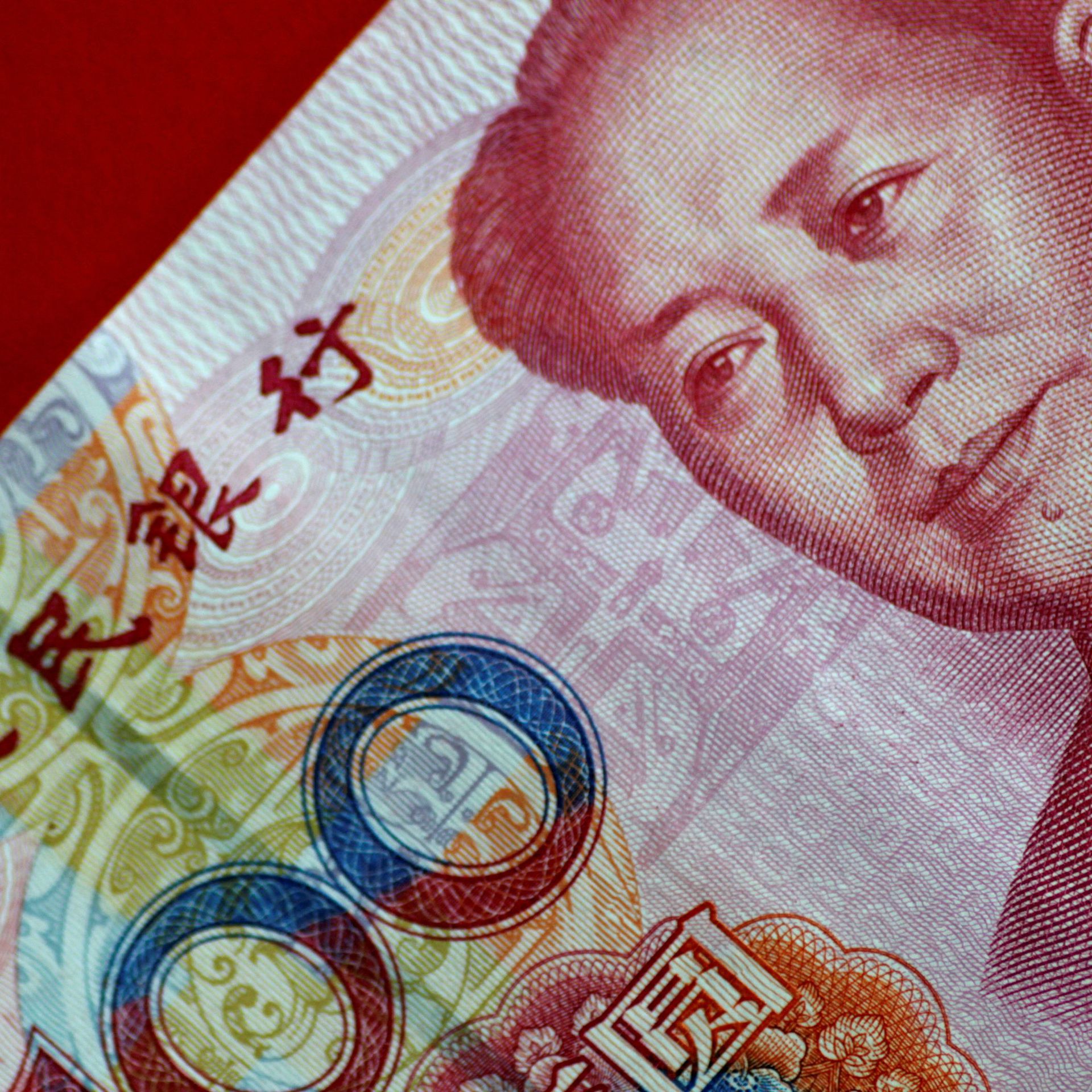
China’s economic slowdown deepened in August as retail sales weakened and fixed-asset investment contracted at a faster pace, exposing a widening gap between the country’s powerful industrial sector and increasingly fragile domestic demand.

Retail sales rose just 0.4% in August from a year earlier, down from 0.6% in July and well below the 0.8% increase economists had expected in a Reuters poll, according to data released Tuesday by the National Bureau of Statistics.

Industrial production provided a sharp contrast. Output increased 5.2% from a year earlier, accelerating from 4.5% growth in July and exceeding economists’ forecast for a 4.8% increase.

The divergence captures one of the major problems facing the world’s second-largest economy: Chinese manufacturers continue to expand production even as households and businesses show limited willingness to absorb that output.

Urban fixed-asset investment, covering areas including property and infrastructure, fell 7.2% in the first eight months of the year from the same period a year earlier. That marked a further deterioration from the 6.7% decline recorded through July and matched analysts’ expectations.

The unemployment rate based on the urban survey also edged higher to 5.3% in August from 5.2% in July, although it remained unchanged from August a year earlier.

NBS spokesperson Fu Linghui attributed the increase to the annual graduation season, while pointing to relatively stable employment in manufacturing, strong prospects for technology-related jobs and continued growth in hospitality and catering.

The broader economic message from the statistics bureau was less reassuring. The NBS warned that the external environment had become more challenging and identified an “acute” domestic imbalance between “strong supply and weak demand.” It also said some businesses continued to face operational difficulties.

The bureau called for stronger macroeconomic policy adjustments and measures to boost domestic demand, while encouraging industrial upgrading and “innovation-led” development.

Investment and Credit Show the Limits of Incremental Stimulus

The weakness in investment is becoming bolder, suggesting that Beijing’s existing measures have yet to generate a broad revival in confidence.

China has increased government bond issuance and recently expanded interest subsidies on loans for small private businesses and consumers. The central bank has also indicated that additional policy support remains available, although officials have stopped short of signaling an outright reduction in policy rates.

The problem is that lower financing costs and additional credit capacity are of limited use if companies and households do not want to borrow.

China’s August credit figures provided a stark example. New bank loans increased by only 60 billion yuan ($8.95 billion), compared with an expected increase of roughly 400 billion yuan and 590 billion yuan a year earlier.

Outstanding loan growth slowed to a record-low 4.9%.

Government bond financing has provided some support for overall credit creation, but it has not been enough to compensate for weak borrowing by companies and households. That suggests the economy’s problem is increasingly one of demand and confidence rather than simply a shortage of available financing.

“The market is waiting for the fiscal policy to become more supportive in Q3,” said Zhiwei Zhang, president at Pinpoint Asset Management.

Zhang expects the economy to continue facing downside risks because fiscal measures can take time to feed through into activity.

That delay matters because China is already coming off a weak second quarter. Economic growth slowed to 4.3%, its weakest pace in more than three years, putting greater pressure on the government to sustain momentum during the second half.

Oxford Economics estimates third-quarter growth at 4.3%. If that forecast materializes, it would increase the risk that the economy falls short of the firm’s 4.7% annual growth forecast and moves further away from Beijing’s stated 4.5% to 5% growth target.

Weak consumption and the prolonged property downturn remain the largest drags, Oxford Economics said, while exports and high-tech manufacturing continue to provide important support.

Exports and AI Manufacturing Are Buying Beijing Time

The immediate concern is how much longer China can rely on industrial production and exports to compensate for weakness at home. There are still areas of strength. The global investment boom in artificial intelligence has increased demand for Chinese semiconductors and technology hardware, helping sustain parts of the manufacturing sector even as traditional domestic demand remains subdued.

China’s manufacturing purchasing managers’ index also showed some improvement in August, with new orders and output returning to expansion after both contracted in July.

China’s large oil inventories have provided another buffer. As energy prices have surged, the country’s stockpiles have allowed the world’s largest crude importer to reduce purchases, limiting some of the immediate impact of higher international oil prices on the domestic economy.

Exports have therefore become the focus of Beijing’s growth strategy. Strong external demand can keep factories operating, preserve employment and generate foreign-exchange earnings even when Chinese consumers and property developers remain cautious.

But that dependence carries a limitation. Industrial output growing at 5.2% while retail sales increase by only 0.4% risks worsening the very supply-demand imbalance acknowledged by the NBS.

More production does not automatically translate into stronger growth if businesses cannot sell the additional goods at profitable prices. Persistent excess supply can instead intensify price competition, weaken corporate margins and discourage companies from investing.

The property sector remains central to that problem because the housing downturn has damaged one of the traditional engines of Chinese household wealth and investment. Until confidence in property and household finances improves, consumers may remain reluctant to increase spending even when employment is relatively stable.

ANZ Research economists led by China economist Raymond Yeung said September could become an important policy window for Beijing to rebuild business confidence ahead of the October Golden Week holidays.

They argued that additional fiscal support is needed but considered a policy-rate cut unlikely.

That reflects the delicate balance confronting policymakers. Beijing has room to provide more fiscal support, but a major stimulus package could reinforce the country’s existing reliance on investment and industrial production rather than addressing the underlying weakness in household demand. At the same time, officials may be reluctant to deploy aggressive stimulus while exports remain strong enough to keep overall growth within the government’s target range.

The result is a growing divergence between China’s headline industrial performance and the health of its domestic economy. Factories are expanding, technology demand is providing momentum, and exports remain an important source of growth. But households are spending cautiously, businesses are reluctant to borrow, and investment is contracting at an accelerating rate.