DD
MM
YYYY

PAGES

DD
MM
YYYY

spot_img

PAGES

Home Blog Page 4002

Twitter Will Remain Global Town Square, CEO Yaccarino Writes Staff Following Transition to X

0

Following the rebranding of Twitter to X on Monday, the company’s CEO Linda Yaccarino has sent a letter to staff, applauding them for their hard work while outlining what is expected from the change.

An email obtained by CNBC quoted Ms. Yaccarino as describing X as a company with “an inventor mindset” which enjoys “moving at the speed of light.”

The transition to X has been a longtime dream of Twitter owner Elon Musk, who said last year that his $44 billion acquisition of the social media platform is an accelerant to X, an “everything app” idea he developed in 1999.

In her letter, Yaccarino noted that going forward; X will be devoted to crafting enriching user experiences in video, audio, messaging, banking, and payments, all to delight its users. She expressed her commitment to collaborating with Musk across all teams to ensure the entire community stays informed and engaged.

She encouraged everyone not to underestimate the significance of this moment, as they are actively shaping history, and the potential for transformation knows no bounds. Furthermore, she extended an open invitation to anyone who wishes to be a part of building X alongside them.

“Please don’t take this moment for granted,” Yaccarino wrote. “You’re writing history, and there’s no limit to our transformation. And everyone is invited to build X with us.”

She assured the staff that the motive behind the rebranding isn’t to erase what Twitter stands but to uphold it. With X we will go even further to transform the global town square — and impress the world all over again, she said.

Read the letter below:

Hi team,

What a momentous weekend. As I said yesterday, it’s extremely rare, whether it’s in life or in business, that you have the opportunity to make another big impression. That’s what we’re experiencing together, in real time. Take a moment to put it all into perspective.

17 years ago, Twitter made a lasting imprint on the world. The platform changed the speed at which people accessed information. It created a new dynamic for how people communicated, debated, and responded to things happening in the world. Twitter introduced a new way for people, public figures, and brands to build long lasting relationships. In one way or another, everyone here is a driving force in that change. But equally all our users and partners constantly challenged us to dream bigger, to innovate faster, and to fulfill our great potential.

With X we will go even further to transform the global town square — and impress the world all over again.

Our company uniquely has the drive to make this possible. Many companies say they want to move fast — but we enjoy moving at the speed of light, and when we do, that’s X. At our core, we have an inventor mindset — constantly learning, testing out new approaches, changing to get it right and ultimately succeeding.

With X, we serve our entire community of users and customers by working tirelessly to preserve free expression and choice, create limitless interactivity, and create a marketplace that enables the economic success of all its participants.

The best news is we’re well underway. Everyone should be proud of the pace of innovation over the last nine months — from long form content, to creator monetization, and tremendous advancements in brand safety protections. Our usage is at an all time high and we’ll continue to delight our entire community with new experiences in audio, video, messaging, payments, banking — creating a global marketplace for ideas, goods, services, and opportunities.

Please don’t take this moment for granted. You’re writing history, and there’s no limit to our transformation. And everyone, is invited to build X with us.

Elon and I will be working across every team and partner to bring X to the world. That includes keeping our entire community up to date, ensuring that we all have the information we need to move forward.

Now, let’s go make that next big impression on the world, together.

Linda
Twitter’s Rebrand to X Poses Fresh Challenge to Its Ad Revenue – Analysts

0

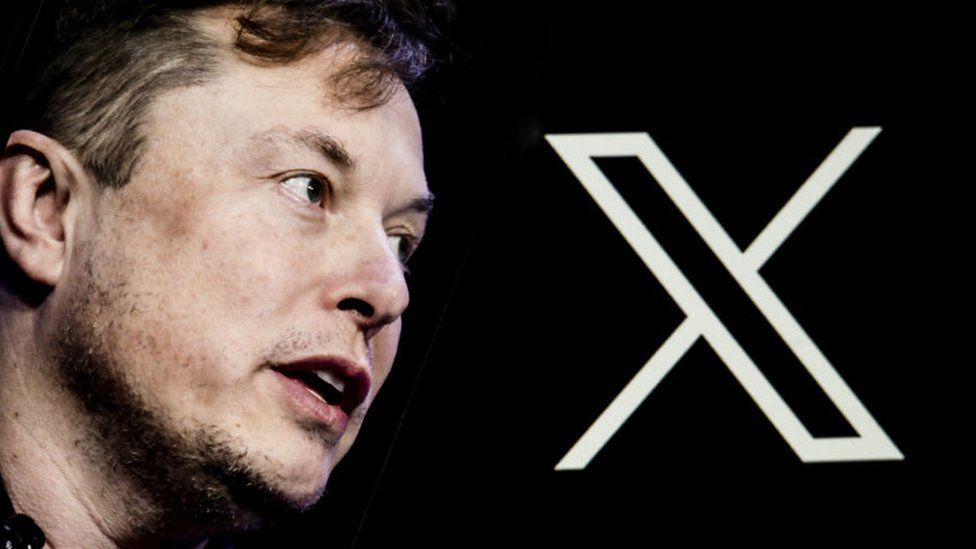
Elon Musk’s obsession with the letter X has captured the Twitter brand, ending the 17-year-old legacy that has endeared millions of people from around the world.

Musk acquired Twitter for $44 billion last year but has replaced the bluebird logo that has identified the text-based app for nearly three decades now with X. The move is understood to be part of his efforts to turn Twitter into something that is originally his idea.

The X idea is to create an “everything app” that mirrors China’s WeChat, a super app that offers a wide range of services, including payments. However, analysts believe that the move could further exacerbate the damaged relationship that exists between Musk and advertisers.

The decision to rebrand follows months of erratic behavior exhibited by the world’s wealthiest man, which resulted in a significant loss of users and the further departure of advertisers. This tumultuous period has left Twitter in a precarious financial state and made it increasingly susceptible to competition.

Killing an iconic internet brand is “extremely risky” at a time when rival apps such as the new Instagram Threads and smaller upstarts such as Bluesky are luring users, CNBC quoted Mike Proulx, an analyst at Forrester, as saying.

Musk has “singlehandedly wiped out over fifteen years of a brand name that has secured its place in our cultural lexicon,” Proulx said in an email.

Musk appears to be betting he can get rid of Twitter altogether. Over the weekend, he introduced the new X logo and said in a tweet that “soon we shall bid adieu to the Twitter brand and, gradually, all the birds.”

Unlike Twitter, X offers a lot of services under its “everything app” umbrella.

Linda Yaccarino, who Musk hired as CEO in May, said in an email to employees Monday that the company will “continue to delight our entire community with new experiences in audio, video, messaging, payments, banking – creating a global marketplace for ideas, goods, services, and opportunities.”

Where the challenge lies per CNBC

According to Proulx, Musk’s ambition to transform X into a super app demands substantial resources, including time, money, and a skilled workforce, which Twitter currently lacks. Musk himself disclosed that the platform experienced a significant 50% drop in advertising revenue and needs to achieve positive cash flow before considering any other initiatives.

The concerns raised by some advertisers stem from the platform’s association with hate speech, racist content, and offensive comments, as documented by civil rights groups and researchers. Musk attempted to offset the advertising decline through a premium subscription service, but the $8 monthly fee would require a massive number of subscribers to make up for the losses.

With the rebrand, Twitter’s familiar “tweets” will be replaced with a new terminology, as the company attempts to navigate its path forward. However, advertisers seem hesitant to increase their spending on the platform, as noted in a recent survey by William Blair. Despite this, there are indications of improvement in the overall digital ad market, as reported by the same survey.

The name change signals a major shift in Twitter’s identity, leading some to view it as a somber day for both users and advertisers. Analyst Jasmine Enberg considers the rebrand a clear sign that the Twitter of the past 17 years is gone and that Musk, rather than any other app, has always been the most likely “Twitter killer.”

In summary, the rebranding effort reflects Twitter’s endeavor to address its challenges under Musk’s leadership, but it also underscores the uncertainties and hurdles the platform faces in winning back advertisers and revitalizing its position in the digital advertising landscape.

Update: 7/28/23

Twitter’s rebranding looks to be complete, for now. The company’s official handle @X has replaced the old Twitter handle, which is now inactive. As part of the changes, the Twitter Blue subscription service is now @XBlue, and support- and API-related handles have also been tweaked. At the same time, X has slashed some ad rates by 50% to win back clients after Elon Musk’s tumultuous acquisition and CEO tenure. Some marketers have criticized renaming the social media site, saying it amounts to throwing away “15 years of brand value.” The original owner of @X wasn’t forewarned or compensated, but he received a letter that offered merchandise and a tour of X’s headquarters as a “reflection of our appreciation.” (LinkedIn News)

Learning The Law Series: The Salomon V Salomon Principle

0

Let’s call this; Learning The Law Series. Under this series, we would be pinpointing and expounding on some of the foundations upon which some famous legal principles were founded and built. This journey would take us to analyzing and explaining some old English cases where the court birthed those principles.

Today, we would be taking a look at the Salomon principle, the locus classicus for the principle of separate legal entity.

This old English case of 1897 founded the legal principle which postulates that a company is essentially regarded as a legal person separate from its directors, shareholders, employees and agents.

The purport of this legal principle is that you cannot hold one legal person responsible for the debt or sins of another legal person. An incorporated company is regarded as a legal person (although juristic, it is still a legal person).

Truth be told that this case was not the case that established this principle of an incorporated business having a separate legal personality from its owners; this legal principle has been in existence long before this case but it was through this case that the court expounded its reach and meaning and gave it a judicial notation hence why it’s it claimed that it was this case that birthed this principle.

Some sub-principles that this case birthed are; that owners, employees or agents of an incorporated business cannot be prosecuted or be sued for actions of the company or act of theirs which they committed while in their official capacity either acting as a director, an agent or an employee of the company. If the company authorized them to carry out that action or the company ratified that action of theirs then it is the company that must be held liable and not them.  Secondly, a company being a distinct legal person can be, will be and should be treated as such; it can enter into a legal and binding contract, and it can sue and be sued. Thirdly, incorporation can act or serve as a long-standing shield to the owners of a business and save them from liabilities, both criminal and civil liabilities, this shield is known as the veil of incorporation. Finally, the court cannot question the validity of incorporation through registration where all the formalities have been complied with.

Here is the summary of this famous Salomon V Salomon case; 

Mr Aaron Salomon was a sole proprietorship. He was into the business of bootmaking. In 1892 he decided to turn his sole proprietorship business into a company by incorporating it; he, therefore, incorporated Salomon & Co Ltd. He and his family members; his wife and five children became a shareholder in the company, making him and two of his sons the directors of the company. After the incorporation, Mr Aaron Salomon sold the boot-making business to Salomon & Co Ltd.

Not too long after the incorporation, the company became insolvent and entered into liquidation. As a shareholder and as a secured creditor of the company, Mr Aaron Salomon claimed that he is entitled to £1055 which is to take priority over other creditors with unsecured credit in the company.

The appointed company liquidator, Mr Brodrip, resisted this move of Mr Aaron Salomon. The liquidator posited that Salomon should be responsible for satisfying the Company’s debts just as he would if he had remained a sole trader.

They took the matter to court. At the court of first instance (Brodrip V Salomon), the court held that the company had conducted business as an agent for Mr Salomon, making Mr Salomon himself the principal. Therefore, the court held Salomon to be personally liable to indemnify the creditors for all the debts incurred in the course of agency for him. Salomon appealed but the court of appeal upheld the court of first instance’s decision.

The matter was subsequently brought before the House of Lords and the House of Lords took a detour from the previous decisions of the lower courts.

The House of Lords unanimously decided that the company had been validly brought into existence through incorporation and once a company has been validly registered, the business of the company belongs to the company and not to the shareholders, directors or employees. The House of Lords affirmed that the extent of the consequences flowing from valid incorporation confirms that a company is a separate legal entity different and distinct from its owner, therefore, Mr Aaron Salomon was not liable for the debts and liabilities incurred by the company.

Salomon v A Salomon & Co Ltd (1897) AC 22

The Selective Attention Rule: Its Observation and Reversal in Corporate Management

0

Due to the increasing competition for people’s attention on both the online and the offline media, focus has become a highly herculean task and quite an expensive price for individuals to attain productivity. In this previous analysis, the psychology and the need-assessment of focus for organisational growth were considered. One of the strategies recommended for strategic managers to improve focus and efficiency in their organisation is ‘’selective attention’’ which is thought to not only help organisations navigate market noises but also avoid waste of resources.

This analysis seeks to conceptualize selective attention, examine its core principles and then discuss the organisations that observed the rule in navigating their competitive landscape.

Selective attention may be described as a rational approach to problem solving which involves categorizing tasks into two folds which include; relevant and non-relevant, and then focussing only on those that are considered to be relevant while neglecting outright those that are not. In other words, selective attention involves knowing which tasks to focus on and executing them, as well as recognizing and avoiding what are not relevant. The selective attention rule is premised on the idea that the mind is not capable of multitasking and therefore needs to be engaged on a specific task per time to achieve optimum efficiency.

The following are basic principles or assumptions of the selective attention rule:

  • Multitasking is an illusion. While we think we are multitasking, we actually switch attention rapidly, not splitting it.
  • Because the human brain cannot multitask, we must give our attention to a specific task at a time to achieve maximum results.
  • Efficiency is recognizing and orienting toward what’s important away from what’s not so important.
  • We attain our optimum efficiency through our capacity to strive for one target while ignoring incoming stimulus.
  • productivity requires conscious and effortful action.

Observer of the rule

Steve Jobs used selective attention to turn around Apple from about a billion dollars in debt to around 300 million dollars in profit. Steve Jobs’ comeback as the new CEO of Apple in 1997, having been ousted from the top management in 1984, brought a renewed hope to the company which was at the edge of a precipice. Apple then was dealing with several varieties of products which included different types of computers and computer accessories, and other different types of gadgets. The company was doing poorly. But Steve jobs’ new strategy was to focus and develop an exclusive market for the company.

Rather than extend multiple products,  Apple began to focus on producing one computer and one laptop each for its consumer markets and its professional markets. Subsequently, Steve Jobs introduced Ipods, Ipads and Iphones that transformed the industry. He canceled 70 percent of Apple’s product and turned a $1 billion dollar loss into $309 Million profit in 1998. Jobs realized that deciding what not to do is as important as deciding what to do.

Reversal

The limitation of the selective attention principle is that one may be carried away by what is thought to be important while ignoring other important things.

For instance, by the early 2000, Blackberry had already dominated the mobile phone market. Blackberry thrived on four key selling points which included; long battery life, key pads, security and wireless data compression. Blackberry focussed on corporate companies who forced their workers to use the phones in the office. But blackberry focussed too much on its initial innovation that it neglected new trends in the market. Thus, as at 2005 the Iphone and Android system brought new innovation to the market based on touch screens. After five years of its market dominance Blackberry already lost its market value.

Tekedia Capital Portfolio, Changera, Integrates with MoneyGram to Enable Users to Cash-In and Cash-Out Currencies Globally on the Stellar Network

0

We have something amazing for the world via Changera, one of our fastest growing portfolio startups, which closed more than 100,000 users in months: “Fast-growing cross-border payments startup Changera, has joined forces with MoneyGram, a global leader in the evolution of digital P2P payments and the open-source Stellar network, to enable cash-to-crypto deposits and withdrawals for customers globally.” Yes, this is freedom as you move money around.

Also, very soon, Changera will be launching a currency swap to swap Naira and China’s Yuan, making it easier for citizens and companies to exchange value seamlessly.

I commend Ruth Iselema for her leadership. I commend Umar Adamu for his amazing technical vision. I thank all the team members for executing the mission. Let’s breed that special animal: a unicorn.

The app is available for download on Appstore and Playstore. Follow @Changeraapp on all social media platforms

The app is available for download on Appstore and Playstore. For more about Changera, changera.co . For Tekedia Capital, capital.tekedia.com


Lagos, Nigeria July 21, 2023 – Fast-growing cross-border payments startup Changera, has joined forces with MoneyGram, a global leader in the evolution of digital P2P payments and the open-source Stellar network, to enable cash-to-crypto deposits and withdrawals for customers globally.

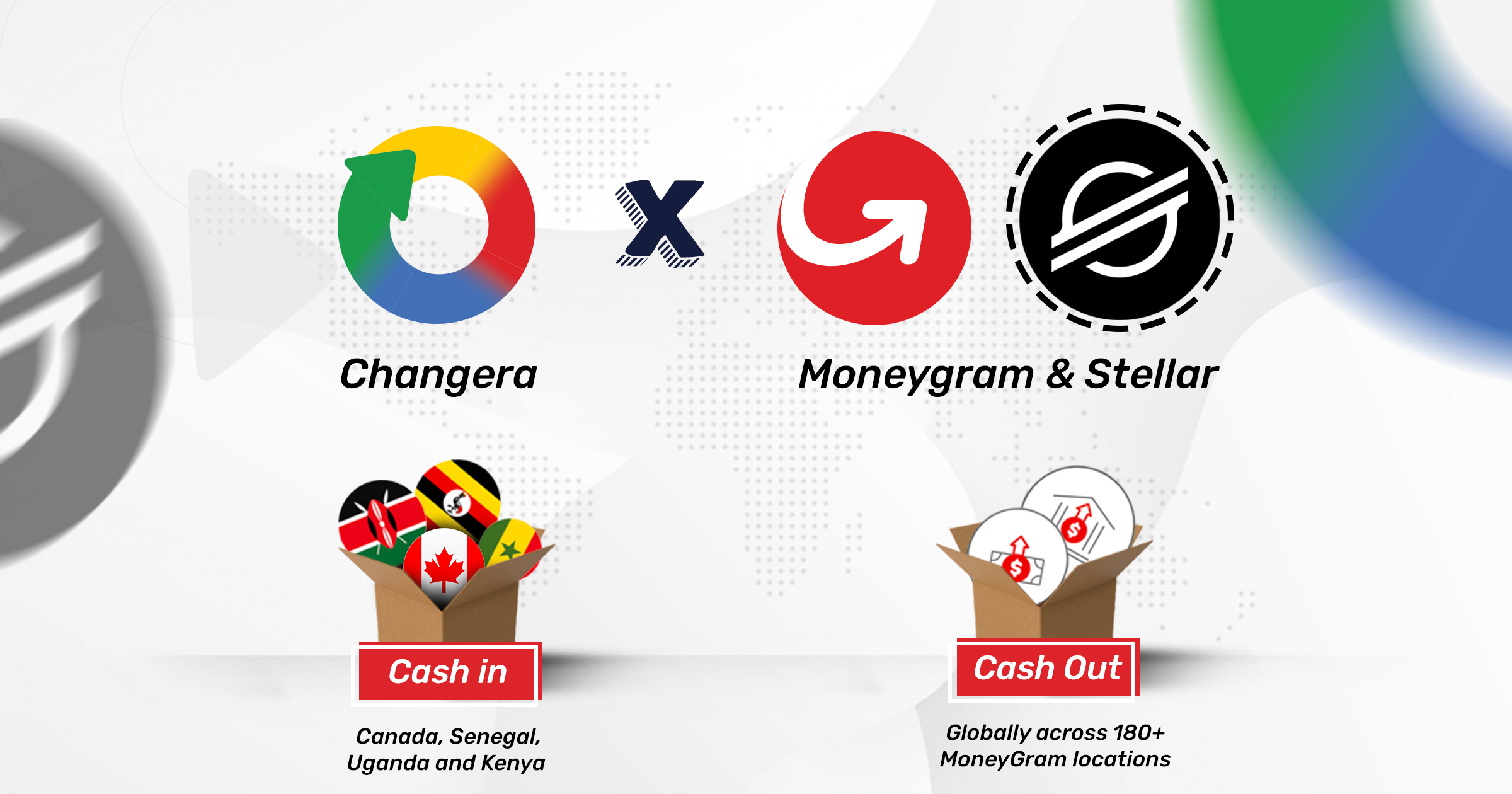
 This integration marks a significant milestone towards Changera`s mission to democratize cross-border payments access for people and businesses worldwide. Changera will now allow both cash-in services in Canada, Senegal, Uganda and Kenya and cash-out services using Circle’s stablecoin, USDC, via the Stellar blockchain network, at participating MoneyGram locations across 180+ countries.

Founded in 2021, Changera’s business objectives are rooted in enabling seamless and secure cross-border payments and remittances for its users. Since its inception, the fintech platform has delivered on its value proposition to allow businesses across Nigeria, Ghana, Kenya and Canada.

With this integration, Changera is taking a giant leap forward, expanding its reach worldwide as the first African-based custodial wallet collaborating with MoneyGram. Users in Canada, Senegal, Uganda and Kenya will enjoy reduced costs and faster transactions when cashing in at MoneyGram agents closest to their locations into their Changera Wallets, while withdrawals are available to existing and new customers globally.

Speaking on the integration, Ruth Iselema, the Chief Executive Officer of Changera said “The primary objective of this integration is to simplify the process of funding Changera wallets for users. Our solution is coming very timely because 1.4b people currently don’t have bank accounts globally. That`s approximately a quarter of the world’s population and 60% of adults worldwide work in the cash economy despite access to digital wallets. MoneyGram’s extensive network of agents will allow easier deposit and cash transfers in these regions and recipients will have unparalleled access to cash out their funds conveniently. This is the first collaboration of its kind between MoneyGram and a Fintech company in Africa, outside of traditional banking institutions. We’re proud to be pioneers of such.”

Expressing excitement about the integration, Umar Adamu, Chief Technology Officer at Changera said  “We are thrilled that our goal to enable businesses and individuals move money freely globally is coming to fruition through this integration with a global leader in cross-border money transfers and payment service MoneyGram. This collaboration marks a significant milestone for Changera as we expand our reach and enhance the user experience for our customers. We are revolutionising the way Africans engage with digital wallets, providing them with unparalleled convenience and accessibility as they on/off ramp with USDC over the Stellar network on our platform. It accentuates our commitment to fostering financial inclusion and empowering individuals throughout the continent. We are excited about the possibilities and look forward to transforming the financial landscape in Africa together.”

Direct cash deposits and withdrawals are a major step forward for Changera`s customers who can now access their funds swiftly and securely, without the limitations previously experienced. It further underscores Changera’s commitment to advancing financial inclusion for the excluded, unserved and underserved regions in Africa and ensuring equal access to the benefits of the digital economy.

By integrating MoneyGram’s trusted services, Changera is staying true to its mission to allow users to transact without limits, regardless of their geographic locations, thereby bridging the gap underserved by the traditional banking systems and offering individuals convenience, reliability, and security when it comes to digital wallet payments and remittance. The integration represents a significant milestone in the pursuit of financial inclusivity, reinforcing Changera’s position as a trailblazer in the African Fintech landscape.


About Changera

Changera is a venture-backed cross-border social payment company that allows businesses and individuals to transact and make payments globally.  Changera has been recognized as one of the fastest-growing fintech apps with users spread across Nigeria, Ghana, Kenya, and Canada.

With Changera, users access features such as local currency conversions,  virtual Dollar cards,  dollar, pound, and euro accounts to send and receive payments globally and hold their cash across several multi-currency wallets.

The fintech offers MasterCard and VISA-issued virtual & physical dollar cards that work on all local and international online/offline payment channels. The app is available for download on Appstore and Playstore. Follow @Changeraapp on all social media platforms.