DD
MM
YYYY

PAGES

DD
MM
YYYY

spot_img

PAGES

Home Blog Page 4004

As Nigeria Goes After $7 billion NLNG Dividends, We Must Pay Attention to Deepening Industrial Capacity

0
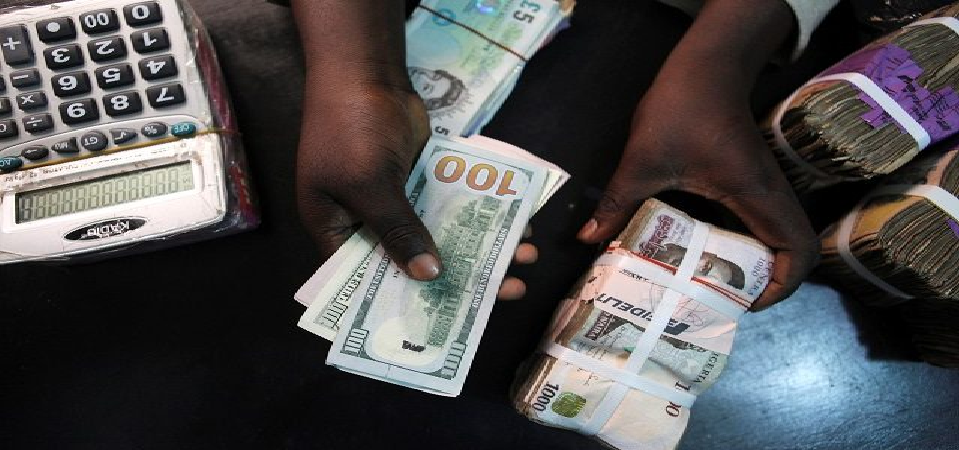
Nigeria Naira US Dollar

Poor Nigeria – now you want to go after NLNG dividends: “To boost foreign currency liquidity in the economy and fortify the foreign exchange situation, the federal government has devised a plan to securitize approximately $7 billion of the country’s dividends from the Nigerian Liquefied Natural Gas (NLNG).”

On Oct 24 2023, I wrote “Forex players, there is a warning shot in the land…Sure, Nigeria has tools which can bring Naira back to sub-N800/$.”. I continued… “And the government can actually get Naira back to whatever number it wants with the US dollars. The real challenge is a long-term playbook. Yes, how do you keep the Naira stable over a long-term view…?”

The NLNG playbook is not the long-term solution as someone must still replace this fund as NLNG’s dividend has remained vital for the Nigerian purse. Besides these ad-hoc piecemeal on-the-run solutions, someone needs to present a comprehensive blueprint on how all the pieces will come together.  Secularizing crude oil, dividends, etc are stale policies looking at what the last government did. Essentially, you shift responsibilities to the next government, leaving the root cause of the issues unsolved.

The root cause is that Nigeria is experiencing massive de-industrialization and that bleeding must STOP for Naira to have any chance to thrive. If we leave Naira alone and use this money to provide decent electricity in Nigeria, we may do better for the Naira over the long-term.

My Response: Nigeria has not shown any evidence that it has scarcity, from our scaling of bureaucracy to importing hundreds of Toyota cars. Do not think you can use Naira engineering to transform Nigeria without doing the real work. That real work includes the lawmakers driving local SUVs over Toyota, as that will send a clear message to the FOREX market that Nigeria is ready to fight for Naira. We need to change our mindset; that has not happened. Borrowing here and here will not solve this problem until we change our mindset.

Comment 1: Thank you for your post, Prof.

What I think is that, With a $7bn from securitization of dividends and a $3bn from Afreximbank loan, A total of $10bn liquidity injection would now be available to the government to meet its outstanding obligations which might give the needed support to stop this rapid depreciation of the Naira, Although this is not sustainable over the long run. But as Keynes would say, “in the long run we’re all dead”

Additionally Macroeconomic issues do not have a quick and direct fix.
It’s complex and the intricacies cannot be fully modeled or the issues be immediately fixed by just tweaking one or few variables.

Although electricity/power is an important input for production. Just focusing on power might not offer the expected benefits as it’s regards long-term equilibrium value of exchange rate.

My ResponseI agree that we need a quick solution. Yet, Nigeria has not shown any evidence that it has scarcity, from our scaling of bureaucracy to importing hundreds of Toyota cars. Do not think you can use Naira engineering to transform Nigeria without doing the real work. That real work includes the lawmakers driving local SUVs over Toyota, as that will send a clear message to the FOREX market that Nigeria is ready to fight for Naira. We need to change our mindset; that has not happened. Borrowing here and here will not solve this problem until we change our mindset.

I call for a comprehensive blueprint where we work to reduce the need for US dollars. That has not happened. All the lawmakers want their Toyotas and have defended why Toyota is better on Nigerian roads than local brands. With that mindset, the quick fixes are not going to be useful because it is a vicious cycle. You fix today, and tomorrow, you have to fix, etc. That has been ongoing for years.

But imagine if lawmakers say, send us local SUVs and let us allow Naira to breathe.  There is nothing new about secularizing dividends and crude oil; we have been doing similar things since 2017 including using pension funds. But what was supposed to be short term becomes permanent because the mindset which has to change remains unchanged. That is my point.

Comment 2: No longterm visionary playbook has be deployed to ensure stability in the economy and by extension the polity over the past two decades, and it is looking more glaring that the current illegitimate government is kicking the can down the road again.

Until the economy starts to produce for local consumption and exports, they will continue dancing around the issues and ignoring the challenges therein

Comment 3: How do you fix the backlogs?
My Response: Any strategy you have must go along with a change of mindset and that is the comprehensive blueprint I am asking for. You do not offset with pension funds in 2019, only to ramp up, and you need forward crude oil in 2021, then in 2023, you need NLNG dividend, etc. Yet, you have NOT changed anything in how you operate. My position is you can borrow anywhere but you need to change how you operate as a nation to avoid coming back in 2 years to borrow again.

Naira Appreciates As Nigeria Moves to Securitize $7bn in NLNG Dividends

1

The Nigerian Naira experienced a remarkable appreciation against the US Dollar on Friday, closing at N789.94 per $1 at the official market. This surge was attributed to several government efforts aimed at bolstering foreign exchange (FX) inflow.

The Naira’s performance represented a substantial 6.26% increase from the previous day’s rate of N837.49 per $1. In the parallel market, the Naira also made a strong comeback, rising to N1,113 per $1 from its previous rate of N1,230 per $1.

During the day’s trading, the Naira reached an intraday high of N900 per $1, while the intraday low was at N696.06 per $1, indicating a wide spread of N203.94 per $1.

Data from the official Nigerian Autonomous Foreign Exchange Market (NAFEM) window revealed that the forex turnover for the day reached $259.84 million, marking a significant 129.50% increase compared to the previous day’s figures.

Additionally, Nigeria’s external reserves experienced a slight uptick, reaching $33.326 billion. This marks the ninth consecutive day of gains and keeps the reserves above the $33 billion mark, a trend that has persisted since July 2023.

To boost foreign currency liquidity in the economy and fortify the foreign exchange situation, the federal government has devised a plan to securitize approximately $7 billion of the country’s dividends from the Nigerian Liquefied Natural Gas (NLNG).

An official from Bola Tinubu’s administration told THISDAY that the government anticipates receiving $7 billion from a consortium led by Standard Chartered Bank in the coming week.

This is in addition to the $3 billion emergency loan secured by the Nigerian National Petroleum Company Limited (NNPCL) from the African Export-Import Bank (Afreximbank), bringing the total expected inflows in the short term to $10 billion.

Finance Minister Wale Edun, speaking at the Nigerian Economic Summit in Abuja, earlier this week, confirmed that the government is well-prepared for an upcoming surge of funds. He stressed that this injection of liquidity is expected to take place in the near future, likely within weeks, rather than being spread out over an extended period.

This initiative is being orchestrated by the Federal Ministry of Finance Incorporated, which is the shareholder of the NLNG.

President Bola Tinubu, speaking at the 29th Nigerian Economic Summit in Abuja, reassured Nigerians and investors of ongoing plans to enhance the country’s foreign exchange liquidity. He acknowledged the challenges faced by the business community in the financial markets and pledged additional FX liquidity to restore market confidence.

The source explained, “NLNG has been performing and used to pay dividends of about $6 billion, but because our oil production and gas production have fallen, dividends also fell to about $2 billion. But what this government has decided to do is to securitize these dividends over a period of time and use it to borrow money to curb the depreciation of the Naira against the Dollar.”

The goal is to increase dollar liquidity by injecting the market with a supply of dollars and pushing the Naira/Dollar exchange rate to approximately N800 per $1. This move is expected to help settle some old FX forward obligations, reduce pressure on the Naira, improve liquidity, and allow the currency to appreciate.

Market analysts believe that these measures may help the Naira appreciate to around N1,000 per $1 and potentially lead to currency speculators incurring losses. They also emphasize that achieving this goal would depend on improved oil production and significant reductions in crude oil theft.

These developments indicate a positive turn of events for the troubled Nigerian currency, which has faced intense pressure in recent weeks. The Nigerian government has recently employed a strategy that entails obtaining an immediate cash loan based on the anticipated revenues from a specified portion of future crude oil production. This approach was utilized by the Nigerian National Petroleum Corporation (NNPC) to secure a $3 billion emergency loan from the African Export-Import Bank (Afreximbank).

Google’s Marketing Innovation As Google Search Spends $26B Yearly for Default Positions

1

When you send that proposal and cannot get a response, understand that certain things are not based on pure product quality or do-no-harm competition. That Google Search spends about $26 billion yearly to secure the best seats in phones and browsers is a concern: “In a federal antitrust trial, a slide made public revealed that Google paid a total of $26.3 billion in 2021 to secure its position as the default search engine on mobile phones and web browsers.” Apple possibly received $19 billion of that for the default placement on Apple devices.

Like I wrote in Harvard Business Review on Intel Inside campaign, and how the marketing genius who invented it might have done just as much as the engineers who wired Intel processors, the partnership lead in Google who closes these deals (locking the Apple world for Google) has provided  core “innovation” in the success of Google just as the engineers who creates the search technology.

What is the message: do not neglect your commercial guys as one partnership can transform a business. Period, innovation happens in marketing and sales, not just in technology.

As the trial continues, we’re learning that Google is a great partnership innovator, just as it is a good engineering one. Sure, the government does not like that. But the court will decide. But the lesson is clear: Google has not won purely on its technical strength; it has got a really great help from those “locks”, made possible by $26 billion yearly payments.

Google Paid $26bn in 2021 to Secure Its Position As The Default Search Engine

0

In a federal antitrust trial, a slide made public revealed that Google paid a total of $26.3 billion in 2021 to secure its position as the default search engine on mobile phones and web browsers.

This figure provides a more detailed breakdown of the payments Google makes to various partners, including Apple, to be the default search engine on their products.

The U.S. Department of Justice and a coalition of state attorneys general have argued that Google has unlawfully maintained its monopoly power in the general search market by using its dominance to exclude competitors from critical distribution channels, such as Apple’s Safari web browser.

While the $26.3 billion figure is not specific to any one company, Apple is likely the largest recipient. Analysts had estimated that Google could pay Apple as much as $19 billion in a given year for the default placement on Apple devices.

The Department of Justice’s complaint asserts that “Google pays billions of dollars each year to distributors—including popular device manufacturers such as Apple, LG, Motorola, and Samsung; major U.S. wireless carriers such as AT&T, T-Mobile, and Verizon; and browser developers such as Mozilla, Opera, and UCWeb—to secure default status for its general search engine and, in many cases, to specifically prohibit Google’s counterparties from dealing with Google’s competitors.”

Google has countered these claims by arguing that users have the option to change their default search engine with just a few clicks.

The slide presented in court, titled “Google Search+ Margins,” focused on Google’s search business. It indicated that the division’s revenue in 2021 exceeded $146 billion, with traffic acquisition costs (TAC) totaling more than $26 billion. The slide included data dating back to 2014 when Google reported approximately $47 billion in revenue for the division and paid around $7.1 billion for default status.

This signifies a threefold increase in revenue for Search+ between 2014 and 2021, while this portion of TAC costs nearly quadrupled.

Google routinely reports its total TAC, which encompasses payments to network partners for displaying ads on their platforms. The trial slide appeared to specifically address the portion of TAC related to Search+ revenue, distinct from the broader TAC figure reported in Google’s earnings.

While Google regularly reports its overall traffic acquisition costs, this figure also includes payments to network partners for displaying ads on their properties. The specific portion of these costs related to Google’s search division was represented in the slide disclosed during the trial.

This ongoing antitrust case has significant implications for Google and the tech industry at large, as it may lead to the drastic downsizing of the tech giant’s dominance of the search market.

Nigerian Launches a Presidential CNG Bus Initiative

0

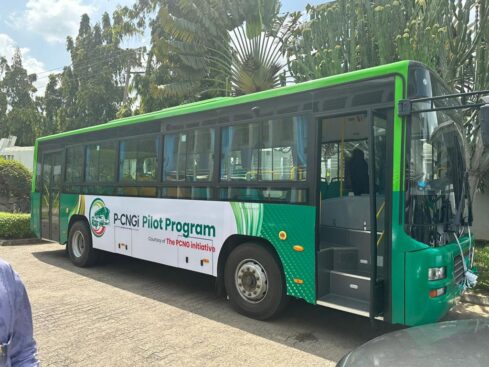
The Federal Government of Nigeria officially launched the Presidential Compressed Natural Gas Initiative (PCNGI) on Friday, in a move to reduce the cost of transportation and promote environmental sustainability and economic growth.

This initiative, which comes as a response to the demands of organized labor unions, aims to provide affordable energy options to Nigerians, reducing the nation’s reliance on traditional fuels.

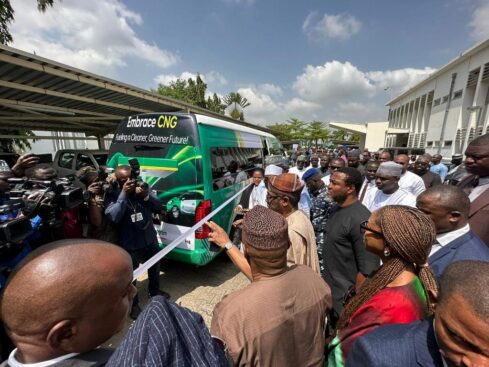
The ceremony, held at the State House in Abuja, saw the Chief of Staff to the President, Femi Gbajibiamila, flagging off the PCNGI.

In a symbolic handover of CNG buses to the State House, Zacch Adedeji, Chairman of the Presidential CNG Initiative Steering Committee, announced key measures to support the adoption of CNG vehicles.

Mr. Farouk Ahmed, the Chief Executive Officer of the Midstream and Downstream Petroleum Regulatory Authority (NMDPRA), represented Adedeji at the event. Ahmed revealed that the government had waived the Value Added Tax (VAT) on the purchase of CNG buses and was actively seeking duty waivers for the entire value chain. He emphasized the goal of building a sustainable future by leveraging Nigeria’s abundant, cheap, and clean energy source – natural gas.

Adedeji also disclosed the government’s plans to establish multiple conversion centers across the country within the next two weeks, further promoting the adoption of CNG vehicles nationwide. He urged Nigerians to view the CNG buses as symbols of a new beginning and an integral part of President Bola Tinubu’s commitment to environmental sustainability and economic growth.

Engr. Micheal Oluwagbemi, the Project Director of the Presidential CNG Initiative, stated that several state governments had already expressed interest in investing in CNG buses. Notably, the Rivers State Government had already acquired a substantial number of CNG buses to address transportation challenges within the state.

Addressing concerns about the cost of conversion to CNG, Oluwagbemi explained that the expense varies depending on the vehicle model and type. However, he assured Nigerians that, as part of the PCNGI, the committee would incentivize the conversion process, making it more affordable for the general populace.

Chinedu Oguegbu, Managing Director of OMAA Motors and managing partner of PCNGI, lauded the federal government’s patronage of made-in-Nigeria vehicles, emphasizing that it is a pivotal step towards deepening industrialization and promoting the use of cleaner energy sources.

The major aim of the CNG initiative is to provide affordable transport means for the Nigerian masses, following a more than 250% increase in transport fares triggered by the fuel subsidy removal.

The Nigerian Labour Congress (NLC) and the Trade Union Congress (TUC) suspended their planned industrial action early this month, after reaching an agreement with the federal government that the CNG and other initiatives contained in their demands will be met.

However, while stakeholders applaud the launch of the scheme, they also emphasized that a lot of work is yet to be done to establish conversion centers across the country.