DD
MM
YYYY

PAGES

DD
MM
YYYY

spot_img

PAGES

Home Blog Page 4005

WOO to buy back shares from 3AC amid Galxe Refund of $396,000 to affected DNS Customers

0
United States Ten and Twenty Dollar notes next to Ten and Twenty UK Pound Notes

Crypto exchange WOO has announced that it will buy back all the shares held by 3AC, a crypto investment firm that has been accused of market manipulation and insider trading. The buyback will be done at the original purchase price of $1.5 per share, which is significantly lower than the current market value of $4.2 per share.

WOO said that the decision was made to “clear the uncertainty” surrounding its relationship with 3AC, which has been under investigation by regulators in several jurisdictions. WOO also said that it will cooperate fully with any inquiries and audits from the authorities.

WOO’s CEO, John Lee, said in a statement: “We value our reputation and integrity as a leading crypto exchange, and we want to assure our customers and partners that we have nothing to hide or fear from 3AC’s alleged misconduct. We are confident that our business operations and financial performance are sound and transparent, and we will continue to provide the best service and products to our users.”

The buyback will be funded by WOO’s own cash reserves, which amount to over $300 million, according to its latest financial report. WOO said that the buyback will not affect its liquidity or solvency, and that it will still have enough capital to support its growth plans and expansion projects.

WOO is one of the largest crypto exchanges in the world, with over 10 million registered users and a daily trading volume of over $2 billion. It offers a variety of crypto products and services, including spot trading, futures trading, margin trading, staking, lending, and mining.

3AC is a crypto investment firm founded by Su Zhu and Kyle Davies, two former Wall Street traders. It has invested in several prominent crypto projects and exchanges, including WOO, Serum, FTX, Solana, and Terra. However, it has also faced allegations of manipulating the prices of certain tokens and using insider information to gain an unfair advantage in the market.

Galxe announces $396,000 refund to affected users following DNS Attack

Galxe, a leading provider of cloud computing and web hosting services, has issued a statement apologizing for the recent disruption of its services due to a DNS attack. The company said that it has refunded $396,000 to the customers who were affected by the outage, which lasted for several hours on October 10.

According to Galxe, the attack was carried out by an unknown group of hackers who exploited a vulnerability in the DNS protocol, which is used to translate domain names into IP addresses. The hackers were able to redirect traffic from Galxe’s servers to malicious websites, causing some customers to lose access to their data and applications.

Galxe said that it has taken immediate steps to mitigate the impact of the attack and to prevent it from happening again. The company said that it has patched the vulnerability, enhanced its security measures, and contacted law enforcement authorities to investigate the incident.

“We deeply regret the inconvenience and frustration that this incident has caused to our valued customers. We take full responsibility for this breach, and we are committed to restoring your trust and confidence in our services. We appreciate your patience and understanding as we work hard to ensure the highest level of security and reliability for your online needs,” Galxe said in its statement.

Galxe also thanked its customers for their loyalty and support and offered them a 10% discount on their next billing cycle as a gesture of goodwill. The company said that it will continue to monitor its systems and provide updates on its website and social media channels.

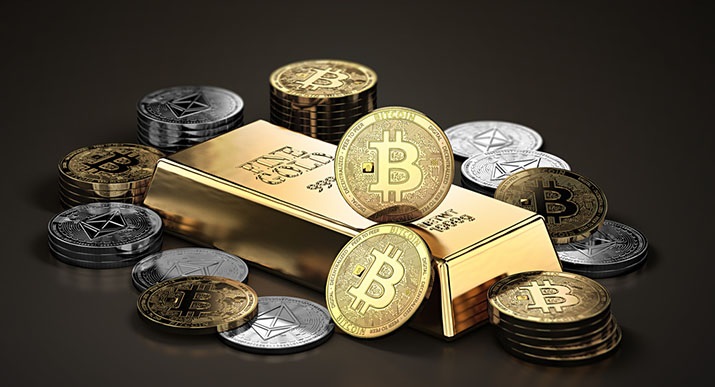
Blockchain is the Future of Money; Gold ETFs Approval could pave way for Spot Bitcoin ETFs

0

Blockchain is a technology that allows for the creation and exchange of digital assets without the need for intermediaries, such as banks or governments. It is based on a distributed ledger that records every transaction in a secure and transparent way, ensuring that no one can tamper with or falsify the data. Blockchain enables peer-to-peer transactions that are fast, cheap, and global, opening up new possibilities for innovation and inclusion.

One of the most prominent applications of blockchain is cryptocurrency, such as Bitcoin or Ethereum, which are digital currencies that can be used as a medium of exchange, a store of value, or a unit of account. Cryptocurrencies have the potential to challenge the dominance of fiat currencies, such as the US dollar or the euro, and to create a more decentralized and democratic monetary system. Cryptocurrencies also offer new opportunities for financial inclusion, as they can reach people who are unbanked or underbanked and provide them with access to financial services and markets.

But blockchain is not only about cryptocurrency. It can also be used for other purposes, such as smart contracts, digital identity, supply chain management, voting systems, healthcare records, and more. Blockchain can enable new forms of collaboration, coordination, and governance, that are more efficient, transparent, and fair. Blockchain can also empower individuals and communities to have more control over their own data and assets, and to participate in the creation of value in a more equitable way.

The US has been a leader in innovation and technology for decades, and it should not miss the opportunity to be at the forefront of blockchain as well. The US has a strong ecosystem of entrepreneurs, investors, researchers, and regulators who can foster the development and adoption of blockchain solutions. The US also has a strategic interest in maintaining its influence and competitiveness in the global arena, and in ensuring that its values and interests are reflected in the emerging blockchain standards and norms.

However, the US also faces some challenges and risks in embracing blockchain. The US has to deal with regulatory uncertainty, legal complexity, technical interoperability, cybersecurity threats, and social resistance. The US also has to balance its own interests with those of other countries and stakeholders who may have different visions and agendas for blockchain. The US has to be proactive and collaborative in shaping the future of blockchain, rather than reactive and isolated.

According to a recent survey conducted by Statista, people living in Nigeria, India, Vietnam, Argentina, and South Africa are the most optimistic about the future of bitcoin. The survey asked respondents from 74 countries whether they expected bitcoin to increase or decrease in value over the next year. The results showed that the five countries mentioned above had the highest percentage of people who expected bitcoin to increase in value, ranging from 76% in Nigeria to 66% in South Africa.

This optimism reflects the growing adoption and interest in #bitcoin and other cryptocurrencies in these regions, where many people face economic challenges, currency instability, and limited access to financial services. #Bitcoin offers them an alternative way to store and transfer value, hedge against inflation, and participate in the global digital economy. Moreover, #bitcoin enables them to access innovative applications and platforms built on top of its decentralized network, such as decentralized finance (DeFi), non-fungible tokens (NFTs), and social media.

Blockchain is the future of money, and the US should be at the forefront of it. This is not only a possibility, but a necessity. Blockchain offers immense benefits for individuals, businesses, society, and the world at large. But it also poses significant challenges and risks that need to be addressed. The US has the potential to be a leader in blockchain innovation and adoption, but it also has the responsibility to do so in a responsible and ethical way.

Gold ETFs Approval could pave way for Spot Bitcoin ETFs

Gold exchange-traded funds (ETFs) are investment products that track the price of gold and trade on stock exchanges. They offer investors exposure to the precious metal without having to buy and store physical gold. Recently, some gold ETFs have been approved by the US Securities and Exchange Commission (SEC), which regulates the securities markets and protects investors.

The SEC’s approval of gold ETFs could have implications for the future of spot bitcoin funds, which are similar products that would track the price of bitcoin and trade on stock exchanges. Spot bitcoin funds have been proposed by several companies, but none have been approved by the SEC so far.

However, some analysts argue that gold ETFs and spot bitcoin funds share many similarities, such as being based on commodities that are not issued by any government or central authority and having global demand and supply dynamics.

The recent approval of several gold exchange-traded funds (ETFs) by the U.S. Securities and Exchange Commission (SEC) has sparked renewed interest in the prospects of a spot bitcoin ETF. A spot bitcoin ETF would track the price of bitcoin directly, rather than through futures contracts or other derivatives, and would allow investors to gain exposure to the cryptocurrency without having to buy or store it themselves.

Therefore, they suggest that the SEC’s approval of gold ETFs could indicate a more favorable attitude towards spot bitcoin funds, or at least provide some guidance on what criteria the SEC would use to evaluate them. Alternatively, others contend that gold ETFs and spot bitcoin funds have significant differences, such as the volatility and liquidity of their underlying assets, and the availability and reliability of their price data.

Therefore, they caution that the SEC’s approval of gold ETFs does not necessarily imply a positive outlook for spot bitcoin funds, or that the SEC would apply the same standards to both products, gold ETFs could shed some light on the SEC’s thinking about proposals for spot bitcoin funds, but they are not a definitive indicator of the SEC’s stance or decision on this matter.

One way to gauge the SEC’s stance on spot bitcoin ETFs is to look at how it has treated gold ETFs, which are similar in some respects. Gold ETFs also track the price of a physical commodity that is traded on various platforms around the world, and that may be subject to manipulation or fraud. Gold ETFs also face challenges in ensuring the safe and reliable custody of the underlying assets.

The SEC has approved several gold ETFs over the years, but not without imposing strict conditions and requirements on the issuers and custodians. For example, the SEC requires gold ETFs to disclose the risks associated with investing in gold, such as price volatility, liquidity issues, regulatory uncertainty, and geopolitical factors.

The SEC also requires gold ETFs to have adequate policies and procedures to ensure the accuracy and reliability of their gold holdings, as well as independent audits and inspections of their custodians.

The SEC’s approach to gold ETFs suggests that it is not opposed to spot bitcoin ETFs in principle, but that it has high standards for ensuring their compliance and transparency. The SEC may be looking for similar assurances from spot bitcoin ETF issuers and custodians, such as:

A clear and comprehensive disclosure of the risks associated with investing in bitcoin, including market volatility, hacking, theft, fraud, regulatory changes, and environmental impacts.

A robust and resilient system for verifying and reporting the bitcoin holdings of the ETF, as well as tracking the movements and transactions of the underlying bitcoins.

A reputable and regulated custodian that can provide secure and auditable storage of the bitcoins, as well as insurance coverage and contingency plans in case of loss or theft.

A fair and orderly process for creating and redeeming shares of the ETF, as well as ensuring adequate liquidity and market depth for investors.

These are some of the factors that the SEC may consider when evaluating proposals for spot bitcoin ETFs. By looking at how the SEC has treated gold ETFs, we can get some insight into its thinking and expectations for spot bitcoin funds. However, it is important to note that gold and bitcoin are not identical assets, and that the SEC may have different or additional concerns about bitcoin that are not applicable to gold. Therefore, while gold ETFs could shed some light on the SEC’s thinking, they are not a definitive guide or guarantee for spot bitcoin ETFs.

What is Internet Computer Protocol (ICP)?

0

The Internet Computer Protocol (ICP) is a novel technology that aims to extend the functionality of the public internet. ICP enables developers to create and deploy software that runs directly on the internet, without relying on any intermediaries or centralized platforms. ICP is powered by a network of independent data centers that host specialized hardware and software nodes. These nodes communicate and coordinate through a protocol called Chain Key Technology, which ensures the security, performance, and scalability of the network.

ICP is designed to address some of the major challenges and limitations of the current internet infrastructure, such as:

The lack of interoperability and composability among different services and applications. The high costs and complexity of developing, deploying, and maintaining software. The vulnerability to censorship, manipulation, and hacking by malicious actors. The inefficiency and environmental impact of wasteful computation and storage

By providing a unified platform for building and running software on the internet, ICP enables developers to create:

Open services that can interoperate and compose with other services across the network. Autonomous software that can self-manage and self-govern without human intervention. Tamper-proof software that can resist attacks and guarantee data integrity.

Efficient software that can optimize resource utilization and reduce energy consumption. Some of the use cases and applications that can benefit from ICP include:

Social media platforms that can preserve user privacy and data sovereignty. Decentralized finance protocols that can offer transparent and fair financial services. Web3 applications that can leverage the power of smart contracts and blockchain technology. Enterprise solutions that can streamline business processes and workflows. Internet-of-things systems that can connect and coordinate devices and sensors.

One of the most common questions about ICP is how it compares to Ethereum, the leading smart contract platform. Ethereum is a layer two blockchain protocol that runs on top of the existing internet infrastructure. Ethereum allows developers to create decentralized applications (DApps) that run on a global network of nodes. Ethereum has been instrumental in fostering the growth of the decentralized web, but it also faces some challenges, such as scalability, security, and usability.

ICP differs from Ethereum in several ways. First, ICP is a layer one protocol that creates a new internet architecture, rather than relying on the existing one. ICP does not need any intermediaries or gatekeepers to run its services, as it connects directly to the physical layer of the internet. Second, ICP is faster and more scalable than Ethereum, as it can process thousands of transactions per second at web speed, while Ethereum can only handle a few dozen transactions per second at slower speeds.

Third, ICP is more secure and private than Ethereum, as it encrypts and verifies all data and computation by default, while Ethereum requires additional layers of encryption and verification for some applications. Fourth, ICP is more cost-effective and user-friendly than Ethereum, as it does not charge any fees for its services, while Ethereum requires users to pay gas fees for every transaction.

ICP is not a competitor to Ethereum, but a complementary technology that can enhance the decentralized web. ICP and Ethereum can work together to create interoperable services that leverage the best features of both protocols.

For example, developers can use ICP to create fast and secure web services that interact with Ethereum’s smart contracts and tokens. Alternatively, developers can use Ethereum to create complex logic and governance mechanisms that interact with ICP’s open internet services.

ICP is not just a protocol, but a vision for a new internet paradigm. ICP aims to democratize the creation and distribution of software, and to empower users and developers with more choice, freedom, and innovation. ICP is an ambitious project that has the potential to transform the internet as we know it.

Anonymous Activist Group Inscribing Classified US War Logs into Bitcoin

0

In a bold and unprecedented move, an anonymous activist group has announced that they are using the Bitcoin blockchain to store and disseminate classified US war logs that expose the atrocities committed by the US military in Iraq and Afghanistan. The group claims that they are doing this to protest the unjust imprisonment of Julian Assange, the founder of WikiLeaks, who first published these documents in 2010.

The project is called ‘Project Spartacus’ which intend to use the bitcoin blockchain as a permanent and censorship-resistant storage for the thousands of classified documents. The project’s website states that ‘Project Spartacus’ is inspired by the legendary gladiator who led a slave uprising against the Roman Empire, and by the courage and sacrifice of the whistleblowers who risked their lives to expose the truth.

The project claims that by embedding the Afghan War logs into the bitcoin blockchain, they will ensure that the documents will remain accessible and verifiable for generations to come, regardless of any attempts to erase or manipulate them by governments or corporations.

The project’s website also provides instructions on how to download, verify and view the documents using a bitcoin node and a web browser. The project encourages anyone who supports their cause to donate bitcoin to their address, which will be used to cover the fees of embedding the data into the blockchain. The project also invites other whistleblowers and journalists to contact them if they have any sensitive information that they want to preserve and share with the world.

The project has already received some support and criticism from various quarters. Some praised the project as a noble and innovative way of safeguarding the historical record and honoring the whistleblowers, while others denounced it as a reckless and illegal act that could endanger national security and put lives at risk. Some also questioned the technical feasibility and sustainability of the project, given the limited space and high costs of storing data on the bitcoin blockchain.

The project’s website does not reveal any information about the identity or location of its members, nor does it specify when or how they obtained the Afghan War logs. WikiLeaks, the original publisher of the documents, has not commented on or endorsed the project. The US government, which has been pursuing legal action against WikiLeaks and its founder Julian Assange for over a decade, has not issued any statement or response to the project either.

The group, which calls itself “The Cypherpunks”, has released a statement explaining their motivation and methodology. They say that they are inspired by Assange’s vision of using cryptography to create a more transparent and accountable world, and that they are using Bitcoin as a tool to achieve this goal.

The group says that they have encoded the war logs into hexadecimal data, which can be embedded into Bitcoin transactions as “OP_RETURN” outputs. These outputs are not spendable, but they are permanently recorded on the blockchain, which is a distributed ledger that records every transaction ever made with Bitcoin. The group says that they have created a website that allows anyone to access and decode these outputs, and to verify their authenticity by comparing them with the original WikiLeaks files.

The group claims that by using Bitcoin, they are making the war logs immune to censorship, deletion, or alteration. They say that anyone who runs a Bitcoin node, which is a software that validates and relays transactions on the network, is effectively hosting a copy of these documents on their computer. The group also says that anyone who mines Bitcoin, which is a process that secures the network and creates new coins, is indirectly contributing to the preservation of these documents.

The group says that they have chosen to use Bitcoin because it is the most secure, decentralized, and resilient cryptocurrency in existence. They say that Bitcoin is designed to resist any form of coercion, corruption, or compromise, and that it is protected by a global network of thousands of nodes and millions of users. The group says that they trust Bitcoin more than any other platform or institution to safeguard the truth about US war crimes.

The group says that they are not affiliated with any organization or ideology, and that they are acting solely out of their conscience and conviction. They say that they are not seeking fame or profit, and that they are willing to face any consequences for their actions. They say that they are doing this for the sake of justice, freedom, and peace.

The group says that they are not done yet, and that they plan to continue encoding and uploading more classified documents to the Bitcoin blockchain in the future. They say that they have access to a vast trove of information that exposes the corruption and criminality of the US government and its allies. They say that they will not stop until Assange is freed, and until the world knows the truth.

Central Bank of Nigeria Removes FX Restriction on 43 Items, to Begin Intervention

0

The Central Bank of Nigeria (CBN) has announced the removal of 43 items from FX restriction, a move geared towards facilitating a vibrant FX market.

The decision was disclosed in a circular signed by Isa AbdulMumin, Director of Corporate Communications, and was released on Thursday.

The circular reads:

1. The Central Bank of Nigeria (CBN) will continue to promote orderliness and professional conduct by all participants in the Nigerian Foreign Exchange Market to ensure market forces determine exchange rates on a Willing Buyer – Willing Seller principle.

2. The CBN reiterates that the prevailing Foreign Exchange (FX) rates should be referenced from platforms such as the CBN website, FMDQ, and other recognized or appointed trading systems to promote price discovery, transparency, and credibility in the FX rates.

3. As part of its responsibility to ensure price stability, the CBN will boost liquidity in the Nigerian Foreign Exchange Market by interventions from time to time. As market liquidity improves, these CBN interventions will gradually decrease.

4. Importers of all the 43 items previously restricted by the 2015 Circular referenced TED/FEM/FPC/GEN/01/010 and its addendums are now allowed to purchase foreign exchange in the Nigerian Foreign Exchange Market.

5. The CBN is committed to accelerating efforts to clear the FX backlog with existing participants and will continue dialogue with stakeholders to address the issue.

6. The CBN has set as one of its goals the attainment of a single FX market. Consultation is ongoing with market participants to achieve this goal.

Participants and the general public are to be guided by the above.

Financial experts have criticized the CBN’s delay in removing the 43 items, saying it is an indication that the naira was only devalued and not floated as the apex bank announced in June.

Former CBN governor Godwin Emefiele imposed the FX restrictions on the 43 items as part of his policies aimed at taming Nigeria’s volatile forex market. However, the move drew severe criticism from business leaders.

Below is the list of the 43 items:

  1. Rice
  2. Cement
  3. Margarine
  4. Palm Kernel/Palm oil products/vegetable oils
  5. Meat and Processed Meat Products
  6. Vegetables and Processed Vegetable Products
  7. Poultry – chicken, eggs, Turkey
  8. Private Airplanes/Jets
  9. Indian Incense
  10. Tinned Fish In sauce (Gelsha)/Sardines
  11. Cold Rolled Steel Sheets
  12. Galvanized Steel Sheets
  13. Roofing Sheets
  14. Wheelbarrows
  15. Head Pans
  16. Metal Boxes and Containers
  17. Enamelware
  18. Steel Drums
  19. Steel Pipes
  20. Wire Rods (deformed and not deformed)
  21. Iron Rods and ReInforcina Bars
  22. Wire Mesh
  23. Steel Nalls
  24. Security and Razor Wire
  25. Wood Particle Boards and Panels
  26. Wood Fiber Boards and Panels
  27. Plywood Boards and Panels
  28. Wooden Doors
  29. Furniture
  30. Toothpicks
  31. Glass and Glassware
  32. Kitchen Utensils
  33. Tableware
  34. Tiles – vitrified and ceramic
  35. Textiles
  36. Woven Fabrics
  37. Clothes
  38. Plastic and Rubber Products, Cellophane Wrappers
  39. Soap and cosmetics
  40. Tomatoes/Tomato Pastes
  41. Euro bond/Foreign Currency Bond/Share Purchases
  42. Milk
  43. Maize

These 43 main items, which include various sub-items categorized by their respective import codes as designated by the Nigerian Customs, have been restricted from accessing foreign exchange through the Investor & Exporter window. This measure aims to encourage local production and reduce their impact on the scarcity of the U.S. dollar in the country.

However, doubts have trailed the CBN’s promise to ensure adequate FX liquidity through interventions. This is because the Nigerian government is currently looking for funds to boost its dollar supply.

In August, the Nigerian National Petroleum Company Limited (NNPCL) secured a $3 billion emergency crude oil-backed loan from the Afreximbank. However the government’s plan to strengthen the naira through a loan from Afrexim Bank has not materialized yet, as the pan-African bank is reportedly seeking buyers for the oil to generate funds to support the loan.

—Press release

CBN Restates Commitment To Boost Liquidity in FOREX Market

  1. The Central Bank of Nigeria (CBN) will continue to promote orderliness and professional conduct by all participants in the Nigerian Foreign Exchange Market to ensure market forces determine exchange rates on a Willing Buyer – Willing Seller principle.
  1. The CBN reiterates that the prevailing Foreign Exchange (FX) rates should be referenced from platforms such as the CBN website, FMDQ, and other recognised or appointed trading systems to promote price discovery, transparency, and credibility in the FX rates.
  1. As part of its responsibility to ensure price stability, the CBN will boost liquidity in the Nigerian Foreign Exchange Market byinterventions from time to time. As market liquidity improves, these CBN interventions will gradually decrease.
  1. Importers of all the 43 items previously restricted by the 2015 Circular referenced TED/FEM/FPC/GEN/01/010 and its addendums are now allowed to purchase foreign exchange in the Nigerian Foreign Exchange Market.
  1. The CBN is committed to accelerating efforts to clear the FX backlog with existing participants and will continue dialogue with stakeholders to address the issue.
  1. The CBN has set as one of its goals the attainment of a single FX market. Consultation is ongoing with market participants to achieve this goal.

Participants and the general public are to be guided by the above.

Isa AbdulMumin PhD Director, Corporate Communications

 October 12, 2023