DD
MM
YYYY

PAGES

DD
MM
YYYY

spot_img

PAGES

Home Blog Page 4013

Tether Freezes $2.5 Million from Multichain

0

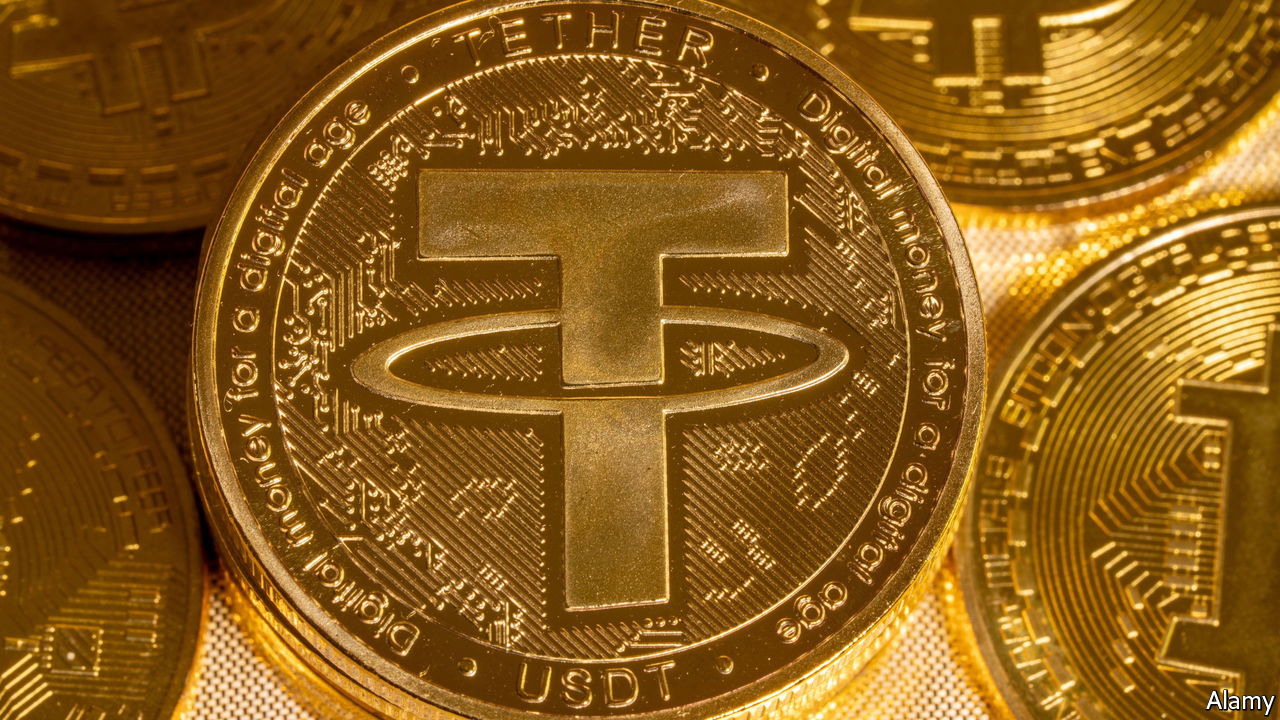
Tether, the company behind the largest stablecoin in the crypto market, has announced that it has frozen $2.5 million worth of USDT tokens from multichain. The move comes after a request from law enforcement agencies, who are investigating a case of fraud involving the tokens.

According to a tweet from Tether, the freeze affects 2.5 million USDT tokens that were issued on the Ethereum, Tron, Binance Smart Chain and Polygon networks. The company did not disclose the details of the fraud case but said that it is cooperating with the authorities to prevent further illicit activity.

Tether is known for its ability to issue USDT tokens on multiple blockchains, which allows users to transfer value across different platforms without friction. However, this also exposes the tokens to various security risks, such as hacks, thefts and scams.

Tether has faced several controversies in the past, such as allegations of insufficient backing, manipulation of the crypto market and lack of transparency. The company has repeatedly denied these claims and said that it is fully compliant with all regulations and audits.

Tether’s freeze of

Tether, the issuer of the largest stablecoin USDT, has announced that it has frozen $2.5 million worth of tokens from multichain, a decentralized exchange platform that supports multiple blockchains. The freeze was requested by multichain after it detected a security breach that compromised some of its wallets.

According to a blog post by multichain, the hacker managed to exploit a vulnerability in its smart contract code and stole over $8 million worth of various tokens, including USDT, ETH, BNB, and MATIC. The hacker then tried to swap the stolen tokens for other assets on different platforms, such as Uniswap, PancakeSwap, and QuickSwap.

Multichain said that it contacted Tether and other projects to help recover the funds and prevent further losses. Tether confirmed that it received the request from multichain and decided to freeze $2.5 million worth of USDT on the Ethereum, Binance Smart Chain, and Polygon networks.

Tether said that it is working with multichain and law enforcement agencies to track down the hacker and assist in the investigation. Tether also stated that it has the ability to freeze and blacklist addresses that hold its tokens in case of emergency situations, such as hacks, thefts, or court orders.

Tether’s freezing power has been controversial in the past, as some critics argue that it undermines the decentralization and censorship-resistance of cryptocurrencies. However, Tether claims that it only uses this power in rare and extreme cases, and that it is necessary to protect its users and the ecosystem from malicious actors.

Harassment And Defamation of Borrowers Still Persist From Loan Companies Despite FCCPC Warnings in Nigeria

0

Reports reveal that loan companies in Nigeria still harass and defame defaulting customers, despite several warnings from the Federal Competition And Consumer Protection Commission (FCCPC), against such action.

These companies with their outrageous interest rates, have continued with their unprofessional way of loan recovery, through threats, blackmail, and breach of data privacy.

They still go ahead to send unpleasant messages to their debtors, as well as their contacts, which contradicts a recent Google policy restraining loan apps from illegally accessing customers’ contact.

Recall that following the complaints of customers speaking against loan companies’ unhealthy practices, the FCCPC last year, worried by the prevailing abusive and arm-twisting practice, led a collaborative effort to address the situation.

Babatunde Irukera, Executive Vice Chairman/Chief Executive Officer of FCCPC, said then that the commission was working closely with the Independent Corrupt Practices Commission (ICPC), the National Information Technology Development Agency, and the Central Bank of Nigeria to address the issue.

In May 2022, the FCCPC confirmed that it had taken strong action against loan apps and other firms violating the rights of Nigerian consumers by freezing 50 accounts belonging to illegal loan app operators.

The commission disclosed that it took down over 12 apps off the Google Play Store, noting that the rate of defamatory messages had dropped by at least 60 percent.

The FCCPC further noted that the new Google’s policy to ban loan apps from accessing user contacts, and photos is one of the success stories of the Commission’s partnership with Google as it continues to sanitize the digital lending space in Nigeria.

In addition to that, Google said the loan apps must also provide all the necessary information about their interest rates, repayment plans, applicable fees, and charges on the Play Store to guide users.

It is understood that the continuous violation of people’s privacy and unethical recovery practices led to the introduction of an interim registration framework for digital lenders by the FCCPC.

The registered companies were said to have provided information regarding their interest rates, the type of information they access from their customers, and sources of their money, among others.

The FCCPC, however, noted that registration does not mean that all the registered companies are law-abiding, but it will significantly reduce how they violate the law.

Furthermore, the Commission commended consumers for diligent cooperation in providing vital and meaningful information that had so far assisted the Commission’s investigations.

Meanwhile, experts have identified economic downturn, desperation, ease of borrowing, and greed on the part of customers as some of the prevailing reasons for the proliferation of loan apps, despite their unhealthy practices.

While commending FCCPC for its clampdown on illegal loan apps which abuse consumer rights, several citizens have gone online to urge the commission to sensitize Nigerians on responsible ways to access loans.

They disclosed that defamation and embarrassment from these loan apps can lead to a high rate of suicide in Nigeria if not properly attended to.

However, those who take loans from illegal loan apps cannot be completely exonerated from culpability. Some experts maintained that some of these loan companies are the real villains for violating extant laws.

Quasi-Judicial Role of Social Media and Proliferation of Moral Conflicts: Cases of the Happie Boys and Mmesoma Vs JAMB in Nigeria

0

The social media is an integral part of the modern social life. Since the development of web 2.0, what ‘’social’’ means to people has been actively reconstructed. The social media space has made it possible for many people to explore opportunities beyond their immediate social network and geographical boundary and enjoy global visibility and acceptance. From work to relationships and personal recreation, people have continued to leverage the social media space to get value.

In the context of globalization, the social media has been a common unifier of the differences among individuals, groups and nations. The relevance of social media extends to its quasi-judicial functions. The social media has been a significant place where public opinions are influenced and who should get punished or rewarded are discussed. It has now become a common practice for people to turn to or be subjected to the court of social media in the quest for justice. In recent periods, consciousness to justice has been raised and truths have been unearthed through sentiments gathered on the social media space.

However, the court of social media is one without a formal structure. And since there is little or no rules of engagement, such as how issues are to be raised, presented, and adjudged, on social media, verdicts on the social media often appear to be crude and counterproductive. In most cases, the quasi-judicial functions of social media are intended to protect seemingly weak individuals against a supposedly harsh system or institution.

The case of the ‘’Happie boys’’ is a lofty instance of how the quasi-judicial role of the social media can be counterproductive. Two young boys, Precious Kelechi and Amakor Johnson, employed as security guards at a Lagos-based restaurant became social media sensation after the management of the restaurant sacked them for dancing while they were on duty-post. Most opinions that emanated from social media remarked the boys were simply expressing their passion for their jobs and the social media court declared the boys innocent even though there were clear evidences of their professional misconduct and dereliction of duties which could have caused their employers some damage.

As the happie boys continued to gather sympathy on social media, Apostle Chibuzor Chinyere, the general overseer of Omega Power Ministry (OPM) placed both of them on scholarship to study in Cyprus. However, it transpired that, after the first year into their scholarship, the boys could not continue with their studies abroad due to the financial incapacity of their sponsor to sustain the scholarship.

The apostle had promised to restore the boys to scholarship in Nigeria and pay for the flight ticket back to the country. However, the boys yet again took their matter to the social media court where the apostle was vehemently criticized. The embattled man of God was forced to rein curses on the boys for being ungrateful. After much public ridicule, the apostle declared his forgiveness for the boys.

However, in their response to the apostle, the happie boys whose reports of academic exploit in Cyprus have not been encouraging were quoted as saying; ‘’we are not returning to Nigeria’’ ‘’we are men now, we don’t need tithe or offering money.’’

But one is called to interrogate the moral conflict of the happie boys. Rewarding the boys for being disciplined for professional misconduct must have emboldened their sense of moral confusion. To them social rewards may be interpreted as the consequences of unapologetic fun rather than sobriety and serious engagement.

Another instance is the case of Miss Mmesoma Ejikeme vs JAMB. Ejikeme became a star-girl on social media after she claimed she had the highest score of 362 in the 2023 Unified Tertiary Matriculation Exams. Her self-acclaimed great fit got her N3 million scholarship from Innoson Group. When the Joint Admission Matriculation Board, JAMB, the administrative body of UTME initially discredited Ejikeme’s claim, revealing she scored 249 instead, the sympathy towards the nineteen-year-old girl grew further on social media until an investigation by a neutral body proved she actually manipulated her score

It can be said that the actions of Ejikeme and the circumstances of the happie boys had been reinforced by the unstructured nature of social media in its dispensation of social justice. The lack of structure to carry out due diligence and the whirl of emotion often directed to discredit the formal institutions by the social media space have been responsible for the proliferation of moral conflicts in the system.

Internet users are advised to be more open-minded and properly fact-check issues arising in the social media. Also, organisations seeking to promote the culture of excellence through rewarding achievements should do their due diligence beyond the social media clout. Organisations can for example, consult with relevant authorities or significant persons involved in the process of a competition or examination before conferring honours on their candidates.

The Future of Chia (XCH) and its Potential Impact on the Cryptocurrency Market

0

Cryptocurrencies have revolutionized the financial landscape, providing a decentralized and secure way to transfer value. Over the years, numerous cryptocurrencies have emerged, each with its unique features and potential. One such promising cryptocurrency that has been making waves in the market is Chia (XCH). In this article, we will explore the future of Chia and its potential impact on the cryptocurrency market. Join the ranks of successful crypto traders by leveraging the features and capabilities of Immediate Bitcoin, a reliable platform for achieving your trading goals.

What is Chia?

Chia is a relatively new cryptocurrency that was introduced in 2021 by Bram Cohen, the creator of BitTorrent. Its main objective is to provide a more environmentally friendly alternative to traditional cryptocurrencies such as Bitcoin. Unlike Bitcoin, which relies on energy-intensive mining processes, Chia employs a consensus mechanism known as proof-of-space and proof-of-time.

The Chia Network operates on a concept called “farming,” where users dedicate their unused hard drive space to participate in the network and secure the blockchain. This innovative approach has attracted attention due to its low energy consumption and reduced carbon footprint. As concerns regarding the environmental impact of cryptocurrencies continue to grow, Chia emerges as an appealing solution.

By leveraging the unused storage space on users’ hard drives, Chia eliminates the need for resource-intensive mining rigs and power-hungry computations. Instead, the network utilizes the available disk space to store cryptographic proofs, which are used to validate transactions and secure the Chia blockchain. This proof-of-space approach not only reduces energy consumption but also contributes to a more sustainable cryptocurrency ecosystem.

Furthermore, Chia’s proof-of-time mechanism complements the proof-of-space consensus. It introduces an element of time, ensuring that farmers have invested a certain duration of real-world time in their contribution to the network. This mechanism adds an additional layer of security and makes the Chia blockchain resistant to potential attacks.

With its environmentally friendly approach, Chia has gained attention from both cryptocurrency enthusiasts and individuals concerned about the ecological impact of digital currencies. It offers an alternative that aligns with the growing global focus on sustainability and energy efficiency.

It is worth noting that as Chia continues to develop and gain adoption, it is important to monitor and evaluate its impact on the environment. While it presents a promising solution to the energy consumption challenges associated with cryptocurrencies, ongoing research and assessment are crucial to ensure its long-term sustainability and environmental benefits.

The Potential Impact on the Cryptocurrency Market:

Environmental Sustainability:

One of the key factors driving the interest in Chia is its focus on environmental sustainability. With the increasing popularity of cryptocurrencies, concerns regarding their energy consumption have become more prevalent. Chia’s use of proof-of-space and proof-of-time consensus mechanism significantly reduces energy consumption compared to traditional mining. This makes Chia an attractive option for environmentally conscious investors and cryptocurrency enthusiasts.

Increased Accessibility:

Chia’s farming mechanism offers greater accessibility to a wider range of users. Unlike Bitcoin mining, which requires specialized and expensive hardware, Chia farming only requires unused hard drive space. This opens up the possibility of participation to a larger demographic, promoting inclusivity within the cryptocurrency space.

Security and Scalability:

Chia’s unique approach to consensus mechanism ensures robust security and scalability. The proof-of-space and proof-of-time algorithm offers enhanced protection against potential attacks, making the network more resilient. Additionally, Chia’s scalability potential allows for efficient transactions, making it a viable option for day-to-day use.

Diverse Use Cases:

Beyond its role as a digital currency, Chia has the potential to enable various innovative applications. Smart contracts, decentralized finance (DeFi), and secure data storage are just a few examples of the possibilities that Chia can unlock. With its sustainable and efficient infrastructure, Chia could foster the development of new decentralized applications, further expanding the cryptocurrency ecosystem.

Market Adoption and Partnerships:

As Chia gains traction in the cryptocurrency market, various businesses and organizations are starting to explore its potential. Partnerships and collaborations with established companies can accelerate Chia’s adoption and drive its value. These alliances can bring increased liquidity and stability to the Chia network, making it a compelling investment opportunity.

Conclusion:

Chia’s unique approach to consensus mechanism, focus on environmental sustainability, and potential for diverse applications make it an intriguing cryptocurrency for the future. While it is still in its early stages, Chia has already captured the attention of investors and enthusiasts alike. Its eco-friendly nature, accessibility, and scalability set it apart from other cryptocurrencies, positioning it as a viable contender in the digital asset space.

As the cryptocurrency market continues to evolve, Chia’s impact and influence are expected to grow. Its potential to disrupt traditional financial systems and offer innovative solutions make it an asset to watch closely. The future of Chia holds promise, and its development and adoption will undoubtedly shape the cryptocurrency market in the years to come.

How To Build You Own Token On Ethereum Blockchain

0

The ability to create your own token on the Ethereum blockchain opens up a world of possibilities. This article explores the process of building your own token, from understanding the basics of tokens and Ethereum to deploying and launching your creation. Apart from this, all your Ethereum trading questions and needs ends at Ethereum Code which is an AI based trading bot. Try now!

Preparing for Token Development

The first step is to define the token’s purpose and use case. Identifying the problem the token aims to solve and understanding its utility is crucial. Defining a clear use case helps establish the token’s value proposition and differentiates it from existing tokens in the same domain.

Token economics and design considerations also play a significant role. Determining the token supply and distribution models is essential for maintaining balance and avoiding issues such as inflation or scarcity. Choosing the appropriate token standard, such as ERC-20, ERC-721, or ERC-1155, depends on the token’s functionalities and requirements. Additionally, planning for token governance and decision-making processes is important. Establishing mechanisms for community involvement and participation in shaping the token’s future helps create a decentralized and inclusive ecosystem.

Researching existing tokens in the same domain is crucial to understanding the competitive landscape. Analyzing their strengths, weaknesses, and adoption rates provides valuable insights for designing a token that offers unique advantages and addresses market gaps. Overall, preparing for token development requires a comprehensive understanding of the token’s purpose, economic considerations, governance models, and the existing market landscape.

Token Development Process

Firstly, it is essential to set up the development environment. This involves installing the necessary tools and software, such as Remix, Truffle, and Metamask. These tools provide the foundation for writing and deploying smart contracts. Next, the focus shifts to writing and deploying smart contracts. Solidity, a programming language specific to Ethereum, is used to write these contracts. They define the rules and functionalities of the token, including its supply, distribution, and other features.

Once the contracts are written, they need to be compiled and deployed on the Ethereum network. After deploying the smart contracts, it is crucial to test and verify their functionality. This involves rigorous testing to ensure that the token operates as intended and meets the specified requirements. The testing phase helps identify and fix any bugs or vulnerabilities that may compromise the security or usability of the token.

Once the token’s functionality is confirmed, it’s time to focus on implementation and integration. This involves implementing the various token functionalities, such as transferring tokens, checking balances, and granting approvals. Additionally, integrating the token with existing platforms or applications allows users to interact with it seamlessly. Throughout the token development process, it is essential to maintain a strong focus on security. Smart contracts are audited to identify and mitigate any security vulnerabilities.

Finally, the completed token is deployed on the Ethereum mainnet, making it accessible to users worldwide. The distribution process is initiated, ensuring that tokens are allocated to their intended recipients. Additionally, listing the token on decentralized exchanges (DEXs) enables trading and liquidity for the token.

Token Launch and Post-Launch Considerations

Before the token launch, conducting thorough security audits is crucial. Smart contracts should be carefully reviewed by experts to identify any vulnerabilities or flaws that could compromise the token’s integrity. This step helps mitigate potential risks and build trust among users and investors. Once the token is ready for deployment, it is essential to plan the distribution process effectively.

DEXs provide liquidity and enable users to trade the token easily. Researching and selecting reputable DEXs that align with the token’s purpose and target audience is crucial for its market accessibility and liquidity. After the token launch, community engagement plays a pivotal role in its success. Building a strong and active community around the token fosters user adoption and support. Communication channels such as social media platforms, forums, and dedicated community channels allow for direct engagement and feedback, creating a sense of inclusivity and shared vision.

Marketing strategies are essential to raise awareness about the token. Developing a comprehensive marketing plan that targets the token’s intended audience and communicates its unique value proposition is crucial. Leveraging social media, content marketing, and collaborations with influencers can help amplify the token’s reach and attract potential users and investors. Ongoing post-launch considerations include continuous monitoring and optimization. Regularly reviewing the token’s performance, addressing user feedback, and implementing improvements enhance its functionality and user experience.

 Conclusion

Building your own token on the Ethereum blockchain is an exciting opportunity to participate in the decentralized revolution. By following the steps outlined in this guide, you can navigate the intricacies of token development, deployment, and distribution. Embrace the potential of blockchain technology and join the vibrant community of token creators, unlocking new avenues for innovation and financial inclusion.