DD
MM
YYYY

PAGES

DD
MM
YYYY

spot_img

PAGES

Home Blog Page 4017

Let’s Support Niger State’s 13% Derivation Hydrocarbon Request Even As We Extend Everything to FULL Federalism in Nigeria

0

Nigerians who want intra-state competitiveness should support Governor Umaru Bago of Niger State who is making a case that his state should be paid “a 13% derivation fund, similar to other oil-producing states in Nigeria”. He continuted, “We need 13 percent derivation for water supplied to the Delta. Our people are ravaged and displaced year in, year out because of the flow of water from the Niger to the Delta…The Federal Government will pay Niger State N1 trillion in the next three months for hydrocarbon exchange; they must. We have provided this country with hydropower for a long time; nobody is compensating us for it.”

That said, it should not end there. I am not a real fan of this 13% derivation payment; I want states to own and be in charge of their assets. Period. In other words, Bayelsa’s oil should belong to the state, and it can only pay taxes to the Federal Government.

Using the same logic, states should pay Niger State for electricity supplied, not because a dam was located in Niger State, but because there is electricity supplied by the state. For that to happen, Bayelsa, Niger and others have to source the investors and operators to turn their latent assets into opportunities.

Our challenge today is that the spirit of comparative advantages has faded because everyone is waiting for Abuja at the end of the month. So, let us support this message from the governor and demand absolute and complete fiscal federalism so that states can return to what they do best.

If Niger can produce affordable electricity, that is a strength. Pay to get it. If Anambra State can run the largest market in West Africa (the Onitsha Main Market), that is something it needs to build up. And with that, we can spread opportunities and advance the citizens.

Comment on Feed

Comment 1: Niger state Governor demanding 13% derivatives because of the environmental degradation they experience from Kanji Dam.
I do not really have any problems with demand. I hope all the states in Nigeria will also pay Ondo state $1billion each for using our Cocoa money to develop the oil in Nigerdelta and the Kanji dam itself.

We from Ondo state has been cheated from the days of Awolowo when our Cocoa was used to drive the economy of the Western region and Nigeria at large. Part of the revenue from Ondo was used by BP to develop the oil and gas sector.

This argument should kick start the discussion around Fiscal federalism. State controlling the resources within their territories. Ogun state should make Similar demands because its hosting the industrial hub of Nigeria and Environmental pollution from the industries affects people too.

Comment 2:

Niger State Governor Demands 13% Derivation Fund for Hydrocarbon Exchange
Uber Hits Year-on-Year $9.3B Revenue, Samsung Unveils Generative AI Model Samsung Gauss

0
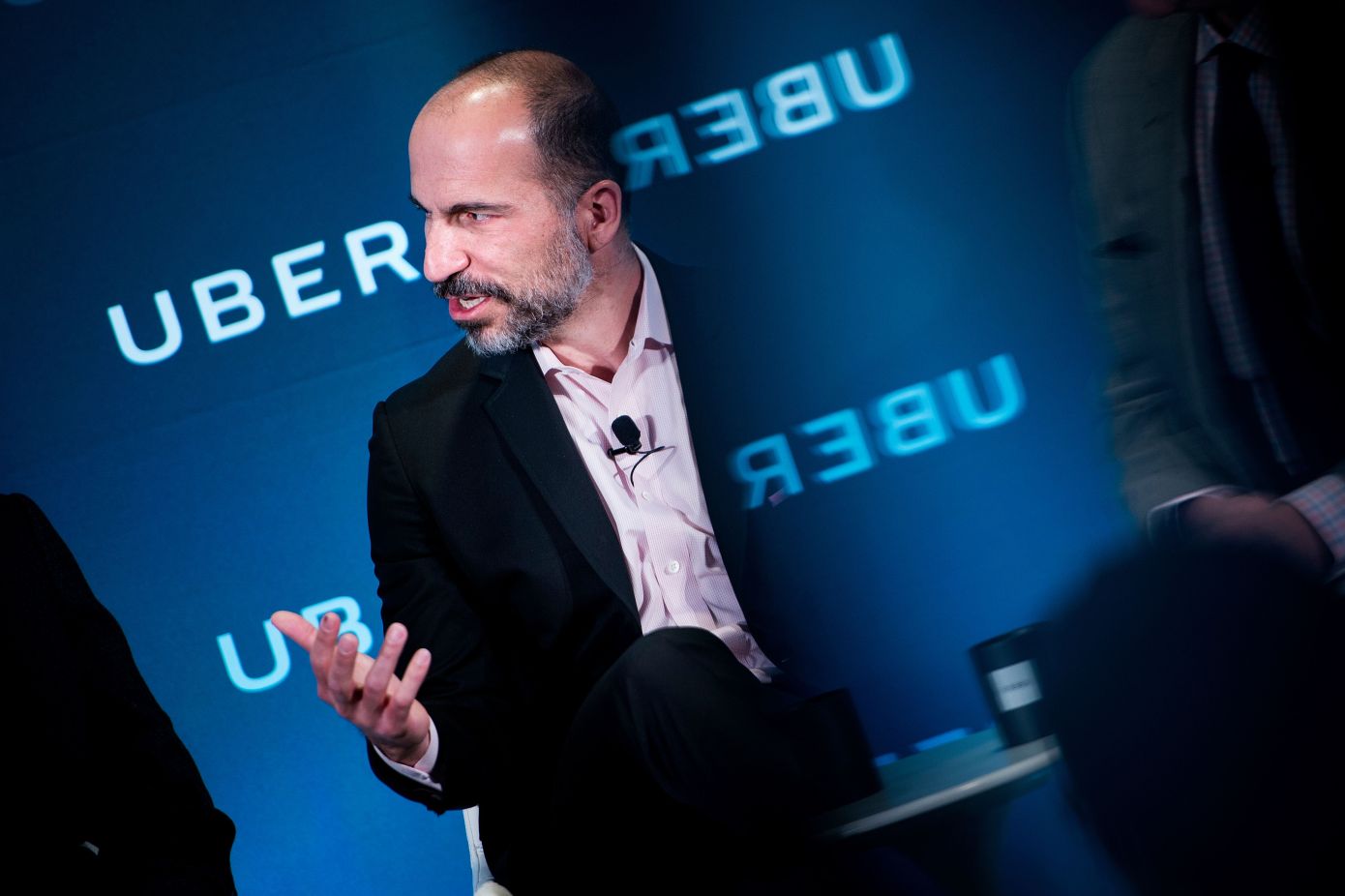
Uber CEO
Dara Khosrowshahi, CEO of Uber, speaks during an event at the Uber DC Green-light Hub April 11, 2018 in Washington, DC. / AFP PHOTO / Brendan Smialowski (Photo credit should read BRENDAN SMIALOWSKI/AFP/Getty Images)

Ride-hailing company Uber, reported its third quarter (Q3) earnings for 2023, recording a revenue growth of 11% year-on-year $9.3 billion, but missed investors expected revenue of $9.5 billion.

Uber CEO Dara Khosrowshahi said revenue growth would have been 8% higher, but he told investors that the Q3 revenue was negatively impacted by business model changes in some countries that classified certain sales and marketing costs as contra revenue by $161 million

In his words,

“These results demonstrate that Uber continues to drive profitable growth at scale and why we believe we’re well positioned for the journey ahead, in good or bad macro environments. Our relentless focus on improving the product experience for both consumers and drivers continued to power profitable growth, with trip growth accelerating to 25%. Uber’s core business is stronger than ever as we enter the busiest period of the year”.

Turning to profitability, Uber reported a net income of $221 million in the third quarter, or 10 cents per share, compared with a net loss of $1.2 billion, or 61 cents per share, in the same quarter last year.

Revenue from Mobility grew to $5.07 billion, up 33% year-over-year, Delivery was $2.94 billion, up 6%, and freight at $1.29 billion, which fell 27% year-over-year.

In the third quarter, Uber saw total bookings rise from $29.1 billion to $35.3 billion, a gain of around 21%. In business segment terms, Uber generated $17.9 billion in ride-hailing bookings (+31% year over year) and $16.1 billion worth of delivery bookings (+18%).

Trips grew 25% year-over-year to 2.4 billion or 27 million per day. Uber’s monthly active platform consumers reached 142 million, up 15% year-over-year.

Gross bookings grew 21% year-over-year to $35.3 billion, with Mobility Gross Bookings of $17.9 billion, up 31% year-over-year, Delivery Gross bookings of $16.1 billion, up 18%, and Freight Gross Bookings of $1.3 billion, which fell 27% year-over-year.

While Uber’s ride-hailing and delivery business saw an uptick in gross bookings in the third quarter, Uber Freight experienced a 27% drop year-over-year. Revenue, as a result, had a similar fall. The business unit reported revenue of $1.3 billion in the third quarter, a 27% drop from the same period last year.

Also speaking on the company’s third-quarter result, Uber CFO Nelson Chai said,

“Strong topline trends and record profitability demonstrate the durability of our growth and, the significant earnings power underlying our platform. We continue to make disciplined investments in growth opportunities to support long-term value creation for all stakeholders.”

The ride-hailing company after the quarter had $5.2 billion in cash and equivalents and generated $905 million in free cash flow.

For the fourth quarter (Q4) of 2023, Uber disclosed that it expects to report gross bookings between $36.5 billion and $37.5 billion, compared with analysts estimation of $36.5 billion, and adjusted EBITDA of $1.18 billion to $1.24 billion.

Samsung Unveils Generative AI Model Samsung Gauss

South Korean Tech giant, Samsung has unveiled its generative AI model called “Samsung Gauss”, at the Samsung AI Forum 2023.

The generative AI model is reportedly named after famous mathematician Johann Carl Friedrich Gauss who made significant contributions to many fields in mathematics and science.

Gauss consists of three main components, which include; Samsung Gauss Language, Samsung Gauss code, and Samsung Gauss Image. Like ChatGPT, Samsung Gauss Language is a large language model that can understand human language and answer questions.

Samsung Gauss Language is a generative language model designed to boost work efficiency by assisting with tasks like email writing, document summarization, and translation. It can also enhance consumer experience by enabling smarter device control when applied to products.

Samsung Gauss Code is a coding assistant that facilitates in-house software development. It streamlines the coding process and provides interactive features like code description and test case generation.

The coding assistant can also quickly generate unit test cases and code snippets using natural language. Users can input code to debug them through a friendly interface.

Samsung Gauss Image is capable of generating and editing images, allowing for style changes, and additions. It also has the ability to generate images in different styles, like scaling a low-resolution image to High resolution image, adding new elements to an image, and many more. The AI model may work similarly to Google Pixel’s Magic editor feature in the photos app.

The generative AI model primarily has three key features, which include text, code, and image generation. It can summarize texts, generate creative ideas, translate texts, write new content, and more.

Announcing the roll-out of Gauss, Samsung said via a press release that the generative AI model is currently used in employee productivity but will be expanded to a variety of Samsung product applications to provide new user experience in the near future.

Samsung’s launch of Gauss is coming seven months after the tech giant temporarily placed a ban on generative AI tools on company-owned devices, over fears that uploading sensitive information to these platforms represents a security risk.

The company’s recent foray into generative AI marks a significant step forward, as it leverages the advanced technology to enhance consumer experience.

Samsung could be amongst the first handset makers in the world to introduce generative Al to its devices. Daniel Araujo, Samsung’s vice president of the mobile business, said on the company’s earnings call last month, disclosed that the generative Al model will likely reach customers next year.

Niger State Governor Demands 13% Derivation Fund for Hydrocarbon Exchange
0

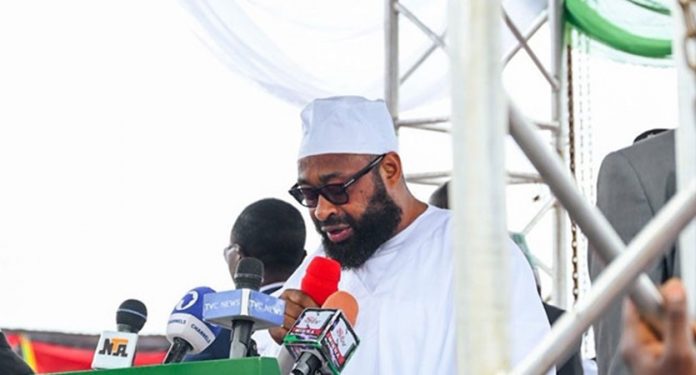
Governor Umaru Bago of Niger State has taken a bold stand in demanding the payment of a 13% derivation fund, similar to other oil-producing states in Nigeria.

The governor made the demand during a meeting with the Federal Commissioner of the National Commission for Refugees, Migrants, and Internally Displaced Persons, Tijani Aliyu, in Minna on Monday.

Bago firmly believes that Niger State, despite not being traditionally classified as an oil-producing state, should receive compensation for the hydrocarbon exchange taking place within its borders. He emphasized that the state deserved to be paid approximately N1 trillion for the resources flowing from Niger State to the Delta region.

“We need 13 percent derivation for water supplied to the Delta. Our people are ravaged and displaced year in, year out because of the flow of water from the Niger to the Delta,” he stated, highlighting the environmental impact and hardships faced by Niger State’s residents.

Bago’s demands are not limited to financial compensation. He urged relevant entities, including the Federal Government, Abuja Electricity Distribution Company (AEDC), and the Nigerian National Petroleum Corporation (NNPC), to acknowledge the contributions of Niger State and pay their dues.

“The Federal Government will pay Niger State N1 trillion in the next three months for hydrocarbon exchange; they must. We have provided this country with hydropower for a long time; nobody is compensating us for it,” the governor asserted.

Bago’s resolve appears unwavering, as he warned that Niger State would take drastic measures to ensure its demands are met.

“We have woken up; we can never ever tolerate being neglected or abandoned again. The only way we can ensure that the federal government heeds to us is to shut down the hydro dams unless we are paid,” he threatened.

He continued, “We are serious about this, it is not a threat; it is a statement. Every dime that is due to us, we will take it, we will take every kobo that is for Niger State. We are not going to be marginalized again; our waters, our lands, our borders are strengths for us and not weaknesses.”

The governor emphasized that every resource originating from Niger State must be compensated, and the state will not tolerate being overlooked any longer. He announced, “We are going to the Supreme Court, and we will take the Federal Government to the Supreme Court unless the 13 percent derivation from our land, water, air, grass, and everything given to us is paid. We must be compensated. Our people have done enough for Nigeria.”

Governor Bago’s demands have once again brought to the fore the issue of fiscal federalism, which has been advocated for years. While Niger State’s determination to secure its rightful share of the hydrocarbon exchange brought attention to a broader conversation about fairness and recognition for all contributing regions in Nigeria, the demand for 13% derivation has raised eyebrows.

Many believe that Bago’s demand is unrealistic given that about 80% of Nigeria’s power generation comes from gas-fired power plants while hydro is about 20%.

Nigerian Banks Are Capturing Value in the Economy; Among The Most Profitable Firms in 9M of 2023

0

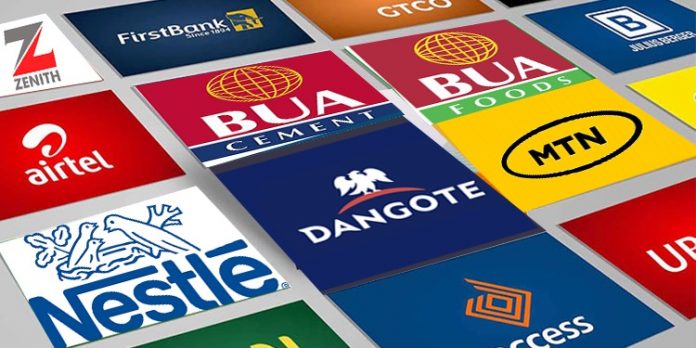
It is raining Naira in some headquarters in Nigeria, over the last 9 months to Sept 2023. Pre-tax profits*:

  • Zenith Bank: N505 billion
  • UBA: N502.1 billion
  • GTBank’s GTCO: N433.2 billion
  • Dangote Cement: N404.9 billion
  • Access Bank’s Access Holdings: N294.4 billion
  • First Bank’s FBNH: N270.3 billion
  • MTN Nigeria: N232.5 billion.

UBA remains the most geographical diversified banking institution in Nigeria and the results are showing the power of that playbook. Indeed, operating in about 20 African countries with shops in Dubai, New York, Paris and London, UBA has a good spot. Zenith Bank has used scale to become the leader. Of course, though it is no more the rainmaker, GTBank* continues to mint money.

For banks, 2023 is the best year yet. Do not expect these numbers in 2024; the FX gains will calibrate out by then. Of course, these numbers are relatively small, but considering the size of Nigeria’s economy, the banks are adequately capturing value – and that is why investors are cheering.

*Nairametrics data

FTX Wants to Sell its GBTC Shares and other Trust Assets

0

FTX, one of the largest cryptocurrency exchanges in the world, has announced that it plans to sell its Grayscale Bitcoin Trust (GBTC) shares on the secondary market. GBTC is a popular investment vehicle that allows investors to gain exposure to Bitcoin without holding the actual cryptocurrency. GBTC shares trade at a premium or discount to the net asset value (NAV) of the underlying Bitcoin, depending on the supply and demand dynamics.

According to the motion filed at the bankruptcy court in Delaware, FTX has reached an agreement with a group of investors, led by Paradigm Capital, to purchase some of its trust assets for $150 million. The trust assets include FTX’s stakes in various crypto projects, such as Solana, Serum, and FTX Token. The sale would allow FTX to repay its secured and unsecured creditors, who are owed more than $200 million.

FTX claims that the sale is in the best interest of its stakeholders, as it would provide a quick and efficient resolution of its bankruptcy case. FTX also argues that the sale is fair and reasonable, as it reflects the current market value of the trust assets and was negotiated at arm’s length. FTX says that it received multiple offers from potential buyers but chose Paradigm Capital as the highest and best bidder.

The motion is subject to approval by the bankruptcy court, which will hold a hearing on November 15. If approved, the sale would mark one of the largest transactions involving crypto assets in a bankruptcy context. The sale would also have implications for the crypto industry, as it would demonstrate the viability and liquidity of crypto assets as a form of collateral and payment.

FTX CEO Sam Bankman-Fried said that the exchange acquired about $1.7 billion worth of GBTC shares earlier this year, when the premium was around 10%. However, since then, the premium has turned negative, meaning that GBTC shares are trading below the NAV of Bitcoin. This has resulted in a loss for FTX and other GBTC holders, who are locked in for six months before they can sell their shares.

Bankman-Fried said that FTX is looking for buyers who are willing to pay a fair price for the GBTC shares, which he estimated to be around 0.5% below NAV. He said that FTX is not interested in holding GBTC for the long term, as it prefers to invest in Bitcoin directly or through other products. He also said that FTX is open to selling its GBTC shares to Grayscale itself, if the trust decides to buy back its own shares.

The negative premium of GBTC has been a source of concern for many investors, who fear that it could affect the performance and reputation of the product. Some analysts have suggested that Grayscale should convert GBTC into an exchange-traded fund (ETF), which would allow for more liquidity and arbitrage opportunities. However, Grayscale has not indicated any plans to do so, as it faces regulatory hurdles and competition from other Bitcoin ETFs that have been approved in Canada and Europe.

FTX filed for Chapter 11 bankruptcy protection in the U.S. bankruptcy court of Delaware. This means that FTX is unable to pay its debts and needs to reorganize its business under the supervision of the court. FTX has more than $200 million in liabilities, mainly to its creditors who lent money or provided services to FTX.