DD
MM
YYYY

PAGES

DD
MM
YYYY

spot_img

PAGES

Home Blog Page 402

Qualcomm Embraces Arm’s v9 Architecture in Flagship Chips, Signaling Truce in Bitter Legal Clash

0

Qualcomm has shifted its flagship chips to the latest generation of Arm Holdings’ computing architecture, with new features aimed at better AI performance, sources familiar with the matter told Reuters — a decision that could not only help Qualcomm compete more effectively with MediaTek and Apple but also give a revenue lift to Arm.

The move addresses lingering questions about whether and how Qualcomm will continue working with Arm following last year’s acrimonious legal dispute, during which Arm had at one point threatened to revoke a critical license. Qualcomm is signaling that it sees value in continuing the partnership by adopting the ninth version of Arm’s computing architecture — known in the industry as “v9” — even as legal tensions remain unresolved.

Shares of Arm jumped 5% during the regular session after news of Qualcomm’s adoption was published. Investors viewed the development as a sign that Arm, now publicly traded, can still rely on major chipmakers to integrate its designs despite growing competition from alternatives like RISC-V.

San Diego-based Qualcomm last week unveiled a new generation of PC and phone chips, and unlike previous iterations, its new processors will be built on the v9 instruction set. The update is designed to help chips handle more complex workloads such as generative AI, image generation, and chatbots — areas seen as central to the next wave of semiconductor demand.

Qualcomm rivals have already staked their positions. Taiwan’s MediaTek, which has at times surpassed Qualcomm’s market share in mobile processors, has publicly confirmed its use of v9. Analysts widely believe Apple is already deploying the architecture in its own chip designs. Qualcomm’s decision, therefore, aligns it with competitors already leveraging v9, avoiding the risk of being perceived as lagging behind in next-gen AI performance.

Asked about its choice of technology, Qualcomm declined to confirm specifics, saying instead in a statement: “We chose the instructions that make sense for our customers. That’s the beauty of having our own CPU design team — we can pick and choose the instructions that add value.”

For investors, the shift highlights an important divergence in strategies across the semiconductor industry. While RISC-V has gained attention as a free, open-source chip standard, it lacks the maturity and developer ecosystem of Arm’s architecture. Qualcomm could have chosen to extend use of its prior Arm generation, as it did with its chips announced last year, or leaned more aggressively toward open standards. Qualcomm appears to be balancing the need for cutting-edge AI performance with the relative stability of Arm’s established ecosystem by opting for v9.

Jay Goldberg, senior analyst for semiconductors and electronics at Seaport Research Partners, said the financial impact for Arm is difficult to quantify since Qualcomm licenses Arm’s computing architecture but designs much of its chip in-house. Still, he said the decision is strategically significant given the recent disputes.

“That’s very positive for Arm,” Goldberg said. “These are companies that were fighting each other. Qualcomm could have gone a very different path here.”

The adoption is believed to underline Qualcomm’s determination to keep pace in the AI-driven semiconductor race, where Apple and MediaTek have already made headway. For Arm, the win strengthens its case to shareholders that even amid legal frictions and emerging rivals, its core technology remains indispensable to industry leaders.

A foray Into The 2025 US Government Partial Shutdown

0

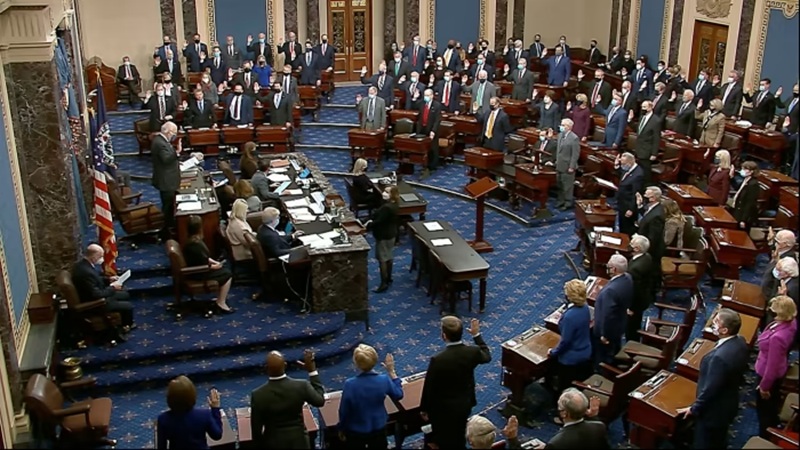
The US federal government has entered a partial shutdown at 12:01 a.m. EDT after Congress failed to pass a funding bill before the fiscal year’s end on September 30.

This marks the 15th shutdown since 1981, triggered by deep partisan divides over spending priorities, including health care protections, border security, and infrastructure funding.

The impasse pits Republicans, who control the White House, House, and Senate under President Trump, against Democrats demanding extensions for Affordable Care Act (ACA) tax credits and opposition to cuts in social programs.

The House passed a continuing resolution (CR) to fund operations through November 21 at current levels, but it stalled in the Senate, where Democrats blocked it via filibuster, citing insufficient protections against rising health costs and other “partisan riders.”

President Trump and GOP leaders blame Senate Democrats, particularly Leader Chuck Schumer, for the “Schumer Shutdown,” while Democrats counter that Republicans are using the crisis to slash entitlements.

In retaliation, the Trump administration has frozen $18 billion in federal funds for New York City rail and subway projects, targeting Schumer’s home state.

A White House meeting on September 29 yielded no breakthrough, with Trump threatening “mass layoffs” for non-essential programs to force negotiations.

No resolution timeline is clear, but past shutdowns have lasted from days to over a month. The shutdown halts non-essential operations, furloughs ~800,000 federal workers without pay, though backpay is eventual, and disrupts services.

Essential functions like national security, air traffic control, and law enforcement continue, but with reduced staffing ~800,000 furloughed (e.g., IRS, EPA staff); ~1.4 million “essential” workers unpaid but on duty like Border Patrol, TSA. Daily losses: $400M in wages.

Military personnel continue duties; backpay guaranteed post-shutdown. September jobs report (Oct 3) delayed; other BLS stats halted. Wall Street unease amid volatility.

Stock markets open as usual, but investors watch for prolonged effects. Airport security lines lengthen fewer TSA; flight delays possible; national parks close no rangers, visitor centers. Flights operate; FAA air traffic control continues pilots union warns of strain.

FDA halts new drug approvals, food inspections; USDA stops loan guarantees, animal feed monitoring risk to meat/milk safety. Medicare/Medicaid payments continue; ACA subsidies at risk if unresolved by year-end.

NIH/NSF halt grants, scientific work; HUD pauses new loans/mortgages. Smithsonian museums open until ~Oct 6 using reserves. IRS stops processing refunds, audits; DOJ curtails civil cases.

Criminal prosecutions, border security proceed. Tax filing deadline Oct 15 for extensions unchanged. Smithsonian, Capitol/White House tours canceled; WIC nutrition aid for low-income families at risk.

Social Security checks issued; veterans’ benefits continue. Estimated weekly cost: $1B+ to travel alone, plus broader economic drag. Prolonged shutdown could lead to permanent layoffs in discretionary programs, per OMB guidance.

This shutdown echoes 2018-2019’s border wall fight but ties into 2025’s battles over ACA credits expiring December 31 and Trump’s push for spending cuts federal outlays up 58% since 2019.

VP JD Vance called Democrats “hostage takers” on CBS, while Speaker Mike Johnson framed it as a “downsize opportunity.” Former VP Kamala Harris blamed Republicans for prioritizing “health care cost hikes.”

The partial shutdown, now in its first day as of October 1, 2025, extends beyond immediate service disruptions into broader ripple effects on the economy, public health, political dynamics, and daily life.

While historical shutdowns have often been short-lived with retroactive pay for workers, this one—fueled by clashes over ACA extensions, spending cuts, and partisan riders—carries unique risks due to the Trump administration’s threats of mass layoffs and program reductions.

Experts like those at the Milken Institute warn of amplified economic drag in a fragile recovery environment, with potential GDP hits of 0.1-0.5% per week if prolonged. Below, I break down the key implications across categories, drawing on contingency plans, expert analyses, and real-time reactions.

Shutdowns typically shave off minimal growth, but this could differ amid high debt— debt-to-GDP at 130% and volatility from tariffs or inflation. Key effects include delayed data releases, furlough-induced spending drops ($400M daily wage loss), and investor unease—S&P futures dipped overnight, while Bitcoin held steady above $113K, echoing past rallies during uncertainty.

Health risks climb with FDA/USDA inspection halts like meat safety lapses, and NIH trials pause, delaying research. Social Security/Medicare payments flow mandatory spending, but VA services strain—veterans’ hospitals stay open, but non-urgent care waits.

Airports operational but strained TSA lines up 20-30%; national parks close visitor centers, canceling hikes and tours—impacting 400+ sites and $500M+ monthly tourism. Smithsonian museums shutter after Oct 6.

Disproportionate harm to women/minorities via WIC/SNAP cuts; urban areas like NYC face amplified transit woes from frozen funds. Prolonged effects could mirror 2013’s sanitation crises in parks, fostering public health hazards.

This “Schumer Shutdown” (GOP label) vs. “GOP austerity ploy” (Dem framing) deepens divides, with Trump eyeing it for entitlement reforms and Democrats filibustering over ACA credits expiring Dec 31.

White House broadcasts mock Dem “devastating impacts” rhetoric, while polls show 59% of independents oppose shutdowns. Senate votes failed 55-45 (GOP CR) and 47-53 (Dem alternative); next attempts Wednesday, but brinkmanship persists.

Scope Ratings flags U.S. ‘AA’ downgrade risk from fiscal chaos, eroding trust amid rising deficits. Allies watch warily; adversaries may exploit delays in aid/diplomacy. Could force OBBB (One Big Beautiful Bill Act) tweaks, but Vought’s letter blames Dem “insane demands,” signaling escalation.

Overall, a brief shutdown under 2 weeks likely limits damage to inconvenience, but extension invites recessionary echoes, per Nomura economists.

DOGE Targets $1.70, CRO Surges 62%, BlockDAG Dominates with Live Ecosystem and Nearly $420M Raised in Presale!

0

The crypto market is once again split between price-driven narratives and adoption-driven fundamentals. On one side, traders are focused on Dogecoin (DOGE) price potential, which is flashing a breakout setup pointing toward $1.70.

Alongside it, Cronos (CRO) price momentum has stunned the market with a 62% surge, propelled by its loyal community and rising trading volumes. Both cases highlight how cycles and community enthusiasm remain powerful short-term drivers in the crypto arena. On the other side, BlockDAG is showing how consistent delivery can define the best crypto to invest in.

With nearly $420M raised, coins priced at $0.0015 in Batch 31, Dashboard V4 offering real-time engagement, and a 25% referral program fueling expansion, BlockDAG is engineering sustainable growth beyond short-term price action. The contrast makes one thing clear: while meme and community tokens spark rallies, fundamentals often decide the long-term winners.

DOGE’s Breakout Pattern Points to Strong Upside Potential

The latest analysis of Dogecoin (DOGE) price potential suggests one of the strongest setups in today’s market. After months of consolidation, DOGE has formed a symmetrical triangle pattern on its weekly chart. Recent price action confirms a breakout above resistance, signaling momentum building for the next major move. Analysts highlight a bullish target of $1.70, supported by an extraordinary 1:29 risk-to-reward ratio, making this setup attractive to traders.

The first resistance level sits near $0.35, which, if cleared, could accelerate buying pressure and validate the bullish thesis. Despite risks of false breakouts, increased trading volume, and market enthusiasm for meme tokens, strengthens the case for sustained gains.

Meme coins thrive on retail participation, and Dogecoin’s community remains unmatched in size and influence. With institutional money showing more willingness to embrace volatility, the Dogecoin (DOGE) price potential narrative continues to capture attention. Its performance ensures DOGE remains in contention for the best crypto to invest in, especially for cycle-driven traders.

Cronos Rallies 62% with Strong Community Push

The surge in Cronos (CRO) price momentum has been nothing short of remarkable, with CRO soaring 62% to hit $0.0002225 in one of its biggest rallies in months. This move has been fueled by the passionate Cronos Army, whose grassroots enthusiasm has amplified trader sentiment across social platforms. Increased trading volumes have added further strength, signaling that this rally may have deeper legs than a typical speculative spike.

Key resistance levels now sit at $0.0002499 and $0.0003000, with a potential path toward $0.0004000 if momentum continues. On the downside, support at $0.0001999 must hold to keep the bullish narrative intact.

Analysts argue that the combination of community energy, rising volumes, and broader Q4 optimism could keep pushing CRO higher. However, sustainability will depend on whether enthusiasm holds after the initial surge. For now, Cronos (CRO) price momentum is one of the most striking stories in the market, keeping CRO firmly on the radar as a candidate for the best crypto to invest in.

Dashboard V4 and Referrals Fuel BlockDAG’s Growth!

While headlines spotlight Dogecoin (DOGE) price potential and Cronos (CRO) price momentum, BlockDAG is proving that adoption and technology determine which projects earn the title of the best crypto to invest in. The project has already raised nearly $420M in its crypto presale, with over 26.5 billion coins sold! Plus, Batch 31 is locked at $0.0015 for a limited time. Against a confirmed $0.05 launch price, this provides a substantial upside for current participants. This success sets BlockDAG apart from speculative plays still chasing validation.

Driving this momentum is Dashboard V4, a presale hub designed like a professional trading platform. It offers live charts, simulated order books, referral leaderboards, and gamified participation, creating transparency and engagement rarely seen in presales. More than just a feature, Dashboard V4 signals BlockDAG’s focus on trust, usability, and confidence ahead of mainnet launch.

At the center of its viral growth engine is the 25% referral system. Referrers receive generous commissions, while referees gain a 5% bonus, ensuring both sides benefit. This structure has fueled community expansion at scale, giving BlockDAG a competitive edge in user acquisition that few projects can replicate.

Underpinning all of this is BlockDAG’s hybrid DAG + PoW/PoE architecture, built to process 2,000–15,000 transactions per second with future smart contract and interoperability capabilities. These technical milestones show that BlockDAG is not just a promising invention; it is already delivering measurable results. Together, the presale raise, referral-driven growth, transparency tools, and scalable infrastructure cement BlockDAG as the best crypto to invest in.

Final Thoughts

The market debate is clear: Dogecoin (DOGE) price potential could drive another legendary meme rally, while Cronos (CRO) price momentum showcases the power of dedicated communities. Both highlight the importance of sentiment and cycles in crypto. Yet, their paths rely heavily on sustaining hype and clearing resistance levels.

BlockDAG, in contrast, has proven it is more than speculation. With nearly $420M raised, a strong presale price structure, Dashboard V4 enabling transparency, a 25% referral program fueling viral adoption, and a robust hybrid architecture ready for scaling, it is building the fundamentals for long-term success. These are not short-term signals but real infrastructure and incentives driving growth.

For investors weighing where to allocate capital, the choice is between chasing volatility or embracing delivery. While Dogecoin and Cronos remain strong players, BlockDAG’s achievements and growth model make it a compelling candidate for the best crypto to invest in in 2025 and beyond.

Presale: https://purchase.blockdag.network

Website: https://blockdag.network

Telegram: https://t.me/blockDAGnetworkOfficial

Discord: https://discord.gg/Q7BxghMVyu


OpenAI Becomes World’s Most Valuable Startup at $500 Billion Valuation

0

Artificial Intelligence company OpenAI, has officially claimed the title of the world’s most valuable startup after closing a secondary share sale that valued the company at a staggering $500 billion, according to Bloomberg.

This recent surge in valuation, represents a significant increase from its previous valuation of $300 billion, underscoring OpenAI’s rapid gains in both users and revenue.

The deal, which allowed current and former employees to sell $6.6 billion worth of shares, pushes OpenAI ahead of Elon Musk’s SpaceX, now valued at $400 billion.

As part of the deal, OpenAI employees sold shares to a consortium of investors including Thrive Capital, SoftBank, Dragoneer Investment Group, Abu Dhabi’s MGX, and T. Rowe Price. Also, reports reveal that the company had authorized sales of $10-billion-plus worth of stock on the secondary market.

Led by CEO Sam Altman, OpenAI’s meteoric rise underscores the frenzied investment wave sweeping through artificial intelligence. The timing is particularly crucial, as the company negotiates with Microsoft, its largest backer and LinkedIn’s parent company, to transition into a for-profit structure.

Financial disclosures reveal that OpenAI generated $4.3 billion in revenue in the first half of 2025, a figure already 16% higher than its total revenue for all of 2024. The company has set ambitious targets of $13 billion in annual revenue and $8.5 billion in cash burn for the year, much of which is being driven by heavy spending on R&D and the infrastructure required to run ChatGPT.

Notably, OpenAI’s valuation surge comes at a time when giant chipmaker Nvidia pledged up to $100 billion in investment, tied to deploying 10 gigawatts of computing power on its chips an energy capacity greater than the annual consumption of some small countries.

OpenAI’s rise is not just about financials. The move has intensified the global AI talent war, with tech giants like Meta scrambling to hire top executives and pour billions into competing AI initiatives. Since the launch of ChatGPT in late 2022, OpenAI’s annual recurring revenue has already reached $12 billion, with forecasts suggesting it could hit $20 billion by the end of 2025.

In less than three years, OpenAI has gone from relative obscurity to setting a new benchmark in global technology. Its valuation now exceeds the GDP of many countries, a fact that simultaneously excites and alarms industry watchers. The artificial intelligence company has continued to roll out innovative features on its popular chatbot ChatGPT which has seen it garner millions of users.

As of September 2025, ChatGPT has approximately 800 million weekly active users, according to statements from OpenAI CEO Sam Altman and corroborated by multiple industry analyses. This marks a rapid doubling from 400 million weekly active users reported in February 2025.

For context on daily usage, estimates put it at around 190 million daily active users, with the platform handling over 1 billion queries per day as of July 2025.

OpenAI has set a goal to reach 1 billion users by the end of 2025, though total lifetime or monthly active user figures (sometimes cited as high as 5.72 billion in aggregated estimates) are less consistently reported and may include duplicates or broader OpenAI ecosystem interactions.

For builders, operators, and policymakers alike, OpenAI $500 billion valuation, signals the dawn of a new era one where AI is no longer a distant promise but a dominant economic force shaping industries, societies, and the future of work.

This valuation coincides with the AI startup negotiating a shift to a more traditional for-profit structure with Microsoft, its key backer.

Bitcoin Breaks $119K as Bullish Momentum Continues Amid U.S Government Shutdown

0

Bitcoin extended its bullish momentum this week, climbing above $119,000 and cementing its strong start in October, amid the U.S government shutdown.

The flagship cryptocurrency held above the $115,000 zone before accelerating higher, breaking through successive resistance levels at $117,000, $118,000, and finally $119,000.

A peak was recorded at $119,426 before the price began consolidating gains above the 23.6% Fibonacci retracement of the move from the $112,806 swing low to the $119,024 high.

At present, Bitcoin is trading well above $117,000 and the 100-hourly simple moving average. Analysts also noted a short-term bullish trend line forming with support at $117,000, signaling resilience in the price structure.

Bitcoin has gained almost 10% over the past week as bulls stage a comeback, echoing the upside in gold. Amid a trip to over $119,500, market participants expect the rally to cool before continuation is possible. This is due to price indicators becoming overheated.

“Uptober” Holds Strong

The surge highlights the strength of the “Uptober” narrative, a recurring seasonal pattern in which October historically delivers robust gains for Bitcoin. This year, the rally has coincided with the U.S. government’s first shutdown since 2018, marking the 11th such disruption in modern history.

With Republicans and Democrats failing to agree on federal spending levels, the shutdown is estimated to cost the U.S. economy $15 billion in lost GDP every week.

According to prediction market Polymarket, there is only an 8% probability of a near-term resolution. Against this backdrop, Bitcoin is increasingly being viewed as a non-sovereign store of value, attracting demand from investors seeking shelter from political dysfunction.

Lucas Kiely, CEO of digital asset wealth manager Future Digital, remarked that market volatility could increase as a result of the uncertainty. He suggested that unless Washington resolves the deadlock quickly, the administration might attempt to push for cuts in the federal workforce, though such measures are likely to face Senate opposition.

Breakout Confirmed, Eyes on $120K–$124K

From a technical standpoint, Bitcoin has broken free from its earlier consolidation phase between moving averages and resistance. Liquidity sweeps and structural shifts now tilt the market strongly bullish. Analysts identify the $120K–$124K region as the next major supply block and liquidity cluster, making it a key upside target.

If a pullback occurs, the $114K–$115K demand zone remains a crucial level. Strong bids there could fuel another rally attempt, while a failure to defend it might drag the price back toward $110K though this appears less probable given the prevailing momentum.

Altcoins Join the Rally

Amid Bitcoin’s recent upward price action, the broader crypto market has also staged a recovery, with the total market capitalization climbing back above $4 trillion. Ethereum trades above $4,300, XRP has rebounded to $2.96, and Binance Coin has surpassed $1,000. Solana reclaimed the $221 level, while Cardano continued its rebound after summer weakness.

Historically, Bitcoin’s strength has preceded capital rotation into altcoins, and traders expect that pattern to unfold once again as Q4 progresses. Analysts forecast that the rally could extend deeper into October, though short-term retests may occur as markets digest recent gains.

Outlook

With the U.S market shutdown, investor flows into Bitcoin demonstrate its resilience during periods of political gridlock. Traders often view decentralized assets as an alternative when traditional markets falter, and the shutdown strengthened that perception.

Despite pullback concerns, traders see Thursday’s rally as proof of Bitcoin’s staying power. The narrative around Uptober, built over years of October gains, adds further fuel to the momentum. A significant number of analysts anticipate the BTC price to hit $120k and above.