DD
MM
YYYY

PAGES

DD
MM
YYYY

spot_img

PAGES

Home Blog Page 4025

OpenAI Makes GPT-4 Generally Available As the Chatbot Loses Users for the First Time

0

OpenAI has announced the general availability of GPT-4, its latest text-generating model, through its API, making the technology available for developers.

According to a blog post by the company, all current developers of the OpenAI API, who have a proven track record of successful payments; will have access to GPT-4. Additionally, the company intends to expand access to new developers by the end of this month. Subsequently, they plan to gradually increase the availability limits based on the availability of computing resources.

“Millions of developers have requested access to the GPT-4 API since March, and the range of innovative products leveraging GPT-4 is growing every day,” OpenAI wrote in a blog post. “We envision a future where chat-based models can support any use case.”

The move follows a report that ChatGPT is losing consumer interest as the number of people visiting the AI chatbot’s website and downloading its app declines for the first time since its launch in November.

GPT-4, the latest iteration of the OpenAI language model, offers enhanced capabilities compared to its predecessor, GPT-3.5. It can generate text, including code, and accept both image and text inputs. It has demonstrated performance at a “human level” across various professional and academic benchmarks. Similar to previous GPT models, GPT-4 was trained using publicly available data and licensed data obtained by OpenAI.

However, the image-understanding feature of GPT-4 is currently being tested with a single partner, Be My Eyes, and there is no specific timeline mentioned for its wider availability to other customers, according to Yahoo.

OpenAI has plans to enable developers to fine-tune GPT-4 and GPT-3.5 Turbo, another text-generating model, using their own data. This capability, which has been available for several of OpenAI’s text-generating models, is expected to be rolled out later this year.

In the rapidly evolving landscape of generative AI, competition has intensified. Anthropic, for instance, expanded the context window of its text-generating AI model, Claude, from 9,000 tokens to 100,000 tokens, according to Yahoo.

The context window refers to the amount of text the model considers before generating additional text, while tokens represent units of raw text. GPT-4 previously held the record for a context window size of 32,000 tokens. Models with smaller context windows tend to “forget” recent conversation content, resulting in deviations from the desired topic.

Competition appears to have given chatbot users a variety of options, tanking OpenAI’s consumer rating. In June, global traffic to the website of ChatGPT experienced a decline of 9.7% compared to the previous month, as reported by SimilarWeb, an internet data firm. Additionally, data from Sensor Tower reveals a consistent decrease in downloads of the ChatGPT iPhone app since its peak in early June, following its launch in May.

In a similar announcement, OpenAI said it’s making some changes in the general availability of its DALL-E 2 and Whisper APIs. DALL-E 2 is OpenAI’s model for generating images, while “Whisper” refers to the company’s speech-to-text model.

To optimize its compute capacity, OpenAI has also revealed plans to deprecate older models offered through its API. This decision comes as a response to the overwhelming demand for OpenAI’s generative models, particularly driven by the immense popularity of ChatGPT.

Effective January 4, 2024, certain older OpenAI models, including GPT-3 and its derivatives, will no longer be accessible. They will be replaced by new “base GPT-3” models, presumably designed to enhance compute efficiency. Developers currently utilizing the old models will be required to manually update their integrations before January 4.

“We will be providing support to users who previously fine-tuned models to make this transition as smooth as possible,” OpenAI wrote. “In the coming weeks, we will reach out to developers who have recently used these older models, and will provide more information once the new completion models are ready for early testing.”
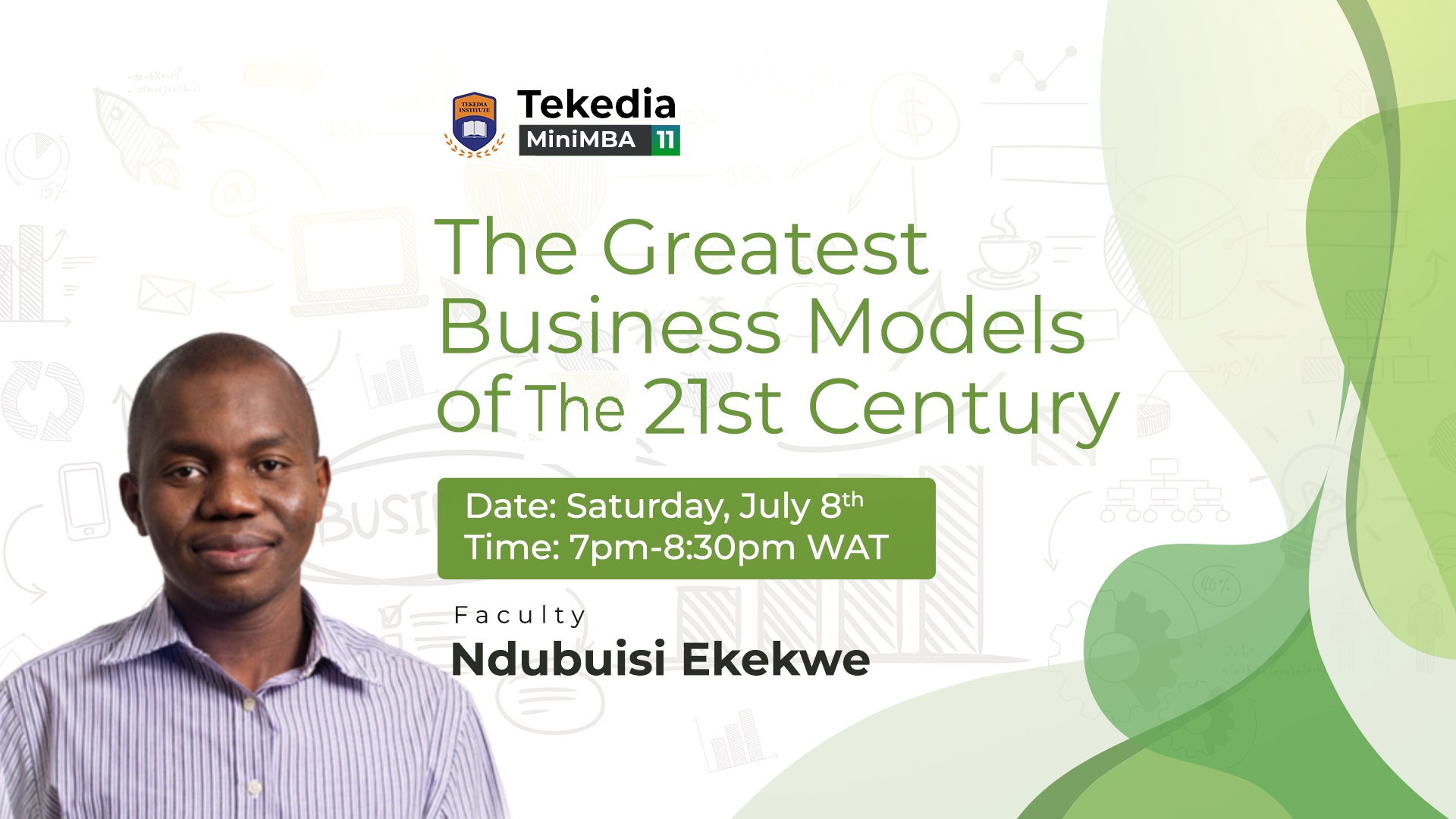

The Greatest Business Models of the 21st Century – Tekedia LIVE, July 8

0

If you check the top 20 digital technology companies in the world, one thing is very consistent: they share a business model. Business model encapsulates how a company makes money and captures value. To a large extent, making and committing a company to a business model is the most important decision a CEO or an executive management is tasked to make. 

In this Tekedia Mini-MBA module, in a 53-page course material, I explain most of the most common business models in our time. During this Zoom Live session, I will focus on cases on some dominant ones. Yes, the business model you commit a company to contributes to a significant level if you would be successful in that business (check my Harvard article on this here) .

Meanwhile, we have opened registration for the next Tekedia Mini-MBA which begins Sept 11. Go here and register today and get the early registration discounts.

In the scheme of things, you can have many models at the end of a strategy session. The business model you commit your business to has a catalytic impact on your success. In other words,  the business model is supreme. Yes, the company has been bleeding revenue, but they changed the CEO. Magically, using the same staff on the products, the revenue started going north. What happened? A new business model has been deployed.

Sociology and Psychology of Post Self-Liking

0

In the realm of social media, individuals often engage in various strategies to gain attention, recognition, and validation. One such strategy is the act of liking one’s own posts. While it may initially seem narcissistic or self-centered, there are underlying sociological and psychological factors at play. In this piece, our analyst explores the sociology and psychology behind liking one’s own posts on social media, shedding light on the motivations that drive this behaviour.

Seeking Visibility and Social Capital

In the social media landscape, users are constantly vying for visibility and attention. By liking their own posts, individuals aim to increase the chances of their content resurfacing in their friends’ news feeds. This strategy enhances the visibility of their posts, potentially leading to more likes and comments. In this way, users strive to accumulate social capital, which is measured by the interactions and engagement received on their content.

Reinforcing Self-Worth and Identity

Liking one’s own posts can also be viewed as a form of self-affirmation. Social media has become a platform where individuals curate their identities and present an idealized version of themselves to the world. By liking their own posts, users reinforce their self-worth, seeking validation and confirmation from themselves and others. It serves as a means to boost self-esteem and maintain a positive self-image.

Timing and Strategic Engagement

Expert users of social media employ a strategic approach to liking their own posts. Rather than immediately liking their content after uploading, they wait for the initial wave of engagement to subside. By doing so, they ensure their posts move down the news feed, increasing the likelihood of reemerging when they eventually like or engage with the post. This timing technique helps prolong the lifespan of their content and maximizes the potential for further engagement.

The Power of Reciprocity and Social Gratitude

Another important aspect of liking one’s own posts is the subsequent chain reaction it can trigger. When individuals receive new likes on their posts, they often express gratitude by individually thanking the likers through comments. This creates a sense of reciprocity and social obligation, encouraging those who have liked the post to further engage or interact with it. By acknowledging each like, users keep their posts actively visible in the news feed, fostering ongoing engagement and prolonging the lifespan of their content.

Our analyst notes that as social media continues to evolve, studying these phenomena becomes increasingly important for researchers, marketers, and individuals seeking to navigate the intricacies of online self-presentation and engagement.

Zuckerberg Vs Musk’s Proposed Cage Match: A metaphor of Warfare in Business?

0

Few weeks back, Meta boss, Mark Zuckerberg, had challenged Tesla and Twitter boss, Elon Musk, to a friendly cage fight. Despite being a neophyte in combat, Musk accepted the challenge and showed his willingness to train as much as it would require him to be able take-on Zuckerberg who on the contrary is well groomed and decorated in Jitsu.

The proposed faceoff between Zuckerberg and Musk picked a lot of people’s interest and raised positive reactions in the media. Many internet users across different social media platforms said they could not wait to see the duo get physical and exhibit their combat skills on stage to the amusement of their viewers.

But it appears the dynamic between the two entrepreneurs is currently taking a different turn. Twitter has recently made a law suit threat to Meta for alleged copyright infringement following Meta’s unveiling of its new social networking platform, Thread, which provides alternative services of the twitter’s. Daubed the copycat app, Thread has been alleged to have been crafted out of Twitter’s trade secret. Twitter’s team of lawyers claimed in a letter sent to Zuckerberg that Meta recruited former Twitter employees who used twitter trade secrets to develop thread.

In a tweet, Musk conveyed his dissatisfaction at the revelation, saying: ” competition is fine. But cheating is not.”

However, Twitter’s claim that Meta enlisted its former employees who championed the development of the thread app, regardless of its correctness and legal implication, underscores the importance of human resource in the survivability and sustainability of a business. Apparently, when people move from companies to companies within the same industry, they move along with knowledge and insights which they consciously or unconsciously use to help their new companies to have a competitive edge.

Could Zuckerberg’s combat challenge with Musk be interpreted as a metaphor foreshadowing what is to transpire between the two social media behemoths, Twitter and Meta? My answer is an emphatic Yes.

It is like picturing the earliest periods of the ancient Chinese and Japanese dynasties where two great generals of two great empires invite each other for a fun game in preparation for a battle or partnership between the two empires at an unknown time in the future.

Meanwhile, Musk’s SpaceX business continues to grow.

Twitter and Tesla have had their ups and downs, but it’s been smoother sailing at another Elon Musk-led firm: SpaceX. The company is effectively monopolizing the global space market thanks to “a proven fleet of reusable rockets that can fly at a pace that rivals can’t match,” The Wall Street Journal writes. It has led 21 launches for outside clients so far this year — almost two-thirds of the world’s commercial space flights — and Musk has estimated that SpaceX will account for 80% of the mass that makes it into orbit in 2023. SpaceX-owned Starlink internet satellites had to “swerve more than 25,000 times” from December 2022 through May 2023 to stay clear of potential collisions, according to a new regulatory report.

Tinubu Set Up Tax Policy Reform Committee, Appoints PwC’s Taiwo Oyedele As Head

0

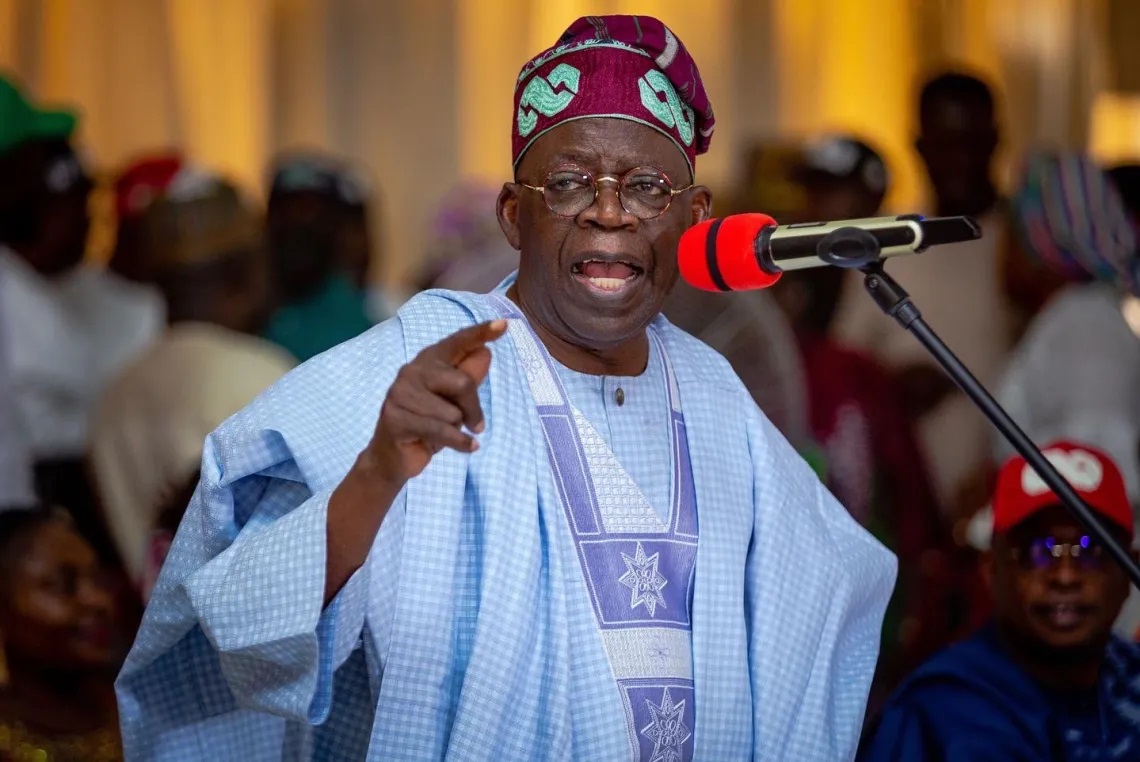
President Bola Tinubu has given his approval for the establishment of a Presidential Committee on Fiscal Policy and Tax Reforms. The committee will be led by Mr. Taiwo Oyedele, who holds the position of Fiscal Policy Partner and Africa Tax Leader at PriceWaterhouseCoopers (PwC).

The announcement of the committee was made by Dele Alake, the Special Adviser to the President on Special Duties, Communications, and Strategy, in a statement released on Friday.

According to the statement, the creation of this committee aligns with President Tinubu’s commitment to eliminating obstacles that hinder business growth in Nigeria. The committee will consist of experts from both the private and public sectors, and its primary responsibilities will encompass various aspects of tax law reform, fiscal policy design and coordination, tax harmonization, and revenue administration.

Further elaborating on the matter, Mr. Adelabu Zacch Adedeji, the Special Adviser to the President on Revenue, emphasized that President Tinubu acknowledges the significance of establishing a robust fiscal policy framework and an efficient taxation system for the proper functioning of the government and the economy.

“Nigeria ranks very low on the global ease of paying taxes while the country’s Tax to GDP ratio is one of the lowest in the world and well below the African average.

“This has led to an overreliance on borrowing to finance public spending which in turn limits the fiscal space as debt service costs consume a greater portion of government revenue, annually resulting in a vicious cycle of inadequate funding for socio-economic development.

“While some incremental progress has been recorded over the years, the outcomes have not been transformative enough to change the narrative,” he said.

Adedeji highlighted several key issues within Nigeria’s tax system, including the presence of multiple taxes and revenue collection agencies, a fragmented and complex tax structure, low tax morale, widespread tax evasion, high costs associated with revenue administration, lack of coordination between fiscal and economic policies, and inadequate accountability in the utilization of tax revenue.

He said the establishment of this committee exemplifies President Tinubu’s dedication to tackling these challenges and instigating transformative reforms in fiscal policy and taxation.

The committee’s primary objective is to enhance the efficiency of revenue collection, ensure transparent reporting, and promote the effective allocation of tax and other revenues. These endeavors aim to bolster citizens’ tax morale, cultivate a positive tax culture, and drive voluntary compliance.

These initiatives will not only improve Nigeria’s revenue profile but also create a more favorable and internationally competitive business environment.

“Our aim is to transform the tax system to support sustainable development and achieve a minimum of 18% Tax to GDP ratio within the next 3 years without stifling investment or economic growth.

“It should be noted that this committee will not only advise the government on necessary reforms, but will also drive the implementation of such recommendations in support of the comprehensive fiscal policy and tax reform agenda of the current administration,” the SA on Revenue added.

Oyedele, who has been critical of the tax initiatives of the federal government, is an exceptionally accomplished professional renowned for his extensive expertise in fiscal policy, taxation, and economic matters. Currently serving as the Africa Tax Leader at PWC, he holds several prominent positions within various organizations.

He assumes the role of Thematic Lead for the Fiscal Policy & Planning Commission and serves as the Chairman of the West Africa Debt Management Roundtable of the Nigerian Economic Summit Group (NESG). Furthermore, he chairs the Taxation & Fiscal Policy Faculty Board of the Institute of Chartered Accountants of Nigeria (ICAN) and is a member of the Nigerian Taxation Standards Board.

Oyedele also contributes as a member of the Ministerial Committee responsible for implementing Nigeria’s National Tax Policy. He is an active participant in the Global Tax Forum and has previously held a position on the Global Governing Council of the Association of Chartered Certified Accountants (ACCA).

Beyond his professional achievements, Oyedele is an educator and currently holds the position of Associate Professor at the Babcock University Business School. He has pursued higher education at prestigious institutions such as the London School of Economics & Political Science, Yale University, and Harvard Kennedy School Executive Education. Additionally, he serves as a guest lecturer at the Lagos Business School and is the Founder and President of the Impact Africa Foundation.

The federal government has been moving to expand the tax net in a bid to create an alternate source of income amid dwindling oil revenue and high public debt servicing.

However, the moves have been widely considered oppressive, especially for the informal sector – already grappling with harsh economic realities buoyed by depleting the spending power of the Nigerian people.

While commending initiatives such as the move to curb multiple taxation and tax revenue leakages, experts said the government needs to consider Nigeria’s economic realities before implementing some of its policies.

On Thursday, the government announced that Tinubu signed five executive orders, abolishing the 5% telecom Excise tax as well as Excise Duty taxes on locally manufactured goods and services. The executive orders also addressed other raging issues contained in the Finance Act.

However, experts said there is more need to align the tax initiatives with current economic realities so as not to squeeze businesses and households further.