DD
MM
YYYY

PAGES

DD
MM
YYYY

spot_img

PAGES

Home Blog Page 4027

Tinubu’s Executive Orders Remove 5% Telecom Tax, Address Other Concerns

0

President Bola Tinubu has signed an executive order, abolishing the 5% telecom Excise tax as well as Excise Duty taxes on locally manufactured goods and services.

The move was announced by the Special Adviser to the President on Special Duties, Communications, and Strategy, Dele Alake, on Thursday during a media briefing at the State House in Abuja.

The president also signed three other executive orders, addressing tax policy concerns. They are as follows:
(I) The Finance Act (Effective Date Variation) Order, 2023, which has now deferred the commencement date of the changes contained in the Act from May 28, 2023, to September 1, 2023. This is to ensure adherence to the 90 days minimum advance notice for tax changes as contained in the 2017 National Tax Policy.

(II) The Customs, Excise Tariff (Variation) Amendment Order, 2023. This has also shifted the commencement date of the tax changes from March 27, 2023, to August 1, 2023, and also in line with the National Tax Policy.

(III) The President has given an Order suspending the 5% Excise Tax on telecommunication services as well as the Excise Duties escalation on locally manufactured products.

(IV). Further to his commitment to creating a business-friendly environment, the President has ordered the suspension of the newly introduced Green Tax by way of Excise Tax on Single Use Plastics, including plastic containers and bottles. In addition, the President has ordered the suspension of the Import Tax Adjustment levy on certain vehicles.

The federal government said these decisions are in line with the President’s promise to run a government that will not make life difficult for Nigerians or asphyxiate corporate entities.

The move comes on the heels of the government’s decision to raise taxes and its efforts to curb multiple taxation.

“We wish to state that the intentions behind upward adjustments of some of these taxes are quite noble. They were designed to raise revenue as well as address environmental and public health concerns. However, they have generated some significant challenges for affected businesses, and elicited serious complaints amongst key stakeholders and in the business community,” Aleke said.

Manufacturers and business owners have decried the government’s decision to raise and expand the tax net amid growing economic headwinds orchestrated by fuel subsidy removal and the floating of the foreign exchange market.

Inflation, which stood at 22.41% as of May, is estimated to rise to 30% soon as a result of the policy reforms. This is expected to further squeeze the meager spending power of Nigerians.

Against this backdrop, the federal government has seen itself caught between the devil and the deep blue sea as it pushes to generate more revenue through taxation. The government has introduced an N1,000 Proof of Ownership Certificate levy for vehicles and has announced a partnership with the Market Traders Association of Nigeria (MATAN) to collect VAT from traders and the informal sector.

To ameliorate the impact of these policy reforms, the federal government has been advised to conduct an upward review of the minimum wage to boost spending power through a living wage. The government, however, said it is working with Civil Society Organizations to develop a workable framework for sustainable minimum wage.
Solar Startup Nuru Raises $40million in Series B Round to Address Significant Energy Gap

0

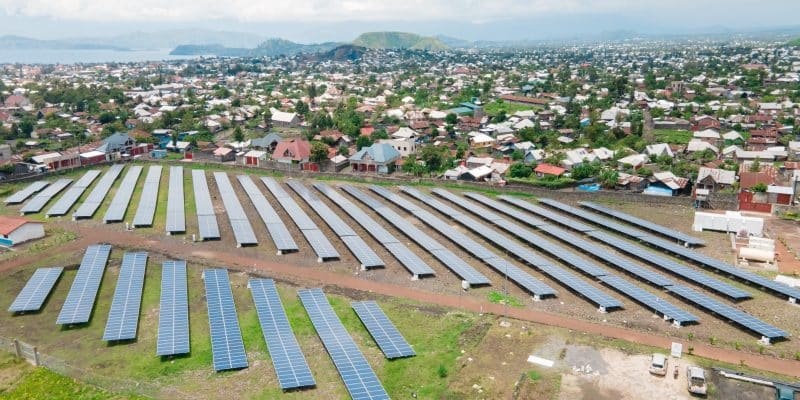
Democratic Republic of Congo (DRC)-based startup Nuru, has raised $40 million in a series B round, to address the significant energy gap in the country.

The series B round was led by The International Finance Corporation (IFC), the Global Energy Alliance for People and Planet (GEAPP), the Renewable Energy Performance Platform (REPP), Proparco, E3 Capital, Voltalia, the Schmidt Family Foundation, GAIA Impact fund, and the Joseph Family Foundation.

With less than 20% of the population having access to energy, Nuru intends to use the funds to provide a 24-hour power supply for five million people in the country. To achieve this, the company will build three mini-grids in parts of Eastern DRC- Goma, Kindu, and Bunia, with a combined capacity of 13.7 megawatts.

Speaking on the funds raised, co-founder and CEO of Nuru Jonathan Shaw said, “Closing the Series B is a significant milestone in Nuru’s journey, but also demonstrates the viability of the metro grid model in the distributed energy sector in Africa. Nuru extends its heartfelt appreciation to the consortium of investors for their visionary support and unwavering commitment to Nuru’s vision. Together, we will continue to illuminate lives, drive economic growth, and empower communities across the DRC”.

Also commenting on the funds raised, the lead investor in the round, The International Finance Corporation (IFC) country manager Malick Fall said,

“Expanding access to electricity is instrumental to supporting economic growth and improving living standards for people and businesses in the DRC. IFC’s support for Nuru will play a pivotal role in helping to bridge the energy access gap by using an innovative business model, new technology, and more climate-friendly power sources”.

While the IFC’s equity investment also includes financing from the Finland-IFC Blended Finance for Climate Program, the company hopes to close off an additional $28 million in project finance by the end of July.

Nuru’s utility-scale solar mini-grids are designed to provide 24/7 reliable and renewable energy to the communities they are installed. This will help improve climate resilience and sustainable development, which the country desperately needs.

Anticipated outcomes of the Project include the provision of affordable and dependable electricity to approximately 28,000 households and businesses. These beneficiaries currently face challenges related to costly, unreliable, unsustainable, or non-existent access to electricity.

The Project also presents opportunities for commercial and industrial entities, such as telecom tower operators, water pumping stations, substations, agri-processing and milling companies, national banks, and water bottling factories, to become potential off-takers of the generated power.

President Tinubu Signs four Executive Orders: Adjusts 2023 Financial Act and Suspends 5% Tax on Telcom Services

0

President Bola Tinubu has signed four different Executive Orders which include the suspension of the five per cent Excise Tax on telecommunication services as well as the Excise Duties escalation on locally manufactured products; Suspension of the newly introduced Green tax and the suspension of Import tax adjustment levy on some vehicles.

The other executive order is the deferment of the 2023 Finance Act signed by the former president, Muhammed Buhari, which is now slated to commence September 1, 2023 as against initial due date of May 23, 2023. Also deferred is the Customs, Excise Tariff Order to commence on August 1, 2023 as against initial due date of March 27, 2023.

This was made known by the Special Adviser to the President on Special Duties, Communications and Strategy, Dele Alake, while briefing journalists at the State House in Abuja on Thursday.

Mr Alake noted that the effective date variation in the finance act as well as the customs, excise tariff act is to ensure adherence to the 90 days’ minimum advance notice for tax changes as contained in the 2017 National Tax Policy.

According to the President’s Spokesman, the President has issued these orders to cushion the negative impacts of the tax adjustments on businesses and households across affected sectors. He gave the following remarks:

“The President has assured Nigerians that there will not be further tax raise without robust and wide consultations undertaken within the context of a coherent fiscal policy framework.

“Further to his commitment to creating a business-friendly environment, the President has ordered the suspension of the newly introduced Green Tax by way of Excise Tax on Single Use Plastics, including plastic containers and bottles.

“In addition, the President has ordered the suspension of Import Tax Adjustment levy on certain vehicles.

“As a listening leader, the President issued these orders to ameliorate the negative impacts of the tax adjustments on businesses and chokehold on households across affected sectors.

“His Excellency will not exacerbate the plight of Nigerians.”

Alake reiterated the President’s commitment to reviewing complaints about multiple taxation, local and anti-business inhibitions. He also noted that the Tinubu-led administration will continue to promote an enabling environment through friendly policies that would allow businesses to flourish in the country.

Tradecurve Surpasses Bitcoin and Axie Infinity, Experts Predict Unbelievable 100X Gains in 2023

0

Step aside Bitcoin (BTC) and Axie Infinity (AXS), because there’s a new star in town: Tradecurve! Emerging from the depths of the crypto universe, the new project has shattered records, and left the competition in awe. With mind-boggling gains and unprecedented trading opportunities, it’s time to buckle up and make better investment choices.

>Register For The Tradecurve Presale<<

Bitcoin (BTC) price gets John Deaton’s attention; the token’s trading at $30,407.81

The well-known attorney of Ripple (XRP) token holders, John Deaton, Tweeted a thought-provoking question on the Bitcoin (BTC) price. He asked, do XRP holders think that Bitcoin’s (BTC) token market cap may reach half of the gold’s price? The attorney predicted that Bitcoin (BTC) might reach $300,000 if that happens. However, only long-term investors with stable financial backgrounds can invest in Bitcoin (BTC) today.

His prediction may have increased customer inquiries on Bitcoin (BTC). Moreover, many pessimistic crypto investors are now trying to look at the brighter side of Bitcoin (BTC) investment.

The current price of Bitcoin (BTC) is $30,569.90, a 1.04% drop in a day. The token has been experiencing a price downturn for a month. However, experts predict the token to reach an average price point of $35,935.56 in the last quarter of 2023.

Axie Infinity’s (AXS) roadmap seems to get mediocre: the token trades at $5.88

When Axie Infinity (AXS) shared its roadmap, investors saw a new energy in the platform’s potential. It introduced Mavis Hub to create a platform for Axie Infinity (AXS) developers to launch new games. The platform sold land on Axie Infinity (AXS) at around 4200 ETH.

Moreover, the team announced that Axis would be transferred to the Ronin network after Axie Infinity (AXS) launched its mainnet. However, even 2 months after the official announcement, the said move was not made because all Axie Infinity (AXS) members did not agree to make the move.

Moreover, the rise of competitors has overshadowed the Axie Infinity (AXS) roadmap’s progress. Investors are concerned that the current status of the roadmap can decrease the value of the platform’s native token.

However, Axie Infinity (AXS) token is trading at a slight rise of 1.07% in a day at the price of $5.88. Experts predict the token to trade at an average price of $7.22 for the rest of 2023.

Tradecurve is poised for another 40% price boost

In a world dominated by complex exchanges, Tradecurve stands apart, prioritizing simplicity and accessibility. With just an email, traders will gain access to a diverse range of derivatives; all consolidated within a single account, unlike Coinbase and E*TRADE, which provides a limited range of tradable assets. It offers a unique blend of centralized liquidity, and decentralized security. With an impressive array of tradable assets, and a privacy-focused approach, it’s the go-to platform for traders craving convenience, anonymity, and lightning-fast transactions.

As decentralized finance surges in popularity, with 300,000 new users added compared to last year’s count, this project emerges as a prominent force.

The platform continues to impress with its exceptional offerings like negative balance protection and convenient copy trading.

Currently, in the 4th presale, TCRV boasts a value of $0.018 (already up a whopping 80%). Brace yourself for the upcoming 5th presale with projections pointing towards an impressive 40% price surge, propelling TCRV to reach an estimated value of $0.025, and later at 100X after launch. So, hurry up and sign up now!

To find more information about Tradecurve and the TCRV token, visit the links below:

Website: https://tradecurve.io/

Buy presale: https://app.tradecurve.io/sign-up

Twitter: https://twitter.com/Tradecurveapp

Telegram: https://t.me/tradecurve_official

Hong Kong Urged to Issue Stablecoin to Compete with USDT and USDC

0

Stablecoins are digital tokens that are pegged to a fiat currency, such as the US dollar, and aim to provide a stable and reliable medium of exchange in the crypto ecosystem. They are widely used for trading, payments, remittances, and other use cases that require low volatility and fast settlement.

However, not all stablecoins are created equal. Some of them, such as Tether (USDT) and USD Coin (USDC), are backed by centralized entities that claim to hold reserves of fiat currency in bank accounts, but do not provide sufficient transparency or auditability to verify their claims. These stablecoins pose risks to users and regulators, as they may face liquidity issues, legal challenges, or even insolvency in case of a black swan event.

That is why some experts have urged Hong Kong to issue its own stablecoin, based on its local currency, the Hong Kong dollar (HKD). An HKD-pegged stablecoin would offer several benefits for Hong Kong and its crypto community, such as:

Enhancing Hong Kong’s status as a global financial hub and a leader in fintech innovation.

Providing a more trustworthy and compliant alternative to USDT and USDC, which are subject to US jurisdiction and sanctions.

Supporting the development of the Greater Bay Area, a regional economic integration initiative that involves Hong Kong, Macau, and nine cities in mainland China.

Facilitating cross-border trade and investment between Hong Kong and other countries, especially in Asia.

Empowering Hong Kong citizens and businesses to access the global crypto market and benefit from its opportunities.

To issue an HKD-pegged stablecoin, Hong Kong could leverage its existing infrastructure and regulatory framework, such as: The Hong Kong Monetary Authority (HKMA), which is the central bank and currency board of Hong Kong and has the authority and responsibility to issue and maintain the HKD.

The Faster Payment System (FPS), which is a real-time payment platform that connects banks and e-wallets in Hong Kong and supports both HKD and RMB transactions.

The Stored Value Facilities (SVF) license, which is a type of regulatory approval for non-bank entities that provide stored value or e-money services in Hong Kong.

By using these elements, Hong Kong could create a stablecoin that is fully backed by HKD reserves held by the HKMA, and that can be easily exchanged with HKD or RMB through the FPS. The stablecoin could also comply with the SVF license requirements, such as anti-money laundering (AML) and consumer protection rules.

An HKD-pegged stablecoin would not only compete with USDT and USDC, but also complement them, as it would offer more diversity and choice for crypto users. It would also enhance Hong Kong’s role in the global crypto space, and foster innovation and growth in its local crypto industry.