DD
MM
YYYY

PAGES

DD
MM
YYYY

spot_img

PAGES

Home Blog Page 4029

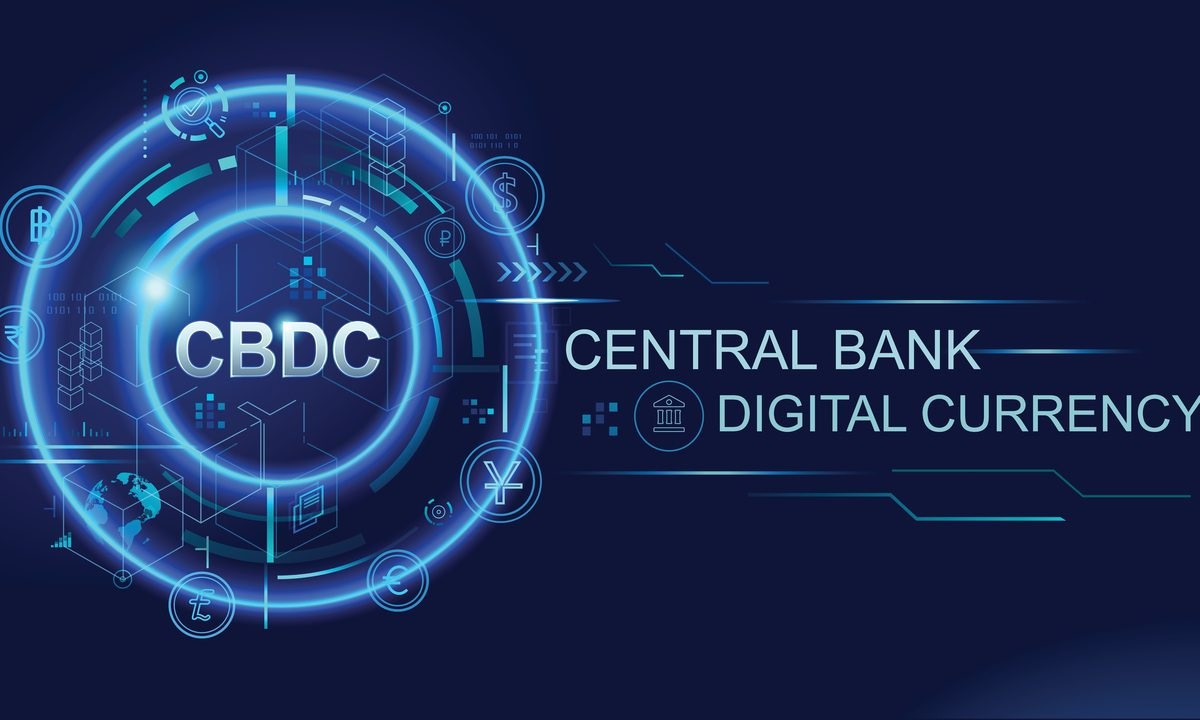
Central Bank Digital Currency Vs Legitimate Decentralized Token

0

Central Bank Digital Currency (CBDC) is a digital form of a country’s fiat currency that is issued and regulated by the central bank. A legitimate decentralized token is a digital asset that is created and operated on a blockchain network without the intervention of a central authority.

A blockchain network is a system of distributed computers that store and validate transactions in a shared ledger. The ledger is secured by cryptography and consensus mechanisms that ensure its integrity and immutability. Transactions on a blockchain network are transparent and verifiable by anyone.

The main difference between a CBDC and a legitimate decentralized token is the degree of centralization and control. A CBDC is fully backed by the central bank and follows the same monetary policy and regulations as the fiat currency. A legitimate decentralized token is not backed by any government or institution and follows the rules of the blockchain network it belongs to.

Another difference is the level of innovation and experimentation. A CBDC is designed to mimic the features and functions of the existing fiat currency, such as stability, privacy, and accessibility. A legitimate decentralized token can offer new and diverse use cases, such as smart contracts, decentralized applications, governance, and utility.

A third difference is the impact on the financial system and society. A CBDC aims to improve the efficiency, security, and inclusion of the current financial system by reducing transaction costs, enhancing digital payments, and reaching unbanked populations. A legitimate decentralized token challenges the status quo of the financial system by enabling peer-to-peer transactions, fostering financial sovereignty, and creating new economic opportunities.

Legitimate decentralized token

A decentralized token is a digital asset that exists on a distributed ledger, such as a blockchain, and is not controlled by any central authority. A legitimate decentralized token is one that meets certain criteria of security, transparency, and utility.

Security: A legitimate decentralized token should have a robust and reliable protocol that ensures the integrity and immutability of the transactions and the data stored on the ledger. The protocol should also protect the network from malicious attacks, such as double-spending, censorship, or denial-of-service. Additionally, the token should have a clear and fair distribution mechanism that prevents excessive concentration of power or wealth among a few entities.

Transparency: A legitimate decentralized token should have a public and verifiable record of its history, governance, and operations. The token should also have a clear and consistent communication channel with its users and stakeholders, such as developers, investors, regulators, and auditors. The token should disclose its purpose, vision, roadmap, and performance indicators, as well as any potential risks or challenges.

Utility: A legitimate decentralized token should have a clear and compelling use case that provides value to its users and the wider ecosystem. The token should also have a well-defined and sustainable economic model that incentivizes participation, collaboration, and innovation. The token should also have a high degree of interoperability and compatibility with other platforms and protocols.

A legitimate decentralized token is not only a technical innovation, but also a social and economic phenomenon that has the potential to transform various industries and sectors. However, not all decentralized tokens are legitimate, and some may pose significant risks or challenges to their users and the society at large. Therefore, it is important to conduct thorough research and due diligence before engaging with any decentralized token project.

In summary, a CBDC is a digital extension of a country’s fiat currency that is centrally issued and controlled by the central bank. A legitimate decentralized token is a digital innovation that is autonomously created and operated on a blockchain network without any central authority.

Blockchain-based exchanges are now equally self-evident – Research

The world of finance is undergoing a radical transformation thanks to the emergence of blockchain technology and cryptocurrencies. A recent paper, Electronification, trading, and crypto, suggests blockchain-based exchanges are now equally self-evident as traditional ones, and offer significant advantages in terms of efficiency, security, and transparency.

The paper, authored by researchers from the University of Oxford and the London School of Economics, explores how blockchain technology enables a new form of electronic trading that is decentralized, peer-to-peer, and trustless. Unlike conventional trading platforms that rely on intermediaries such as brokers, clearing houses, and regulators, blockchain-based exchanges allow traders to directly interact with each other and execute transactions without the need for third-party verification or intervention.

Blockchain-based exchanges are platforms that allow users to trade digital assets, such as cryptocurrencies, tokens, or derivatives, without relying on a central authority or intermediary. Instead, they use smart contracts and peer-to-peer networks to facilitate transactions, ensuring security, transparency, and efficiency.

The paper argues that blockchain-based exchanges have several benefits over traditional ones, such as:

Lower costs: Blockchain technology eliminates the fees and commissions charged by intermediaries, as well as the operational costs associated with maintaining centralized systems and databases.

Faster settlement: Blockchain technology enables near-instantaneous settlement of transactions, reducing the risks of counterparty default, fraud, and market manipulation.

Greater access: Blockchain technology enables anyone with an internet connection and a digital wallet to participate in the global financial market, regardless of their location, identity, or credit history. This opens up the market to a wider and more diverse audience, who may otherwise face barriers or restrictions to participate in traditional exchanges.

Enhanced transparency: Blockchain technology provides a public and immutable record of all transactions, ensuring accountability and auditability of the market participants and their activities.

Increased innovation: Blockchain technology fosters a more competitive and diverse market environment, where new products, services, and business models can emerge and thrive. Blockchain-based exchanges can support a variety of digital assets, including new and emerging ones that may not be available on traditional exchanges. This fosters innovation and experimentation in the crypto space, as well as more choice and customization for users.

Blockchain-based exchanges put more responsibility on the users, who have to bear the consequences of their actions and decisions. Users have to perform their own due diligence and research before trading, as well as take full responsibility for their losses or mistakes. There is no recourse or protection in case of human error, technical failure, or malicious activity.

Blockchain-based exchanges are now equally self-evident, but they are not without challenges. They represent a new paradigm of trading that offers many advantages but also requires more caution and awareness. As the technology evolves and matures, blockchain-based exchanges will likely become more mainstream and integrated with the traditional financial system, creating a more diverse and dynamic market for digital assets.

The paper concludes that blockchain-based exchanges are not only viable alternatives to traditional ones, but also catalysts for a more inclusive, efficient, and resilient financial system. The paper also acknowledges the challenges and limitations of blockchain technology, such as scalability, regulation, and governance issues, and calls for further research and collaboration among academics, practitioners, and policymakers to address them.

The rise of blockchain technology has revolutionized the world of finance, enabling new forms of decentralized and trustless transactions. Blockchain-based exchanges are now equally self-evident, offering a range of benefits over traditional intermediaries.

Bugatti and Adidas, NFT Volumes Surge High in 24hrs Trading

0

Two iconic brands, Bugatti and adidas, have teamed up to create a unique and exclusive product: a football boot that combines the performance and style of both companies. The boot, named the Bugatti x adidas Speedster, is a limited-edition model that will only be available for 500 lucky customers worldwide.

The Bugatti x adidas Speedster is designed to offer the ultimate in speed, agility and comfort for football players. The boot features a sleek and aerodynamic shape, inspired by the Bugatti Chiron hypercar, and a lightweight and durable upper, made from recycled materials and enhanced with adidas’ Primeknit technology. The boot also boasts a responsive and cushioned sole, equipped with adidas’ Boost technology and a carbon-fiber plate for extra stability and traction.

The boot is not only a high-performance product, but also a fashion statement. The boot showcases the signature colors and logos of both brands, as well as a special serial number on the heel that indicates the exclusivity of the product. The boot comes in a luxurious and elegant box, along with a certificate of authenticity and a pair of matching socks.

The Bugatti x adidas Speedster is a rare and coveted item that will appeal to both football fans and collectors. The boot will be available for pre-order on November 15th, 2023, on the official websites of both brands, for a price of $999. The boot will be delivered to the customers in December 2023, just in time for the holiday season. The Bugatti x adidas Speedster is more than just a football boot. It is a symbol of excellence, innovation and collaboration between two legendary brands that share a passion for speed and style.

NFT Volumes Surge High in 24hrs Trading

The Ethereum network has witnessed a remarkable surge in the volume of non-fungible tokens (NFTs) traded in the past 24 hours, reaching new highs and surpassing previous records. According to data from DappRadar, the total volume of NFTs on Ethereum reached $1.2 billion on November 27, 2023, a 300% increase from the previous day. This indicates a growing demand and interest in digital collectibles, art, gaming and metaverse assets that are powered by the second largest blockchain platform.

The main drivers of this impressive growth were the NFT projects that have been attracting massive attention and investment from both crypto enthusiasts and mainstream audiences. Among them, CryptoPunks, the original NFT project that features 10,000 unique pixelated characters, accounted for $400 million of the volume, followed by Bored Ape Yacht Club, another popular NFT collection that features 10,000 cartoon apes with different traits and accessories, with $300 million.

Other notable projects that contributed to the volume spike were Art Blocks, a platform that allows users to create and collect generative art pieces, with $200 million, and Loot, a minimalist NFT project that consists of randomly generated adventure gear, with $100 million.

The rise of NFTs on Ethereum is not only a sign of the increasing popularity and innovation of this new form of digital ownership and expression, but also a testament to the resilience and scalability of the Ethereum network itself. Despite the high gas fees and congestion that have plagued the network for a long time, Ethereum has been able to support the booming NFT sector and provide a secure and decentralized infrastructure for its development.

Moreover, with the ongoing transition to Ethereum 2.0, which aims to improve the network’s speed, efficiency and sustainability through a shift from proof-of-work to proof-of-stake consensus mechanism, Ethereum is expected to become even more attractive and competitive as a platform for NFTs and other decentralized applications.

The soaring volume of NFTs on Ethereum in the past 24 hours is a remarkable achievement that showcases the potential and value of this emerging technology. NFTs are not only a new way of creating and collecting digital art and culture, but also a powerful tool for empowering creators, artists, gamers and communities to express themselves and interact in novel and meaningful ways. As Ethereum continues to evolve and improve its network capabilities and features, we can expect to see more innovation and diversity in the NFT space and beyond.

DeGods NFT Revamped Roadmap and Yuga Labs Co-Founder’s Surprising Move

0

DeGods, the decentralized platform for creating and trading generative NFTs, has recently announced its new roadmap for the upcoming year. The roadmap includes several exciting features and updates that aim to enhance the user experience, expand the DeGods ecosystem, and increase the value of the DeGods tokens.

Some of the highlights of the roadmap are:

A new DeGods marketplace, where users can buy, sell, and trade their DeGods NFTs with other collectors and enthusiasts. The marketplace will also feature a ranking system, a leaderboard, and a curated gallery of the most popular and rare DeGods.

A new DeGods DAO, where users can participate in the governance and decision-making of the platform. The DAO will allow users to propose and vote on various aspects of the platform, such as fees, rewards, tokenomics, and future developments.

A new DeGods staking program, where users can stake their DeGods tokens to earn passive income and access exclusive benefits. The staking program will also introduce a new token, called DeFi (DeGods Fuel), which will be used to power the platform and reward the stakers.

A new DeGods minting mechanism, where users can create their own DeGods NFTs using a variety of generative algorithms and parameters. The minting mechanism will also allow users to customize their DeGods NFTs with different attributes, traits, and effects.

In addition to the roadmap, DeGods has also revealed a surprising move by one of its co-founders, Roham Gharegozlou. Gharegozlou, who is also the co-founder and CEO of Dapper Lab, the company behind the popular NBA Top Shot NFT platform, has decided to step down from his role at Dapper Lab and join DeGods as its full-time CEO.

Gharegozlou explained his decision in a blog post, saying that he believes that DeGods is “the next frontier of NFT innovation” and that he wants to dedicate his time and energy to “building the best generative art platform in the world”.

He also thanked his team at Yuga Labs for their support and achievements and assured that he will remain involved as an advisor and a board member. He said that Dapper Lab will continue to operate under the leadership of its co-founder and CTO, Dieter Shirley, who is also the creator of the Flow blockchain.

Gharegozlou’s move is seen as a major endorsement for DeGods, as he is one of the most influential figures in the NFT space. His vision and expertise are expected to boost DeGods’ growth and reputation in the industry.

DeGods is currently in its beta phase, with over 10,000 users and 50,000 NFTs minted so far. The platform plans to launch its mainnet in early 2024, along with its new features and updates. Users who are interested in joining DeGods can sign up for its waitlist on its website.

Yuga Labs Co-Founder’s Surprising Move

Yuga Labs, the company behind the popular Bored Ape Yacht Club (BAYC) NFT collection, has announced that one of its co-founders, Gordon Gekko, has decided to step down from his role and pursue other opportunities. This news came as a surprise to many in the crypto and NFT space, as Gekko was widely regarded as a visionary and a leader in the industry.

Gekko, who co-founded Yuga Labs with his brother Bud Fox in 2020, was instrumental in creating and launching BAYC, one of the most successful NFT projects to date. BAYC consists of 10,000 unique digital apes that grant their owners access to exclusive benefits, such as a members-only online community, merchandising rights, and future drops. BAYC has generated over $500 million in sales since its inception, and has attracted celebrities, athletes, and influencers as collectors.

In a blog post published on the official BAYC website, Gekko explained his decision to leave Yuga Labs and thanked the community for their support. He wrote:

“I have decided to step down from my role as co-founder and head of product at Yuga Labs. This was not an easy decision, but one that I feel is best for me and the company at this stage. I have been working on BAYC since day one, and I am extremely proud of what we have achieved together. BAYC is more than just a collection of NFTs, it is a movement, a culture, and a family. I am grateful for every single ape that has joined us on this journey, and I will always be a part of this amazing community.

However, I also feel that it is time for me to explore new challenges and opportunities in the crypto and NFT space. I have always been passionate about innovation and creativity, and I have many ideas that I want to pursue and bring to life. I believe that the NFT space is still in its infancy, and there is so much potential for growth and disruption. I want to contribute to this evolution and push the boundaries of what is possible with NFTs.

Yuga Labs Co-Founder starts another nft shopping spree, spent 90 ETH on 8 nfts

The co-founder of Yuga Labs, the company behind the popular Bored Ape Yacht Club (BAYC) nft collection, has been on a buying frenzy lately, acquiring eight new nfts for a total of 90 ETH (about $360,000 at the time of writing).

According to his Twitter account, the co-founder, who goes by the name Goner Gondor, purchased four nfts from the Mutant Ape Yacht Club (MAYC), a spin-off of BAYC that features apes with different mutations and accessories. He also bought two nfts from the Cool Cats collection, which features cute and colorful cats with various traits and outfits. Additionally, he acquired one nft from the CryptoPunks collection, one of the oldest and most valuable nft projects, and one nft from the Pudgy Penguins collection, which features adorable and chubby penguins.

Goner Gondor is not new to the nft scene. He is one of the most influential and prolific collectors in the space, owning over 300 nfts worth millions of dollars. He is also known for his involvement in BAYC, which he helped launch in April 2021. BAYC is a collection of 10,000 unique and randomly generated ape avatars that grant their owners access to exclusive benefits, such as a members-only online club, merchandise, and collaborations with other brands and celebrities. BAYC has become one of the most successful and sought-after nft projects, with some apes selling for over $1 million.

Goner Gondor’s latest purchases reflect his confidence and enthusiasm for the nft market, which has been booming in recent months. According to data from DappRadar, the total sales volume of nfts in October 2021 reached $2.6 billion, up 31% from September. The number of active wallets interacting with nft platforms also increased by 20% to 1.2 million.

Goner Gondor believes that nfts are more than just digital art or collectibles. He sees them as a new form of social identity and expression, as well as a way to connect with like-minded communities. In an interview with Forbes, he said: “I think nfts are the future of how we interact online. They allow us to show who we are, what we like, and what we stand for. They also enable us to join clubs and communities that share our values and interests.”

As a co-founder of Yuga Labs, Goner Gondor also has a vision for how nfts can create new opportunities and experiences for creators and consumers. He said: “We want to build a world where anyone can create and own their own digital assets and use them across different platforms and metaverses. We want to empower people to express themselves creatively and economically through nfts.”

Goner Gondor’s recent nft shopping spree is a testament to his passion and commitment to the nft space. He is not only a collector, but also a creator and a leader who is shaping the future of digital culture.

Abia State Announces Plan to Fully Digitalize Civil Service by March 2024

0

The Commissioner for Science and Technology in Abia State, Nigeria, Chima Oriaku, has announced the government’s commitment to fully digitalizing the state’s civil service by March 2024.

The initiative aims to automate the entire state government workflow and transition from paper-based to digital formats for enhanced efficiency. It is one of the initiatives of the Otti-led government, geared toward transparent governance.

The move focuses on automating the workflow of the state government, converting manual processes into digital formats. The goal is to create a centralized data management system that facilitates easy access to government work environments, files, and project plans.

Challenges of Analog Processes

Oriaku highlighted the challenges of keeping files in paper and analog formats, making them susceptible to losses and destruction due to various factors. The move to digitalization of the state’s workflow is expected to address these challenges and improve overall access and management of government data.

The digitalization effort is also aimed at easing access to government data, enhancing work efficiency, and increasing overall output. The commissioner emphasized the need for a central data management system that enables quick access to information at the push of a button.

“We should have a centralized data management system so that at any time, at the punch of a button, by a government official, you will access data that you can work with.

“That is why we are in this partnership with Xerox Nigeria Limited to give us their support in that plan,” he said.

Oriaku said the digitalization initiative is to make Abia State workers more efficient and improve work processes. He added that the transition from analog to digital systems is expected to bring about accountability, reliability, productivity, and efficiency.

Partnership with Xerox Nigeria Limited

The government of Abia State has entered into a partnership with Xerox Nigeria Limited to support the digitalization plan.

Femi Abidoye, General Manager (Marketing) at Xerox Nigeria Limited, noted that the partnership was initiated by the governor’s desire for quality service delivery.

“The objective is to make Abia state workers work smarter and to deliver on state objectives. To simplify work processes, procedures, and work environment, and to move from the analog system to the digital system era where there is accountability, reliability, productivity, and efficiency at the end of the day,” he said.

“We are partnering with the Abia Ministry of Science and Technology to ensure there is cost control and to correct the record of everybody so that no data is lost at the end of the day. That is of uttermost importance.”

Oriaku stated the government’s commitment to completing the digitalization of the civil service by March 2024.

The move toward digitalizing government processes aligns with global trends in leveraging technology for improved governance, accessibility, and efficiency. It is expected to contribute to better service delivery and data management within the Abia State civil service.

Cybertruck Deliveries start from Thursday.

0
TEHRAN, IRAN - JULY 19: (RUSSIA OUT) Russian President Vladimir Putin leaves his presidential plane during the welcoming ceremony at the airport, on July 19, 2022 in Tehran Iran. Russian President Putin and his Turkish counterpart Erdogan arrived in Iran for the summit. (Photo by Contributor/Getty Images)

The wait is finally over. Tesla has announced that the first batch of Cybertruck deliveries will start on Thursday, marking a milestone for the company and the electric vehicle industry. Elon Musk tweeted on X confirming the delivery scheduled for Thursday.

The Cybertruck, which was unveiled in November 2019, is a futuristic pickup truck that features a stainless-steel exoskeleton, a bulletproof glass windshield, and a tri-motor powertrain that can accelerate from 0 to 60 mph in 2.9 seconds. But what are the Cybertruck’s specs? Here are some of the key features and numbers that make this vehicle stand out:

Range: The Cybertruck offers three battery options, with estimated ranges of 250+, 300+, and 500+ miles respectively.

Towing: The Cybertruck can tow up to 14,000 pounds with the tri-motor variant, 10,000 pounds with the dual-motor variant, and 7,500 pounds with the single-motor variant.

Payload: The Cybertruck can carry up to 3,500 pounds of cargo in its 6.5-foot-long bed, which also has a built-in ramp and a tonneau cover.

Performance: The Cybertruck can reach a top speed of over 130 mph and has an adjustable air suspension that can raise or lower the vehicle by 4 inches.

Price: The Cybertruck starts at $39,900 for the single-motor version and goes up to $69,900 for the tri-motor version. Customers can also opt for a self-driving package that costs an additional $10,000.

But what is the self-driving package? This is an optional feature that enables the Cybertruck to drive itself on highways and city streets, using Tesla’s advanced Autopilot system. The self-driving package also includes access to Tesla’s Full Self-Driving (FSD) software, which is expected to enable more autonomous capabilities in the future, such as navigating complex intersections, recognizing traffic lights and signs, and parking itself.

The self-driving package is not yet fully functional and requires the driver to monitor the vehicle and be ready to take over at any time. However, Tesla claims that the self-driving package will increase in value over time as more features are added.

Tesla has received over one million pre-orders for the Cybertruck, which will be manufactured at its Gigafactory Texas. According to Tesla CEO Elon Musk, the initial production will be limited to the tri-motor variant, followed by the dual-motor variant in late 2022 and the single-motor variant in late 2023.

The Cybertruck is expected to face stiff competition from other electric pickup trucks that are entering the market, such as the Ford F-150 Lightning, the Rivian R1T, and the GMC Hummer EV. However, Tesla has a loyal fan base and a reputation for innovation that could give it an edge over its rivals. The Cybertruck also offers a unique design and features that appeal to customers who are looking for something different and futuristic.

Tesla fans who have pre-ordered the Cybertruck are eagerly awaiting their delivery notifications, while others who are curious about the vehicle can visit Tesla’s website or showrooms to learn more about it. The Cybertruck is set to revolutionize the pickup truck segment and usher in a new era of electric mobility. Thursday can’t come soon enough.