DD
MM
YYYY

PAGES

DD
MM
YYYY

spot_img

PAGES

Home Blog Page 4031

Will Litecoin Go Up 2025 Considering Its Halving Event? How Does This Impact Fellow Cryptos Like Big Eyes Coin & Avalanche?

0

The upcoming halving event in Litecoin has sparked excitement in the crypto market. With approximately 13% of Litecoin’s supply remaining unmoved for five years, investors are eager to see how this event will unfold. In this comparative article, we will analyse the current market standing of Litecoin, Avalanche, and Big Eyes Coin (BIG), and assess how the halving event of Litecoin may impact Avalanche & Big Eyes Coin.

Litecoin: The Undeniable Silver To Bitcoin’s Gold

Litecoin, launched in 2011, often referred to as the silver to Bitcoin’s gold, shares many similarities with Bitcoin, as it operates on a decentralised blockchain network. However, Litecoin differentiates itself by offering faster block generation times and a different hashing algorithm called Scrypt.

The upcoming halving event in Litecoin is significant, as it will reduce the block reward given to miners by half. This event, which occurs approximately every four years, aims to control inflation and maintain the scarcity of Litecoin. Historically, halving events have led to increased demand and price appreciation for cryptocurrencies, as investors anticipate a reduction in the available supply.

Is Avalanche Recovering From Crypto Winters?

Avalanche faced significant setbacks during the crypto winter, closely resembling Terra (LUNA)’s growth trajectory before reaching an all-time high of $146.22 over a year ago. Despite the current decline of more than 87% from the pinnacle, AVAX holders have demonstrated remarkable resilience by disregarding losses and wholeheartedly embracing the promising future that awaits the protocol.

Recent data analysis reveals an unfortunate reality: a considerable number of AVAX holders find themselves in an unfavourable financial position, signifying losses. However, amidst this prevailing circumstance among the majority of holders, the protocol’s consistent and unwavering progress plays a crucial role in alleviating investor concerns across the entire spectrum.

Big Eyes Coin: The Meme Coin With An Irresistible Appeal

In contrast to Litecoin’s established presence, Big Eyes Coin is a recently launched meme coin that has quickly gained traction. This captivating project has forged partnerships with prominent exchanges like Uniswap, Poloniex, OKX, and the esteemed LBank Exchange, showcasing its growing credibility within the crypto community.

The Big Eyes Coin team has demonstrated unwavering dedication to the long-term prosperity of their cryptocurrency. Their remarkable $200,000 token buyback initiative within a 24-hour period has bolstered market cap and liquidity, enhancing the coin’s value proposition. Furthermore, Big Eyes Coin’s plans to unveil a crypto casino on August 29th add another layer of excitement, with over 4,000 casino games and a range of play-to-earn (P2E) games, promising ample opportunities for substantial rewards.

The Impact Of Litecoin’s Halving On Big Eyes Coin & Avalanche

While Litecoin’s halving event may not have a direct impact on Big Eyes Coin and Avalanche, it can still influence the overall sentiment and excitement within the crypto market. Halving events tend to generate attention and attract new investors to the industry, potentially benefiting emerging cryptocurrencies like Big Eyes Coin.

As investors explore different opportunities during the halving, some may be drawn to the unique appeal of Big Eyes Coin. Its meme coin status and upcoming crypto casino create a fun and engaging experience for users, distinguishing it from other cryptocurrencies. The partnerships with reputable exchanges and the team’s commitment further solidify its potential to thrive in the market.


Find Out More About Big Eyes Coin (BIG):

Website: https://bigeyes.space/

Telegram: Telegram: Contact @BIGEYESOFFICIAL

Instagram: https://www.instagram.com/BigEyesCoin/

Twitter: https://twitter.com/BigEyesCoin

The Rendition by the University of Alberta’s choir – “onye kwe chi ya ekwe”

0

The Igbo Nation’s republican spirit of entrepreneurial capitalism, personal liberty and individual responsibility is encapsulated in one of the most important lines in the Igbo Nation : “onye kwe chi ya ekwe” [if you believe, your personal god will believe]. What that says is that your future is in your hands, not in the hands of your king, boss or anyone!

In this rendition by the University of Alberta’s choir, that song comes out live. Yes, even in far away Canada, it looks ecclesiastical and the heavens pay attention because this stanza is powerful in the church, in traditional war dance, and the Igbo High Life music like the type popularized by Oliver de Coque.

Good People, if you understand what they are saying in that song, you will understand how their “chis” are connecting them to Chi (Chineke, the Chukwu Abiama, Osebuluwa , Chukwuokike).

Udo diri unu [peace unto you all]

Comment on Feed

Comment 1: As?s? Igbo amaka “The Igbo language is beautiful.” Similarly, Joshua 1:8 in the Bible is comparable to the Igbo saying “onye kwe chi ya ekwe,” which translates to “whoever says yes to his/her chi (god) will succeed.” Just as Ndubuisi Ekekwe mentioned. As it is said “your future is in your hands,” Joshua 1:8b conveys a similar message: “For then you shall make your way prosperous, and then you shall deal wisely and have good success.” This emphasizes that our future and success depend on us. When we apply the revealed principles, we can shape a beautiful future for ourselves.

The verse from Joshua 1:8 in the Amplified Bible Classic Edition (AMPC) states, “This Book of the Law shall not depart out of your mouth, but you shall meditate on it day and night, that you may observe and do according to all that is written in it. For then you shall make your way prosperous, and then you shall deal wisely and have good success.”

Ethiopian Airlines, Dangote Cement Swap $100m in Trapped Revenue

7

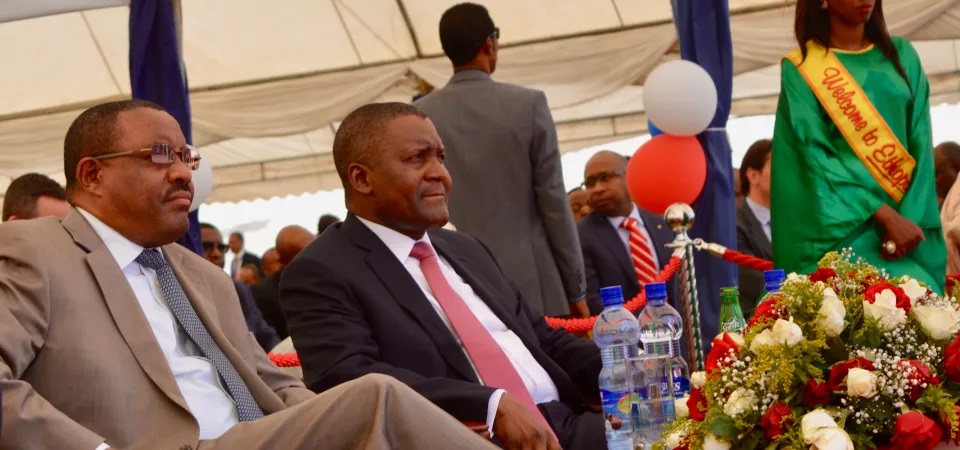
Nigeria and Ethiopia’s central banks have reached a deal to swap $100 million in funds blocked as a result of a shortage of foreign currency in both countries, according to the Ethiopian news outlet, The Reporter.

Under the deal, both Dangote Cement and Ethiopian Airlines will swap funds from their trapped revenue in Nigeria and Ethiopia. Sources in the aviation industry reveal that Ethiopian Airlines will exchange $100 million out of the total $180 million in blocked funds in Nigeria for Ethiopian birr from Dangote Cement, Ethiopia.

“The National Bank will reimburse us with the equivalent amount in Ethiopian birr,” stated Mesfin Tassew, the CEO of Ethiopian Airlines, in an interview with The Reporter. He also mentioned that there are no current plans to swap the remaining amount.

The two African countries have struggled with the repatriation of funds, with millions of dollars trapped in the revenue of foreign companies owing to the massive decline in foreign currency inflow.

Sources from the Central Bank of Ethiopia, quoted by The Reporter, confirmed it had reached an agreement with its Nigerian counterpart to conduct a “temporary swap of foreign currencies.”

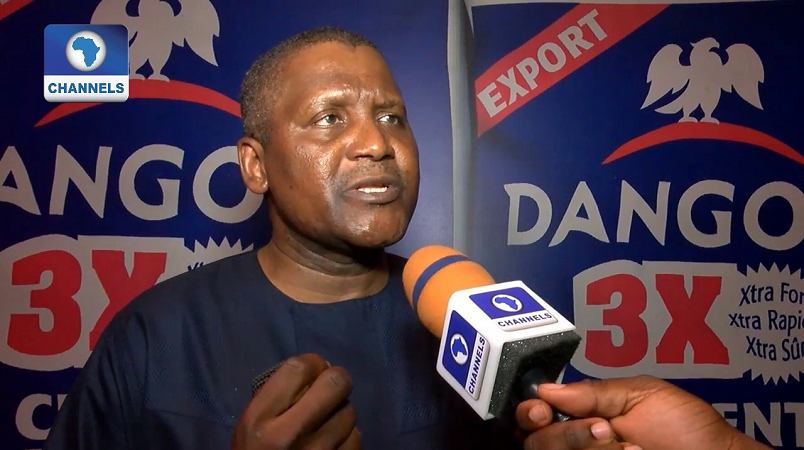
Dangote Cement, which produces about 2.5 million tons of cement yearly in Ethiopia, has millions of US dollars held in the country, while Ethiopian Airlines – which is popular among Nigerian international travelers – has about $180 million to be repatriated. Dangote is estimated to have about $300 million trapped.

The situation highlights the seriousness of the forex crisis in both countries. Ethiopia is currently facing a severe foreign exchange scarcity, reaching a critical stage that hampers the country’s ability to import crucial commodities such as pharmaceuticals and industrial resources.

The foreign exchange reserves held by Ethiopia are inadequate to support even a single month of imports, according to The Reporter.

Insufficient forex liquidity in the Northeastern African country has dampened the interest of investors, prompting the National Bank of Ethiopia to implement reforms aimed at mitigating FX obstacles faced by investors.

In Nigeria, the effect of the dollar shortage has not only inspired rising inflation, it has also forced the blocking of revenues of foreign companies operating in the country.

Last year, United Arab Emirates-based airline, Fly Emirates, twice, called off its operation in Nigeria due to its inability to repatriate more than $500 million in trapped funds.

But unlike the UAE’s Fly Emirates, Ethiopian Airlines, which is the largest foreign carrier operating in Nigeria – with international operations covering major cities like Lagos, Abuja, and Kano, shares a similar problem of dollar shortage with Nigeria.

Dangote Cement, which has been a major player in Ethiopia’s construction sector for over a decade, and Ethiopian Airlines, have over the years – accumulated millions of dollars in blocked funds.

In June, under the leadership of Nigeria’s new President Bola Tinubu, the Central Bank of Nigeria (CBN) floated the country’s forex market, in a move to collapse multiple exchange rates into one. Though the move has been applauded as a bold step in attracting foreign investment, it is yet to solve the forex shortage problem.

Nigeria has seen its foreign reserves drop to $34 billion as of May, following the massive decline in oil revenue – its major source of forex.

The accumulated trapped funds are said to have inspired investors’ suspicion that Nigeria’s dollar reserves are not as large as the CBN says. Investors are concerned that Africa’s largest economy is struggling to pay off debts that it should be able to pay easily given the volume of its foreign reserves.

“The suspicion is that Nigeria’s external reserves are much less than what the CBN reports,” a fund manager based in South Africa is quoted to have said on condition of anonymity. “The level of opacity is alarming and is a real drag on investor confidence.”

Given their shared forex challenge, the Ethiopian central bank offered Dangote Cement a currency swap proposal, allowing it to exchange its excess Ethiopian birr for US dollars held by overseas firms operating in Ethiopia.

Dangote Cement’s 168.7million Shares Buyback to Commence Mid July

0

Africa’s largest cement producer, Dangote Cement Plc, has announced its shares buyback programme will takeoff in mid July having secured the backing of its Shareholders at the extraordinary meeting which held in December 2022.

The share repurchasing programme which was said aimed at enhancing the value of the company’s shareholders, targets N50.1 billion worth of shares, estimated to constitute a percentage of the company’s current total share issued which entails 16,873,559,251shares at N300.1 per share.

The first tranche of the share buyback in which 168,735,593 ordinary shares of 50kobo each will be repurchased at N300.1 per share is scheduled to commence on July 17 to July 18 or when the entire tranche 1 shares will be completely taken over.

A statement made available at the Nigerian Exchange Group, NGX, by Dangote Cement Plc, DCP, on Thursday, showed DCP through its appointed stockbrokers, will be conducting the tranche 1 of the share buyback via the open market of the NXG subject to the prevailing market conditions and under the current daily trading rules of the NGX.

The statement reads in part: “DCP would not be under any obligation whatsoever to purchase any or all of the DCP shares put on offer over the duration of Tranche I.

“The shares being bought back by the Company under the Share Buy-Back Programme will be held as treasury shares, as permissible under CAMA. Execution of this Tranche I is not expected to have any material impact on the Company’s financial position.

“Dangote Cement shareholders seeking to participate in Tranche I of the Share Buy-Back Programme are advised to contact their stockbrokers or any other independent professional adviser registered as a capital market operator by the SEC for further guidance on the submission of trades on the NGX’s trading platform.

“DCP will provide weekly updates on the progress of Tranche I of the Programme on its website over the duration of this tranche. The Company said it will continue to monitor the evolving business environment and market conditions, in making decisions on subsequent tranches of the Share Buy-Back Programme.

“Shareholders and investors are advised to exercise caution when dealing in the securities of Dangote Cement until the completion of Tranche I of the Share Buy-Back Programme. An announcement will be published upon completion of Tranche I of the Programme,” it stated.

CBN Warns Nigerian Banks And Other Financial Institutions to be Wary of Transactions From Russia, Iran, Others

0

The Central Bank of Nigeria (CBN), has warned Nigerian banks and other financial institutions in the country to be wary of transactions from Russia, Iran, the Democratic People’s Republic of Korea, and Cameroun.

The apex bank via a circular signed by the Director, Financial Policy and Regulation Department, Chibuzo A. EFOBI stated that financial institutions in the country, must apply due diligence and implement counter-measures when dealing with transactions from the above-mentioned countries.

This is coming after the Financial Action Task Force (FATF), listed these counties as high-risk jurisdictions, subject to Call for action.

The circular reads in part,

“The attention of banks and other financial institutions is drawn to the outcomes of the Financial Action Task Force (FATF) Plenary conducted from June 21-23, 2023, and the subsequent addition of Cameroon, Croatia, and Vietnam to the list of jurisdictions under Increased Monitoring.

“Furthermore, Democratic People’s Republic of Korea, Iran, and Myanmar remains on the list of high-risk jurisdictions subject to “Call for Action”. Consequently, enhanced due diligence should be applied, and in severe cases, countermeasures may need to be implemented to safeguard the international financial system. Additionally, we would like to emphasize that the suspension of the Russian Federation’s membership in the FATF remains in effect.

“Fls are to remain vigilant and be alert to possible emerging risks resulting from the circumvention of measures taken to protect the international financial system In light of these developments. Fls are directed to Note all addition to jurisdictions under Increased Monitoring as well as high-risk jurisdictions subject to a “Call for Action” and take necessary measures to mitigate these risks effectively”.

The Central Bank of Nigeria is therefore urging financial institutions in the country to stay vigilant and alert to emerging risks resulting from attempts to bypass measures designed to safeguard the international financial system following the FATF warning.

The Financial Action Task Force (FATF) is the global money laundering terrorist financing watchdog. The FATF’s process helps protect the integrity of the international financial system by issuing a public warning about the risks emanating from the identified jurisdictions (Russia, Iran, the Democratic People’s Republic of Korea, and Cameroun).

These public warnings also put pressure on the identified jurisdictions to address their deficiencies in order to maintain their position in the global economy.

Democratic People’s Republic of Korea

Since February 2020, in light of the COVID-19 pandemic, the FATF has paused the review process for Iran and DPRK, given that they are already subject to the FATF’s call for countermeasures.

The FATF remains concerned by the DPRK’s failure to address the significant deficiencies in its anti-money laundering and combating the financing of terrorism (AML/CFT) regime and the serious threats they pose to the integrity of the international financial system.

Iran

In June 2016, Iran committed to address its strategic deficiencies. Iran’s action plan expired in January 2018. In February 2020, the FATF noted Iran has not completed the action plan. Given Iran’s failure to enact the Palermo and Terrorist Financing Conventions in line with the FATF Standards. The FATF fully lifts the suspension of counter-measures and calls on its members and urges all jurisdictions to apply effective counter-measures, in line with Recommendation 19.

Iran will remain on the FATF statement on [High Risk Jurisdictions Subject to a Call for Action] until the full Action Plan has been completed.

Russia

The FATF expresses its deepest sympathies for the people of Ukraine and continues to deplore the huge loss of life and needless destruction caused by the ongoing Russian invasion. The Russian actions run counter to the FATF core principles aiming to promote security, safety, and the integrity of the global financial system.

They also represent a gross violation of the commitment to international cooperation and mutual respect upon which FATF Members have agreed to implement and support the FATF Standards.

Jurisdictions under increased monitoring are actively working with the FATF to address strategic deficiencies in their regimes to counter money laundering, terrorist financing, and proliferation financing.

High-risk jurisdictions have significant strategic deficiencies in their regimes to counter money laundering, terrorist financing, and financing of proliferation. For all countries identified as high-risk, the FATF calls on all members and urges all jurisdictions to apply enhanced due diligence, and, in the most serious cases, countries are called upon to apply counter-measures to protect the international financial system from the money laundering, terrorist financing, and proliferation financing (ML/TF/PF risks emanating from the country.

The FATF has continued its work to revise the FATF Standards relating to asset recovery in line with its priority to strengthen countries’ measures to deprive criminals of their ill-gotten gains.

The FATF also aims to provide a new suite of tools that countries should use to effectively freeze, seize, and confiscate criminal property, both domestically and through international cooperation.

A key milestone was reached at its Plenary in early this year, to advance the reforms, which the FATF aims to approve in full in October 2023 related to Recommendations 4 and 38.