DD
MM
YYYY

PAGES

DD
MM
YYYY

spot_img

PAGES

Home Blog Page 4036

A Bridge Job Could Help Navigate A Seamless Career Change

0

The idea of a linear career path is almost becoming obsolete now. With the fast pace of change occurring across industries, it is now hard to conclude that a person will follow the same career path. So, people who started in business development or marketing, for instance, are switching to tech roles like UI/UX design, Data science, and the like.

Some people already find themselves bored in their current jobs, but the thought of starting all over on another path has them frozen. Some are worried about how they would pay bills while learning the skills required for the desired role. This is where you need a strategy, and the strategy we are talking about today is – a bridge job.

So, what is a bridge job?

It doesn’t mean working on a bridge, lol. A Bridge Job is like a transitional job that connects the current job and the job you want to do. It is a link, a connector, a stepping stone, a bridge between where you are and where you want to be.

This job role may serve to provide you with some financial soft landing, bringing you some income while also giving you the needed skills to make an entry into your desired field. In other words, a bridge job would find some application for the knowledge and experience you have acquired in your past roles while also giving you the room to hone the skills and capabilities you would need for your future role in the desired field. So, you get to provide value based on what you already know and get paid for doing that while having a platform to develop and hone skills you will need for your future role.

Why consider a Bridge job?

The Power of Stability

Embarking on a career change can be thrilling, but the uncertainties it brings can be unnerving. A Bridge Job provides the stability needed to weather the storm of change. It ensures a steady income stream, easing the financial pressure that often accompanies a shift in professional direction.

Moreover, financial stability isn’t just about paying bills; it’s about maintaining peace of mind. The reduced stress from financial worries allows you to focus more on your new career path, giving you the mental bandwidth to absorb new knowledge and excel in your chosen field.

Learning on the Go

A Bridge Job is not just about the paycheck; it’s a unique opportunity to gather firsthand experience in your desired industry. It’s a chance to familiarize yourself with the nuances of the new field, understand its challenges, and build a network that can prove invaluable as you move forward.

Consider it a hands-on classroom where you can acquire skills, learn from seasoned professionals, and gain insights that no amount of theoretical knowledge can provide. The skills and insights from a Bridge Job become your toolkit for the future, giving you a competitive edge in your new career.

Networking: Your Career’s Secret Sauce

In career transitions, the saying, “It’s not just what you know, but who you know,” couldn’t be more accurate. A Bridge Job opens up a world of networking opportunities. Colleagues, mentors, and industry professionals you meet during this transitional phase can become your greatest allies in your new venture.

Don’t underestimate the power of a genuine connection. Engage in conversations, attend industry events, and leverage social platforms like LinkedIn to build relationships. These connections can be the bridge that propels your career to new heights.

Some Bridge Job scenarios

  1. Take on roles that suit what you want to learn within your organization: If you are an IT professional with a keen interest in project management, for instance, you can volunteer to take on roles in your organization that involve aspects of project management. This allows you to acquire relevant skills and experience without leaving your comfort zone. It also helps if you do this while working under the supervision of some experts in that role. This is more like offering to help or volunteer on tasks that will let you learn.
  2. Shadowing Experts: This is also similar to the first. If your current organization is big enough, you can identify a department or team that aligns with your desired position. Then, talk with the HR or team lead to shadow one or two persons in the department for a while. If you are already taking some online courses, this will give you a physical opportunity to see those things play out around you and learn from them.
  3. Freelancing or Remote gigs: Register on freelance platforms while keeping your current job. That way, you build a portfolio and gain experience while keeping your current job.
  4. Side Hustles: If you are a teacher looking to transition into entrepreneurship, you may want to start it as a side business. You could be writing educational materials, creating an online course, or even tutoring.
  5. Apprenticeships & Internships: This is also an excellent way to bridge your way into an industry.

The Ripple Effect: How Bridge Jobs Impact Your Resume

Beyond the immediate benefits, a Bridge Job profoundly impacts your resume. It demonstrates adaptability, a willingness to learn, and the ability to navigate diverse professional landscapes. Employers appreciate candidates who showcase a proactive approach to their career development, and a Bridge Job speaks volumes about your commitment to growth.

When potential employers see that you’ve successfully transitioned from one industry to another, it sends a powerful message – you are resilient, resourceful, and ready to take on new challenges.

Final Thoughts

In the symphony of career evolution, a Bridge Job is the well-composed note that ties everything together. It’s not a detour; it’s a strategic pit stop that fuels your journey towards a more fulfilling professional life.

So, if you yearn for change, don’t rush headlong into the unknown. Embrace the idea of a Bridge Job – a catalyst for growth, a source of stability, and a doorway to a brighter, more fulfilling career.


US Credit Rating vs CPI rates of November 2023

0

The US credit rating is a measure of the country’s ability to repay its debt and the risk of defaulting on its obligations. The higher the rating, the lower the interest rate that the US government has to pay to borrow money from investors. A lower rating, on the other hand, implies a higher risk of default and a higher interest rate.

The consumer price index (CPI) is a measure of the average change over time in the prices paid by urban consumers for a market basket of goods and services. The CPI reflects the cost of living and the purchasing power of consumers. A higher CPI means that prices are rising faster than incomes, which erodes the real value of money and reduces consumer spending.

Both the US credit rating and the CPI rates are important indicators of the health and stability of the US economy. They affect various aspects of economic activity, such as business confidence, investment, trade, growth, and employment. The US credit rating and the CPI rates of November 2023 have changed compared to previous months and years, and what implications they have for the US economy in 2023 and beyond.

The US Credit Rating Downgrade

In October 2023, Moody’s Investors Service downgraded the US credit rating from Aaa to Aa1, citing the rising debt burden, the political gridlock over fiscal policy, and the uncertainty over the future of social security and health care programs. This was the first time that Moody’s lowered the US rating since 2011, when it placed it on negative outlook following the debt ceiling crisis.

Moody’s said that the US debt-to-GDP ratio, which measures the size of the public debt relative to the size of the economy, was projected to rise from 107% in 2022 to 112% in 2023, and to continue increasing thereafter. Moody’s also said that the US fiscal policy was “increasingly incoherent and unstable”, as evidenced by the repeated government shutdowns, the lack of a long-term budget plan, and the growing reliance on temporary spending measures.

Moody’s warned that further downgrades were possible if the US failed to address its fiscal challenges and restore its credibility. It said that a downgrade to Aa2 could occur if there was a significant deterioration in economic growth prospects, a material increases in interest rates, or a failure to raise the debt ceiling in a timely manner.

The downgrade by Moody’s followed similar actions by other rating agencies in recent years. In 2011, Standard & Poor’s (S&P) cut the US rating from AAA to AA+, citing similar concerns over debt and political dysfunction. In 2016, Fitch Ratings affirmed its AAA rating for the US, but revised its outlook from stable to negative, citing “deteriorating public finances” and “reduced policy flexibility”. In 2019, S&P also revised its outlook for the US from stable to negative, citing “growing discord” among policymakers and “rising debt levels”.

Moody’s downgrades US credit outlook from stable to negative.

Moody’s cited several factors for its decision, including the worsening fiscal situation, the lack of a credible plan to reduce the debt burden, the political gridlock in Washington, and the uncertainty caused by the ongoing pandemic and its variants. The agency warned that the US’s debt-to-GDP ratio, which is projected to rise above 130% by 2025, is unsustainable and poses a risk to its creditworthiness.

The negative outlook is not a downgrade yet, but it signals that Moody’s is losing confidence in the US’s ability to manage its finances and address its long-term challenges. A downgrade would mean that Moody’s no longer considers the US as a safe and reliable borrower and could trigger a sell-off of US Treasury bonds, higher interest rates, and a weaker dollar. It could also affect the ratings of other entities that are linked to the US government, such as states, municipalities, and corporations.

The US is one of only 11 countries that have a AAA rating from Moody’s, which is the highest possible rating and indicates a very low probability of default. The US has maintained this rating since 1917 and has never been downgraded by any major rating agency. However, in 2011, Standard & Poor’s cut its rating on the US from AAA to AA+, citing similar concerns as Moody’s. Fitch Ratings still assigns a AAA rating to the US, but also has a negative outlook.

Moody’s said that it could revise its outlook back to stable if the US shows progress in reducing its debt ratio, implementing fiscal reforms, and restoring political stability. However, it also said that it could downgrade the rating if the US fails to meet its debt obligations, faces a severe economic shock, or experiences a significant deterioration in its institutional strength.

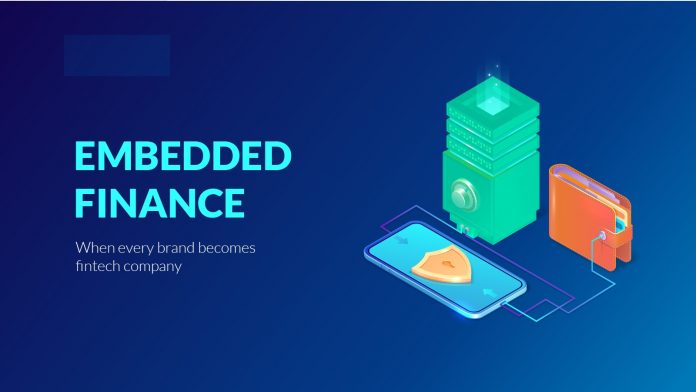
By 2030, Embedded Finance Market is projected to reach $7 Trillion

0

The future of finance is embedded. This means that financial services are seamlessly integrated into other platforms, such as E-commerce, social media, or Mobility. Embedded finance enables customers to access banking, payments, lending, insurance, and investing without leaving their preferred apps or websites. This creates a more convenient, personalized, and engaging customer experience, while also reducing costs and increasing revenues for the providers.

According to a report by Lightyear Capital, the embedded finance market is expected to grow exponentially in the next decade, reaching a whopping $7 trillion in value by 2030. This would surpass the combined market capitalization of fintech startups, major global banks, and insurance companies. The report identifies four key drivers of this growth: technology innovation, customer demand, regulatory support, and competitive pressure.

Technology innovation refers to the development of new technologies and platforms that enable embedded finance, such as cloud computing, APIs, artificial intelligence, blockchain, and biometrics. These technologies lower the barriers to entry and facilitate interoperability and scalability for embedded finance providers.

Customer demand refers to the changing preferences and expectations of customers, especially millennials and Gen Z, who are more tech-savvy, mobile-first, and value-driven. These customers want more convenience, choice, personalization, and social impact from their financial services. They are also more willing to trust and use non-traditional providers, such as big techs, retailers, or telcos.

Regulatory support refers to the favorable policies and frameworks that encourage innovation and competition in the financial sector. Examples include open banking, which allows customers to share their financial data and access third-party services; sandbox programs, which allow fintechs to test their products and services in a controlled environment; and digital identity schemes, which enable secure and seamless verification of customers.

Competitive pressure refers to the increasing rivalry among existing and new players in the financial industry. Embedded finance creates new opportunities for non-financial players to offer financial services and capture a larger share of the customer wallet. At the same time, it also challenges traditional financial institutions to innovate and adapt to changing customer needs and preferences.

Embedded finance allows customers to access financial services anytime, anywhere, and on any device. Customers do not need to switch between different apps or websites, or visit physical branches or offices. They can complete their financial transactions within their preferred platforms, such as shopping online, booking a ride, or chatting with friends.

Embedded finance enables providers to offer tailored and customized financial solutions that suit the specific needs and preferences of each customer. Providers can leverage data and analytics to understand customer behavior, preferences, and needs, and offer relevant and timely financial products and services. They can also offer personalized recommendations, incentives, rewards, and loyalty programs.

Embedded finance creates more opportunities for customer interaction and engagement. Providers can offer more value-added services and features that enhance the customer experience and satisfaction. They can also create more touchpoints and feedback loops with customers and build long-term relationships and trust.

Embedded finance reduces the operational costs and inefficiencies of traditional financial services. Providers can leverage existing platforms and infrastructure and avoid the costs of building and maintaining their own systems. They can also benefit from economies of scale and network effects. Embedded finance also creates new sources of revenue and profit for providers. They can monetize their customer data and insights, cross-sell and upsell their financial products and services, and charge fees or commissions for their embedded finance offerings.

The embedded finance revolution is already underway. Examples of successful embedded finance providers include Shopify, which offers e-commerce merchants a range of financial solutions such as payments, lending, banking, and investing; Grab, which offers ride-hailing customers and drivers access to payments, insurance, wealth management, and lending; and Amazon, which offers online shoppers and sellers various financial services such as payments, credit cards, loans, insurance, and savings.

However, embedded finance also comes with some risks and challenges that need to be addressed. These include; Data privacy and security: Embedded finance involves sharing sensitive customer data across multiple platforms and providers. This raises concerns about data protection, consent, ownership, and liability. Customers need to be aware of how their data is used and stored, and providers need to ensure compliance with data privacy regulations and best practices.

Cybersecurity and fraud: Embedded finance increases the exposure and vulnerability of financial transactions to cyberattacks and fraud. Providers need to invest in robust cybersecurity measures and systems to prevent and detect unauthorized access, data breaches, identity theft, phishing, malware, and other threats.

Regulatory uncertainty and complexity: Embedded finance operates in a dynamic and evolving regulatory environment that varies across jurisdictions and sectors. Providers need to navigate the complex and sometimes conflicting rules and regulations that apply to their embedded finance offerings. They also need to monitor and adapt to the changing regulatory landscape and expectations of regulators and customers.

Customer trust and loyalty: Embedded finance creates new opportunities for customer acquisition and retention, but also new challenges for customer satisfaction and loyalty. Providers need to deliver consistent, reliable, and high-quality financial services that meet or exceed customer expectations. They also need to build trust and credibility with customers who may not be familiar with their financial capabilities or reputation.

Embedded finance is not a trend or a niche; it is the future of finance. But it is not without risks and challenges that need to be managed and mitigated. The implications of embedded finance are profound and far-reaching. It will transform the way customers interact with financial services, create new business models and revenue streams for providers, and reshape the competitive landscape of the financial industry.

Amazon’s New York City Airbnb ban and resetting from WFH to In-office Work Operations

0

Amazon will stop promoting Airbnb listings in New York City, following a recent ban on short-term rentals by the city council. The decision affects thousands of hosts who rely on Airbnb as a source of income and millions of travelers who use the platform to find affordable and convenient accommodation.

The ban, which was passed in July, prohibits renting out entire apartments for less than 30 days unless the host is present. The city council claims that the ban is necessary to protect the housing supply and prevent illegal hotels from operating in residential areas. However, Airbnb argues that the ban is unfair and violates the rights of hosts and guests.

Amazon, which has a partnership with Airbnb to offer discounts and rewards to its Prime members, said that it respects the local laws and regulations of each market where it operates. The company said that it will continue to work with Airbnb to find ways to support its hosts and guests in New York City, but it will not promote any listings that violate the ban.

New York City prohibits renting out entire apartments for less than 30 days unless the host is present.

If you are planning to visit New York City and stay in an Airbnb, you should be aware of the legal restrictions that apply to short-term rentals. According to the New York State Multiple Dwelling Law, it is illegal to rent out an entire apartment for less than 30 days unless the host is also staying there during the rental period. This law is intended to prevent the conversion of residential units into illegal hotels and to protect the rights and safety of tenants and neighbors.

The law does not affect rentals of individual rooms or shared spaces, as long as the host is present and there are no more than two guests at a time. It also does not apply to rentals of single-family homes, townhouses, or condos, as long as they are not subject to other rules or regulations that prohibit short-term rentals. However, renters should always check with their landlords or homeowner’s associations before listing their properties on Airbnb or other platforms, as they may face fines or eviction for violating their lease or bylaws.

Airbnb hosts who violate the law may face penalties ranging from $1,000 to $7,500 per illegal rental, depending on the number of violations. The New York City Office of Special Enforcement is responsible for enforcing the law and conducting inspections and investigations of suspected illegal rentals. Airbnb also cooperates with the city authorities and removes listings that do not comply with the law.

If you are looking for a legal and affordable way to experience New York City, you may want to consider other options besides renting an entire apartment on Airbnb. You can still find many listings of private rooms or shared spaces that offer comfort and convenience at a lower cost. You can also explore other types of accommodations, such as hotels, hostels, bed and breakfasts, or couch surfing. Whatever you choose, make sure you do your research and follow the rules to avoid any trouble and enjoy your stay in the Big Apple.

The move by Amazon is a blow to Airbnb, which has been facing increasing pressure from regulators and competitors in various markets. The company, which is planning to go public next year, has been trying to improve its image and reputation by introducing new safety measures, verification processes, and community standards. However, it still faces legal challenges and opposition from hotel groups, housing advocates, and some local residents.

Amazon is blocking the promotion of employees who don’t comply with the company’s return-to-office policy

The company claims that this policy is necessary to maintain its culture of innovation and collaboration, but many workers are unhappy with the decision. Amazon has been one of the most successful companies during the pandemic, thanks to its online retail and cloud computing businesses.

However, it has also faced criticism for its treatment of warehouse workers, who have reported unsafe working conditions and lack of adequate protection from the virus. Now, the company is facing backlash from its corporate employees, who have enjoyed the flexibility and convenience of working from home.

According to an internal memo obtained by The Wall Street Journal, Amazon’s senior vice president of global corporate affairs, Jay Carney, wrote that “employees who choose not to return to the office will not be eligible for promotions or salary increases.” He added that “this is not a punishment, but a recognition that certain roles require in-person collaboration and communication.”

Many employees disagree with this rationale, arguing that they have been able to perform their tasks effectively and efficiently from home. Some have also expressed concerns about their health and safety, as well as their work-life balance, if they are forced to commute and spend long hours in the office. Some have even threatened to quit or look for other jobs if the policy is not revised.

Amazon is not the only company that is trying to bring its workers back to the office. Other tech giants like Google, Facebook and Apple have also announced plans to require some form of in-person work in the near future. However, Amazon’s policy seems to be stricter and more punitive than others, as it directly affects the career prospects of its employees.

The company has defended its stance, saying that it believes that “the office is essential for fostering culture and innovation.” It has also said that it will offer some exceptions for employees with medical conditions or other special circumstances. However, it has not specified how many employees will be affected by the policy, or how it will enforce it.

The policy has sparked a heated debate among Amazon’s employees, as well as the wider tech industry and society. Some support the company’s decision, saying that it will help restore a sense of normalcy and community after a long period of isolation and disruption. Others oppose it, saying that it will harm employee morale and productivity, as well as limit diversity and inclusion.

On New York City prohibition, Airbnb said that it is disappointed by Amazon’s decision and hopes that it will reconsider its stance. The company said that it believes in the positive impact of home sharing and the benefits it brings to hosts, guests, and communities. It also said that it is willing to work with the city council to find a fair and reasonable solution that balances the needs of all stakeholders.