DD
MM
YYYY

PAGES

DD
MM
YYYY

spot_img

PAGES

Home Blog Page 4042

Justin Sun Supports Curve, Calls for Greater DeFi Security Measures, as Aave Community Votes on ARFC Proposal

0

The decentralized finance (DeFi) sector has been hit by another major exploit, this time affecting the popular stablecoin platform Curve. On July 29, an attacker managed to drain over $7.5 million worth of crypto from the Curve sUSD pool, exploiting a flaw in the pool’s smart contract.

The attack was quickly detected and stopped by the Curve team, who deployed a fix and restored the pool to normal operation. However, the damage was already done, as the attacker got away with a large amount of stablecoins, including DAI, USDC, USDT and sUSD.

The Curve team issued a statement on Twitter, explaining that the exploit was caused by an incorrect calculation of virtual price in the sUSD pool. They also assured users that no other pools were affected and that the funds in the sUSD pool were safe.

The Curve team also thanked Justin Sun, the founder of TRON and CEO of BitTorrent, for his support and assistance during the incident. Sun, who is a vocal advocate of DeFi and a major investor in Curve, tweeted that he was in contact with the Curve team and offered his help to resolve the issue.

Sun also called for greater security measures and audits in the DeFi sector, saying that such exploits are detrimental to the growth and adoption of DeFi. He urged the DeFi community to work together and cooperate to prevent future attacks and protect users’ funds.

Sun’s support for Curve is not surprising, as he has been actively involved in the DeFi space for a long time. He launched his own DeFi platform, JUST, on TRON in April 2020, offering users various services such as lending, borrowing, stablecoins and governance tokens. He also invested in several DeFi projects, such as 1inch, Aave, Compound and Uniswap.

Sun has also been promoting interoperability between TRON and other blockchains, especially Ethereum, which hosts most of the DeFi applications. He recently announced that TRON would launch a wrapped version of Bitcoin on its network, allowing users to access Bitcoin-based DeFi services on TRON. He also revealed that TRON would support Ethereum’s upcoming upgrade to proof-of-stake (PoS), dubbed ETH 2.0.

Sun’s vision is to create a more inclusive and accessible DeFi ecosystem that benefits users across different platforms and networks. He believes that DeFi is the future of finance and that it can empower people to take control of their own money and assets.

Curve is one of the leading DeFi platforms on Ethereum, specializing in stablecoin liquidity provision and exchange. It allows users to deposit and swap various stablecoins at low fees and high efficiency. It also offers users incentives to provide liquidity by distributing its native governance token, CRV.

Curve has been growing rapidly since its launch in January 2020, attracting over $10 billion worth of total value locked (TVL) in its pools. It has also integrated with several other DeFi protocols, such as Yearn.finance, Synthetix and SushiSwap.

However, Curve has also faced some challenges and controversies along the way. In August 2020, it suffered a governance crisis when an anonymous user deployed its CRV token contract without the team’s consent, triggering a chaotic distribution process. In November 2020, it was accused of being centralized and censoring some users’ votes on its governance platform.

Despite these setbacks, Curve has remained one of the most popular and innovative DeFi platforms in the market. It has also been working on improving its security and governance, as well as expanding its features and functionality. It recently launched a new pool for Euro-based stablecoins, as well as a cross-asset swap feature that allows users to swap between different types of assets without going through stablecoins.

The latest exploit on Curve is a reminder of the risks and challenges that still exist in the DeFi sector. It also highlights the need for more collaboration and cooperation among DeFi stakeholders, as well as more education and awareness among users. As Sun said, DeFi is still in its early stages and has a lot of potential to grow and improve. With more support and participation from influential figures like Sun, DeFi can overcome its obstacles and achieve its goals.

Aave Community Votes on ARFC Proposal to Deploy Aave V3 on Base

Meanwhile, the Aave community has recently voted on an important proposal to deploy Aave V3 on Base, a decentralized protocol for cross-chain asset exchange. The proposal, known as ARFC (Aave Request for Comment), was submitted by the Base team and received overwhelming support from the Aave governance token holders.

Aave V3 is the latest version of the popular lending and borrowing platform that offers improved features such as liquidity mining, flash loans, credit delegation, and more. Base is a protocol that enables users to swap any asset across any blockchain, without intermediaries or centralized exchanges. By integrating Aave V3 with Base, users will be able to access a wider range of assets and liquidity pools, as well as benefit from lower fees and faster transactions.

The ARFC proposal outlined the technical details and benefits of deploying Aave V3 on Base, as well as the incentives for both Aave and Base users. According to the proposal, Aave V3 will be deployed as a smart contract on Base, and users will be able to deposit and borrow any asset supported by Base. The interest rates and collateral ratios will be determined by the Aave protocol, and users will also earn AAVE tokens for providing liquidity. Additionally, users will be able to swap their assets across different blockchains using Base’s native token, BASE, which will also be integrated with Aave V3.

The Aave ARFC proposal is a new initiative that aims to improve the governance and risk management of the Aave protocol. ARFC stands for Aave Risk Framework Committee, and it is a group of experts and stakeholders that will oversee the risk parameters and policies of the protocol.

The ARFC proposal was submitted by Gauntlet, a platform that uses simulation and machine learning to optimize the performance and security of decentralized protocols. Gauntlet has been working with Aave since 2020, providing risk analysis and recommendations for various aspects of the protocol, such as interest rates, collateral ratios, and liquidation thresholds.

The ARFC proposal seeks to formalize and expand the role of Gauntlet in the Aave ecosystem, by creating a dedicated committee that will work closely with the Aave core team, the Aave community, and other risk partners. The ARFC will have the following responsibilities:

Monitor and assess the risk profile of the Aave protocol and its markets.

Propose and implement changes to the risk parameters and policies of the protocol.

Communicate and educate the Aave community and users about the risk framework and its rationale.

Coordinate with other risk partners and external auditors to ensure the security and robustness of the protocol.

The ARFC proposal is currently under discussion in the Aave governance forum, where anyone can share their feedback and questions. The proposal will also undergo a formal vote by the AAVE token holders, who will ultimately decide whether to approve or reject it.

The ARFC proposal is an important step towards enhancing the governance and risk management of the Aave protocol, which is one of the leading decentralized lending platforms in the crypto space. By creating a dedicated committee of experts and stakeholders, the proposal aims to ensure that the protocol remains safe, efficient, and responsive to the needs and preferences of its users.

The proposal also stated that the integration will increase the adoption and awareness of both Aave and Base, as well as create synergies between the two communities. The proposal received 98% approval from the Aave token holders, who expressed their enthusiasm and support for the collaboration. The Base team also thanked the Aave community for their vote of confidence and announced that they will start working on the implementation as soon as possible.

The deployment of Aave V3 on Base is expected to be completed by the end of the year and will mark a significant milestone for both protocols. The integration will offer users a new level of flexibility and efficiency in managing their assets across different blockchains, as well as open up new opportunities for innovation and growth in the decentralized finance (DeFi) space.
The Importance of Proactive Risk Management in Today’s Dynamic World; Navigating Uncharted Waters

0
Source: Risk Evolves

In today’s business world, the climate is exceptionally dynamic and rapidly changing. technology advancements, globalization, changing consumer preferences, regulatory requirements, economic fluctuations, and other important elements all contribute to these changes. There are also emerging risks that pose significant challenges and disruption to the business landscape such as cybersecurity threats, Artificial Intelligence (AI), climate change, data governance and data privacy. 

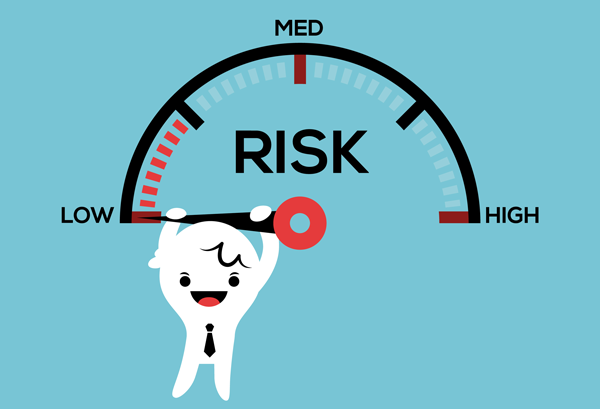
This high level of dynamism makes it crucial for organizations to remain flexible and adaptable. So, as businesses navigate the ever changing business landscape, risks are often complex, interconnected, and can have wide-ranging impacts on various aspects of an organization. Therefore, taking a proactive approach to identifying, assessing, and mitigating risks helps businesses to be better prepared, more resilient, and capable of seizing opportunities.

With its large population, ever-growing market, and resources, Nigeria presents immense opportunities for business owners and investors. However, as in any business environment, there are various issues that can impact businesses seamlessly operating. There is a massive infrastructural deficit ranging from roads in poor conditions posing increasing challenges for logistics, poor electricity supply, etc. There is also the issue of Naira volatility further compounding inflation. Nigeria has experienced security challenges, including terrorism, insurgency, and kidnapping alongside political instability on the back of the recently concluded and courts contested general elections. Successful businesses in Nigeria often navigate these issues through strategic planning and proactive risk management to drive sustainable growth and development.

The first step of this proactiveness is risk identification. This requires conducting risk assessments, having brainstorming sessions, and examining historical data and industry patterns to discover potential hazards particular to the organization’s operations, industry, and environment. The identified risks are then assessed and prioritized in order of their significance. It is important at this stage to address critical risks first. Critical risks are high-impact risks that have the potential to significantly affect an organization’s ability to achieve its objectives and threaten its overall success. 

A further step is taken in developing and implementing control measures, process improvements, and redundancies to reduce the likelihood of risks occurring or minimize their impact if they do occur. A mitigating measure could be for instance, Insurance. It is an effective risk transfer mechanism and provides financial protection against potential losses and helps mitigate the impact of unexpected events. There is also the place of training and development. With proper training, risk management teams, business leaders, organizations can significantly improve their ability to identify, assess, and address risks effectively.

Important to note also that Risk management is a continuous process, hence, it is vital to continually monitor and evaluate. It is an iterative process that requires continuous evaluation and improvement. Regularly reviewing the progress, gathering feedback, and assessing the effectiveness of the implementation efforts help in identifying areas for improvement and making necessary adjustments. Lessons learned from successes and failures should be documented and used to refine the implementation approach and enhance future risk management strategies. More important is this ongoing review as risk itself can evolve overtime.

From the foregoing, a key strategy that enables firms to foresee, address, and minimize possible hazards before they escalate into serious problems is proactive risk management. Proactive risk management entails anticipating problems rather than just responding to them when they happen. This enables firms to stay ahead of uncertainties and provide better results.

Embracing proactive risk management is a strategic investment that supports an organization’s success and longevity. By identifying potential risks early on and implementing appropriate risk mitigation measures, organizations can not only survive challenges but also thrive in a dynamic and competitive business landscape. As Alan Greenspan, the former chair of the Federal Reserve of the United States, puts it, “…better risk management may be the only truly necessary element of success.”

The Grand Illusion of Oil Wealth In A National Wellbeing – The Paradox of Less is Better

1

Great comments on the piece on why Nigeria needs to provide assist (as in football) to the Naira, as it dribbles in the global currency field, via warehouses and factories, both traditional and modern, for a goal. Sure, some of our citizens still believe that Nigeria’s future is tied to oil, and if we pump more oil, we will be fine. Last week, in a well received piece in Harvard, I offered how I see it, that the future belongs to young people with modern skills. Why?

Let’s go back to secondary school and examine the computation of GDP. AO Lawal, explaining in his economics textbook, was abundantly clear on comparative advantages of nations as he posited many factors affecting location and localization of industries. In a chapter of that popular textbook, he has explained factors of production and division of labour. Standing digitally on the shoulders of that good economics teacher, I write:

Case A: You sleep in your house, someone pumps oil in your backyard, sells it, and credits you $10 million at the end of the month. The economic activity for the production of the “finished goods”, in this case, crude oil at this phase, is $1 million. That $1m is the GDP – value added, created through the production of goods and services. Few but well paying jobs created.

Case B: Another person cultivates palm trees, employs many people to weed, trim, harvest, and process all to palm oil -and further to soaps, cosmetics, etc. The person credits you $2 million at the end of the month. But the economic activity for that translation is worth $8 million because many things have happened in translating those palm tree seeds into soaps and cosmetics, generating massive economic activities. Here, there are jobs and many jobs.

If you are a policy expert advising a President of a nation, which one would you recommend for the nation?


(Note this: the raw oil has minimal impact in advancing a nation if it is not used to seed new economic vistas in a nation. But just relying on the monetary receipts in New York and London will not help any country. You can replace oil with diamond, gold, etc provided none is refined or processed locally. Simply, a nation could be better off in the long term without oil (or gold or diamond) where its leaders are inherently incapable of doing that refining and processing. But where they are able, great things happen, because oil, diamond, gold, etc have the capacity to stimulate local economic activities just like the palm tree.)

You can say less is better (a paradox) when it comes to sub-Saharan Africa when it comes to commodities since more oil, gold, diamond, etc have not advanced the welfare of the citizens.

Have that in mind as you look at the GDP map of countries. Africa could be making money on natural resources but we are missing a lot on the economic activities. That explains why our GDP remains very small. We belong to Case A and account for a small component of the global economy.

Comment on Feed

Comment 1: Nigeria has the capability and capacity to do both and more. I have previously suggested that Nigeria should redevelop their Palm oil production – focus and be intentional about developing the industry from growth to processing to finished products. Government incentives like land and production grants and loans as well as tax exemptions can be employed to stimulate the industry. After all, where do you think the Asian palm oil giants got their palm oil tree seeds from? Nigeria!

Furthermore, Nigeria could still sell crude oil for export or but domestic consumption should only be from domestic refineries. No domestic petrol, oil, and the various derivatives should be from imports. Only import what simply can’t be produced domestically. But I ask another question: What specialty, with regard to oil production and refinement, does not exist in Nigeria? Within the country, and in the diaspora, experts exist in every field. The incentives I mentioned above could be employed to oil refining as well as palm oil refining. There is no reason, other than political will, that these can’t exist.

I have confidence in Nigeria and Nigerians; there’s nothing they(you) can’t do. Political will is the key.

Register for Tekedia “AI in Business Masterclass” (Full Curriculum Published)

0

Good People, you asked for it, and Tekedia Institute is super-excited to unveil “AI in Business Masterclass“. This program focuses on how AI (artificial intelligence) will redesign the world of business, and re-architect economies even as it transforms markets, communities, and organizations. Participants will gain the knowledge capabilities, and confidence, required to support the integration of AI systems into their organizations, and advance their professional careers.

Coordinated by Tekedia Institute Lead Faculty, Prof Ndubuisi Ekekwe (doctoral degrees in electrical/computer engineering with specialization in robotics & neuromorphic engineering, and Banking & Finance), the multidisciplinary program runs for 8 weeks. Here is the full curriculum:

WEEK 1: The Business of Numbers and Computing

  • The Beginning and the World of Numbers
  • Computing Evolution and Emergence of AI
  • Grand Mission of Businesses, AI Convergence

WEEK 2: Understanding AI &Modern Computing, And Impacts on Business

  • Introduction and History of AI
  • Traditional AI and Generative AI
  • AI in Today’s Business World
  • Case Studies – AI for Social Good: Flood Prediction, Healthcare
  • Beyond Code – the Microprocessors Which Power AI

WEEK 3: AI Technology and Tools (ChatGPT, DALL-E & others)

  • Generative AI and Web 3.0 Opportunities
  • ChatGPT and AI Arms Race
  • AI Co-Pilots and Future
  • Generative AI: texts, images, etc
  • Lab 1 *
  • Lab 2

WEEK 4: AI in Various Industries

  • AI in Telecoms
  • AI in The Justice System
  • AI in Mass Media & Content
  • AI in Marketing and Sales
  • AI in Advertising
  • AI in Digital Business

WEEK 5: AI Strategy and Implementation

  • The 6 Key Steps
  • Lab 3
  • Lab 4

WEEK 6: Future of AI and Business Impacts

  • The AI Tech Stack

WEEK 7: AI Nativity and Evolving To AI-Company

  • – Transforming Grand Business Playbooks with AI
  • -“From Bank which uses AI to AI-company which does banking”
  • -“From bakery which uses AI/robotics to AI/robotics-firm which does bakery”

WEEK 8: Innovative Business Models for AI Era

  • Business models as an AI-native company
  • Winning the AI Race As A Business – Beyond tech, to Business Model
  • Case Studies on Launching AI Startups

Cost and Payment

Cost: $400 or N200,000. Register and let’s co-learn here.

Certificate

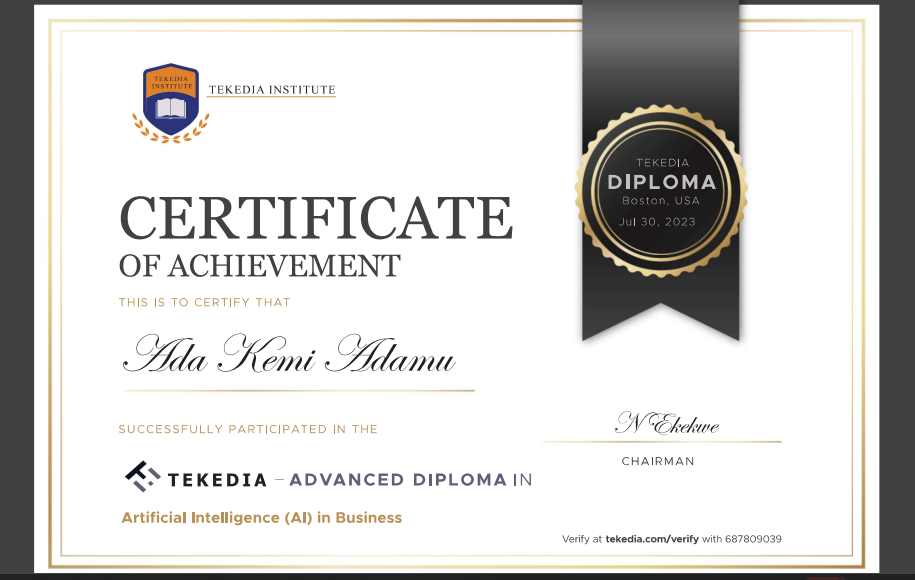
And when you finish Tekedia AI in Business Masterclass, we have a certificate to validate your success. Yes, Tekedia Institute will award you an Advanced Diploma in Artificial Intelligence (AI) in Business.

Experts in the industry developed this AI course, and it will help your professional mission. 

Which Unique Wealth Opportunities Do Decentraland, the Sandbox, Pomerdoge Provide?

0

The cryptocurrency market has been a breeding ground for unique wealth opportunities, with projects like Decentraland (MANA), The Sandbox (SAND), and Pomerdoge (POMD). Each of these tokens offers distinctive features and concepts that have the potential to reshape various industries. Today, we will examine all three projects and determine what makes them appealing.

Click Here To Find Out More About The Pomerdoge (POMD) Presale

Decentraland (MANA): Virtual Real Estate Ownership

Decentraland (MANA) is a decentralized virtual world that allows users to explore experiences through the ownership of digital land. The project’s unique NFT-based real estate system enables users to buy, sell, and develop virtual parcels. As a result, it is creating a new frontier for property ownership in the digital realm.

Decentraland recently updated its NFT marketplace significantly to improve the user experience. In other words, Decentraland hopes to increase visibility and boost navigation throughout its marketplace. Consequently, in the last month alone, the Decentraland price jumped by 3.8%.

The Decentraland coin has a value of $0.3855 with a market cap of $729M. In addition, the technical indicators for Decentraland show buy signals. Thus, experts forecast that the token could surge to $0.52 by December 2023.

The Sandbox (SAND): User-Created Gaming Experiences

The Sandbox (SAND) is a decentralized virtual gaming platform where players can create and monetize their gaming experiences through NFTs. Users can design their unique virtual worlds, assets, and games using the platform’s intuitive game creation tools.

In recent The Sandbox news, it was announced that the platform partnered with the British Museum and laCollection. As a result, public access to the museum’s collection of artifacts will increase. Evidently, this positively impacted The Sandbox crypto as its value jumped by 4.4% in the past 30 days.

Currently, The Sandbox has a value of $0.4294 with a market cap of $830M. But both its moving averages and technical indicators are in the green. Therefore, market analysts predict that The Sandbox could reach $0.56 before 2023 ends.

Pomerdoge (POMD): An Exciting P2E Game

Pomerdoge (POMD) represents a novel entry in the P2E space, offering players a competitive gaming experience. Players can earn rewards by participating in the game, competing with each other, and selling assets on its marketplace. Prominent experts believe that Pomerdoge could become the new Dogecoin.

Exclusive NFT Collections and Revenue Sharing

Presale buyers in Pomerdoge gain access to an exclusive 7,777 NFT collection, providing a sense of scarcity and value. Furthermore, Pomerdoge allows early buyers to receive a percentage of the game’s revenue based on their token holdings. This incentive fosters community engagement and holds the potential for substantial financial returns.

Regarding security, SOLIDProof and Cyberscope have already performed an audit, finding Pomerdoge to be 100% safe. As a matter of fact, the Pomerdoge team has locked liquidity forever. With this in mind, buyers can rest easy knowing their funds are secure.

POMD vs. Decentraland (MANA) vs. The Sandbox (SAND)

While Decentraland focuses on virtual real estate ownership and The Sandbox centers on user-generated gaming experiences, Pomerdoge rewards players with earnings for their in-game activities.

Pomerdoge is offering its native coin, POMD, for just $0.007. Most importantly, as the POMD presale continues, more price hikes are coming. In fact, some experts foresee it surging by 17x before it concludes. Due to this reason, now is the perfect time to purchase it and become an early backer of this upcoming game-changer.


Find out more about the Pomerdoge (POMD) Presale Today

Website: https://pomerdoge.com/

Telegram Community: https://t.me/pomerdoge