DD
MM
YYYY

PAGES

DD
MM
YYYY

spot_img

PAGES

Home Blog Page 405

Kodak Returns to Direct Film Distribution With Kodacolor Launch

0

Kodak has stepped back into the spotlight with the surprise launch of two new film products, Kodacolor 100 and Kodacolor 200 — marking the first time in years that the company is not only introducing fresh products but also handling its own distribution.

For photographers, it’s more than a nostalgic announcement. Since Kodak’s 2012 bankruptcy restructuring, film distribution has largely been the domain of Kodak Alaris, a separate business spun off during the company’s financial collapse. Kodak’s decision to take direct control once again signals a strategic shift that could reshape how its products reach consumers, putting the company in sharper contrast with rivals like Fujifilm, which has scaled back its consumer film offerings in recent years.

Rebranded classics, not brand-new emulsions

Kodak described the new films in an Instagram post as “sub-brands of existing Kodak films,” which means they are rebranded rather than completely new emulsions.

Industry observers quickly speculated that Kodacolor 100 is based on ProImage 100 and Kodacolor 200 on Color Plus 200, judging by early sample images.

While some photographers may have hoped for a never-before-seen emulsion, the launch is still a big deal. Film prices have soared dramatically since 2020 — up by at least 50 percent, with some color stocks doubling. Affordable alternatives like Kodacolor, priced at around $9 per roll, offer a more accessible entry point for newcomers and hobbyists eager to try analog without the premium costs tied to more established stocks.

Capacity upgrades fuel comeback

Kodak’s move is closely tied to expanded production at its Rochester, New York factory, which has recently undergone upgrades to boost capacity. The company expects to streamline supply, put more film in photographers’ hands, and potentially help stabilize pricing by cutting out Kodak Alaris as a middleman.

The analog revival has kept demand for film strong, but shortages and sporadic restocks have frustrated photographers while fueling price spikes. Kodak is positioning Kodacolor as both a stabilizer and an accessible line to expand its consumer base.

Strategic contrast with Fujifilm

The decision also highlights Kodak’s diverging path from Fujifilm, its long-time rival. While Kodak is reasserting itself in film manufacturing and distribution, Fujifilm has steadily pulled back from the consumer analog market, focusing instead on its highly successful Instax line and digital imaging businesses. For photographers loyal to 35mm film, Kodak’s decision to bring production closer to its customers contrasts sharply with Fujifilm’s retrenchment, potentially leaving Kodak as the dominant player in the traditional film space for now.

The last time Kodak ventured into chemicals and distribution at this scale was more than a decade ago, prior to bankruptcy. Now, with Kodacolor 100 and 200 set to roll out directly through Kodak, the company is signaling that it wants to rebuild a direct relationship with photographers.

They may not be completely new emulsions, but in a market where cost, access, and stability matter as much as innovation, Kodak’s re-entry into distribution could shape the future of analog film.

Naira Overvalued by 30% Against the Dollar – Rencap Declares

2

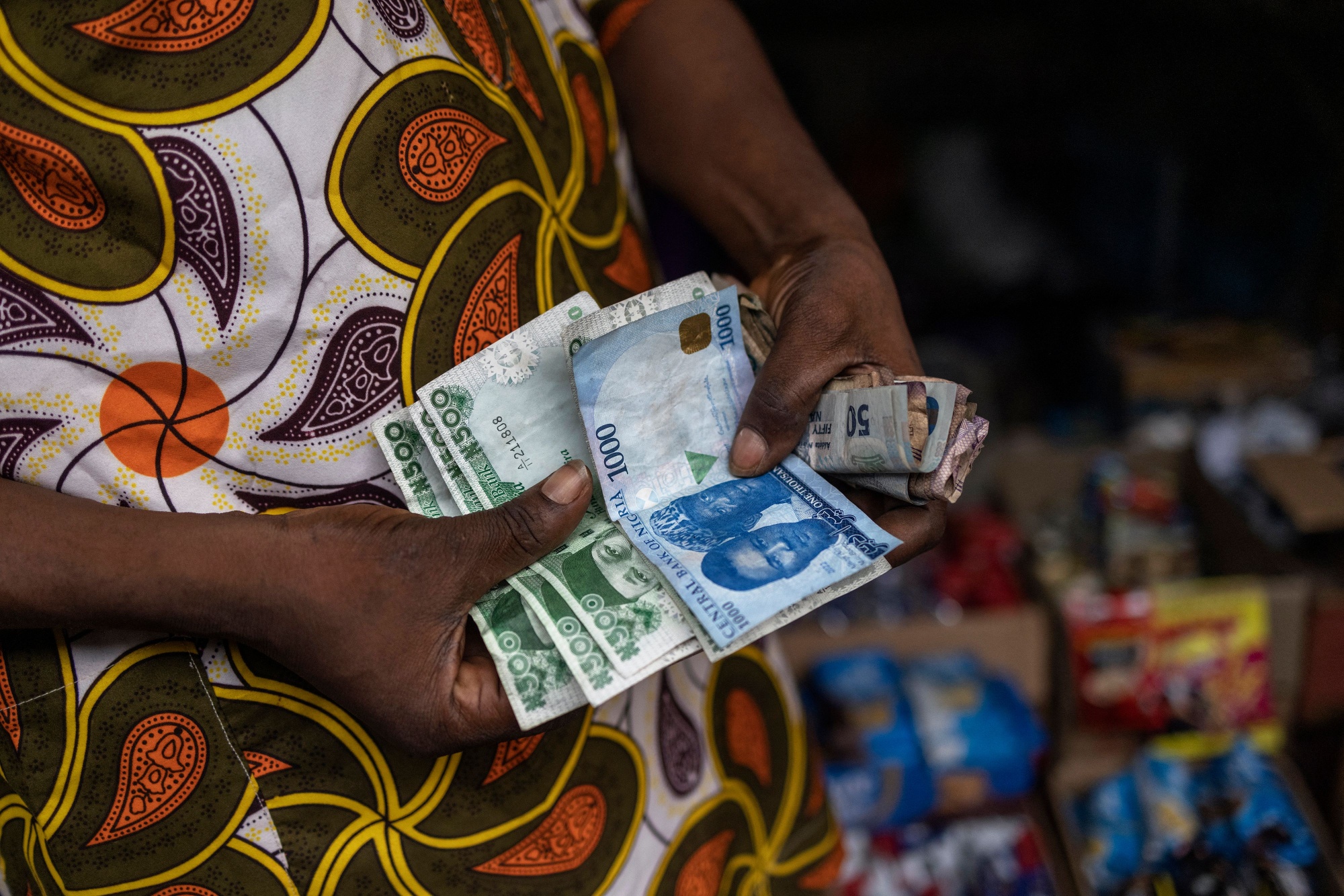
Nigeria’s naira, long at the heart of policy debates, has now been declared the most overvalued currency in Africa by Renaissance Capital Africa (Rencap), which estimates it is overpriced by as much as 30% when measured against the real effective exchange rate model (REER).

The investment house’s findings land at a delicate moment for the economy. The exchange rate is trading at one of its strongest levels in more than a year, supported by external reserves that recently touched $41 billion. Yet, beneath this appearance of stability, the report argues, lies a distortion that could eventually unwind with painful consequences.

A clash over inflation data

Rencap points to Nigeria’s peculiar inflation story as a major contributor to the mispricing of the naira. The country has been experiencing food price deflation throughout 2025, the firm says, which means the official inflation numbers are overstating reality.

The National Bureau of Statistics (NBS) reported inflation above 20% in August. But Rencap’s models suggest inflation was already closer to 12% in October, headed for 10% in December, and potentially as low as 6% in 2026.

The discrepancy stems from Nigeria’s updated Consumer Price Index (CPI) basket, introduced in January 2025, which altered the weighting of items. While the update dragged headline inflation down from 34.8% in December 2024 to 24.48% in January 2025, Rencap argues the revisions created fresh distortions.

For instance, non-alcoholic beverages now account for 12% of the CPI basket — a heavier weight than transport at 11%, and nearly four times telecoms at just 3%. These anomalies, Rencap insists, have caused official CPI to drift away from actual price trends, leaving policymakers with faulty data.

The knock-on effect, according to Rencap, is that the Central Bank of Nigeria (CBN) has been “keeping policy excessively tight.” Despite inflation running closer to 10% in real terms, the policy rate remains at 27%. This places Nigeria’s real interest rate among the highest in the world at 17%. For comparison, Egypt’s real rate stands at 14%, while Argentina’s is just 6%.

Such a tight policy has, in Rencap’s view, engineered artificial stability in the naira. A mix of high interest rates, a relatively steady exchange rate, and a current account surplus has kept the currency anchored at levels that do not reflect its true value.

But stability, the report warns, is fragile. Rencap expects the naira to hold steady at around N1,400–N1,450 to the U.S. dollar through the end of 2025. The real risk lies ahead: once interest rates are eventually cut and credit growth resumes, imports will likely surge. That scenario could trigger a sharp 30% depreciation in the naira between 2026 and 2027.

The report arrives just as foreign portfolio investors are reassessing African markets. With global oil prices stuck in the $60–70 per barrel range and the dollar forecast to weaken, both Nigeria and Ghana are increasingly seen as attractive destinations for local debt.

Rencap notes the two economies are diverging in important ways. Nigeria, with President Bola Tinubu eyeing re-election in 2027, may see its central bank deliberately delay aggressive rate cuts until after the polls. This political calculation could prolong the naira’s artificial strength, keeping it supported in the near term even as fundamental pressures mount.

In short, while investors may be lured by Nigeria’s high yields and apparent currency stability, Rencap’s analysis paints a picture of fragility beneath the surface — an economy propped up by data distortions, political timing, and unusually high interest rates. When the props are removed, the naira could face its sternest test yet.

A history of questionable data

Beyond Rencap’s findings lies a broader debate about the credibility of Nigerian data itself. In recent years, agencies such as the NBS have faced increasing scrutiny over the accuracy of their figures. Critics accuse the bureau of publishing inflation numbers that understate the severity of price pressures in order to shield the government from backlash over economic policies.

Nigeria has a long history of contested economic data, particularly when it comes to growth and inflation. From the controversial GDP rebasing in 2014 that suddenly repositioned Nigeria as Africa’s largest economy, to persistent disputes over unemployment and poverty statistics, data credibility has repeatedly been questioned by analysts, investors, and even lawmakers.

Rencap’s latest critique flips the script. While NBS has often been accused of underreporting inflation, the investment firm now suggests official data may actually be overstating the rate. However, many have pointed to unabating high cost of living in defense of allegations of inaccurate data by NBS. Now, Rencap’s report has created conflicting narratives, deepening doubts over whether policymakers are working with reliable numbers.

Perps Volumes on DEXs Exceeded $1T In September 2025— First Time In History

0

In September 2025, the monthly trading volume for perpetual futures often called “perps” on decentralized exchanges (DEXs) exceeded $1 trillion for the first time in history, reaching approximately $1.05 trillion to $1.14 trillion according to various reports.

This milestone reflects a 48% surge from August’s $707.6 billion and underscores the rapid growth of DeFi derivatives amid increasing competition and innovation in the sector.

Key drivers include fierce rivalry among platforms like Aster which led with over $420 billion in volume, dethroning prior leader Hyperliquid, Hyperliquid $282.5 billion, and Lighter, fueled by advancements in low-latency execution, high leverage up to 50x or more, and incentives like token buybacks and airdrops.

This shift highlights a broader trend where perp DEXs are capturing significant market share from centralized exchanges (CEXs), with on-chain perps now processing daily averages around $38 billion—comparable to major traditional markets.

For context, a year earlier in September 2024, perp DEX volume was only about $131 billion, showing explosive year-over-year growth driven by better infrastructure like sub-second finality and zk-based layers.

While this boom signals maturing DeFi liquidity, it also raises concerns about over-reliance on speculation, as perp volumes often dwarf spot trading and could amplify volatility during downturns.

The $1.05T–$1.14T volume milestone shows perp DEXs are no longer niche, rivaling centralized exchanges (CEXs) in liquidity and scale. Daily averages of ~$38B indicate perps are now a core component of crypto trading, comparable to traditional financial markets.

DeFi is becoming a legitimate alternative to CEXs, attracting institutional and retail traders seeking self-custody and transparency. Perp volumes significantly outpacing spot trading often by 10x or more highlight a speculative frenzy, with platforms offering up to 50x leverage.

While this drives liquidity, it risks amplifying volatility and potential liquidations during market downturns, posing systemic risks to DeFi ecosystems. The surge from $131B in September 2024 to over $1T in 2025 reflects DEXs capturing market share from CEXs, driven by trustless trading and lower counterparty risk.

CEXs face pressure to innovate or risk obsolescence, while DEXs must scale infrastructure to handle growing demand without compromising decentralization. High-volume, high-leverage trading on DEXs may attract regulators concerned about market manipulation, investor protection, and systemic stability.

DEXs may face compliance challenges, potentially requiring KYC/AML integration or decentralized identity solutions to balance regulation with ethos. Platforms like Aster and Hyperliquid use token buybacks, airdrops, and yield incentives to drive volume, which may inflate metrics artificially.

Unsustainable incentives could lead to “mercenary capital” users chasing rewards then exiting, threatening long-term protocol viability. The perp DEX race is undergoing a revolution driven by technological innovation, fierce competition, and user-centric incentives.

Infrastructure improvements allow DEXs to handle $38B daily volumes, with Aster alone processing over $420B in September 2025. These advancements make DEXs viable for high-frequency trading, eroding CEXs’ technical edge and enabling 24/7, permissionless markets.

Aster overtook Hyperliquid as the volume leader $420B vs. $282.5B in September, with Lighter and others rapidly gaining ground. Competition drives innovation in UI/UX, leverage options 10x–50x, and cross-chain interoperability, making perps accessible to diverse users.

This “race to the top” fosters rapid iteration, with platforms differentiating via unique features like portfolio margining or exotic perp pairs. Platforms are deploying aggressive incentives—token airdrops, fee rebates, and buyback programs—to attract liquidity providers and traders.

Aster’s buyback program and Hyperliquid’s points system have fueled user acquisition, though some question their sustainability. These mechanisms mimic Web2 growth hacking, transforming DeFi into a user acquisition battleground, but risk creating incentive-dependent ecosystems.

Perp DEXs prioritize self-custody, reducing reliance on centralized custodians and aligning with DeFi’s ethos. Community governance and open-source protocols allow users to influence platform development, unlike CEXs.

This shift empowers users, fostering trust and resilience, though it demands greater user responsibility for wallet security. Scalability Limits: Even with zk-rollups, network congestion during peak volatility could degrade performance.

High leverage and volume concentration in top platforms Aster, Hyperliquid could lead to cascading liquidations. Global regulators may target DEXs, especially those offering high leverage without KYC. These hurdles force DEXs to innovate under pressure, balancing growth with resilience and compliance.

ConclusionThe $1T perp trading volume milestone underscores DeFi’s meteoric rise and the revolutionary transformation of the perp DEX race. Technological advancements, cutthroat competition, and user incentives are driving unprecedented growth, positioning DEXs as serious contenders against CEXs.

However, the reliance on speculation, high leverage, and incentives raises sustainability and regulatory concerns. The revolution is well underway, but its success hinges on DEXs navigating scalability, risk management, and potential regulatory headwinds while maintaining DeFi’s decentralized ethos.

From $0.006 to the Next Avalanche? Blazpay Emerges as the Pre Sale Coin to Watch!

0
Blazpay - pre sale coins

Crypto history is full of missed chances where early entries in pre sale coins became extraordinary success stories. Avalanche (AVAX) is one of those moments. Launched with tokens trading under a dollar, Avalanche quickly became known for its high-speed blockchain and scalability, later soaring past $100 during peak market cycles. That rise transformed early participants’ modest allocations into major gains, proving how powerful high-potential crypto presales can be when innovation meets adoption.

For many, missing Avalanche’s breakout was a lesson in timing. But the market is once again offering a rare ground-floor entry. Today, Blazpay ($BLAZ) is attracting attention at just $0.006 per token, positioning itself as one of the best presale opportunities in crypto and standing out among the best new crypto presales for 2025.

Blazpay - pre sale coins

BlazAI: The AI Edge That Could Push Blazpay to Avalanche-Level Growth

Avalanche rose to prominence by solving speed and scalability, quickly becoming one of the top players in DeFi. But while Avalanche optimized infrastructure, Blazpay is taking the next leap, bringing intelligence to DeFi through AI.

At the core of this is BlazAI, a conversational and generative AI layer that allows users to trade, stake, and bridge with simple natural commands. Instead of wrestling with multiple platforms, anyone can say: “Stake 500 BLAZ in the top yield pool”—and BlazAI executes instantly.

This AI-driven approach doesn’t just simplify DeFi; it broadens adoption by lowering barriers for newcomers while offering predictive insights and personalized strategies for advanced users. Where Avalanche built speed, Blazpay is building accessibility and intelligence, unlocking the potential for exponential network effects.

If Avalanche’s innovation could take it from under $5 to nearly $146 at its peak, Blazpay’s integration of AI into DeFi positions it as the next-level evolution in this space. For early participants at $0.006, this isn’t just about being part of another token launch, it’s about backing a project that merges two of the fastest-growing sectors: crypto and artificial intelligence.

Avalanche’s Missed Moment

When Avalanche (AVAX) launched, it entered a crowded field of smart contract platforms. Early believers who purchased tokens below a dollar, however, saw their positions multiply as AVAX surged past $100 during bull market highs. That leap turned small allocations into substantial returns, and stands as a reminder of how timing can shape outcomes in the world of pre sale coins.

For many who overlooked Avalanche in its earliest days, the regret remains clear. Yet history shows that crypto never stops creating new chances. Today, that opportunity may be found in Blazpay ($BLAZ).

Blazpay - high-potential crypto presales

Why Early-Stage Projects Matter

Avalanche’s rise is a clear reminder of how early positioning can deliver outsized gains. What began as a modestly priced token evolved into a top-tier blockchain, driven by strong infrastructure and a clear market fit.

Blazpay, launching at just $0.006, is entering the market with similar potential, but with the added advantage of day-one utilities designed to solve pressing challenges in DeFi and trading. Its multi-chain integration, AI-powered tools, and perpetual trading framework give it a utility-first foundation that sets it apart from speculative presales.

For investors scanning the horizon for the best new crypto presales, Blazpay represents more than just a low entry price. It’s a case study in how infrastructure, utility, and timing converge, offering early adopters the chance to secure a position before momentum takes hold.

How to Access the Blazpay Presale

  1. Visit the official Blazpay website (https://blazpay.com/).
    2. Connect your digital wallet (MetaMask, Trust Wallet, or equivalent).
    3. Select the number of $BLAZ tokens you wish to purchase.
    4. Confirm the transaction to secure the Phase 1 price of $0.006.

    Once the phase closes, the system automatically increases the price for the next round.

Final Perspective

Avalanche’s climb from under a dollar to triple-digit valuations highlighted what can happen when innovation meets adoption. While no two projects are the same, Blazpay ($BLAZ) is entering the market with a combination of presale accessibility, advanced AI, and a rapidly growing ecosystem.

For participants seeking pre sale coins that combine affordability with ambitious utility, Blazpay is emerging as one of the best presale opportunities in crypto and one of the high-potential crypto presales that define the year ahead.

Blazpay -  best presale opportunities in crypto


Community Links:

Website: https://blazpay.com

Twitter: https://x.com/blazpaylabs

Telegram: https://t.me/blazpay

FAQs for Blazpay Pre Sale

Q1: What made Avalanche such a success story?

Its combination of scalability, speed, and developer adoption helped Avalanche move from under $1 to over $100 within a few years.

Q2: What is the current price of Blazpay’s presale?

Blazpay is live at $0.006 in Phase 1, with price increases built into later stages.

Q3: What utilities make Blazpay stand out?

Blazpay integrates AI-driven execution, perpetual trading, gamified participation, and multi-chain access within one platform.

Q4: How do the presale phases work?

Each phase runs for 14 days or until tokens sell out, then the price automatically rises.

Q5: Where can I purchase Blazpay tokens?

Tokens can be purchased directly through the official Blazpay website by connecting a compatible Web3 wallet.

Best Crypto to Invest in Now: BlockDAG, Nexchain, Ozak AI, & BlockchainFX Lead 2025 Presale Market Growth

0

The 2025 presale season is heating up, and many wonder which project could deliver real results. Some launches fade into empty promises, while others show clear progress. What matters most is adoption, working products, and a solid roadmap that points to growth.

This review highlights four names shaping the space in very different ways. BlockDAG continues to dominate with a live testnet and unmatched fundraising. Nexchain is creating tools for cross-chain use, Ozak AI blends artificial intelligence with blockchain, and BlockchainFX promotes itself as an all-in-one trading hub. Each has its strengths, but one clearly sets itself apart as the best crypto to invest in now.

1. BlockDAG: Awakening Testnet and Growth Momentum

BlockDAG has positioned itself as far more than a presale coin. The release of its Awakening Testnet confirmed its ability to execute. The network doubled performance to around 1,400 transactions per second, adopted an account-based model for smoother Ethereum compatibility, and included account abstraction to enhance smart wallets. Developers already benefit from features like a built-in IDE, NFT explorer, analytics dashboard, and live decentralized apps such as Reflection and Lottery. The progress shows real delivery, not speculation.

The numbers also tell the story. BlockDAG (BDAG) has raised close to $420 million, sold more than 26.5 billion coins, and attracted around 312,000 holders. The project has already sold 20,000 X-Series miners and counts over 3 million mobile app users. Entry remains low at $0.0015, while the launch price is locked at $0.05. That gives BlockDAG a potential return exceeding 3,746% from current levels, making it the best crypto to invest in now.

What separates BlockDAG is its ability to combine market excitement with proven infrastructure. Sponsorships, working products, and fast-growing adoption have put it ahead of hype-driven presales. With batches moving quickly, this looks like one of the last chances to secure a low entry before major exchange listings. That mix of traction and delivery is why BlockDAG stands out as the top presale heading into 2026.

2. Nexchain: Driving Cross-Chain Connectivity

Nexchain (NEX) focuses on interoperability, one of the most needed solutions in crypto. Its goal is to make moving assets and data between blockchains simple and seamless. By enabling these cross-chain connections, Nexchain aims to reduce the isolation that keeps many networks from working together effectively.

The presale price is holding near $0.012, and the project has attracted a growing community alongside interest from developers. While not yet at the scale of BlockDAG, Nexchain is building tools that could gain more traction as demand for interoperability expands.

If multi-chain adoption grows in the coming cycle, Nexchain could secure a strong position. Many see it as the best crypto to invest in now when it comes to bridging blockchains. The long-term value will depend on how well it can turn its vision into working products after launch.

3. Ozak AI: Combining Blockchain with Artificial Intelligence

Ozak AI is all about bringing artificial intelligence into blockchain platforms. Its approach allows businesses and developers to add AI-powered features like predictive trading models and risk analysis tools directly into decentralized networks. This makes the project relevant both in financial applications and enterprise use cases.

The presale has been moving steadily, with the price currently near $0.014. The roadmap highlights plans for governance features and AI services powered by its native coin. This dual utility keeps it in focus as AI continues to dominate the tech narrative.

While Ozak AI does not yet match the scale of BlockDAG, its concept gives it a clear identity in the market. For those who see AI as central to the future, it ranks as one of the best crypto to invest in now. Its growth will depend on how well the team executes post-launch.

4. BlockchainFX: Building a Multi-Asset Trading Hub

BlockchainFX presents itself as a one-stop platform for trading across different markets. Its design covers crypto, stocks, forex, and commodities, while BFX holders can receive up to 70% of trading fees back as rewards. The project also mentions audits by CertiK and Coinsult, a Visa card integration for real-world payments, and referral incentives to expand its user base.

The presale price sits around $0.025 with a planned launch at $0.05. Reports suggest it has already raised over $8 million. The full supply is 3.5 billion, with purchase options in ETH, BTC, BNB, USDT, ADA, and card payments.

The idea of merging multiple markets into one app has caught attention. Still, much depends on BlockchainFX delivering beyond promotional claims. For now, it remains a project with potential, and some see it as the best crypto to invest in now if the team meets its promises.

Key Takeaways

Each project targets a different segment of the market. Nexchain focuses on interoperability, Ozak AI highlights artificial intelligence, and BlockchainFX wants to unify trading across asset classes. All carry opportunities but also carry the usual risks that come with early-stage launches.

BlockDAG stands out because it already has proof of delivery. With its live testnet, large-scale fundraising, miner adoption, and active user base, it combines both community strength and infrastructure. That is why it is widely seen as the best crypto to invest in now. For those seeking early entry into a project with real progress, BlockDAG looks like the clear frontrunner for 2025 and beyond.