DD
MM
YYYY

PAGES

DD
MM
YYYY

spot_img

PAGES

Home Blog Page 4050

Nigeria’s Problem is Not Fuel Subsidies

2

My social media channels are classrooms. And most times, I write things which deviate from the “typical” consensus, partly because of my experiences and multifaceted training. I hold degrees in technology, banking, finance, and engineering, with experiences that cut across banking, oil & gas, semiconductors, finance and education.

What if I tell you that fuel subsidies are not Nigeria’s main problem? What if I tell you that what you see as a “fuel subsidies” problem is actually inefficiency in government? When you do not know how much petrol you use, is that a fuel subsidy problem? When you do not have the ability to control your borders, feeding smugglers, is that a fuel subsidy problem? When you pay for “imported” fuel which never arrived, paying fake invoices, is that a fuel subsidy problem?

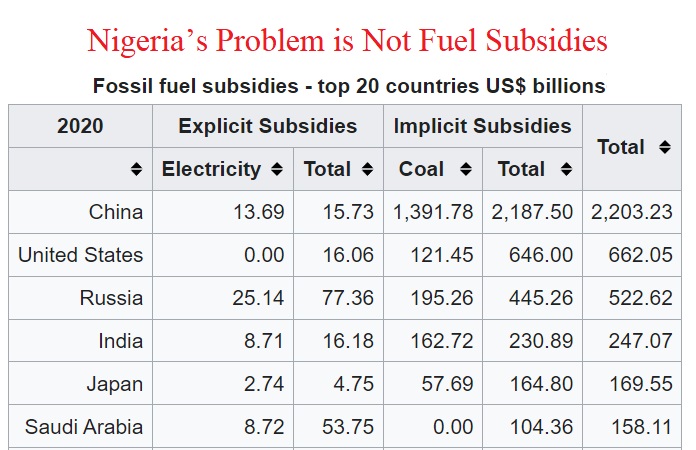
Simply, when you fail on those and many, you need an excuse and that excuse is to kill what benefits economies. Good People, there is no major country which does not subsidize fuel. But while they subsidize fuel, they use that cheap energy to drive PRODUCTION because energy is a very important component of the manufacturing process. China leads the world. The United States follows. Japan is 5th. With energy subsidies, they have a manufacturing base, and when they tax the outputs from those industries, they recover their money!

Nigeria’s fuel subsidy problem is that it was designed to feed corruption (you can photoshop invoices and the government will keep paying you because you have one special connection in Abuja). In my book, Nanotechnology and Microelectronics, which received a Book of the Year award from IGI Global, and upon which I received an invitation from Harvard Business Review, I explained how nations drive technology growth, looking at 2,000 years of data.

The US postal service has not made a single profit in the last 20 years. That is a massive subsidy to improve the supply chain, across America, by making sure commerce works. But they’re smart: the money used to subsidize post office is recovered when profits of companies which depend on the postal system are taxed. Provided there is no corruption, the government has no need to turn the post office into a direct profit-making machine. Recently, the government tried to clean the books, and even after, the postal service still recorded red! That subsidy is a platform strategy as we do in startups.

Postal Service Net Income/Loss By Year

  • 2021 – $9.7 billion loss (projected)
  • 2020 – $9.2 billion loss
  • 2019 – $8.8 billion loss
  • 2018 – $3.9 billion loss
  • 2017 – $2.7 billion loss
  • 2016 – $5.6 billion loss
  • 2015 – $5.1 billion loss
  • 2014 – $5.5 billion loss
  • 2013 – $5 billion loss
  • 2012 – $15.9 billion loss
  • 2011 – $5.1 billion loss
  • 2010 – $8.5 billion loss
  • 2009 – $3.8 billion loss
  • 2008 – $2.8 billion loss
  • 2007 – $5.1 billion loss
  • 2006 – $900 million surplus
  • 2005 – $1.4 billion surplus
  • 2004 – $3.1 billion surplus
  • 2003 – $3.9 billion surplus
  • 2002 – $676 million loss
  • 2001 – $1.7 billion loss

Fellow Nigerians, we need better journalism because for decades our citizens are not well informed. Nigeria needs fuel subsidies to build a competitive production economy. But since we cannot reduce corruption, the subsidies have become a victim; that is unfortunate. As that happens, according to Manufacturers Association of Nigeria (MAN), our manufacturers in Nigeria  spent around N144 billion on alternative sources of energy (yes, generators) last year! We can do better.

President Biden last year signed into law the 2022 Postal Service Reform Act, which is expected to save a combined $107 billion for USPS by eliminating existing debt and taking future liabilities off of its books. Setting aside that savings, the Postal Service saw a net loss of nearly $500 million in fiscal 2022.

Nigeria needs fuel subsidies to build a competitive production economy. Fuel subsidy is not the main problem; corruption is. Deal with corruption and you will get the “productive” dividend of subsidizing energy. Even the debt servicing will become better. Yes,  the borrowing we see in financing energy subsidies  is not because of fuel subsidies; it is simply that fuel subsidies were not put into a production system because the benefits were muted by corruption. In other words, when you borrow and waste the  money on financing corruption, there is no way the system will work. But if you have borrowed, and used the funds to subsidize energy, you will likely improve your balance of payment and tax base, and that will help to pay the debts easily.

Comment on Feed: Thanks Prof. Whilst I agree with inefficiencies in our governance, the data above will be more balanced if the costs of energy in these countries are provided.

My Response: The cost of energy in the countries will not change anything in the overriding theme. You have a decent sample to make a decision, from energy producing countries like Saudi Arabia to non-native producers like Japan, and those in-between like India.  More so, using the cost without adjusting for purchasing power parity (ppp) makes no sense.  My point is that the absolute cost of energy in the US and what it costs in Nigeria will not matter; you focus on the PPP and if you do, you will see that the US would have subsidized even if its energy cost is at the Nigerian level.

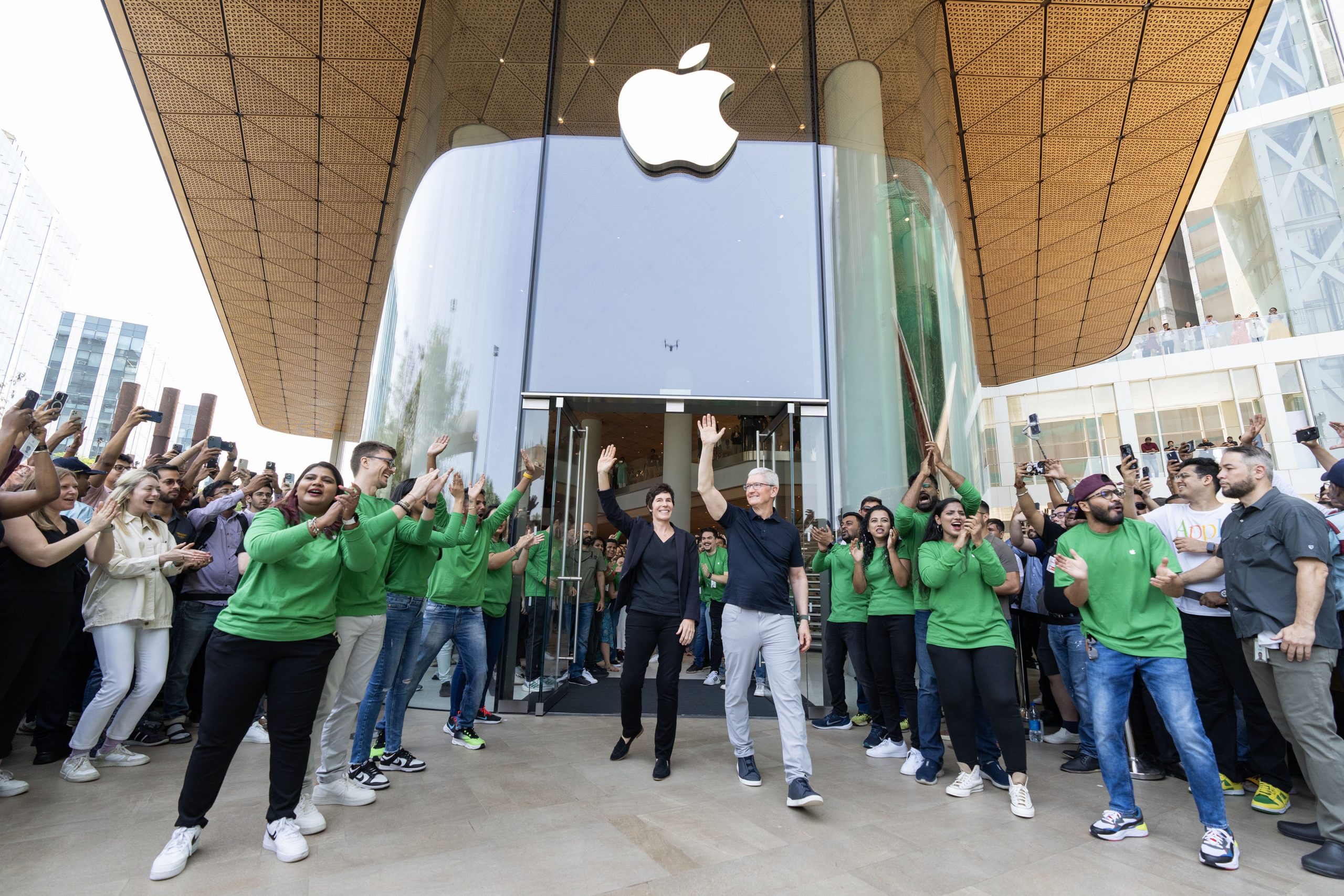
Apple has hit that milestone again – market cap of $3 trillion

0

Apple has hit that milestone again – market cap of $3 trillion. Indeed, an unbelievable value creation there: Apple’s market value passed the $3 trillion mark again on Friday — a milestone no other company has ever reached.”

The tech giant previously grazed the milestone during intraday trading in January 2022 but closed shy of the mark. Apple shares have risen roughly 47% so far this year — adding about $940 billion in value. The tech sector has seen a flurry of renewed optimism around the potential of artificial intelligence, with the Nasdaq up about 30% and on track for its best first half of a year since the 1980s. Apple has also benefited from a rebound in its iPhone business.

Apple is viewed by investors as a relatively safe stock in a time of global economic uncertainty, boosting its share price.

As we discuss that, Google plans freeze news in Canada over regulations. It joins Meta on this news exit in Canada.

Google says news links will stop appearing on its search engine in Canada by the end of the year, when Bill C-18 takes effect. Also known as the Online News Act, the bill forces the likes of Google and Meta to pay news outlets for their content. News links will also be removed from Google News and Google Discover. The federal government says the bill is aimed at helping level the playing field between local news publications and foreign tech giants, but Google calls it “unworkable.” Google is also pulling the plug on Google News Showcase, which licenses news from local publishers. The move follows a similar step away from news by Meta last week.

OKX Expands Sponsorship Deal with Manchester City FC

0

OKX, the leading online gaming platform, has announced that it has expanded its sponsorship deal with Manchester City FC, the reigning champions of the English Premier League. The new agreement will see OKX become the official gaming partner of the club, as well as featuring its logo on the sleeve of the team’s shirt.

OKX and Manchester City FC have been working together since 2019, when they signed a multi-year partnership that aimed to create engaging and innovative content for fans of both brands. Since then, OKX has launched several exclusive promotions and campaigns for its users, such as giving away VIP tickets to watch Manchester City games, offering special bonuses and rewards for playing OKX games, and hosting live events with Manchester City players and legends.

The expanded sponsorship deal will allow OKX to reach a wider audience and enhance its brand awareness and reputation in the global gaming market. OKX will also benefit from Manchester City’s extensive digital and social media platforms, which have over 100 million followers worldwide. OKX will collaborate with Manchester City to produce more exciting and interactive content for their fans, such as behind-the-scenes videos, interviews, quizzes, and competitions.

Manchester City FC is one of the most successful and popular football clubs in the world, having won seven domestic titles, six FA Cups, eight League Cups, and one UEFA Champions League trophy. The club is known for its attractive and entertaining style of play, as well as its commitment to social responsibility and community engagement. Manchester City FC has a loyal and passionate fan base across the globe, especially in Asia, where OKX operates.

OKX is a leading online gaming platform that offers a variety of games, such as sports betting, casino, poker, bingo, and lottery. OKX aims to provide a safe, secure, and fun gaming experience for its users, with high-quality graphics, sound effects, and customer service. OKX also supports responsible gaming and promotes fair play and transparency. OKX has over 10 million registered users and operates in several countries in Asia.

The expanded sponsorship deal between OKX and Manchester City FC is expected to bring mutual benefits for both parties, as well as create more value and enjoyment for their fans. OKX CEO James Lee said: “We are delighted to extend our partnership with Manchester City FC, one of the best football clubs in the world. We share the same vision of delivering excellence and innovation to our customers and fans. We look forward to working with Manchester City FC to create more amazing content and experiences for our users.”

Manchester City FC Chief Operating Officer Omar Berrada said: “We are very pleased to continue our relationship with OKX, a leading online gaming platform that has shown great support and enthusiasm for our club and our fans. OKX has been a fantastic partner for us over the past two years, and we are excited to take our partnership to the next level. We thank OKX for their trust and confidence in our club, and we hope to achieve more success together in the future.”

Finance Platform SoLo Funds is Expanding to Nigeria to Further Its International Growth

0

Financial service provider enabling a marketplace where members can request and fund emergency needs, SoLo Funds has revealed that it is expanding to Nigeria.

In a bid to further its international growth, Nigeria is SoLo Funds first international market, as the company plans to expand into more international markets in the next 12-18 months.

Speaking on its expansion to Nigeria, the CEO of SoLo Funds Rodney Williams said

It is the test case. It is the template. It is the first. We are not stopping with Nigeria, we look at Nigeria as the gateway to the continent. For us to do what we do, we have to partner, we have to leverage many partners to deliver our solution and those partners have to be in the market and be successful in the market. And in Nigeria, we saw many examples of that”.

Owing to the fact that Nigeria has the largest economy in sub-Saharan Africa, with a booming fintech ecosystem, which is largely driven by increasing smartphone penetration and a massive unbanked population, SoLo Funds seeks to tap into the country’s vibrant fintech sector.

With its expansion to Nigeria, the fintech company will bring its community of finance powered by people, where members can request and fund emergency needs.

Founded in 2018 by Rodney Williams and Travis Holoway with its headquarters in Los Angeles, California, United States, SoLo Funds has grown to over one million users.

Since its launch, SoLo has seen 800K loans funded, $400M in transaction volume, a 93% repayment rate, and a median funding time of fewer than 15 minutes, with 82% of its members being from underserved zip codes. 

SoLo Funds allows customers to request a cash advance from its community of lenders. Approval takes a few days, which is much longer than competitors, but all fees are optional. It also provides peer-to-peer cash advances that may be suitable for small, non-urgent expenses.

The app gives users more control over the loan than some of its competitors, including the ability to choose a loan amount and repayment date. The app also doesn’t charge mandatory fees, a rarity among cash advance apps. Notably, the app has 4.6 stars across more than 8,000 reviews on Google Play and 4.3 stars across more than 15,000 reviews on the Apple Store.

The company has also issued over $200 million in loans and a total of $400 million in transaction volume through a fintech offering that caters to communities that have historically been economically disenfranchised.

On May 9, 2023, SoLo Funds was chosen as a 2023 CNBC Disruptor 50 company making its founder the 1st founder to receive such a distinction for two different companies. 

At 50, the startup was chosen because of its groundbreaking community finance model where its members back each other, enabling people to borrow and lend from each other. With a focus on serving underserved communities, SoLo has promoted innovation and community impact.

SEC Says Spot Bitcoin ETF Filings by BlackRock, Others Aren’t Clear

0

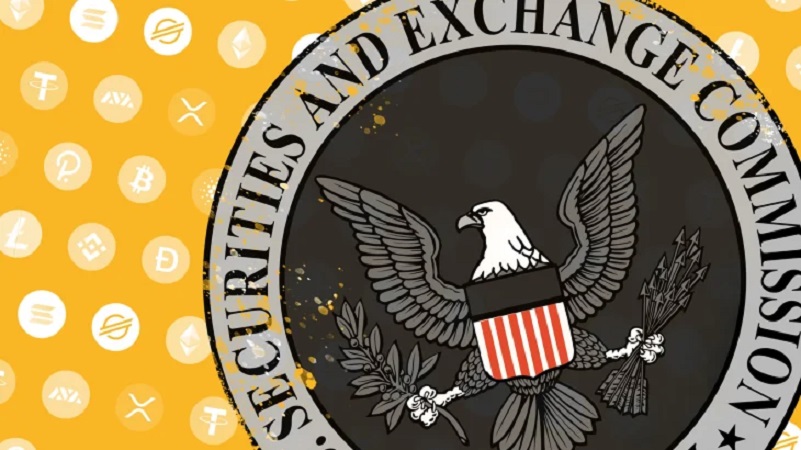
The U.S. Securities and Exchange Commission (SEC) has issued a statement on the recent wave of applications for spot bitcoin exchange-traded funds (ETFs), saying that they do not meet the standards for approval. The SEC said that the applicants have not demonstrated how they would comply with the federal securities laws and the rules of the national securities exchanges, especially in terms of preventing fraud and manipulation.

The SEC also said that the spot bitcoin market is highly volatile, unregulated, and susceptible to cyberattacks, which pose significant risks for investors and market integrity. The SEC urged the applicants to withdraw their filings or face rejection. The statement comes as a blow to the hopes of many bitcoin enthusiasts who have been waiting for a spot bitcoin ETF to launch in the U.S., following the success of several bitcoin futures ETFs that debuted last year.

A spot bitcoin ETF would track the price of bitcoin directly, rather than through derivatives contracts, and would allow investors to buy and sell bitcoin without having to deal with the complexities and costs of custody and storage. However, the SEC has been reluctant to approve such a product, citing concerns about the lack of oversight and transparency in the underlying market. The SEC has also rejected several proposals for bitcoin ETFs in the past, including those from VanEck, Bitwise, and Wilshire Phoenix.

The SEC’s statement does not mean that a spot bitcoin ETF is impossible in the future, but it does indicate that the current applications are inadequate and need to be revised or withdrawn. The SEC said that it welcomes engagement with potential applicants on how to address the issues it raised, and that it will continue to monitor developments in the digital asset space. The SEC also reminded investors to exercise caution when investing in any product related to bitcoin or other cryptocurrencies, and to do their own research before making any investment decisions.

Interestingly, Revolut US — one of the leading fintech platforms in the country, has announced that it will delist three popular cryptocurrencies from its app starting from September 1st, 2021. The affected coins are Cardano (ADA), Polygon (MATIC), and Solana (SOL).

According to a blog post published by Revolut US on August 25th, the decision to delist these coins was made due to regulatory uncertainty and compliance issues in the US market. The company stated that it has been working closely with its partner bank and regulators to ensure that it can offer a safe and compliant service to its customers, but that the current situation does not allow it to support these coins any longer.

Revolut US said that customers who hold any of these coins will have until August 31st to sell them or transfer them to an external wallet. After that date, customers will not be able to access their balances or perform any transactions with these coins. Revolut US also warned that customers who do not take action before the deadline may lose their funds permanently, as the company will not be able to recover them.

The announcement came as a shock to many Revolut US users, who expressed their disappointment and frustration on social media. Some users accused Revolut US of betraying its mission of democratizing finance and giving users more choice and control over their money. Others questioned the legitimacy and transparency of the company’s decision, and wondered if there were ulterior motives behind it.

Revolut US is not the first fintech platform to delist certain cryptocurrencies in the US market. Earlier this year, PayPal and Venmo also removed support for some coins, such as Dash (DASH) and Zcash (ZEC), citing similar reasons of regulatory compliance. However, Revolut US’s move is more significant, as it affects some of the most popular and widely used coins in the crypto space, with a combined market capitalization of over $100 billion at the time of writing.

The delisting of ADA, MATIC, and SOL also raises questions about the future of crypto regulation in the US, and how it will impact the innovation and adoption of this emerging technology. Many crypto enthusiasts and experts have been calling for more clarity and consistency from regulators, as well as more collaboration and dialogue between the public and private sectors. They argue that a more supportive and balanced regulatory framework is needed to foster innovation, protect consumers, and ensure fair competition in the crypto industry.