DD
MM
YYYY

PAGES

DD
MM
YYYY

spot_img

PAGES

Home Blog Page 4055

Social Media Accounts for KYC: Data Protection Commission Declares CBN’s Directive Illegal

0

The Nigeria Data Protection Commission (NDPC) has deemed the recent directive issued by the Central Bank of Nigeria (CBN) requiring banks to obtain customers’ social media handles as part of enhanced Customer Due Diligence (CDD) regulations to be unlawful.

The commission is currently in discussions with the central bank regarding this matter, as there are fundamental principles that must be upheld when collecting citizens’ data. Dr. Vincent Olatunji, the National Commissioner of NDPC, conveyed this information in a statement released by Mr. Itunu Dosekun, the commission’s Head of Media, on Thursday in Abuja.

Olatunji disclosed that before the enactment of the Nigerian Data Protection Act (NDPA) on June 12, the indiscriminate collection of citizens’ data by Data Controller Organizations was not treated with due seriousness.

The NDPA, signed into law by President Tinubu, includes crucial guidelines for the processing of personal data. These guidelines stipulate that data collection must be conducted in a fair, lawful, and transparent manner. Furthermore, data collection should be limited to the minimum necessary for the intended purpose and should not be retained for longer than necessary.

He explained that there are prerequisite steps that every Data Controller must follow before collecting data from data subjects. Failure to comply with these steps constitutes a violation of the law and can result in a data breach, which may incur penalties.

“There are provisions in the law to go against any data controller be it private or government office, NGOs, hotels, because we are pro-citizens.

“The whole idea of this law is to protect the rights, the interests of Nigerians who are data subjects.

“We are already engaging with the CBN to let them know that what they have done is against the law because there are basic principles you must meet when you want to collect citizens’ data.

“There is data minimization, meaning you don’t collect data beyond the purpose for which it was intended, purpose limitation, what purpose is it for,’’ he said.

According to Olatunji, the requirement for bank customers to provide their social media handles is unnecessary.

However, he acknowledged that if the collection of social media handles was based on public interest, such as monitoring certain transactions, proper awareness should be given to customers.

Olatunji also stated that they would investigate the reasons behind the implementation of the Customer Due Diligence (CDD) regulation and work towards resolving the issue in alignment with international best practices.

Last week, the CBN published a document, ‘Central Bank of Nigeria (Customer Due Diligence) Regulations, 2023’, mandating financial institutions to obtain social media information of customers as part of their Know Your Customer (KYC) exercise. This is in addition to the requirement to obtain email addresses, telephone numbers, and residential addresses.

The apex bank said the key objective of the new regulation is to enforce compliance with relevant provisions of the laws designed to checkmate money laundering and terrorism financing.

However, the move has drawn criticism from civil rights advocates and the general public, who believe it is another attempt by the government to censor social media users.

The Opportunity From Overturning Affirmative Action into US Top Universities

1

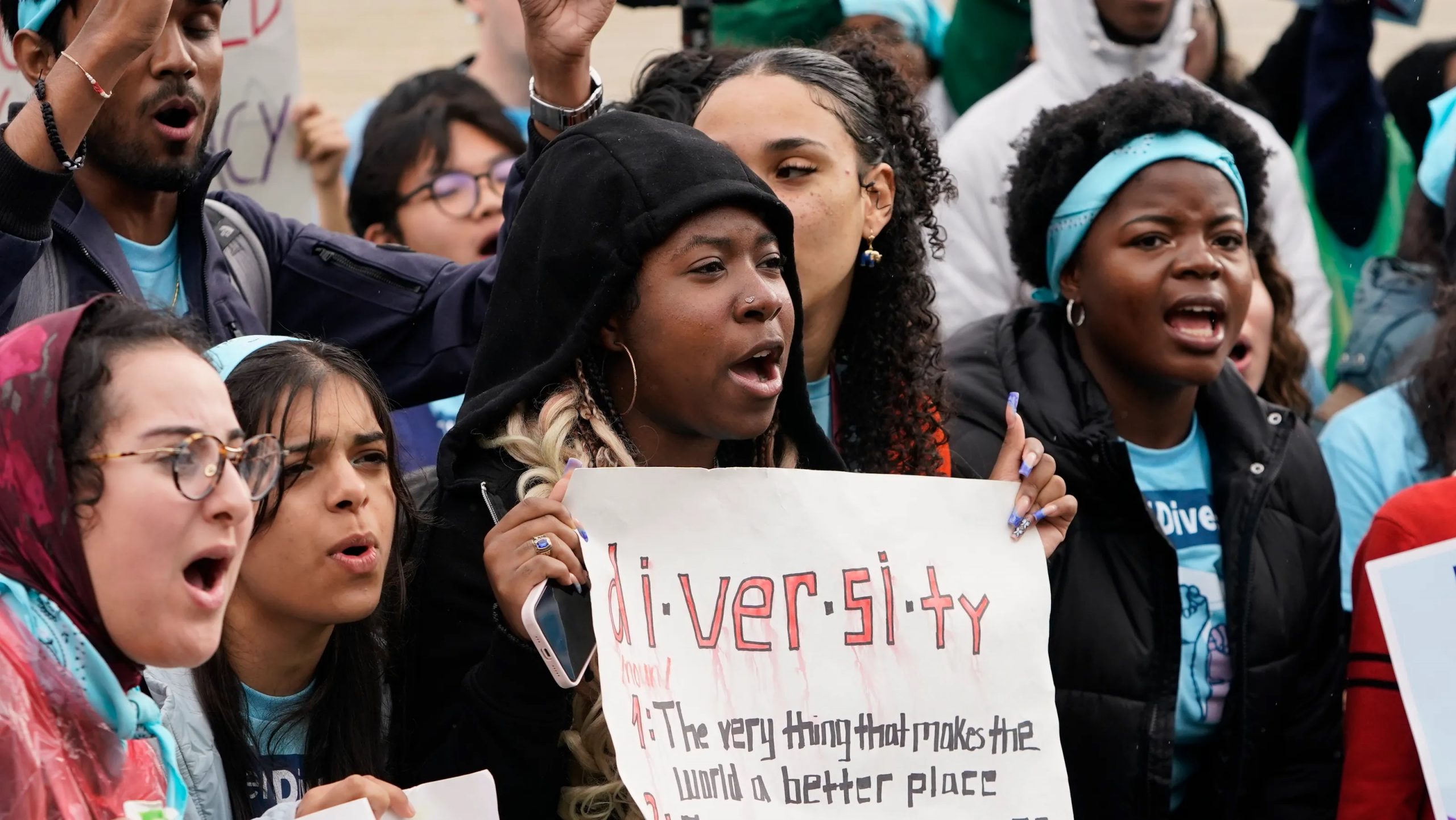
In the United States, most top universities use race as a factor as they decide who makes the admission cut. They call it affirmative action, and I hate it even as I vigorously support a variant So, the Supreme Court ruling today is a draw: “The Supreme Court has ruled against the use of race as a factor in higher education admissions. The 6-3 decision will force colleges to scrap affirmative action policies designed to increase minority representation on campus.”

First, why I hate it: it makes extremely accomplished African Americans to be perceived as being less competent before their White counterparts. As a student in Johns Hopkins University, in my first year, I was the ONLY black student in the electrical & computer engineering department PhD program, and one of two in the whole school of engineering PhD program. By default, many will think this student possibly made it because of affirmative action. And one student did say that, and I took time and provided my records.

I explained to the student that I did not know how I came here – affirmative action or not – but happy that someone is spending close to $100,000 per year (I was paid $36,000 yearly and my tuition was $55,000 yearly) on my education in a foreign land. But note this: in my master’s degree, I had 4.00/4.00 and in GRE Quantitative, I scored 800/800 (top 0.01% in the world). So, if someone after my stellar records did not admit me on merit, that person was not fair to me. The student apologized. And I graduated on time, wrote a book which won an award, filed and received a US patent and excelled. (That student spent 7 years and dropped out.)

Yes, if you have 100 students and 5 black kids need affirmative action to get in, it may be good to check on graduation day if they came last in the class. If they do not, it means the system was faulty at the admission phase since those who need help most times are not the bottom of the class on graduation day. If Obama had needed affirmative action to enter Harvard Law, the system was unbalanced for him in the admission phase, as he finished among the top of his class.

In other words, most affirmative action students do not graduate bottom of their classes, which indicates that the admission process is not effective for them to have needed help to get in. And by using the policy, it makes universities lazy, masking necessary improvements which could have deepened the admission process for minority students.

Then I am happy that affirmative action is gone: Affirmative action is unfair to many hard working middle class minority families.  This system allows universities to check “Black” and onload black students from wealthy families who do not need any help. In other words, Obama’s kids could qualify even though the kids have access most white kids do not have. But being black, some schools can admit them to have the right statistics. So, at the end, most beneficiaries at the undergraduate level are children of wealthy black kids who do not need that help, as they’re well positioned to compete at the highest level.

The Supreme Court has ruled against the use of race as a factor in higher education admissions. The 6-3 decision will force colleges to scrap affirmative action policies designed to increase minority representation on campus. Schools must now “decide where racial diversity ranks among priorities that can include academic performance, achievement in extracurricular activities … and preferences for alumni and donors,” The Wall Street Journal notes. While expected, the ruling is a reversal from the court’s last big decision on the subject, which in 2016 reaffirmed the use of racial preferences in public university admissions. (LinkedIn News)

So where do I stand? I want universities to use economic status, and not race, to make that admission decision. Yes, affirmative action on economic status. The probability that many black kids from families which need help will get into top US universities is closer to “1” if economic status is the core metric, over race. We may not like the Supreme Court ruling, but if you check the data of black kids in leading top universities, you will look at this ruling from a different angle.

This ruling is an opportunity for aspiring minority families!

Comment on Feed

Comment 1: I believe this affirmative action is close to our quota system policies which have not allowed qualified individual to access most government opportunities.

Seeing that different part of Nigeria has their cutoff mark in getting into FGC and universities speak volumn.
Whenever we improve our system to institute merit base opportunities for all, then our nation will be ready to compete among nations.

Comment 2: Prof., does this in any way discount the underrepresentation of black minorities in academics? School enrollment is already positively correlated to increasing household income (a key indicator of wealth). And data is consistent in showing that black families remain poorer with a widened income gap.

University policies already factor economic status in admission, especially given that first generation students (who have been consistently shown to come from poorer families) are given preferential treatment.

I’m overly concerned on the impact that this ruling will make to advance arguments in favour of reverse racism and how proponents will capitalise this ruling to undermine equity and social justice across other sectors, and not just university admissions.

My Response: If you do not have many black students, you will not have many black professors. It is a pipeline issue. The issue here is that everyone is a victim. Asian students which started the campaign already have more students per capita when benchmarked with their percentage in the full population in the US. Yet, while they excel in school, they have minimal impact in US politics. 

So, what happens is that the US is an interesting country, considering that the Supreme Court excluded military schools from this ruling (yes, they should use race even though Harvard cannot).

Having Obama, Kamala as President and VP will mask many things in America as the Asian kid will ask: this race has reached a level we have never reached, why do they need help? I think economic affirmative action, over race, is a better metric. Most schools will adopt that going forward.

Comment 3: Yes, prof Ndubuisi Ekekwe, it’s a more objective and “less” socially-sensitive criterion than race in today’s uber-conscious world. That said, it comes with its own challenges, too.

Interestingly, per your story, I had a similar experience at UNILAG regarding the controversial Nigerian quota system (on which I think I have read an article of yours calling for a change there as well). I am from Gombe State. So, naturally, anyone seeing a Gombe student in UNILAG would be forgiven to think that the student came in per quota (= low scores). My HOD in year 1 had such a bias when he blatantly refused to sign my admission papers for weeks, even with my good JAMB scores & WAEC. He said northen students struggled in accounting. He said anyone could get high scores in those exams, so, they meant nothing to him. Well, I topped not just my class, but the entire faculty, from the very first semester to the last. I was just 1 step short of leaving as best overall in the entire school. Prof Eddy Omolehinwa avoided me for 4yrs. He just couldnt swallow his ego. That’s part of the unintended consequences (like the rich black kids you mentioned) that such dysfunctional classification systems can engender…

My Response: .This is the story of Nigeria and extremely profound. Just like these things create opportunities, they also diminish as your case. Think of two kids in a primary school in Lagos; one from Zamfara and another from Imo. Both write exams to enter a federal government college. Imo has 150 but cannot get in while the Zamfara kid has 10 and makes the cut. Forever, the Imo kid cannot understand Nigeria.

Canada Lawmakers Want A National Blockchain Strategy

0

Blockchain technology has the potential to transform various sectors of the Canadian economy, from banking and health care to energy and agriculture. However, Canada is lagging behind other countries in developing and implementing a national blockchain strategy that would foster innovation, competitiveness and trust in this emerging field.

That is why a group of lawmakers from different political parties have recently formed the Canadian Parliamentary Blockchain Caucus, a cross-partisan initiative that aims to raise awareness, promote dialogue and advocate for policies that support the development and adoption of blockchain technology in Canada.

The caucus, which was officially launched on June 15, 2023, is co-chaired by four members of parliament: Julie Dzerowicz (Liberal), Tom Kmiec (Conservative), Heather McPherson (New Democratic) and Elizabeth May (Green). The caucus also includes representatives from the Bloc Québécois and the People’s Party of Canada, as well as senators, academics, industry experts and civil society organizations.

The caucus has three main objectives: to educate parliamentarians and the public about the benefits and challenges of blockchain technology; to engage with stakeholders from various sectors and regions to identify best practices and policy recommendations; and to advocate for a national blockchain strategy that would foster a conducive regulatory environment, support research and development, and encourage collaboration and coordination among different levels of government and industry.

According to Dzerowicz, one of the co-chairs of the caucus, blockchain technology is not only a disruptive innovation that can create new opportunities for businesses and consumers, but also a tool for social good that can enhance transparency, accountability and inclusion. She said that Canada has a unique opportunity to become a global leader in this field, but it needs a clear vision and a coordinated approach to achieve that goal.

“We have a lot of talent, expertise and potential in Canada when it comes to blockchain technology, but we also face some challenges, such as regulatory uncertainty, lack of public awareness and trust, and fragmentation among different stakeholders,” she said. “That is why we need a national blockchain strategy that would provide clarity, guidance and support for the development and adoption of this technology in Canada.”

Kmiec, another co-chair of the caucus, echoed Dzerowicz’s sentiments and said that blockchain technology can offer significant benefits for various sectors of the Canadian economy, especially in light of the COVID-19 pandemic and the recovery efforts. He said that blockchain technology can improve efficiency, security and resilience in areas such as supply chain management, digital identity verification, health data sharing and financial inclusion.

“Blockchain technology can help us address some of the most pressing challenges that we face as a country, such as ensuring the safety and quality of our food and medical supplies, protecting our personal data and privacy online, and providing access to financial services for underserved communities,” he said. “We need to embrace this technology and leverage its potential for the benefit of all Canadians.”

McPherson, another co-chair of the caucus, said that blockchain technology can also contribute to social and environmental sustainability, as well as democratic participation. She said that blockchain technology can enable more transparent and accountable governance, as well as more inclusive and equitable distribution of resources. She also said that blockchain technology can reduce carbon emissions and energy consumption by enabling more efficient use of renewable energy sources.

“Blockchain technology can be a force for good in our society, if we use it wisely and responsibly,” she said. “It can help us achieve some of the United Nations Sustainable Development Goals, such as reducing poverty and inequality, promoting peace and justice, and combating climate change. It can also empower citizens to have more control over their own data and decisions.”

May, another co-chair of the caucus, said that blockchain technology can foster more collaboration and cooperation among different actors in Canada and around the world. She said that blockchain technology can facilitate cross-border trade and commerce, as well as cross-cultural dialogue and understanding. She also said that blockchain technology can enhance trust and confidence among different stakeholders by ensuring verifiability and immutability of transactions.

“Blockchain technology can bring us closer together as a global community,” she said. “It can help us overcome some of the barriers and divisions that exist in our world today. It can also help us build more trust and mutual respect among different nations, cultures and perspectives.”

The caucus plans to hold regular meetings and events to discuss various topics related to blockchain technology, such as its applications, implications and challenges. The caucus also plans to produce reports and recommendations that would inform and influence the development and implementation of a national blockchain strategy in Canada. The caucus invites anyone who is interested in learning more about or contributing to its work to contact its members or visit its website.

Safaricom Rolls Out New Payment Service That Allows Users Pay For Goods And Services With Mobile Data

0

Kenya’s top Communication company Safaricom has rolled out a new payment service that allows customers to pay for goods and services using mobile data.

The new service tagged ‘Lipa na Data’, allows Safaricom’s postpaid users with a data balance of 5GB and above, to make payments for goods and services. Additionally, this service is also accessible to prepaid users with no expiry bundles above 5GB.

Users will be required to dial *544*34# through their Safaricom line and will then be prompted to pay the amount keyed in via till numbers or pay bills.

On dialing the payment request code, the bundle calculator gives the bill in Kenya shillings in its data bundle equivalent and prompts the user to either agree or decline to proceed with payment.

For example, 500 Megabytes of Mobile data, is equal to 32.50 Shillings, and 2,000 shillings is equal to 30,769.23 MBs (30.8GB).

However, this service does not allow users to proceed beyond the dialing code, in the event that one does not have the threshold of the required data balance. They will receive a feedback message saying, “You are not eligible for this service”.

Safaricom has continued to hold a firm grip on its existing customers, also amassing more customers through the rollout of its new services and the expansion of product offerings to address customers’ needs.

The telco giant has also recently embarked on an aggressive revenue optimization drive. Among the most notable moves are expanding the fifth generation (5G) network coverage to Kenya’s 21 countries in April, and introducing the Fuliza overdraft service for businesses last month.

Notably, Safaricom controls approximately 64.5% percent of the Kenyan market as of 2020 with a subscriber base estimated at approximately 35.6 million. In terms of voice market and SMS market share, Safaricom controls 69.2% and 92.2% respectively.

Safaricom’s Dominance in Kenya

Formed in 1997, Safaricom has revealed that it exists to transform lives. The telecommunications giant believes that the role of business extends far beyond making profits, which is why the company sees mobile telecommunications and its related products and services as a unique opportunity to improve the quality of life and contribute to sustainable livelihoods for people in Kenya and beyond.

The company has continued to contribute greatly to the Kenyan economy. In the year ended March 2020, the company added KES. 654 billion to the Kenyan economy, an equivalent of 6% of the country’s GDP, cementing its position as the single largest contributor to the economy.

In the same year, the company paid over KES. 110 billion in taxes, and registered over KES. 71 billion in profits.

Safaricom was ranked as Africa’s Best Employer, 67th in the World by the Forbes Global 200 list of the World’s Best Employers. As of 2020, Safaricom was reported to have employed over 4,500 people permanently and over 1,900 people on contract.

In March 2018, the company was ranked as the number one company to work for in the annual BrighterMonday Best 100 Companies to Work for in Kenya according to career professionals and job seekers.

Growth of Safaricom’s Fintech Platform M-PESA

In 2007, Safaricom launched its fintech platform M-PESA, a mobile phone-based money transfer, financing, and micro-financing service. M-PESA was originally designed as a system to allow microfinance-loan repayments to be made by phone, reducing the costs associated with handling cash.

After the pilot testing, it was broadened to become a general money-transfer scheme. Since then Safaricom M-PESA brand has reached 12 countries in Africa and three countries outside the continent.

It provides services to more than 51 million customers every month. It also has a wide range of financial services including Person to Person, ATM withdrawal, Payments, Bulk Payments, and Bank to M-PESA.

The fintech platform has quickly captured a significant market share for cash transfers and grew to 17 million subscribers by December 2011 in Kenya alone.

The growth of M-PESA reportedly forced formal banking institutions to take note of the new venture. As of November 2014, M-PESA transactions for the 11 months of 2014 were valued at KSh.2.1 trillion/=, a 28% increase from 2013, and almost half the value of the country’s GDP.

The Communications Commission of Kenya reported in September 2021 that there were 29.1 million M-Pesa customers in Kenya, making up 63% of the population. According to the research, Kenyans used M-Pesa to do business worth KSh 5.1 trillion (about $47 billion) in the three months ended in September 2021.

The development of M-Pesa has also aided Kenya’s economic expansion. An analysis by the World Bank found that since M-Pesa in 2007, it has contributed 2 percent to Kenya’s GDP. According to the research, M-Pesa creates 185,000 employees in Kenya.

Notably, as a result of M-popularity Pesa’s in Kenya, it has been introduced to other markets such as Tanzania, Mozambique, India, and Romania.

What to take into account when choosing a bookmaker

0

It can be difficult for beginner forecasters to guess an accurate result of a sporting event. In pursuit of big wins, they are left without a game bank. The player must be responsible for making predictions and choosing a bookmaker. The experts of the resource DailySports compiled a rating of  betting sites, using such criteria as license, availability of online broadcasts, convenience of payments, user reviews. With the help of such a rating it is possible to read the information in detail in order to choose a verified site and at any time to bet on your preferred sports and cyber sports disciplines.

How to find a fine betting site

In the global network, you can find a huge number of sites that belong to betting companies. Such gaming platforms offer an extensive line of outcomes for betting, a deep description, various bonuses and promotions. Not every bookmaker is able to meet the needs of its customers. Unscrupulous bookmakers block players’ accounts and refuse to pay them winnings. In order not to make a mistake with the choice of BC, you need to pay attention to the following nuances:

The breadth of the money line.

The more sporting events the bookmaker offers, the better for the bettor. The bookmaker’s line should include traditional sports. Also, players often bet on esports disciplines. In the money line of any event, there should be many markets available with various positive and bottom values.

  • Each reputable bookmaker has documents that allow it to work legally in the country. Bookmakers receive licenses from independent gambling commissions.
  • deposit and withdrawal. The bookmaker must guarantee the players the rapid implementation of cash transactions. To deposit and withdraw money, bettors usually use bank cards, electronic payment services or cryptocurrency.

Pay attention to the support service of the bookmaker. Technical support should work daily and promptly respond to players. You should also familiarize yourself with the promotions and the bookmaker’s loyalty program. With the help of bonuses and freebets, you can significantly increase your winnings. The better does not have to spend a lot of money to place a bet.

Increase opportunities with the right choice

Choosing the right bookmaker can greatly expand your options in the world of sports betting. Here are some examples of 1XBET opportunities:

An abundance of events: renown betting sites propose many events, comprising major championships and leagues, as well as lesser known tournaments. This gives you the opportunity to bet on a variety of sporting events and choose the most interesting and promising options.

Multiple bet types: a decent site offers different bet types, including singles, combinations and system bets. This allows you to experiment with different strategies and choose the one that best suits your preferences.
High odds: the chosen bookmaker might provide high odds on most of the events. This means that you can enhance your chances of success.