DD
MM
YYYY

PAGES

DD
MM
YYYY

spot_img

PAGES

Home Blog Page 4058

Musk’s Decision to Cap Twitter Posts Poses A Challenge to Yaccarino’s Efforts to Revamp Ad Revenue – Experts

0

Over the weekend, Elon Musk surprisingly announced a temporary cap on the number of posts Twitter users can read, triggering mass attempts by users to move to other platforms, especially Truth Social – which has similar functions to Twitter.

The capping follows the implementation of a new requirement for users to log into their Twitter accounts to view tweets, which Elon Musk referred to as a “temporary emergency measure” to combat data scraping.

Like several other platforms, including Reddit and major media organizations, Musk had previously expressed his dissatisfaction with artificial intelligence companies, such as OpenAI, which owns ChatGPT, for utilizing Twitter’s data to train their large language models.

Musk sees capping tweets as an effective way to stop AI companies, an idea Kai-Cheng Yang, a researcher at Indiana University in Bloomington, agrees with. Yang noted that the tweet limits seemed to effectively prevent third parties, including search engines, from scraping Twitter data as easily as before.

But apart from forcing users to jump from Twitter to other platforms, Musk’s decision presents a situation that will likely exacerbate the current poor relationship between Twitter and advertisers. 

According to marketing industry professionals who spoke to Reuters, Musk’s decision could also undermine efforts by the company’s new Chief Executive and former advertising chief at NBCUniversal, Linda Yaccarino, to make peace with advertisers.

Musk said on Saturday that he decided to limit how many tweets Twitter users can see per day to discourage “extreme levels” of data scraping and system manipulation.

The decision, which forced many users out of Twitter during the weekend, ignited heavy criticism, with many labeling it ‘Musk’s latest attempt to destroy Twitter.’ The company’s co-founder and former CEO Jack Dorsey shared a plain field picture suggesting to Twitter users that it’s time to break their addiction and go outside and play. 

The inability of users to see tweets beyond what was stipulated by Musk means that Twitter’s ability to serve ads has been impacted. 

Users posted screenshots as proof that they were unable to view any tweets, including those from corporate advertisers, after reaching the limit. 

According to industry experts quoted by Reuters, this development poses a challenge for Yaccarino, who has been focused on rebuilding relationships with advertisers who left Twitter following its acquisition by Musk last year. 

Reuters quoted Mike Proulx, research director at Forrester, saying on Sunday that the tweet limits have had a significantly negative impact on both users and advertisers, who are already grappling with the disruption Musk has brought to the platform.

“The advertiser trust deficit that Linda Yaccarino needs to reverse just got even bigger. And it cannot be reversed based on her industry credibility alone,” he said.

Lou Paskalis, the founder of advertising consultancy AJL Advisory and former marketing executive at Bank of America, said Yaccarino, the newly appointed CEO of Twitter, represents Musk’s final and most promising opportunity to revive ad revenue and restore the company’s value.

“This move signals to the marketplace that he’s not capable of empowering her to save him from himself,” he said.

Musk initially limited the number of tweets users can see to 600 per day for unverified accounts, 300 for new unverified accounts and 6,000 for verified accounts. It was later reviewed upward to 10,000 posts per day for verified users, 1,000 per day for unverified and 500 posts per day for new unverified users.

Jasmine Enberg, principal analyst at Insider Intelligence, who also spoke to Reuters said the decision to cap how much users can view could be “catastrophic” for the platform’s ad business.

“This certainly isn’t going to make it any easier to convince advertisers to return. It’s a hard sell already to bring advertisers back,” she said.


The Nigeria’s New Informal Sector VAT Initiative And How Government Can Win The Challenge

1

This is a good policy provided the introduction of the VAT Direct Initiative will phase out fees, levies and other forms of indirect taxation for the informal sector: “The Federal Inland Revenue Service (FIRS) has announced a new move by the Nigerian government to introduce Value Added Tax in the informal sector, through a scheme dubbed VAT Direct Initiative. The federal tax agency said in a statement on Monday that the government aims to also use the VDI to curb multiple taxations in the sector.”

In FUTO, there was this General Studies course ( I think GST 201, Nigeria, Africa and Development) which provided a bombshell on my understanding of taxation. The professor had asked about the largest source of revenue for the federal government. People, my local understanding was oil and oil; I had just picked some skills after a 3 month internship in NNPC at Moscow Road, PHC, with the illusion that oil was funding everything in Nigeria. But here, the professor was all about Taxation.

Years later, and making it to America, I encountered a revelation: people willingly pay taxes because taxes are working in their lives. In other words, you are happy paying taxes because you can see the evidence of taxation. The same thing happens when you take a car for mandatory inspection, knowing that someone is tasked to check that car for road-worthiness, at least once in a year.  You are happy to do that despite the cost because the government is helping you to avoid a potential problem. Indeed, you feel good paying that mechanic for that job even though a part goes to the government.

For FIRS, it needs to ramp up the numbers to boost Nigeria’s revenue. For Nigerian citizens and their ventures, they need to see that tax works in their lives and communities. Across many indicators, both are far apart right now.

The question now is how do you bring both together? I propose one thing: have a website where MDAS (government agencies and ministries) will make public how they spend the people’s money with minor exceptions for national security. If we have that level of transparency, Nigerians and their companies will come along. So, I put this one on the government to show uncommon openness, and riding on that, will challenge even the informal sector to pay VAT because technically VAT is the government’s money to start with!

Indeed, challenge the people and let’s get back to the age of Mbakwe, Rimi and Jakande when Nigerians sent cheques to their governors to develop their communities. Then, government was working in those communities!

Comment on Feed


My Response: The irony is that if federal and state come together, there may not be a need for the extra the state is collecting since a bulk of the VAT goes back to the state. I know that LGA and state get more than 60% of total VAT.  What that means is that VAT could have covered all those LGA and states levies, and fees. I am not a tax expert but I know the federal government does not keep 100% of VAT.

Nigerian Government Announces Plan to Collect VAT from Market Traders

0

The Federal Inland Revenue Service (FIRS) has announced a new move by the Nigerian government to introduce Value Added Tax in the informal sector, through a scheme dubbed VAT Direct Initiative.

The federal tax agency said in a statement on Monday that the government aims to also use the VDI to curb multiple taxations in the sector.

To achieve its aim, the agency said it will partner with the Market Traders Association of Nigeria (MATAN) to collect & remit VAT from their members especially those in the informal sector using a unified systems technology.

“This collaboration is known as VAT Direct Initiative,” the FIRS said.

“A collaboration between FIRS and MATAN where MATAN promotes awareness on VAT collection and remittance in the marketplace and informal sector, while also simplifying VAT payment and remittance for the marketplace and informal sector using a purpose-built digital platform.”

The FIRS indicated that it is counting on the huge membership of MATAN to ensure that the VDI succeeds.

The 28-year-old association has more than 40 million members, making it the largest player in Nigeria’s informal sector, according to the statement.

The initiative will utilize MATAN’s digital platform to enumerate its members, giving them a digital ID card and tracking their turnover so that VAT accrued is collected and remitted to the FIRS. MATAN members will each receive an ID card upon enumeration, which would contain their Tax Identification Number and other personal details.

“The Initiative is the first of its kind that will utilize technology to foster collaboration between the FIRS and the marketplace for the collection and remittance of VAT,” the FIRS said.

The agency said the use of digital technology will among other things, help to tackle multiple taxations in the marketplace. It added that it will partner with security agencies to curb the activities of touts and self-imposed tax collectors.

“This will also boost VAR revenue generation for the three tiers of government, which in turn means more money to fund infrastructure and social amenities,” it said.

However, the announcement has riled up Nigerians, who have decried the speed with which President Bola Tinubu’s government is expanding the tax net. The new tax regime is coming simultaneously with other policies that include; the removal of fuel subsidy and the floatation of the forex market, which have orchestrated a jump in the cost of living.

The federal government last week announced a Proof of Ownership Certificate for vehicle owners across the country. The POC comes with an N1,000 levy, which is seen as an additional tax to the Nigerian public already being suffocated by multiple taxations.

“This tax is retrogressive. It is ill-conceived and poorly designed. Apart from the payment which seems to be solely for revenue generation and perhaps more for non-state actors than for the government…” Taiwo Oladele, PwC Nigeria tax executive.

“The tax adds complications to the myriad of multiple taxes which make doing business difficult and dampens tax morale.”

Critics believe that imposing VAT on the informal sector, which is also reeling from the negative effects of the recent policies, will compound Nigerians’ harsh economic situation.

Tekedia Credits All Affiliate Members N10,000 Bonus for Month of July

0

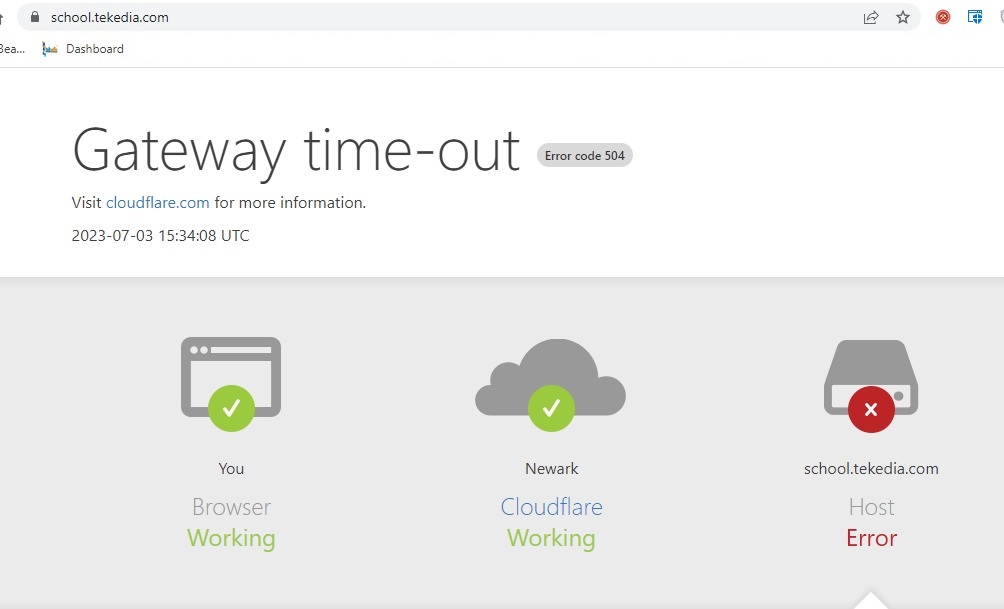
Good People,  first, our sites are back. Yes, we launched a new edition of Tekedia Mini-MBA to begin Sept 11 to end Dec 2, 2023, along with an affiliate program, the traffic crashed our school and the affiliate portals. Thank you so much for your interest in what we do; truly appreciated.

We also thank Amazon for sending us $100,000 free AWS credit as further support on what we do in the community; thank you Amazon for the support.

Let me also apologize to our learners who started Tekedia Investment & Portfolio Management program and Tekedia Venture Investing & Portfolio Management program today for the site downtime.

To all our Affiliate members, we’re crediting everyone N10,000 which you can cash out on your first redemption. Team has promised to get all the Welcome emails within the next 12 hours. I welcome all to the Tekedia community. Get your friends, associates, and everyone to co-learn with us at Tekedia Institute. More affiliate members wanted https://hub.tekedia.com/ and in this July, everyone gets a N10k bonus.

IRS orders Bitcoin Exchange Kraken to Turn Over its Users’ Information

0

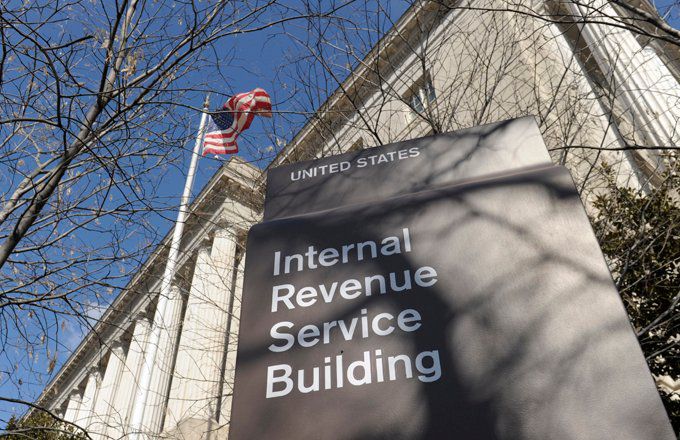
In a major blow to the privacy and anonymity of cryptocurrency users, the Internal Revenue Service (IRS) has obtained a court order to force Kraken, one of the largest and oldest Bitcoin exchanges in the world, to hand over the personal data of its customers.

Kraken is one of the largest and most popular crypto exchanges in the US. It allows users to trade over 50 different cryptocurrencies and offers advanced features such as margin trading, futures, and staking. To report your crypto transactions on Kraken, you need to download your transaction history from the platform and calculate your gains and losses for each trade.

You can use a third-party software or service to help you with this process, or do it manually using a spreadsheet. Once you have your gains and losses calculated, you need to report them on Form 8949 and Schedule D of your tax return. You also need to check if you have any foreign account reporting obligations, such as FinCEN Form 114 or Form 8938, depending on the value of your crypto holdings on Kraken.

The Internal Revenue Service (IRS) has issued a summons to Kraken, to provide information on its users who engaged in transactions worth $20,000 or more from 2016 to 2020. The IRS is seeking to identify and tax individuals who have not reported their income from crypto trading. Kraken has not yet responded to the summons, but it is expected to comply with the law and protect its customers’ privacy as much as possible.

The IRS treats cryptocurrencies as property, not as currency. This means that every time you buy, sell, or exchange crypto, you trigger a taxable event and have to report the capital gain or loss on your tax return. The amount of tax you owe depends on your income bracket and the holding period of the crypto. If you held the crypto for more than a year, it is considered a long-term capital gain and taxed at a lower rate than short-term capital gains, which apply to crypto held for less than a year.

Crypto taxation can be complex and confusing, especially if you have a lot of transactions or trade on multiple platforms. Here are some tips to help you stay compliant and avoid penalties from the IRS:

Keep track of your transactions and records throughout the year. Don’t wait until the last minute to gather your data and calculate your taxes.

Use a reliable and secure software or service to help you with your crypto tax reporting. Make sure it supports Kraken and other platforms you use, and that it can handle different types of transactions, such as margin trading, staking, or airdrops.

Review your transactions and reports carefully before filing. Make sure they are accurate and complete, and that they match the information on your Kraken account.

File your tax return on time and pay any taxes due. The deadline for filing your 2023 tax return is April 15, 2024, unless you request an extension. If you owe taxes, you can pay online or by mail using various payment options offered by the IRS.

The summons requires Kraken to provide the IRS with the name, address, phone number, email address, taxpayer identification number, account statements, and transaction histories of its users who meet the criteria. The IRS claims that this information is necessary to identify and correct the underreporting of income and payment of taxes from cryptocurrency transactions, which it estimates to be in the billions of dollars.

However, many cryptocurrency advocates and experts have criticized the IRS’s move as an invasion of privacy and a violation of the Fourth Amendment, which protects against unreasonable searches and seizures.

They argue that the IRS is casting too wide a net and requesting more information than it needs to enforce tax compliance. They also point out that cryptocurrency users have legitimate reasons to value their privacy and anonymity, such as avoiding censorship, discrimination, or persecution.

Kraken has not yet commented on the court order or indicated whether it will comply or challenge it. However, in the past, Kraken has been vocal about its commitment to protecting its users’ rights and interests.

In 2016, Kraken refused to comply with a similar request from the New York Attorney General’s office, which sought information on its operations and customers as part of an investigation into cryptocurrency exchanges. Kraken’s CEO Jesse Powell said at the time that the request was “insulting” and “unconstitutional”.

It remains to be seen how this legal battle will unfold and what implications it will have for the future of cryptocurrency and its users. For now, many Kraken customers are likely feeling anxious and betrayed by the IRS’s attempt to access their personal information.