
DD
MM
YYYY

PAGES

DD
MM
YYYY

spot_img

PAGES

Home Blog Page 4060

SEC, Blockchain Capital, Digital Currency Group, Anchorage Digital, Toncoin and More

0

The U.S. Securities and Exchange Commission (SEC) has expressed a strong interest in examining Binance.US, the American affiliate of the global cryptocurrency exchange Binance. The regulator is concerned about the safety and security of the digital assets that Binance.US holds on behalf of its customers, as well as the compliance of its trading platform with the federal securities laws. The SEC has requested access to Binance.US’s books and records, as well as information about its internal controls, governance, and risk management practices.

Blockchain Capital, one of the oldest and most prominent venture capital firms in the crypto industry, has announced the closing of two new funds with a total of $580 million in capital commitments. The firm, which was founded in 2013 and has backed some of the most successful projects and companies in the blockchain space, said that the new funds will enable it to continue investing in both early-stage and growth-stage opportunities across the crypto ecosystem.

The two funds are Blockchain Capital VI, a $300 million fund focused on seed and Series A rounds, and Blockchain Capital Growth Fund I, a $280 million fund dedicated to later-stage investments. According to the firm, the new funds were oversubscribed and attracted a diverse group of investors, including pension funds, endowments, foundations, family offices, corporations, and high-net-worth individuals.

Blockchain Capital also said that it has expanded its team and added new strategic partners to support its portfolio companies and enhance its network. The firm’s co-founder and managing partner, Bart Stephens, said that the crypto industry is at an inflection point, with more innovation and adoption than ever before. He added that Blockchain Capital is well-positioned to capitalize on this trend and help shape the future of finance, technology, and society.

“We are incredibly honored to welcome such a distinguished group of investors into our new funds,” Stephens said in a press release. “We believe that we are in the early stages of a multi-decade adoption cycle for digital assets and blockchain technology. Our mission is to support the best entrepreneurs in the world who are building this new and exciting digital economy.”

Digital Currency Group (DCG), a global blockchain and cryptocurrency investment leader, has appointed Professor Tonya Evans as a new independent director. Professor Evans is an expert in blockchain law and policy, digital assets and intellectual property. She is also the founder and CEO of Advantage Evans Academy, an online education platform for blockchain literacy and crypto asset management.

Professor Evans has over 20 years of experience as a lawyer, scholar, educator and entrepreneur. She teaches blockchain, crypto and fintech courses at Penn State Dickinson Law School. She also chairs the Maker Foundation’s MakerDAO Law and Policy Working Group and advises several blockchain startups and organizations.

“Professor Evans is a visionary leader in the blockchain space, with deep legal and regulatory insights. Her perspective and guidance will be invaluable as we grow our portfolio of companies and initiatives across the globe,” said Barry Silbert, founder and CEO of DCG.

“I am honored and excited to join DCG’s board of directors. DCG is at the forefront of innovation and adoption in the blockchain and cryptocurrency sector. I look forward to working with Barry and the board to advance DCG’s mission of a better financial system for everyone,” said Professor Evans.

Anchorage Digital, a leading crypto custody and staking platform, saw a significant increase in the demand for Ether staking services in 2023, according to its co-founder and president, Diogo Monica. In an interview with Bloomberg, Monica revealed that the amount of Ether staked on Anchorage’s platform quadrupled in the past year, reaching over $40 billion worth of the second-largest cryptocurrency. Monica attributed the growth to the launch of Ethereum 2.0, a major upgrade that aims to transition the network from a proof-of-work to a proof-of-stake consensus mechanism.

By staking Ether, users can earn rewards for securing the network and validating transactions. Monica said that Anchorage’s clients, which include institutional investors, hedge funds, and corporations, are attracted by the high returns and low volatility of staking Ether compared to other crypto assets. He also said that Anchorage’s platform offers a unique advantage of allowing users to stake Ether without locking it up for an indefinite period, as is the case with some other platforms. “We have a very innovative solution that allows our clients to stake their Ether and still have access to it for trading, lending, or any other use case they might have,” he said.

Toncoin, the cryptocurrency backed by the popular messaging app Telegram, has surged ahead of bitcoin in the latest crypto market rally. According to CoinMarketCap, Toncoin’s price increased by more than 50% in the past 24 hours, reaching a new all-time high of $2.34.

The spike came after Telegram’s founder and CEO Pavel Durov announced on his channel that Toncoin will be integrated into the app’s payment system, allowing users to send and receive Toncoins within chats. Durov also praised Toncoin’s speed, scalability and security, calling it “the future of digital money”. Bitcoin, meanwhile, lagged behind Toncoin, gaining only 10% in the same period and trading at around $27,266. Analysts attribute Toncoin’s dominance to its strong community support, innovative technology and growing adoption by mainstream platforms.
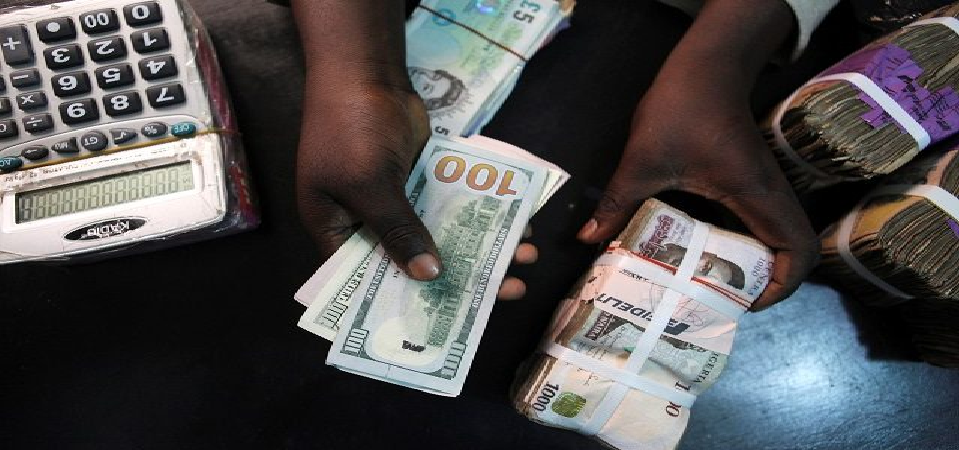

How Nigeria Lost The NAIRA

1
Nigeria Naira US Dollar

When you are majorly import-dependent, you lose your national-building capacity as a nation. Strategically and economically, Nigeria began to fade in 1983 when many institutional adjustments reshaped our manufacturing and production capabilities. By 1989, Nigeria died economically, with abysmal native ability to grow and advance endogenously. Yes, with SAP (structural adjustment programme), Nigeria lost its economic soul as we allowed the full vagaries of globalization to nip our indigenous industries. People, SAP sapped Nigeria and we have not recovered.

In Ovim (Abia State), the top five crops are yam, cassava, melon, maize and pumpkin. Take a look at the top 3 crops in your village. Then check the national agricultural policy. What you would notice is this: in more than 90% of communities in Nigeria, the national agricultural policy is not structured to help them. Rather, the policy is mainly designed to boost export-focused crops. So, you have cocoa, rubber, sesame seed, and all kinds of seeds no one uses in homes and kitchens in Nigeria.

But why do we do that? We have lost the ability to decide on what to farm since we have a bill to pay at the international market. In other words, because of the pressure of balance of trade and payment, our national policy is now tuned to earn US DOLLARS to settle those bills. As that becomes the order of the day, what Ovim farmers need becomes secondary, and what becomes the focus of the government is how to grow special seeds which can bring in dollars.

That mindset precipitates across our national economic strategy. Only the United States has the special printer to print US dollars; others have to earn the dollars. And to earn dollars, you need to produce things which people with US dollars need. They do not need pumpkin (ugu) and that means Nigeria does not care. And because Nigeria does not care, a vicious circle is triggered where those farmers never rise to advance, affecting the nation economically – and destroying the national currency, the Naira.

So, as Naira fades to N1,000/$, it will not stop there. Yes, there is nothing that can stop it going to N2,00/$ until you pay attention to local factories and warehouses (the modern and the old). Yes, you need to earn the dollars and also boost the local communities to produce what they need. Do those and we can dance as a nation.

Someone needs to reset Nigeria economically. Those local crops in Ovim, factories and warehouses (old and modern) in Aba, Kano, Ibadan, Uyo, etc are the variables.

Comment on Feed

Comment 1Nigerians erroneously attribute our failure to the structural adjustment programme. This is not so.

Upon decolonisation, several countries across Africa took caught thr fever of structuralism which had taken root in Latin America (especially Brazil and Argentina) and adopted ISI policies. We set up numerous state owned enterprises in a bid to find substitutes for import and there by create jobs and keep the naira strong….since it has been observed the the relationship which involved exchange of raw materials for finished products was unhealthy for the exporters of raw materials…prebisch singer thesis.

Nigeria as well several other countries in the southern hemisphere unfortunately went into industries that at that point didn’t match their factor endowment. There were no skilled hands to even on the textile factories that littered the country. These SOEs where doomed to fail for the inception since there was an obvious misalignment, and there has not been any deliberate attempt by succeeding governments to deliberately upgrade our endowment factor in line with targeted industries. SAP was a consequence of the failure of our structural policies. Those we borrowed money from had to recover their money since our industries had failed.

My Response“Nigerians erroneously attribute our failure to the structural adjustment programme” -I was waiting for you to support this but you did not.

“We set up numerous state owned enterprises” – that may not be true. Per capita, Nigeria was advancing in industrialization during colonization than post-colonization. From Unilever to First Bank, Flour Mills to Delta Steel Company, etc, Nigeria established indigenous great companies. There is a difference between having a fintech company and having the Aba Glass Industry or Kano textiles on FX,

The core impact of SAP was that it wiped out the real income of Nigerians as Naira depreciated. With that, everyone became poor. And because of that, investing in anything more than 90 days became risky. Magically, no one wanted to build industries or factories because those became risky. With that, entrepreneurial Nigerians moved into “banking” since factories are no-go areas. From GTBank to Zenith Bank to Access Bank – the new generation banks, most were born around 1989-1992 as it became a great business of trading to import since no one was making things. As that happened, the local industries collapsed. That was how SAP killed the economy and turned the nation into a trading economy where everyone is adding his 3% with none doing anything of value. It continues till today with fintech: receive N100k as a merchant, they take their 3% from it. Shekinah

Bluesky Records Surge in Daily Active Users, After Musk Disclosed Plan to Put X Behind Paywall

0
The Bluesky social media app logo is seen on a mobile device in this photo illustration in Warsaw, Poland on 21 April, 2023. Founder Jack Dorsey of twitter has released the Bluesky application on Android. (Photo by Jaap Arriens / Sipa USA)(Sipa via AP Images)

Jack Dorsey-backed social network Bluesky, recently recorded a surge in the number of active users after X CEO Elon Musk announced plans to charge users on the platform monthly.

Reports revealed that after Musk’s statement, Bluesky saw a record 53,585 total new sign-ups on Tuesday, September 19. The figure equates to 5% of the platform’s entire user base of roughly 1.13 million accounts.

Data from analytics firm Similarweb revealed that Bluesky’s Android app saw half a million daily active users on the day of Musk’s announcement on September 18, and its web traffic surged even higher.

On Android, the daily active users metric was up 20.6% from the day prior. Bluesky web app saw over 775,000 daily visitors, up 30% from the day prior.

Earlier this summer, Bluesky said in a post on the platform that it was dealing with record-high traffic, the same day Musk announced a temporary limit on the number of tweets X users can view.

The platform had to temporarily pause new sign-ups in response to the surge of interest.

It wrote,

“We will temporarily be pausing Bluesky sign-ups while our team continues to resolve the existing performance issues. We’ll keep you updated when invite codes will resume functionality.”

Recall that X owner Elon Musk four days ago, announced the idea of charging users a small amount monthly to use the service.

In a live-streamed conversation with Israeli Prime Minister Benjamin Netanyahu on Monday, Musk said the company was moving

to a small monthly payment for the use of the X system. He suggested that such a change would be necessary to deal with the problem of bots on the platform.

In his words,

It’s the only way I can think of to combat vast armies of bots. Because a bot costs a fraction of a penny call it a tenth of a penny but even if it has to pay a few dollars or something, the effective cost of bots is very high. Plus, every time a bot creator wanted to make another bot, they would need another new payment method”.

Reports reveal that because Bluesky has remained in invite-only mode, the surge in user usage this week could have been higher if it had opened the app for users to sign up.

According to Bluesky CEO Jay Graber, 1.2 million people were on the platform’s waitlist following Musk’s X takeover.

Originally launched by X (Formerly Twitter) co-founder Jack Dorsey, Bluesky has been touted as X’s replacement. The platform has on countless occasions benefitted from X challenges.

With the latest surge in active users after Musk floated the idea that the social network may no longer be a free site, Bluesky would likely record more usage in active users if X decides to charge users monthly.

Citi expanding on Blockchain services with Bond custody and Tokenized deposits

0

Citi, one of the leading global banks, has announced that it is expanding its digital asset services with two new offerings: bond custody and tokenized deposits. These services aim to provide institutional clients with more options and flexibility to access the emerging opportunities in the crypto space.

Bond custody is a service that allows Citi to hold and manage digital bonds on behalf of its clients, using blockchain technology to ensure security and transparency. Citi has partnered with Securitize, a platform that enables the issuance and management of digital securities, to offer this service. Citi will leverage Securitize’s Digital Securities Protocol (DS Protocol) to create, transfer and store digital bonds on the Ethereum blockchain.

Tokenized deposits are a service that allows Citi to issue tokens that represent deposits held at the bank, using blockchain technology to enable faster and cheaper transactions. Citi has partnered with ConsenSys, a leading software company that builds solutions for the Ethereum ecosystem, to offer this service. Citi will use ConsenSys’ Codefi Payments platform to create, transfer and redeem tokenized deposits on the Ethereum blockchain.

These services are part of Citi’s broader strategy to embrace digital transformation and innovation in the financial sector. Citi has been actively exploring and experimenting with blockchain and crypto technologies since 2014, when it launched its first internal blockchain lab. Since then, Citi has participated in various initiatives and projects related to digital assets, such as the Utility Settlement Coin (USC) consortium, the World Economic Forum’s Global Blockchain Council, and the Bankchain project.

Some of the reasons why Citi Bank is navigating into blockchain are:

To improve efficiency and reduce costs: Blockchain can streamline and automate various processes, such as cross-border payments, trade finance, and reconciliation. By using blockchain, Citi Bank can reduce operational costs, human errors, and fraud risks. For example, Citi Bank has partnered with Nasdaq to use blockchain for private securities settlements. This can reduce the settlement time from days to minutes and lower the capital requirements.

To enhance customer experience and satisfaction: Blockchain can offer faster, cheaper, and more convenient services to customers. By using blockchain, Citi Bank can provide more transparency, security, and control to customers over their transactions and data. For example, Citi Bank has launched a blockchain-based platform called CitiConnect for Blockchain to enable its clients to access distributed ledger technology (DLT) solutions from various providers. This can help clients to access new markets, optimize liquidity, and improve cash management.

To innovate and differentiate: Blockchain can enable new business models, products, and services that can create value for customers and stakeholders. By using blockchain, Citi Bank can gain a competitive edge and position itself as a leader in the digital economy. For example, Citi Bank has joined the Enterprise Ethereum Alliance (EEA), a consortium of organizations that are developing standards and best practices for using Ethereum blockchain. This can help Citi Bank to collaborate with other members and explore new use cases for blockchain.

Citi’s Head of Digital Assets, Puneet Singhvi, said: “We are excited to launch these new services that will enable our clients to access the growing opportunities in the digital asset space. We believe that blockchain and crypto technologies have the potential to transform the financial industry and create new value for our clients and society. We are committed to continue exploring and developing innovative solutions that leverage these technologies to meet the evolving needs of our clients.”

Bubblemaps raises $3.2M as Web3 Labs Secures $25M in VC Funding

0

Bubblemaps, a company that specializes in creating interactive and dynamic data visualizations for blockchain projects, has announced that it has raised $3.2 million in a seed funding round led by Placeholder Ventures. The funding will be used to expand the team, develop new features and integrations, and grow the user base of Bubblemaps.

Bubblemaps was founded in 2021 by a team of blockchain enthusiasts and data scientists who wanted to make it easier and more accessible for anyone to explore and analyze blockchain data. Bubblemaps allows users to create custom data visualizations using a drag-and-drop interface, without any coding required. Users can choose from a variety of templates, data sources, filters, and metrics, and then customize the appearance, layout, and interactivity of their charts. Bubblemaps also supports embedding and sharing of the visualizations on websites, social media, and other platforms.

A new Web3 startup, led by former Andreessen Horowitz (a16z) crypto executives, has raised $25 million in a seed round, according to a report by The Block. The startup, called Web3 Labs, aims to build a platform that enables developers to create decentralized applications (dApps) that leverage the power of Web3 technologies, such as blockchain, smart contracts, and decentralized storage.

According to the report, the seed round was led by a16z crypto, with participation from other investors, such as Polychain Capital, Electric Capital, and Coinbase Ventures. The round also included angel investors, such as Naval Ravikant, Balaji Srinivasan, and Vitalik Buterin.

Web3 Labs was co-founded by Ali Yahya and Jesse Walden, who both left a16z crypto earlier this year to pursue their own venture. Yahya was a general partner at the firm, while Walden was the founder of Variant Fund, a crypto-focused seed fund that was incubated by a16z.

In a blog post announcing the launch of Web3 Labs, Yahya and Walden wrote that they believe Web3 is “the next phase of the internet”, where users can own and control their own data, identity, and assets. They also wrote that they want to make Web3 more accessible and user-friendly for developers and users alike, by providing tools and frameworks that abstract away the complexity and friction of building and using dApps.

“We believe that Web3 will enable a new wave of innovation and creativity on the internet, where anyone can build and participate in open, fair, and transparent networks,” they wrote. “We are excited to partner with some of the best investors and builders in the space to make this vision a reality.”

Bubblemaps aims to become the go-to tool for blockchain data visualization, as the demand for data-driven insights and storytelling in the blockchain space grows. According to the company, Bubblemaps has already attracted over 10,000 users, including developers, researchers, investors, journalists, educators, and enthusiasts, who have created over 50,000 visualizations for various blockchain projects such as Bitcoin, Ethereum, Solana, Polygon, Avalanche, and more.

“We are thrilled to have the support of Placeholder Ventures and other investors who share our vision of democratizing blockchain data visualization,” said Alice Lee, co-founder and CEO of Bubblemaps. “We believe that Bubblemaps can empower anyone to explore and understand blockchain data in a simple and intuitive way, and ultimately help drive adoption and innovation in the blockchain ecosystem.”

Chris Burniske, partner at Placeholder Ventures and lead investor in Bubblemaps, said: “Bubblemaps is a unique and powerful tool that enables anyone to create beautiful and interactive data visualizations for blockchain projects. We are impressed by the team’s passion and expertise in both blockchain and data science, and we are excited to partner with them as they build the future of blockchain data visualization.”