In this essay, I examine Nigeria, and what we can do, as we transition into a post-petroleum era.
Table of Contents
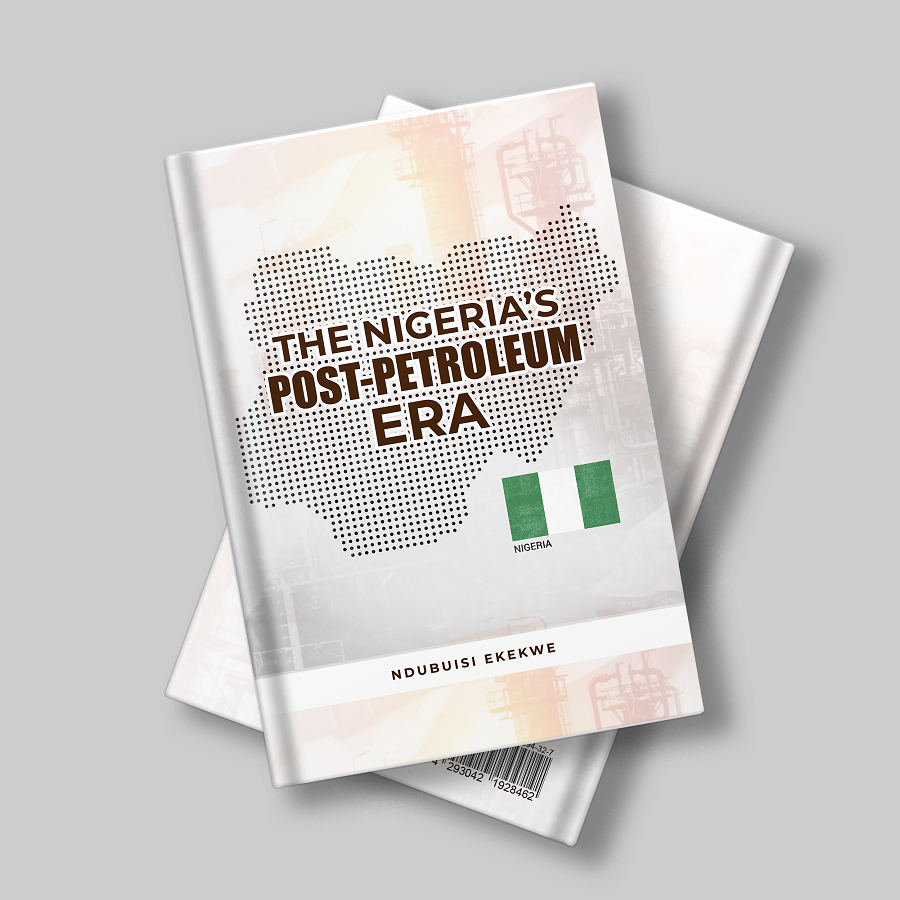



In this essay, I examine Nigeria, and what we can do, as we transition into a post-petroleum era.
Over the past few decades, Nigeria has emerged as one of the key political leaders in Africa. Despite a long history of under-performance, driven primarily by leadership and visioning problems, it remains a key global strategic partner. It has petroleum with the capacity to partly influence the dynamics of global commerce and industry. Whether the […]

This recent trend in Nigeria of becoming a baby mama to a celebrity is a wild one. I understand that it is even a bragging right to some ladies, i.e. being a baby mama to a popular person.
We need to start having this difficult but true conversation that becoming or being a baby mama is not a flex neither is it an achievement despite whomever you got pregnant for. It is just an open display of how much you lack self-discipline and respect for your body.
A huge chunk of Nigerian entertainers have baby mamas and some do not just one but multiple baby mamas. A Nigerian A-lister even has as many as six baby mamas. It is not a flex, it just shows how irresponsible and undisciplined those entertainers are and are not fit to be role models to our youths.
The hard question is; would you want to get pregnant by a man who has refused or is not ready to marry you, and why would you impregnate a lady you are not willing to marry? I understand that some ladies do willfully get pregnant for the guy so as to “tie the guy down” and force him to marry them but it does not always work out that way. A man that you have to use pregnancy as a bargaining chip to force to marry you will always treat you like trash. Once you become a baby mama you have sold yourself short and you have lost all your bargaining rights that ought to have accrued to you as a wife.
Bringing a child into the world is one of the most critical and important decisions you would ever make in your life so you really need to think hard about it before you embark on it, it’s a journey of no return; the journey of becoming a parent. It should never be a spur-of-the-moment thing. You need to be ready before you bring a child into this world; being financially ready, mentally ready, psychologically and physiologically ready or you will fail catastrophically as a parent.
According to research most of the kids that turn into street urchins, become riff raffs and ragamuffins and engage in violent crimes are children raised by a single parent or raised in a broken home. A child needs both warm motherly love to grow and a firm fatherly iron hard for guidance so as not to turn into a societal misfit. Parenting is a collective effort between the man and the woman. Once you see that one of the partners will not be able to join you in that journey you need to run away. Becoming a baby mama will only turn you into a single parent and you will have to work extra hard to make sure you do not fail as a parent.
As a matter of fact, all of the baby mamas I know are regretting becoming a baby mama or getting pregnant by a man that is not their husband and is not ready to marry them. Especially the baby mamas the man had abandoned and they do not have a strong means of sustenance. Do not let the social media glitz and glass fool you; the majority of social media baby mamas are in deep regret too. Most end up becoming a nuisance, seeking attention up and down on social media and attacking their baby daddies. You may only be likely to enjoy a baby mama status if the man that impregnated you is rich and he is ready to take care of you and the child or if your family is rich and ready to sponsor you or if you are rich yourself if not you will suffer.
Some ladies have missed lifetime opportunities by becoming baby mamas hence their utmost regret; some were still in school when they got pregnant and they had to drop out without their degrees, Some resigned from their jobs without proper planning or savings. After giving birth to the baby, readjusting into society without a degree, without a good job and without a sponsor or support is really something not to wish for, especially with the economic reality of today’s Nigeria.
Children are blessings but you need to be sure that you are ready to receive the blessing, if not you may end up cursing the day that blessing came into your life. Castaway today the demonic urge and the societal pressure of becoming a baby mama, You deserve better than being a baby mama.
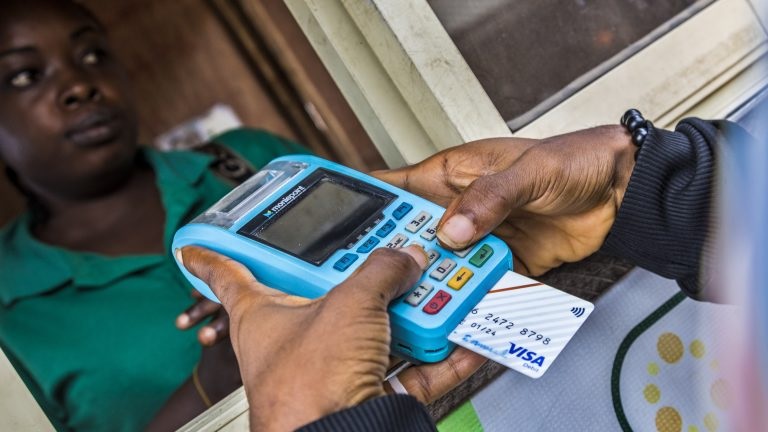
The Association of Mobile Money and Bank Agents in Nigeria, Lagos Chapter, has announced a new price regime for Point of Sales (PoS) transactions – a fresh move to eradicate price discrepancies in the industry.
The association’s Public Relations Officer, Lagos Chapter, Stephen Adeoye, revealed the new price list during an interview with ChannelsTV on Friday. Under the new price regime, Adeoye said customers will pay N500 or less (depending on location) for N10,000 cash withdrawals.
“Let me tell you the price list, N1000–N2,400 will be N100 for withdrawal. N3500 to N4000 will be N200; N4,100 to N6,400 will be N300; N6,500 to N7,900 will be N400; N8500 to N10,900 will be N500; N11,000 to N14,000 will be N600; N14,500 to N17,900 will be N700; N18,000 to N2000 will N800 for withdrawal.
“Like we said, depending on your location, you can also step it down for people depending on the circumstances. But it should not go more than this,” he said.
He further explained that for other transactions like deposits and transfers, agents can now charge N100 for N1,000 to N4,900; N200 for N5000 to N10,900; N300 for N11,000 to N20,900; N400 got N21,000 to N30,900; N500 for N31,000 to N40,000; and N600 for N41,100 to N50,000.
Recently, the chairman of the Lagos chapter of the association, David Abiodun, released the new price list to excos at a symposium, according to Adeoye.
“Although, we agreed that depending on one’s area, they can lower the charges. But it should not exceed these new prices. This is why we expect everyone to paste it in their locations so that customers can see it,” he said, explaining that the purpose of the list was to curb the activities of agents that were still overcharging their customers.
Regarding the implementation of the price list, the association’s PRO mentioned that they plan to utilize their connections with the police and a specialized task force operating in their area. This collaborative effort is aimed at ensuring compliance with the set prices and maintaining control over the situation.
“To enforce this new price list is easy because we have a good relationship with the Lagos State Command, Police Force, and all the DPOs in the area. Very soon a task force will be set up in each zone so that they will work along with it,” he said.
“Today, someone can get a PoS and start working, but we would soon get to everyone. Registered members have a number and certificate, and we have a good collaboration with the CBN both in Lagos and in Abuja. AMMBAN is part of meetings around financial inclusion.
“So, enforcing this will be easy for us. We have zones in almost all the local governments. So, our task force in each zone will locate those who are there. We also have our website, and everyone has to register.”
During the cash crunch, the charges of PoS operators became a national concern that the central bank threatened to withdraw the license of any operator caught inflating charges. Unfortunately, the challenge did not go away, prompting the decision of the association to announce the price list.
A lot of businesses, particularly in the informal sector, rely on PoS operators to carry out financial transactions.
My social media channels are classrooms. And most times, I write things which deviate from the “typical” consensus, partly because of my experiences and multifaceted training. I hold degrees in technology, banking, finance, and engineering, with experiences that cut across banking, oil & gas, semiconductors, finance and education.
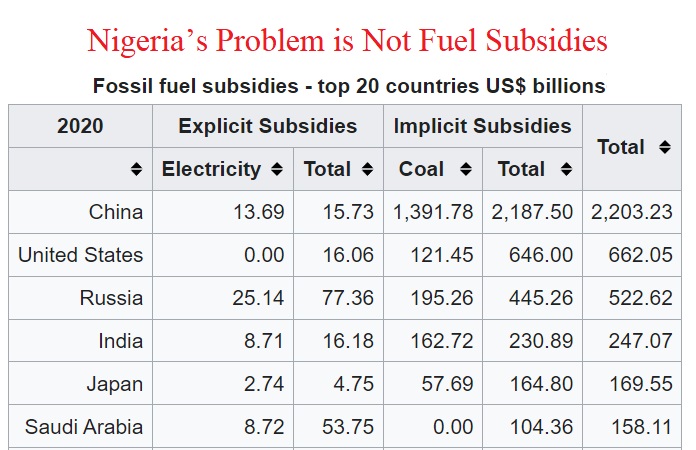
What if I tell you that fuel subsidies are not Nigeria’s main problem? What if I tell you that what you see as a “fuel subsidies” problem is actually inefficiency in government? When you do not know how much petrol you use, is that a fuel subsidy problem? When you do not have the ability to control your borders, feeding smugglers, is that a fuel subsidy problem? When you pay for “imported” fuel which never arrived, paying fake invoices, is that a fuel subsidy problem?
Simply, when you fail on those and many, you need an excuse and that excuse is to kill what benefits economies. Good People, there is no major country which does not subsidize fuel. But while they subsidize fuel, they use that cheap energy to drive PRODUCTION because energy is a very important component of the manufacturing process. China leads the world. The United States follows. Japan is 5th. With energy subsidies, they have a manufacturing base, and when they tax the outputs from those industries, they recover their money!
Nigeria’s fuel subsidy problem is that it was designed to feed corruption (you can photoshop invoices and the government will keep paying you because you have one special connection in Abuja). In my book, Nanotechnology and Microelectronics, which received a Book of the Year award from IGI Global, and upon which I received an invitation from Harvard Business Review, I explained how nations drive technology growth, looking at 2,000 years of data.
The US postal service has not made a single profit in the last 20 years. That is a massive subsidy to improve the supply chain, across America, by making sure commerce works. But they’re smart: the money used to subsidize post office is recovered when profits of companies which depend on the postal system are taxed. Provided there is no corruption, the government has no need to turn the post office into a direct profit-making machine. Recently, the government tried to clean the books, and even after, the postal service still recorded red! That subsidy is a platform strategy as we do in startups.
Fellow Nigerians, we need better journalism because for decades our citizens are not well informed. Nigeria needs fuel subsidies to build a competitive production economy. But since we cannot reduce corruption, the subsidies have become a victim; that is unfortunate. As that happens, according to Manufacturers Association of Nigeria (MAN), our manufacturers in Nigeria spent around N144 billion on alternative sources of energy (yes, generators) last year! We can do better.
President Biden last year signed into law the 2022 Postal Service Reform Act, which is expected to save a combined $107 billion for USPS by eliminating existing debt and taking future liabilities off of its books. Setting aside that savings, the Postal Service saw a net loss of nearly $500 million in fiscal 2022.
Nigeria needs fuel subsidies to build a competitive production economy. Fuel subsidy is not the main problem; corruption is. Deal with corruption and you will get the “productive” dividend of subsidizing energy. Even the debt servicing will become better. Yes, the borrowing we see in financing energy subsidies is not because of fuel subsidies; it is simply that fuel subsidies were not put into a production system because the benefits were muted by corruption. In other words, when you borrow and waste the money on financing corruption, there is no way the system will work. But if you have borrowed, and used the funds to subsidize energy, you will likely improve your balance of payment and tax base, and that will help to pay the debts easily.
Comment on Feed: Thanks Prof. Whilst I agree with inefficiencies in our governance, the data above will be more balanced if the costs of energy in these countries are provided.
My Response: The cost of energy in the countries will not change anything in the overriding theme. You have a decent sample to make a decision, from energy producing countries like Saudi Arabia to non-native producers like Japan, and those in-between like India. More so, using the cost without adjusting for purchasing power parity (ppp) makes no sense. My point is that the absolute cost of energy in the US and what it costs in Nigeria will not matter; you focus on the PPP and if you do, you will see that the US would have subsidized even if its energy cost is at the Nigerian level.
You have said it all. Those justifying subsidy removal are just ignorant or following bandwagon. First, it isn’t feasible considering the purchasing power of most citizens, secondly, subsidy itself is not the problem, but subsidy scam. Government should address the REAL problem!
— Arsenal Babe (@arsenalbabe_) June 30, 2023