DD
MM
YYYY

PAGES

DD
MM
YYYY

spot_img

PAGES

Home Blog Page 4076

China Ready to Coordinate with Russia on Middle East Crisis

0

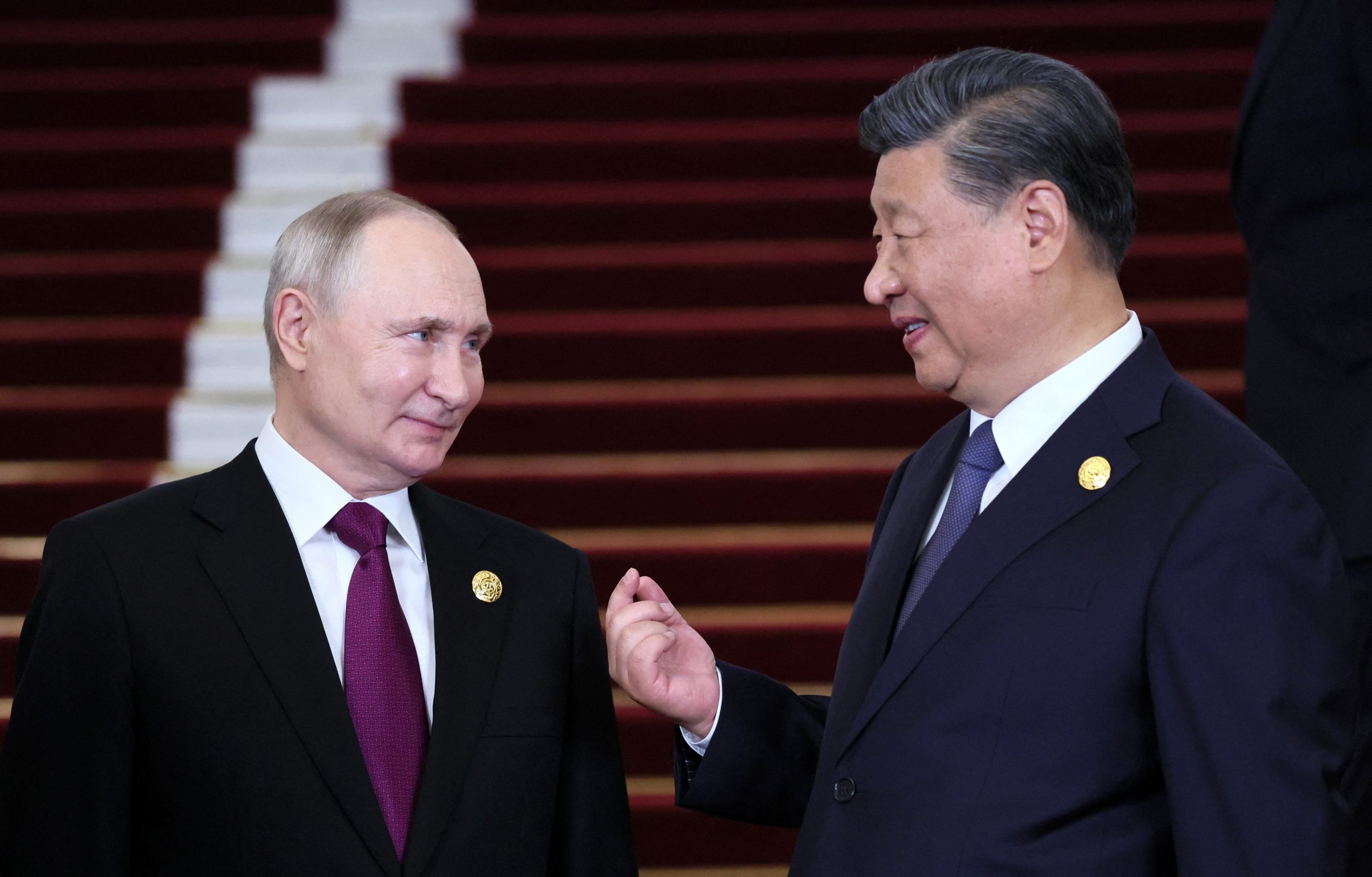
In a recent statement, China’s Foreign Ministry spokesperson Zhao Lijian said that China is ready to coordinate with Russia on the situation in the Middle East, especially in Syria and Iraq. He said that China and Russia share common interests and responsibilities in maintaining regional peace and stability, and that they have been in close communication and coordination on various issues.

Zhao also expressed China’s support for Russia’s efforts to promote a political settlement of the Syrian conflict, and to combat terrorism and extremism in Iraq. He said that China hopes that all parties concerned will respect the sovereignty and territorial integrity of Syria and Iraq and work together to achieve a comprehensive and lasting solution to the crisis.

Syria has been mired in a civil war since 2011, when anti-government protests erupted as part of the Arab Spring. The conflict has killed more than 500,000 people, displaced more than 12 million, and created one of the worst humanitarian crises in history. The war has also drawn in regional and international actors, such as Iran, Turkey, Saudi Arabia, Israel, the US, France, Britain, and Russia.

Russia has been a key ally of Syrian President Bashar al-Assad, providing military, diplomatic, and economic support to his regime. China has also backed Assad politically, vetoing several UN resolutions that would impose sanctions or authorize military action against him.

Iraq has faced instability and violence since the US-led invasion in 2003 that toppled Saddam Hussein’s regime. The country has struggled to rebuild its institutions, economy, and society amid sectarian tensions, corruption, terrorism, and foreign interference. The rise of the Islamic State (IS) group in 2014 posed a major threat to Iraq’s security and sovereignty, as it seized large swathes of territory and declared a caliphate.

A US-led coalition supported Iraqi forces in fighting IS, which was largely defeated by 2017. However, IS still remains active in some areas, carrying out attacks against civilians and security forces. Iraq has also been affected by the rivalry between Iran and the US, as both countries have significant influence and interests in Iraq. Iran has backed various Shia militias that have fought against IS and opposed US presence in Iraq.

The US has maintained thousands of troops in Iraq to train and advise Iraqi forces, as well as to counter Iran’s activities. In January 2020, a US drone strike killed Iran’s top general Qasem Soleimani near Baghdad airport, sparking a major escalation of tensions that threatened to plunge Iraq into a new conflict.

China and Russia have been strategic partners for more than two decades and have cooperated on various regional and global issues. They have also jointly proposed the concept of a “community of shared future for mankind”, which aims to promote multilateralism, dialogue and cooperation among countries.

The Middle East is a region of strategic importance for both China and Russia, as it affects their energy security, economic interests and geopolitical influence. Both countries have advocated for a peaceful resolution of the conflicts in the region and have opposed any external interference or military intervention.

China and Russia have also been active participants in the international efforts to address the Iranian nuclear issue, the Palestinian-Israeli issue, and the humanitarian situation in Yemen. They have called for the full implementation of the Joint Comprehensive Plan of Action (JCPOA) on the Iranian nuclear issue, the establishment of a Palestinian state with East Jerusalem as its capital, and the cessation of hostilities and violence in Yemen.

As two permanent members of the UN Security Council, China and Russia have a special role and responsibility in safeguarding international peace and security. Their coordination and cooperation on the Middle East crisis will not only benefit the people of the region, but also contribute to the stability and prosperity of the world.

European Central Bank Launches Preparation Phase for Digital Euro CBDC

0

The European Central Bank (ECB) announced on October 17th, 2023, that it has entered the “preparation phase” for the development and launch of a digital euro, a central bank digital currency (CBDC) that would complement the existing cash and payment systems in the euro area. The preparation phase is expected to last for about two years, during which the ECB will conduct technical and policy work to design the features and requirements of the digital euro.

According to the ECB, the digital euro would be a form of electronic money issued by the central bank that would be legal tender and accessible to all citizens and businesses. It would be available through digital wallets provided by intermediaries, such as banks and payment service providers, and would allow for online and offline payments, as well as peer-to-peer transfers. The digital euro would be backed by the ECB’s assets and would not entail any credit or liquidity risk for users.

The ECB’s decision to launch the preparation phase was based on the results of a public consultation that took place between October 2022 and January 2023, as well as an investigation phase that involved experiments and analysis by the ECB and the national central banks of the euro area. The public consultation received more than 8,000 responses, which showed a high level of interest and support for a digital euro, as well as a preference for privacy, security, usability, and low cost as the main features of the CBDC.

One of the key questions that arises from the introduction of a digital euro is how it will affect the banking sector. The ECB has stated that the digital euro is not intended to compete with or substitute bank deposits, but rather to offer an alternative and complementary option for payments.

The ECB has also proposed some safeguards to limit the potential impact of the digital euro on banks, such as imposing a cap on the number of digital euro that each user can hold, charging a penalty interest rate for holdings above a certain threshold, or requiring intermediaries to remunerate or invest part of their digital euro holdings with the central bank.

The ECB argues that the digital euro could also bring some benefits for banks, such as reducing their dependence on costly and inefficient payment systems, enhancing their customer relationships and loyalty, and creating new business opportunities and revenue streams. The ECB also expects that the digital euro will stimulate innovation and competition in the payment market, which could lead to more efficient and diverse services for users.

The ECB stated that the main objectives of the digital euro are to support the digital transformation of the European economy, to foster financial inclusion and innovation, to enhance the resilience and diversity of the payment system, and to reinforce the international role of the euro. The ECB also emphasized that the digital euro would not replace cash, but rather complement it as a means of payment.

The preparation phase will involve close cooperation between the ECB and various stakeholders, such as national authorities, European institutions, market participants, civil society organizations, and international partners. The ECB will also conduct user testing and experimentation to ensure that the digital euro meets the needs and expectations of users.

At the end of the preparation phase, the ECB will decide whether to launch a formal investigation phase, which would last for about three years and would involve a pilot project with selected users.

Tesla Stock Records its Worst Performance in the Year, Ends the Week 15% Down

0

Tesla, Inc. experienced a significant drop in its stock value, with shares plummeting over 15% during the past week, ultimately closing at $211.99.

This marks Tesla’s most challenging week in terms of stock performance this year, though the company still boasts a 96% increase in share value year-to-date.

The dip in stock value followed Tesla’s third-quarter earnings call, where CEO Elon Musk expressed a notably pessimistic stance on macroeconomic issues. The company reported $23.35 billion in revenue and $1.85 billion in profits for the period ending September 30, 2023. While these figures represent substantial earnings, they signify a decline compared to the preceding quarter and the same quarter in the previous year.

During the earnings call, Musk emphasized the need for cost-cutting and price reductions for Tesla in the forthcoming quarters. He acknowledged that the economy’s uncertain outlook demands proactive measures to ensure the company’s financial stability.

Musk said during a question-and-answer portion of the earnings call with analysts, “I am worried about the high-interest rate environment that we’re in,” he said, adding that “If interest rates remain high or if they go even higher, it’s that much harder for people to buy the car. They simply cannot afford it.”

Also, Tesla’s new CFO Vaibhav Taneja, on the call, echoed Musk’s sentiment. “Reducing the cost of our vehicles is our top priority. We’ve tried to offset such adjustments via our focus on reducing costs. However, there is an inherent lag in cost reductions, which in turn impacts margins,” he said.

Musk also provided a tempered update on the long-awaited Cybertruck, asserting that the vehicle’s launch would require careful consideration of pricing to accommodate its extensive demand. While more than one million reservations have been made for the Cybertruck, Musk emphasized the need to strike a balance between affordability and profitability.

In response to rising interest rates, Musk expressed concern about the potential impact on consumers’ purchasing power. He said that making Tesla’s vehicles accessible to a wide range of buyers remains a top priority.

Although Musk articulated a long-term vision for Tesla, including significant investments in artificial intelligence and the potential for fully autonomous vehicles, the market did not respond as positively as it has in the past. Some analysts, typically bullish on Tesla, issued cautious notes following the Q3 results, indicating a more cautious outlook for the company’s future.

As an example, Morgan Stanley’s Adam Jonas adjusted his price target from $400 to $380. However, it’s worth noting that even with this reduction, his forecast suggests a potential upside of over 56%, as indicated in a note released after the Q3 Tesla call.

“How can we defend a ‘growth’ stock that appears ready to enter its 2nd consecutive year of earnings decline?” Jonas asked. He later answered, “We feel it is also important and reasonable to consider the long-term potential of the products and services being commercialized by the company,” in the note.

Tesla’s recent stock fluctuations have prompted reflection on the broader landscape for electric vehicles (EVs). Some analysts interpret Tesla’s Q3 results as a signal of a potentially challenging outlook for the EV industry as a whole, impacting not only Tesla but also Chinese EV manufacturers and other automakers.

However, during the call, Musk made several optimistic statements, including his assurance to investors that Tesla remains committed to substantial investment in AI development. He described AI as a “massive game changer” with the potential to propel Tesla to become the world’s most valuable company by a significant margin. Musk envisions achieving this through the widespread adoption of fully autonomous cars and fully autonomous humanoid robots.

Tesla may make the car of the future, but its latest project looks to the past: A ’50s-style diner and drive-in movie theater in Hollywood that will double as a Supercharger station for its cars. Some existing chains like 7-Eleven are already installing EV chargers at their locations, but if Tesla expands its concept beyond the L.A. site, it could create a whole new retail category of “charge-and-dine stations,” says Axios. Tesla has not revealed a timeline for the project, but Teslarati suggests that it could be done by the end of the year. (LinkedIn News)

Nigeria Needs A New Constitution to Make Progress – Anyaoku, Babalola

0

Former Secretary-General of the Commonwealth, Chief Emeka Anyaoku, has called for a new constitution as the path forward for Nigeria, emphasizing its importance in ending the “unprecedented level of divisiveness and declining sense of national unity” plaguing the nation.

Anyaoku made this declaration during his address at the 2023 Convocation Lecture of Afe Babalola University, Ado Ekiti, titled, “Management of Diversity: A Major Challenge to Governance in Pluralistic Countries.”

Anyaoku stressed the need for a governmental system that not only acknowledges Nigeria’s diverse population but is also founded upon a constitution that truly represents the will of the Nigerian people.

“The essence of the new Constitution should, in recognition of the crucial principle of subsidiarity in every successful federation, involve a devolution of powers from the central government to fewer and more viable federating units with strong provisions for inclusive governance at the center and in the regions as was agreed by Nigeria’s founding fathers,” he said.

The former Commonwealth scribe pointed out that Nigeria effectively managed its diversity in the early years of independence when it was perceived as a source of strength and national unity. However, this unity began to erode following military intervention in the country’s governance in January 1966, which led to a change in the existing constitution.

Anyaoku noted that prior to the military intervention, the Nigerian Constitution ensured the security of life and property, fostering a faster pace of economic development in the regions. Healthy competition among regions facilitated rapid development across the nation. Today, Nigeria faces significant challenges, including an “unprecedented level of divisiveness,” declining national unity, economic stagnation, insecurity, poor infrastructure, and ethical decay.

Despite these challenges, Anyaoku expressed his belief in Nigeria’s potential for restoration. He stated, “I believe that Nigeria is still salvageable. The country can still be restored to greater peace, greater security, a renewed sense of national unity, greater political stability, and a more assured pace of economic development.”

To achieve this transformation, Anyaoku urged the federal government to acknowledge the necessity of a new constitution made by the people of Nigeria, rather than continuing to amend the 1999 Constitution.

He recommended the immediate convening of a National Constituent Assembly, consisting of directly elected representatives on a non-party basis. Their task would be to discuss and agree on a new constitution, taking into account the 1963 and 1999 Constitutions, as well as the recommendations of the 2014 national conference.

Anyaoku proposed a timeline for this process, suggesting that the Constituent Assembly be given six months to produce the draft new Constitution. Once agreed upon, the draft constitution should be subject to a national referendum for adoption by a majority of voters, after which it should be signed by the President.

Aare Afe Babalola, the founder of Afe Babalola University, commended Anyaoku for his lecture, noting that it aligned with his long-standing calls for a new constitution to address Nigeria’s challenges. Babalola said that the new constitution should also address the issue of Nigerian leaders viewing politics as a lucrative business rather than a service to the people.

He expressed his belief that a new constitution is the key to achieving the necessary changes in the country, and he highlighted the role of institutions like Afe Babalola University in nurturing leaders who can positively impact Nigeria.

SEC Lawsuit Against Ripple CEO and Co-founder Dropped, Roblox to End Remote Work Policies

0

In a major victory for the cryptocurrency industry, the US Securities and Exchange Commission (SEC) has dropped its lawsuit against Ripple CEO Brad Garlinghouse and co-founder Chris Larsen. The lawsuit, which was filed in December 2020, alleged that Ripple and its executives had raised over $1.3 billion through an unregistered and ongoing digital asset securities offering of XRP, the native currency of the Ripple network.

The SEC’s decision to dismiss the case comes after months of legal battles, public statements, and community support for Ripple and XRP. The defendants had argued that XRP was not a security, but rather a medium of exchange that facilitates cross-border payments. They also claimed that the SEC had failed to provide fair notice of its regulatory stance on XRP, and that the lawsuit had caused significant harm to XRP holders and the broader crypto ecosystem.

The dismissal of the lawsuit marks a turning point for Ripple and XRP, as they can now resume their operations and partnerships without the regulatory uncertainty and pressure that had plagued them for almost a year. The news also boosts the confidence and optimism of the crypto industry, as it shows that the SEC is willing to reconsider its approach to digital assets and work with innovators to foster a more conducive and compliant environment for crypto innovation.

XRP, which is currently the sixth-largest cryptocurrency by market capitalization, surged by over 10% following the announcement of the dismissal. The price of XRP is expected to continue to rise as more investors and institutions regain interest and trust in the project. Ripple has also announced that it will resume its expansion plans in Asia and other regions, where it has established strong relationships with banks and payment providers.

The cryptocurrency market is buzzing with anticipation as JPMorgan, one of the largest and most influential financial institutions in the world, has expressed its confidence that a Bitcoin exchange-traded fund (ETF) will be approved by the US Securities and Exchange Commission (SEC) in the near future. In a recent note to clients, JPMorgan analysts wrote that they expect a spot Bitcoin ETF to be approved “within months”, citing the positive signals from the SEC chair Gary Gensler and the growing demand from investors.

A spot Bitcoin ETF would allow investors to buy and sell Bitcoin directly through a regulated platform, without having to deal with the complexities and risks of storing and transferring the digital asset themselves. This would lower the barriers to entry and increase the liquidity and efficiency of the market, potentially boosting the price and adoption of Bitcoin.

JPMorgan’s bullish outlook on a Bitcoin ETF is significant, as the bank has been historically skeptical and cautious about cryptocurrencies. In 2017, JPMorgan CEO Jamie Dimon famously called Bitcoin a “fraud” and threatened to fire any employee who traded it. However, since then, the bank has changed its tune and embraced the innovation and potential of digital assets.

JPMorgan now offers crypto-related services to its clients, such as custody, trading, research, and advisory. It has also created its own blockchain platform, Quorum, and its own digital currency, JPM Coin. The bank’s endorsement of a Bitcoin ETF could signal a major shift in the attitude and perception of the mainstream financial industry towards cryptocurrencies, which could have far-reaching implications for the future of finance.

The dismissal of the SEC lawsuit against Ripple is a historic moment for the crypto industry, as it sets a precedent for future cases and clarifies the regulatory status of XRP. It also demonstrates the resilience and strength of Ripple and its community, who have fought tirelessly to defend their vision and values. With this legal hurdle behind them, Ripple and XRP are poised to lead the next wave of crypto innovation and adoption.

Roblox to End Remote Work Policies

Roblox, the popular online gaming platform, has announced that it will end its remote work policies and require all employees to return to the office by January 2024. The company said that the decision was based on the need to foster collaboration, innovation and culture among its workforces.

The hybrid work model seems to be the dominant trend among the tech giants, but it is not without its challenges and risks. For instance, how will they ensure that remote workers are not disadvantaged or isolated compared to their office-based peers? How will they measure and reward performance and productivity in a fair and consistent way? How will they maintain security and privacy of their data and systems in a distributed environment? And how will they deal with the legal and regulatory implications of having employees across different jurisdictions and time zones?

These are some of the questions that the tech giants will have to answer as they prepare for the transition to the hybrid work model. It is clear that there is no one-size-fits-all solution, and that each company will have to adapt and experiment with what works best for them and their employees.

Roblox CEO David Baszucki said in a memo to employees that the company values the flexibility and autonomy that remote work offers, but also believes that in-person interactions are essential for creating high-quality products and services. He said that the company has invested in building new offices and renovating existing ones to provide a safe and comfortable environment for employees.

Baszucki also said that the company will offer relocation assistance and support for employees who need to move closer to the office locations. He added that the company will continue to monitor the COVID-19 situation and adjust its policies accordingly.

The announcement comes as a surprise to many Roblox employees, who have been working remotely since March 2020 due to the pandemic. Some employees expressed frustration and disappointment with the decision, saying that they enjoyed the benefits of working from home, such as saving time and money on commuting, having more flexibility in their schedules, and being able to balance their work and personal lives better.

Some employees also said that they felt more productive and creative working remotely, and that they did not see any negative impact on their collaboration or communication with their colleagues. They argued that the company should offer a hybrid model that allows employees to choose whether they want to work from home or from the office.

Roblox is not the only company that has decided to end its remote work policies. Other tech giants such as Google, Apple and Facebook have also announced plans to bring back most of their employees to the office by early 2024. However, some companies such as Twitter, Spotify and Shopify have embraced remote work as a permanent option for their employees.

The future of work is a hot topic in the tech industry, especially after the pandemic forced many companies to adopt remote work policies. While some employees enjoy the flexibility and convenience of working from home, others miss the social interaction and collaboration of the office environment. How are the tech giants planning to balance these preferences and needs?

One of the most influential players in this field is Microsoft, which has recently announced its hybrid work model for its global workforce. According to the company, starting from January 2024, most employees will be expected to spend at least 50% of their time in the office, while having the option to work remotely for the rest of the time. Microsoft believes that this approach will foster innovation, productivity and well-being, while respecting individual choices and circumstances.

However, Microsoft is not the only one to embrace this hybrid work model. Other tech giants such as Google, Apple and Facebook have also announced plans to bring back most of their employees to the office by early 2024. These companies have similar reasons as Microsoft, such as maintaining their culture, enhancing collaboration and creativity, and attracting and retaining talent. They also acknowledge that some roles and functions may require more flexibility or autonomy than others, and that they will accommodate those needs accordingly.