DD
MM
YYYY

PAGES

DD
MM
YYYY

spot_img

PAGES

Home Blog Page 4080

Nigerian Court Convicts P2P Crypto Trader Accused of Operating a Pig Butchering Scam

0

A Nigerian court recently convicted and fined a peer-to-peer (P2P) crypto trader accused of running a pig butchering scam. According to the Economic and Financial Crimes Commission, the crypto trader’s activities were “contrary to and punishable under the Cybercrimes (Prohibition etc.) Act, 2015.”

A Nigerian court recently convicted a peer-to-peer cryptocurrency trader accused by authorities of committing a “computer related fraud.” In his ruling, Justice Nicholas Oweibo of the Federal High Court ruled that Lawrence Karinate was accused of using a fake identity and a fake bank account to lure investors into his P2P crypto platform, promising them high returns on their investments.

However, instead of using the funds to trade cryptocurrencies, he allegedly used them to buy pigs from local farmers, butcher them, and sell their meat to various markets in Lagos. The court heard that the trader made over 100 million naira ($240,000) from the scam, which he used to fund his lavish lifestyle.

“That you, Success Lawrence Karinate, sometime in 2023, within the jurisdiction of this Honorable Court, with intent to defraud, fraudulently held out yourself on social media platforms, as a female, bearing the name ‘Jessie Randall’, a fashion influencer, to unsuspecting members of the public, with intent to gain advantage for yourself and you thereby committed an offence, contrary to and punishable under Section 22(2)(b) of the Cybercrimes (Prohibition etc.) Act, 2015.”

He was arrested by the Economic and Financial Crimes Commission (EFCC) in February 2021, after some of his victims reported him to the authorities. The court sentenced him to 10 years in prison and ordered him to refund the money he stole from his investors. The judge also warned the public to be wary of online platforms that offer unrealistic returns on investments, especially those that involve cryptocurrencies, which are largely unregulated in Nigeria.

Karinate, who pleaded guilty to the charge, was arrested by EFCC operatives in the Lekki area of Lagos State. At the time of his arrest, the operatives recovered a mobile phone which the crypto trader used to perpetrate the scam.

Ethereum validator queues drop to record lows.

One of the most anticipated events in the crypto space this year is the launch of Ethereum 2.0, the upgrade that will transition the network from a proof-of-work (PoW) consensus mechanism to a proof-of-stake (PoS) one. This means that instead of relying on miners to secure the network and validate transactions, Ethereum will use validators who stake their ETH tokens and run nodes to perform these functions.

However, becoming a validator is not as easy as it sounds. It requires a minimum of 32 ETH (around $120,000 at current prices) to be locked in a smart contract, as well as running a node that is online and synced with the network at all times. Moreover, there is a waiting period before a validator can start earning rewards or exit the network, which depends on the number of validators in the queue.

According to data from Beaconcha.in, an Ethereum 2.0 explorer, the validator queue has dropped to record lows in recent days, reaching as low as 1.5 days on October 15. This means that new validators can join the network and start earning rewards in less than two days, compared to over 20 days in August.

This is a positive sign for Ethereum 2.0, as it indicates that more people are willing to stake their ETH and support the network’s security and decentralization. It also shows that the network is able to process more validators per epoch (a period of 6.4 minutes), thanks to the recent optimizations and upgrades implemented by the developers.

The validator queue is expected to fluctuate depending on the demand and supply of validators, as well as the network’s performance and stability. However, as Ethereum 2.0 progresses and more features are rolled out, such as sharding and the merge with Ethereum 1.0, the incentives and opportunities for validators will likely increase, attracting more participants and enhancing the network’s value proposition.


Nigerian Crypto Exchange Platform Coinazer Expands Operations to Brazil

0

Coinazer, a Nigerian Web 3.0 crypto exchange platform has broadened its presence by expanding to Brazil.

The company announced that the expansion plan was to position itself as a globally recognized leader in digital remittances and blockchain-based financial services.

Speaking on the company’s expansion to Brazil, CEO of Coinazer Achigonye Joh Paul said,

“Coinazer global footprint has expanded to Brazil, which is a significant step in our efforts to reach a broader audience. We have forged partnerships with over 40 key players in the blockchain and Fintech industries.

“These partnerships enable us to enhance our services, expand our reach, and collaborate with like-minded organizations dedicated to advancing financial exclusivity. Coinazer’s expansion strategy extends beyond Nigeria and Brazil, as we aspire to become a globally recognized leader in digital remittances and blockchain-based financial services”.

Coinazer is reported to have clocked 5,000 customers and has facilitated over $3.8 million worth of transactions.

Founded in April 2022 by CEO Achigonye JohnPaul, alongside Egbuonu Ikenna, Malachi Chidera, and Nnaji Joshua, Coinazer is on a mission to empower individuals and businesses by providing them with secure, seamless, and cost-effective access to the world of cryptocurrencies and blockchain technology.

The crypto exchange wallet is designed to give users full control over their digital assets, while Coinazer provides a platform for users to buy, sell, and trade a wide range of cryptocurrencies.

Coinazer offers a crypto payment Gateway, Peer 2 Peer trading, Swap Farming, Exchange, Mining Investment, Conversion of crypto assets to cash, easy-to-integrate payment link, as well as structured API documentation for developers.

Currently, it supports more than 20 crypto assets, running on 18 different blockchain networks and offering low transaction fees.

Coinazer’s vision extends beyond itself, the company envisions a world where everyone has the opportunity to participate in the global financial landscape with confidence and control, including the seamless settlement of remittances, both locally and internationally.

While many crypto wallets and exchanges have high fees, transaction failures, and limited accessibility, Coinazer aims to be the opposite of that. It wants to reduce fees, enhance security, and increase accessibility and reliability.

Coinazer’s competitive edge lies in its commitment to addressing the identified market gaps and providing a holistic solution that combines the benefits of blockchain technology with financial inclusivity.

As the African digital remittance market continues to grow, Coinazer is well-positioned to capture a significant share of this expanding market by offering secure, efficient, and cost-effective remittance services

The crypto exchange platform initially secured funding from an angel investor, and is now in the pre-seed phase, with plans to further develop and expand its offerings.

Huawei Surpasses Apple’s iPhone to Claim The Top Spot in The Chinese Smartphone Market – Report

0

A recent report by Jefferies analysts has revealed that Huawei has dethroned Apple’s iPhone from its position as the smartphone market share leader in China.

According to the analysts, it reports that smartphone sales in China have shown positive growth year-over-year driven by high double-digit growth in Android sales led by Huawei, but Apple’s iPhone has seen a significant double-digit decline.

The analysts wrote,

We believe weak demand in China would eventually lead to lower than expected global shipments of iPhone 15 in 2023”, adding that the trend suggests the iPhone will lose to Huawei next year.

The Jefferies analysts wrote that Android’s volume growth can’t be chalked up to discounts and that discounts on iPhones, excluding the iPhone 15 models, have been stable, while the average discount for Android is not high.

It further noted that resale of iPhone 15 devices are all trading at discounts to official selling prices, which also reflects the weak demand in China.

After Apple released the latest model of its iPhone 15 last month September, the Cupertino giant expected the device to be a top seller, unfortunately, it recorded a massive decline in sales.

Market tracker counterpoint Research estimates a 4.5% decline in iPhone 15 sales compared to the iPhone 14 during the first 17 days after release. Apple stock fell 1.2% on the news.

Recall that Huawei also launched its latest mobile device Mate 60 Pro in the same month of September, while the 7-nanometer processor is not as advanced as Apple’s 3-nanometer, Huawei’s technological development however represents a significant advancement in the US-China chip war.

This highlights the challenges Apple is encountering in China, where economic struggles and competition from companies like Huawei are impacting iPhone sales.

Analysts predict that Huawei could sell 5 to 6 million units of the Mate 50 pro alone this year, and the numbers could hit double digits in 2024.

Reports reveal that analysts are concerned about Apple’s longer-term impact in China, the world’s largest smartphone arena. Many analysts argue that Huawei’s rising prominence could erode Apple’s dominance of the higher end of the market.

Counterpoint blamed the iPhone’s slump in China mainly on an economy struggling to rebound from its Covid trough. It stressed that in the US, the iPhone 15 likely posted a double-digit rise over 2022 in the first nine days of sales.

Also, the US and China relations are said to have impacted the smartphone war. Recall that last month, Chinese officials banned government employees from using iPhones at work, one week before Apple unveiled the iPhone 15.

While Huawei, which is seen as a national champion has enjoyed strong support from the Chinese government which includes favorable regulatory treatment, and partnerships with local carriers, all of which have contributed to Huawei’s success in the Chinese market, impacting the sales of iPhone.

It is also worth noting that China has vowed to cut reliance on foreign technologies, and doing so could hurt Apple’s market capitalization in the country, one of its biggest markets.

The ban on iPhones in China, reflects similar United States policies, such as the Federal Communications Commission designating Huawei a national security risk.

Luring Nigerians Abroad for Sustainable Development

0

The allure of the West and developed countries has seen a significant migration of Nigerian talent and resources over the past years. The exodus of Nigerians, particularly the youth, has had undeniable consequences, leaving gaps in our economy, institutions, and communities. However, it’s high time we contemplated a new narrative—a story of Nigeria’s potential and the opportunity for those who’ve ventured overseas to return and be catalysts for sustainable development.

 Building on the Strength of Our Diversity

Nigeria’s cultural wealth is a treasure trove waiting to be fully harnessed for national development. Our diverse ethnicities, languages, and traditions are sources of strength, not division. The Diaspora can play a crucial role in celebrating and preserving this cultural richness. The exchange of cultural knowledge and practices between Nigerians abroad and those at home can be a driving force for unity and shared identity.

Moreover, the return of Nigerian expatriates brings fresh perspectives and global experiences, enriching our cultural landscape. They can actively contribute to the development of the arts, including music, film, fashion, and literature, ensuring that the world continues to marvel at our creative talents.

 Streamlining the Bureaucracy

It’s no secret that bureaucracy and red tape have been a deterrent to Nigerians abroad considering a return. Administrative inefficiencies often hinder investments and discourage those wishing to engage in public service. We must commit to making our institutions more efficient, transparent, and accountable. Simplifying business registration, property acquisition, and immigration procedures is crucial. Nigerians returning home should be welcomed with open arms, not cumbersome forms. Creating a “one-stop shop” for administrative processes could go a long way in easing the transition.

The administrative framework should also extend to fostering partnerships with international organizations, NGOs, and philanthropic institutions to ensure a smooth reintegration for returning Nigerians. Engaging the Nigerian Diaspora in policy formulation, such as through advisory councils, is an effective means to harness their expertise and build trust in the administrative system.

Regional Development and Urban Planning

Regional disparities have been a driving factor in emigration. To attract Nigerians back home, we must address geographical imbalances in development. Urban centres like Lagos, Abuja, and Port Harcourt have been the primary beneficiaries of growth, while many rural areas remain underdeveloped. We need a plan for equitable regional development, with investments in infrastructure, healthcare, education, and agribusiness to stimulate economic activity outside major cities.

The return of skilled Nigerians from developed countries can be a catalyst for creating sustainable urban centres in underdeveloped areas. Investing in infrastructure and urban planning will not only ease congestion in existing cities but also create hubs of innovation and economic growth.

Investment and Entrepreneurship

The economic potential of Nigeria is immense, and returning Nigerians have a pivotal role to play in unlocking it. Initiatives like the Presidential Enabling Business Environment Council (PEBEC) have already improved the ease of doing business. We need to build on this foundation to foster a favourable environment for investments and entrepreneurship.

The government should provide incentives for returning Nigerians who invest in critical sectors such as technology, agriculture, renewable energy, and manufacturing. Tax breaks, access to credit, and supportive policies can stimulate investment.

Entrepreneurship is another vital avenue for sustainable development. The Nigerian Diaspora is already known for its entrepreneurial spirit, which can be harnessed for the benefit of the nation. Initiatives like business incubators and mentorship programmes can nurture entrepreneurial talent.

Embracing a New Narrative

Nigeria’s development journey is intrinsically linked to the return of its skilled expatriates. By adopting a cultural framework that celebrates our diversity, streamlining administrative processes, addressing geographical disparities, and fostering investment and entrepreneurship, we can create a compelling narrative that lures Nigerians back for the country’s sustainable development.

Let us remember that Nigeria is not just a land of challenges but also a land of boundless opportunities. The potential for growth, innovation, and prosperity is unparalleled. It’s time for Nigerians abroad to reconsider their role in the country’s renaissance and be part of a brighter future. Together, we can build a nation that is not just admired for its cultural richness but also celebrated for its sustainable progress.

Nigeria’s Migration Dilemma and the Path to Progress

0
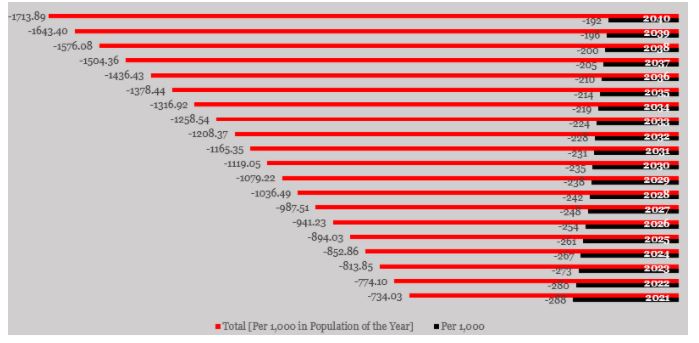
Source: Macrotrends, 2021; Infoprations Analysis, 2021

In recent years, the world has witnessed a significant exodus of Nigerian youths to Western countries and Europe. The quest for better opportunities, education, and improved living standards has driven this migration wave. This piece delves into the challenges posed by this phenomenon and explores pathways for Nigeria to address them, while also highlighting opportunities for those who choose to remain in their homeland.

Departure and its Impact

The departure of the youth has left a profound mark on various sectors, particularly education, technology, banking, and law. These sectors bear the brunt of the talent drain as skilled professionals seek their fortunes abroad. The education sector, which should be the backbone of a nation’s progress, witnesses a loss of educators and academicians to foreign shores. This exodus results in a shortage of experienced teachers and researchers, which, in turn, affects the quality of education in the country.

The technology sector in Nigeria, which has been experiencing rapid growth and innovation, also faces a significant setback due to this migration. The departure of tech-savvy youths leaves tech startups and companies in need of skilled workers. This exodus disrupts the technology landscape, stalling the growth of this promising industry. The banking and financial sector grapples with a talent shortage, and the law industry, which relies on experienced legal professionals, sees a steady outflow of talent. Both of these sectors require an influx of fresh minds and seasoned experts to thrive.

The Root Causes

To understand this migration wave, we must consider its underlying causes. Economic factors play a significant role, as Nigeria grapples with limited job opportunities and high youth unemployment rates. The desire for financial stability pushes young Nigerians abroad, where they hope to secure better-paying jobs.

Social and political instability also act as powerful push factors. Instability can discourage individuals from investing their time and skills in a nation where their future remains uncertain. Furthermore, the erosion of trust in local institutions impacts sectors like banking and law. In a climate where people lack confidence in the justice system and financial institutions, they may be less inclined to build their careers within these sectors.

Youth aspirations are another driving force behind this migration. The dream of attaining a higher quality of life abroad often lures young Nigerians. Improved access to healthcare, education, and a higher standard of living are powerful motivators.

Addressing the Challenge

To mitigate the challenges posed by youth migration, Nigeria must embark on a multifaceted approach. Firstly, it should strive to enhance educational and job opportunities within its borders. Investments in education, both in terms of quality and access, are crucial. Providing youths with opportunities to gain valuable skills and knowledge can encourage them to stay and contribute to the nation’s development.

Political and social stability must also be a priority. A stable political environment and a strong social fabric instil confidence in the nation’s future, making it more appealing for its youth to stay and contribute to its growth. Strengthening local institutions and restoring trust in them is essential, especially in sectors like banking and law. Efforts to improve transparency and accountability can help regain public trust and encourage young professionals to build their careers at home.

Furthermore, Nigeria should consider programs and incentives that attract skilled expatriates back to their homeland. Leveraging the knowledge and experience of those who have succeeded abroad can greatly benefit the country.

Opportunities Within Nigeria

While many Nigerian youths migrate in search of better opportunities, there are emerging prospects within the country itself. Nigeria’s technology sector, for instance, is growing at an impressive rate. The nation’s young and vibrant population presents a significant advantage for innovation. Encouraging entrepreneurship, supporting startups, and fostering a culture of innovation can harness the potential of local talent.

The banking industry also offers room for investment and growth. Nigeria’s large population, coupled with increasing access to financial services, creates a fertile ground for the banking sector to thrive. The legal landscape in Nigeria is evolving as well. Legal reforms are gradually improving the legal framework, offering exciting opportunities for those in the legal profession to make a positive impact.

Encouraging Reverse Migration

To encourage the return of skilled expatriates and reverse the brain drain, Nigeria should create incentives for their homecoming. Programs that facilitate reintegration, provide job opportunities, and support entrepreneurship can entice those who have succeeded abroad to return.

Supporting entrepreneurship is particularly crucial. Many expatriates may have gained valuable skills and insights while abroad and could use these to create successful businesses in Nigeria. Establishing mentorship programs and building networks can ease the transition for returnees. Fostering a culture of giving back to the community can also be instrumental in encouraging reverse migration. When professionals see opportunities to make a meaningful impact in their homeland, they are more likely to consider returning.

Collaboration for a Brighter Future

The journey to addressing the challenges of youth migration and seizing the opportunities within Nigeria requires collaboration between the government and the private sector. Government policies play a pivotal role in attracting talent and fostering a conducive environment for businesses to thrive. Public-private partnerships can be instrumental in driving economic growth and job creation.

The migration of Nigerian youths to the West and Europe is a complex issue with both challenges and opportunities. By addressing the root causes of migration, improving local opportunities, and creating a supportive environment for those who choose to return, Nigeria can harness the potential of its young population and ensure a brighter future for the nation. It’s a collective effort, with government, the private sector, and the youth themselves playing pivotal roles in shaping the destiny of the nation.