DD
MM
YYYY

PAGES

DD
MM
YYYY

spot_img

PAGES

Home Blog Page 4084

Provisions of The CBN Consumer Protection Guidelines on Transparency and Disclosure

0

Pursuant to the powers conferred on the Central Bank of Nigeria (CBN) by the relevant provisions of Central Bank of Nigeria Act & the Banks and Other Financial Institutions Act (BOFIA), it issued its Guidelines on Disclosure and Transparency, hereinafter referred to as “the Guidelines” to give effect to the Disclosure and Transparency Principle contained in the Consumer Protection Framework (CPF) for institutions regulated by the CBN.

The Guidelines provide minimum Disclosure and Transparency requirements for Financial Institutions under the regulatory purview of the CBN to ensure they provide consumers with all material and relevant information regarding their business relationship in a clear and transparent manner. 

The notable provisions  of these guidelines are what will constitute the focus of this article going forward.

What is the objective of the guidelines?

The objective of the Guidelines is to protect consumers against the provision of inadequate, misleading or failure to disclose material and relevant information and generally guard against lack of transparency by Financial Institutions in their dealings with consumers. 

The Guidelines therefore set out the minimum standards expected from Financial Institutions on consumer protection disclosure and transparency. 

What is the scope/applicability of the guidelines on transparency and disclosure?

The Guidelines shall apply to all transactions by financial  institutions(FIs) licensed and regulated by the Central Bank of Nigeria and their agents, subsidiaries and associates. 

What are some of the notable general provisions of the guidelines?

Some of the general conditions of the guidelines on disclosure and transparency include the following :-

Contracts, offer letters, statements of account, notices and other documents (hereinafter referred to as the “document”) provided or made available to consumers shall:

-Be written in clear, legible and simple English language and in a minimum font size of 10.

– State the name, contact details of the Financial Institution and the consumer.

-Contain a statement that the Financial Institution is regulated by the Central Bank of Nigeria.

– The overall impression of the document must not be misleading or deceptive.

– Provide a copy of the document to the consumer in a durable medium for future reference.

What are the disclosure requirements of the guidelines on advertisement?

Financial Institutions shall comply with the following disclosure requirements on all advertisements and promotional materials: 

-The content of advertisements shall be factual and unambiguous, expressed in clear and simple language and shall not be offensive, misleading, deceptive, injurious, or exaggerate the benefits of the products or services being advertised.

-The overall impression of advertisements shall not emphasize benefits of a product or service while de-emphasizing its associated risks or important disclosure information. 

– Details of the cost of a product or services, including all fees and other charges shall be clearly disclosed.

– All interest rates in advertisements shall be disclosed on an annual basis and not for a shorter period.

– Where an advertisement refers to, or is linked to other value adding benefits, the nature and value of such benefits shall be fully disclosed.

What are the requirements of the guidelines on pre-contractual disclosures?

FIs are required to :

-Disclose to consumers all terms and conditions of a product or service on offer, as well as the features, inherent risks, benefits, fees and other associated charges.

-Disclose in contract documents, the possibility of variations in rate of interest or foreign exchange due to changes in market conditions.

– Disclose to consumers all available similar or competing products and services for the purpose of comparison and making informed choices.

-Provide a Key Fact Statements (KFS) in a format attached as Annexure A1 stating a summary of key information on loans to consumers. 

What are the requirements of the guidelines regarding contractual disclosures?

FIs are required to:-

–  Notify consumers of any transaction on their account immediately it is made. At a minimum, the notification shall include the amount, date and the account balance.

– Ensure that transaction narrations in account statements and transaction notifications are clear; stating the nature of the transaction, date, payer or payee, transaction channel and location.

-Ensure that, at a minimum, any proposed and final contract prominently contains the following information: 

  • Key features and risks of the financial product or service;
  • Tenor of the contract (if any);

 The nature, amount and method of calculation of any interest, fee or charge and when it is payable; 

  • The applicable Annual Percentage Rate to be calculated using the formula stated in Annexure B1 and B2 of the guidelines.

What are the provisions of the guidelines regarding specific products disclosure?

FIs shall ensure that they comply with the following additional disclosure requirements for specific product types in any proposed contract, letter of offer or final contract: 

For credit facilities:

  • a) Name and contact details of borrower;
  • b) type of credit, purpose of credit;
  • c) collateral pledged and its estimated value;
  • d) the amount of credit or applicable credit limit; 
  • e) conditions precedent to drawdown; 
  • f) debt recovery process;
  • g) moratorium (where applicable); 
  • h) insurance requirements (where applicable);
  • i) details of lending fees; 
  • j) variable rate information (where applicable)

For deposit products

  • a) minimum balance requirement and other limit on account balances or transactions where applicable; 
  • b) monthly maintenance fee, any applicable tenor for a term deposit and any penalty for terminating a term deposit early;
  • c) savings withdrawal options; and
  • d) any reason(s) and timeline within which the account could become inactive or dormant.

 For products or instruments used as store of value such as e-wallet accounts and cards: 

  • a) minimum balance and any other limit on account balances and transactions (if applicable); 
  • b) types of payments for which the instrument may not be used; 
  • c) applicable agent network.

What are the provisions of the guidelines on disclosures on default?

On the due date of the loan repayment, the consumer shall be notified within 3 days, through the agreed medium that a default charge would be applied on the account after 7 days from the date the obligation becomes due.

What are the compliance requirements prescribed by the guidelines?

Financial Institutions(FIs) shall have in place a policy approved by their Boards of Directors which documents the processes, procedures and systems designed to ensure compliance with the provisions of the Guidelines.

What is the effect of failure to comply with these guidelines?

Failure to comply with the provisions of the Guidelines shall attract regulatory sanctions provided for by the CBN Act, the BOFIA, other laws and regulations. 

JAMB’S Forgery: What Foucault Says About Punishing and Disciplining Ejikeme Joy Mmesoma, Others

0

The recent case of Ejikeme Joy Mmesoma’s JAMB score controversy has shed light on the importance of effectively managing academic misconduct and maintaining the integrity of educational systems. Drawing upon Michel Foucault’s influential framework of “punish and discipline,” our analyst explores strategies to prevent and address such incidents in the future. By understanding the power dynamics at play, instituting appropriate disciplinary measures, and emphasizing self-discipline, Nigeria can work towards creating a more accountable and ethical educational environment.

Understanding Power Dynamics

Foucault’s framework invites us to critically examine the power dynamics within educational institutions. In the case of Mmesoma, her manipulation of exam results demonstrates the misuse of power to deceive various stakeholders, including the school, her family, and the government. By recognizing the asymmetrical power relationships between students, educators, and examination bodies, we can proactively address potential abuses of power.

Instituting Disciplinary Measures

Disciplinary measures play a vital role in deterring academic misconduct and preserving the integrity of educational systems. Following the committee’s recommendations, it is essential to establish clear and transparent consequences for those found guilty of academic dishonesty. This might include penalties such as suspension, loss of privileges, or academic probation. By ensuring that disciplinary actions are consistent, fair, and appropriately enforced, we can send a strong message that academic misconduct will not be tolerated.

Fostering Self-Discipline

In addition to external disciplinary measures, cultivating self-discipline among students is crucial for preventing academic misconduct. Education systems should emphasize the development of ethical values, critical thinking skills, and a sense of personal responsibility. By encouraging students to take ownership of their actions and promoting a culture of integrity, we can create an environment where academic misconduct is seen as a breach of personal ethics rather than a mere rule violation.

Promoting Supportive Environments

Preventing academic misconduct requires creating supportive environments that empower students to excel honestly. This entails providing students with access to academic resources, mentoring programs, and counseling services. By nurturing a culture of support and encouraging open dialogue, educational institutions can address the underlying factors that may drive students towards unethical behavior. It is crucial to prioritize the well-being of students while simultaneously fostering an environment that upholds the values of integrity and honesty.

Leveraging Technology

Advancements in technology offer new opportunities to prevent academic misconduct. Educational institutions can implement sophisticated anti-cheating software during exams, utilize plagiarism detection tools, and promote digital literacy programmes to help students understand the ethical use of online resources. Embracing technology as a tool for integrity can help create a more trustworthy academic ecosystem.

Ejikeme Joy Mmesoma’s JAMB score controversy serves as a wake-up call to reevaluate our approaches to managing academic misconduct. By applying Foucault’s punish and discipline framework, educational institutions can take proactive steps to prevent such incidents in the future. Recognizing power dynamics, instituting disciplinary measures, fostering self-discipline, promoting supportive environments, and leveraging technology are key strategies in building a culture of integrity and accountability.

Our analyst notes that, as Nigeria moves forward, it is essential for all stakeholders, including educators, policymakers, and students themselves, to collectively work towards upholding the principles of honesty and academic integrity. Only by doing so can the country ensure that educational systems remain a sanctuary for knowledge, personal growth, and the pursuit of truth.

Nuru’s Business Idea and How $49.3 Million Funding is Helping it Fix Huge Energy Gap

0

Jonathan Shaw and his co-founder, Archip Lobo, launched Nuru to address the huge electricity gap in Democratic Republic of Congo (DRC).

Nuru is a renewable and environment company that specializes in developing mini-grid and solar-hybrid systems.

Jonathan got his business idea by observation of the high level of energy starvation in DRC

” Only about 10% of Congo’s 100 million inhabitants have access to electricity.” Bloomberg

This huge energy gap inspired Prof. Shaw to launch Nuru with his PhD Research Assistant, Archip Lobo Ngumba

Nuru was founded in 2015 as Kivu Green Energy and built Congo’s first mini-grid in 2017. In 2020, it opened a 1.3-megawatt facility in the city of Goma, making it the largest mini-grid in sub-Saharan Africa with no connection to a national network.

Nuru operates a B2B business model and a metro-grid electrification model. Its solar panels are backed up by Tesla Inc. batteries and diesel. Its mini-grids provide power to urban communities. This allows the communities to leapfrog the use of power generated with fossil fuels and primarily use renewable sources in a region where security threats make it difficult to attract investment.

The smart execution of its metro-grid electrification model has proved viable and enabled the company to develop more mini-grids across different regions; attract mass adoption; and raise a total of $49.3 million in 6 funding rounds

Nuru won the backing of the International Finance Corp. and the UK government-backed Renewable Energy Performance Platform, among others, in its recent $40 million Series B round.

The company is using the funds to boost energy generation from its four plants by about 10-fold to 13.7 megawatts at peak capacity by adding three more larger-scale facilities, namely Goma, Kindu, and Bunia.

By combining solar power and batteries, the new transformational projects will build upon Nuru’s existing operating assets in four other cities in eastern DRC, as it pushes to provide power to 5 million people by 2024.

JPMorgan says Bitcoin ETF Approval unlikely to be a ‘Game Changer’

0
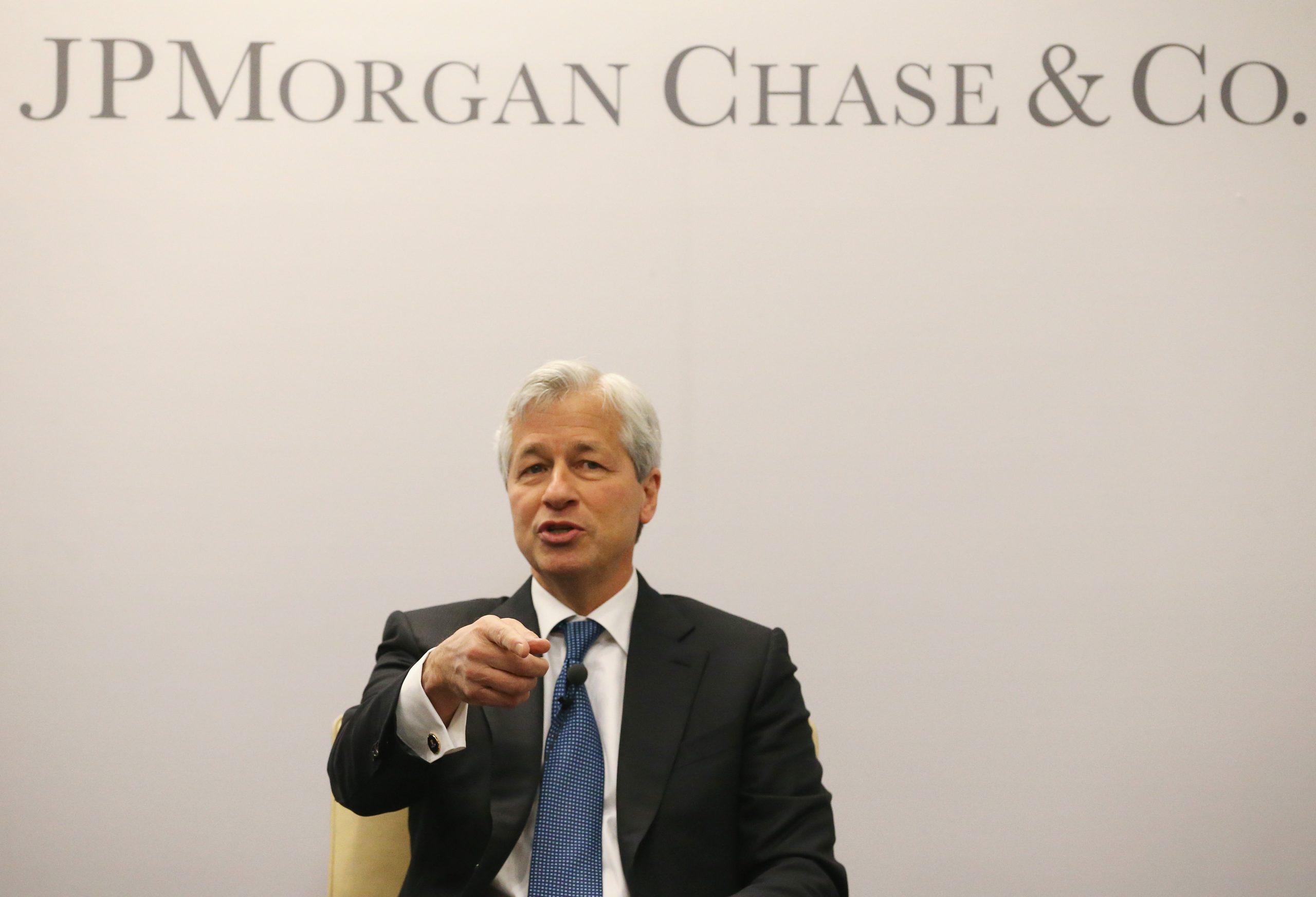
JP Morgan Chase puts contents through its CEO account, it goes viral. But the same content via JPMC account, no one cares (WSJ)

The recent approval of the first bitcoin exchange-traded fund (ETF) in the US has been hailed as a historic milestone for the cryptocurrency industry, but JPMorgan analysts are not convinced that it will have a significant impact on the market.

In a note to clients, the bank’s global markets strategy team said that the bitcoin ETF, which tracks the performance of bitcoin futures contracts rather than the spot price of bitcoin, is unlikely to be a “game changer” for several reasons.

First, they argued that the bitcoin futures market is already well developed and liquid, with an average daily volume of about $5 billion in September, compared to $1.6 billion for the spot market. Therefore, the ETF does not offer much additional exposure or convenience for investors who want to gain exposure to bitcoin.

Second, they pointed out that the bitcoin futures contracts have a negative roll yield, meaning that investors have to pay a premium to roll over their contracts as they expire. This creates a drag on the performance of the ETF, which could discourage long-term investors from holding it. The analysts estimated that the annualized cost of rolling over the futures contracts could be as high as 10% for the ETF.

Third, they suggested that the bitcoin ETF could face competition from other products that offer exposure to the spot price of bitcoin, such as Grayscale Bitcoin Trust (GBTC) or exchange-traded notes (ETNs). These products could have lower fees and more tax advantages than the ETF, which could attract more investors.

The analysts concluded that while the bitcoin ETF approval is a positive development for the cryptocurrency industry, it is unlikely to have a major impact on the demand and supply dynamics of bitcoin. They said that the main drivers of bitcoin’s price are still macroeconomic factors, such as inflation expectations, risk appetite, and regulatory developments.

Stock Market Booming to Create More Investment: What Do Tesla, Nio, and BEASTS Coin Have To Say?

0

Regardless of how the world turns out, being profitable remains the most common factor for any human. With the stock market climbing since the COVID fiasco, things seem brighter for the economy. A prime example is the most significant player is Tesla. Being one of the most profitable businesses, the stock has produced higher yields, benefiting all invested. And since competition is always good for business, another contender, Nio, has started competing with Tesla in the EV vehicle market. And the battle has been brutal. Nio is up by 3%, and 10,707 automobiles were handed over in June, a rise from 6,155 in May, according to Nio. As of June 30, the company has reported 23,520 total deliveries for the second quarter, bringing the overall number of deliveries to 344,117.

The question arises whether such potential can be expected in the digital market, specifically for altcoins such as BEASTS Coin. If so, how can you increase and earn more? We shall answer these questions by comparing Tesla and Nio with the acclaimed BEASTS Coin.

Tesla: Revolutionizing the Electric Vehicle Industry

Tesla, led by visionary entrepreneur Elon Musk, has become synonymous with electric vehicles. The company’s unwavering commitment to innovation and sustainability has propelled it to the forefront of the EV market. Tesla’s stock prices have grown significantly, and its recent second-quarter deliveries surpassed expectations, leading to a 6% premarket stock jump.

With an expansive product lineup, including the popular Model S, Model 3, Model X, and Model Y, Tesla caters to various consumer segments. The company’s focus on performance, range, and cutting-edge autonomous driving technology has captured the imagination of car enthusiasts worldwide. Tesla’s dedication to building a global network of Supercharger stations further reinforces its commitment to revolutionizing the transportation industry.

Nio: China’s Answer to Tesla’s Dominance

While Tesla dominates the global EV market, Nio, a Chinese electric vehicle manufacturer, has emerged as a formidable competitor. Nio’s sales figures for June indicate a surge in demand for electric cars as the market rebounds. The company’s strong presence in China and commitment to technological advancements have solidified its position as a significant player in the EV industry.

Like Tesla, Nio offers a range of electric vehicles, including the ES6, ES8, and EC6. Nio differentiates itself through innovative features like swappable batteries, advanced driver-assistance systems, and a unique battery-as-a-service (BaaS) program. This approach provides customers flexibility and convenience, enhancing Nio’s appeal in the Chinese market.

BEASTS Coin: Expanding the Frontiers of Passive Income

The BEASTS Coin initiative stands out for its cutting-edge community involvement strategy. The growing community of the project is enthralled by the new captive beasts that Rabbit 4001 unveils with each presale stage. Early investors experience anticipation due to the creation of the creatures supported by the money acquired during these presales.

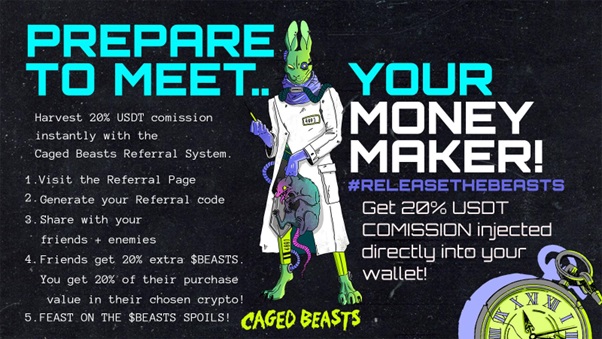
Furthermore, BEASTS Coin has a unique referral program that rewards people in the community for telling their friends about the project. Participants can make 20% of the referred buyer’s purchase value by creating personal referral codes and recommending new customers. This recommendation mechanism encourages community growth and develops a sense of togetherness.

What could it mean?

While Tesla and Nio operate in the electric vehicle sector, they differ in geographical reach and market positioning. Tesla’s global presence and innovative brand image have solidified its status as a market leader, whereas Nio’s strong foothold in China provides a foundation for expansion into international markets. Both companies drive the adoption of electric vehicles but cater to different demographics and markets.

On the other hand, BEASTS Coin represents a unique opportunity for investors to explore the world of cryptocurrencies and passive income generation. Although distinct from Tesla and Nio, BEASTS Coin aligns with the broader trend of seeking alternative investment options. By capitalizing on the growing interest in cryptocurrency, BEASTS Coin introduces a fresh perspective for finance-savvy individuals aiming to diversify their portfolios.

To seize this opportunity, consider buying BEASTS tokens during its presale stage and share your unique referral code to unlock the potential of passive income. As the world embraces sustainable transportation and alternative investment options, the combination of Tesla, Nio, and BEASTS Coin provides a dynamic landscape for investors seeking a money-driven lifestyle.


BEASTS Coin (BEASTS):

Website: https://cagedbeasts.com

Twitter: https://twitter.com/CAGED_BEASTS

Telegram: https://t.me/CAGEDBEASTS