DD
MM
YYYY

PAGES

DD
MM
YYYY

spot_img

PAGES

Home Blog Page 4087

The Moral Language of Drug Abuse in Nigerian Newspapers

0

The issue of drug abuse has been a persistent concern in Nigeria, with its devastating impacts on individuals and society as a whole. The moral language used in Nigerian newspapers is a fascinating aspect of the discourse surrounding this issue. Our analyst notes that the selected headlines of The Punch, The Guardian, and Vanguard between 2016 and 2020 reveal a complex web of concerns, emotions, and values. These headlines served as a lens through which we could analyse the evolving societal response to this pressing concern.

Concern: The first stage of the moral panic theory, as outlined by Stanley Cohen, begins with the identification of an issue as a threat to societal values and interests. During this period, the media gave increased attention to the issue. We saw headlines that expressed a growing concern about the consequences of drug abuse. “Re-engineering the drug law and enforcement agency” was a clear call to action. It highlighted the need to address the issue systematically. “Shocking sexual abuses by aid workers in Africa” sheds light on the alarming moral implications of drug abuse, as it often leads to such horrific incidents. “Task before presidential committee on drugs” recognized the need for a comprehensive approach. While the concerns were palpable, they set the stage for addressing the issue more robustly through strategic policy and managerial action.

Hostility: As the headlines moved from concern to hostility, the emotional response to the perceived threat intensified. “Beware, drug addiction is dangerous” evoked fear and caution among readers, as it clearly signalled the need to be vigilant about the perils of addiction. “Father rapes 15-year-old daughter, drugs her to prevent pregnancy” elicited a sense of outrage and anger. The moral implications were crystal clear. These headlines were a harsh reminder of the natural and immediate consequences of drug abuse. However, this emotional reaction was not unproductive. It can serve as a catalyst for action. It’s here that strategic policy recommendations become crucial. Stricter laws, effective law enforcement, and comprehensive education programs can be deployed to address the issue and protect society’s most vulnerable members.

Consensus: As the moral panic continued to develop, the third stage brought about a growing consensus that the issue needed attention. The headlines in this stage illustrated this collective recognition. “NDLEA advises parents to counsel children on drugs” highlighted the importance of parental involvement in addressing the issue. “CPC vows to protect Nigerians against abuse” conveyed a commitment to safeguarding society. The mention of research and linking drug addiction to various factors showcased a move towards understanding the problem and reaching a consensus on the need for intervention. At this stage, strategic policy recommendations would involve implementing comprehensive educational programs in schools and communities, increasing access to rehabilitation and treatment, and fostering public-private partnerships to tackle drug abuse holistically.

Disproportionality: The fourth stage often sees a disproportionate response to the issue, including stricter laws and increased law enforcement. Several headlines reflected this stage, indicating an active and intensive approach. “NDLEA arrests 24 suspected drug traffickers in Bayelsa” showed a proactive approach in curbing drug trafficking. The magnitude of drug seizures and the mention of politicians, civil servants, and students undergoing drug tests reflect a concerted effort to curb drug abuse. The involvement of Nigeria’s Drug Law Enforcement Agency (NDLEA) was central in this stage. While the intensity of enforcement was commendable, it is essential to ensure that these efforts are accompanied by rehabilitation programs to address the root causes of addiction. A balanced approach that combines stringent enforcement with support for recovery is crucial.

Volatility: In the final stage, the moral panic may either die down or escalate further. Several headlines suggested a mix of responses, indicating that the discourse surrounding drug abuse continues. “More women in Kano, Katsina abusing drugs” demonstrated that the issue is evolving, affecting new demographics. “Egbeyemi laments high drug consumption in Ado Ekiti” indicated that concerns are still prevalent at the regional level. “NDLEA arrests 59 drug dealers in Kebbi” showed that law enforcement efforts remained in force. This stage calls for a flexible and adaptable approach. As the nature of drug abuse changes, so must the strategies to address it. Policymakers and managers need to constantly monitor and adjust their approaches, ensuring that they are relevant to the current situation.

Strategic Policy and Managerial Recommendations

Preventive Education: Develop and implement comprehensive drug abuse prevention programs in schools and communities. Education is a powerful tool to create awareness and deter individuals from experimenting with drugs.

Treatment and Rehabilitation: Invest in the expansion of addiction treatment and rehabilitation centres. Ensure that individuals with substance use disorders have access to effective treatment options.

Law Enforcement and Regulation: Strengthen the legal framework to combat drug trafficking and distribution. Enhance the capabilities of agencies like NDLEA and promote international cooperation to curb the illicit drug trade.

Holistic Approach: Combine strict law enforcement with support for recovery. Address the root causes of addiction, such as poverty, mental health issues, and social disintegration.

Data Collection and Analysis: Establish a comprehensive system for collecting and analyzing data related to drug abuse. This data-driven approach can guide policy and resource allocation.

Public-Private Partnerships: Collaborate with private organizations and NGOs to create a more extensive support network for individuals struggling with addiction.

Community Engagement: Encourage community-based initiatives to raise awareness and reduce the stigma associated with drug abuse.

Adaptive Strategies: Continuously monitor the drug abuse landscape and adapt strategies to address evolving challenges.

Resuscitate Your Business Through Advertising

0

Although I am not professionally qualified to talk extensively on the topic of marketing and advertising, permit me to talk about it based on the little experience I have had as a business owner. Because of my lack of qualifications, I will not belabor you with definitions of what marketing or advertising is or what it is not and the rest of theoretical nonsense, I’m just here to share an experience with you on how much I have seen advertising turn around a struggling business with no sales to booming business with so much sales.

Let us assume that you have a good product or render impeccable services. Everyone who has patronized you all attests to that fact but the problem is you are struggling to make sales despite your excellent product and impeccable service. You do not have many clients or customers; nobody knows about you or about your product. If that is you, you should definitely consider advertising. 

The above problem of no sales or low patronage has been the major problem after finance/funding facing many entrepreneurs and business owners. These are the major killers of businesses and entrepreneurship in Africa. So many folks have good products and services they offer but nobody is buying, nobody knows about them or their products, not to talk about patronizing them. 

Ironically, there are thousands of people out there who are in dire need of the product or services you are offering, they have been looking for who offers that service and who sells the products you have. You as the seller are worlds apart from the potential customer and the only way they can get to know what you sell or offer is through either referrals or advertising. Once people get to know that you are offering that service or selling that product and some other persons who are your existing customers can vouch for you that what you offer is solid, that’s all potential client needs, your business will boom. 

I have seen advertising; specifically social media advertising take a struggling business into a booming one within a short period of time. 

The proven truth is if you want your business to scale quickly and grow exponentially in a short period you will need to consider advertising. Letting the business grow organically without advertising may work but it will definitely take some time hence why advertising is there to save the day. 

Let us not forget that this can only work and will be sustainable if you have a good product. So the formula is; to attract new clients through advertising and retain old and existing clients by offering great products and services. 

Social media has even made it easier to run cheaper and well targeted advertisements so you don’t shoot and miss or waste money and time advertising to the wrong people or people who do not need your product. For instance, If your target market are the youngins and trendy people your platform should be Instagram, if your target is older people, consider Facebook, if your target audience are professionals and those in the corporate world, you should focus on LinkedIn etc. 

Social media Influencer advertising is probably the best way to get more customers on social media faster. It is getting a popular person on that social media to endorse your product. It is more like putting a stamp of endorsement on that product from a popular person and it also introduces your product to the influencer’s millions of followers who from that moment become potential customers. 

Help your struggling business today by spending some money on advertising, the return on investment is always huge especially when you target the proper audience, even if you did not target the proper audience, no money spent on advertising is a waste. 

The Illegality or Otherwise of Publishing a Private Conversation

0

Someone called my attention to a video from a lawyer educating people that it is a crime and breach of privacy to screenshot a private conversation you had with another person and share it on a social media timeline.

It happens regularly on WhatsApp, Twitter, Instagram and even LinkedIn where users publish a private conversation they had with another person. The person at the other end of the conversation can commence a legal action against you for breach of privacy.

Section 37 of the constitution provides thus; “The privacy of citizens, their homes, correspondence, telephone conversations and telegraphic communications is hereby guaranteed and protected”. This section is the fons et origo for the protection of privacy of an individual’s privacy in Nigeria thereby making it a crime when a person’s privacy has been breached by another person which can include publishing a private conversation.

Taking a screenshot of a private conversation between you and another person without that person’s consent can be illegal and posting a private conversation between you and that person or even disclosing the conversation to a third party can get you sued for breach of privacy.

But this rule of the illegality of publishing a private conversation is not a rock solid one just as it is said that in every rule there must be an or some exceptions, the same goes with this rule. 

There are some instances where you can leak a private conversation without incurring any criminal liability. Truth be told, the legality or otherwise of publishing recordings of conversations/interactions in any medium is based on whether there is a reasonable expectation of privacy which is to be judged by the content and context of the conversation and whether it would be highly offensive and damaging to a reasonable person.

So the question posed in determining the illegality of publishing a private conversation is whether there is a reasonable expectation of privacy in the conversation. The answer to this question will be determined solely by the content or context of the conversation. 

As a petitioner bringing an action against another person for publishing the content of the private conversation you had with the person, the court in determining if you have a reasonable cause of action or not will consider amongst other things;

a) whether there was a reasonable expectation of privacy in the conversation

b) whether the content would be highly offensive or damaging

C) whether the content or the focus of the conversation is criminal in nature or not.

For instance, if two adults engage in sexting and sharing of their nude pictures and videos with each other, it will reasonably be expected that the content of such conversation should be kept away from the third eye and publishing such a private conversation will be highly damaging to the other person. So instances like this, a right to legal action may arise.

As a take home, if you must publish a private conversation for whatever reason, consider the potential damage it might cause to the person at the other end, think about the potential for the post to go viral, and think about the potential for the succeeding crimes relating to the posting of the messages. After considering the above, if you still want to go ahead to publish such a private conversation, be sure to blur out any identifiable information of the other person because sharing private information of another person is a crime on its own. 

AI Audio on TikTok is Fueling misinformation with Deepfakes

0
The brand is growing

AI audio is a technology that allows users to create realistic-sounding voice clips from text or other audio sources. It can be used for various purposes, such as entertainment, education, accessibility, and more. However, it can also be misused to spread misinformation, manipulate opinions, and impersonate others.

One of the platforms where AI audio is becoming popular is TikTok, the social media app that lets users create and share short videos. TikTok has a feature called “Voice Effects” that allows users to change their voice in various ways, such as adding echo, distortion, or pitch. Some of these effects are powered by AI audio technology, which can generate realistic-sounding voices from text or other audio sources.

However, some TikTok users are abusing this feature to create and share deepfakes, which are videos that use AI to replace the face or voice of a person with another. For example, some users have created videos that appear to show celebrities or politicians saying or doing things that they never did. These videos can be used to spread misinformation, influence public opinion, or damage the reputation of the target.

According to a report by The Verge, some of the deepfake videos on TikTok have been viewed millions of times, and some have even gone viral on other platforms. The report also states that TikTok does not have a clear policy on how to deal with deepfake videos, and that its moderation system is not effective enough to detect and remove them.

The problem of AI audio on TikTok is not only a technical one, but also a social and ethical one. It raises questions about the responsibility of the platform, the creators, and the viewers of these videos. How can TikTok prevent the misuse of AI audio and protect its users from misinformation? How can creators use AI audio in a responsible and ethical way? How can viewers verify the authenticity and credibility of the videos they watch?

These are some of the questions that need to be addressed as AI audio becomes more accessible and widespread. AI audio is a powerful tool that can be used for good or evil. It is up to us to use it wisely and responsibly.

THORswap resumes with updated terms to exclude users from sanctioned countries.

THORswap, the leading decentralized exchange on the THORChain network, has announced that it will resume its operations after a temporary suspension due to a security breach. The exchange has also updated its terms and conditions to exclude users from countries that are subject to sanctions by the United States, the European Union, or the United Nations.

The exchange stated that the decision to exclude sanctioned users was made to comply with the regulatory requirements of its liquidity providers and partners, and to ensure the safety and security of its platform and users. The exchange added that it will implement a KYC (know your customer) process to verify the identity and location of its users, and that it will block any transactions from or to sanctioned jurisdictions.

THORswap apologized for any inconvenience caused by the suspension and the updated terms and thanked its users for their patience and support. The exchange also assured its users that it has taken all the necessary measures to prevent any future attacks, and that it will continue to provide a fast, secure, and decentralized trading experience for its users.

THORswap is one of the most popular decentralized exchanges on the THORChain network, which allows cross-chain swaps between different cryptocurrencies without intermediaries. THORswap leverages the power of THORChain’s native token, RUNE, to provide liquidity and incentives for its users. THORswap claims to offer lower fees, higher speed, and more security than centralized exchanges.

SEC Chair Gensler, Coinbase Price, MetaMask, and other Crypto News

0
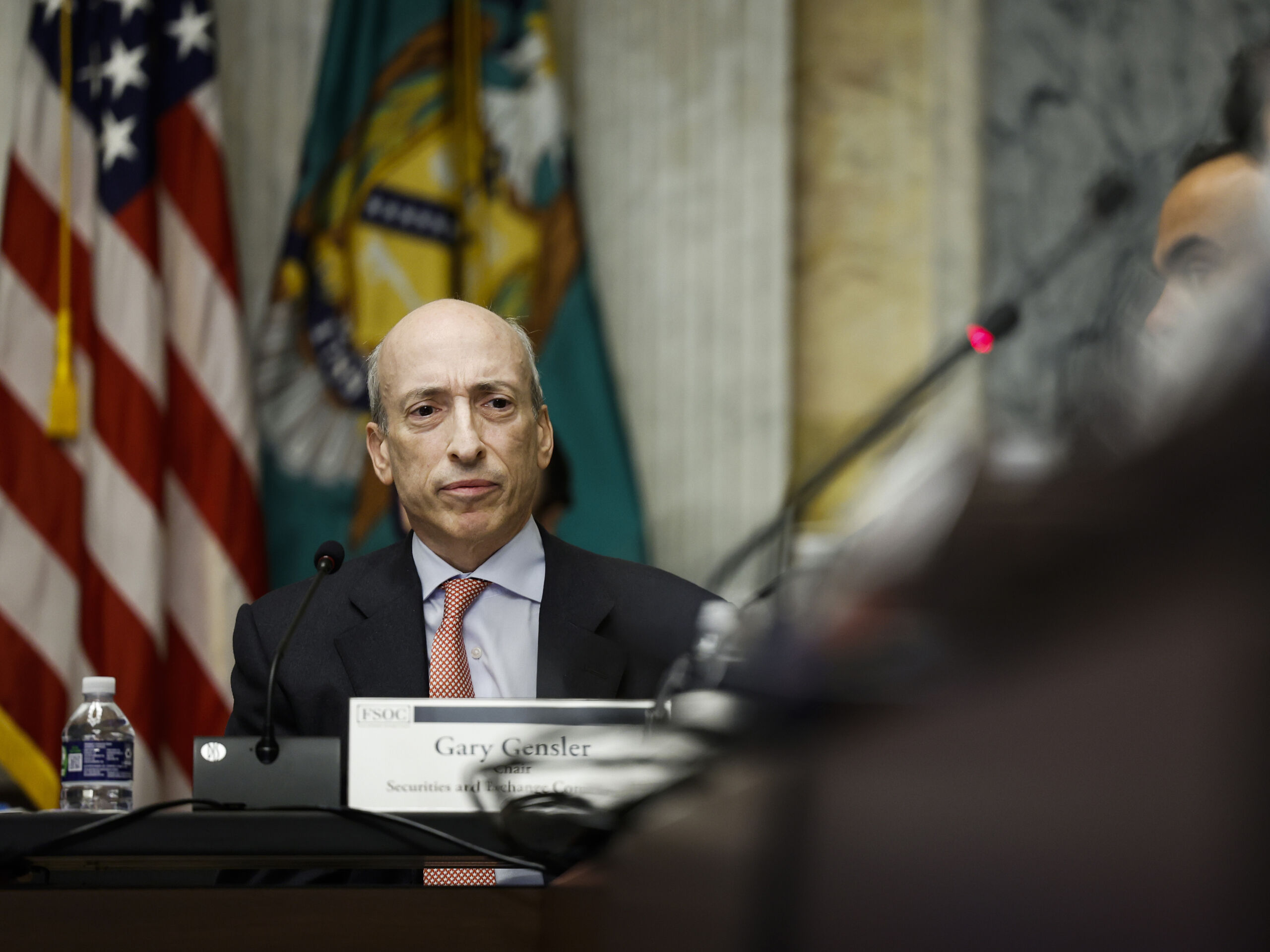
WASHINGTON, DC - OCTOBER 03: Securities and Exchange Commission (SEC) Chair Gary Gensler listens during a meeting with the Treasury Department's Financial Stability Oversight Council at the U.S. Treasury Department on October 03, 2022 in Washington, DC. The council held the meeting to discuss a range of topics including climate-related financial risk and the recent Treasury report on the adoption of cloud services in the financial sector. (Photo by Anna Moneymaker/Getty Images)

SEC Chair Gensler has not commented on whether he will grant an appeal to Grayscale Investments, the largest digital asset manager in the world, as the clock ticks down to the midnight deadline. Grayscale has been seeking approval from the SEC to convert its popular Bitcoin Trust into an exchange-traded fund (ETF), a move that could boost investor confidence and liquidity in the crypto market.

However, the SEC has been reluctant to approve any crypto ETFs, citing concerns over market manipulation, fraud and investor protection. Grayscale has argued that its trust meets the SEC’s standards and that denying its request would harm innovation and competition in the industry.

Coinbase, one of the largest cryptocurrency exchanges in the world, has expressed its “serious concerns” about the proposed tax rules by the Internal Revenue Service (IRS) that would require crypto businesses to report transactions over $10,000 to the agency. In a blog post published on October 13, Coinbase said that the rules are “unworkable” and “would have a negative impact on the crypto industry and its users”.

Coinbase argued that the rules are based on outdated assumptions about how crypto transactions work, and that they would impose an unreasonable burden on crypto businesses and customers. Coinbase said that the rules would require crypto businesses to collect and verify personal information from every counterparty in a transaction, even if they are not customers of the business. This would create privacy and security risks, as well as increase costs and complexity for both businesses and users.

Coinbase also said that the rules would create a competitive disadvantage for U.S. crypto businesses, as they would not apply to foreign competitors. Coinbase said that this would drive innovation and investment away from the U.S., and harm the growth of the crypto industry. Coinbase urged the IRS to reconsider its approach and engage with the crypto industry to develop more sensible and effective tax rules.

The cryptocurrency market saw a boost on Friday as the U.S. Securities and Exchange Commission (SEC) did not file an appeal against a court decision that granted Grayscale Investments the right to offer a Bitcoin exchange-traded fund (ETF). The ruling, which was issued on September 30, marked the first time that the SEC approved a Bitcoin ETF in the U.S., opening the door for more institutional investors to enter the crypto space.

Bitcoin, the largest and most popular digital asset, rose by more than 5% on Friday, reaching a high of $27,000. Analysts expect the bullish momentum to continue as more investors seek exposure to Bitcoin through the Grayscale ETF, which has lower fees and higher liquidity than other crypto products.

The cryptocurrency market is showing signs of weakness as Bitcoin struggles to stay above the $27,000 mark. The leading digital coin has lost more than 10% of its value in the past week, amid regulatory uncertainty and increased volatility. The SEC is expected to announce its decision on whether to approve or reject a Bitcoin exchange-traded fund (ETF) by November 14, which could have a significant impact on the market sentiment and liquidity.

Some analysts believe that the SEC will deny the ETF application, citing concerns over market manipulation and investor protection. If that happens, Bitcoin could face further downward pressure and test the $25,000 support level.

Social finance platforms are trying out new features to attract more users and challenge the dominance of FriendTech, the leading social network that also offers financial services. Some of these platforms, such as MoneyMate and CashClub, are even aiming to compete with X, the global digital currency that has disrupted the traditional banking system.

These platforms claim to offer more transparency, security and convenience than their rivals, as well as better rewards and incentives for their users. They hope to appeal to a growing segment of consumers who are looking for alternative ways to manage their money and socialize online.

MetaMask, the popular Ethereum wallet and browser extension, seems to have disappeared from the Apple App Store as of today. This is a surprising and unfortunate development for the crypto community, as MetaMask has been a reliable and user-friendly tool for accessing decentralized applications (dApps) on the Ethereum network. The reason for the removal is not clear yet, but some speculate that it may be related to Apple’s policies on cryptocurrency apps, which have been inconsistent and restrictive in the past.

MetaMask has not issued any official statement on the matter, but we hope that they will be able to resolve the issue with Apple and restore their app to the store as soon as possible. In the meantime, users who have already downloaded MetaMask can continue to use it, but they may not receive any updates or bug fixes until the situation is resolved. Users who have not downloaded MetaMask yet can still use it on their desktop browsers or on Android devices. We will keep you updated on any further developments regarding this issue.