DD
MM
YYYY

PAGES

DD
MM
YYYY

spot_img

PAGES

Home Blog Page 4092

Former Nigerian Government Officials and Returning Back Official Properties

0

One of the major issues every new government in Nigeria (both at the local, state and federal level) encounters is the recovery of public/ official properties from the previous officeholders; those properties that were assigned to them to aid them in the stress-free discharge of their official functions. 

It is embarrassing to see that men and women who served in government and who claimed to be people of integrity will steal public properties adding to the public funds they have been pilfering while in active service. It is expected of you as a past public official; whether elected or appointed that as a matter of Integrity, morality and ethics it is expected of you that after your time in the office, you take your personal belongings and leave the official properties behind for the office. It is both unethical and criminal to take what does not belong to you. 

You cannot resign from your job or get sacked in an organization and you also want to go along with the company’s property, unless the company gifted you those items, you can be prosecuted for the crime of stealing, but since it is government properties people are now seeing coveting them as a normal thing; no, it’s not, that’s stealing and I am here to remind you that you are a thief. 

Nigerian politicians are fond of converting public or official properties into their personal private use after they have left office. Official properties are properties of the public and it was purchased with taxpayers’ money and should therefore be returned after your time in office, anything other than that amounts to stealing. 

The Abia state government is currently chasing around immediate past public officials to return public properties in their confers. The state governor had to issue an ultimatum some days ago threatening to take drastic action against past officials who refuse to return any public property with them. It should not always be like this. 

Same goes with past state governors. Some governors will hand over power and will refuse to return official vehicles and vacate official residences they were assigned to, converting them into private use. The immediate past governor of Zamfara State, Bello Matawalle refused to return government vehicles even after much pleadings from the new government, the new governor had to send police to his house some days ago to recover some government-owned vehicles. About 40 official vehicles, some of which were newly purchased and never been used were recovered from his residence. 

The system where past administrations will have to sweep the confer and loot both finances and material things or whatever is left once they are about to leave office leaving the new administration with an empty treasury is criminal and officials who have been engaging in this crime should be prosecuted. Law enforcement agencies need to start going after past government officials; whether elected or appointed who after leaving office refuse to hand over official vehicles, residences, gadgets etc back to the government because it is criminal. 

The Innovation Zone, Features of Great Innovative Companies [video]

0

Creating a new basis of competition and operating in the Innovation Zone.

What are the features of great innovative companies? 

You must have these 4 features to lead your category and become a category-king.  The greatest reward for innovation is to turn customers into FANS. Of course, very few companies accomplish that. A state of fandom means massive value creation for all stakeholders. Over the next 12 weeks in Tekedia Mini-MBA, we will be looking at the physics of making innovation happen as companies pursue missions.

Source: From Tekedia Mini-MBA Live Zoom class, June 10, 2023. Join for the full 90-minute video

Commoditization of Sex and the Dearth of Affection in Romance and Social relations

0

Commoditization simply means the reduction of a thing to a mere commodity. A commodity is anything that has economic value and can be exchanged for money or any other acceptable means of exchange. Commoditization was used by Marxist theorists to explain the process by which capitalism changes something not regarded as an economic good into something with price, and consequently part of the economy.

In his Capital, Karl Marx identified the two types of values, namely real value and economic or monetary value. The real value of a thing is its inherent unique value which cannot be compared to something else. Monetary value on the other hand entails the worth of something based on its economic cost of production. In other words, the real value of a thing is largely determined by nature while the monetary value of a thing is determined by the economic forces of demand and supply.

For instance, it is not out of place to think one would naturally prefer to be gifted a brand new Toyota Corolla as against being gifted a bottle of cold beverage for one’s twenty-first birthday. However, when you reconsider the same option for someone who is extremely exhausted and dehydrated in the middle of a journey, the outcome of the choice is likely to be different.

It is in the light of the foregoing hypothetical scenario that some scholars in the field of psychology came up with the idea of subjective wellbeing as a parameter for understanding people’s intrinsically driven choices or decisions. Subjective wellbeing is the collective thought and feelings of people that support their choice of a particular thing or action among alternatives. Essentially, while the satisfaction that comes with our having a thing is extrinsically impacted by our knowledge of the market value of things, it will be recalled that in some special situations, some things appear to be extremely valuable to us regardless of their market value.

However, in line with Marx’s proposition that social relations rest on the economy, the impact of commoditizing things is felt in almost every aspect of our social life including interpersonal relationships and romantic affairs and how love is generally conceived and practiced in society. Consequently, sex and sexual activities have been highly motivated by economic survival rather than their traditional roles of procreation and increasing emotional bond and compassion among lovers.

I recall, on a social media platform I belong to, a young man lamented how most young women these days think less of their other functional roles in a relationship than their ability to gratify men’s sexual desires. This fixated mindset, he claimed, spurs the excessive demands and compulsive show of entitlement by women in most romantic relationships. The sentiment shared by the young lad seemed quite popular and genuine considering the lots of supportive reactions and responses it got from largely the male folks and a few women on the platform.

But my position was quite the opposite. I argued that the situation is not a sex or gender-specific problem; rather, it is a social problem affecting both the male and the female individuals in diverse ways. Consider if sex is not highly priced by men, perhaps most women would not have placed premium on their sex organs.

The prevalence of dysfunctional relationships and increasing role conflicts in most romantic affairs today has been largely due to the unintended consequences of the increasing commoditization of sex. The meaning and relevance of sex have vastly changed over the course of the last centuries. Sex has transcended from a sacred affair confined to marriage institution to a commodity accessible in some business centres such as brothels, clubs or pubs.

The commoditization of sex has also been impacted by technological advancement and proliferation of dating apps, making the practice of sex as an economic exchange seamless for the participants. Generally, the practice of casual sex which has been highly driven by cultural globalization has continued to shatter the idea of attaching sex to serious affection or to an institution. People have also published in ecosystems  with Kink videos being very common.

Also, the thought of sex expanding into a sport or sporting activity has been recently ignited by a viral report that Sweden was planning to host the inaugural global sex tournament in June 2023. However, according to Complete Sport, the Swedish Government has denied this information, claiming the misinformation by some international media was with the intent of smearing the Government.

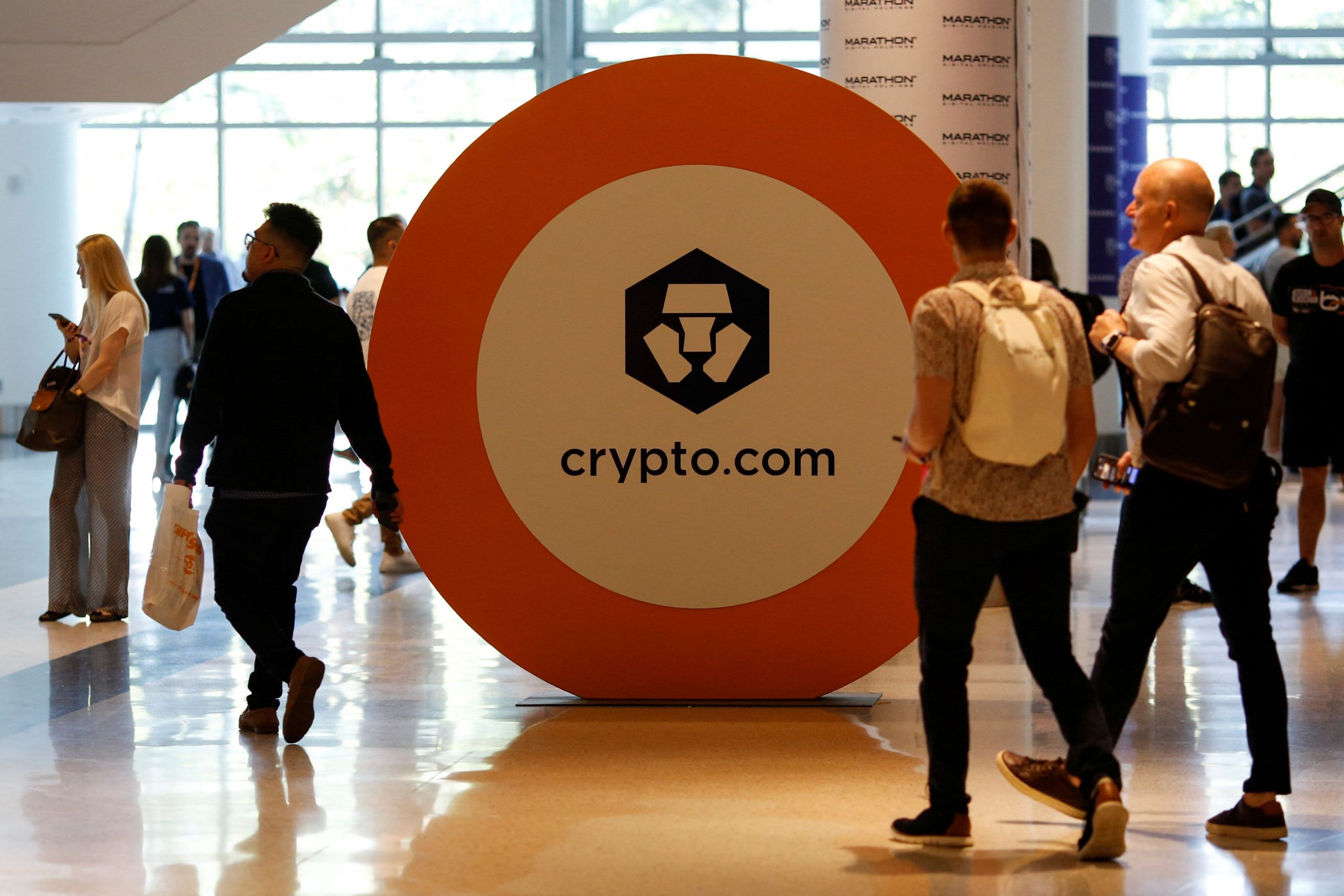
CryptoCom to Shut Its US Affiliate, Binance-US Suspends USD Trading

0

In a surprising move, Cryptocom, one of the leading cryptocurrency platforms in the world, announced that it will shut down its US affiliate by the end of this year. The decision comes amid increasing regulatory scrutiny and legal challenges from US authorities and customers. The decision comes after facing regulatory hurdles and legal challenges from various authorities in the country.

Cryptocom said that it will focus on expanding its operations in other markets where it has a stronger presence and more favorable conditions. The company also assured its existing customers in the US that they will be able to withdraw their funds and access their accounts until the closure date.

Cryptocom, which was founded in 2018 and has over 10 million users worldwide, offers a range of services such as trading, lending, staking, and payments using various digital assets. The platform also operates its own native token, CRO, which has a market capitalization of over $2 billion.

Relatively, Binance-US, one of the leading cryptocurrency exchanges in the United States, has announced that it will temporarily suspend USD deposits and withdrawals on its platform. The company cited technical issues with its banking partner as the reason for this decision. Binance-US assured its customers that their funds are safe and that they are working to resolve the problem as soon as possible. The suspension will affect both fiat and stablecoin deposits and withdrawals, but not crypto-to-crypto transactions. Binance US apologized for any inconvenience caused by this disruption and thanked its users for their patience and support.

However, the company has faced several difficulties in operating in the US market, which is one of the most regulated and competitive in the world. According to a statement from Cryptocom, the US affiliate has been unable to meet the compliance requirements and customer expectations in the country and has suffered from low profitability and high operational costs.

As a result, Cryptocom decided to cease its operations in the US and focus on other markets where it has a stronger presence and growth potential. The company said that it will provide a smooth transition for its existing US customers, who will be able to withdraw their funds and transfer their accounts to other platforms before the shutdown date.

The announcement has sparked mixed reactions from the crypto community, with some expressing disappointment and frustration over losing access to Cryptocom’s services, and others praising the company for its honesty and transparency. Some analysts also speculated that Cryptocom’s exit from the US could pave the way for other crypto exchanges and crypto infrastures to look outword for conducive and workable environment for trading crypto.

Netflix Password-Sharing Crackdown Pays Off as Company Records Surge in Subscriptions

0

American subscription video-on-demand top streaming service Netflix’s crackdown on password sharing seems to be paying off, as the company records a surge in subscriptions.

During the four days following Netflix’s announcement about limiting accounts to a single household, the company saw an increase in subscribers in the U.S., than in any other four-day period since 2019.

Reports reveal the streaming giant saw almost 100,000 daily sign-ups on both May 26 and May 27. Average daily Sign-ups reached 73k during that period, a 102% increase from the prior 60-day average. These exceeded the spikes in sign-ups Antenna observed during the initial U.S. Covid-19 lockdowns in March and April 2020.

Shares of Netflix rose over 2% on Friday morning, and have gained about 17% since the May 23rd password crackdown.

Netflix password crackdown is coming after analysts revealed that the company and other U.S. streaming video services lose about $25 billion a year in potential revenue due to password sharing.

Netflix previously turned a blind eye to password sharing because it was fueling growth. The company didn’t always have a problem with subscribers sharing their passwords.

In 2016, the company’s CEO Reed Hastings described the practice as a “positive thing”, because so many password sharers eventually got their own accounts.

However, last year it said that it was going to crack down on password sharing because it hurts its bottom line. It has previously estimated that more than 100 million households worldwide share an account.

Netflix says it has no choice but to crack down on “unpaid viewing” as subscriber growth slowed. While executives say they know the new policy isn’t popular and some people may cancel their accounts, they hope to lure them back with quality programming.

In a bid to reduce its lose on password sharing, in May 2023, Netflix officially began to crackdown on users who share passwords in the United States as it looked to increase revenue in what has become a saturated market.

Also, the company began to clamp down on password sharing in several countries earlier this year, which includes Spain, Portugal, including Canada, and New Zealand.

Netflix said in an earnings call last month that it has seen a cancel reaction in each market when it announced the news about the paid sharing option, but then it sees increased acquisition and revenue.

With the new policy, only users who are part of a Netflix Household, those who are using the same internet connection, will be able to access the account

Those who are currently borrowing a Netflix password will get an update when they try to log in that tells them how to start their own account. With the recent surge in revenue and subscriptions, Netflix obviously did not go wrong on its password crackdown idea.