DD
MM
YYYY

PAGES

DD
MM
YYYY

spot_img

PAGES

Home Blog Page 4095

Join Tekedia Investment Course Which Begins on Monday, July 3

0

Tekedia Investment and Portfolio Management program is designed to provide learners with hands-on experience in performing investment research, investing capital, and managing a portfolio. The program runs for 8 weeks and it is completely virtual. Besides some pre-recorded courseware developed by eminent capital market experts, the program includes live Zoom sessions.

In the academic component, the program prepares learners to master the institutional structure, and fundamental concepts of asset valuation, in financial markets, using analytical tools to study the valuation of different types of securities. Fundamentally, learners are equipped to understand investment theory, portfolio development and management.

In the practical laboratory component, learners evaluate existing portfolio compositions and past performances, generate new investment ideas, research new opportunities, and make recommendations, based on quantitative and qualitative analyses. Subsequently, the recommended securities are recorded, dated and later used to evaluate the efficiency of the picks (in Nigeria and US capital markets).

The next edition begins on Monday, July 3; register today  and master how to win in markets and then walk on the runway to success.

(For Tekedia Capital members, it is called “Venture Investing and Portfolio Management” and comes at no additional cost to your membership)

Shiba Inu (SHIB) And Uniswap (UNI) Latest Rival – Tradecurve (TCRV) Holds Potential For Explosive 100X Gains

0

The cryptocurrency market is a hotbed of innovation and competition, with new projects constantly emerging. Today, we will explore the rise of a new contender in the market: Tradecurve. This rising presale star poses a potential challenge to established players like Shiba Inu and Uniswap. Let’s dive into the details and understand what sets Tradecurve apart.

  • >>BUY TCRV TOKENS NOW<<

Shiba Inu (SHIB) shows red on its price charts

Shiba Inu has been a buzzworthy cryptocurrency in recent times, captivating the attention of investors worldwide. Looking closely at the Shiba Inu price analysis, we observe an intriguing market performance. Shiba Inu experienced significant volatility and price movements in the past, with notable surges and corrections.

Shiba Inu garnered attention and enthusiasm from the community, driven by its meme-inspired nature and association with the popular Dogecoin. However, in the last 24 hours, Shiba Inu has been showing red as it trades hands at $0.000007765 with a market cap of $4.5B, a drop of 1.69%.

With its trading volume also going down by 13.21% in that same period, Shiba Inu could see further price drops as the selling pressure increases.

Uniswap (UNI) could see a price increase

Uniswap (UNI) has established itself as a prominent decentralized exchange protocol within the cryptocurrency space. When analyzing its price performance, we can observe an interesting trend.

Uniswap’s price has shown significant fluctuations and volatility, influenced by market sentiment, overall market conditions, and developments within the DeFi sector. Uniswap’s value has increased by 21.1% in the last week alone. This bullish trend has continued as Uniswap currently has a value of $5.40 with a market cap of $3.1B, a jump of 1.50% overnight.

As the go-to platform for decentralized trading and liquidity provision, Uniswap has gained considerable popularity and adoption, which could cause further price increases down the line.

Tradecurve (TCRV) could see a 100x growth

While Shiba Inu and Uniswap have gained popularity in the crypto community, Tradecurve presents a new and promising alternative. The platform’s unique features focus on privacy, and advanced trading capabilities have the potential to attract a substantial user base.

Tradecurve stands out from the rest of the pack of trading platforms by offering a hybrid exchange model that combines the best centralized and decentralized platforms. This allows users to enjoy the convenience of centralized exchanges while maintaining control over their assets.

With Tradecurve, users can trade all derivatives, such as stocks, commodities, options, ETFs, bonds, cryptocurrencies, and more, on one account. Not only that, but traders can also utilize their cryptocurrency assets as collateral on Tradecurve; no fiat payments or sign-up KYC requirements are needed. Tradecurve aims to attract users who value confidentiality and anonymity by providing a secure and private trading environment.

Tradecurve offers advanced trading features that give users an edge in the market. The platform supports high leverage starting at 500:1, enabling traders to amplify their potential gains, a metaverse trading academy that connects beginners with trading professionals, access to algorithmic trading tools such as automated & AI-driven trading bots, which can help increase profitability with a simple subscription and more. By acquiring and holding TCRV, the platform’s native token, users can get savings on these subscription costs.

TCRV is now at Stage 4 of its open presale and has a value of just $0.018. However, experts have taken notice of its low market cap, which sits at $32M as the token supply is 1.8B.

They claim that TCRV has the potential to see an incredible surge faster than both Shiba Inu and Uniswap, as a lower amount of new funds will be needed. Because of this, market analysts foresee a 50x growth during its presale and a possible 100x surge following its launch and listing on a Tier-1 CEX.

Only 40% of the 1.8B token supply will be available during its presale. So, if you wish to gain governance voting rights, access to VIP status, and passive income via staking, purchase a TCRV token now by following the links below.


For more information about the Tradecurve presale:

Click Here For Website

Click Here To Buy TCRV Presale Tokens

Follow Us Twitter

Join Our Community on Telegram


Trinity Guy: From a Prankster to a Prisoner

0

There is this notorious guy that goes around causing nuisances in the guise of pranks, he is called the Trinity Guy. He is known for the trademark of always yanking off random ladies’ wigs, chasing old women to the gutter, chasing people around with machetes and sticks etc all in the name of pranks and other manners of nuisance.

Well,  he’s in jail now. A Magistrate Court sitting in Ibadan, Oyo state earlier today remanded him “ Trinity Guy’ in prison for ‘sexualizing a female minor’ in a prank video and for other dangerous, life-threatening skits.

These should set precedence and a stern warning for other skit makers and pranksters for them to know that there is a limit to everything and there is a huge difference between creating content and causing a nuisance to other people and endangering other people’s lives.

For the umpteenth time, any skit or content you will have to place the lives of others at risk to create or cause public nuisance, that’s no longer content; contents and skits ought to be risk-free, seamless, harmless and funny, but if you have to chase someone around with machete or big sticks and some of the victims falling into gutters and into pits or muds all in the name of prank and you end up recording them and posting that on social media blogs then I wonder what is funny with all that. If someone got injured, got a heart attack, or even nearly died and you found it funny, then you must be a sadist.

If you have ever watched the Trinity Guy’s post then you will know that the guy is a very dangerous person. Nobody is immune from his pranks; the aged, the sick, the underaged, the pregnant women, the hawkers, the market traders etc.

The bloggers who post and promote nuisances like these in the name of content are as well complicit; if these pranksters see that everyone frowns against and in strong terms condemn these dangerous pranks and bloggers turn down reposting them on their individual pages then they will learn to engage their time and creativity creating danger and risk-free contents.

Pranks itself is not a crime or yet to be criminalized in Nigeria but other events surrounding these dangerous contents in the disguise of the prank are criminal offenses. Like the Trinity Guy was not remanded in jail for the offense of prank, he was remanded for sexualizing a minor in one of his prank videos. He claimed to have obtained the consent of the parents of the minor before using the minor for the video, but that excuse will definitely not exculpate him.

I am so sure as I am sure of my name that numerous victims of his dangerous pranks will be willing and eager to testify against him in court and that will put him behind bars for a long time.

Central Bank of Nigeria Sets Transaction Limits For Contactless Payments in The Country

0

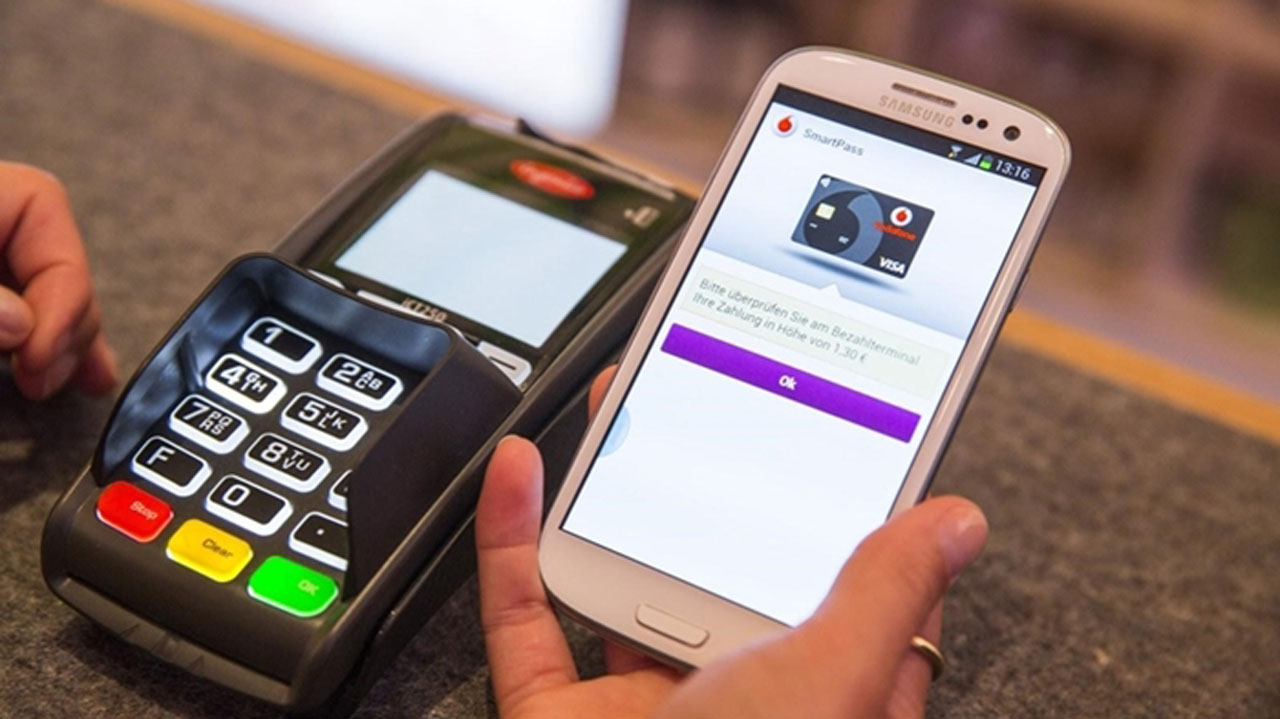
The Central Bank of Nigeria (CBN) has set transaction limits for contactless payments in Nigeria, for commercial banks and other financial institutions to adopt, in cognizance of the risks associated with contactless payments.

In a circular issued to Banks, other financial institutions, and payment service providers in Nigeria, the CBN stated that contactless payments are now limited to N15,000 per transaction and a daily cumulative limit of N50,000.  Limits above the stipulated daily cumulative limit shall be conducted using contact-based technology.

The circular signed by the Director of, Payment System Management Department, CBN, Mr. Musa Jimoh reads,

“Following the issuance of the Guidelines on Contactless Payments in Nigeria and cognizance of the risks associated with contactless payments, the Bank hereby defines transaction limits above which verification and authorization are required.

“Transaction limits for contactless payments through accounts/wallets in Nigeria shall be as follows: Transaction limit N15,000, Daily Cumulative Limit 50,000. Higher-value contactless payments are transactions that exceed the above-stated limits and shall require appropriate verification and authorization. For these transactions, existing KYC requirements and limits on the electronic payment channels shall apply”.

Contactless payment, which involves the consummation of financial transactions without physical contact between the payer and the acquiring devices, has been identified as an innovative payment option for the safe and efficient conduct of low-value and large-volume payments.

The technology enables an alternative payment method whereby payment instruments are used without physical contact with devices. This payment system offers a secure and convenient method of conducting transactions without the need for physical contact between the payment device and the payment terminal.

Examples of contactless payment instruments include prepaid, debit, and credit cards, wearable devices, tokens, and mobile electronic devices. Contactless-enabled payment terminals interact with contactless payment devices to facilitate payments.

The new transaction limits for contactless payments through accounts and wallets in Nigeria according to the CBN, are to safeguard Nigeria’s financial payment system.

In a bid to ensure that participants in contactless payments implement appropriate risk management processes and measures while keeping to the best relevant standards, the CBN has issued a 14-page Guideline for contactless payments in Nigeria.

These Guidelines provide minimum standards and requirements for the operations of contactless payments in Nigeria, as well as specify the roles and responsibilities of stakeholders involved in contactless payments in Nigeria.

All banks, financial institutions, and payment service providers are required to ensure strict compliance with the guidelines.

Check out some of the guidelines;

Acquirers

  • Only CBN-licensed institutions shall serve as acquirers for contactless payments.
  •  Acquirers who engage in contactless payments shall ensure that their applications, instruments, tokens, and devices meet current standards and specifications for contactless payments.
  • Acquirers who engage in contactless payments shall ensure that all contactless-enabled applications, instruments, and devices deployed have been duly certified to process contactless payment transactions by CBN or any authorized body.
  • Acquirers shall execute contactless payments agreements/contracts with parties for utilizing contactless platforms for payments. All agreements/contracts shall spell out the terms and conditions, including the roles, responsibilities, and rights of all parties.
  • Acquirers and processing entities shall switch all domestic contactless payments through a Nigerian switch for the purpose of seeking authorization from the relevant issuer and shall not under any circumstance route transactions outside Nigeria,

Issuers

  • Issuers whose payment instruments are used for contactless payments shall ensure that their applications, instruments, tokens, and devices meet current standards and specifications for contactless payments.
  • Issuers whose payment instruments are used for contactless payments shall ensure that these contactless-enabled applications, instruments, and devices deployed have been duly certified to be used for contactless payments by the Bank or any authorized body.
  • Issuers shall execute contactless payments agreements/contracts with parties for utilizing contactless platforms for payments. All agreements/contracts shall clearly spell out the terms and conditions, including the roles, responsibilities, and rights of all parties.
  • Issuers shall activate only accounts and wallets with Bank Verification Number (BVN) for contactless payments in Nigeria.

Payment Schemes

  • Payment schemes operating in Nigeria shall comply with these Guidelines and other relevant CB Guidelines/Circulars.
  • Payment schemes shall ensure that all contactless transactions are processed online or/and submitted via current processing specifications.
  • All payment schemes that engage in contactless payments shall ensure that the systems and schemes shall be interoperable.
  • Payment schemes shall implement a documented risk management process to identify and treat risks associated with contactless payments.

Switching Companies

  • All local switching companies in Nigeria shall ensure that contactless transactions consummated by all payment instruments issued in Nigeria are successfully switched between acquirers and issuers.
  • Switching Companies shall carry out periodic risk assessments of their processes and have the necessary measures to mitigate ML/TF/PF risks associated with contactless payments.
  • Switching Companies that process contactless payments shall ensure that there are service-level agreements executed with stakeholders meeting minimum requirements set by the Bank.

Victim Impact Statement

0

In most criminal jurisdictions of the world (if not all), it is the state (i.e. the government) that prosecutes crimes. If a crime is committed against an individual, the government steps in to prosecute that crime on behalf of the victim against the assailant, the duty of the victim during the prosecution is to testify or appear as a witness during the proceedings.

After these criminal proceedings, the victims are given the right to speak or to be heard in court and the statement rendered by the victim is called a Victim impact statement. A victim impact statement is totally different from an oral testimony rendered by the victim in court during the proceedings. The victim’s testimony is taken during the proceedings as a form of examination in chief or cross-examination but the victim’s impact statement is taken after the proceedings, during sentencing.

A victim impact statement is therefore a written or oral statement made as part of the judicial legal process which allows victims of a crime ample opportunity to speak during the sentencing of the convicted person or at subsequent parole hearing.

This is an avenue where a victim is given the chance to say whatever he had to say to the assailant; cuss out at the assailant if the victim wants to go that route and as well say whatever he needs to say to the court. The victim is at liberty to say anything even if they are relevant or not to the case; the victim can narrate how much suffering the action of the assailant has brought upon them and their family and the victim can as well tell the court what punishment they would want on the victim before they will be satisfied.

The primary purpose of the statement is to allow the person or persons most directly affected by the crime to address the court during the decision-making process i.e. during the sentencing. It gives the victim the chance to inform the court of the harm suffered by the victim so as to help in the decision-making process of the court in punishing the assailant so that a commensurate punishment will be awarded against the assailant to the satisfaction of the victim. The person making the statement is allowed to discuss specifically the direct harm or trauma they have suffered and problems that have resulted from the crime such as loss of income, loss of means of livelihood etc.

A victim impact statement is as well therapeutically and psychologically recommended to help in the healing, rehabilitation process and emotional recovery of the victim since it gives the victim ample opportunity to look the assailant in the eye and lash out or cuss out at the assailant without the fear of getting harmed again by the assailant.

When the victim is dead or the victim died as a result of the crime for instance in a crime like murder, the victim’s closest family member like the wife, or the husband, father, mother, son etc is called upon to give the victim impact statement in place of the victim.

A victim impact statement is an important part of criminal proceedings in most jurisdictions of the world like the USA, the UK, Canada etc but unfortunately, it appears it is not in practice or adopted in Nigeria. The Nigerian courts should look for a way to adopt it as well as its importance and benefits cannot be over-emphasized especially in the victim’s rehabilitation and healing process.