DD
MM
YYYY

PAGES

DD
MM
YYYY

spot_img

PAGES

Home Blog Page 4096

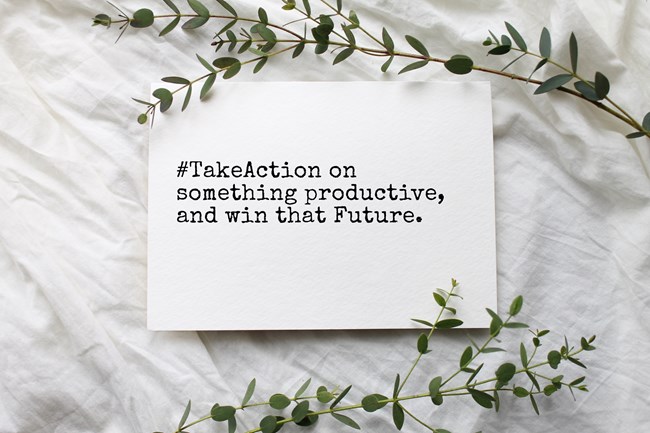
#TakeAction on something productive and win your Future

0

You underestimate how prepared you are. You underestimate how ready you are. Yes, get over that indecision and take action. Launch that company. Apply for that graduate program. Apply for that next line job. Unveil that product. Move forward, and you will be surprised at the outcome. Remember: nothing great has ever been accomplished until someone takes action. Action begins a history, and history is TIME.

The biggest victory in life is victory over your time. If you master and own your time, you will win your future. Greatness has been achieved not because of special talent but rather via total dedication, perseverance and commitment through the mastering of time. A man who cannot manage his seconds will wander through the boundless time. Time seems infinite, but time expires easily.

#TakeAction on something productive and see how it would compound. Win that Future. Good luck.

Pillars for Executing Business Vision – Tekedia Live w/ Ndubuisi Ekekwe

0

This evening, I will be teaching on Business Vision and how to execute it, focusing on catalytic pillars which can help companies win their market battles. How do you create a vision and how do you execute it?

We understand that CEOs and ExCos in firms are tasked to do one thing: commit a company to a business model, after a strategic framework. But how do you connect that business model to the business vision upon which that company was founded?

This is a two-part class: we will focus on business vision and mission today, and next week, move into business models and how to deploy winning ones in markets.

This is Tekedia Mini-MBA; more business students study here than any university in Africa. Registration for the next edition opens on Monday.

Petroleum Marketers Debunk Plan to Increase Pump Price to N700/Liter

0

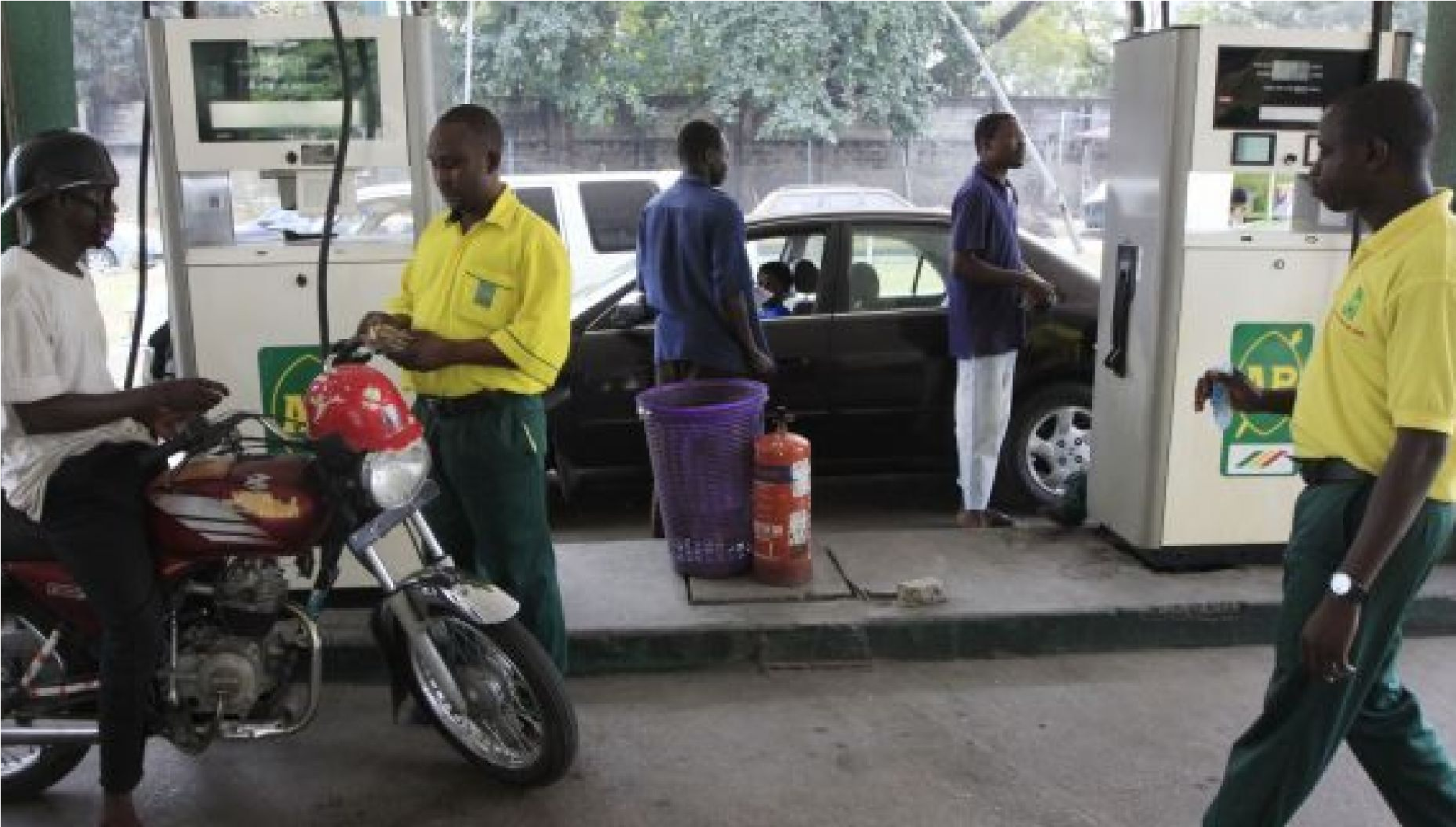
The Independent Petroleum Marketers Association of Nigeria (IPMAN) has debunked the alleged plan to increase the pump price of Premium Motor Spirit (PMS), commonly known as petrol, to N700 per liter in the country’s north and above N600 in the south.

Alhaji Dele Tajudeen, the Chairman of IPMAN Southwest Zone, clarified this matter in an interview with the News Agency of Nigeria (NAN) in Ibadan on Friday.

The projected price increase is based on the realities of the floated FX market that have resulted in a significant depreciation of the naira against the dollar. The naira has fallen up to N769/$1 in the Investor and Exporter window, fueling the belief that given the removal of fuel subsidy, the next batch of imported PMS will be based on current exchange rates.

But Tajudeen urged Nigerians to disregard such speculations and advised against participating in panic buying. He said that the current selling price of petrol would not exceed its present rate.

Furthermore, he commended President Bola Tinubu for eliminating the subsidy on petrol, stating that it was a long-overdue decision.

“Even in PIA bill, it has been clearly stated that the subsidy must be removed.
”So, I want to commend him for removing the subsidy and I want to say that we are in support totally. This is because the subsidy was a scam,” he said.

According to him, the Nigerian National Petroleum Company Limited (NNPCL) retail outlet has a market advantage that will sustain the current market prices. He said the masses should relax because the fuel prices will not rise up to N700 per liter.

“I want to disabuse the mind of the people that they should not panic about it, there is no cause for alarm, we are in control and there is nothing like that.

“So, people should be rest assured that there is no way they can buy petrol more than the price it is being sold now.

“If we look at the price from NNPC retail limited, which is an integral part of NNPC limited, they have more advantages than independent marketers and major marketers.

”So, it was the retail price that they announced they had never given a specific price to the independent marketers.

“However, I have read what somebody put into the paper, it is just speculation it is not a reality. Nothing like that I want to assure the masses.

“There is no how the price can go to N700 as we speak, because even if the FX is N700 or N800 that has not nothing to take the price of petroleum from N500 to N700,” Tajudeen said.

A coalition of Civil Society Organizations (CSOs) has vowed to resist further increment in pump prices, which upon the removal of fuel subsidy last month, jumped from N185 to as high as N557 per liter. The increment has been described as adding more nails to the coffin of suffering Nigerians.

Tajudeen said the deregulation has resulted in different pump prices, which is now determined by the cost of transportation of the products to different locations.

”If you are moving products within Lagos the price may not be more than N300,000 but if you are moving up to Ibadan or there about it could be as much as N500,000.

”And if you are going to Ilorin, it could be as high as N700,000 that would account for differential in prices.

“I want to say with all sense of authority that as of today within Lagos metropolis nobody should sell more than N515 to N520 per liter.

”Though NNPC has given us the price but the reality of it is that what we buy from the market; because NNPC limited is not the only source for our product, we get from private depots.

“So, whatever we buy is what we put our own margin and sell.

”But as of today, the highest you can get anywhere should be around N550; Lagos N510 per liter; Ogun State between N500 and N520,” Tajudeen said.

How Nations Advance, Using Strategic Subsidies To Build and Rebuild Economies

2

My social media handles are classrooms, and I like to engage as the questions come. Question: Why do you want the Nigerian government to subsidize or keep subsidizing postal service, petrol and education?

My Response: Let me begin by drawing cases from the United States (I can use any developed economy). I have lived in a red state (Alabama), blue states (MD and MA) and swing state (PA), and I have seen how cities advance. In the ranking of the top 20 American best universities, more than 80% are in blue democratic cities. Also, the largest American cities are also majorly blue cities. More so, in per capita income ranking, blue states will pick the top five while the red ones will pick the bottomn five. So, there is a statistical validation that blue states outperform economically.

So, what do blue American cities and states do? They build economic platforms faster, larger and better than their red counterparts. They have the best school systems, best transport networks, etc. With those infrastructural platforms, communities and opportunities emerge. 

Education: there will not be a generation of knowledge workers if Nigeria does not subsidize education. For all the attacks on California, with its world-class university ecosystem, innovation happens therein and everyone comes there to build the next phase of technology. Nigeria’s most important infrastructure is education. More than 70% of people reading this will not have gone to universities in Nigeria without that subsidy. In FUTO, I won multiple university scholar awards and I experienced the beauty of an amazing Nigeria, helping my education through broad subsidies and scholarships.  For me, Nigeria worked for me. Education subsidy is a catalytic infrastructure for a nation; do not remove it.

Postal service: Nigeria needs to link the urban and rural areas so that commerce can happen at scale. The postal system has a role. In the US, for the last 20 years, the US postal service has recorded losses and they’re fine with it.  If Nigeria fixes corruption, we can build a functioning NIPOST that will lose $100 million but can power a new market of $50 billion which we can tax to make $1 billion. 

Fuel: I have already explained my point here. You can add that as Europe subsidies renewable energy, and EV cars, they’re using subsidies to rebuild their economies. Nigeria’s problem is not subsidies but CORRUPTION in our subsidy execution. We must kill corruption to advance as a nation.

My Conclusion: Nigeria needs to do strategic subsidies, effectively and efficiently. We cannot be the “red states” of Africa in a time when Rwanda and South Africa are building modern platforms for their futures. America created one a few decades ago when it decided to subsidize ecommerce. Yes, when US senators voted to not burden online stores with collecting sales taxes, etc, it knew many Americans would move online, leaving physical stores which must continue to collect taxes, to fade.

That dishwasher is $1,000 and sales tax is 7%. If you buy on Amazon, you pay only $1,000 while if you go to a physical store, you pay $1,070. With free shipping, most moved online. Then, when the US government felt that those online stores had matured, they removed those subsidies, and now all stores collect the taxes! If Amazon had been left to battle the free market, it would not have succeeded! It got a lot of help along with many online stores because the US wanted to create a new sector! 

Nigeria needs to create new sectors, and subsidies are vehicles which nations use to make such happen. Ford, Tesla, GM, etc are getting huge funds as the US races to build modern infrastructure for the electric vehicle future. Intel, AMD, ADI, etc are getting massive funds from the government to rebuild their semiconductor competitiveness.


Nigeria’s Problem is Not Fuel Subsidies

NCC Empowers Telcos to Recycle SIMs Inactive for Six Months in Nigeria

0

The Nigerian Communications Commission (NCC) has announced that telecommunications companies (Telcos) are authorized to deactivate inactive subscribers from their networks after six months of inactivity.

This is a key provision outlined in the newly approved guidelines for Telcos by the NCC, which will be implemented soon.

The new NCC guidelines, titled, ‘Draft Quality of Service Business Rules’, stipulate the minimum quality and standards of service, associated measurements, and key performance indicators for measuring the quality of service.

Per the guidelines, if a subscriber remains inactive for an additional six months, there is a possibility of losing their number, unless there is a network-related issue preventing the activation of the Registered Glove Enclave (RGE).

“A subscriber’s line may be deactivated if it has not been used, within six months, for a Revenue Generating Event (RGE), and if the situation persists for another six months, the subscriber may lose their number, except for a network-related fault inhibiting an RGE,” the guidelines stipulated.

Recycling of inactive phone numbers has remained a big subject in Nigeria, following the arrest of one Anthony Okolie, a Delta State-based trader, by the Department of State Services (DSS), for using a SIM previously owned by Hanan Buhari, the president’s daughter.

Based on the new guidelines, the NCC said that telcos have the authority to reassign dormant SIM cards without recourse to the previous owners, as long as the inactivity falls within the stipulated period of six months.

For subscribers who wish to recover their lines after it might have been recycled, the commission said they must provide “proof of good reason for absence and are at liberty to request for line parking.”

In the guidelines, the NCC announced other regulations, including alert etiquette.

The commission stated that during credit alert notifications while on a call, telecommunications companies (telcos) should provide “a single short-beep” to the call initiator two minutes before the call is set to end, and another beep at 30 seconds before termination.

The NCC also said that if a call is unable to last for up to 30 seconds, a low credit announcement should be played when the call is initiated.

These new guidelines have been introduced per Section 57 of the NCC Act, allowing stakeholders to provide their input on the policy.

Additionally, the NCC directed in the guidelines, that telcos ensure that customers are attended to within 30 minutes upon their arrival at any of the telcos’ service centers nationwide.

“For customer care centers, waiting time to be physically attended to by relevant staff at customer care centers is 30 minutes. The licensee shall provide means of measuring the waiting time, starting from the time of arrival at the premises,” the guideline said.

The commission also said telcos must ensure that customers are hastily attended to when they call a helpline or visit their providers’ offices.

“Lines should not be more than three times; maximum number of rings before a call is answered by either an IVR machine or a live agent should not be more than five; and where a customer decides to speak to a live agent, the maximum duration allowable on the queue/IVR should be five minutes before answer,” the NCC said.

The regulator added: “In exceptional cases where a live agent may be unavailable within five minutes to answer the call, a customer should be given an option to hang up to be called back within a maximum time of 30 minutes. Customer care lines that can be accessible through 21 free access numbers and if one number, then it should accommodate multiple other network calls at the same time.”