
DD
MM
YYYY

PAGES

DD
MM
YYYY

spot_img

PAGES

Home Blog Page 4110

How To Acquire an Alcohol / Liquor Business License in Nigeria

0

The business of manufacturing and selling alcoholic/liquor brands in Nigeria is no doubt profitable but subject to struct licensing regulations which will form the focus of this article, particularly with respect to:-

– The regulatory framework governing liquor business licenses.

– The procedure for procuring a liquor business license

– The validity of a liquor business license

Which regulatory agency is in charge of liquor business licensing in Nigeria?

The licensing of liquor production and selling is subject to the Liquor Act, the liquor licensing laws and subsidiary liquor licensing regulations of various states in Nigeria and with respect to liquor selling, through the local government of where the liquor business is to be physically located.

What is the validity of an alcoholic beverages business license in Nigeria?

Alcohol/liquor business licenses are valid for a period of 5 years.

What are the documentary requirements for procuring a liquor license in Nigeria?

– A covering letter detailing the operational mode of the applicant

– A completed application form

– A Certificate of Incorporation and certified true copies of shareholder and director information of the applicant

– Proof of advertisement on in a government gazette 

– Certified copies of valid means of identification for shareholders of the applicant company

– Copies of work and residence permits for foreign staff of the applicant company

– A detailed listing of alcoholic beverages to be served by the business

– Copies of valid environmental health reports upon inspection of the applicant’s business premises

What is the procedure for procuring an alcohol/liquor sales license in Nigeria?

– An application form for the license must be obtained from the relevant department of the Local Government having jurisdiction over the location of the alcohol business.

– This application form is to be filled and submitted along with the proof of payment of the prescribed application fee.

– A processing of the application will commence taking into consideration the following :-

  • The suitability or the premises where the liquor business is to be located.
  • The applicant’s character.
  • An estimation of the number of people to be served by the business.
  • Whether the license is required for public convenience

What are the regulatory requirements for foreign manufacturers of alcoholic beverage brands wishing to operate in Nigeria?

– Foreign businesses engaged in the manufactur of alcoholic beverages must be represented by a duly registered Nigerian company or person capable of recalling products.

– There must be presented as well, a certificate of manufacture and sale issued by a competent health authority, verified by the Nigerian embassy in the country of origin.

– A certificate if trademark registration of the alcoholic brand to be sold by the importer/Nigerian representative of the foreign manufacturer.

– An importation permit

– A certificate of product analysis issued by the Manufacturer 

– The Nigerian representative/importer representative of the foreign manufacturer must have and present from the manufacturer, a power of attorney establishing him as such.

What is the procedure for obtaining produce certification for alcoholic liquor brands?

This involves applying for certification of each liquor product via a registration code to the National Agency For Food and Drug Administration and Control (NAFDAC). Please consult your lawyer on the applicable procedure involved. 
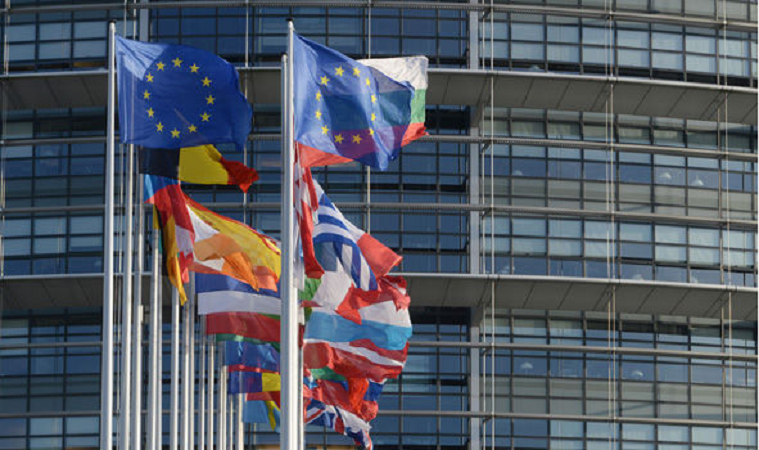
The EU Unveils A Set of New Rules to Curtail the Influence of Big Tech Firms

0

In its effort to rein in the influence of Big Tech, the European Union (EU) has introduced a series of groundbreaking regulations aimed at curbing the dominance of six major tech companies.

These regulations include granting consumers the authority to choose the applications they wish to have on their mobile phones and the ability to uninstall pre-installed software, such as Google or Apple’s map applications.

A commission official said the rules “mark a revolutionary step.” Brussels envisions these laws as a means to foster increased competition, paving the way for startups to vie with industry giants on a more equitable footing for the very first time.

The Guardian noted in a report that these new laws will also clear the path for heightened competition in sectors that have been traditionally tightly controlled by tech giants, such as Apple Wallet and Google Pay.

The rules, which came under the Digital Markets Act (DMA), represent the second major set of EU laws targeting tech companies within two months. They define a set of responsibilities that gatekeepers must adhere to, including refraining from engaging in anti-competitive practices.

The EU has been on a pace-setting regulatory expedition to rein in the excesses of Big Tech across the bloc. This has resulted in several changes to existing rules and new also new regulations.

The DMA comes after the implementation of the Digital Services Act, which became effective on August 25th.

The Digital Services Act is designed to combat online hate speech, child sexual abuse, and disinformation, representing the initial set of laws ever introduced to regulate online content.

The objective of the DMA is to dismantle the gatekeeper or dominant positions that large tech companies have held for the past decade. It grants the European Commission the authority to conduct market assessments and propose corrective measures should these firms deviate from the established regulations.

According to an official quoted by The Guardian, these regulations are poised to free both consumers and businesses, especially startups that have encountered technical obstacles when trying to access platforms and connect with users.

“For example, now when a consumer sees an app doesn’t do well on their phone, they think immediately it is the app that is not really good. Very often it is not because the challenger app is bad, but because the interoperability is missing because it is in the interest of the gatekeeper to make sure the experience is not the same,” the official said.

The tech giants, including Apple, Google, and Amazon, must adhere to a comprehensive set of regulations within the next six months. Failure to comply could result in fines of up to 10% of their annual turnover.

One notable change is that pre-installed apps on phones, such as weather, maps, calculator, and email apps, which have traditionally been challenging to remove, will no longer be allowed to remain unremovable.

Additionally, these major tech firms will be prohibited from monetizing user information collected from apps on a phone. This means they cannot use the data they gather from mobile applications to create highly detailed profiles of individual consumer behavior for advertising purposes.

The laws will initially apply to six companies: Alphabet, Amazon, Apple, ByteDance, Meta and Microsoft. Under the new rules, the services offered by the subsidiaries of the tech conglomerates, have also been designated for regulation. These include WhatsApp, Messenger, TikTok, Facebook, Amazon, Google, Chrome, Safari, Google Maps, Google Pay and Google Shopping.

Officials also provided examples of the regulations governing payment systems on Apple and Android phones. Although consumers have the option to use alternatives like bank cards, the existing “gatekeeping” practices may currently hinder startups from offering genuinely innovative services that could otherwise thrive. These new regulations aim to level the playing field and foster innovation in the payment sector.

The European commissioner Thierry Breton, overseeing the new digital services, described the new legislation as D-day for the large players, warning that they will now “have to play by our rules – European rules”.

Nigeria Telecom Regulator To Prosecute Loan Apps, Telemarketers over Illegal Use of Phone Numbers

0

The Nigerian Communications Commission (NCC) has issued a strong warning to both loan app companies and telemarketers regarding their unauthorized use of individuals’ phone numbers for commercial purposes.

In a public notice issued on Thursday, the Commission stated that individuals found engaged in such activities would face arrest and prosecution.

The warning has come in the wake of incessant harassment of subscribers by loan sharks, which has failed to die down despite efforts by regulators.

Loan sharks require access to the phone contacts of borrowers and begin to call and text the numbers in case of default.

The NCC said in a statement posted on its website that utilizing individuals’ phone numbers without their explicit consent is considered a violation of privacy. Furthermore, the telecom regulator clarified that telemarketers falsely asserting that they obtained these numbers from the NCC or the national database of registered SIMs are making inaccurate claims.

The statement reads: “The attention of the Nigerian Communications Commission (NCC) has been drawn to the criminal activities of telemarketers who illegally access the telephone numbers of telecom subscribers for their commercial activities and gains.

“These telemarketers also falsely claim that they obtain telecom consumers’ phone numbers from the Nigerian Communications Commission. Otherwise, they claim that the Commission gave them access to the numbers through the Subscriber ldentity Module (SIM) Registration Database. These claims are not true.

“The Commission fully abides by the principles and rules guiding the protection of privacy as a right of all consumers and users of telecommunications services.

“Therefore, no service provider or telemarketer is authorized to invade, harvest, or use subscriber data in any form or guise without the express approval of the consumer, except otherwise provided by law.

“The protection of the data of telecom subscribers by the Commission is guaranteed in Section 35 (1) of the Consumer Code of Practice Regulations, 2007; Section 9 (1) of the Nigerian Communications (Registration of Communications Subscribers) Regulations, 2022; and Section 4.2 (a) &< (b) of the NCC’s Internet Code of Practice.

“Therefore, any telemarketer involved in harvesting telecom subscribers’ phone numbers and other personal details through dishonest means and using such for commercial purposes without regulatory approval is hereby strongly warned to desist from this illegal act, as anyone found guilty shall be arrested and prosecuted in keeping with the law.”

The Commission has urged telecom subscribers to utilize the Do-Not-Disturb (DND) Short Code, introduced by the NCC for managing their subscriptions to Value Added Services. This service provides the option to stop unsolicited text messages and other telemarketing offers.

To activate full DND, subscribers can send ‘STOP’ to the Short Code 2442.

Furthermore, the NCC has encouraged telecom consumers who come across such illicit activities by telemarketers to report such instances to the Commission. This can be done by calling the NCC Toll-Free Number 622, and necessary enforcement actions will be taken.

“Despair is Not An Option”, Peter Obi Urges Supporters to Keep Hope Alive Following PEPT Judgment

0

The presidential candidate of the Labour Party (LP) Peter Obi, has issued a message of hope to “Obidients” and all his supporters, following the judgment of the Presidential Election Petition Tribunal (PEPT) on Wednesday.

In a message titled: “DESPAIR IS NOT AN OPTION”, shared on X on Friday, the former Anambra State governor urged his supporters to keep hope alive despite the “general despair” emanating from the tribunal’s judgment.

The PEPT, in its judgment, quashed all the charges challenging President Bola Tinubu, upholding his controversial election victory. However, a large section of Nigerians, especially supporters of Obi known as Obidients, had described the judgment as a miscarriage of justice.

Although the LP and Obi have moved to appeal the ruling, many of his supporters have been calling for protest.

However, in his message, Obi said that the dream of a new Nigeria has only been deferred for now by the judgment, but remains alive for all times.

“Today, I want to personally reach out and encourage you all to keep hope alive. Considering the challenges that lie ahead of us as a movement, despair is not an option. Nothing good in life comes easy,” he said.

The two-term former governor said in the journey to actualize “Nigeria of dream” despair or surrender is not an option.

“We set out knowing fully well that the forces we are up against are entrenched and formidable but not insurmountable. They would resist the wind of change and try to push us into surrender or despair. We must not succumb to their design,” he said.

Read his full message below:

My Dear Obidient Family and Supporters,

I trust that you all have listened to, or read my reaction to the judgment delivered by the Presidential Election Petition Court (PEPC) on Wednesday, 6th September 2023.

Understandably, there has been a note of general disappointment within our fold and indeed the general population of Nigerians who hoped that the outcome of the February 25th Presidential election would usher in a new and different Nigeria of our dreams.

That dream has only been deferred for now but remains alive for all times. Since the Tribunal verdict, there has been a note of general despair among the Obidients and the generality of our supporters. I assure you all that on this journey, despair or surrender is not in our options.

Today, I want to personally reach out and encourage you all to keep hope alive. Considering the challenges that lie ahead of us as a movement, despair is not an option.

Nothing good in life comes easy. Throughout history, positive changes come only with sacrifices, perseverance, resilience, and fluctuating fortunes. Right from the onset of our journey, I told you all that the journey upon which we were about to embark was not a short sprint, but a long and tough marathon. It was always going to be difficult, painful, and excruciating.

We set out knowing fully well that the forces we are up against are entrenched and formidable but not insurmountable. They would resist the wind of change and try to push us into surrender or despair. We must not succumb to their design.

I am inspired that we have endured the odds placed in our way at every point. In such a short space of time, we have persevered to get to the point where we cannot be ignored any longer. Therefore, I urge you to abide and never think of giving up.

I wish to assure you that our recent disappointments have inspired me to re-dedicate myself to the cause of building a New Nigeria. For me, rescuing Nigeria is a lifelong commitment, and on this journey, we shall be resolute but orderly, principled but lawful.

I assure you that we shall persist with even greater determination and zeal until we get to our destination. Nigeria must belong to all Nigerians and not to a select few.

Like all of you, I believe fervently that a New Nigeria is POssible. God bless you all and God bless Nigeria.

South African Energy Startup Wetility Raises $48M to Accelerate Growth

0
Fund, money cash dollar

Wetility, a South African Solar fintech company that offers solar energy solutions to households and businesses, has announced the raise of R903 million, approximately $48 million to accelerate its growth.

The fundraising comprises R180 million in convertible debt as well as total debt, including a R600 million commercial debt package from Sanlam, a diversified financial services company headquartered in South Africa, and large commercial and development banks.

Reports reveal that Wetility’s first venture debt funding was led by Multichoice via its accelerators program which is part of the Multichoice innovation fund in January 2022.

According to the CEO of Wetility, Vincent Maposa, he said the current funds raised will be used to accelerate the startup’s expansion plans and grow its customer base in South Africa.

Also speaking on the funds raised, Chief of Staff at Wetility, Johanna Hortz said,

“Our recent fundraising is a pivotal moment for Wetility. It is a testament to the trust and confidence our customers, investors, and commercial partners have in our vision. The capital infusion provides us with the means to accelerate our growth and make a substantial impact in South Africa and power the Fintech space”.

Founded in 2019, Wetility flagship product is an all-encompassing digital solar energy management system that allows users to remotely manage power usage. The energy company harnesses the sun’s power to give customers hybrid energy solutions that work together with their power systems.

Wetility also provides customers with a personalized 360 Wetility experience, allowing them to interact, connect, and grow as they need to, when they need to.

PACE is the heartbeat of the Wetility solar solution, consisting of a hybrid inverter, lithium-ion batteries, and switchgear. PACE is intelligently designed to control the energy flow to used homes or businesses and manages load shedding and switching schedules. PACE is powered by the startup’s rooftop PV installations with an offering of 10 10-year warranty.

Wetility is backed by notable partners such as Standard Bank, Sunflower Energy Africa, The Innovation Hub, Sasfin, NBI, Investec, Experian, Multichoice, and Instructured Capital Solutions.

Unlike other providers, Wetility offers unique financing solutions such as monthly payment schemes, tapping into a market segment of consumers who were otherwise unable or hesitant to invest in solar equipment upfront.

The company has achieved this unique financing model through strategic partnerships with a number of South Africa-based enterprises. Wetility’s energy strategies are poised to play a key role in achieving sustainability and energy stabilization in the long run.