DD
MM
YYYY

PAGES

DD
MM
YYYY

spot_img

PAGES

Home Blog Page 4114

Nigerian Company WATT Secures $13M to Advance Renewable Projects Across Nigeria

0
Fund, money cash dollar

A Nigerian renewable company that specializes in hybrid solar energy solutions and is dedicated to reducing carbon footprint through innovative technologies, WATT, has announced the raise of $13 million in funding.

The funding was raised by a Norwegian renewable energy investment firm, Empower New Energy, a startup that provides finance and co-development for small and medium-sized solar power plants across Africa.

WATT disclosed that the funds will be used to improve its portfolio, adding an impressive 8MW of installed generating capacity and 14.3MWh of storage capacity through end-to-end services and operation of towers in Nigeria.

The startup also added that the funding received will go a long way to make a substantial impact on the availability and reliability of clean energy in the region and reduce the consumption of diesel at approximately 3,000,000 liters per year, which translates to about 7,039 metric tons of CO2 emissions avoided annually.

Speaking on the funds raised, Chief Executive of WATT, Mr Oluwole Eweje said,

“This funding injection will play a pivotal role in furthering our mission, and we are immensely grateful to Empower New Energy for their trust and support. With this funding, we are well-positioned to continue serving the telecoms industry with reliable, sustainable energy solutions.

WATT is excited to embark on this transformative journey with the support of Empower New Energy. Together, we will accelerate the transition to clean energy sources, benefiting not only Nigeria but the entire region”.

WATT Renewable Corporation is an independently owned sustainable development company delivering hybrid solar solutions with social impact to telcos, mobile network operators, financial service providers, and C&I businesses in Africa.

In just five years, the company has established an impressive portfolio of hybrid solar storage projects that are not only improving connectivity and uptime for the telecommunications and financial services industries but also bringing a reliable, affordable source of power to underserved communities. 

Through its turnkey sustainable Energy-as-a-Service model, WATT increases power reliability to 99.9% while providing local communities access to a sustainable source of power, improving business energy security, reducing costs and carbon emissions, and supporting economic and social development to achieve a just transition.

It would be recalled that in June this year, WATT announced plans to raise $100 million by the end of 2024 to deliver a 100MW pipeline of hybrid solar storage projects in Nigeria.  

The company is seeking investors that can accelerate its journey to become one of the most notable solar providers in Africa.

Its goal is to design, build, own, and operate (DBOOM) renewable energy (RE) projects through solar, wind, and biomass generation.

WATT believes that power generation through utilizing renewable sources is critical to sustainable development in emerging countries.

By using clean renewable sources, it will allow for an increase in consistent access to power and reduce the use of other harmful resources that have contributed to poor air quality, and deforestation.

‘It Doesn’t Make Sense’ – Presidency Responds to Tinubu’s CSU Certificate Saga

0

The Presidency, in response to the controversy surrounding the certificate submitted by President Bola Tinubu to the Independent National Electoral Commission (INEC), has asserted that the certificate is authentic and not forged.

The controversy surrounding Tinubu’s certificate from Chicago State University (CSU) was blown out of proportion on Tuesday after the university confirmed that it did not issue the certificate.

As the resulting backlash accelerated, the presidency issued a statement to debunk the allegation.

Temitope Ajayi, the Senior Special Assistant on Media and Publicity to the President said that the CSU confirmed the authenticity of President Bola Tinubu’s certificate submitted to INEC.

Ajayi emphasized that the CSU had affirmed, under oath, that Tinubu attended and graduated from the institution. Furthermore, the CSU stated that they do not handle replacements for lost certificates.

This response aims to dispel any doubts regarding the authenticity of the certificate and underscores that the allegations of forgery are baseless. Ajayi’s statement also highlights the implausibility of forging a certificate that one already possesses.

“We should be clear. In the deposition made by the Chicago State University, there was nowhere the University said the certificate presented to INEC by President Tinubu is fake,” he said in a post on X.

“The University insisted under oath that President Tinubu graduated with honors and even at that, replacements for lost certificates are done by vendors, not the University.

“The claim that President Tinubu submitted fake certificate to INEC does not make sense. A man can not forge the academic records he possesses. You can only forge what you don’t have.”

Federal District Judge Nancy Maldonado had issued an order for the release of Tinubu’s academic record, following an August 2 lawsuit filed by former Nigeria’s Vice President Atiku Abubakar, seeking to compel the CSU to make the president’s academic credentials public.

The CSU admitted under sworn deposition that the certificate Tinubu submitted to Nigeria’s electoral commission in June 2022, as part of his paperwork for the presidential election contest, did not come from them.

The development has generated a lot of faux, including calls for Tinubu, who was controversially declared winner of the February 25 presidential election by INEC, to be disqualified.

The outcome of the presidential election is still being challenged, currently at the Supreme Court, by Atiku and Peter Obi, Tinubu’s major opponents at the election.

Nigeria’s Presidential Election Petition Tribunal in early September, dismissed the allegation of certificate forgery filed Atiku. The release of Tinubu’s Chicago State University record is expected to bring a fresh critical bearing on the case, as the constitution stipulates forgery as a ground for disqualification of any political office holder.

India to launch a Worldwide Database of Crypto exchanges

0

India is set to launch a global database of cryptocurrency exchanges by the end of 2023, according to a report by The Economic Times. The database will aim to provide information on the legal status, regulatory compliance, tax obligations, and security measures of crypto exchanges operating in different jurisdictions.

A crypto exchange database is a platform that collects and verifies data from various sources, such as exchange websites, APIs, social media, news outlets, and third-party auditors. The database can then display this data in a user-friendly and accessible way, allowing users to compare and evaluate different exchanges based on various criteria, such as fees, liquidity, security, customer service, and reputation.

The initiative is part of India’s efforts to regulate the crypto industry and prevent money laundering, terrorism financing, and tax evasion through digital assets. The database will also help Indian authorities to monitor the cross-border flows of crypto transactions and enforce anti-money laundering (AML) and counter-terrorism financing (CTF) rules.

The crypto industry is constantly evolving and innovating, but it also faces challenges such as regulatory uncertainty, security breaches, and lack of trust. One way to address these issues is to create a database of crypto exchanges that can provide reliable and transparent information about their operations, compliance, and performance.

A crypto exchange database can benefit both the crypto industry and the general public in several ways. For the crypto industry, a database can help improve its credibility and legitimacy by demonstrating its adherence to best practices and standards. A database can also help foster collaboration and innovation among exchanges by facilitating information sharing and benchmarking. For the general public, a database can help increase awareness and education about the crypto space by providing objective and factual information. A database can also help empower users to make informed and responsible decisions when choosing an exchange to trade or invest in.

A crypto exchange database is not a new concept, but it is still in its early stages of development. There are already some initiatives that aim to create such a database, such as CryptoCompare, Nomics, CoinGecko, and Messari. However, there is still room for improvement and expansion, especially in terms of data quality, coverage, and standardization. A crypto exchange database should strive to be comprehensive, accurate, consistent, and up to date, as well as to adhere to ethical and legal principles.

A crypto exchange database is a valuable tool that can boost transparency and trust in the crypto industry. By providing reliable and relevant information, a database can help users make better choices and exchanges improve their services. A database can also help promote the growth and development of the crypto ecosystem by enhancing its reputation and attractiveness.

According to the report, the database will be developed by the Reserve Bank of India (RBI), the central bank of the country, in collaboration with other government agencies and international organizations. The RBI will also consult with crypto industry stakeholders and experts to ensure that the database is comprehensive and accurate.

The database will be accessible to the public and will provide ratings and rankings of crypto exchanges based on various criteria, such as legal recognition, regulatory framework, tax regime, security standards, customer protection, and transparency. The database will also include a list of banned or restricted crypto exchanges in different countries.

The launch of the database is expected to boost the confidence and trust of investors, traders, and users in the crypto industry, as well as foster innovation and growth in the sector. The database will also help India to position itself as a leader in the global crypto space and attract more foreign investment and talent.

Why investing in Africa makes Business Sense

0
A detached three-bedroom apartments are pictured at Haggai Estate, Redeption Camp on Lagos Ibadan highway in Ogun State, southwest Nigeria on August, 30, 2012. The high cost of living and the massive urbanization of Lagos, the largest city and the economic capital of Nigeria, has engineered a migration of residents mostly middle class and the poor to neighbouring towns in Ogun State, both in southwest part of the country in search of cheap accommodations. Estate developers are quick in exploiting the high cost and scarcity of accommodation leading to emerging new towns, modern estates to accommodate the spillover in Lagos. AFP PHOTO/PIUS UTOMI EKPEI (Photo credit should read PIUS UTOMI EKPEI/AFP/GettyImages)

Africa is a continent of immense potential and opportunities. It is home to 1.3 billion people, 60% of whom are under the age of 25, and has a fast-growing middle class that is expected to reach 1.1 billion by 2060. Africa also has abundant natural resources, a diverse cultural heritage, and a vibrant entrepreneurial spirit.

But Africa is also facing many challenges, such as poverty, inequality, conflict, climate change, and poor infrastructure. These challenges create both risks and opportunities for investors who are willing to look beyond the stereotypes and see the potential of the continent.

Investing in Africa is not only a moral imperative, but also a smart business decision. According to the World Bank, Africa’s GDP growth rate is projected to rebound to 3.4% in 2021, after contracting by 2.1% in 2020 due to the COVID-19 pandemic. This is higher than the global average of 2.9%. Africa also offers access to a large and growing consumer market, with a projected spending power of $2.5 trillion by 2030.

Moreover, investing in Africa can have positive social and environmental impacts, as well as financial returns. By supporting sectors such as renewable energy, agriculture, health, education, and digital innovation, investors can help create jobs, improve livelihoods, reduce emissions, and foster inclusive development.

There are many examples of successful investments in Africa that have generated both profits and impact. For instance, M-KOPA, an African fintech platform that provides digital financial services to underbanked consumers to low-income households, has raised about $245 million from investors such as Generation Investment Management and LGT Venture Philanthropy. M-KOPA  has reached over three million customers across Kenya, Ghana, Uganda, and Nigeria, and has created over 10,000 jobs.

Another example is Jumia, an e-commerce platform that operates in 14 African countries. Jumia has raised over $1 billion from investors such as Goldman Sachs and MTN Group and became the first African tech company to list on the New York Stock Exchange in 2019. Jumia has over 6.8 million active customers and offers a range of products and services, from fashion and electronics to food delivery and travel.

These are just two of the many stories that illustrate the potential of investing in Africa. Of course, investing in Africa is not without challenges and risks. Investors need to do their due diligence, understand the local context and regulations, build trust and partnerships with local stakeholders, and adopt a long-term perspective.

What are the risks investing in Africa?

Political risk: One of the most prominent risks in Africa is political instability and uncertainty. Many African countries have experienced civil wars, coups, ethnic conflicts, and authoritarian regimes that have undermined the rule of law, governance, and human rights. These factors can affect the security of investments, the enforceability of contracts, the protection of property rights, and the transparency of regulations.

Moreover, some African countries have weak or corrupt institutions that can hamper the business environment and create barriers to entry and exit. Investors should conduct thorough due diligence on the political situation and legal framework of their target markets and seek local partners who can help them navigate the complexities and risks.

Economic risk: Another major risk in Africa is economic volatility and vulnerability. Many African economies are dependent on commodities exports, which makes them susceptible to fluctuations in global prices and demand. For example, the recent slump in oil prices has severely affected the revenues and fiscal balances of oil-producing countries such as Nigeria, Angola, and Algeria.

Furthermore, some African countries have high levels of debt, inflation, and currency depreciation that can erode the profitability and competitiveness of investments. Investors should diversify their portfolios across different sectors and regions and hedge against currency and inflation risks.

Social risk: A third risk in Africa is social unrest and conflict. Africa has a diverse and heterogeneous population with different cultures, languages, religions, and ethnicities. This diversity can be a source of richness and innovation, but also of tension and violence. Some African countries have witnessed social protests, strikes, riots, and insurgencies that have disrupted economic activity and threatened social cohesion.

These events can be triggered by various factors such as poverty, inequality, unemployment, corruption, human rights violations, environmental degradation, or political grievances. Investors should monitor the social climate and engage with local communities and stakeholders to understand their needs and expectations and to contribute to their development and well-being.

But the rewards can be worth it. Investing in Africa can offer attractive returns, diversify portfolios, and contribute to the sustainable development of the continent. As former UN Secretary-General Kofi Annan once said: “Africa is not a problem to be solved but an opportunity to be seized.”

SEC sending feedback and holding private meetings with applicants regarding their ETF Filings

0

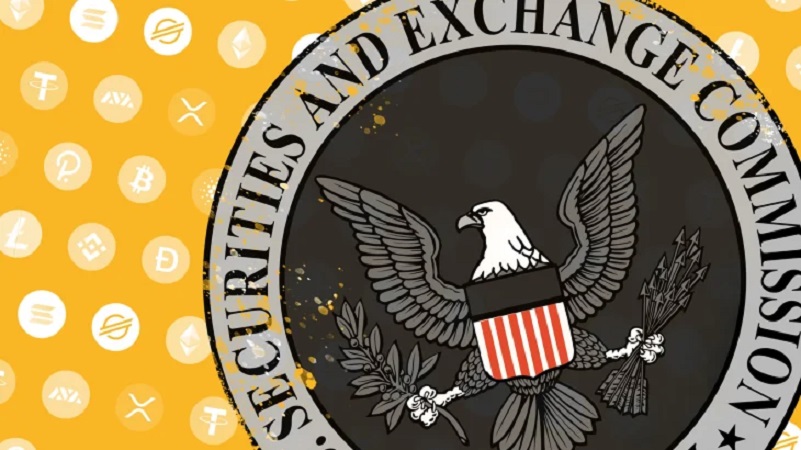
The U.S. Securities and Exchange Commission (SEC) is reportedly in active discussions with several companies that have filed applications for a spot Bitcoin exchange-traded fund (ETF). According to Bloomberg, the SEC has been sending feedback and holding private meetings with applicants to address some of the concerns and challenges that have prevented the approval of a Bitcoin ETF so far.

A spot Bitcoin ETF would track the price of the underlying asset directly, unlike futures-based ETFs that track contracts that bet on the future price of Bitcoin. Many investors and experts believe that a spot Bitcoin ETF would be more beneficial for the crypto market, as it would provide more exposure, liquidity and transparency.

However, the SEC has been reluctant to approve a spot Bitcoin ETF, citing issues such as market manipulation, custody, valuation and investor protection. The regulator has repeatedly delayed or rejected applications for a spot Bitcoin ETF, while approving several futures-based ETFs in October.

The Bloomberg report suggests that the SEC is not completely opposed to a spot Bitcoin ETF, but rather wants to ensure that the applicants meet the high standards and requirements that the regulator has set. The report also indicates that the SEC is open to dialogue and feedback from the applicants, and that some of the issues could be resolved in the near future.

Some of the companies that have filed for a spot Bitcoin ETF include VanEck, WisdomTree, NYDIG, Valkyrie and Bitwise. These companies have been waiting for months or even years for a response from the SEC, and some of them have expressed frustration and disappointment with the regulator’s approach.

However, the Bloomberg report could signal a positive development for the prospects of a spot Bitcoin ETF in the U.S., as it shows that the SEC is actively engaging with the applicants and not dismissing their proposals outright. While there is no guarantee that the SEC will approve a spot Bitcoin ETF anytime soon, the report could boost the hopes and expectations of the crypto industry and investors.

SEC asks judge to deny Coinbase motion to dismiss its lawsuit

The Securities and Exchange Commission (SEC) has filed a motion to oppose Coinbase’s request to dismiss the lawsuit that the agency brought against the cryptocurrency exchange in September 2021. The SEC claims that Coinbase violated federal securities laws by offering a lending program that involved digital assets.

The lawsuit stems from Coinbase’s announcement of a product called Lend, which would allow users to earn interest on their crypto holdings by lending them to other users. The SEC alleges that Lend involved the sale of unregistered securities, namely the contracts that promised interest payments. The SEC also accuses Coinbase of failing to disclose material information about the risks and rewards of the program, as well as the identity and qualifications of the borrowers.

Coinbase, on the other hand, argues that Lend did not involve securities, but rather simple loans that were fully collateralized and subject to consumer protection laws. Coinbase also asserts that it cooperated with the SEC and sought guidance from the agency before launching the product but received no clear answer. Coinbase claims that the SEC’s lawsuit is an attempt to stifle innovation and competition in the crypto industry, and that it violates due process and fair notice principles.

In its motion to dismiss, Coinbase contends that the SEC has failed to state a plausible claim for relief, and that the court should dismiss the lawsuit for lack of jurisdiction and failure to state a claim. Coinbase also requests that the court grant it leave to amend its complaint if the motion is denied.

The SEC’s opposition motion, filed on October 3, 2023, challenges Coinbase’s arguments and asks the court to deny the motion to dismiss. The SEC maintains that Lend involved securities, and that Coinbase did not comply with the registration and disclosure requirements of the securities laws. The SEC also disputes Coinbase’s allegations of cooperation and lack of clarity and asserts that it has jurisdiction and authority to enforce the securities laws against Coinbase.

The motion is now pending before Judge Richard Seeborg of the U.S. District Court for the Northern District of California. The court has scheduled a hearing on the motion for November 15, 2023. The outcome of the motion could have significant implications for the future of crypto lending and regulation in the U.S.