DD
MM
YYYY

PAGES

DD
MM
YYYY

spot_img

PAGES

Home Blog Page 4115

How Crypto Community Shapes the Efficiency of Scorpion Casino Token, Polkadot, and Bitcoin Blockchains

0

Blockchain technology aims to provide decentralized and secure solutions for transactions and data management within the crypto community. The efficiency of blockchains is paramount in determining the effectiveness and usability of digital assets. In this article, we delve into an analysis and comparison of the blockchain efficiency of Scorpion Casino Token, Polkadot, and Bitcoin. We explore various factors that contribute to their overall performance and usability, shedding light on their respective strengths in delivering efficient blockchain solutions.

Scorpion Casino Token: Democratizing the Online Betting and Crypto Community

Scorpion Casino Token aims to disrupt the online betting and crypto community by removing barriers to entry and providing users with a seamless and rewarding gaming experience. With its decentralized nature, Scorpion Casino Token leverages blockchain technology to ensure transparency and fairness in online gambling. By utilizing smart contracts and the SCORP token, users can engage in various gaming activities, earn passive income through staking, and participate in an affiliate reward system.

Polkadot: Enhancing Interoperability and Scalability

Polkadot, on the other hand, focuses on enhancing interoperability and scalability in the blockchain space. As a multichain network, Polkadot allows different blockchains to operate in parallel, enabling seamless communication and data transfer between them. This interoperability promotes efficiency and enables developers to create customized blockchains tailored to specific use cases. Additionally, the community’s involvement in governance and consensus mechanisms ensures that decisions are made collectively, reflecting the diverse needs and perspectives of participants.

Cryptocurrency Leader and Pioneer: Bitcoin

Much like Polkadot, Bitcoin’s community plays a crucial role in addressing the scalability challenges faced by its blockchain. Through active participation and engagement, community members contribute to the development and implementation of solutions such as layer 2 protocols like the Lightning Network. These innovations aim to enhance transaction speed, reduce fees, and improve the overall efficiency of the Bitcoin blockchain. Additionally, the community’s continuous support, research, and advocacy for scalability solutions foster a collaborative environment, encouraging the exploration of new ideas to optimize Bitcoin’s blockchain efficiency.

The Efficiency of Scorpion Casino Token, Polkadot, and Bitcoin Blockchains

When evaluating blockchain efficiency, several key factors come into play: transaction speed, scalability, energy consumption, and smart contract functionality.

Transaction Speed and Scalability: Polkadot vs. Scorpion Casino Token

Polkadot’s sharding technology significantly improves transaction speed and scalability by dividing the network into multiple shards. On the other hand, Scorpion Casino Token’s blockchain focuses on providing a seamless gambling experience, prioritizing the efficiency of gaming transactions rather than high transaction volumes. Therefore, while Polkadot excels in transaction speed and scalability, Scorpion Casino Token optimizes efficiency for its specific use case.

Energy Consumption: Bitcoin vs. Polkadot vs. Scorpion Casino Token

Bitcoin’s proof-of-work (PoW) consensus mechanism, which requires extensive computational power, results in high energy consumption. This has raised apprehensions about the environmental consequence of Bitcoin mining. In contrast, Polkadot has transitioned to a more energy-efficient proof-of-stake (PoS) consensus mechanism, significantly reducing its energy consumption. Scorpion Casino Token, as a relatively new project, aims to leverage the energy efficiency of the blockchain it operates on.

Smart Contract Functionality: Polkadot vs. Scorpion Casino Token vs. Bitcoin

Smart contracts are programmable agreements that enable the execution of predefined actions once certain conditions are met. While Polkadot and Scorpion Casino Token embrace smart contract functionality, Bitcoin’s blockchain has been historically limited in this aspect. However, recent developments in the Bitcoin ecosystem, such as the introduction of BRC-20 tokens and the Taproot upgrade, have shown promise in expanding Bitcoin’s smart contract capabilities.

In Retrospect

The crypto community plays a significant role in shaping the efficiency of Scorpion Casino Token, Polkadot, and Bitcoin blockchains. Through their collective involvement, these communities contribute to the development, adoption, and improvement of the platforms. The Scorpion Casino Token community fuels the efficiency of online betting, while Polkadot’s community drives interoperability and scalability advancements. Meanwhile, the strong and dedicated Bitcoin community solidifies its position as a secure and trusted store of value. As these communities continue to engage and collaborate, they shape the efficiency of these blockchains, paving the way for a more secure, scalable, and inclusive future for the crypto industry as a whole.

Presale: https://presale.scorpion.casino/

Twitter: https://twitter.com/ScorpionCasino

Telegram: https://t.me/scorpioncasino_official

Shiba Inu Investments Over Polkadot: 17% US Buyers Opt SHIB, Paving the Way for Big Eyes Infinity

0

ConsenSys has unveiled a research study showcasing the burgeoning interest of Americans in the crypto realm. What’s truly captivating is that 17% of the respondents have delved into the world of Shiba Inu (SHIB) tokens, surpassing even more established assets like Polkadot (DOT).

This data is a breath of fresh air for the meme coin industry, suggesting that “shitcoins” hold more promise than just their allure factor. Shiba Inu’s triumph is not only a victory for the token itself. It is also a resounding win for startup tokens like Big Eyes Infinity (BIGINF) that place their faith in the charm of memes and the potential for sky-high returns.

Shiba Inu Investments Grow with 17% Americans Buying $SHIB

A recent survey led by the esteemed blockchain and web3 software company ConsenSys discovered that American investors are delving into crypto investments. Among the 1,018 individuals surveyed (aged 18 to 65 US residents), Bitcoin, Ethereum, and Dogecoin, Binance Coin, and USD Coin are the top-tier choices for crypto investments.

<< 100% Big Eyes Infinity Tokens Airdropped at Launch! >>

Astonishingly, Shiba Inu claims the sixth spot among the most sought-after assets. An astounding 17% of these $SHIB investors had reportedly diverted their assets into this $4.5 billion market-capped token. Notably, Shiba Inu managed to eclipse more established assets like Polkadot in terms of popularity and investor interest.

In parallel, Polkadot’s 20-day, 50-day, and 100-day Exponential Moving Averages (EMAs) continue to bleed red, registering declines ranging from 14% to 30%. This suggests that prevailing sentiment leans toward pessimism, and thus, traders are inclined to sell during rallies. Beneath this narrative lies a subtext: cryptocurrency investors place their faith in meme tokens. This raises a pressing question: What implications does this hold for fledgling meme tokens like Big Eyes Infinity?

Is it Time for Stricter Regulations and Creative Solutions?

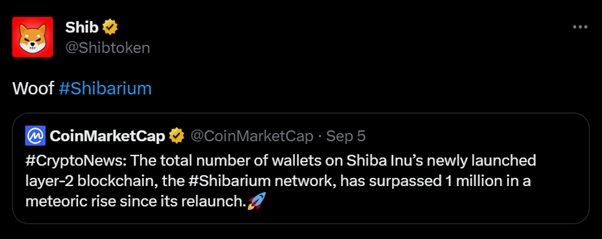
In the ever-shifting crypto landscape, Shiba Inu makes waves to break free from its speculative origins. Often dubbed as the “Dogecoin Killer”, it has embarked on a journey of legitimacy and utility, and as such, it created Shibarium from the ground up. An Ethereum layer-2 scaling solution, this advancement significantly enhances Shiba Inu’s scalability and reduces transaction costs associated with $SHIB. Notably, data from Shibariumscan.io reveals that SHIB, with the help of Shibarium, surpassed one million wallets during the first week of September.

Shiba Inu’s ongoing transformation prompts a pertinent question: Is it time for stricter regulations and creative solutions in the crypto realm? The answer is a resounding “yes!” Many respondents in the Consensys study believe that firm regulations are vital to safeguard investors in this asset class.

Thankfully, Big Eyes Infinity distinguishes itself with resilience and creative ingenuity. A fresh utility token within the Big Eyes universe, utilizing the ERC-20 protocol, it gears for an airdrop launch. This move will directly benefit users who may have missed out on the earlier Big Eyes presale.

The BIGINF token is critical to the Big Eyes 819Casino and play-to-earn (P2E) gaming metaverse. This stimulating plot allows token holders the opportunity to play and win BIGINF tokens. Inevitably, BIGINF will help generate increased trading activity and heightened buying pressure for the cryptocurrency.

Unlock the Magic of Meme Coin Returns + Airdrops in Crypto with Big Eyes Infinity!

By incorporating airdrops in crypto, the team behind this cat-themed token plans to distribute funds to $BIGINF users. This process eliminates the need for unnecessary claiming steps, as all tokens will be airdropped directly into a decentralized exchange (DEX) platform.

While enthusiasts eagerly await this development, BIGINF welcomes investors to participate in the presale round. With timed stages offering a potential 6x return on investment, BIGINF guarantees a 150% return for token holders at each stage. This promising opportunity aligns with the potential for meme coin returns.

Final Chapter

The preference shown by 17% of US investors for Shiba Inu investments over well-established assets like Polkadot highlights the growing influence of meme tokens. This shift underscores the potential success of unconventional tokens like Big Eyes Infinity. This proves that creative ingenuity and meme coin returns are possible for those willing to explore the colorful tapestry of crypto.


Big Eyes Infinity (BIGINF)

Presale: https://buy1.bigeyes.space/

Website: https://bigeyes.space/

Telegram: Contact@BIGEYESOFFICIAL

Twitter: https://twitter.com/BigEyesCoin

Shibarium Mainnet Launch Coming Soon, Avalanche Tokenizes $50M In Assets And $SIGN Offers 72x Potential ROI

0

Shytoshi Kusama, the co-founder and lead developer of Shiba Inu (SHIB), has recently announced that the Shibarium mainnet launch will take place on the first day of the upcoming conference that will be held in Toronto from the 13th to the 17th of August. Avalanche (AVAX) has been in the news lately after announcing its plan to tokenize $50 million worth of assets with its new Avalanche Vista.

In this article, we will discuss these two news stories and their impact on the crypto market as well as introduce you to Signuptoken.com (SIGN), a new project offering 72x potential ROI to its presale investors.

Shiba Inu Announces Shibarium Mainnet Launch

Shiba Inu (SHIB), led by Shytoshi Kusama, is steadily gaining momentum in the crypto ecosystem. The upcoming launch of the Shibarium mainnet on the first day of the conference taking place in Toronto starting on August 13th, has further bolstered the project’s reputation. Kusama’s speech, powered by AI technology, generated considerable buzz and excitement.

Moreover, anticipation is high for the potential unveiling of the layer-2 Shibarium on the same day, coinciding with the third anniversary of Shiba Inu and Ethereum’s creation. The ecosystem’s decentralized structure, coupled with collaborations among various decentralized Shib projects and strong support from the ShibArmy, provides a robust foundation for future growth. Traders have shown keen interest, as evidenced by the nearly 1% increase in SHIB’s price from its 24-hour low.

Avalanche To Tokenize $50 Million Worth Of Assets

Avalanche’s (AVAX) foundation has a clear vision to tokenize $50 million worth of assets through Avalanche Vista, a program aimed at bringing digital versions of traditional investment products to the blockchain. The concept of tokenization is gaining significant traction in the crypto market, with an estimated potential market value of $16 trillion by 2030. As a strong contender against Ethereum, Avalanche offers faster transactions and impressive scaling capabilities, making it an appealing choice for investors.

Furthermore, Avalanche’s collaborations with renowned financial institutions, such as WisdomTree and T. Rowe Price, for testing and deploying blockchain-based services on its subnets positioned the platform optimistically for the future. Its sovereign subnet architecture adds another layer of uniqueness to the project, enhancing its appeal among investors and crypto enthusiasts alike. With these strong fundamentals and a clear focus on innovation, Avalanche is positioning itself as a competitive player in the crypto space.

SIGN Token Offers Jaw-Dropping 7200% ROI Potential

Signuptoken.com (SIGN) has quickly emerged as a promising project in the cryptocurrency market. Its innovative community-building approach, which includes both a traditional presale and a zero-cost email registration option, has captured significant attention.

With nearly 7000 subscribers so far, the project is steadily approaching its target of a million subscribers, at which point the project will release the tokens onto swap sites. These subscribers will be rewarded with the opportunity to purchase the tokens before the public as a reward for their early support of the project.

Signuptoken.com also offers presale investors the opportunity to earn a side income with the use of its referral program. After investing in the presale, users can generate and then share a personalized referral code, and each investment made through this code will earn the referrer a commission. It will also enter them into a competition that rewards the user with the most successful rewards.

Only one billion $SIGN tokens will be minted, of which 60% will be dedicated to the presale, 20% to community rewards, 15% to exchanges, and only 5% to the team. At this point in presale, one $SIGN token is worth $0.01, but after launch, each token will be worth $0.72. This means that the projected return on investment for $SIGN is a jaw-dropping 7200%.

As we gear up to witness the Shibarium mainnet launch on August 13th and Avalanche’s new Avalanche Vista, we are reminded of the crypto market’s thirst for innovation and creativity. SIGN Token brings those same qualities to the presale market with its innovative email subscription feature approach to community-building. Don’t miss out on this opportunity to potentially gain $SIGN’s 7200% ROI and lucrative referral rewards. Visit Signuptoken.com today and register your email to claim your spot in the millionaires’ club!


Signuptoken.com: Join The Millionaires’ Club!

Website: https://www.signuptoken.com

Twitter: https://twitter.com/_SignUpToken_

Telegram: https://t.me/SignUpToken

Hong Kong Expands Trial of China’s Digital Yuan

0

Hong Kong is taking another step forward in its efforts to integrate with China’s digital currency ecosystem. According to a senior official, the city will expand its pilot program of the e-CNY, or the digital yuan, to include more banks and payment platforms.

The e-CNY project is China’s ambitious plan to create a digital version of its national currency, the yuan. The project aims to enhance the efficiency and convenience of cross-border payments, as well as to support the internationalization of the yuan. Hong Kong, as a special administrative region of China and a global financial hub, has a significant role to play in the e-CNY project.

Hong Kong has been actively participating in the e-CNY project since its inception. In 2017, the Hong Kong Monetary Authority (HKMA) and the People’s Bank of China (PBOC) signed a memorandum of understanding to collaborate on the research and testing of the e-CNY. Since then, the two authorities have conducted several technical trials to explore the feasibility and interoperability of the e-CNY in cross-border scenarios.

The e-CNY is a digital version of China’s national currency, issued and controlled by the People’s Bank of China (PBOC). It is not a cryptocurrency, but a legal tender that can be used for online and offline transactions. The PBOC has been testing the e-CNY in several mainland cities since 2019 and has also launched cross-border trials with Hong Kong and Macau.

One of the major achievements of the Hong Kong-China cooperation on the e-CNY project is the launch of a pilot program in December 2020, which allows Hong Kong residents to use e-CNY wallets to make purchases at designated merchants in Shenzhen. The pilot program is part of the Greater Bay Area (GBA) initiative, which aims to foster closer economic and social integration among Hong Kong, Macau, and nine cities in Guangdong province. The pilot program has received positive feedback from both consumers and merchants and has demonstrated the potential of the e-CNY to facilitate cross-border consumption and tourism in the GBA.

Another important milestone of the Hong Kong-China collaboration on the e-CNY project is the announcement of a joint technical testing in May 2021, which involves using the e-CNY for cross-border trade settlement between Hong Kong and mainland China. The joint testing aims to evaluate the technical feasibility and operational efficiency of using the e-CNY for trade finance and invoice verification, as well as to explore the regulatory and legal implications of using the e-CNY for cross-border transactions. The joint testing is expected to provide valuable insights and experience for further expanding the use cases and scope of the e-CNY in cross-border contexts.

Hong Kong’s involvement in the e-CNY project reflects its strategic position and unique advantages as a bridge between mainland China and the rest of the world. By participating in the development and testing of the e-CNY, Hong Kong can contribute to the innovation and advancement of digital currency technology, as well as to the promotion and adoption of the yuan as an international reserve and payment currency.

Hong Kong can also benefit from the opportunities and challenges brought by the e-CNY project, such as enhancing its financial inclusion and competitiveness, strengthening its anti-money laundering and counter-terrorism financing capabilities, and managing its financial stability and monetary sovereignty.

In May this year, Hong Kong announced that it had successfully completed the first phase of its e-CNY trial, involving six local banks and the Hong Kong Monetary Authority (HKMA). The trial tested the technical feasibility of using the e-CNY for cross-border payments between Hong Kong residents and mainland merchants.

Now, the city is ready to move on to the second phase of the trial, which will involve more banks and payment service providers, as well as more use cases and scenarios. According to Edmond Lau, deputy chief executive of the HKMA, the second phase will start in the fourth quarter of this year and last for about six months.

Lau said that the HKMA will work closely with the PBOC to ensure that the e-CNY trial meets the regulatory standards and requirements of both sides. He added that the e-CNY will not pose any threat to Hong Kong’s monetary system or financial stability, as it will only be used as a retail payment tool and not as a reserve currency.

The HKMA also stressed that the e-CNY trial will not affect Hong Kong’s status as an international financial center or its role as a gateway between China and the world. On the contrary, Lau said that the e-CNY will bring new opportunities for Hong Kong’s financial sector and enhance its competitiveness in the digital era.

Spot ETFs vs. Futures ETFs

0

Exchange-Traded Funds (ETFs) are popular investment vehicles that allow investors to gain exposure to a basket of assets, such as stocks, bonds, commodities, or cryptocurrencies. ETFs are traded on regulated exchanges and can be bought and sold like any other security. However, not all ETFs are created equal. Depending on the underlying assets and the way they track their performance, ETFs can have different characteristics, risks, and benefits.

A spot ETF is an ETF that holds the actual asset it tracks in its portfolio. For example, a gold spot ETF would own physical gold bars or coins, and its price would reflect the current market price of gold. A spot ETF provides direct exposure to the asset and its price movements.

A futures ETF is an ETF that does not hold the actual asset, but instead uses futures contracts to track its performance. Futures contracts are agreements between two parties to buy or sell an asset at a predetermined price and date in the future. A futures ETF uses these contracts to gain exposure to the asset’s expected future price.

For example, a gold futures ETF would not own any physical gold, but would buy and sell gold futures contracts on a regulated exchange. The price of the futures contracts would depend on the market’s expectations of the future price of gold, which may differ from the current spot price.

A futures ETF provides indirect exposure to the asset and its price movements. However, it also introduces some additional factors that affect its performance, such as:

Rolling costs: Futures contracts have expiration dates, so a futures ETF has to periodically sell its expiring contracts and buy new ones with later expiration dates. This process is called rolling, and it can incur costs or gains depending on the price difference between the contracts.

Contango and backwardation: These are terms that describe the relationship between the spot price and the futures price of an asset. Contango occurs when the futures price is higher than the spot price, implying that the market expects the asset’s price to rise in the future. Backwardation occurs when the futures price is lower than the spot price, implying that the market expects the asset’s price to fall in the future. These situations can affect the performance of a futures ETF relative to a spot ETF.

Leverage: Futures contracts allow traders to control a large amount of an asset with a small amount of money, known as margin. This creates leverage, which magnifies both potential profits and losses. A futures ETF may use leverage to increase its exposure to the asset, but this also increases its risk and volatility.

Spot ETFs vs. Futures ETFs for Bitcoin

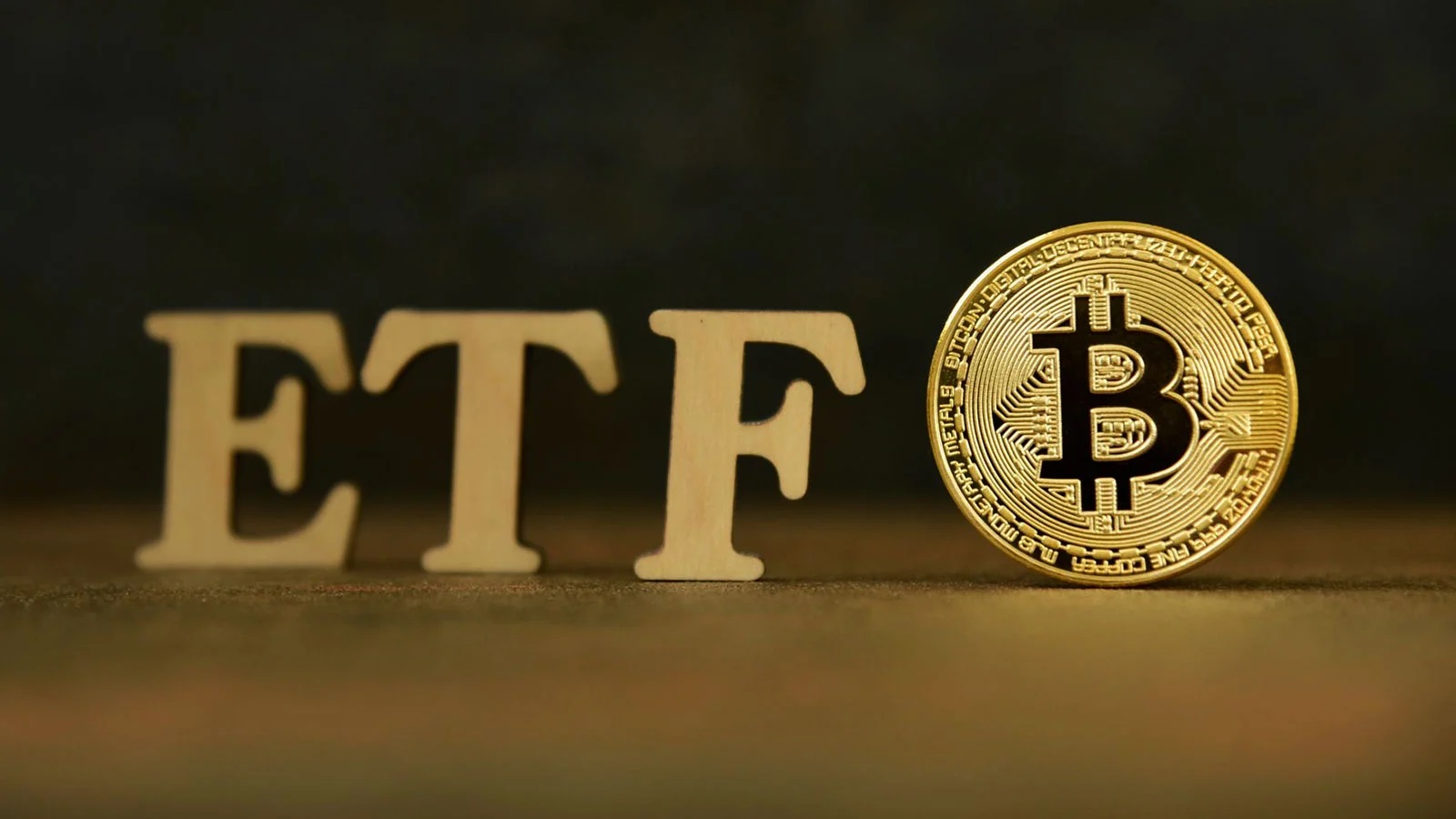
Bitcoin is a digital currency that operates on a decentralized network of computers. It has become one of the most popular and controversial assets in recent years, attracting investors, enthusiasts, regulators, and critics alike. Bitcoin spot ETFs are ETFs that hold actual bitcoins in their portfolio, either directly or through a custodian. They track the current market price of bitcoin and provide investors with direct exposure to the cryptocurrency and its volatility.

Bitcoin futures ETFs are ETFs that do not hold any bitcoins, but instead use bitcoin futures contracts traded on regulated exchanges to track its performance. They track the expected future price of bitcoin and provide investors with indirect exposure to the cryptocurrency and its volatility.

As of 2022, there are no bitcoin spot ETFs available in the U.S., as the Securities and Exchange Commission (SEC) has not approved any applications for them yet. The SEC has expressed concerns about the lack of regulation, transparency, liquidity, custody, and security of bitcoin and its market.

However, there are several bitcoin spot ETFs available in other countries, such as Canada and Europe. These ETFs have proven to be popular among investors who want to access bitcoin without having to deal with its technical complexities and risks.

In contrast, there are several bitcoin futures ETFs available in the U.S., as the SEC has approved some applications for them in 2021. The SEC has deemed these ETFs to be less risky than spot ETFs, as they use regulated futures contracts instead of unregulated bitcoins. However, these ETFs also have some drawbacks, such as higher fees, rolling costs, contango effects, and leverage risks. Moreover, they may not track the actual price of bitcoin as closely as spot ETFs do. There is no definitive answer to which type of ETF is better for bitcoin investors. It depends on various factors, such as:

Investment objectives: Investors who want to gain direct exposure to bitcoin and its price movements may prefer spot ETFs, as they reflect the actual value of the cryptocurrency. Investors who want to gain indirect exposure to bitcoin and its price expectations may prefer futures ETFs, as they reflect the market’s sentiment about the cryptocurrency.

Risk tolerance: Investors who are willing to accept higher risk and volatility may prefer spot ETFs, as they expose them to the full potential of bitcoin and its market. Investors who are more risk-averse may prefer futures ETFs, as they offer some protection from the regulatory and operational uncertainties of bitcoin and its market.

Cost efficiency: Investors who want to minimize their costs and fees may prefer spot ETFs, as they have lower expense ratios and no rolling costs. Investors who are willing to pay higher costs and fees for more convenience and accessibility may prefer futures ETFs, as they are easier to trade and available in more markets.

Spot ETFs and futures ETFs are two different ways of gaining exposure to an asset, such as bitcoin. They have different characteristics, risks, and benefits that investors should consider before choosing one over the other. Spot ETFs provide direct exposure to the asset and its price movements, while futures ETFs provide indirect exposure to the asset and its price expectations. Spot ETFs may be more suitable for investors who want to capture the actual value of bitcoin, while futures ETFs may be more suitable for investors who want to capture the market’s sentiment about bitcoin.

However, both types of ETFs have their own drawbacks and limitations, such as regulatory hurdles, cost inefficiencies, tracking errors, and leverage risks. Therefore, investors should do their own research and due diligence before investing in any ETF.