DD
MM
YYYY

PAGES

DD
MM
YYYY

spot_img

PAGES

Home Blog Page 412

Pavel Durov’s Interview on Lex Fridman Podcast Spotlights Telegram Gifts

0

Lex Fridman released a 4+ hour podcast episode (#482) featuring Pavel Durov, the founder and CEO of Telegram. Titled Pavel Durov: Telegram, Freedom, Censorship, Money, Power & Human Nature, the conversation covers Durov’s philosophy on freedom, his arrest in France, encryption, Bitcoin investments, and the evolution of Telegram.

A notable highlight is Durov’s enthusiastic promotion of Telegram Gifts—a feature that integrates NFTs into the messaging app via the TON blockchain. This segment has generated buzz on X, with users calling it a “pitch” for the rapidly growing product.

Telegram Gifts are limited-edition digital collectibles essentially NFTs on TON that users can buy, send to friends in chats, or display on profiles. Launched around early 2025, they started as simple in-app purchases using Telegram’s “Stars” currency priced $2–$50 initially but have exploded in value on secondary markets.

For example: Rare items like a “plush Pepe” minted for ~$30 now trade for over $1,500 in TON equivalent. Even Durov himself spent $13,000 on a golden version earlier this year. The feature includes a built-in marketplace for instant trading, making it seamless within the app.

Collaborations with influencers like Snoop Dogg’s collection generated $12 million in 30 minutes have fueled hype. In the podcast around the 3:44:23 timestamp on TON and NFTs, Durov positions Gifts as a “reinvented, socially relevant” evolution of NFTs—more aesthetic, shareable, and integrated than traditional ones.

He highlighted explosive Growth. Launched just six months prior, Gifts have made TON the #1 or #2 blockchain globally by daily NFT trading volume surpassing others despite Telegram’s lean team. People are building empires around it—one trader reportedly earned millions flipping Gifts.

Durov sees it sparking “new trends” with upcoming drops from artists and influencers. As a privacy-focused app, Telegram uses Gifts to blend fun, social sharing, and blockchain without heavy monetization pressure, Durov funds his lifestyle via early Bitcoin holdings, not app revenue.

Durov’s tone was promotional yet authentic, tying Gifts to Telegram’s mission of user empowerment. He contrasted it with “speculative” NFTs, emphasizing real utility like profile displays and gifting.

This promo aligns with Telegram’s crypto push via TON originally developed in 2018 for scalability. With 900M+ users, Gifts could mainstream NFTs by making them “socially relevant” and easy—think Reddit avatars meets Pokémon cards, but on blockchain. Early data shows $500K daily volume and 67K+ wallets engaged.

It’s also timely amid Durov’s post-arrest reflections on censorship resistance, positioning TON/Gifts as tools for financial freedom. This promo could accelerate TON’s market cap currently hovering around $15B+ post-episode by attracting more developers and traders.

Early data shows $500K+ daily volume from 67K+ wallets, with secondary market flips yielding millions for individuals—e.g., one trader Durov cited made “several million dollars” just buying and selling.

Expect a surge in influencer collaborations Snoop Dogg’s drop alone generated $12M in 30 minutes, creating a flywheel of hype and liquidity. Durov funds his lifestyle via early Bitcoin holdings thousands bought at ~$700 in 2013, not Telegram revenue, allowing the app to remain “money-losing” for him personally.

Gifts represent low-pressure monetization via Stars currency $2–$50 per item, potentially generating $100M+ annually if adoption scales, while tying into his $1M BTC prediction as a hedge against fiat instability.

By positioning Gifts as “fun and shareable” think digital Pokémon cards on blockchain, it could onboard Telegram’s 900M+ users to NFTs, reducing crypto’s speculative stigma and boosting TON’s TVL (total value locked) toward Ethereum rivals.

Gifts’ in-app marketplace and profile displays lower barriers to blockchain entry—no wallets or gas fees needed initially—making TON a “social layer” for NFTs. This could inspire ccompetitors like WhatsApp or Signal to embed crypto features, accelerating hybrid apps that fuse social and DeFi.

Durov touted TON’s origins 2018–2019 development for Telegram’s needs as superior for high-throughput apps like Gifts, handling explosive growth without centralization. More devs building on TON, potentially spawning “Gift empires” as Durov described, from custom collections to trading bots.

By emphasizing “aesthetic and shareable” over hype, Gifts could shift NFT paradigms toward utility gifting, displays vs. art speculation, fostering sustainable trends like artist drops. Gifts make NFTs “socially relevant,” enabling viral sharing in chats, which could normalize blockchain for non-crypto natives.

This aligns with Durov’s freedom ethos—users own and trade assets censorship-free—potentially sparking cultural trends like celebrity-endorsed drops more “designer gifts” incoming. The promo humanizes him post-arrest, blending vulnerability with vision, reinforcing his anti-establishment appeal.

Gifts on TON embody Durov’s “freedom > money” mantra, using decentralized tech to evade bans—ironic given criticisms of Telegram as a “Darknet interface” for shadow ops. Bolsters Telegram’s appeal in restricted regions like Russia, Iran but risks platform-wide blocks.

Durov’s story—from VK exile to TON revival—frames tech founders as sovereignty challengers, inspiring a “tech vs. state” ethos that resonates in Web3 ccommunities.

This promo signals Telegram’s pivot to a full Web3 ecosystem, leveraging Durov’s credibility to drive adoption while navigating his fraught history with power. It could make Gifts the “killer app” for social crypto, but success hinges on balancing innovation with regulatory savvy.

Stripe Launches Platform to Help Businesses Launch And Manage Their Own Stablecoins

0

Stripe, a multinational financial services and software as a service company, has rolled out Open Issuance, a new platform that enables businesses to create, launch, and manage their own stablecoins.

The platform gives companies full control over their digital currency strategy removing reliance on third-party issuers, reducing fees, and unlocking new revenue opportunities through reserve rewards. By connecting every issuer into a shared liquidity network, Open Issuance makes it faster and easier for businesses across industries to bring stablecoins to market and scale globally.

Stablecoins are quickly becoming one of the most transformative tools in global finance. Companies worldwide are adopting them to receive payments, store value, and streamline treasury operations making it easier to reach customers, launch cross-border financial services, and reduce costs.

Until now, most businesses have relied on stablecoins from a small number of external issuers. While these issuers offer scale, liquidity, and brand recognition, building on their infrastructure leaves businesses with little control. They remain dependent on third-party roadmaps, subject to unpredictable fees, and unable to participate in the economics of issuance.

Stripe introduction of Open Issuance, will enable companies to fully control the product experience, mint and burn coins without unnecessary restrictions or fees, and capture rewards from reserves. The platform also connects every issuer into a shared liquidity network, reducing costs and enabling businesses to get to market faster without reliance on a handful of incumbent providers.

Open Issuance is designed to support companies across sectors, which includes; Crypto platforms looking to control their economics and pass rewards to users, Fintechs offering stablecoins alongside fiat services. Also, Enterprises optimizing global treasury operations while earning yield, and Banks exploring stablecoin strategies to enhance consumer and business products.

The platform is already live with its first major use case. Phantom, a crypto wallet with more than 15 million users, has launched CASH, a new stablecoin built on Open Issuance. CASH underpins Phantom’s native money movement features, allowing users to spend, send, use across DeFi, or convert seamlessly to fiat and other stablecoins.

Several other projects are migrating their stablecoins to the platform as well. Open Issuance enables businesses to launch a stablecoin in just a few days. Stripe, alongside its partners, handles the core infrastructure—reserve management, liquidity, security, and compliance—while businesses focus on customers.

Nearly every aspect of a stablecoin can be customized, including; Supported blockchains, Smart contract functionality, Reserve composition, with allocations between cash and treasuries managed through top-tier partners such as BlackRock, Fidelity, and Superstate to help drive adoption, Open Issuance integrates with leading tools for onramps, offramps, wallets, and cards through partners like Bridge, Privy, and Stripe.

Notably, while liquidity is a key challenge for any new stablecoin, Open Issuance solves this by making all coins on the platform interoperable. Businesses can opt into one-for-one swaps between stablecoins, ensuring every new coin strengthens the network’s overall liquidity.

A new era of stablecoin issuance

With Open Issuance, Stripe aims to democratize the stablecoin landscape. Businesses no longer have to depend on a few dominant providers, they can issue, customize, and scale their own stablecoins while benefiting from a built-in liquidity network.

This marks a new step forward in how digital money is created, managed, and moved across borders.

Implications of World Liberty Financial’s Tokenization Plans for RWAs with USD1

0

World Liberty Financial (WLFI)—a DeFi platform backed by Donald Trump Jr. and CEO Zach Witkoff—announced plans to tokenize real-world assets (RWAs) such as oil, gas, cotton, and timber.

These tokenized assets will be paired with their USD1 stablecoin to enable secure, transparent blockchain trading while maintaining price stability in volatile markets.

WLFI aims to bring commodities and other RWAs onto the blockchain, allowing fractional ownership, 24/7 trading, and global accessibility. This bridges traditional finance (TradFi) with DeFi, emphasizing compliance and institutional adoption.

The USD1 stablecoin, launched in March 2025 and pegged 1:1 to the U.S. dollar, will serve as the stable pairing for these RWAs. Backed by U.S. Treasuries, cash equivalents, and managed by custodians like BitGo and Fidelity, USD1 has grown to a $2.7 billion market cap, making it the fifth-largest stablecoin globally.

It eliminates minting/redemption fees and supports cross-chain transfers for expanding to Aptos. WLFI’s dual-token model includes:USD1: For stability and liquidity in payments, lending, and RWA trades.

A debit card for spending USD1 is slated for Q4 2025 or Q1 2026, enabling seamless fiat-to-crypto conversions. This move positions WLFI as a leader in RWA tokenization, potentially rivaling platforms like BlackRock’s tokenized funds.

By tying RWAs to a “trustworthy” stablecoin like USD1, it reduces counterparty risk and appeals to institutions wary of unbacked cryptos. Early integrations with Binance via a $2B MGX deal highlight its momentum.

Tokenizing RWAs allows fractional ownership, enabling retail investors to access high-value assets (e.g., oil or timber) previously restricted to institutions or high-net-worth individuals.

Blockchain-based trading with USD1 enables 24/7, borderless access, potentially increasing liquidity and participation in commodity markets, especially in regions with limited financial infrastructure.

Tokenization on a blockchain ensures transparent pricing and ownership records, reducing intermediaries and costs. Pairing with USD1, a stablecoin pegged to the U.S. dollar, minimizes volatility risks in RWA trading.

Blockchain settlements are near-instant compared to traditional markets, which can take days, streamlining trade execution and capital flow. WLFI’s compliance-focused approach like USD1 backed by U.S. Treasuries and managed by custodians like BitGo and Fidelity appeals to traditional financial institutions wary of crypto’s regulatory ambiguity.

This could accelerate institutional entry into DeFi. WLFI’s RWA tokenization competes with efforts by firms like BlackRock, which tokenized a money-market fund on Ethereum. WLFI’s broader asset scope (commodities) could carve a unique niche.

Pairing RWAs with USD1, a stablecoin with a $2.7B market cap and no minting/redemption fees, reduces exposure to crypto volatility, making DeFi more appealing for conservative investors.

USD1’s cross-chain support like Aptos and upcoming debit card (Q4 2025/Q1 2026) could drive adoption, creating a robust ecosystem where RWAs, payments, and lending coexist. Tokenizing commodities like oil and gas could shift pricing dynamics, potentially challenging traditional exchanges or cartels by increasing market access and competition.

WLFI’s Trump-backed branding and focus on U.S.-centric assets backed by Treasuries may align with nationalist economic policies, influencing U.S. crypto regulation or global stablecoin adoption.

As WLFI grows, its $391M daily USD1 trading volume and RWA ambitions could attract stricter oversight, especially given stablecoin regulations tightening globally such as EU’s MiCA framework.

While USD1 is stable, tokenized RWAs remain subject to underlying asset volatility which could deter risk-averse investors. Tokenizing RWAs requires navigating complex securities and commodities regulations, which vary by jurisdiction. Missteps could lead to legal challenges.

Institutional and retail uptake depends on trust in WLFI’s infrastructure, security, and compliance—a challenge given DeFi’s history of hacks and scams. USD1’s integration with RWAs could challenge Tether (USDT) and Circle (USDC), especially if WLFI’s debit card and Binance integrations boost its utility.

WLFI’s RWA tokenization paired with USD1 could transform how commodities and other assets are traded, making markets more accessible, efficient, and liquid. It strengthens DeFi’s credibility for institutional players while challenging traditional finance. However, success hinges on regulatory compliance, market adoption, and managing asset-specific risks.

Zoox Expands to Washington D.C. as Robotaxi Competition Heats Up

0

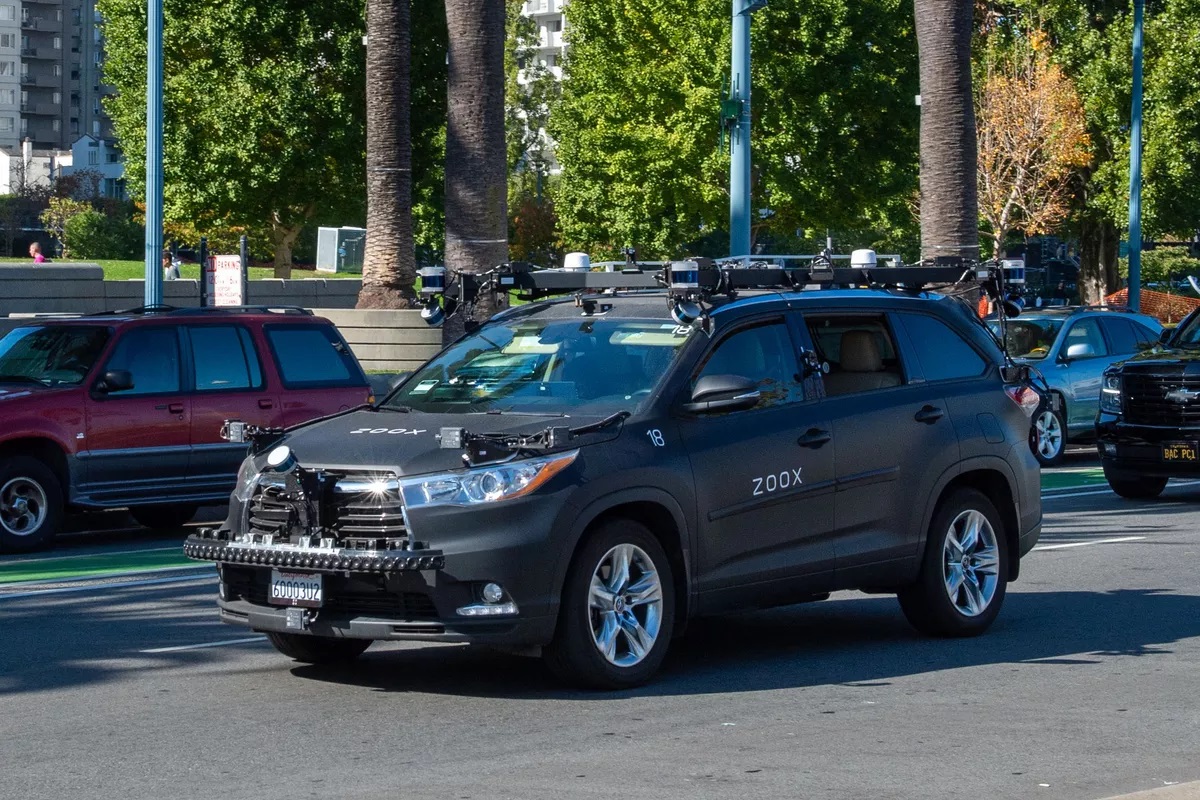
Amazon-owned Zoox is steering its autonomous vehicle ambitions to the nation’s capital, announcing Tuesday that it has begun mapping Washington D.C.’s streets in preparation for testing later this year.

The company said it will start with manually driven Toyota Highlanders equipped with sensors and proprietary software to build detailed maps of the city. Once the groundwork is complete, Zoox plans to transition to testing its autonomous vehicles with human safety operators behind the wheel.

“With its growing population and high demand for flexible transport options, the District is an ideal next location and optimal place to begin testing and mapping our technology on the East Coast,” Zoox said in a blog post.

The push into Washington D.C. marks Zoox’s eighth U.S. test site, joining Austin, Atlanta, Los Angeles, Las Vegas, Miami, San Francisco, and Seattle. A spokesperson told TechCrunch the company will begin with a small fleet in the District, which will expand gradually over time.

Zoox has come a long way since its 2014 founding in Foster City, California. Backed by Amazon since 2020, it has scaled operations from Silicon Valley test tracks to hundreds of vehicles across multiple U.S. cities. At the heart of its ambitions is a custom-built robotaxi, designed without a steering wheel or pedals, that aims to redefine urban mobility. Earlier this year, the company launched a free robotaxi service in Las Vegas, its anchor market since 2019, and started testing the shuttles in San Francisco last November.

Still, Zoox must clear regulatory hurdles before it can run a full-fledged commercial service. The National Highway Traffic Safety Administration granted the company an exemption in August to demonstrate its custom vehicles on public roads, though that approval only covers research and demonstrations. Zoox has since filed for a broader exemption that would pave the way for commercial rollout.

The Washington move comes at a time when the robotaxi market is heating up, with self-driving companies jockeying for leadership as the technology inches closer to mainstream adoption. Alphabet’s Waymo and General Motors’ Cruise have been at the forefront, running robotaxi services in parts of California. Waymo recently expanded its service zones in Los Angeles and Phoenix, while Cruise is navigating a turbulent stretch after regulatory scrutiny forced it to scale back in San Francisco. Tesla, meanwhile, has promised to unveil its long-delayed robotaxi in the coming year, positioning its approach as one built on mass deployment of existing vehicles rather than bespoke designs like Zoox’s.

The different strategies underscore the race to establish dominance. Waymo has leaned heavily on regulatory goodwill and incremental expansion, Cruise has pursued aggressive rollouts that at times backfired under safety concerns, and Tesla has staked its future on AI-driven autonomy built into its passenger cars. Zoox, by contrast, is betting that its purpose-built robotaxi will give it a unique edge once regulators greenlight full commercial operations.

By choosing Washington D.C., Zoox is not only entering a dense and highly visible urban environment but also signaling its readiness to compete coast-to-coast with rivals. But the bottom line is, cities are becoming equally important as the fight for control of the emerging robotaxi market is shaping up to be one of the defining contests in the transportation industry.

Cerebras Raises $1.1bn to Delay IPO, Doubling Valuation as AI Chip Race Intensifies

1

Cerebras is buying itself more time before an IPO by locking in $1.1 billion in new private funding, a move that doubles its valuation to $8.1 billion and positions the startup as one of the few challengers to Nvidia in the red-hot market for AI chips.

The company filed to go public exactly a year ago, but ran into headwinds after U.S. regulators raised concerns about its reliance on a single Middle Eastern customer, G42. The Treasury Department’s Committee on Foreign Investment in the United States (CFIUS) reviewed Cerebras’ plan to give G42 a bigger stake, slowing down its path to market. That dependence had also drawn scrutiny from analysts who flagged it as a potential vulnerability.

Despite those setbacks, investor enthusiasm has only grown. Co-founder and CEO Andrew Feldman confirmed that Cerebras still intends to go public, but that raising fresh funds was necessary to seize opportunities in the fast-changing AI landscape.

“I don’t think this is an indication of a preference for one or the other,” Feldman said in an interview. “I think we have tremendous opportunities in front of us, and I think it’s good practice, when you have enormous opportunities, not to let them fall by the wayside for lack of capital.”

Feldman has previously said the company aspires to list in 2025.

The funding round included heavyweight investors such as 1789 Capital, Alpha Wave, Altimeter Capital, Atreides Management, Benchmark, Fidelity, Tiger Global, and Valor Equity Partners. Feldman described the lineup as one that could easily “cornerstone your IPO,” underscoring the caliber of backing the company now enjoys.

Much of the new money will go toward expanding U.S. manufacturing capacity. Cerebras’ chips are produced as wafers by Taiwan Semiconductor Manufacturing Co. (TSMC) and then packaged in the United States.

“We increased manufacturing capacity in the last 18 months 8x, and we are going to go another 4x in the next six or eight months,” Feldman said, adding that the company will also hire aggressively to meet demand.

Financially, Cerebras is beginning to show traction. The company generated about $70 million in revenue in the second quarter of 2024, a leap from less than $6 million in the same period a year earlier. It has recently won business from Hugging Face, Meta, Notion, and Perplexity—clients that signal growing trust in its technology.

Cerebras’ rise comes as private capital continues to flow into AI. Databricks, which sells data analytics software, raised $1 billion at a valuation above $100 billion. OpenAI recently disclosed that Nvidia plans to invest up to $100 billion to support its buildout of data centers. Anthropic, another AI startup, secured $13 billion at a valuation of $183 billion. Against those eye-popping numbers, Cerebras looks modest, but its focus on AI hardware—rather than software or platforms—places it in direct competition with Nvidia, a $3 trillion company whose chips dominate training and inference workloads.

The contrast highlights the different paths emerging in the AI arms race. While OpenAI and Anthropic are soaking up billions to expand data center capacity and scale software models, Cerebras is betting on specialized chips that can serve as alternatives to Nvidia’s GPUs. That strategy is capital-intensive but also positions the startup at the very heart of AI infrastructure, where demand for compute power is exploding.

Nvidia’s dominance is believed to have wetted investors’ appetite for a challenger. Feldman, for his part, framed Cerebras’ funding not as a retreat from public markets but as a bridge to ensure it has the capital needed to compete.

“When you have enormous opportunities,” he said, “it’s good practice not to let them fall by the wayside for lack of capital.”

Although Cerebras remains private for now, with revenues surging, investors circling, and competition intensifying, its eventual IPO is likely to test just how much appetite remains for high-risk, high-reward bets in the AI hardware space.