DD
MM
YYYY

PAGES

DD
MM
YYYY

spot_img

PAGES

Home Blog Page 412

Implications of World Liberty Financial’s Tokenization Plans for RWAs with USD1

0

World Liberty Financial (WLFI)—a DeFi platform backed by Donald Trump Jr. and CEO Zach Witkoff—announced plans to tokenize real-world assets (RWAs) such as oil, gas, cotton, and timber.

These tokenized assets will be paired with their USD1 stablecoin to enable secure, transparent blockchain trading while maintaining price stability in volatile markets.

WLFI aims to bring commodities and other RWAs onto the blockchain, allowing fractional ownership, 24/7 trading, and global accessibility. This bridges traditional finance (TradFi) with DeFi, emphasizing compliance and institutional adoption.

The USD1 stablecoin, launched in March 2025 and pegged 1:1 to the U.S. dollar, will serve as the stable pairing for these RWAs. Backed by U.S. Treasuries, cash equivalents, and managed by custodians like BitGo and Fidelity, USD1 has grown to a $2.7 billion market cap, making it the fifth-largest stablecoin globally.

It eliminates minting/redemption fees and supports cross-chain transfers for expanding to Aptos. WLFI’s dual-token model includes:USD1: For stability and liquidity in payments, lending, and RWA trades.

A debit card for spending USD1 is slated for Q4 2025 or Q1 2026, enabling seamless fiat-to-crypto conversions. This move positions WLFI as a leader in RWA tokenization, potentially rivaling platforms like BlackRock’s tokenized funds.

By tying RWAs to a “trustworthy” stablecoin like USD1, it reduces counterparty risk and appeals to institutions wary of unbacked cryptos. Early integrations with Binance via a $2B MGX deal highlight its momentum.

Tokenizing RWAs allows fractional ownership, enabling retail investors to access high-value assets (e.g., oil or timber) previously restricted to institutions or high-net-worth individuals.

Blockchain-based trading with USD1 enables 24/7, borderless access, potentially increasing liquidity and participation in commodity markets, especially in regions with limited financial infrastructure.

Tokenization on a blockchain ensures transparent pricing and ownership records, reducing intermediaries and costs. Pairing with USD1, a stablecoin pegged to the U.S. dollar, minimizes volatility risks in RWA trading.

Blockchain settlements are near-instant compared to traditional markets, which can take days, streamlining trade execution and capital flow. WLFI’s compliance-focused approach like USD1 backed by U.S. Treasuries and managed by custodians like BitGo and Fidelity appeals to traditional financial institutions wary of crypto’s regulatory ambiguity.

This could accelerate institutional entry into DeFi. WLFI’s RWA tokenization competes with efforts by firms like BlackRock, which tokenized a money-market fund on Ethereum. WLFI’s broader asset scope (commodities) could carve a unique niche.

Pairing RWAs with USD1, a stablecoin with a $2.7B market cap and no minting/redemption fees, reduces exposure to crypto volatility, making DeFi more appealing for conservative investors.

USD1’s cross-chain support like Aptos and upcoming debit card (Q4 2025/Q1 2026) could drive adoption, creating a robust ecosystem where RWAs, payments, and lending coexist. Tokenizing commodities like oil and gas could shift pricing dynamics, potentially challenging traditional exchanges or cartels by increasing market access and competition.

WLFI’s Trump-backed branding and focus on U.S.-centric assets backed by Treasuries may align with nationalist economic policies, influencing U.S. crypto regulation or global stablecoin adoption.

As WLFI grows, its $391M daily USD1 trading volume and RWA ambitions could attract stricter oversight, especially given stablecoin regulations tightening globally such as EU’s MiCA framework.

While USD1 is stable, tokenized RWAs remain subject to underlying asset volatility which could deter risk-averse investors. Tokenizing RWAs requires navigating complex securities and commodities regulations, which vary by jurisdiction. Missteps could lead to legal challenges.

Institutional and retail uptake depends on trust in WLFI’s infrastructure, security, and compliance—a challenge given DeFi’s history of hacks and scams. USD1’s integration with RWAs could challenge Tether (USDT) and Circle (USDC), especially if WLFI’s debit card and Binance integrations boost its utility.

WLFI’s RWA tokenization paired with USD1 could transform how commodities and other assets are traded, making markets more accessible, efficient, and liquid. It strengthens DeFi’s credibility for institutional players while challenging traditional finance. However, success hinges on regulatory compliance, market adoption, and managing asset-specific risks.

Zoox Expands to Washington D.C. as Robotaxi Competition Heats Up

0

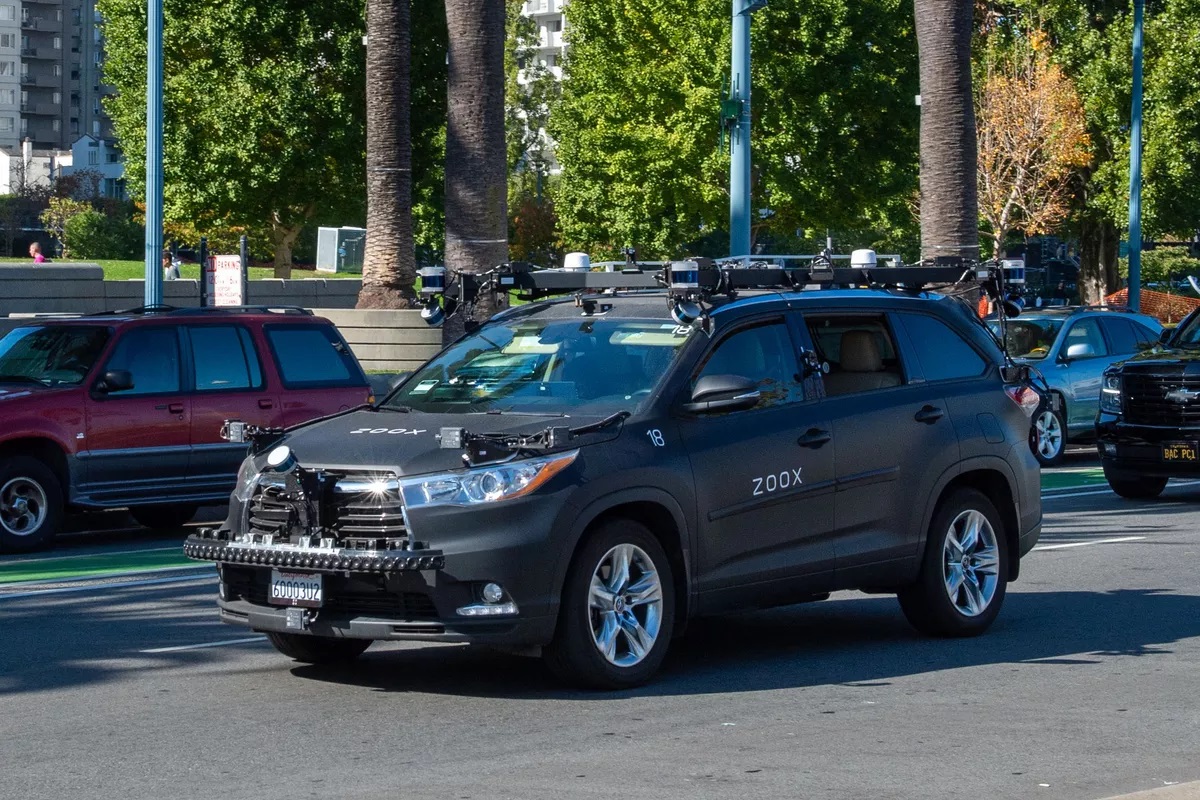
Amazon-owned Zoox is steering its autonomous vehicle ambitions to the nation’s capital, announcing Tuesday that it has begun mapping Washington D.C.’s streets in preparation for testing later this year.

The company said it will start with manually driven Toyota Highlanders equipped with sensors and proprietary software to build detailed maps of the city. Once the groundwork is complete, Zoox plans to transition to testing its autonomous vehicles with human safety operators behind the wheel.

“With its growing population and high demand for flexible transport options, the District is an ideal next location and optimal place to begin testing and mapping our technology on the East Coast,” Zoox said in a blog post.

The push into Washington D.C. marks Zoox’s eighth U.S. test site, joining Austin, Atlanta, Los Angeles, Las Vegas, Miami, San Francisco, and Seattle. A spokesperson told TechCrunch the company will begin with a small fleet in the District, which will expand gradually over time.

Zoox has come a long way since its 2014 founding in Foster City, California. Backed by Amazon since 2020, it has scaled operations from Silicon Valley test tracks to hundreds of vehicles across multiple U.S. cities. At the heart of its ambitions is a custom-built robotaxi, designed without a steering wheel or pedals, that aims to redefine urban mobility. Earlier this year, the company launched a free robotaxi service in Las Vegas, its anchor market since 2019, and started testing the shuttles in San Francisco last November.

Still, Zoox must clear regulatory hurdles before it can run a full-fledged commercial service. The National Highway Traffic Safety Administration granted the company an exemption in August to demonstrate its custom vehicles on public roads, though that approval only covers research and demonstrations. Zoox has since filed for a broader exemption that would pave the way for commercial rollout.

The Washington move comes at a time when the robotaxi market is heating up, with self-driving companies jockeying for leadership as the technology inches closer to mainstream adoption. Alphabet’s Waymo and General Motors’ Cruise have been at the forefront, running robotaxi services in parts of California. Waymo recently expanded its service zones in Los Angeles and Phoenix, while Cruise is navigating a turbulent stretch after regulatory scrutiny forced it to scale back in San Francisco. Tesla, meanwhile, has promised to unveil its long-delayed robotaxi in the coming year, positioning its approach as one built on mass deployment of existing vehicles rather than bespoke designs like Zoox’s.

The different strategies underscore the race to establish dominance. Waymo has leaned heavily on regulatory goodwill and incremental expansion, Cruise has pursued aggressive rollouts that at times backfired under safety concerns, and Tesla has staked its future on AI-driven autonomy built into its passenger cars. Zoox, by contrast, is betting that its purpose-built robotaxi will give it a unique edge once regulators greenlight full commercial operations.

By choosing Washington D.C., Zoox is not only entering a dense and highly visible urban environment but also signaling its readiness to compete coast-to-coast with rivals. But the bottom line is, cities are becoming equally important as the fight for control of the emerging robotaxi market is shaping up to be one of the defining contests in the transportation industry.

Cerebras Raises $1.1bn to Delay IPO, Doubling Valuation as AI Chip Race Intensifies

1

Cerebras is buying itself more time before an IPO by locking in $1.1 billion in new private funding, a move that doubles its valuation to $8.1 billion and positions the startup as one of the few challengers to Nvidia in the red-hot market for AI chips.

The company filed to go public exactly a year ago, but ran into headwinds after U.S. regulators raised concerns about its reliance on a single Middle Eastern customer, G42. The Treasury Department’s Committee on Foreign Investment in the United States (CFIUS) reviewed Cerebras’ plan to give G42 a bigger stake, slowing down its path to market. That dependence had also drawn scrutiny from analysts who flagged it as a potential vulnerability.

Despite those setbacks, investor enthusiasm has only grown. Co-founder and CEO Andrew Feldman confirmed that Cerebras still intends to go public, but that raising fresh funds was necessary to seize opportunities in the fast-changing AI landscape.

“I don’t think this is an indication of a preference for one or the other,” Feldman said in an interview. “I think we have tremendous opportunities in front of us, and I think it’s good practice, when you have enormous opportunities, not to let them fall by the wayside for lack of capital.”

Feldman has previously said the company aspires to list in 2025.

The funding round included heavyweight investors such as 1789 Capital, Alpha Wave, Altimeter Capital, Atreides Management, Benchmark, Fidelity, Tiger Global, and Valor Equity Partners. Feldman described the lineup as one that could easily “cornerstone your IPO,” underscoring the caliber of backing the company now enjoys.

Much of the new money will go toward expanding U.S. manufacturing capacity. Cerebras’ chips are produced as wafers by Taiwan Semiconductor Manufacturing Co. (TSMC) and then packaged in the United States.

“We increased manufacturing capacity in the last 18 months 8x, and we are going to go another 4x in the next six or eight months,” Feldman said, adding that the company will also hire aggressively to meet demand.

Financially, Cerebras is beginning to show traction. The company generated about $70 million in revenue in the second quarter of 2024, a leap from less than $6 million in the same period a year earlier. It has recently won business from Hugging Face, Meta, Notion, and Perplexity—clients that signal growing trust in its technology.

Cerebras’ rise comes as private capital continues to flow into AI. Databricks, which sells data analytics software, raised $1 billion at a valuation above $100 billion. OpenAI recently disclosed that Nvidia plans to invest up to $100 billion to support its buildout of data centers. Anthropic, another AI startup, secured $13 billion at a valuation of $183 billion. Against those eye-popping numbers, Cerebras looks modest, but its focus on AI hardware—rather than software or platforms—places it in direct competition with Nvidia, a $3 trillion company whose chips dominate training and inference workloads.

The contrast highlights the different paths emerging in the AI arms race. While OpenAI and Anthropic are soaking up billions to expand data center capacity and scale software models, Cerebras is betting on specialized chips that can serve as alternatives to Nvidia’s GPUs. That strategy is capital-intensive but also positions the startup at the very heart of AI infrastructure, where demand for compute power is exploding.

Nvidia’s dominance is believed to have wetted investors’ appetite for a challenger. Feldman, for his part, framed Cerebras’ funding not as a retreat from public markets but as a bridge to ensure it has the capital needed to compete.

“When you have enormous opportunities,” he said, “it’s good practice not to let them fall by the wayside for lack of capital.”

Although Cerebras remains private for now, with revenues surging, investors circling, and competition intensifying, its eventual IPO is likely to test just how much appetite remains for high-risk, high-reward bets in the AI hardware space.

Google Adds Visual Results to AI Mode, Expanding Its Generative Search Capabilities

0

Google is expanding its artificial intelligence-powered search experience, AI Mode, by adding visual results, the company announced on Tuesday.

The feature, launched in the U.S. in May as a text-first tool that answered queries in natural language, will now generate images for users seeking inspiration or shopping help — a shift that underscores how search is evolving in the age of generative AI.

Robby Stein, vice president of product management at Google Search, said the update unlocks new possibilities for how users engage with AI Mode.

“Sometimes what you’re looking for really just can’t be articulated with text,” Stein told reporters during a briefing. “If you ask about shopping for shoes, it’ll describe shoes when really people want visual inspiration, they want the ability to see what the model might be seeing.”

For instance, a user searching “Show me a maximalist inspo for my bedroom” will now receive a series of AI-generated images. These results can then be refined with follow-ups such as “Show me more with bolder prints and dark tones.”

The same logic applies to shopping. A query like “Barrel jeans that aren’t too baggy” would produce shoppable images, each linked directly to retailer websites.

The new feature draws on multiple Google technologies, including the Gemini 2.5 AI model, Google Search, Lens, and Image Search. Google aims to create a multimodal experience that goes beyond the limitations of text by combining these.

“This is really, we think, a breakthrough in what’s possible,” Stein said.

Market Context and Investors Sentiment

The rollout comes as Google faces growing competitive pressure from Microsoft’s Bing, which is infused with OpenAI’s technology, and AI-native startups that are reimagining online discovery. Google is attempting to lock in users who might otherwise turn to rivals by making search more visual, interactive, and transactional.

For investors, the financial-market angle has an underpin. Visual shopping features not only deepen user engagement but also pave the way for new monetization channels, particularly through advertising and retail partnerships. Analysts say the move could shift consumer behavior from traditional search queries toward direct commerce funnels, potentially increasing Google’s share of e-commerce-driven ad spending — an area where Amazon and TikTok have been eating into Google’s dominance.

But Google’s AI strategy has drawn criticism from many quarters. The company’s AI Overview, which automatically generates summaries at the top of search results, has drawn backlash from publishers and content creators who argue that it undercuts traffic to their sites. Critics say this risks alienating an ecosystem that has long relied on Google referrals for visibility and revenue.

That criticism creates a behavioral challenge in the market. Advertisers may welcome AI Mode’s direct purchase links, but publishers and online businesses share a concern that traffic may continue to erode, broadening questions about the sustainability of Google’s AI-driven search strategy.

However, many believe that Google’s visual expansion highlights how users are being trained to expect multimodal, curated answers instead of static blue links. This means faster discovery and more immersive shopping for consumers, and a balancing act for Google. The company is seen as tapping into new revenue streams and protecting market share, while navigating the backlash that comes with altering the fundamental economics of the web.

As the rollout unfolds, the key question will be whether these AI-driven innovations can strengthen Google’s financial moat without deepening conflicts with publishers and content creators.

Best First-Person Shooters of All Time 

0

Over the nearly 50 years of the gaming industry’s existence, thousands of first-person shooters have been released. Some, like Doom, Call of Duty, and Battlefield, have become successful worldwide, others even inspired game providers to release their less versatile but still unique titles at Spinando. Yet, there are many games that are not as popular. Let’s see which of these are worth paying attention to and what makes them engaging even decades after their release.

Nitro Family

Nitro Family is a game by the small Korean studio Delphieye Entertainment. It was released on the wave of popularity of early Serious Sam games, the original Painkiller, and Will Rock, cementing itself in the public consciousness as “just another Serious Sam clone.” Besides the similar gameplay of destroying enemies on arena-like levels, the games looked alike visually and used the same engine — the Serious Engine.

The main difference between Nitro Family and Serious Sam (and other similar games) is its heightened level of absurdity. The local analogue of Serious Sam is not a lone wolf lost in dimensions but a married man. The family theme is tightly woven into the gameplay. The main character carries his wife on his shoulders so she can help during battles with hordes of enemies. This lady, who resembles Julie from the action game Heavy Metal: F.A.K.K.², handles melee combat and special abilities. Charged with nitrogen, she can leave her perch, dash to an enemy, and deal massive damage. 

The couple’s goal is to rescue their beloved son, who has been kidnapped by an evil corporation. The heroes must battle hordes of pigs and chickens, ride through wastelands in a Mad Max style, defeat a clown from the Spawn comics, Muhammad Ali, and Bruce Lee, visit Vladivostok, and see a statue of Vladimir Ilyich Ulyanbi. If this cavalcade of scenes ever gets boring, you can take pills that turn enemies into dancing half-naked women.

Despite being a PC exclusive, the combat in Nitro Family only resembles Serious Sam at first glance. The aim-assist system, with its tight lock-on to a selected enemy, is more reminiscent of GoldenEye 007 for Nintendo 64 and other console shooters of that era. The scaled-down battles worked in Delphieye’s favor. For the most part, the firefights focus on insane humor and the ridiculous appearance of the enemies, as well as mocking stereotypes from different cultures.

The Betrayer

The developers from Monolith Studios were known for their unusual first-person shooters and action games until the 2010s. Their “old” portfolio includes cult classics like No One Lives Forever, TRON 2.0, F.E.A.R., and Condemned. After the 2010s, publisher Warner Bros. decided to repurpose the veteran team into a conveyor belt for producing games in the “Lord of the Rings” universe. Not all studio employees agreed with this sharp transition. Some developers left and founded a new studio — Blackpowder Games.

Freedom from publisher pressure allowed the creators to focus on developing games in genres they loved. The Betrayer combines Monolith’s strengths with an unusual visual style reminiscent of Robert Rodriguez’s film adaptation of “Sin City.” The game’s grim, gray imagery is occasionally broken by contrasting red elements. These could be items of clothing, ammunition, effect markers, or the blood of enemies.

The monochromatic color scheme and contrasting red not only play an important role in the game’s story about the colonization of America but also create a sense of mystery, paranoia, and tension even when nothing threatens the hero. By the way, for those who don’t like this palette, the authors included an option to make the game “normal.”

Despite having combat mechanics similar to F.E.A.R. and No One Lives Forever, The Betrayer is entirely dedicated to the process of non-linear exploration of large locations. Making the player constantly shoot bows and single-shot muskets would get boring quickly. Therefore, The Betrayer is in no hurry, offering moments to stand still, soak in the atmosphere, and “listen to the spirits.” The game itself will let you know which way to go. All important items in the shooter emit unique sounds that you must learn to hear.

Breakdown

In one interview, Hideo Kojima stated that Japanese game studios don’t develop first-person shooters due to perceptual peculiarities. Such games often require quickly controlling the camera and reacting to various stimuli in a 3D space. Because of this, the genius claimed, Japanese players get motion sickness and stop playing.

This physiological reaction is one factor behind the genre’s low demand in the Land of the Rising Sun. Many, to avoid discomfort, prefer on-rails light gun shooters where you don’t control the character (The House of the Dead, CarnEvil) or slower third-person shooters (Gears of War, Binary Domain).

But Japanese first-person shooters do exist. One of them is Breakdown, an exclusive for the original Xbox. Taking the aiming system from GoldenEye 007 as a basis, the creators made a game where you control the hero with one thumbstick and the camera with the other. Contextual actions with long animations and story cutscenes in Breakdown are also entirely done from a first-person perspective. And the seamless transitions from non-interactive scenes to interactive ones provide a high level of cinematography — all this long before The Last of Us and Death Stranding.

Gunfights compete with the melee system for the title of Breakdown’s central mechanic. The hero can fight with fists and feet, block, chain attacks, and perform finishing moves. Because of this feature, critics in their reviews called Breakdown “first-person Tekken.” Don’t expect a seamless blend of fists and firearms in the style of the combat ballet from the John Wick films. The authors designed the game with a focus on switching styles throughout the playthrough, rather than combining them.

Coded Arms

The action of Coded Arms takes place in a future where people have learned to connect their consciousness to computer networks. One such network is a military training simulation called A.I.D.A., which is frequently attacked by hackers. The main character is connected to it. His goal is to penetrate the very heart of the digital labyrinth and retrieve some crucial information. The problem is, the longer he explores the simulation, the higher the chance he will never return to his body. His consciousness will become part of A.I.D.A.’s code.

Coded Arms is another Japanese shooter. Unlike Breakdown, Konami’s game does not focus on cinematography and alternating combat styles. Instead, it offers “pure shooting” with roguelike elements. Small levels made of iron and concrete are procedurally generated. Upgrades and items are placed randomly, and the difficulty increases gradually. Perfect design for those who play on their commute to work.

Coded Arms’ story ends after the introductory cutscene and doesn’t remind you of itself until the final credits. The only cutscenes in the game are short intros announcing bosses. The rest is combat and a leisurely exploration process. The hero goes deeper and deeper into a digital labyrinth full of cybernetic monsters and dangerous robots. The atmosphere of loneliness, sadness, and anxiety makes Coded Arms akin to King’s Field, Dark Souls, and Shadow of the Colossus.

Darkwatch

Before becoming part of the massive Call of Duty production conveyor, High Moon Studios created decent games based on Marvel and Hasbro licenses. But in its impressive portfolio, there is one game that stands out from its usual directions. This is the studio’s debut, the console shooter Darkwatch — a completely original game not based on others’ ideas or franchises.

The authors play with different settings, combining elements of western, horror, sci-fi, and steampunk in Darkwatch. Vampires and zombies roam the night prairies, trains resemble the works of H.R. Giger, and the main antagonist is the son of the devil himself. 

Blood, stifling air, sand, and death rhyme in the most straightforward way. A cavalcade of borrowed images alternately references Painkiller, Marc Silvestri’s comics, Stephen Sommers’ “Van Helsing,” the “Underworld” franchise, and the film “From Dusk Till Dawn.”

A skillful balance between action, horror, and black comedy is Darkwatch’s main asset. In this, the High Moon game is similar to the recent Witchfire. The shooter is at its best in the first two hours. The authors maintain a high pace of events, irony over their own conventions, and develop the plot quickly. Later, the game slows down, the shooting becomes tedious, and the plot starts to induce yawns. But don’t give up. The middle is just a test on the way to a grand finale.

Urban Chaos: Riot Response

Before releasing the hit Batman: Arkham trilogy, the small British studio Rocksteady developed a little-known shooter called Urban Chaos: Riot Response. As in the games about the Dark Knight, the main setting is the grim streets filled with various kinds of criminals: robbers, vandals, arsonists, and terrorists. But fighting them wasn’t a pumped-up billionaire in a super-suit, but an ordinary riot squad officer.

This non-superhero Batman, on the one hand, operates within the law and takes orders from the command center, but on the other, uses much harsher methods to eliminate crime. Nick Mason has firearms, a license to kill, and orders to open fire on anyone dressed like a punk from “RoboCop” or a cosplayer as Jason Voorhees. For particularly accurate headshots and non-lethal arrests with a taser, Mason earns hero medals and improves his abilities.

Bullets and Molotov cocktails fly from all sides, and Nick’s health depletes quickly and doesn’t regenerate on its own. There are no familiar medkits on the levels either. The hero can defend against mortal danger using an armored police shield, and only medics can restore his health. However, there are few of them in Urban Chaos, and the healing process is hard because you first need to save the character or help them complete a task set by their superiors.

Despite the authors’ meticulous approach, it’s important to remember that this isn’t a tactical simulator but an entertainment shooter with arcade elements. Sometimes you’ll have to liberate streets under the pressure of a ticking timer. And particularly dangerous areas with respawning enemies are best showered with lead from a minigun on a helicopter.