
DD
MM
YYYY

PAGES

DD
MM
YYYY

spot_img

PAGES

Home Blog Page 4121

Google Reveals Bard is Improving at Mathematics Tasks And Coding Execution

0

Tech giant company Google has revealed that its conversational generative artificial intelligence chatbot ‘Bard’, is improving at mathematics tasks, coding questions and string manipulation through a new technique called implicit code execution.

Google via a blogpost revealed that the new technique called “implicit code execution”, helps Bard to detect computational prompts and run code in the background. As a result, it can respond more accurately to mathematical tasks, coding questions, and string manipulation prompts.

In order to enable Bard to solve more complex problems with advanced reasoning and logic capabilities, Google revealed that relying solely on Large Language Models (LLMs) isn’t enough, hence it had to implement a new method.

The new method allows Bard to generate and execute code to boost its reasoning and Math abilities. This approach according to the tech giant takes inspiration from a well-studied dichotomy in human intelligence which is covered in Daniel Kahneman’s book “Thinking, Fast and Slow”, the separation of system 1 and system 2 thinking. System 1 thinking is fast, intuitive and effortless, why system 2 thinking is slow, deliberate and effortful.

With this latest update, Google combined the capabilities of both LLMs (System 1) and traditional code (System 2) to help improve accuracy in Bard’s responses. Through implicit code execution, Bard identifies prompts that might benefit from logical code, writes it, executes it, and uses the result to generate a more accurate response.

Based on internal benchmarking, Google says that the new Bard’s responses to computation-based word and math problems were improved by 30% compared to the previous version when it was earlier released.

However, despite Bard’s improvement, Bard Product lead Jack Krawczyk issued a disclaimer that Bard won’t always get every questions right.

In his words,

“Even with these improvements, Bard won’t always get it right. For example, Bard might not generate code to help the prompt response, the code it generates might be wrong or Bard may not include the executed code in its response. With all that said, this improved ability to respond with structured, logic-driven capability is an important step toward making Bard even more helpful”.

It would be recalled that following the launch of OpenAI chatbot ChatGPT last year November, this saw several tech companies roll out AI chatbots into their products to maintain market dominance.

In February 2023, Google unveiled its AI chatbot Bard to keep pace with the trending AI products. When Google launched Bard, it didn’t compare all that favorably to the likes of Bing Chat and ChatGPT. The launch was a bit flawed, with a Google ad featuring a wrong answer by Bard, which tanked the company’s stock by 8%, losing $100 billion in market value

Ever since, Google has been constantly working and improving Bard to ensure it gives accurate answers to users.

Experts revealed that when it comes to coding, Bard is a clear winner. Supporting over 20 programming languages, it can help professionals with code generation, explanation, and debugging. ChatGPT is also able to generate snippets of code, but it takes a considerably longer time.

Google’s newly updated AI chatbot, is set to give OpenAI’s ChatGPT and other AI chatbots a run for their money, threatening to topple their hegemony.
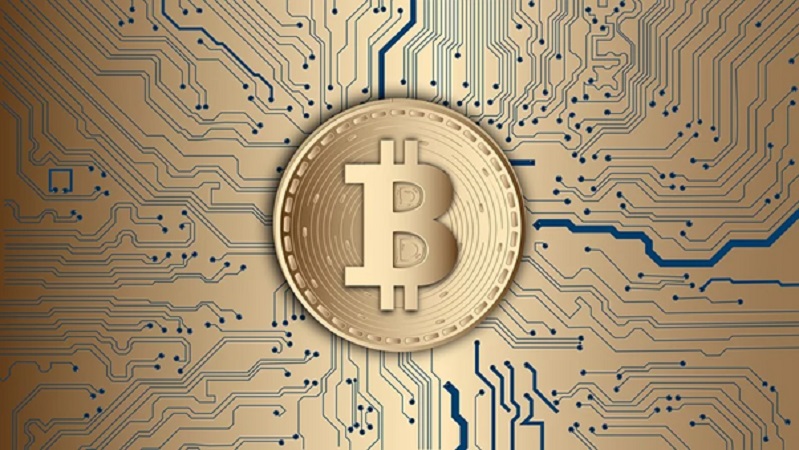

Mysterious Bitcoin Wallet Comes to Life After Nine Years

0

In the world of cryptocurrencies, there are many mysteries and surprises. One of them is the phenomenon of dormant bitcoin wallets that suddenly become active after years of inactivity. These wallets contain large amounts of bitcoins that have been untouched for a long time, sometimes since the early days of bitcoin when the coins were worth very little.

One such wallet recently came to life after nine years of dormancy. The wallet contains 616 BTC, which is worth more than $40 million at the current market price. The wallet dates back to around the time that bitcoin’s pseudonymous creator Satoshi Nakamoto was last active online and has seen its value increase by more than 800,000%… According to Whale Alert, a service that tracks large cryptocurrency transactions, the wallet was activated on September 23, 2021, and transferred its entire balance to different addresses.

Who owns this wallet and why did they decide to move their bitcoins after so long? This is a question that many in the crypto community are asking, but there is no definitive answer. Some speculate that it could be a whale, an individual or a group with a large stash of bitcoins, who is planning to sell or trade their coins. Others suggest that it could be someone who forgot or lost their password and finally managed to recover it. And some even wonder if it could be Satoshi Nakamoto himself, returning to claim his fortune.

It is not possible to link the wallet to an identity or a location, due to the anonymous and decentralized nature of bitcoin. However, it is possible to track the movements of the coins through the public blockchain ledger, which records every transaction that ever happened on the network. If the owner of the wallet decides to cash out their bitcoins on an exchange or a platform that requires identification, they might reveal themselves. But until then, they remain a mystery.

This is not the first time that a dormant wallet containing huge sums of bitcoins has been activated without explanation. In November 2020, a mystery person moved more than $1 billion worth of bitcoins from the fourth largest wallet in the world. The wallet had been inactive since 2015 and contained 69,369 BTC. In January 2021, another wallet that had been dormant since June 2010 woke up and transferred 50 BTC to another address. The wallet was believed to be one of the earliest ones created by Satoshi Nakamoto.

There are dozens of other wallets that have been inactive for at least nine years and contain thousands of bitcoins each. Some of them might belong to people who died, lost their passwords, or simply forgot about their coins. Some of them might belong to early adopters who are waiting for the right moment to sell or use their bitcoins. And some of them might belong to unknown entities who have their own reasons for keeping their coins dormant.

The activation of these wallets can have an impact on the bitcoin market, as they introduce new supply and demand dynamics. If the owners decide to sell their bitcoins, they might cause a price drop and volatility in the short term. If they decide to hold or use their bitcoins, they might increase the demand and scarcity of the cryptocurrency. Alternatively, they could use their funds to support some crypto-related project or cause, or simply hold on to them for longer.

The activation of this dormant wallet is a reminder of the history and mystery of Bitcoin, a decentralized and pseudonymous currency that has grown from a niche experiment to a global phenomenon. It also shows that there are still many hidden treasures in the crypto space, waiting to be discovered or claimed by their rightful owners.

ApeCoin to be Delisted on Binance

0

In a shocking announcement, Binance, one of the largest cryptocurrency exchanges in the world, has decided to delist ApeCoin (APE), a meme-based token that claims to support animal welfare and conservation projects. The decision was made after Binance received numerous complaints from users and regulators about the legitimacy and transparency of ApeCoin and its team.

ApeCoin is a token that aims to support the evolution of art, gaming, entertainment, digital and physical events, storytelling, and everything else web3 dreams up. It is the official token of Bored Ape Yacht Club, a collection of 10,000 unique NFTs that grant access to exclusive benefits and experiences.

ApeCoin is an ERC-20 token that runs on the Ethereum blockchain. It has a total supply of 1 billion APE and a circulating supply of 368 million APE as of June 2023. The current price of ApeCoin is $3.13 USD, with a market cap of $1.15 billion USD, ranking it #41 among all cryptocurrencies.

According to Binance, ApeCoin has violated several of its listing criteria, such as providing accurate and timely information, maintaining a healthy and active community, and complying with relevant laws and regulations. Binance also stated that ApeCoin has failed to demonstrate its social impact and contribution to the crypto ecosystem, as well as its innovation and technical development.

Binance will suspend trading and deposits of APE on June 15, 2023, at 12:00 PM (UTC), and will withdraw all APE balances from users’ accounts on June 30, 2023, at 12:00 PM (UTC). Users are advised to withdraw their APE tokens before the deadline, or they will lose them permanently. Binance will not be liable for any losses or damages caused by the delisting of APE.

The delisting of ApeCoin has sparked a lot of controversy and debate in the crypto community. Some users have expressed their disappointment and anger at Binance for removing a popular and fun token that supports a noble cause. They have accused Binance of being biased and unfair and have threatened to boycott the exchange. Others have applauded Binance for taking a bold and responsible step to protect its users and reputation from a potential scam. They have praised Binance for being diligent and professional and have urged other exchanges to follow suit.

ApeCoin’s team has not issued any official statement or response to the delisting announcement. However, some sources claim that the team is planning to launch a new token on another blockchain platform, with a similar name and logo. The sources also claim that the team is offering a 1:1 swap for existing APE holders who want to migrate to the new token. However, these claims have not been verified or confirmed by any reliable authority.

ApeCoin’s price has plummeted by more than 90% since the delisting announcement, reaching an all-time low of $0.0001 per token but currently trading above $3 as of press time. The trading volume and liquidity of APE have also dropped significantly, making it harder for users to sell or buy the token. The future of ApeCoin looks bleak and uncertain, as it faces legal and regulatory challenges, as well as a loss of trust and support from its community.

HedgeUp (HDUP) Crushes Polygon (MATIC) and Solana (SOL) with Consistent 10X Gains, Experts Explain why  

0

In the vast ocean of digital currencies, a new entrant has been making waves. HedgeUp (HDUP), a promising Defi project, has made its mark with consistent 10X gains, surpassing industry heavyweights Polygon (MATIC) and Solana (SOL). Crypto experts are now focusing their attention on this emerging player to understand the secret behind its impressive performance.

HedgeUp (HDUP): Unleashing Defi Potential

HedgeUp (HDUP) is a decentralized finance platform offering a range of lucrative features, including lending, staking, and yield farming services. The HedgeUp (HDUP) token is pivotal to this ecosystem, facilitating transactions and incentivizing user engagement. The token’s intrinsic value combined with the platform’s innovative features has fueled its staggering price growth.

Experts suggest that HedgeUp (HDUP)’s success lies in its ability to cater to the growing demand for more sophisticated and profitable Defi solutions. Moreover, its focus on security and transparency, often missing in the Defi space, has won investor trust, leading to its exceptional price performance. 

Comparing to Polygon (MATIC) and Solana (SOL)

Despite being powerful platforms in their own right, Polygon (MATIC) and Solana (SOL) haven’t been able to keep pace with HedgeUp (HDUP)’s ascent. Polygon (MATIC), though successful in addressing Ethereum’s scalability issues, has struggled with price consistency. On the other hand, Solana (SOL), despite its high-speed and low-cost transactions, is facing stiff competition from other similar platforms.

While both Polygon (MATIC) and Solana (SOL) have made significant contributions to blockchain technology, HedgeUp’s (HDUP) value proposition seems to resonate more with investors, primarily due to its direct profitability and growth potential. 

Expert Insights

According to industry experts, HedgeUp (HDUP)’s  success lies in its comprehensive approach to Defi. The platform has expertly integrated the lucrative aspects of decentralized finance, providing investors with an all-in-one solution for maximizing their crypto gains. Additionally, the robust community backing HedgeUp (HDUP) and the team’s dedication to constant development further strengthens its position.

Risk and Reward: The Balancing Act 

While HedgeUp (HDUP)’s performance has been stellar, investors should always remain mindful of the inherent volatility and risks associated with the crypto market. Just as rapid gains are possible, so too are significant losses. As always, due diligence is crucial before making any investment decisions.

Conclusion

HedgeUp (HDUP) has emerged as a notable contender in the crypto space, leaving behind established names like Polygon (MATIC) and Solana (SOL). Its meteoric rise can be attributed to the platform’s powerful Defi features, community support, and consistent development.

While the crypto market’s volatility always calls for cautious investing, the success of HedgeUp (HDUP) indicates that it could be an exciting addition to a diversified investment portfolio. However, as with all investments, careful research and understanding of the platform’s technology, use case, and market trends are essential. 

For more information about HedgeUp (HDUP) presale use the links down below:

  • Website: https://hedgeup.io/
  • Presale: https://app.hedgeup.io/sign-up
  • Telegram: https://t.me/HedgeUpChat
  • Twitter: https://twitter.com/HedgeUpOfficial

Nigerian Logistics Startup Haul247 Secures $3 Million in Seed Round to Expand Operations to Other African Markets

0

Nigerian end-to-end logistics technology platform that connects companies to haulage and warehousing service, Haul247, has secured $3 million in a seed round to expand operations to other African markets.

The funding round was led by Alitheia Capital which provided the equity capital and investment from Investment One which contributed $1 million in debt financing. This investment follows a pre-seed funding round in 2021 by Khafid Gbadamosi and Horsham Gates.

Speaking on the funds secured, Haul247 CEO Sehinde Afolayan said,

“Africa’s logistics sector continues to be hampered by a lack of supporting infrastructure, bottlenecks in service delivery, and a widespread informal approach to logistics business. Over 80% of the market is dominated by informal carriers operating with one to three vehicles. We founded Haul247 to address the supply-demand mismatch in the ecosystem, and this funding will enable us to optimize logistics service delivery in key African markets.

“Our platform connects businesses with reliable and efficient haulage and warehousing assets, making the movement of goods across the continent easier and faster. With the support of our investors, we will expand to new markets, recruit more talent and develop our technology to make logistics even more accessible and efficient for businesses in Africa”.

Founded by Sehinde Afolayan, Tobi Obasa, and Akindele Phillips in 2020, Haul247 provides a platform for businesses to seamlessly book trucks and warehouses across multiple geo-locations in Africa using real-time technology. Across its platforms, all logistics processes are blazing fast because of the company’s efficient partners and digital servers that anchor our work.

The Haul247 platform matches orders with available assets through an Airbnb-style model for trucks and warehouses. Partners are assured of reverse hauling, and shippers are charged less than they usually pay.

Whether you are an individual, farmer, FMCG, or manufacturing company, Haul247 will complement your supply chain process by providing movement and storage of your goods as well as providing valuable insights on tracking. The startup is committed to simplifying haulage solutions for Africa with value-driven services & 99.9% service uptime.

As of November 2022, the startup has onboarded 14 enterprise and FMCG businesses and also has over 1,000 trucks on its roster, with about 150,000 sqm of warehouse space available across multiple locations. The company currently operates only in Nigeria but is looking to expand into other African countries over the next couple of years. The goal is to ensure that more businesses across Africa can tap into trade opportunities that the AfCFTA will unlock.

Haul247 is trusted by leading brands which include PZ Cussons, Unilever, CWAY Group, Promasidor, Honeywell Flour Mills, GB Foods, Cormart, and Reckitt, amongst several others.