DD
MM
YYYY

PAGES

DD
MM
YYYY

spot_img

PAGES

Home Blog Page 413

Uptober’s Best Meme Coin Trio: Turbo’s Run, Dogecoin’s Staying Power, and BullZilla’s Presale Frenzy

0

The hunt for the best meme coin presale to join in October 2025 has reached a fever pitch. Investors are searching for projects that combine community hype, unique mechanics, and explosive ROI potential. This Uptober is no exception, with the spotlight falling on Top meme presales October contenders such as BullZilla ($BZIL), Turbo, and Dogecoin. These three tokens embody the spectrum of meme coin investing, from presale innovation to legacy dominance.

The rise of BullZilla with its Roar Burn, the recent surge in Turbo, and the enduring legacy of Dogecoin position them as central players in this cycle. As Meme coin Uptober rally picks, they highlight the momentum sweeping across the crypto market. For traders, these coins aren’t just speculative; they represent pathways into the best October meme tokens, with potential to shape portfolios for years to come. In a market buzzing with Presale coins trending 2025, these standouts also embody the Best new meme launches and fuel the growing wave of Meme crypto presale hype.

BullZilla: The Presale That Redefines Scarcity and Growth

BullZilla stands tall as the project many are calling the best meme coin presale to join in October 2025. This presale has captured attention by blending cinematic branding, scarcity-driven mechanics, and one of the strongest communities forming in Uptober.

Current Stage Snapshot

  • Stage: 5 (Roar Drop Incoming)
  • Phase: 5A
  • Current Price: $0.00011241
  • Presale Raised: $750,000+
  • Holders: 2,400+ and growing

The presale operates on a mutation model where the price rises every 48 hours or once $100k is raised. This progressive climb injects urgency, reinforcing why analysts continually describe BullZilla as the best meme coin presale to join in October 2025.

Roar Burn Mechanism: A Deflationary Edge

BullZilla’s most disruptive feature is the Roar Burn. Each new chapter triggers a live token burn, decreasing supply while fueling a Roar Surge across the community. With every milestone achieved, scarcity intensifies and remaining tokens grow more valuable. This deflationary approach is one of the primary reasons why many consider BullZilla unmatched among Top meme presales October.

The Roarblood Vault: Loyalty Anchored in Rewards

BullZilla isn’t only about scarcity. Its Roarblood Vault powers community expansion and long-term rewards. Referral systems grant bonuses to both referrers and new buyers, while staking through the HODL Furnace offers a jaw-dropping 70% APY. This system locks holders into loyalty, making it one of the Presale coins trending 2025 to watch closely.

How to Buy BullZilla Coins

  1. Set Up a Wallet: Install MetaMask or Trust Wallet.
  2. Buy ETH: Purchase Ethereum and transfer it to your Web3 wallet.
  3. Visit the Presale Portal: Connect your wallet on BullZilla’s official presale site.
  4. Swap ETH for $BZIL: Confirm your transaction and secure your allocation.

Investment Scenario: $4,000 in BullZilla

Investment Tokens Purchased Potential Value (10x) Potential Value (100x) Potential Value (1000x)
$4,000 at $0.00011241 35,587,934 $BZIL $39,999 $399,990 $3,999,900

This table illustrates the ROI potential if BullZilla follows through on its roadmap. The numbers reveal why many investors regard it as the best meme coin presale to join in October 2025.

Turbo: Uptober’s Momentum Play

Turbo, trading at $0.003588 after a 5.38% surge in the past 24 hours, exemplifies the fast-moving excitement of Meme coin Uptober rally picks. Its appeal lies in sheer momentum, as traders position themselves ahead of sharp breakouts.

While it lacks BullZilla’s scarcity model, Turbo has carved its place among the best October meme tokens by leveraging community enthusiasm. Its resilience through market corrections and ability to rebound quickly position it firmly within the category of Best new meme launches to track this season.

Turbo thrives on speculative cycles. In a month known for meme volatility, its low cap and strong community engagement make it one of the Top meme presales October observers can’t ignore.

Dogecoin: The Evergreen Meme Giant

Dogecoin continues to hold sway, trading at $0.2397 with a 3.56% daily increase. Despite being older than many of its competitors, Dogecoin remains the original meme king and a critical part of Meme crypto presale hype conversations.

Its liquidity, institutional adoption, and mainstream name recognition ensure its survival. As Presale coins trending 2025 bring innovation, Dogecoin proves that legacy still commands value. With every Uptober rally, it reasserts itself as one of the best October meme tokens, bridging the gap between past and present.

For traders balancing risk, Dogecoin’s combination of recognition and consistent performance keeps it relevant. It’s no wonder that analysts still position it alongside BullZilla and Turbo as part of the best meme coin presale to join in October 2025 ecosystem.

Conclusion: Why BullZilla Leads the Charge

As Uptober unfolds, the spotlight shines brightest on the best meme coin presale to join in October 2025. Bull Zilla dominates with its Roar Burn scarcity engine, Roarblood Vault loyalty rewards, and cinematic narrative. Turbo rides the waves of the meme coin Uptober rally picks, and Dogecoin secures its role as the evergreen powerhouse of Meme crypto presale hype.

These three tokens embody the narrative of October: Top meme presales October for traders chasing growth, Best October meme tokens for those seeking stability, and Presale coins trending 2025 for investors aiming at the future. Together, they form the foundation of the Best new meme launches, proving that Uptober is alive and well.

In a month filled with choices, one truth stands clear: BullZilla isn’t just participating, it’s roaring as the best meme coin presale to join in October 2025.

For More Information:

BZIL Official Website

Join BZIL Telegram Channel

Follow BZIL on X  (Formerly Twitter)

Frequently Asked Questions for BullZilla Presale

Why is BullZilla considered the best meme coin presale to join in October 2025?

Because it blends scarcity-driven burns, loyalty incentives, and staking rewards that position it for exponential growth.

Is Turbo’s price rise sustainable?

Its low market cap and active trading suggest strong potential, but volatility remains a risk.

Can Dogecoin still compete with new meme launches?

Yes. Its liquidity, recognition, and integration ensure it remains one of the Best October meme tokens.

What are the risks of meme coin presales?

Smart contract vulnerabilities, liquidity issues, and regulatory challenges always apply.

How can investors buy BullZilla safely?

By using a Web3 wallet, buying ETH, and connecting to the official presale portal.

Glossary

  • Roar Burn Mechanism: BullZilla’s deflationary supply model tied to milestone burns.
  • Roarblood Vault: A rewards treasury for loyalty and referrals.
  • HODL Furnace: BullZilla’s staking hub with 70% APY.
  • Uptober: The recurring October rally phenomenon in crypto markets.
  • Liquidity: The ease with which a coin can be traded.

ALT TEXT

best meme coin presale to join in October 2025, Top meme presales October, Meme coin Uptober rally picks, Best October meme tokens, Presale coins trending 2025, Best new meme launches, Meme crypto presale hype

Disclaimer

This article examines BullZilla, Turbo, and Dogecoin as the best meme coin presale to join in October 2025. BullZilla leads with its Roar Burn, Roarblood Vault, and HODL Furnace, showing explosive ROI potential. Turbo thrives as one of the Meme coin Uptober rally picks, while Dogecoin remains a liquidity-rich legacy coin. Together, they capture Uptober’s essence: innovation, momentum, and legacy. SEO keywords include Top meme presales October, Best October meme tokens, and Meme crypto presale hype.
Doordash Expands Beyond Delivery, Rolls Out Creator Program For Short Videos, AI Features, Dine-In Rewards

0

DoorDash is moving to reshape its role in the food and retail ecosystem, unveiling on Tuesday a series of features that borrow directly from the worlds of social media, loyalty programs, and artificial intelligence.

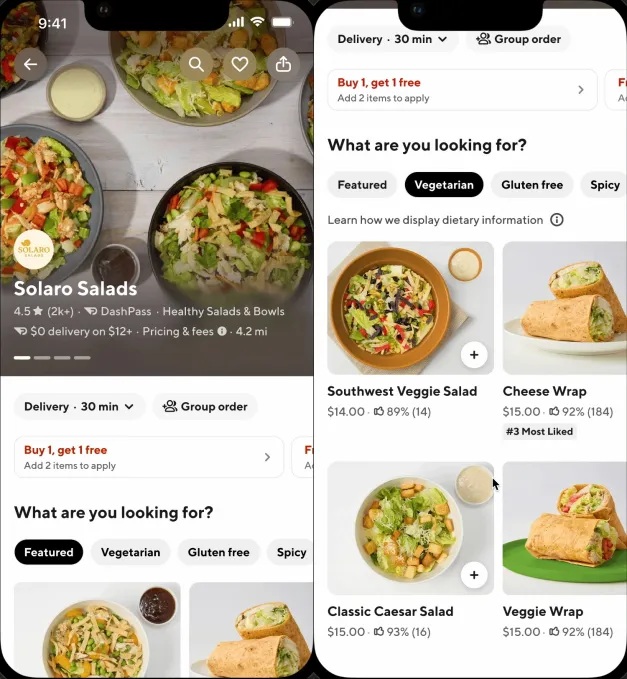
The company announced a creator program to pay users for producing short-form videos of their meals, rolled out “Going Out” dining rewards, and introduced AI-powered personalization tools.

The creator program, open initially in 20 U.S. cities such as Atlanta, Austin, Miami, and San Francisco, will compensate participants who record videos of local dishes. The goal is to bring discovery into the app, letting users preview meals before they order. Uber Eats piloted a similar TikTok-style feed last year, underscoring how delivery apps are racing to embed content into their platforms as a way of keeping users engaged. DoorDash has not yet detailed its monetization structure for creators, but said the initiative will expand nationwide through the end of the year.

Another step is Going Out, a feature that rewards customers for dining in restaurants. DashPass members can earn exclusive benefits and redeem offers when eating out, with early testers receiving an average of $9 in value per order. Rewards are now live at thousands of restaurants across the U.S. and Australia, and for a limited period, even non-members will gain access.

“With Going Out, you can find and redeem exclusive in-app offers when you dine in and earn rewards just for coming back,” said Parisa Sadrzadeh, vice president of strategy and operations, at a press event on Monday. “This year, Going Out customers received an average of $9 in value per order when using offers.”

The feature positions DoorDash in direct competition with companies like OpenTable and Resy, especially as it integrates with SevenRooms, the hospitality platform it acquired earlier this year, to allow in-app reservations.

Artificial intelligence is also playing a bigger role. The DoorDash app now generates personalized recommendations based on user history, budget, dietary needs, location, and even time of day. At checkout, a “Complement your Cart” section proposes add-ons to simplify grocery shopping.

Meanwhile, new smart tags help users filter restaurant menus by identifying dishes as vegetarian, gluten-free, high-protein, or spicy, drawing from reviews, text, and photos. These tags are already live in the U.S., Canada, Australia, and New Zealand.

“We’re looking at an individual restaurant item, and we use every piece of information we have. The customer reviews, the text from the merchant, the photo of the item, to start to infer things about those items,” Austin Haugen, DoorDash’s VP of product, said at the event. “So we can learn this item is vegetarian, this one is gluten free, spicy, high in protein, etc. Once we infer this about the items, you’ll start to see these tags around the app.”

Beyond food, the company has expanded its comparison shopping tools to cover categories like beauty, electronics, and pet supplies, building on a feature previously limited to alcohol.

The strategy reflects an intensifying battle among delivery giants to capture not just orders but consumer attention and loyalty. Uber Eats has leaned on cross-platform perks with Uber’s rides and has been experimenting with its own video-driven discovery features. Grubhub, meanwhile, has turned to partnerships, such as its tie-up with Amazon Prime, to expand its equivalent of DashPass.

Each company is trying to redefine itself as more than a logistics network: Uber Eats as an integrated lifestyle platform, Grubhub as a membership-driven service, and DoorDash as a hybrid of marketplace, media hub, and AI-powered shopping assistant.

OpenAI’s Revenue Hits $4.3bn in First Half of 2025, But Cash Burn Remains Heavy

0

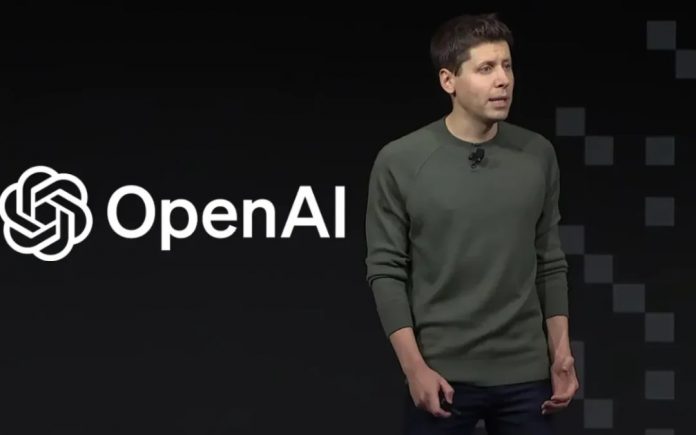
OpenAI generated about $4.3 billion in revenue in the first half of 2025, according to financial disclosures to shareholders reviewed by The Information. The figure represents a 16% jump over its total revenue for all of 2024, underscoring the scale of demand for artificial intelligence tools like ChatGPT.

At the same time, the disclosures show the AI company is still spending aggressively to secure its lead. OpenAI reported a cash burn of $2.5 billion in the first six months of the year, largely driven by the immense cost of running and developing large-scale AI models.

Heavy R&D Spending

The report highlights that OpenAI poured $6.7 billion into research and development during the period, a level of spending unmatched in the sector. Even after such outlays, the company closed the half-year with $17.5 billion in cash and securities, giving it substantial firepower to pursue expansion despite mounting costs.

OpenAI told investors it expects to meet its full-year revenue goal of $13 billion while keeping cash burn within its $8.5 billion target.

Valuation and Liquidity Moves

The financial disclosures land as OpenAI continues to explore ways to broaden its capital base. In August, Reuters reported the company was in early discussions about a stock sale allowing employees to cash out, a move that could value the firm at roughly $500 billion. Such secondary sales are increasingly common among late-stage private companies as they balance high valuations with the need to retain talent.

Investor appetite remains strong for Nvidia, which has benefited enormously from the AI boom. The company announced last week that it will invest up to $100 billion in OpenAI and supply data-center chips critical to scaling the company’s operations. The partnership links OpenAI more closely to the dominant supplier of AI infrastructure, ensuring a steady pipeline of computing power even as rivals like Anthropic, Google DeepMind, and xAI expand their own model development.

How OpenAI Stacks Up

While OpenAI’s revenue trajectory is the steepest in the industry, its burn-to-revenue ratio is far higher than its peers. By comparison, Google DeepMind — folded into Google’s broader AI division — is estimated to spend several billion annually, but Alphabet’s vast advertising revenues cross-subsidize those costs, shielding investors from the kind of direct burn rate OpenAI is shouldering.

Anthropic, backed by Amazon and Google, has pursued a more measured growth strategy. Its last reported figures suggested annualized revenue in the low billions, but with lower infrastructure costs as it leaned heavily on its cloud backers for credits and partnerships. xAI, Elon Musk’s entrant, has raised billions but is still at an earlier stage of monetization, focusing on consumer subscriptions and integrations with Tesla and X.

In this context, OpenAI’s $6.7 billion R&D spend in just six months signals both its scale and its structural disadvantage: unlike DeepMind, it lacks a parent company with diversified revenue streams, and unlike Anthropic, it must sustain massive compute costs more directly on its balance sheet.

The Assumptions

For financial markets, OpenAI’s numbers highlight the paradox of generative AI: surging top-line growth paired with eye-watering costs. Investors are expected to interpret the $4.3 billion revenue haul as validation of enterprise adoption and ChatGPT’s stickiness, but the $6.7 billion R&D spend underlines how capital-intensive the race for model dominance has become.

Behaviorally, the disclosures may harden a view among investors that only a handful of players — those with access to vast computing resources and strategic partners like Nvidia — can realistically compete at scale. At the same time, the looming $500 billion valuation could spark debate in financial circles about whether OpenAI is entering “mega-cap tech” territory in private markets, or whether its cash burn points to a model that will remain structurally expensive for years.

With OpenAI signaling confidence in its full-year revenue and cash-burn targets, markets may treat its disclosures as evidence that the AI wave remains in full force — but also as a reminder that profitability, not just scale, is the long-term hurdle.

Tekedia Capital Joins Paul Graham, Others To Seed Nozomio with $6.2m

0

Tekedia Capital joins Paul Graham (a founder of YCombinator), executives in OpenAI, and other global investors to seed Nozomio, with $6.2 million, under the solo and singular one-person coding prodigy Arlan Rakhmetzhanov.

Arlan’s story is a magical one: from Kazakhstan to Silicon Valley for an advanced context augmentation system for AI agents . We wish this secondary school dropout the best of luck as he takes Nozomio to the next level.

I started Nozomio in high school six months ago as an AI agent for codebases that could cross-reference multiple repos, answer questions, and help developers onboard themselves. I failed.

But I knew there was something in the agent space that every developer wants: the right context.

Right before my Y Combinator batch, I was struggling to give coding agents the right context. They missed versions, filled up the context window, and used incorrect frameworks. That is when I built the first iteration of Nia, which is now an augmentation layer for AI agents.

Context is the most important problem in the agent space. It prevents AI systems from achieving superhuman code intelligence, and I want to solve it.

The current state of Nia might change a thousand times, but the problem will stay the same. Even as an MCP, which is very novel and underdeveloped, Nia has already improved every coding agent by at least 30%. I am on the mission to 100x it.

Periodic Labs Emerges from Stealth With $300m Funding, Aiming to Build AI Scientists for Materials Discovery

0

Periodic Labs, a startup founded by some of the most influential minds in artificial intelligence, launched out of stealth on Tuesday with a massive $300 million seed round.

The funding, unusually large for a company at this stage, reflects the ambition of its mission: to automate scientific discovery through AI-driven laboratories.

The round was backed by an elite roster of investors from both the tech and scientific worlds, including Andreessen Horowitz, DST, Nvidia, Accel, Elad Gil, Jeff Dean, Eric Schmidt, and Amazon founder Jeff Bezos.

From AI Breakthroughs to Scientific Frontiers

Periodic Labs was founded by Ekin Dogus Cubuk and Liam Fedus. Cubuk previously led the materials and chemistry team at Google Brain and DeepMind, where he helped develop GNoME, an AI tool that discovered more than 2 million new crystals in 2023—materials researchers say could one day power entirely new generations of technology.

Fedus, meanwhile, is a former VP of Research at OpenAI and one of the creators of ChatGPT. He also led the team behind the first trillion-parameter neural network. The company’s small team is composed of scientists and engineers who have worked on major AI and materials science initiatives, including OpenAI’s agent Operator and Microsoft’s MatterGen, a large language model for materials discovery.

Automating Discovery

Periodic Labs describes its mission as building “AI scientists.” In practice, this means creating labs where robots conduct experiments, collect data, and learn from each cycle, iterating in ways that mimic and potentially accelerate the scientific method.

The startup’s first focus is superconductors—materials capable of conducting electricity with little to no resistance. Today’s superconductors are expensive, difficult to produce, and require extreme conditions like supercooling. If Periodic Labs can invent new materials that perform better under easier conditions, it could reshape industries from power transmission to computing.

Another priority is building a vast database of physical-world data generated by its AI scientists. “Until now, scientific AI advances have come from models trained on the internet,” the company said in a blog post. But with the internet as a data source now “exhausted,” Periodic Labs argues that the next breakthroughs will depend on fresh, real-world experimental data.

A Field Heating Up

While Periodic Labs is one of the most heavily funded entrants in this space, it is not alone. Automating chemistry and materials discovery with AI has been a growing focus of academic research since at least 2023. Startups such as Tetsuwan Scientific, nonprofits like Future House, and institutions like the University of Toronto’s Acceleration Consortium are also exploring how machine learning can accelerate breakthroughs in materials science.

But Periodic’s $300 million seed round sets it apart. It represents one of the largest initial financings for a science-focused AI company and suggests that Silicon Valley’s top investors believe the combination of AI and lab automation could lead to transformative discoveries.

Beyond AI Chatbots

The launch highlights a broader shift in the AI sector. For years, breakthroughs like ChatGPT and generative image models have defined public understanding of AI. But with models trained largely on the internet reaching diminishing returns, investors are now backing ventures that can create their own experimental data.

Companies like Periodic Labs hope to do for physical science what ChatGPT did for language: compress decades of trial-and-error into accelerated cycles of learning. Compared with efforts in pharmaceuticals, where AI is already being used to predict drug candidates, materials discovery has lagged. Periodic’s deep pockets and star-studded founding team suggest that may soon change.

The opportunity is believed to be about scale: creating not just one AI scientist, but many, each running thousands of experiments to invent materials that today exist only in theory.