DD
MM
YYYY

PAGES

DD
MM
YYYY

spot_img

PAGES

Home Blog Page 414

Meta Moves Toward Settlement With Nigerian Regulator Over $32.8m Data Privacy Fine

0

Meta Platforms Inc., parent company of Facebook and Instagram, has taken steps to resolve its ongoing legal battle with Nigeria’s data watchdog out of court.

On Friday, the company’s lawyers told the Federal High Court in Abuja that Meta and the Nigeria Data Protection Commission (NDPC) have entered advanced settlement discussions regarding a $32.8 million fine and compliance orders imposed on the social media giant for alleged privacy breaches involving Nigerian users.

The disclosure came as Justice James Omotosho was set to rule on NDPC’s preliminary objection against Meta’s lawsuit and the company’s motion to amend its filings. Instead, both parties confirmed they were pursuing a negotiated resolution.

Meta’s lawyer, Fred Onwuobia, SAN, asked the court to defer its ruling, explaining that “draft terms of settlement have been exchanged” and that both sides feared a ruling might derail talks. NDPC’s counsel, Adeola Adedipe, SAN, confirmed this, noting that discussions “have advanced appreciably” and requesting an adjournment to return with terms that could be entered as a consent judgment.

Justice Omotosho agreed, stating that the court “encourages settlement” and adjourned proceedings to October 31, 2025, for either the adoption of settlement terms or the delivery of his consolidated ruling.

The Legal Dispute

The case originated from NDPC’s February 18, 2025, decision to fine Meta and issue eight corrective orders under the Nigeria Data Protection Act, enacted by President Bola Tinubu in June 2023. The regulator acted on a petition from the Personal Data Protection Awareness Initiative (PDPAI), which accused Meta of engaging in behavioral advertising on its platforms without the express consent of Nigerian users.

The NDPC also alleged that Meta failed to submit its 2022 compliance audit, breached cross-border data transfer rules, and even processed data belonging to non-users of its platforms.

Meta challenged both the findings and the process, arguing it had been denied fair hearing and due process. In its filings, the company maintained that the Commission failed to provide adequate notice or an opportunity to respond before issuing enforcement orders. Lead counsel Prof. Gbolahan Elias, SAN, previously urged the court to quash the orders, arguing they violated Section 36 of the Nigerian Constitution.

The NDPC countered that Meta’s suit was “grossly incompetent,” insisting the Federal High Court lacked jurisdiction. It further claimed that Meta’s filings were procedurally defective and an attempt to reframe reliefs already decided upon ex-parte.

NDPC’s Broader Regulatory Crackdown

The Meta case is part of a wider crackdown by the NDPC, which has begun flexing its regulatory muscle against major corporations. In a recent parallel action, the regulator fined Multichoice Nigeria N766.2 million for allegedly breaching data privacy rights of both subscribers and non-subscribers, including through illegal cross-border data transfers.

Analysts say these fines signal Nigeria’s intent to enforce its new data protection regime more aggressively. For Meta, however, the penalties represent another clash with regulators over privacy practices. Globally, the company has faced multiple lawsuits and billion-dollar fines in Europe and the U.S. for how it handles user data — battles that have shaped its compliance strategies and reputation.

If settlement talks succeed, the October adjournment could result in a consent judgment, sparing Meta a potentially lengthy legal fight. However, the outcome will also set a precedent for how Nigeria’s new data law is enforced against global tech firms operating in its market.
Tesla Faces Investor Pushback Over Elon Musk’s $1 Trillion Pay Deal

0

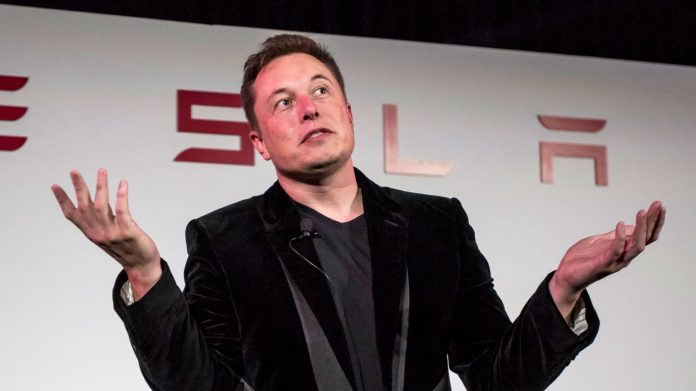
Tesla’s upcoming shareholder vote on CEO Elon Musk’s proposed $1 trillion compensation plan is drawing intense opposition, setting the stage for what could become another protracted legal battle reminiscent of Musk’s previous $50 billion pay deal that was struck down in court.

On Thursday, a coalition of unions, state treasurers, and institutional investors — including the SOC Investment Group, the American Federation of Teachers, and New York City Comptroller Brad Lander — released a joint letter urging shareholders to reject the package. They argued that the terms are excessive, the performance metrics lack rigor, and the EV maker’s board remains too beholden to Musk to negotiate independently on behalf of shareholders.

The plan, announced last month, is designed to stretch over the next decade. To unlock the payout, Musk would need to lift Tesla’s market capitalization to $8.5 trillion while hitting milestones such as annual earnings of $400 billion, the production of one million Optimus humanoid robots, and the delivery of roughly 12 million electric vehicles by 2035. Yet critics say some of these goals are far less demanding than they appear. For example, Tesla sold more than 1.8 million vehicles in 2024, making the average annual delivery target of 1.2 million seem underwhelming rather than ambitious.

The investor group also took aim at Musk’s split focus. With the billionaire simultaneously running SpaceX, Neuralink, and social media platform X (formerly Twitter), Tesla’s board has not secured any commitment that he will devote more of his time and energy to the carmaker.

“Shareholders should not be asked to underwrite the world’s richest person with vague milestones and without firm commitments to the company he leads,” the letter stated.

Tesla’s board, however, has defended the package vigorously. In a post on X, it insisted the deal is designed to align Musk’s incentives with shareholder value creation, adding: “If Elon Musk doesn’t deliver results, he receives nothing.” The company argued that the pay structure could generate trillions of dollars in returns for investors and “accelerate global prosperity.”

But the pushback from institutional investors raises the likelihood of a courtroom showdown, much like Musk’s earlier compensation deal. In 2018, Tesla shareholders approved a record $50 billion package for Musk, which also hinged on ambitious market capitalization and revenue milestones. That deal immediately drew lawsuits, with opponents alleging the board had rubber-stamped the package without sufficient oversight.

In January 2024, a Delaware Chancery Court judge annulled the award, ruling that the process behind the deal was flawed and that the package was “unfathomable” in scale. The court found that Tesla’s directors had failed to properly disclose key information to shareholders and had not acted independently of Musk.

The Delaware decision was a stunning rebuke and underscored broader concerns about Tesla’s corporate governance. Musk appealed the ruling, but the case cast a long shadow over Tesla’s leadership structure and raised alarms among governance experts worldwide.

That history looms large over the current $1 trillion proposal. Many observers believe that, even if shareholders approve the deal at Tesla’s annual general meeting in November, opponents could quickly turn to the courts to challenge it — potentially sparking years of litigation similar to the Delaware case.

Adding to the uncertainty, Tesla’s financial performance has been volatile. Sales and revenue slumped earlier this year amid intensifying competition from Chinese EV makers and growing backlash over Musk’s polarizing political activities. The company staged a recovery in the third quarter, reporting record deliveries, but analysts warn that the swings in performance underline how risky such a massive pay arrangement could be.

Against this backdrop, Musk’s compensation saga appears headed down a familiar road: a high-stakes vote followed by likely courtroom battles. The outcome could determine not just Musk’s personal wealth trajectory — which already makes him the world’s richest person — but also the direction of Tesla’s governance at a time when investor patience with the CEO’s excesses is wearing thin.

Zelis Healthtech Hires JPMorgan, Goldman Sachs in Preparation for $17bn IPO

0

Zelis Healthcare is preparing for a $17 billion initial public offering, according to information obtained by Business Insider, marking one of the most anticipated listings in the healthtech space in recent years.

The healthcare payments company has confidentially filed its S-1 with regulators and brought on Goldman Sachs and JPMorgan as lead underwriters, four people with direct knowledge of the deal, quoted by BI, said. The firm, which helps hospitals and insurers streamline medical claims and electronic payments, is now generating nearly $1 billion in earnings before expenses such as taxes and interest, according to one of the sources.

While Zelis had initially been eyeing a listing in the fourth quarter of 2025, it has shifted its target to the first quarter of 2026. The delay aligns with a broader trend of healthcare IPO hopefuls pacing themselves for more favorable conditions, given the rocky market climate and stricter benchmarks public investors now demand.

The company is backed primarily by Bain Capital and Parthenon Capital, two private equity giants that have spent years consolidating healthcare payments technology. Bain first invested in Zelis during its 2019 merger with payments platform RedCard, while Parthenon had backed both firms prior to their tie-up. That merger signaled Zelis’s pivot from medical claims management to becoming a central payments hub between health insurers and providers. Today, it services more than 750 payers, helping them manage reimbursements, claims, and provider communications.

A potential $17 billion valuation

Bloomberg reported in October 2024 that Mubadala Capital, Norwest Venture Partners, and HarbourVest acquired a minority stake in Zelis at a valuation of about $17 billion. The deal underscored the surging interest in payment integrity and healthcare transaction platforms—an area that inefficiencies have long plagued.

The IPO buzz around Zelis comes in the wake of a sluggish year for healthtech debuts. Only a handful of names braved the market in 2025: physical therapy company Hinge Health in May, diabetes care company Omada Health in June, and AI-powered medtech firm Heartflow in August. Analysts said those listings tested investors’ appetite but highlighted how selective Wall Street has become.

By contrast, Zelis’s profitability sets it apart. Unlike venture-backed startups chasing growth, private equity-backed Zelis already throws off hundreds of millions in annual profit, making it more likely to meet the “high bar” public markets now demand. Bankers told BI in July that Zelis, with its stable business model and recurring revenue, represents the kind of defensive growth story investors are increasingly drawn to.

Waystar as a precedent

Many expect Zelis to follow a playbook similar to Waystar, another private equity-backed healthcare payments company that went public in June 2024. Waystar’s IPO valued it at $3.5 billion, but its shares have since risen roughly 85%, pushing its market cap above $7 billion. Analysts say that success shows Wall Street’s appetite for proven operators in healthcare finance.

Zelis is seen as a payments and communications backbone for insurers and hospitals, which is much broader than Waystar’s focus on hospital revenue cycles. It is believed that the difference could make its IPO an even more compelling story.

Zelis is also operating in a field where few large-scale private companies exist. New Mountain Capital’s Machinify, launched in early 2025 with a $5 billion valuation, is among the few players focusing on insurer-side health payments. Machinify moved aggressively this summer, acquiring public company Performant Healthcare for $670 million to strengthen its foothold in payment integrity.

Meanwhile, younger startups like Abridge are tackling adjacent problems, such as using AI to improve clinical documentation. But Zelis’s focus on the complex relationship between payers and providers places it in a less crowded—and highly lucrative—niche.

Since its 2019 merger with RedCard, Zelis has pursued bolt-on acquisitions to expand its offerings. Its most recent move came in June, when it acquired assets from Medxoom to build a mobile-first price transparency platform for health insurers, a feature that dovetails with new U.S. regulatory requirements around healthcare pricing.

IPO climate

The broader IPO market has shown sparks of revival, with tech names like Figma and Klarna delivering blockbuster debuts. Yet for healthcare companies, 2025 remained largely a waiting game. Analysts, bankers, and investors have suggested that 2026 could represent the first true “wave” of digital health IPOs since the sector’s pandemic-era boom.

Against that backdrop, Zelis stands out. With a proven profit engine, $17 billion valuation whispers, and heavyweight backers like Bain and Parthenon, the company appears primed to be one of the sector’s defining public listings in 2026.

OpenAI’s Invite-Only Video App Sora Rockets to No. 1 on App Store: How to Get An Invite

0

OpenAI’s latest consumer tool, Sora, has surged to the top of Apple’s App Store as the number one free app in the U.S., despite being accessible only by invitation.

Launched on Tuesday, the app allows iPhone users to generate short-form AI videos that can be shared in a built-in feed, bringing OpenAI squarely into the social media and content creation arena.

Currently, Sora is available only in the U.S. and Canada and requires iOS 18.0 or later. Users must log in with an OpenAI account, request access, and then enter an invite code. Access codes are being prioritized for paying ChatGPT Plus subscribers, though some are circulating informally through OpenAI’s Discord server, Reddit communities, and X. Once granted access, users can create AI-driven videos using text prompts or images, remix other users’ posts, and even cameo as characters in the generated clips.

The app is powered by OpenAI’s new Sora 2.0 model, described by the company as more “physically accurate, realistic, and controllable” than its predecessor, which debuted in early 2024. That model marked a milestone for AI video research, drawing both excitement and scrutiny for its ability to render realistic scenes of people, environments, and objects that obey the laws of physics more convincingly than prior attempts.

The decision to roll out Sora through an invite-only model has helped fuel its rapid rise in visibility. OpenAI has echoed the viral debut of apps like Clubhouse, which leaned on exclusivity and social buzz to build momentum, by topping the iOS charts within days of launch. Screenshots and short clips of Sora-generated videos are already being reposted on TikTok, X, and Instagram, feeding interest among users still waiting for access.

The early traction suggests pent-up demand for consumer-facing AI video tools, a space that until now has been largely dominated by specialized startups like Runway and Pika Labs.

How to get an invite

Getting into Sora is currently a multi-step process. After downloading the app and logging in with an OpenAI account, users are prompted with a “Notify me when access opens” option. That’s followed by a request for an access code.

OpenAI said it is prioritizing ChatGPT Plus subscribers for early access. For everyone else, the fastest route is to track down codes being shared by existing users on the official OpenAI Discord server, Reddit threads, or social media platform X. The app is currently restricted to the U.S. and Canada, though a wider international rollout is planned.

Video as AI’s next frontier

The launch of Sora is being closely watched across Silicon Valley and Hollywood. Video is widely seen as the “holy grail” of generative AI—far more computationally complex and socially impactful than text or still images. While image generators such as MidJourney and DALL-E have become mainstream, high-quality video production remains expensive and limited to small groups of creators.

OpenAI is signaling ambitions to not just power professional content creation but to own the pipeline of casual, everyday AI video use by creating a free, mobile-first app. Analysts note that this move positions OpenAI directly in competition with TikTok, Instagram Reels, and YouTube Shorts—all of which thrive on short-form video discovery. If OpenAI can leverage its AI infrastructure to generate fresh, viral content, it could alter the balance of power in the attention economy.

The timing of Sora’s debut also carries strategic weight. TikTok is facing mounting political scrutiny in the U.S., including potential regulatory challenges. Meta continues to experiment with generative AI features on Instagram, while Google-owned YouTube has leaned into creator tools and licensing agreements to manage AI’s role in video.

Meanwhile, OpenAI’s move comes as rivals like Stability AI and Anthropic are racing to refine their own multimodal models. But unlike those players, OpenAI is betting on consumer distribution as much as research.

Challenges and risks ahead

However, the app’s success raises difficult questions. Copyright experts have warned that AI-generated video could accelerate disputes over intellectual property, especially if users “remix” content without attribution. There are also broader concerns about misinformation, given how easily realistic video can be weaponized in politics or social debates. Regulators in the U.S. and Europe are already scrutinizing synthetic media, and Sora’s viral growth may push those conversations to the forefront.

From a business perspective, scaling video generation is also costly. Training and running multimodal models requires massive compute power, and serving millions of consumer users will put pressure on OpenAI’s partnerships with Microsoft Azure and other infrastructure providers.

Despite the risks, Sora’s rapid ascent underscores how aggressively OpenAI is moving to establish itself as more than a research lab or enterprise partner. With ChatGPT already entrenched in the productivity space, Sora opens a new front: entertainment, creativity, and social engagement.

For now, the invite-only strategy is keeping demand high, and Sora’s climb to the top of the App Store charts suggests that OpenAI has once again tapped into the viral edge of consumer AI.

Walmart-Backed OnePay to Roll Out Crypto Trading as “Everything App” Ambitions Grow

0

OnePay, the fintech firm majority-owned by Walmart, is preparing to add cryptocurrency trading and custody to its mobile app later this year, CNBC has learned.

The move will allow users to buy, sell, and hold bitcoin and ether directly inside the app, with the help of startup Zerohash, according to people with knowledge of the matter who declined to be identified before an official announcement.

Building Toward the “Super App”

Founded in 2021 by Walmart and venture firm Ribbit Capital, OnePay has steadily layered services onto its platform as it aims to become an American “super app,” comparable to China’s WeChat or Southeast Asia’s Grab. Its services now include high-yield savings accounts, credit and debit cards, buy-now-pay-later loans, and even wireless plans.

OnePay strengthens its pitch as a one-stop destination for financial and lifestyle services by adding crypto. Customers will soon be able to hold bitcoin and ether in-app, convert digital tokens into cash, and spend balances on purchases or use them to pay off card debts.

Although spokespeople for New York-based OnePay and Chicago-based Zerohash declined to comment, insiders said the move is considered a “core offering” in the company’s growth roadmap.

The timing reflects a broader shift in Washington. Since President Donald Trump’s election, federal regulators have adopted a friendlier stance toward digital assets, giving financial firms more room to innovate.

Wall Street giants are seizing the opening. Last month, Morgan Stanley announced it would soon allow retail investors to trade crypto through its E-Trade subsidiary.

Zerohash, meanwhile, is positioning itself at the center of this transformation. The company raised $104 million last month from financial heavyweights, including Morgan Stanley and Interactive Brokers, part of its plan to become the default back-end provider for banks and brokers entering crypto.

Competing in a Crowded Market

The expansion comes amid intense competition for OnePay. Most of its rivals — from PayPal and Venmo to Block’s Cash App and Robinhood — already offer crypto trading.

Even so, OnePay’s rapid ascent has been striking. It is now ranked No. 5 on Apple’s App Store list of free finance apps, ahead of JPMorgan Chase, Robinhood, and Chime. The handful of apps above it, including PayPal and Cash App, all offer crypto, suggesting OnePay’s move is designed to close one of its last major product gaps.

OnePay also enjoys a unique distribution advantage through Walmart’s retail footprint. The app is integrated directly into Walmart’s physical and online checkout process, exposing it to the 150 million Americans who shop at the retailer every week.

Crucially, Walmart structured OnePay as an independent company to ensure it could expand beyond Walmart’s core customer base and appeal to Americans underserved by traditional banks.

Risks and Challenges Ahead

The crypto industry remains volatile, and even with a friendlier political climate, future administrations or regulators could revisit stricter oversight. That risk is compounded by the fact that cryptocurrencies like Bitcoin and Ether can swing sharply in value, potentially deterring mainstream consumers who are new to digital assets.

Integrating crypto seamlessly into OnePay’s broader suite of services could also prove challenging. Analysts have pointed to execution as a critical factor that will significantly determine its success. This is because glitches, compliance missteps, or security issues could erode the trust OnePay has built among its growing user base.

Finally, by moving deeper into crypto, OnePay risks exposing itself to the same reputational and regulatory pressures that have dogged larger players. Apps like PayPal and Robinhood have faced questions over consumer protections and transparency in their crypto products. Similar scrutiny could quickly follow OnePay as it scales.

However, the addition of crypto underscores OnePay’s ambition to become an all-in-one hub for finance and payments, marking Walmart’s most expansive foray yet into digital banking. It is believed that in a financial landscape where the lines between retailers, banks, and fintechs continue to blur, OnePay’s move is as much about future-proofing as it is about growth.