DD
MM
YYYY

PAGES

DD
MM
YYYY

spot_img

PAGES

Home Blog Page 4146

Gary Gensler faces Market Manipulation Charges

1
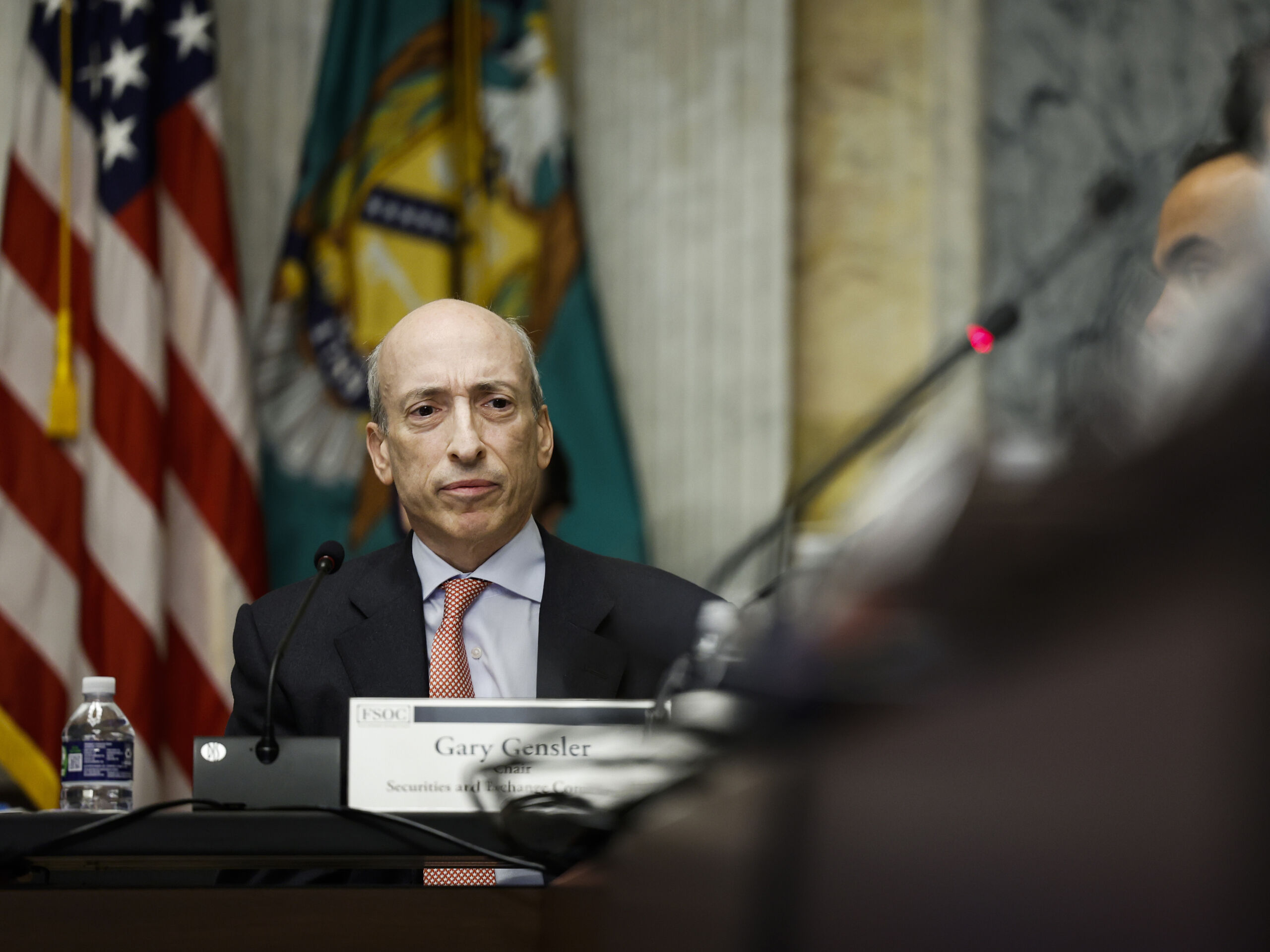
WASHINGTON, DC - OCTOBER 03: Securities and Exchange Commission (SEC) Chair Gary Gensler listens during a meeting with the Treasury Department's Financial Stability Oversight Council at the U.S. Treasury Department on October 03, 2022 in Washington, DC. The council held the meeting to discuss a range of topics including climate-related financial risk and the recent Treasury report on the adoption of cloud services in the financial sector. (Photo by Anna Moneymaker/Getty Images)

Gary Gensler, the chairman of the Securities and Exchange Commission (SEC), is facing market manipulation charges from a group of cryptocurrency investors, Citadel Securities and Citadel Market Maker, two prominent financial firms. The charges allege that Gensler has engaged in short-selling activities in stocks related to cryptocurrencies.

The group claims that Gensler has been using his position and influence to spread false and misleading information about digital assets, such as Bitcoin and Ethereum, in order to drive down their prices and benefit his own interests. The group alleges that Gensler has a conflict of interest, as he is a former partner of Goldman Sachs, a major player in the traditional financial system that competes with cryptocurrencies.

The group also accuses Gensler of abusing his regulatory power by imposing excessive and arbitrary rules on crypto-related businesses and activities, stifling innovation and growth in the sector. The group has filed a lawsuit against Gensler in a federal court, seeking damages and an injunction to stop him from further interfering with the crypto market.

The charges allege that Gensler has engaged in short-selling activities in stocks related to cryptocurrencies, such as AMC Theatres and GameStop, through two large investment companies: Vanguard Group and BlackRock. The short-selling activities are said to have caused significant losses for retail investors who were betting on the rise of these stocks.

The charges have sparked a public outcry, with a petition on Change.org demanding Gensler’s resignation from his post at the SEC. The petition claims that Gensler has failed to protect retail investors from fraud and manipulation by Citadel Securities and Citadel Market Maker, who are accused of using illegal tactics such as naked short selling and dark pool abuse. The petition also criticizes Gensler’s recent stance on digital asset exchanges, which he has urged to comply with the same regulations as securities exchanges.

Gensler has defended his actions, saying that he has followed the rules of the capital markets and that he aims to safeguard market integrity and prevent fraud and manipulation. He has also stated that he supports the development of a crypto market that protects investors and meets the standards of the market regulations. Gensler’s supporters argue that he is a visionary leader who is trying to bring more transparency and accountability to the crypto industry.

The charges against Gensler are still under investigation, and it is unclear what the outcome will be. However, the controversy has put Gensler and the SEC under intense scrutiny, highlighting the challenges and opportunities of regulating the emerging and volatile crypto market.

Meanwhile, Venture capital firm Andreessen Horowitz will open its first international office in London later this year, citing the country’s greater “political will” towards supporting cryptocurrencies. The U.K. said last year that it would introduce new regulations for digital assets. Crypto firms are considering moving operations outside the U.S. following a Securities and Exchange Commission crackdown on companies like Binance and Coinbase.
Tether Just Printed One Billion Dollar USDT

0

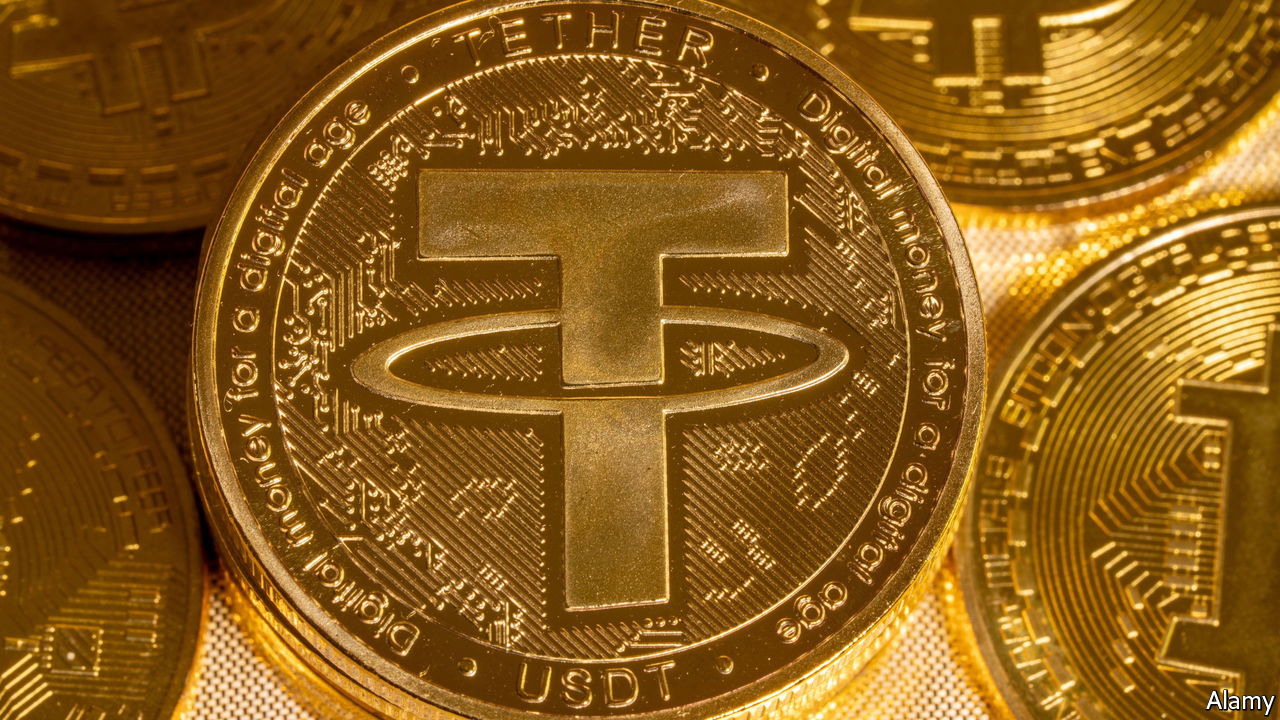
Tether (USDT) is a stablecoin that is pegged to the US dollar on a 1:1 basis. It is one of the most popular and widely used cryptocurrencies in the world, with a market capitalization of over $83 billion as of June 2023. Tether claims that every USDT token is backed by a corresponding amount of fiat currency or other assets in its reserves. However, Tether has faced criticism and controversy over its lack of transparency and auditability, as well as its involvement in market manipulation and legal issues.

On June 11, 2023, Tether announced that it had printed one billion USDT tokens, which were transferred to an unknown wallet. This was the largest single issuance of USDT in history, surpassing the previous record of 800 million USDT in April 2023. The reason for this massive minting is unclear, but some speculate that it could be related to the increasing demand for USDT in the crypto market, especially in China, where USDT is widely used as a means of circumventing capital controls and accessing global exchanges.

This is a significant milestone for Tether, as it shows the growing demand and adoption of its stablecoin in the crypto space. According to Tether’s website, the total supply of USDT tokens across all blockchains is now over 86 billion, with more than 40 billion on Tron alone.

The impact of this new supply of USDT on the crypto market is also uncertain. Some argue that it could boost the liquidity and trading volume of cryptocurrencies, as well as provide support for their prices. Stablecoins are useful for traders and investors who want to hedge against the volatility of other cryptocurrencies, as well as for users who want to transact with traditional currencies across the blockchain.

Tether claims that its tokens are fully backed by its reserves, which include cash, cash equivalents, and other assets. However, some critics have questioned the transparency and accuracy of Tether’s reserve audits, as well as the potential legal and regulatory risks that the platform faces.

But where is the proof that Tether has such a large number of reserves? Tether has not provided any verifiable audit or independent verification of its reserves since 2018, when it was revealed that it only had 74% of the required reserves. Since then, Tether has been involved in several legal disputes and investigations by regulators and authorities, who have accused it of fraud, market manipulation and money laundering. Some critics and skeptics have suggested that Tether is printing USDT tokens out of thin air.

Despite these challenges, Tether remains the dominant stablecoin in the market, with a market capitalization of over 83 billion dollars and a daily trading volume of over 35 billion dollars. Tether supports multiple blockchains, such as Ethereum, Tron, EOS, and Algorand, and can be used for various purposes, such as payments, remittances, DeFi, gaming, and NFTs. Tether aims to disrupt the conventional financial system by providing a more modern and efficient approach to money.

Nigerian Startup Termii Raise $3.65 Million in New Funding, to Expand Operations in Other African Countries

0
Fund, money cash dollar

Nigerian communications platform that allows African businesses to send messages to anyone across sms, email, voice, and instant messaging channels, Termii, has raised $3.65 million in new funding to expand operations to other African countries.

The funding round was led by a pan-African early-stage investor ventures platform, with participation from a New York-based fund fintech collective and launch Africa ventures. Other backers include Ralicap Ventures, Nama Ventures, Aidi Ventures, NOA Capital, Adamantium Fund, and Probability Ventures.

The funding round also included angel investors such as Aubrey Hruby, partner at Tofino Capital, and Eamon Jubbawy of Onifido.

Termii disclosed that the funds raised will not be used for operational activities, but rather to enhance the company’s expansion initiatives. This includes the developing and promoting of existing and new products in new markets with a priority on Francophone African countries.

Speaking on the funding round, Termii CEO Emmanuel Gbolade said,

“This funding is a significant milestone for Termii and a testament to the incredible work we have been doing to transform customer engagement in Africa. We are thrilled to have the support of such esteemed investors who share our vision of empowering businesses to easily engage and support their customers anywhere in Africa.

Speaking on the eSIM feature, Emmanuel explained that African businesses can offer their employees and users the ability to own eSIM cards or branded sim cards with unlimited voice calls and texts, noting that it also allows remote working and customer support services with data to work without switching sims when they travel across cities in Africa and the U.S for example.

He said, “We plan to support more countries in the future, like countries in the UK. We plan to launch all these services in phases and have seen growing interest in this product from big tech and financial service providers and small enterprise businesses. We would be launching physically first in Nigeria at our conference this June and also in Ivory Coast, Ghana, and the U.S. After which we would explore other locations. However, other features of our app would be open for use across multiple African countries.”

Founded by Tayo Awe and Emmanuel Gbolade, and launched in 2019, Termii powers customer messaging for the next generation of African technology businesses by helping millions of African businesses communicate with their customers easily across multiple messaging channels.

The startup offers features such as direct-to-mobile notifications, rich SMS messaging, time-based OTPs, and cost-effective local and international calling for enterprise businesses. It is trusted by 4,438+ businesses.

Termii fills up a crucial gap by providing seamless integration of telecom services, solving the high message failure rates and complex setup requirements experienced by businesses across the continent.

Terra Classic (LUNC) Rebounds, TMS Network (TMSN) Soars, and Render Token (RNDR) Hits The Bottom This Week

0

Markets have been in a lull lately. Market leaders like Bitcoin and Ethereum have not moved much, with little to no gains for investors. They have been unable to break out of the fatigue resulting from the push and pull of the market forces. In addition, the SEC crackdown on Binance and Coinbase has pushed the market down, even as the dollar rise is pulling the market up. Every altcoin is reacting to the market in its own way – Terra Classic (LUNC) is on a rebound, and TMS Network (TMSN) is soaring, but Render Token (RNDR) has hit its bottom.

Here is what you need to know about these crypto tokens this week.

Terra Classic (LUNC) Is on a Rebound

Terra Classic (LUNC) surprised everyone when it registered a spike in its price this week. Terra ecosystem’s original token Terra Classic (LUNC) has been in a constant downtrend since September 2022. Terra Luna (LUNC) breached the $0.0001 mark multiple times in a single day. It remains on an upward trajectory even now.

At its height, Terra Classic (LUNC) was priced at over $116. The 2022 black swan event took down the entire Terra ecosystem. $45 billion of wealth was wiped off the market, and Terra Classic (LUNC) crashed, losing almost all its value. The rise in the value of Terra Classic (LUNC) has brought hope to its long-time investors. It remains to be seen whether Terra Classic (LUNC) can sustain this upward trajectory or fall back to the red zone.

TMS Network (TMSN) Continues its Roar in the Markets

TMS Network (TMSN) is an upcoming innovative decentralized exchange. TMS Network (TMSN) takes a unique approach to decentralized trading. It offers cryptos, CFDs, forex, and equities for trading on its platform. TMS Network (TMSN) users can invest in any of the 500 cryptocurrencies supported on the platform, or use them to invest or trade other assets. No account creation, no fiat currency, and no KYC verification are required to trade on TMS Network (TMSN).

Armed with a user-friendly interface and MetaTrader software suite compatibility, TMS Network (TMSN) hopes to give traders a familiar trading experience. With TMS Network (TMSN), fiat asset traders can finally experience the benefits of DeFi.

Currently, TMS Network (TMSN) is raising $12 million to fund the creation of the platform, of which it has already raised $6 million. Between the stage 1 presale and the ongoing stage 4 presale, TMS Network’s (TMSN) value has risen by 300% to $1.05. There’s consensus among analysts that TMS Network (TMSN) will grow between 4,000% and 7,000% by the end of this year. 

Render Token (RNDR) Hits Bottom

Built on the Ethereum blockchain, Render Token (RNDR) is meant to create a distributed network for sharing GPU capabilities. Render Token (RNDR) network connects artists that need GPU computing power with GPU owners who can rent it out to them.

While Render Token (RNDR) does provide an acceptable solution to the GPU crisis in the market, it has not received the acknowledgment from the market that it anticipated. As a result, Render Token (RNDR) has attracted little investor interest. The current fall in the price of Render Token (RNDR) to $2.21 can be attributed to traders booking profits. They may have caught on to the bearish pressures surrounding Render Token (RNDR) and exited their positions. It is difficult to say when Render Token (RNDR) will be able to cover those losses and start moving up again.


For more information on TMSN Network (TMSN):

Presale: https://presale.tmsnetwork.io/

Website: https://tmsnetwork.io/

Telegram: https://t.me/tmsnetworkio

Twitter: https://twitter.com/tmsnetwork_io

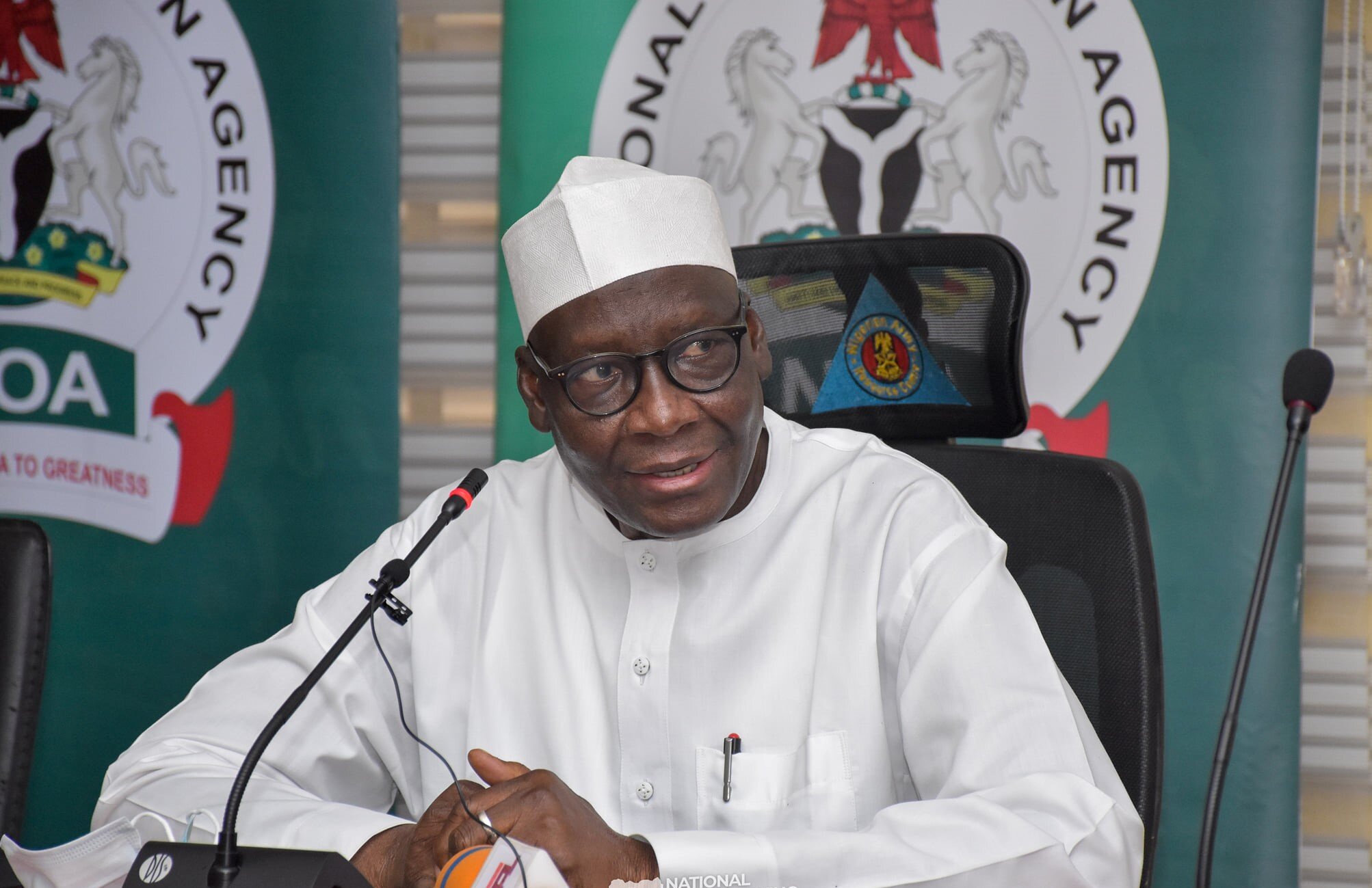
Imam Ogbomoso and NOA Revitalisation

0

Since its establishment in 1993, the National Orientation Agency (NOA) in Nigeria has been tasked with the crucial responsibility of raising awareness, shaping attitudes, and mobilising citizens to support government programmes and policies. Specifically, on its official website and other numerous publications, it frequently states that it was established “to consistently raise awareness, positively change attitudes, values, and behaviours; accurately and adequately inform; and sufficiently mobilise citizens to act in ways that promote peace and harmony”. While the main objective of the agency is to ensure “that government programmes and policies are better understood by the general public and mobilize favourable public opinion for such programmes and policies”.

However, the agency has faced challenges in effectively fulfilling its mandate, often struggling to bridge the gap between the government and the public. In this piece, our analyst explores the effectiveness of the NOA since its inception and emphasises the significant role played by Chief Imam of Ogbomoso in revitalising the agency through his proactive actions and community engagement during the initial stage of the impacts of fuel subsidy removal by President Bola Ahmed Tinubu. According to the viral sources, the Imam educated his followers about issues around the removal of fuel subsidy, in a video that was recorded during his sermon. The first curator of the video notes that “he is assisting the NOA in doing their statutory work. Religious, traditional, and community leaders should take a cue.”

While the public’s appreciation of his efforts continues, our analyst discovered Nigerians, especially on digital platforms, are not relenting in calling on concerned stakeholders to address structural problems at the agency. One of the key reasons for the NOA’s ineffectiveness has been the government’s failure to transparently inform the public about its policies and programmes. This lack of effective communication has led to misunderstandings, misinformation, and public discontent, as seen during the fuel subsidy crisis in 2012. Former Director General of the NOA, Mr. Idi Farouk, rightly pointed out that the government’s inability to clearly communicate the gains and temporary pains of the subsidy removal fueled the crisis.

In the midst of this communication gap, Imam Ogbomoso emerged as a beacon of hope, actively assisting the NOA in carrying out its statutory work. Through his religious leadership, community engagement, and informative sessions, the Imam played a crucial role in bridging the divide between the government and the people.

Imam Ogbomoso’s actions exemplify the immense influence religious, traditional, and community leaders hold in Nigerian society. These figures often command respect, trust, and loyalty from their followers, making them invaluable partners in mobilising public opinion and facilitating positive change. The Imam’s proactive approach and willingness to collaborate with the NOA showcased the potential for synergy between religious and governmental institutions.

The NOA can draw valuable lessons from Imam Ogbomoso’s initiatives. Firstly, the agency must prioritise transparent and effective communication as a fundamental pillar of its operations. It should actively engage with religious and community leaders, leveraging their reach and influence to disseminate accurate information and foster dialogue. Collaborative efforts, such as joint awareness campaigns and workshops, can go a long way towards creating a more informed and engaged citizenry.

The NOA should proactively engage citizens through various platforms, including social media, town hall meetings, and grassroots outreach programmes. By incorporating feedback mechanisms and actively seeking public opinion, the agency can demonstrate a genuine commitment to representing the interests and concerns of the people.