DD
MM
YYYY

PAGES

DD
MM
YYYY

spot_img

PAGES

Home Blog Page 4152

CoinFlip’s Olliv brings 300+ Crypto ATMs to Access Litecoin in Australia. Here’s Why the Aussies Love HedgeUp (HDUP)

0

As over 300 crypto ATMs from CoinFlip’s Olliv roll out in Australia, the Aussies are already getting excited about what this means for access to digital currencies. Not only does it give citizens of Australia easier access to cryptocurrency, but it also helps them make secure transactions with the security of blockchain technology.

>> Buy HedgeUp Now <<

Why This Is Important For The Blockchain Industry

The most appealing aspect of Olliv’s ATMs is that they allow users to access cryptos like Litecoin (LTC) in Australia, which is not something that can be done easily with traditional banking methods. This means that people are now able to more easily and securely access and use digital currencies like Litecoin (LTC) without having to rely on third-party services or exchanges.

The addition of these ATMs also helps to further the adoption of cryptocurrencies with Litecoin (LTC) being just one example among Australians. This is especially beneficial for those who may be just beginning to explore the cryptocurrency world and will become more comfortable using digital currencies as they become more familiar with them. Litecoin (LTC) is a crypto that many new investors are attracted to because of its low fees, fast transaction times, and decentralized nature.

Litecoin (LTC) is also a well-known and popular crypto, which makes it an ideal choice for CoinFlip’s Olliv ATMs. Moreover, by making Litecoin (LTC) more accessible and available to Australians, it helps to create an even stronger economy around digital currency. This includes making it easier for people to make Litecoin (LTC) transactions, as well as for merchants to accept it as a form of payment.

The launch of these ATMs also helps to improve the security of digital transactions in Australia. As more people move away from cash-based transactions and towards digital payments, their transactions must remain secure and private. Litecoin (LTC) may experience a boost of interest due to the added security and convenience of using these ATMs.

>> Buy HedgeUp Now <<

The Benefits of HedgeUp (HDUP)

On a similar note, HedgeUp (HDUP) is also stirring interest in Aussies as the platform also democratizes access to non-traditional investments. With more and more people wanting to get their hands on unique assets such as collectibles, fine art, and commodities without the hassle of traditional investing methods, HedgeUp (HDUP) has become a go-to platform.

Investors can also find security in HedgeUp (HDUP) as it uses blockchain technology to ensure that transactions are secure and audited by reputable companies. On top of that, the platform also has a system of smart contracts designed to keep investments safe. By pairing alternative assets with NFTs that people can own for just as little as $1, HedgeUp (HDUP) makes it easier for people to start investing and reap the rewards of early investments.

As more people become interested in the platform, the value of HedgeUp (HDUP) is set to grow. With a 30% bonus during the pre-sale, Aussies (and anyone else interested) will be able to take full advantage of this opportunity and get into HedgeUp (HDUP) before it goes mainstream.

For more information about HedgeUp (HDUP) use the links down below:

  • Website: https://hedgeup.io/ 
  • Presale: https://app.hedgeup.io/sign-up 
  • Twitter: https://twitter.com/HedgeUpOfficial
Google Launches Advanced AI Chatbot Bard With Interesting Features in 180 Countries

0

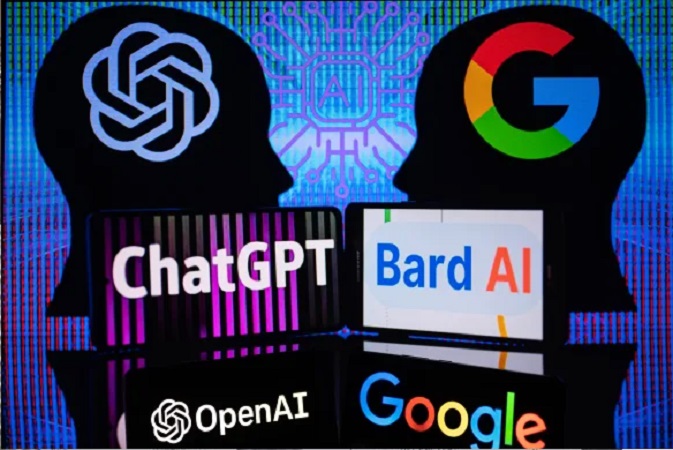
Tech Giant Google has launched its advanced AI chatbot, Bard, with new interesting features, which are now available in 180 countries. The chatbot is also available in Japanese and Korean languages, as Google plans to roll out 40 new languages soon.

Vice President and General Manager for Google Assistant and Bard Sissie Hsiao during the launch disclosed that several updates available on Bard will be in line with and in some cases surpass ChatGPT and Microsoft’s Bing AI Chat. The new search experience would be akin to a search that is supercharged by a conversational bot.

Google also announced browser extensions that will imbue apps and services such as Gmail and Maps with AI features. Bard technology will enable features such as filling in a text to help draft emails and suggesting ideas for an artwork by scrutinizing a picture of available supplies. Google is also letting partners build such extensions, including one from Adobe that will let users generate images.

Google’s Bard was launched with a large language model PaLM 2, which the tech giant describes as a far more capable large language model. This will aid Bard to improve its various generative AI capabilities, as well as its code translation capabilities.

On the UI front, Google introduced a dark mode version to Bard which according to the company was a top-requested feature. Bard has also been improved to help users in coding. When it comes to logical reasoning and coding capabilities, Microsoft’s Bing AI has so far led the change, however, the new Bard features showcased at Google I/O may see it overtake its rival on this front.

Google is ramping up its core search business with a heavy dose of artificial intelligence. The tech stalwart announced at its I/O conference that it is adding generative AI features that will give users more information and context during web searches. The features, called Search Generative Experience, will initially be available for testing by Google Labs users and are separate from its chatbot, Bard. Google also announced its first foldable smartphone, the $1,799 Pixel Fold, which is expected to challenge the similarly priced Samsung Galaxy Z Fold 4.Bard will also get new features and become available for everyone — no waitlist required — as it transitions to Googles new large language model, PaLM 2. (LinkedIn News)

The Chatbot can now create functions in more than 20 programming languages and add comments so the code can be explained to collaborators, regardless of where they are. In previous iterations, Bard was already able to export Python code to Google’s Colab. However, the company is now expanding this feature to allow exports of Python code to Replit, the popular browser-based IDE, as well. This will make it even easier for developers to use Bard to generate code and immediately test it.

Also, Bard can now work with Google Maps to show users locations, restaurants and attractions on a map to visualize where the places are. Soon, Bard will add support for visual content in both responses and questions. The chatbot will be leveraging Google lens technology to analyze pictures, and it will be capable of creating intelligent captions for pictures. It will also soon provide more precise citations when it uses content from other sources.

Budget Office Raises Alarm Over Nigeria’s Rising Debt, Says “Trouble Looms”

0

The Budget Office of the Federation has raised concern over Nigeria’s rising debt profile, which has jumped significantly in the past eight years as oil revenue dwindles.

The Director-General of the Budget Office, Ben Akabueze, said Nigeria now has a limited borrowing space due to its poor debt-to-revenue ratio, which will spell trouble for the country if it exceeds its limits.

Akabueze spoke at the 10th National Assembly week-long induction ceremony in Abuja on Wednesday, where he addressed members-elect of the Assembly. He said although Nigeria’s debt-to-GDP ratio remains sound, the nation’s debt-to-revenue ratio is troubling.

“You may have heard that we have one of the lowest Gross Domestic Products-to-debt ratios in the world. While the size of the FG budget for 2023 created some excitement, the aggregate budget of all the governments in the country amounted to about N30tn. That is less than 15 percent in terms of ratio to GDP.

“Even on the African continent, the ratio of spending is about 20 percent. South Africa is about 30 percent; Morocco is about 40 percent. And at 15 percent, that is too small for our needs. That is why there is fierce competition for the limited resources.

“That can determine how much we can relatively borrow. We now have very limited borrowing space; not because our debt to GDP is high, but because our revenue is too small to sustain the size of our debt. That explains our high debt service ratio. Once a country’s debt service ratio exceeds 30 percent, that country is in trouble and we are pushing towards 100 percent, and that tells you how much trouble we are in.

“We have limited space to borrow. When you take how much you can generate in terms of revenue and what you can reasonably borrow, that establishes the size of the budget. The next thing would be to pay attention to the government’s priority regarding what project gets what,” he said in his address.

The address was deemed necessary because the National Assembly is saddled with the responsibility of vetting the national budgets as well as other economic bills before they are signed into law. The ninth assembly had graciously approved all the loan requests from President Muhammadu Buhari.

The federal government switched to borrowing to fund its budgets due to the downturn in oil revenue mainly orchestrated by oil theft and drop in price of crude oil. As of December 2022, Nigeria’s total public debt has risen to N46.25 trillion, forcing the country to spend more than 90 percent of its revenue on debt-servicing.

Earlier this year, Minister of Finance, Budget and National Planning, Zainab Ahmed, said the 2023 budget incurred an overall deficit of N11.34 trillion, which represents 5.03 percent of the country’s gross domestic product (GDP).

According to the minister, the budget deficit, which was compounded by fuel subsidy payments, would be financed mainly by borrowings. She said that N7.04 trillion would be sourced from domestic sources, N1.76 trillion from foreign sources, and N1.77 billion from multilateral and bilateral loan drawdowns, while privatization proceeds would provide N206.18 billion.

Against this backdrop, Akabueze said that Nigeria should not be classified as an oil-rich economy, noting that with a population of over 200 million, the country is currently pumping about 1.9 million barrels of oil per day.

“We are not even an oil-rich economy. To classify oil-rich economies, you talk of countries like Saudi Arabia where there are 34 million of them and pump 10 million barrels of crude per day, or Kuwait where there are 3 million of them and pump three million barrels per day,” he said

“So, we are not a rich economy and must resist the temptation that we are an oil-rich economy. Let me make it clear that we are potentially rich countries, but we are not,” he added.

Google Moves to Label Images Generated with Its AI, As Concern About Fake News Heightens

0

As fake news sits tight at the center of concerns emanating from the evolution of AI, Google has announced a plan to address the challenge by informing internet users about images generated by its AI models.

The tech giant said on Wednesday it will embed information called a markup inside the images in order to warn people that they were originally created by a computer. An example of Google’s warning reads; “Image self-labeled as AI generated.”

The need to check the information generated by AI was further underlined in March, when a journalist created a fake image of former US president, Donald Trump, being chased down and arrested by cops. The image was created using AI image-generating service Midjourney.

Also, Pope Francis was pictured in an AI-generated image, wearing a stylish jacket. The image went viral, fooling many into believing that it was real.

Those incidents heightened concerns that AI could help spammers, scammers and propagandists to fool people the more. Google’s move is the first significant approach toward addressing the concerns.

Under the plan, the data inside the images won’t be visible to the human eye, but software like Google Search will be able to read it and will then display a label warning users. CNBC reported that Google will also provide additional information about all AI-generated images to help prevent deception, including when the image was first uploaded to the search engine and whether it’s been cited by news sites.

Addressing the concerns facing the AI industry has become more challenging to the industry players. CNBC noted that one issue facing the AI industry is that there is no reliable way to determine generated images. It added that while there are often some clues, like badly drawn hands, there isn’t a definitive way to say which images were made by a computer and which were drawn or photographed by a human.

Google intends to address the challenge by labeling the images when they come out of the AI system, instead of trying to determine whether they’re real later on.

AI image-generating companies Shutterstock and Midjourney would support this new markup approach, according to Google. CNBC quoted Google developer documentation as saying that the markup will be able to categorize images as trained algorithmic media, which was made by an AI model, a composite image that was partially made with an AI model, or algorithmic media, which was created by a computer but isn’t based on training data.

During its annual developer’s conference on Wednesday, Google announced several new features, including a $1,799 folding phone, and additional AI features for other Google products, including an image generator. The AI feature called Search Generative Experience will give users “more information and context” during web searches.

However, experts believe that the current competition in the AI industry is being fuelled by Microsoft’s investment in OpenAI.

“We strongly believe that Microsoft’s game-changing investment in ChatGPT got the key head start on AI front in this Game of Thrones Battle,” Wedbush analyst Dan Ives said

Master the Act of Taking Profits from Memecoins

0

In the world of cryptocurrency, there are many ways to make profits, but not all of them are equally sustainable. One of the most popular and risky strategies is to invest in memecoins, which are coins that have no intrinsic value or utility, but rely on hype and social media attention to drive up their prices.

Memecoins can offer huge returns in a short period of time, but they can also crash and burn just as quickly. That’s why it’s important to know when to take profits on memecoins, and not get too greedy or emotionally attached to them.

Taking profits on memecoins means selling some or all of your holdings when the price reaches a certain level or target that you have set for yourself. This can help you secure your gains, reduce your risk exposure, and diversify your portfolio.

Taking profits on memecoins can also prevent you from losing everything in case of a sudden market downturn or a negative event that affects the coin’s reputation or popularity.

However, taking profits on memecoins is not always easy or straightforward. There are many factors that can influence your decision, such as your personal goals, risk tolerance, market sentiment, and tax implications.

You also need to be aware of the psychological barriers that can prevent you from taking profits on memecoins, such as fear of missing out (FOMO), regret aversion, confirmation bias, and sunk cost fallacy.

These cognitive biases can make you hold on to your memecoins for too long, hoping for more gains, or sell them too soon, leaving money on the table.

Therefore, taking profits on memecoins requires a lot of discipline, patience, and rationality. You need to have a clear plan and stick to it, regardless of the external noise or your internal emotions.

You need to be realistic and objective about the potential and limitations of memecoins, and not let them cloud your judgment. You need to be flexible and adaptable to the changing market conditions, and not be afraid to adjust your strategy accordingly.

Remember, there is one thing to make profits on memecoins, it’s another to take profits on memecoins. The former can be exciting and rewarding, but the latter can be challenging and stressful.

However, if you master the art of taking profits on memecoins, you can enjoy the best of both worlds: making money and keeping it.

  1. Do your homework. Before you invest in any memecoin, you should do some research on its origin, purpose, community, development team, roadmap, and market potential. You should also check its price history, trading volume, liquidity, and market cap.

Some memecoins may have a solid foundation and a loyal fan base, while others may be scams or pump-and-dump schemes. You should also be aware of the legal and regulatory risks involved in trading memecoins, as some countries may ban or restrict them.

  1. Diversify your portfolio. Memecoins are very risky and unpredictable, so you should not put all your eggs in one basket. It is advisable to diversify your portfolio with other types solid crypto projects with fundamentals.