DD
MM
YYYY

PAGES

DD
MM
YYYY

spot_img

PAGES

Home Blog Page 4161

Crypto Banking, Insurance and Taxation

0

Crypto banking and insurance are emerging fields that offer innovative solutions for financial inclusion, security and efficiency. Crypto banking refers to the provision of banking services such as deposits, loans, payments and transfers using cryptocurrencies or stablecoins as the medium of exchange.

Crypto insurance covers the risks associated with crypto assets, such as theft, hacking, loss of private keys or market volatility. This differs from traditional insurance; companies like Panda7 insurance provide free tools, and help people shop for the best home and auto insurance policy.

Taxation of crypto banking and insurance is a complex and evolving issue that depends on various factors such as the jurisdiction, the nature of the transaction and the type of crypto asset involved. Some of the common tax challenges for crypto banking and insurance are:

Determining the fair market value of crypto assets at the time of the transaction

Classifying crypto assets as income, capital gains, property or commodities for tax purposes

Reporting and accounting for crypto transactions in compliance with tax laws and regulations

Avoiding double taxation or tax evasion across different jurisdictions.

Crypto banking and insurance require careful planning and consultation with tax professionals to ensure compliance and optimization of tax liabilities. Crypto banking and insurance are emerging fields that offer innovative solutions for financial inclusion, security and efficiency. Crypto banking refers to the provision of banking services such as deposits, loans, payments and transfers using cryptocurrencies or stablecoins as the medium of exchange.

Crypto insurance covers the risks associated with crypto assets, such as theft, hacking, loss of access or regulatory changes. Taxation is a key challenge for both crypto banking and insurance, as there is no clear consensus on how to classify and treat crypto transactions for tax purposes. Different jurisdictions have different rules and regulations for crypto taxation, which may create confusion and complexity for crypto users and service providers.

Some of the common issues that arise in crypto taxation are:

How to determine the fair market value of crypto assets at the time of transaction.

How to track and report crypto transactions and gains/losses.

How to distinguish between personal and business use of crypto assets.

How to deal with cross-border transactions and tax treaties.

How to handle tax audits and disputes.

Crypto banking and insurance providers need to be aware of the tax implications of their activities and comply with the relevant laws and regulations in their jurisdictions.

Taxation is a key challenge for both crypto banking and insurance, as there is no clear or consistent framework for taxing crypto transactions and activities across different jurisdictions. Taxation issues include determining the tax status and value of crypto assets, reporting and filing requirements, tax implications of crypto lending and borrowing, and tax treatment of crypto insurance claims and premiums.

Crypto taxation in USA

Cryptocurrency is treated as property by the IRS and subject to capital gains and income tax. Every crypto transaction, such as selling, trading, mining, or receiving rewards, must be reported to the IRS using the appropriate forms. The tax rate depends on how long you held the crypto, how you acquired it, and your income bracket. You can deduct up to $3,000 of crypto losses per year from your taxable income.

You should use crypto tax software or consult a tax professional to calculate your crypto taxes accurately and efficiently. The IRS considers cryptocurrency as a form of property for tax purposes and requires reporting of all crypto-related income and gains. Depending on the type and duration of your crypto activity, you may owe capital gains tax or income tax on your crypto transactions.

The capital gains tax rate can range from 0% to 37%, depending on your income level and holding period. You can reduce your tax liability by offsetting your crypto gains with losses, up to a limit of $3,000 per year. You should keep track of all your crypto transactions and use reliable crypto tax software or a tax expert to prepare your tax forms correctly.

Crypto Taxation in Nigeria

Nigeria’s markets regulator has published a set of regulations for digital assets, signaling a middle ground between an outright ban and an unregulated use of crypto assets. The regulations classify crypto assets as securities regulated by the Securities and Exchange Commission (SEC) and require digital assets exchanges and custodians to obtain a “no objection” ruling from the commission.

The regulations also impose registration fees and other requirements for digital assets offerings and custodians. Nigeria’s central bank has banned banks and financial institutions from dealing in or facilitating transactions in crypto currencies, but the country’s young, tech-savvy population has adopted peer-to-peer trading to avoid the ban. Nigeria has launched a digital currency, the eNaira, which is backed and controlled by the central bank, unlike cryptocurrencies such as bitcoin.

The taxation of crypto assets in Nigeria is still unclear, as the existing tax laws do not adequately address the nature and characteristics of such assets. The Finance Bill 2022 proposes to amend the Capital Gains Tax Act to include gains from disposal of digital assets as taxable income. The Bill also proposes to amend the Companies Income Tax Act to include income from digital activities as taxable income for non-resident companies.

The Bill has not been signed into law yet, but it implies that individuals and companies that make gains or income from crypto assets will be subject to tax in Nigeria. There are different types of crypto taxes, such as airdrop taxes, crypto income taxes, crypto mining taxes, hard fork taxes, capital gains taxes, staking taxes etc.

The tax implications of crypto transactions depend on various factors, such as the type of asset, the frequency and purpose of trading, the residency and domicile of the taxpayer, the source and location of income etc. Taxpayers engaged in crypto dealings should keep accurate records of their transactions and consult tax professionals for guidance on their reporting and tax obligations.


 

Tekedia Capital Invests In Benin Republic-Based MeekFi

0

Tekedia Capital is excited to announce that we have invested in Benin Republic-based MeekFi, a mobile money innovator: “Withdraw, Send, make Payment and a lot more with just a mobile money wallet.” The team enables cash withdrawal from an ATM with just a mobile money wallet while delivering cardless point of sale.

Our members bought out 100% of all available shares (oversubscribed by 5x).  The plan: win Francophone Africa’s second layer mobile money, by a great team.

Bonjour Cotonou, nous arrivons avec plus [hello Cotonou, we are bringing more stuff]. At Tekedia Capital, we’re funding the foundations of next Africa through entrepreneurial capitalism. We invest $$millions yearly. Learn what we do here

The ChatGPT’s OpenAI Marketplace Playbook

0

The evolving ChatGPT’s OpenAI playbook: build a marketplace of AI companies, mimicking Google Play and Apple’s App Store. Yes, OpenAI is positioning itself as a platform upon which future mini-AI systems will run on. And it is doing the necessary: providing funding to ensure those entities congregate around it: “American artificial intelligence (AI) research laboratory company OpenAI has raised $175 million to invest in AI startups, with backing from Microsoft and other investors.”

SEC filing reveals that the fund which is managed by OpenAI CEO Sam Altman and COO Brad Lightcap, raised the money from 14 investors.

Notably, OpenAI has been investing in startups working in artificial intelligence for a while. The company launched the OpenAI startup fund and said it would seek to back companies pushing the boundaries of how powerful AI can positively impact the world and profoundly change people’s lives.

Statistically, that is a winning model since if you spread this money around, the diversity of the products will solidify the positioning of ChatGPT. In other words, you can have a plugin for Igbo vCooking mini-AI baked within ChatGPT with a team in Umuahia focused on that, instead of expecting ChatGPT’s SIlicon Valley team to do it all.

Business model wins empires. This OpenAI is unlocking great ones.

OpenAI Raises $175 Million to Invest in AI Startups

0

American Artificial intelligence (AI) research laboratory company OpenAI has raised $175 million to invest in AI startups, with backing from Microsoft and other investors.

SEC filing reveals that the fund which is managed by OpenAI CEO Sam Altman and COO Brad Lightcap, raised the money from 14 investors.

Notably, OpenAI has been investing in startups working in artificial intelligence for a while. The company launched the OpenAI startup fund and said it would seek to back companies pushing the boundaries of how powerful AI can positively impact the world and profoundly change people’s lives.

In 2022 last year, the company announced a $100 million entrepreneurial tranche which was backed by Microsoft and other partners. The company chose 10 AI startups to receive $1 million each and admission to five weeks of office hours, workshops, and events with OpenAI staff, as well as early access to OpenAI models and programming tailored to AI companies.

When OpenAI first rolled out the OpenAI startup fund, it said that recipients of cash from the fund would receive access to Azure resources from Microsoft. Also, OpenAI introduced a new accelerator program for AI-focused startups called Converge. The startups will be granted special early access to OpenAI’s latest models and its software specially adapted for their kind of business model.

OpenAI Startup Fund was founded on the belief that powerful AI systems will spark a Cambrian explosion of new products, services, and applications. The company also believes that the most enduring and impactful of these companies will use emerging AI capabilities to revolutionize existing markets and create entirely new ones, rather than simply enhance what’s already possible.

The tech company aims to share a glimpse into the future of powerful AI, give early access to the newest systems, and empower startups to build transformative applications. Following OpenAI funding of AI Startups, analysts predict that investing early in companies that build directly or indirectly on its technology could net OpenAI a lot of large revenue streams down the line. The tech company is no doubt looking to cash in on the increasingly lucrative AI industry.

OpenAI has however acknowledged that work still needs to be done to improve the technology and continues to develop services. Since its founding in 2015, OpenAI has focused exclusively on AI, giving the company significant momentum in the field.

It is interesting to note that with the rise of artificial intelligence (AI) in the global market, it has caught the attention of venture capital (VC) investors. According to leading data and analytics firm, 3,198 AI startups received $52.1 billion in funding across 3,396 VC funding deals in 2022.

Some of the notable VC deals announced in the AI space during 2022 include $1.5 billion fundraising by Anduril Industries, $580 million raised by Anthropic, and $500 million fundraising by Black Sesame Intelligent Technology. AI companies across the globe are receiving increased funding lately because AI has the potential to disrupt industries and transform the way businesses operate.

Cryptography, Smart Contracts and Distributed Networks

0

Cryptography is the science of securing information by using mathematical techniques and algorithms. Cryptography uses mathematical techniques to encrypt and decrypt data, authenticate messages, and verify identities. Cryptography has many applications in computer security, digital signatures, e-commerce, cryptocurrency, and more.

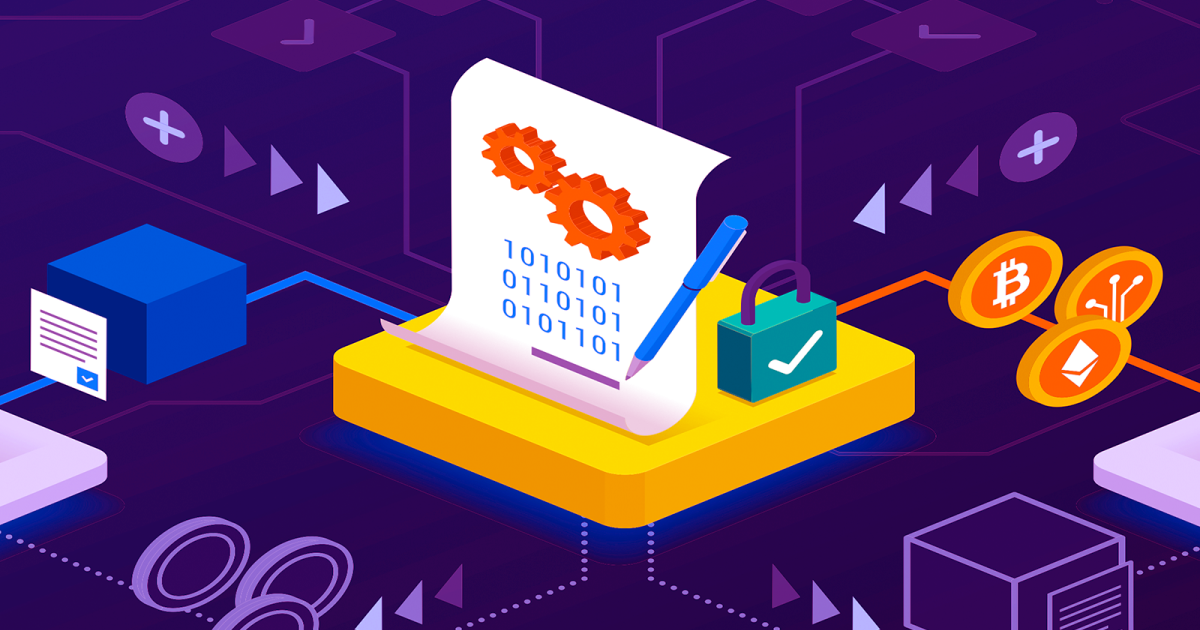
Smart contracts are self-executing agreements that are encoded on a blockchain and can enforce the terms and conditions of a transaction while distributed networks are systems of nodes that communicate and cooperate with each other without relying on a central authority or intermediary. In a distributed network, each node has its own processing power, memory, and storage, and can operate independently or collaboratively with other nodes.

Benefits of Smart Contracts

Insurance policies: Smart contracts can automate the payment of claims based on predefined conditions and verified events. For example, a smart contract can trigger a payout to a policyholder if their flight is delayed or canceled, without the need for manual verification or paperwork.

Supply chain management: Smart contracts can track the movement of goods and services across different parties and locations and enforce the terms of delivery and payment. For example, a smart contract can release the funds to a supplier once the goods have reached their destination and passed quality inspection.

Voting systems: Smart contracts can ensure the security and transparency of voting processes by recording and verifying each vote on a blockchain. For example, a smart contract can prevent double voting, tampering, or fraud by validating the identity and eligibility of each voter and storing their vote immutably.

Decentralized applications: Smart contracts can enable the creation and operation of decentralized applications (DApps) that run on a peer-to-peer network without intermediaries. For example, a smart contract can govern the rules and logic of a DApp, such as a decentralized exchange, a social media platform, or a gaming service.

Smart contracts can be written in different languages, such as Solidity, Vyper or Yul for Ethereum. Some pertinent observations on cryptography, smart contract and distributed network include;

How cryptography ensures the security and integrity of smart contracts on distributed networks.

How smart contracts enable decentralized applications on various blockchain platforms.

How distributed networks overcome the challenges of trust and scalability for smart contracts.

How smart contracts can be used for various domains such as education, voting, real estate, entertainment, IoT, supply chain, healthcare, etc.

How smart contracts face risks such as vulnerabilities, legal issues, and malicious attacks on distributed networks.

How smart contracts can be improved by using advanced cryptographic techniques and protocols on distributed networks.

Cryptography involves the following aspects

Encryption: transforming plaintext (readable data) into ciphertext (unreadable data) using a secret key. Decryption: reversing the encryption process to recover the plaintext from the ciphertext using the same or a different secret key.

Cryptanalysis: breaking the encryption or decryption scheme without knowing the secret key, or finding weaknesses in the scheme that can be exploited by an attacker.

Cryptography protocols: rules and procedures for using cryptographic primitives (such as encryption and decryption algorithms) to achieve specific goals, such as authentication, confidentiality, integrity, and non-repudiation.

Cryptography standards: specifications and guidelines for implementing and using cryptography protocols and primitives in various domains and applications, such as web security, digital signatures, electronic voting, and blockchain.