DD
MM
YYYY

PAGES

DD
MM
YYYY

spot_img

PAGES

Home Blog Page 4170

Uwerx (WERX) Signups Exceed 5000, As Pepe (PEPE) and Avalanche (AVAX) Grapple With Price Fluctuations

0

Amid price fluctuations affecting Pepe (PEPE) and Avalanche (AVAX), Uwerx stands strong. Surpassing 6,000 signups and showcasing its resilience in the cryptocurrency market, there’s no doubt Uwerx will be a force to reckon with.

This newfound popularity and interest in Uwerx beg the question: what makes this cryptocurrency different from the rest? Also, will it continue to defy the odds in this ever-changing market? Let’s explore this further.

Pepe (PEPE) Experiences a Downward Trend

The cryptocurrency market is always in a state of flux, and Pepe (PEPE) is no exception. This meme coin rose to fame immediately after its launch in April 2023, and early investors were rewarded handsomely for their foresight. Unfortunately, the value of Pepe (PEPE) has been plummeting in recent weeks, causing great concern among investors.

As of now, Pepe (PEPE) is trading at $0.000001433, marking a 3.74% decrease in the last 24 hours alone. Despite its high circulating supply of 391,790,000,000,000 PEPE tokens and a market cap of $561,713,524, it is struggling to regain its footing.

However, cryptocurrency users know that anything is possible. There is always the chance for a turnaround, and the current bearish conditions may not last forever. In fact, many investors remain optimistic about Pepe (PEPE) and are holding onto their tokens in the hopes of a rebound.

Avalanche (AVAX) Slumps Harder as Price Declines

The cryptocurrency world is often unpredictable, full of twists and turns. When investors thought they had it all figured out, Avalanche (AVAX) experienced an avalanche of its own, taking a sharp plunge.

Avalanche (AVAX) is a blockchain platform known for its high-performance infrastructure and decentralized applications. It has a circulating supply of 334,599,395.65 AVAX tokens and a market cap of $4,757,675,407.

At the beginning of the month, Avalanche (AVAX) was trading at $17.08, showing promising signs of upward momentum. However, as of writing, Avalanche (AVAX) stands at $14.14, representing a substantial drop of 16.78% in just a short period.

While Avalanche (AVAX) may face a challenging market environment, the future remains uncertain. Investors who believe in the long-term potential of Avalanche (AVAX) may find the current slump as an ideal opportunity to accumulate the coin at a lower cost.

Uwerx Presale Gains Momentum as Fifth Stage Begins

With the Uwerx presale gaining momentum, investors and enthusiasts are watching this emerging blockchain-powered freelancing project with keen interest. As the project enters its fifth presale stage, the excitement continues to build as more people see the platform’s enormous potential.

The Uwerx team’s dedication to a fair distribution of tokens has helped attract even more interest to the project, as they have reduced the allocation for the founding team and partnership to ensure inclusivity. Their unwavering commitment to accommodating users’ needs in the fast-paced presale environment has proven successful.

The fifth stage of the presale offers an unparalleled opportunity for investors to acquire 72.5 million WERX tokens at an affordable price of $0.041 per token.


The blockchain world is often riddled with controversy, shady deals, and uncertainty. However, Uwerx is taking a step towards changing the narrative. The Uwerx team has decided to renounce ownership of the smart contract once the platform is listed on centralized exchange platforms.

This decision will show the world that Uwerx is committed to transparency and decentralization, which are the core principles of blockchain technology. Moreover, the team is implementing a 25-year liquidity lock on developers’ tokens. This decision has overwhelming community support, with 82.8% in favor.

By doing this, Uwerx is demonstrating accountability, responsibility, and transparency. The liquidity lock initiated by the project will prevent developer token sell-offs for 25 years, providing stability and trust within the Uwerx ecosystem.

Furthermore, Uwerx is an emerging platform devoted to creating meaningful user interactions. Their proposed move, the Test Airdrop, is just a tiny glimpse into the big picture that the team at Uwerx is trying to achieve.

With 98.2% of poll respondents supporting this initiative, it is evident that Uwerx is onto something big. The Test Airdrop not only allows users to verify their wallet addresses but also allows them to participate in the token distribution process actively.

However, Uwerx is not stopping there. Their unwavering commitment to improving the user experience led to the Uwerx Vault’s creation. This feature allows token holders to store their tokens while earning rewards, creating a seamless and rewarding user experience.

The Uwerx Vault will strengthen the bond between users and the platform while providing additional benefits to token holders.

As Uwerx transitions to the Beta version, they are excited to hear feedback and suggestions from users. Users are encouraged to reach out through the dedicated email address: feedback@uwerx.network. Also, Uwerx is committed to constant improvement and cooperation, as seen in its adoption of Agile methodology.

To incentivize users to participate in the Uwerx presale, there’s a 15% purchase bonus on WERX tokens. However, the bonus is likely to decrease with subsequent price increases. Users are to stay tuned for more details about referral bonuses.

The future is bright at Uwerx. Sign up now and become a part of the Uwerx revolution!

Presale: invest.uwerx.network

Telegram: https://t.me/uwerx_network

Twitter: https://twitter.com/uwerx_network

Website: https://www.uwerx.network

XRP (XRP) Transactions Reach 1.16 Million, as TMS Network Users Grow Fast: What’s Next?

0

Recently, the number of XRP (XRP) transactions has hit a high of 1.16 million. At the same time, the user numbers for TMS Network are shooting up. Everyone is curious about what will happen next as these two cryptocurrencies progress.

XRP (XRP) Achieves 1.16 Million Transactions: Predicting the Road Ahead

In recent weeks, XRP (XRP) has seen a remarkable increase in network activity. Specifically, as of June 8, 2023, XRP (XRP) transactions reached 1.16 million. This increase hints at broader XRP (XRP) network usage and may affect its price. Despite market ups and downs prompted by SEC lawsuits, the XRP (XRP) transaction count has remained upward.

Price-wise, XRP (XRP) has also exhibited some positive momentum in this period. From $0.47 on May 27, the token’s price rose to $0.52 by June 7, 2023, and has settled at $0.53 as of June 9, 2023. This link between transaction volume and price shows that as more users transact on the XRP (XRP) network, demand for the token could rise, pushing the price upwards.

However, while rising transaction volumes are often a good sign of a healthy network, they don’t operate alone. Other important factors, like market sentiment, regulatory news, and wider macroeconomic variables, can sway the value of a digital asset like XRP (XRP). So, while the increase in transaction volume looks promising for the XRP (XRP) price, investors should also keep a keen eye on these other influences.

An Increase in TMS Network User Base: What Lies Ahead?

Having recently entered the crypto scene, TMS Network (TMSN) has quickly generated a buzz. Its innovative design, a link between traditional and crypto markets, and a versatile platform for trading multiple asset classes have led to an upward spiral in popularity among the crypto investing community.

The attraction to TMSN has been evident since its initial stage 1 presale, attracting interest from investors worldwide. This interest has led to significant growth in value, rising from $0.025 in the stage 1 presale to an outstanding $0.11 in the ongoing stage 4 presale. The sustained growth trend further underscores the market’s faith in TMSN.

Accompanying its impressive 300% appreciation during its ICO, TMS Network (TMSN) continues demonstrating robust positive growth. The sustained growth and momentum show an optimistic future for this hybrid market disruptor, seamlessly blending traditional and crypto markets.

Join the Presale:

Presale: https://presale.tmsnetwork.io

Website: https://tmsnetwork.io

Telegram: https://t.me/TMSNetworkIO

Twitter: https://twitter.com/@tmsnetwork_io

Sparklo (SPRK) Value Spikes as Avalanche (AVAX) And Uniswap (UNI) Experience Downward Price Movement

0

Despite the current deplorable price trajectory of coins in the crypto market, Sparklo has shown a bear-proof tenacity which has left investors jumping ships to align with the Sparklo project. Meanwhile, the Avalanche (AVAX) and Uniswap (UNI) tokens witness sharp price slump. Let’s look at Sparklo and see while investors are jumping over the project.

Sparklo (SPRK) is on the rise as the project show consistency

Amid the plummeting price of tokens in the crypto market, investors have recognized the Sparklo project as a redeeming investment option that will mitigate the current market volatility.  When launched, Sparklo will be a cutting-edge investment platform where investors can invest in timeless solid assets like Silver, Gold and Platinum. These assets can be traded using fractionalized NFTs acting as digital representations of real-world assets.

Apart from the stability the SPRK token has shown so far, it has a sky-high potential to become the next blue-chip crypto.  Sparklo has finalized the first stage of presale and is currently in the ongoing second stage of the presale, with the SPRK token selling at the price of only $0.036 per token. Also, a 35% bonus offer is open to early investors of Sparklo. This bonus will expire soon and you won’t be given any bonus when you buy the token. With the projected 1,500% increase of the SPRK token before the end of the year, now is the best time to invest in the project to align oneself for explosive profit in the near future.

It is worth noting that SPRK tokens are secured as the liquidity will be locked for 100 years to prevent an event of a rug pull. Interfi Network has passed Sparklo’s audit, while the BlockAudit Report Team has verified the project’s KYC. Overall, Sparklo is a very promising investment opportunity. Investing now will improve your investment portfolio while aligning you for exponential gains. Click the link below to invest.

>>>> PURCHASE HERE <<<

Avalanche (AVAX) Investors on the quest for better alternatives as the token takes deep dive

Avalanche (AVAX) is a layer 1 blockchain that rivals other blockchains like Ethereum for more territory in the on-chain smart contract transactions. Avalanche (AVAX) saw a 5.50% decline in value in the last 24 hours. This sees Avalanche (AVAX) trading at $13.93 at the time of this writing. However, Avalanche (AVAX) coin’s 24-hour trading volume increased within that same timeframe by 53.37% to stand at $222 million currently.

The last 48 hours’ price curve of Avalanche (AVAX) shows that the coin is in the bear market. With the current fall of the Avalanche (AVAX) token, its investors are looking for better investment alternatives.  Avalanche (AVAX) investors have joined the ongoing Sparklo presale to make gains.

Uniswap (UNI) sees a huge negative price action

Uniswap (UNI) is an on-chain protocol that automates the trading of decentralized finance (DeFi) tokens. Uniswap (UNI) lost  5.31% of its value in the last 24 hours to trade at $4.70 presently. The Uniswap (UNI) token’s 24-hour trading volume in the same time frame rose by 44.39% to stay at $71 million presently. Uniswap (UNI) has also lost 9% of its value in the last 48 hours, are the price curve continues to tilt downward.

Having experienced a massive bearish run recently, uncertainty trails the short-term future of Uniswap (UNI). It is worth noting that Uniswap (UNI) has gone below the $5 support level, which may suggest an extended bearish run. Sparklo presents a stable, high-potential alternative for investors. Uniswap (UNI) coin holders have moved over to the trending Sparklo project to make gains since there are no chances of Uniswap (UNI) recovering from the ongoing bearish run very soon.

Find out more about the presale with the links below;


 Click here to buy presale

 Check out the website

 Check out the telegram channel

The CBN Code of Corporate Governance For Bureaux De Change in Nigeria

0

The CBN Code of Corporate Governance For Bureaux De Change in Nigeria  – Objectives, Appointment & Tenures, Meetings and Remunerations.

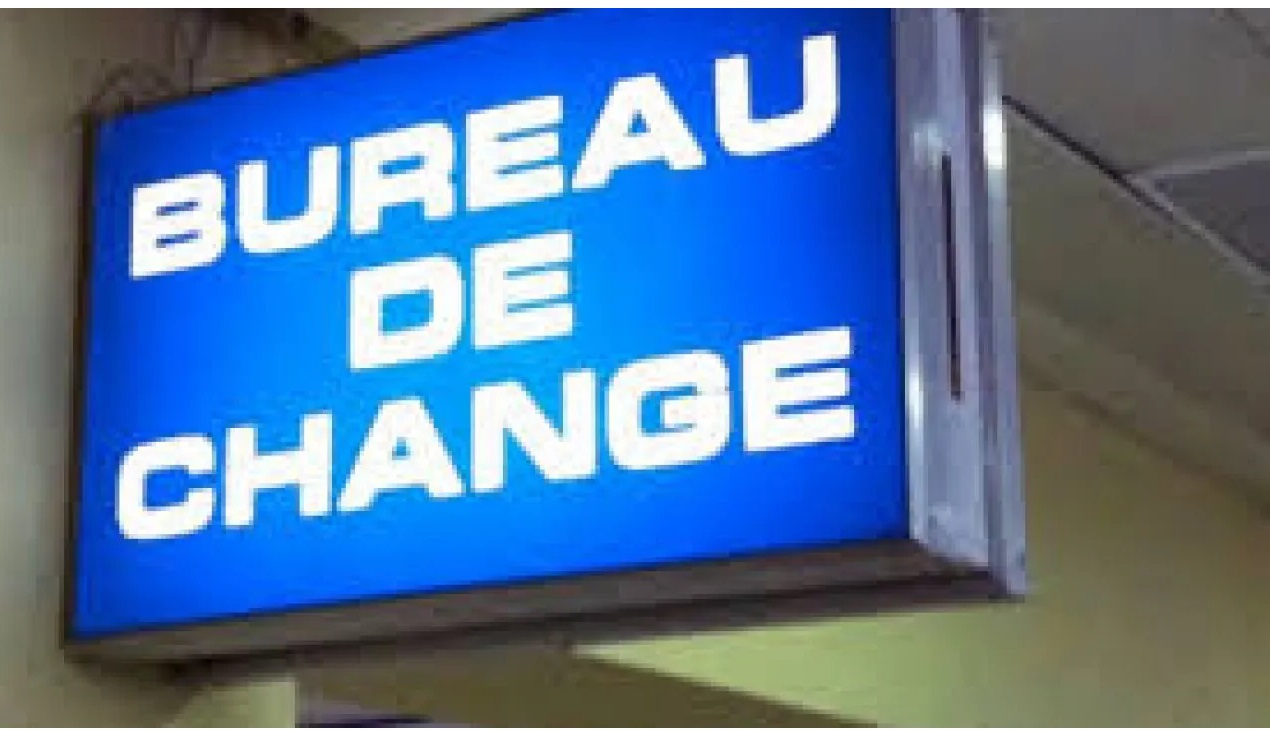
Bureaux de Change (BDCs) are financial institutions licensed to carry on small scale foreign exchange business services on a stand-alone basis in Nigeria, serve as tools for the management of exchange rate and provide economic data for monetary policy decisions. Their activities impact on exchange rates; hence BDCs are important players in the money market.

In 2014, the Central Bank of Nigeria observed some deficiencies in the operational effectiveness of BDCs which militate against the achievement of their objectives. To address this challenge, the CBN commenced the reform of the sub-sector and issued revised guidelines in 2015 which, among others, reviewed upwards the minimum capital requirement for BDCs.

To further strengthen the institutions and reposition them to perform their statutory roles, the CBN issued the Code of Corporate Governance for BDCs in Nigeria to complement extant operational guidelines and regulations on BDC business. The provisions of this code will constitute the focus of this article.

What is the application scope of the code? 

The code shall apply to BDCs in Nigeria.

What does the code say about the responsibilities of boards of directors and management teams of bureaux de change in Nigeria?

The code states that :-

– A BDC board shall be accountable and responsible for the performance and affairs of the BDC. 

– Specifically, and in line with the provisions in the Companies and Allied Matters Act (CAMA) 2020 (as amended), directors owe the BDC the duty of care and loyalty to act in the interest of the BDC’s shareholders and other stakeholders.

– Members of the Board are severally and jointly liable for the activities of the BDC.

– The Board shall define the institution’s strategic goals, approve its long and short-term business strategies and monitor their implementation by management.

– The Board shall determine the skills, knowledge and experience that members require which shall, at the minimum, be in line with the requirements of the approved persons Regime.

– The Board shall ensure that its human, material and financial resources are effectively deployed towards the attainment of set goals of the BDC.

– The Board shall appoint the MD/CEO as well as top management staff and establish a framework for the delegation of authority in the BDC, which shall comply with extant regulations issued by the CBN from time to time.

– The Board shall establish and monitor agreed performance targets for the management.

– The Board shall ensure that a succession plan is in place for the MD/CEO and other management staff.

– The Board shall consider, approve and monitor the implementation of the BDC’s budget, including setting expenditure limits for management.

2.1.10 The Board shall ensure strict adherence to the Code of Conduct for BDC Directors.

What is the composition and size of the board of directors as provided by the code?

– The size of the Board of any BDC shall be limited to a minimum of three (3) and a maximum of five (5).

– The MD/CEO shall be the only Executive Director of a BDC.

 – Members of the Board shall be persons of proven integrity and shall meet the requirements of the Revised Assessment Criteria of approved persons Regime.

What does the code say about separation of powers regarding BDCs?

The code in this aspect provides that :-

– The positions of the Board Chairman and the MD/CEO shall be separate. No one person shall combine the two positions in any BDC at the same time. For the avoidance of doubt, no executive Vice Chairman shall be allowed in the Board structure.

– Not more than two members of a family shall be on the board of a BDC at the same time. The expression ‘family’ includes the director’s spouse, parents, children, siblings, cousins, uncles, aunts, nephews, nieces and in-laws.

-Where the BDC is a member of a holding company, not more than two family members shall be allowed to serve on the Boards of the BDC and the holding company. 

-No two members of a family shall occupy the positions of Chairman and MD/CEO of a BDC.

What are the provisions of the code regarding the appointment and tenure of members of the board/directors of BDCs?

The code provides that:-

– Members of the Board of Directors shall be appointed by the shareholders and approved by the CBN.

-To qualify for the position of a Non-Executive Director, it is required that the nominee shall not be an employee of a bank or other financial institution, except where the BDC is promoted by the bank or Other Financial Institution(OFI) and the proposed director is representing the interest of such an institution.

-The procedure for appointment to the Board shall be formal, transparent and documented in the Board charter.

– The appointment to the Board of BDCs shall be in accordance with extant regulations issued by the CBN from time to time.

– The track record of appointees shall be an additional eligibility requirement. Such records shall cover both integrity and past performance, in accordance with extant CBN guidelines.

– To ensure continuity and injection of fresh ideas, Non-Executive Directors of BDCs shall serve for a maximum of three (3) terms of four (4) years each.

– The tenure of the MD/CEO of the BDC shall be in accordance with the terms of engagement for a tenure of five (5) years renewable every five (5) years subject to CBN approval. 

-Where the BDC is a member of a Group or is owned by another financial institution, a director in the BDC may be allowed to serve on the Boards of the BDC and its holding company at the same time, provided the aggregate number of directors from the subsidiaries and associates at any point in time shall not exceed 30 per cent of the membership of the Board of Directors of the holding company.

-To enhance effectiveness, all Directors shall have access to corporate information under conditions of confidentiality; undergo training and continuing education and have access to independent professional advice.

What are the provisions of the code regarding BDC board meetings?

– To effectively perform its oversight functions and monitor management’s performance, the Board shall meet at least once every quarter.

– Minutes of meetings of the Board shall be properly written in English language, adopted and signed off by the Board Chairman and Secretary, pasted in the minutes book and domiciled at the BDC’s Head Office.

– Every Director shall attend all meetings of the Board. In order to qualify for re-election, a Director must have attended at least two-thirds of all Board meetings in each financial year.

– Board meetings shall be deemed to be duly constituted where two-thirds of members are present, provided that a majority of directors at the meeting are Non-Executive Directors’ (NEDs).

–  The Board shall disclose, in the Corporate Governance Section of the Annual Report, the total number of Board meetings held in the financial year and attendance by each Director.

What are the provisions of the code Remuneration of BDC directors/members of the board?

– BDCs shall align executive and Board remuneration with the long term interests of their institutions and their shareholders.

– Levels of remuneration should not be excessive but sufficient to attract, retain and motivate management and members of staff of the BDC.

-Where remuneration is linked to performance, it shall be designed in such a way as to prevent excessive risk taking.

-Every BDC shall have a remuneration policy put in place by the Board of Directors, which shall be disclosed to the shareholders in the annual report.

-The MD/CEO shall not receive sitting allowances and Directors’ fees.

-Non-Executive Directors’ (NEDs) remuneration shall be limited to Directors’ fees, sitting allowances for Board meetings and reimbursable travel and hotel expenses. NEDs shall not receive salaries and benefits whether in cash or in kind, other than those mentioned above.

– BDCs shall disclose in their annual reports, details of the shares held by Directors and their related parties.

The CBN Code of Corporate Governance For Bureaux De Change in Nigeria (Other Stakeholder Rights, Whistleblowing, Disclosure/Transparency and Compliance)

What are the provisions of the code on the rights of other stakeholders?

The code provides that :-

– Employees, customers and other stakeholders of BDCs shall be able to freely communicate their concerns about illegal or unethical practices to the Board. Where such concerns bother on the activities of the Board, such individuals shall have recourse to the CBN in accordance with Section 3.4 of the Guidelines for Whistle Blowing for Banks and Other Financial Institutions in Nigeria.

-Where stakeholders’ interests are protected by law, stakeholders shall have the opportunity to obtain effective redress for violation of their rights.

– BDCs shall demonstrate good Corporate Social Responsibility (CSR) to their stakeholders such as customers, employees, host communities, and the general public.

What are the provisions of the code on disclosure and transparency?

On Disclosure, the code provides that :- 

– In order to foster good corporate governance, BDCs are required to make timely, quality and robust disclosure beyond the statutory requirements in BOFIA 1991 as amended, CAMA 1990, monetary policy guidelines, all rules and regulations as well as circulars issued by the CBN on foreign exchange activities/business from time to time.

– Disclosure in the annual and periodic financial reports or by any other appropriate means shall include, but not limited to, material information on:- 

  • Exchange Rates applied in the preparation of the accounts.
  • Rationale for all material estimates; 
  • Details on Directors:

(i)Total NEDs’ remuneration, including fees and allowances;

(ii)Total Executive compensation, including bonuses paid/payable;

(iii)Organizational Structure.

  • Governance structure;
  • Risk Management;
  • All regulatory/supervisory contraventions during the year under review and infractions uncovered through whistle blowing, including regulatory sanctions and penalties;
  • Capital Structure/Adequacy;
  • Opening and closure of branches;
  • Any service contracts and other contractual relationships with related parties;
  • Frauds and Forgeries;
  • Sources and application of funds during the period of reporting.
  • Details of all domiciliary accounts owned and maintained by the BDC.
  • All customers’ complaints during the reporting period and actions taken thereon.
  • Any matter not specifically mentioned in this code but which is capable of affecting in a significant form, the financial condition of the BDC or its status as a going concern.

What are the provisions of the code on transparency and integrity in reporting?

The CBN code provides that regarding transparency, :-

– BDCs shall have a structure to independently verify and safeguard the integrity of their financial reporting, which shall enhance the independence and competence of the BDC’s internal and external auditors.

-Appointment of external auditors shall be approved by the CBN.

– External auditors shall render reports to the CBN on BDC’s risk management practices, internal controls and level of compliance with regulatory directives. 

– The MD/CEO of a BDC shall certify in the statutory returns submitted to the CBN that he/she has reviewed the reports, and that based on his/her knowledge:

i. The report does not contain any untrue statement of a material fact.

ii. The financial statements and other financial information in the report, fairly represent, in all material respects the financial condition and results of operations of the BDC as of, and for the periods presented in the report.

– Rendition of false information to the CBN shall attract appropriate sanctions including monetary penalties and suspension of the MD/CEO for six (6) months in the first instance and possible removal. 

-There shall be due process in all the procedures of BDCs.

– Each BDC should have an Internal Auditor who shall report directly to the Board. The Internal Audit and Compliance functions may be merged and headed by one individual. 

What are the provisions of the code on Whistle Blowing?

The code provides that :-

– A BDC shall have a whistle-blowing policy made known to employees, customers and other stakeholders.

– The policy shall contain mechanisms, including assurance of confidentiality, that encourage all stakeholders to report any unethical activity to the BDC and/or the CBN.

– BDCs are required to submit returns on the compliance with the whistleblowing policy on a semi-annual basis to the Director, Other Financial Institutions Supervision Department, CBN, not later than 7 days after the end of the relevant period.

What does the code provide regarding risk management?

The code provides that every board of BDCs shall put in place adequate systems, policies and procedures for the identification, measurement, monitoring and control of the risks inherent in its operations.

What are the requirements of the board on Regulatory compliance?

The code requires that :-

– All BDCs shall comply with the provisions of this Code. External auditors of BDCs shall report annually to the CBN, the extent of the BDC’s compliance with the provisions of this Code.

– Returns on the status of each institution’s compliance with this code shall be rendered to the CBN semi-annually (30th June and 31st December every year) or as may be specified by the CBN from time to time. The returns shall be addressed and submitted to the Director, Other Financial Institutions Supervision Department not later than 2 weeks after the end of the relevant reporting period.

What are the consequences of failing to comply with the provisions of the code?

Failure to comply with the Code will attract appropriate sanctions in accordance with section 64 BOFIA or as may be specified in any applicable legislation or regulation. The effective date for compliance shall be from December 1, 2018.

Yoruba Monsters in Cohen’s Seven Theses

1

Monsters are philosophical beings that human beings want to relate to either consciously or unconsciously, much like immortality, which human beings cannot really exist without in terms of relating to both known and unknown people as well as objects. In this piece, our analyst discusses monsters using seven theses proposed by Cohen and relate them to some of the existing scholarly views and specific examples of an African ethnic group. From Cohen to Mittman and Nirta and Pavoni, different perspectives have been explored in the quest to find an appropriate definition for what monster really means. However, while searching for the true meaning of the concept, arguments have been predominantly made about whether monsters really exist or not.

All in all, existence has been examined through binary and non-binary options. Aligning with binary options suggests that one needs to see existence as ‘real’ and ‘unreal’, whereas non-binary options expect monsters to be viewed as non-existing or not existing at all. Suffice to say that the binary option is more problematic because what is monster and monstrous in a particular culture might be the same in another culture. On the other hand, what a person experienced and mainly tagged ‘monster’ and ‘monstrous’ might not be for another person. In other words, monsters are situated within the localized beliefs of individual societies.

Historically driven and culturally constructed

In two of his theses, Cohen further notes that monsters are not just physical entities but are culturally constructed, persist, and reemerge in different forms throughout history. Thus, one can say monsters are culturally constructed and maintained historically by people and society through specific discourses. Cohen’s physically bonded and culturally inclined monsters’ description suggests that they are products of cultural representations and processes of any society that cannot be separated from people’s total way of life, especially when some of them are considered myths for warning people against committing sinful acts or encouraging them towards doing good. It could be further argued that monsters can represent more than just cultural symbols and also have a material existence in stories.

For instance, some monsters can represent actual phobias and anxieties that are not just products of culture but may also result from personal encounters. Monsters challenge established boundaries and reveal the fragility of cultural categories. This thesis contends that monsters question and obfuscate preconceived notions, revealing the frailty of cultural categories. This idea is consistent with the theory that normative structures are disrupted and societal norms are challenged by monsters. But it is important to understand that not all monsters equally represent this category of crisis. Monsters can have a variety of effects on category crises, including reinforcing preexisting categories or acting as cautionary tales.

For instance, in Yoruba mythology, Ìjìnl?? is a terrifying monster or spirit that guards sacred places and can inflict harm on those who disrespect them. Àbíkú is a malevolent spirit associated with child mortality, and rituals and charms are performed to prevent their return. Àjé is a powerful female witch or sorceress known for her ability to shape-shift into animals, possess supernatural powers, and manipulate forces of nature. Ègúngún is an ancestral masquerade tradition in Yoruba culture, where participants wear costumes that embody the spirits of deceased ancestors. These costumes represent a bridge between the living and the spirit realms. Ìbejì, also known as ‘the divine twins,’ are revered in Yoruba culture as the spirits of deceased twins who bring good fortune and protection to their families. Although not monsters, Ìbejì are often depicted as small, mischievous beings with supernatural abilities.

“Monster” as a figure posing a threat to a social group or “pure culture”

Monsters often represent marginalized and oppressed groups at the fringes of society. According to Cohen, monsters frequently stand in for oppressed and marginalised groups that are on the periphery of society. While highlighting the potential subversive power of monsters, this thesis runs the risk of oversimplifying and reinforcing stereotypes. Not all monsters are representative of marginalised groups, and drawing a straight line between monstrosity and marginalisation can obscure the intricate and nuanced relationship between the two. In another thesis, Cohen states that monsters can enforce societal boundaries by defining what is considered “normal” or acceptable, claiming that by defining what is deemed “normal” or acceptable, monsters enforce societal boundaries. Monsters can indeed serve as cultural markers that outline the boundaries of what is regarded as acceptable, but it is crucial to understand that they can also push these limits and encourage alternative viewpoints. The transformative potential of monsters may be overlooked if they are viewed as merely norm enforcers.

Monsters as ‘strangers’ and the elimination of their negativity

Monsters are fascinating because they challenge our fears and provide a way to confront and engage with them. However, fear and desire are complex emotions that can vary across cultures. Monsters can embody transformative potential and act as agents of change, challenging preexisting social norms and opening new possibilities. However, not all monsters are progressives or change agents, and it is crucial to critically examine their role and intention. Popular culture has framed the presence of monsters through biological taxonomies, legal discourses, and moral panics. The monstrous category signals a transgression of social, cultural, or moral law, leading to the demystification of insidious characterisations of the other as monstrous. This reduces monstrosity to a socio-cultural construction, depriving it of any reality. The monstrous is not something we can join, endorse, or celebrate, nor is it something that empowers or emancipates us.

Therefore, monsters are not human beings. They exist in their own ways, as God wants them to. Claiming that they are part of us through the ‘pure culture’ concept is uncalled for and unnecessary because they were created to perform specific tasks God assigned to them. Furthermore, technologically, creating techno-monsters to establish a sense of real natural monstrosity is tantamount to challenging God’s power regarding the essence of natural monsters on Earth and possibly invoking apprehension associated with their lifestyle upon ourselves.

Make and limit kin with monsters

Forming social relations and caring for monsters depends on a person’s perspective and understanding of their role in their life and society. For example, not all Yoruba people believe in cases like Ìjìnl??, Àbíkú, Ègúngún, and Àjé, which are rooted in cultural values and norms. However, those who have Ìbejì as children celebrate their deity, indicating their readiness to have strong bonds with the deity and their children. Individual differences and religious orientations may be the main determinants of making kin or not with monsters among Yoruba people in Nigeria.