DD
MM
YYYY

PAGES

DD
MM
YYYY

spot_img

PAGES

Home Blog Page 4174

How Decentralized is Central Bank Digital Currency?

0

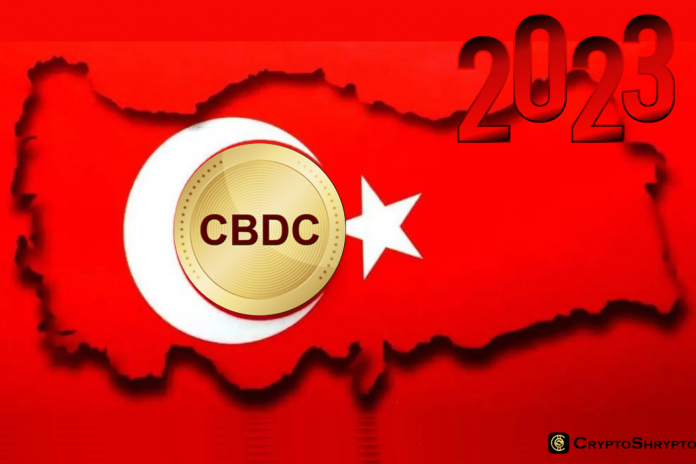
A central bank digital currency (CBDC) is the digital form of a country’s fiat currency, such as the dollar, euro, pound or yuan. It is issued by the central bank and has the same value and legal status as the physical currency. CBDCs are different from cryptocurrencies, which are not backed by any government or central authority and have volatile prices.

One of the main questions about CBDCs is how decentralized they are, or how much control the central bank has over them. Decentralization is often seen as a desirable feature of digital currencies, as it can enhance privacy, security, innovation and resilience. However, decentralization also comes with trade-offs, such as scalability, efficiency, regulation and governance.

Decentralization is a term that describes the degree of control and influence that different entities have over a system or a network. In the context of digital currencies, decentralization can refer to several aspects, such as:

– The governance of the currency: who decides the rules and parameters of the currency, such as its supply, distribution, and interest rate?
– The issuance of the currency: who creates new units of the currency and how?
– The validation of the transactions: who verifies and records the transactions on the ledger and how?
– The access to the currency: who can use the currency and how?

Cryptocurrencies are generally considered to be highly decentralized, as they rely on distributed networks of nodes that operate according to a consensus protocol, without the need for a central authority or intermediary. Anyone can join the network, create new units of the currency (through mining or staking), validate transactions (through proof-of-work or proof-of-stake), and access the currency (through wallets and exchanges). However, decentralization is not absolute or uniform across different cryptocurrencies, and there may be trade-offs between decentralization and other features, such as scalability, security, and usability.

CBDCs, on the other hand, are inherently centralized, as they are issued and controlled by a single entity: the central bank. The central bank decides the rules and parameters of the currency, creates new units of the currency (through monetary policy), validates transactions (through a centralized ledger or a permissioned blockchain), and regulates access to the currency (through identity verification and eligibility criteria). However, centralization does not necessarily imply uniformity or rigidity across different CBDCs, and there may be variations in design and implementation that affect the degree of decentralization.

The anonymity of cryptocurrency transactions has left it susceptible to crimes and scams over the last decade — but there has also been a growing business of companies tracking that down, The New York Times reports. Chainalysis is one of the companies involved in deciphering blockchain records, drawing in tens of millions of dollars in contracts with federal agencies to monitor crypto transactions. But with privacy concerns on the rise these days, other companies such as Cake Wallet are trying to make crypto transactions less traceable again, making it harder to determine who is sending and receiving money. (LinkedIn News)

For example, some CBDCs may adopt a two-tier model, where the central bank delegates some functions to intermediaries, such as commercial banks or payment service providers. These intermediaries may provide retail services to end-users, such as account opening, transaction processing, and customer support. This may increase efficiency and competition in the payment system, but also introduce some degree of decentralization and fragmentation.

Another example is that some CBDCs may use a hybrid blockchain architecture, where the central bank maintains a master ledger that records the aggregate balances of intermediaries or users, while allowing for sub-ledgers that operate on different platforms or protocols. These sub-ledgers may enable faster and cheaper transactions among participants within a network or a community. This may enhance innovation and inclusion in the payment system, but also create some degree of decentralization and interoperability.

Therefore, CBDCs are not necessarily monolithic or homogeneous in terms of decentralization. They may exhibit different degrees of decentralization depending on their design choices and objectives. However, CBDCs are unlikely to match cryptocurrencies in terms of decentralization, as they still rely on a central authority that has ultimate control over the currency. This may limit some of the advantages that cryptocurrencies offer, such as censorship-resistance, anonymity, and permissionlessness. However, it may also mitigate some of the risks that cryptocurrencies pose, such as volatility, fraud, and illicit activity.

The degree of decentralization of a CBDC depends on its design choices and implementation. There are many possible ways to design a CBDC, such as:

– Who can access and use it? Is it available to everyone (retail CBDC) or only to financial institutions (wholesale CBDC)?
– How is it issued and distributed? Is it directly from the central bank or through intermediaries such as commercial banks or payment platforms?
– How is it stored and transferred? Is it based on a centralized ledger or a distributed ledger technology (DLT) such as blockchain?
– How is it validated and secured? Is it based on a permissioned or permissionless system, where different actors have different roles and responsibilities?
– How is it governed and regulated? Is it subject to existing laws and regulations or does it require new ones?

Depending on these design choices, a CBDC can be more or less decentralized. For example, a retail CBDC that is issued directly by the central bank and based on a centralized ledger would be more centralized than a wholesale CBDC that is distributed through intermediaries and based on a DLT. However, there is no clear-cut answer to how decentralized a CBDC should be, as different levels of decentralization may suit different purposes and contexts.

The benefits and risks of decentralization for CBDCs are still being explored by researchers, policymakers and practitioners. Some potential benefits include:

– Enhancing privacy and anonymity for users, by reducing the need for intermediaries and third-party verification
– Improving security and resilience for the system, by reducing single points of failure and cyberattacks
– Fostering innovation and competition for the market, by enabling new entrants and business models
– Increasing financial inclusion and access for the public, by lowering barriers and costs of participation

Some potential risks include:

– Reducing efficiency and scalability for the system, by increasing complexity and latency
– Complicating regulation and oversight for the authorities, by creating new challenges for compliance and enforcement
– Eroding trust and stability for the economy, by undermining the role and credibility of the central bank
– Exposing users to new risks such as fraud, theft or loss of funds

In conclusion, CBDCs are not inherently centralized or decentralized, but rather reflect a spectrum of possible design choices that have different implications for their performance and impact. The optimal degree of decentralization for a CBDC depends on its objectives, functions and context. Therefore, each central bank needs to carefully weigh the benefits and risks of decentralization for its own CBDC project.


Bitcoin and other notable Cryptos Will drive Institutional Transfer of Ownership in DEFI

0

Cryptocurrencies have been around for more than a decade, but they have gained unprecedented popularity and adoption in recent years. Bitcoin, the first and most well-known cryptocurrency, has emerged as a global phenomenon, reaching new heights of market capitalization and public awareness. But Bitcoin is not alone; there are thousands of other cryptocurrencies, each with its own features, advantages, and challenges.

Some of these cryptocurrencies are designed to serve as alternative forms of money, enabling fast, cheap, and secure transactions across a decentralized network of users. Others are more than just currencies; they are platforms that enable the creation and execution of smart contracts, decentralized applications, and other innovations. These platforms aim to transform various sectors of the economy, such as finance, supply chain, gaming, art, and more.

In this post, we will explore some of the most important cryptocurrencies other than Bitcoin, and how they are driving institutional transfer of ownership. We will look at their origins, characteristics, use cases, and challenges, as well as their potential impact on the future of business and society.

Ethereum (ETH)

Ethereum is the second-largest cryptocurrency by market capitalization, and the most widely used platform for smart contracts and decentralized applications (DApps). Ethereum was launched in 2015 by Vitalik Buterin, a Russian-Canadian programmer and visionary, who wanted to create a more general-purpose and programmable blockchain than Bitcoin.

Ethereum enables developers to create and deploy DApps that can run on a distributed network of computers without intermediaries or censorship. These DApps can provide various services, such as decentralized finance (DeFi), gaming, social media, identity management, and more. Ethereum also supports the creation and exchange of non-fungible tokens (NFTs), which are unique digital assets that can represent anything from art and music to collectibles and real estate.

Ethereum is powered by its native cryptocurrency, Ether (ETH), which is used to pay for transaction fees and computational resources on the network. Ether can also be used as a form of money, or as a store of value. Ethereum has a large and active community of developers, users, and investors, who contribute to its innovation and growth.

Ethereum is driving institutional transfer of ownership by enabling new forms of decentralized governance, ownership, and collaboration. For example, Ethereum allows for the creation of decentralized autonomous organizations (DAOs), which are entities that operate according to predefined rules encoded in smart contracts, without human intervention or hierarchy. DAOs can enable collective decision-making, resource allocation, and value creation among stakeholders.

Another example is DeFi, which is a fast-growing sector that aims to provide alternative financial services without intermediaries or centralized control. DeFi applications on Ethereum allow users to lend, borrow, trade, invest, and earn interest on their crypto assets in a transparent and permissionless way. DeFi can potentially democratize access to financial opportunities and empower individuals and communities.

Binance Coin (BNB)

Binance Coin (BNB) is the native cryptocurrency of Binance, one of the largest and most popular crypto exchanges in the world. Binance was founded in 2017 by Changpeng Zhao (CZ), a Chinese-Canadian entrepreneur and crypto enthusiast, who wanted to create a platform that could cater to the needs and demands of the global crypto community.

Binance Coin was initially launched as an ERC-20 token on Ethereum, but later migrated to its own blockchain platform called Binance Chain in 2019. Binance Chain is a fast and scalable platform that focuses on facilitating low-cost and high-throughput trading of crypto assets. Binance Chain also supports the creation and exchange of tokens using a simple standard called BEP-2.

Binance Coin has multiple use cases within the Binance ecosystem. It can be used to pay for trading fees on Binance with a discount; it can be used to participate in token sales on Binance Launchpad; it can be used to stake or farm other tokens on Binance Launchpool; it can be used to access various services and benefits on Binance Smart Chain; and it can be used as a form of money or a store of value.

Binance Coin is driving institutional transfer of ownership by enabling users to access a wide range of crypto products and services on one platform. Binance offers not only spot trading but also futures trading.

Nigerian Fintech Startup Storspay Secures $320,000 in Funding Round, to Improve Financial Well-Being of Business Owners

0

Nigerian decentralized cross-border lending fintech startup Storspay has secured $320,000 in a funding round to improve the financial well-being of business owners across the world.

The company also announced via Twitter that the startup will be participating in the prestigious Techstars New York accelerator powered by J.P Morgan, while noting that Storspay was in the top 1% of applicants selected for the exclusive program. The 13-week fundraising and mentorship program is for startups seeking to accelerate their growth and raise their next round of funding.

Speaking on the mission of the company, Storspay CEO Sam Alonge said,

At Storspay, our mission is focused on enabling economic well-being for everyday people across the world. Inflation continues to eat away at the savings of ordinary people in North America and small business owners in emerging economies continue to face the daily frustrations of not finding the capital they need at affordable rates to successfully grow their businesses.

“We believe at Storspay that we can make an outsized economic and social impact by building a decentralized retail lending platform that uses stablecoin to share prosperity across the world. We will enable ordinary people on one side of the world to support other ordinary people in another part of the world and make more money while at it.”

Located in Toronto, Ontario, Canada, StorsPay’s goal is to enhance the financial well-being of business owners globally by offering a decentralized lending infrastructure for the Internet. The platform allows them to exchange capital instantly and securely across borders to finance their working capital inventory.

Storspay APIs and software automate lending by retail investors to small businesses globally using stablecoin. Retail investors in North America only need their phones to lend to participating merchants anywhere in the world using just a debit/credit card. They enjoy 3x higher yield vs. savings accounts. Users can earn interest income (higher vs. their bank) by staking their balances to be lent at affordable rates to merchants in the network (who enjoy lower rates vs. banks).

The startup is creating a new way for merchants and retail investors to exchange capital, one that puts them at the heart of the transaction while undoing the frictions of the current system through new paradigms- borderless instant lending, zero fees, community-driven higher interest income on user staking and lower rates on merchant borrowing. Backed by Techstars, JPMorgan Chase, UBA Bank, Paystack, Invest Ottawa, and several others, Storspay is building Stripe for cross-border retail lending to small businesses globally. The platform uses over 3 web technology tools on its website. They include tools like SSL, javascript, and widgets among others.

Enjin coin (ENJ) and Axie Infinity (AXS) Displays Mixed Signals as Investors Prioritize Sparklo (SPRK)

0

With investors looking for the next big thing since Bitcoin(BTC), a lot of digital tokens have shown promise over the years. While Bitcoin(BTC) remains the most valuable coin, many investors have made significant profits from tokens that they invested in early.

As such, it is now a best practice to invest in tokens when they are relatively new in the market and low in price. Amid mixed signals of Enjin coin (ENJ) and Axie Infinity (AXS) tokens, emerging and innovative platforms like Sparklo (SPRK) are establishing fresh opportunities for investors to jump on.

Experts Hopeful as Enjin coin Coin (ENJ) Price Stalls

Launched in July 2017, Enjin coin (ENJ) is a tokenized in-game product for game developers under the Ethereum blockchain. In 2021, Enjin coin (ENJ) was at an all-time high of $2.6 and cruising.

However, due to the economy and downturn in the crypto industry, the price of Enjin coin (ENJ) experienced a bearish run that put it well below a dollar in the market. At the moment, the price of Enjin coin (ENJ) is $0.39, with a 24-hour trading volume of $14,753,082 and a -1.09% loss in price value in the last 24 hours. This is a far cry from what it was some years back.

Despite the seeming fall from grace, Enjin coin (ENJ) still retains the faith of die-hard investors, as experts expect the price to rally in the coming days and weeks. Meanwhile, it may be safe to put off investing in Enjin coin (ENJ) for now until a favorable price action arises.

>>>> BUY SPARKLO TOKENS <<<

Axie Infinity (AXS) Struggles to Maintain Steady Rise

While some tokens have shown a steady upward trend in price, Axie Infinity (AXS) isn’t one of them, as the popular play-to-earn (P2E) game and blockchain-based token have found it hard to maintain a steady consolidated price action. Axie Infinity (AXS) is a token that represents the Axie Infinity (AXS) game token in blockchain and allows players to purchase NFT assets while they play the game.

The price of Axie Infinity (AXS) is at $7.95 with a market cap of $923.01M and a volume of $33.56M. The circulation supply so far is 116.14M. The price of Axie Infinity (AXS) saw a -30.68% loss in value in the past 90 days and has gone through a -0.51 loss in price value in the last 24 hours.

This has left investors wondering if Axie Infinity (AXS) is worth investing in at the moment. Experts advise that investors look at other opportunities for higher growth and potential returns.

Investors Queue Up to Invest in Sparklo (SPRK)

Despite the mixed signals witnessed in the crypto industry recently, experts and investors are all confidently backing Sparklo (SPRK) to excel.  Sparklo (SPRK) will be a next-gen crypto investment platform that allows investors the opportunity to invest in valuable precious stones such as gold, Silver, and Platinum through a fractionalized NFT that represents the investors’ real-world assets.

Sparklo (SPRK) has the potential to become an investment with exponential room for growth. At a presale price of $0.017 presently, Sparklo (SPRK) gives investors a real shot at owning the next possible blue-chip cryptocurrency.

Currently,  investors who buy the token will be given a 30% bonus of their purchase. That is, when an investor purchases 10000 SPRK, the investor gets 13000 in return, making it one of the best crypto projects.  However, the bonus will be offered till May 5th, after which you won’t be given extra bonus when you buy the token. So, you still have time to invest and get extra tokens.

What’s more, Sparklo (SPRK) will be the first blockchain investment platform to allow members to invest in real gold, silver, and platinum bars. Also, investors can have first access to new products from selected jewellery shops as well as discounts. We highly recommend this very promising investment opportunity. Check out some details of the investment below.

Buy Presale: https://invest.sparklo.finance

Website: https://sparklo.finance

Twitter: https://twitter.com/sparklo_finance

Telegram: https://t.me/sparklofinance

Klaytn (KLAY), Neo (NEO) and Sparklo (SPRK) Caught Investors Attention as Prices Show Potential For Sustained Rally

0

After the crypto slump of November 2022 is gradually settling down, the crypto industry is finding its feet again, and so are cryptocurrencies. As such, investors are looking to capitalize on rising market trends to make gains.

Ahead of both Klaytn (KLAY) and Neo (NEO) tokens, one of the investment platforms drawing the attention of investors is Sparklo (SPRK) which promises to be the next big investment with the potential for sustained growth.

Klaytn (KLAY) Price Rally a Positive Sign for Investors

Observations from experts have shown that Klaytn (KLAY) is gathering momentum with a 1.02% increase in the past day to peg the price at $0.2274 and a 24-hour trading volume of $15,234,789. Currently, the CoinMarket for Klaytn (KLAY) ranking is #65, with a circulating supply at 3,008.8M. The Market seems to be looking good for Klaytn (KLAY) at the moment.

Klaytn’s (KLAY) favorable price action could be a positive sign for investors looking to invest in low-lying tokens at the moment. However, beyond Klaytn (KLAY), Sparklo (SPRK) could well prove to be a better investment option for both the short term and in the long run.

>>>> BUY SPARKLO TOKENS <<<

Doubts On Whether Neo(NEO) Could Consolidate its Positive Price Action

Similar to Klaytn (KLAY), the Neo (NEO) token has experienced a 1.1% increase in its price value. However, it is still unclear to experts whether the price increase is the beginning of a bullish run or just another false dawn.

Currently, the price of Neo (NEO) is around $10.85, with a trading volume of $26,788,973. Despite the 1.1% positive price action, the Neo (NEO) token has fallen to a -1.75 price decline in the past week. The past 30 days have seen a -18.2% price decline on the Neo (NEO) token.

These statistics have kept both investors and experts on the fence as to whether to take the recent Neo (NEO) token price increase as a sign of price rallying. In the meantime, it would be in every investor’s best interest to stall any investment in the Neo (NEO) token until more detailed price movement data is available.

Sparklo (SPRK) Continues to Gather Momentum as More Investors Seize Opportunity to Invest on the Platform

Investors are not new to the fact that significant gains are often achieved by investing early in a project. In view of this, investors are leveraging on the Sparklo (SPRK) project’s presale in a bid to be among the frontrunners of the investment platform.

Sparklo (SPRK) is gearing up to become the first crypto investment platform that gives users the opportunity to invest in silver, gold, and platinum. You can be part of the Sparklo (SPRK) project by investing  $0.017 per token, which is the current pre-sale price presently. And investors that buy the coin presently will be given a 30% bonus which ends on May 5th. That is, when an investor buys 10000 SPRK, the investor gets 13000 in return. However, this is only possible from now till May 5th after which no bonus will be given again.

The project is raging with the possibility of becoming the next blue-chip crypto due to the high potential it exhibits and which is recognized by experts. What’s more,  the project passed its audit with Interfi Network, and investors can invest in NFTs that represent real-world assets of Gold, silver, and platinum.

The Sparklo (SPRK) project will be integrated with jewellery stores to help them bring their products to the blockchain market while giving investors first access to new products and discounts. You can check out this potentially profit-lading investment opportunity below:


Buy Presale: https://invest.sparklo.finance

 Website: https://sparklo.finance

Twitter: https://twitter.com/sparklo_finance

Telegram: https://t.me/sparklofinance