DD
MM
YYYY

PAGES

DD
MM
YYYY

spot_img

PAGES

Home Blog Page 4181

Experts See a Booming Uwerx (WERX) Presale Compared To The Aave (AAVE) Coin With This Price Prediction

0

As most experienced investors know, buying in early on projects with a solid foundation and growth potential is the way to go for long-term wealth. Analysts have taken notice of one such project – Uwerx, a presale project that could become a top-tier platform used by countless freelancers worldwide! Today, we will compare this rookie with an already established coin like Aave (AAVE) and see how they both fare in the coming days!

Uwerx (WERX) To Bring Change To An Entire Industry

According to a 2021 Forbes report, online talent platforms have increased from 80 to over 330 since 2009. However, these platforms have been criticized due to problems like high fees, distrust among parties, third-party influence, and copyright infringement. One project will aim to solve all of these issues – Uwerx! With the innovation and fundamental advantages that Uwerx will bring, it could become a powerful entity in the freelancing market for years to come.

Uwerx will be the first-ever freelance platform based on the Polygon network, connecting freelancers and service buyers at a lower cost as smart contracts will replace third-party escrow services requiring only a 1% service fee compared to Upwork & Fiverr’s 20%.

Furthermore, due to being decentralized and utilizing blockchain technology, the records will have more transparency, and your IP rights will be protected through the Proof-of-Work (PoW) system. Uwerx will also provide WERX tokens to its users for participating in platform activities, incentivizing sign-ups, and more! These tokens have a current presale price of just $0.01, but as Uwerx picks up more steam, experts forecast a low of $0.80 and a high of $2 for WERX within Q4 of 2023. Some bullish analysts even see WERX reaching $3 by Q3 of 2024 – presenting an excellent chance to purchase a potential blue-chip coin for just a cent!

The Aave (AAVE) DAO Shows Most Voters

Recently, Aave (AAVE) displayed that in the last six months, it has had the most DAO voters on the market. According to Nansen, Aave (AAVE) sits at the top of the voter list with 33,831, and Uniswap (UNI) follows with 22,082.

Aave (AAVE) is trading hands for $81.37 with a market cap of $1.1B, an increase of 0.49% in the last 24 hours. However, the trading volume for Aave (AAVE) has been decreasing in that same time as it sits at $50M, down 19% overnight. When we look at price predictions for Aave (AAVE), experts see it fluctuating between $106.19-128.04 within Q4 of 2023 and $150.08-184.12 in 2024. While Aave (AAVE) may have some favorable price movement in the future, it would be beneficial to look for assets with more upside potential, in our opinion.

Uwerx (WERX) – A Superb Presale

Many investors believe Uwerx may surpass Aave (AAVE) as it is connected to a growing gig industry that has survived in the harshest conditions. And since it has already obtained SolidProof and InterFi Network audits, contract ownership renouncement and will have a 25-year lock on liquidity after the presale finishes, investing in it now is safer than ever! Compared to Aave (AAVE), the WERX coin costs just a cent but is expected to rally by 29,900%.

According to experts, you may now participate in one of the best presales this year by clicking one of the links below to enjoy a 20% purchase discount a price of $0.00995.


Presale: invest.uwerx.network

Telegram: https://t.me/uwerx_network

Twitter: https://twitter.com/uwerx_network

Website: https://www.uwerx.network

The importance of crypto staking service

0

Staking is a process that allows you to lock up your coins in a smart contract and receive rewards for securing the network. If you are interested in earning passive income from your crypto assets, you might want to consider using a crypto staking service. Staking is different from mining, which requires expensive hardware and consumes a lot of electricity. Staking is more energy-efficient and accessible to anyone who owns some stake able coins.

However, staking also comes with some challenges and risks. For example, you need to choose a reliable and secure staking platform that supports your preferred coins. You also need to be aware of the minimum staking amount, the lock-up period, the withdrawal fees, and the potential penalties for misbehaving nodes. Moreover, you need to keep your coins online and connected to the network at all times, which can expose them to hacking or theft.

This is where a crypto staking service can help you. A crypto staking service is a third-party provider that offers staking solutions for various coins and platforms. By using a crypto staking service, you can delegate your coins to a professional staking provider and enjoy the benefits of staking without the hassle and risk of managing your own nodes. A crypto staking service can also offer you higher rewards, lower fees, and more flexibility than staking on your own.

Some of the advantages of using a crypto staking service are:

  • You can stake multiple coins and platforms with one account and one interface.
  • You can access a variety of staking options, such as fixed-term, flexible-term, or instant-unstake.
  • You can benefit from the economies of scale and network effects of a large staking pool.
  • You can rely on the security and expertise of a trusted staking provider.
  • You can withdraw your coins at any time without waiting for long periods or paying high fees.

If you want to start staking your crypto assets and earn passive income, you should consider using a crypto staking service. A crypto staking service can help you maximize your returns, minimize your risks, and simplify your staking experience.

The Clubhouse Challenge – And the problem of Synchronous Audio Social Media

1

Conversational and synchronous videos, texts and audios are the three core ways to engage and entertain in the age of social media when everyone is live (synchronous means everyone is engaged real time). Videos, in all forms, have shown to scale really fast (think of YouTube, YouTube Live). Texts have also done well even though monetizing text seems harder compared to video (think of Twitter, WhatsApp real-time conversations).

Yes, you can be watching a video, and watching videos, and ads will keep showing. You do not have to do anything for those ads to drop. But for texts, you have to use your hands to initiate a kinetic process for the ads to show since you need to write to text-chat. In other words, you need to “work” for the ads to keep dropping.

For audio, the challenge scales. Indeed, in (synchronous) audio, you have a big problem to solve if you plan to monetize. How can you have many people speaking at the same time, with no visual element, and still figure out when to pause them to sell an ad? This is different from a podcast where the creator controls the sequence. It is also different from listening to music because the platforms have ways to use ads to enable the transitions, from one song to the other.

But having two or more speaking, and suddenly an ad interjects will not make a service great.  That is the Clubhouse challenge. Yes, how do you monetize in an audio chat room where everyone is speaking?

Finding a way to revenue will be a tough call. No wonder Clubhouse fired 50% of its staff today.

The company may need to borrow ideas from Twitter and offer subscriptions at scale but that would be a huge challenge if it wants to keep growing and scaling.

Today we announced that we’re scaling back our organization by over 50% and saying goodbye to many talented, dedicated teammates in the process. We’re deeply sorry to be doing this, and we would not be making this change if we didn’t feel it was absolutely necessary.

“If you are among those impacted, you will receive a calendar invite to a 1:1 meeting with a manager in your department within the next 10 minutes. In the meantime, we wanted to provide everyone with more context about why we made this decision and how we will be supporting the individuals who are departing.

To fix this we need to reset the company, eliminate roles and take it down to a smaller, product-focused team. We arrived at this conclusion reluctantly, as we have years of runway remaining and do not feel immediate pressure to reduce costs. But we believe that a smaller team will give us focus and speed, and help us launch the next evolution of the product.”

The company may need to borrow ideas from Twitter and offer subscriptions at scale, but that would be a huge challenge if it wants to keep growing and scaling. At this time, it does not have the scale, value proposition and brand equity to offer an all-user subscription.  And the implication is that Clubhouse may have to be acquired by a bigger company like YouTube to thrive. YouTube will just buy it and integrate into YouTube. I do not see how this company can be a standalone business with its current business.

YouTube Music is betting on the future of podcasts. The Google-owned platform announced on Thursday it is officially rolling out its new podcast feature available to only some users in the U.S. as it looks to deepen its podcast offerings outside of YouTube’s main platform. In a statement, the company said the roll-out “complements the podcast video experience on YouTube.” The music streaming giant also noted it will let those even without a premium subscription be able to listen to their favorite podcasts through the new function.

YouTube continues to invest in the podcast space, while other audio-first products have taken recent hits – including Clubhouse, which announced on Thursday it will be laying off over half of its workforce.

The move also comes as Google’s parent-company Alphabet reported a decline in ad revenue earlier this week. (LinkedIn News)

How things may be changing in domains under ICANNs authority, and not for the better.

0

Way back in 2014, ICANN said the Internet domain name for a country doesn’t belong to that country— well maybe that dynamic, driven by ICANN themselves may change….

‘Plaintiffs who successfully sued Iran, Syria and North Korea as sponsors of terrorism want to seize the three countries’ ccTLDs (country code top-level domains) as part of financial judgments against them. (ICANN), The Internet Corporation for Assigned Names and Numbers, which oversees the Internet, says they can’t do that because ccTLDs aren’t even property’ – reported PC World in 2014.

Though… back then when IT magazines were still ‘a big thing’, pretty much all of the relevant publications of the day carried the story – Computer World, and IT World just to name two more.

Now, it seems things may be about to turn on their heads.

ICANN and Verisign – the company with commercial rights over the first ever domain TLDs (Top Level Domains) – ‘.com’ and ‘.net’ –  have new proposals that are at consultation stage which poses serious public safety, property security, and ethical problems.

Last week on Freespeech George Kirikos raises these serious concerns.

He also eludes that the policy recommendation, if adopted may not stop at .com and .net but may eventually extend to all domains in ICANN authority.

Kirikos argues – ‘Either by design, or unintentionally, they’ve proposed allowing any government in the world to cancel, redirect, or transfer to their control applicable domain names! This is an outrageous and dangerous proposal that must be stopped. While this proposal is currently only for .NET domain names, presumably they would want to also apply it to other extensions like .COM as those contracts come up for renewal.’

“Any government” means what it says, so that means China, Russia, Iran, Turkey,  the Pitcairn Islands, Tuvalu, the State of Texas, the State of California, the City of Detroit,  a village of 100 people with a local council in Botswana, or literally “any government” whether it be state, local, or national. We’re talking about countless numbers of “governments” in the world (you’d have to add up all the cities, towns, states, provinces and nations, for starers). If that wasn’t bad enough, their proposal adds “any administrative authority” and “any government authority” (i.e.  government bureaucrats in any jurisdiction in the world) that would be empowered to “deny, cancel, redirect or transfer” domain names.  [The new text about “court of competent jurisdiction” is also problematic, as it would  override determinations that would be made by registrars via the agreements that domain name registrants have with their registrars.]

‘This proposal represents a complete government takeover of domain names, with no due process protections for registrants. It would usurp the role of registrars, making governments go directly to Verisign (or any other registry that adopts similar language) to achieve anything they desired. It literally overturns more than two decades of global domain name policy.’

This makes a great case for Web 3 Domains.

Web 3 Domains offers a blockchain as the ‘DNS root’ instead of a centralized organisation such as ICANN.

This means that nobody (in theory) can shut them down… Why do I say ‘in theory’?

Well, the thing is, all of the products that companies go around ‘calling’ Web 3 Domains aren’t exactly that.

Since Ethereum went PoS (Proof of Stake), miners are replaced with validators, and those that become stake holders are commercial infrastructural investors, all of which can be tracked and traced by authorities such as the US SEC.

It gets even worse, when commercial entities start building off  them with what are known as L2s or sidechains.

The reason why L2s are faster and more scalable than the Ethereum itself, is because most of the key is kept off chain in the corporate environment, and only a small bit of meta data makes it to the Eth core.

But if the company that owns the sidechain gets hacked, goes bankrupt, gets into licencing trouble with SEC, and a host of other potential problems then any assets funnelled through that company or with keys being managed by them… they will be lost.

It’s the NFA (Non Fungible Asset) version of the old Crypto adage – “Not Your Keys, Not Your Coins” – err, Domains.

Once it’s possible for any central authority to ‘require’ the ecosystem to conform, how can it be considered decentralized? And if it isn’t decentralized, how can it be considered Web 3 enabling?

Tokenized, i.e. minted domains have a long way to go in building out into communication systems and this is mostly down to the lack of straight-out-of-the-box interoperability with legacy infrastructures, significantly, Google Chrome and Google Search.

ICANN domains have been in existence since the last millennium, and technologies like Google have grown up around them.

While all these new technologies will eventually become ubiquitous, it’s pretty slow moving. Meanwhile if they can’t exhibit true Web 3, i.e. complete decentralization, they are really no less centralized than an ICANN domain and without full interoperability with ‘legacy’ systems – it’s hard to see the value proposition.
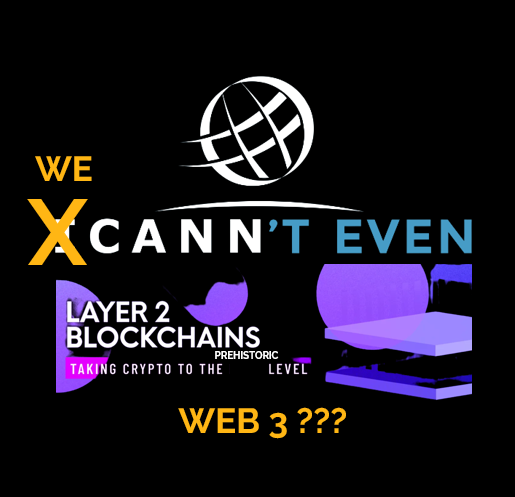


Domains off L2s of Ethereum have all of the drawbacks of being early in tokenized technology and all of the drawbacks of an ICANN domain as well.

No full decentralization (No Web3) + No backward compatibility = No point!

Thankfully, 9ja Cosmos operates off Handshake, which is a fully decentralized, PoW (Proof of Work) blockchain, completely independent, and not owned by anybody. It is modelled on Bitcoin.

In addition to .9jacom and .9javerse SLDs, 9ja Cosmos can sell TOP LEVEL DOMAINS!

Back to the Kirikos article, and the good thing is that it’s a public consultation, so at least for now, there is opportunity to have voices heard at https://www.icann.org/en/public-comment/proceeding/proposed-renewal-of-the-registry-agreement-for-net-13-04-2023.

There is full transparency and they have published two email addresses, globalsupport@icann.org, and   karla.hakansson@icann.org at which to receive queries.

So if the decisions that happen later don’t align with your beliefs, but you didn’t engage, then don’t complain later!

The consultation closes in 28 days.


9ja Cosmos is here…

Get your .9jacom and .9javerse Web 3 domains  for $2 at:

.9jacom Domains

.9javerse Domains

All reference sites accessed between 28/04/2023

namepros.com/threads/red-alert-icann-and-verisign-proposal-would-allow-any-government-in-the-world-to-seize-domain-names.1300241/

freespeech.com/2023/04/19/red-alert-icann-and-verisign-proposal-would-allow-any-government-in-the-world-to-seize-domain-names/

computerworld.com/article/2697118/countries-don-t-own-their-internet-domains–icann-says.html

icann.org/en/public-comment/proceeding/proposed-renewal-of-the-registry-agreement-for-net-13-04-2023

pcworld.com/article/440588/countries-dont-own-their-internet-domains-icann-says.html

www2.cio.com.au/article/print/551289/countries_don_t_own_their_internet_domains_icann_says

.


Clubhouse Announces Plans to Layoff 50% of Its Employees as It Restructures Platform

0

Social audio app Clubhouse has announced plans to lay off 50 percent of its employees as it restructures the platform.

The company’s co-founders Paul Davison and Rohan Seth disclosed via a memo to employees that the layoff was necessitated to reset the company following a post-covid era.

The memo reads in part,

Today we announced that we’re scaling back our organization by over 50% and saying goodbye to many talented, dedicated teammates in the process. We’re deeply sorry to be doing this, and we would not be making this change if we didn’t feel it was absolutely necessary.

“If you are among those impacted, you will receive a calendar invite to a 1:1 meeting with a manager in your department within the next 10 minutes. In the meantime, we wanted to provide everyone with more context about why we made this decision and how we will be supporting the individuals who are departing.

To fix this we need to reset the company, eliminate roles and take it down to a smaller, product-focused team. We arrived at this conclusion reluctantly, as we have years of runway remaining and do not feel immediate pressure to reduce costs. But we believe that a smaller team will give us focus and speed, and help us launch the next evolution of the product.”

The co-founders disclosed that as the world has opened up post-Covid, it has become harder for many people to find their friends on Clubhouse and to fit long conversations into their daily lives. Hence, to find its role in the current realities of today’s world, the product needs to evolve which requires a period of change.

Laid-off employees will receive severance pay as they will be paid salaries for the rest of April, plus 4 months of additional severance. This means everyone affected will receive their full salary until Aug 31, 2023.

Also, every laid-off employee will be allowed to keep their company-issued laptops, to help them research and apply for new roles. Unlike several tech companies that have downsized their workforce due to the recent economic downturn, Clubhouse did not cite any economic crisis while announcing layoffs. Instead, the company is responding to complexities that arose from overturning during the covid era

It is worth noting that Clubhouse first emerged as an invite-only app during the covid-19 pandemic lockdown in 2020. During this period the platform witnessed a surge in downloads as people were looking for ways to link up with friends.

Unfortunately, following the post-covid era, the app has been struggling to stay relevant. In a bid to evolve and adapt to the post-covid era, the app launched a feature called “Houses” last year August, which is a dedicated chat space where users can make new friends through their existing friend groups in a more intimate setting.