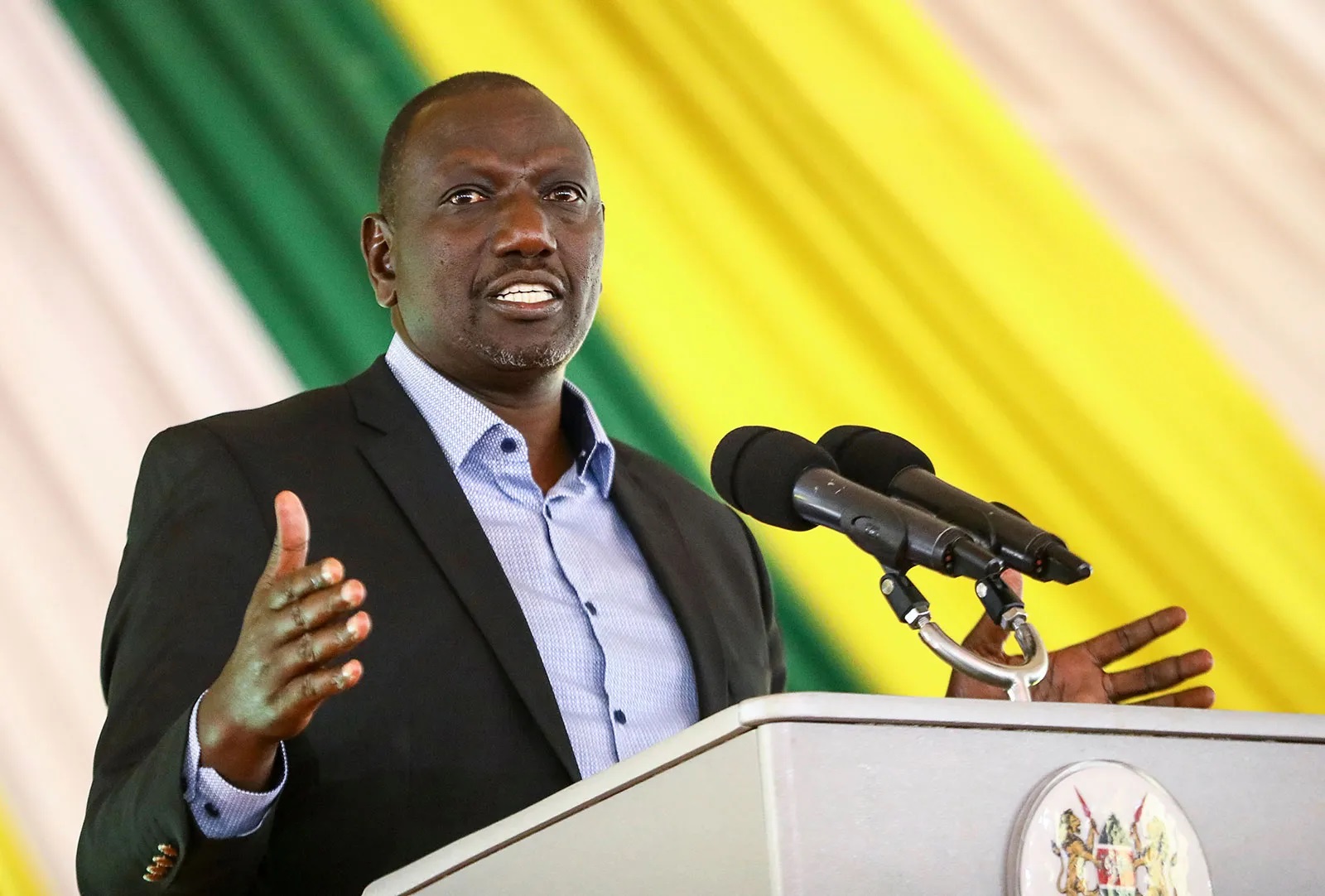
Kenyan President William Ruto has called on all African leaders to embrace pan-African payments to reduce reliance on the globally-bullish US dollar.
Speaking at a forum on the African Continental Free Trade Area (AfCFTA) on Monday, Ruto urged his peers in Africa to mobilize central and commercial banks to join Pan-African Payments and Settlement System (PAPSS) which was formed in January 2022.
He expressed concerns over the challenges faced by African countries and local banks, who often rely on correspondent banks in the US and Europe to complete payments between African currencies, resulting in delays and additional charges.
In his words,
“We are all’ struggling to make payments for goods and services from one country to another because of differences in currencies. And in the middle of all these, we are all subjected to a dollar environment. There has been a mechanism where all our traders can trade in the local currency and we leave it to the Afreximbank to settle all the payments. We do not have to look for dollars; our businessmen will concentrate on moving goods and services and leave the arduous task of currencies to Afreximbank.
“I suggest that we have a mechanism where we can settle all our payments whether between our countries or externally using our local currencies. And we have a mechanism like the one that has been put up by the Afreximbank so that we don’t have to be hostage to any one currency. Without a single payment platform, payment instructions from one African country to another typically pass through several intermediary financial institutions, leading to increased costs, complications, problems, and unnecessary currency fluctuations and it ends up being a whole ecosystem of confusion.”
A 2021 business day report revealed that African countries with 42 different currencies are losing $5 billion annually, which is why intra-African trade is constrained and the Small and Medium Enterprises (SMEs) are the most affected. The current reliance on US dollars has led to a mismatch between demand and supply, causing importers including oil marketers and manufacturers to face difficulties. The shortage of the dollar has also put pressure on the Kenyan shilling, which saw it depreciate by 12.1% since the beginning of the year.
This saw Ruto call for the adoption of PAPSS in the wake of challenges faced by Kenya, such as fuel shortages and economic problems attributed to a dollar shortage. Reports reveal that African traders and their local banks are using correspondent banks, usually in Europe to complete payments between two African currencies largely in dollars, and sometimes in euros. Payment usually takes up to three to five days to get to the recipient’s bank.
Importers such as oil marketers and manufacturers have since last year complained of a gaping mismatch in demand and supply of the US dollars, prompting them to buy it in batches and levels way above the official rate. The Kenya Association of Manufacturers, for example, last year said the dollar crunch strained relations with suppliers at a time competition for raw materials had intensified due to rising demand amid lingering supply chain constraints.
The unit has remained under sustained pressure from the US dollar due to higher demand than supply in a high-inflation environment that has seen investors shift their assets to a haven. Kenya suffered an acute shortage of fuel which the oil marketers largely linked to delays in releasing cash for fuel subsidies creating cash flow challenges, while the government accused the firms of hoarding the commodity.
As part of efforts towards addressing this challenge, AfCFTA is reportedly working with Afreximbank to establish a Pan-African Payment and Settlement System (PAPSS), which will enable Africans to transact in real-time on a digital platform with some entity in other parts of the continent using their local currency, so they will not have to worry about converting to a dollar, Euro, or any currency.
As more countries move away from the US dollar, there is a growing shift in the focus on international trade. Countries are increasingly looking to trade with each other using their currencies, rather than using the dollar as a medium of exchange. This shift has the potential to reshape the global economy, as it could reduce the dominance of the US and increase the influence of other countries.
One of the main benefits of using alternative currencies in international trade is that it can reduce the risks associated with exchange rate fluctuations. When countries trade using the dollar, they are exposed to the risk of fluctuations in the value of the dollar, which can impact the profitability of their trade. By using their currencies, countries can reduce this risk and ensure that they are not impacted by external factors beyond their control.
UnionPay, the gigantic Chinese payment company, has overtaken Visa on the global debit card market, commanding 40.03% in 2022, with Visa 38.8%, on settlement volume of $16.227 trillion and $14.109 trillion respectively. A decade ago, Visa held 80% of the market while UnionPay was just around 1-2%. The country called China has bulldozed itself into the center of the world economy in many domains.
The Report
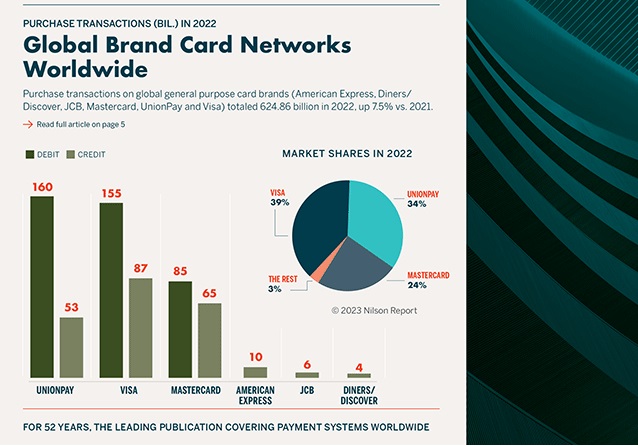
Credit, debit and prepaid cards carrying the brands of Visa, UnionPay, Mastercard, American Express, JCB and Diners Club/Discover—the global card networks—generated a combined 624.86 billion purchase transactions worldwide for goods and services in 2022, up 7.5% over 2021. Consumer, small business and commercial card products are included in those purchase transactions. All debit card figures mentioned in the text and used in the charts and tables on this page and pages 6, 7 and 8 include prepaid cards.
Of all global network purchase transactions worldwide in 2022, Visa brand credit and debit cards generated a 38.76% market share. This was a decline of 10 basis points (bps) from 38.86% in 2021. Visa credit cards generated 38.73% of credit card purchase transactions, an increase of 121 bps. Visa’s share of debit card transactions was 38.78%, down 82 bps.
UnionPay credit and debit cards accounted for a 34.04% share of global network purchase transactions, a slip of 4 bps from 2021. Debit cards with the UnionPay brand held a market share of 40.03% of all debit card purchase transactions, an increase of 139 bps. The market share for UnionPay credit cards among all credit card purchase transactions was 23.45%, a decrease of 230 bps.
Credit and debit cards with the Mastercard brand held a 24.00% market share of all global network purchase transactions worldwide, down 11 bps from 2021. Debit cards with the Mastercard brand held a 21.19% share of all debit card purchase transactions, a decline of 57 bps. Mastercard brand credit cards had a 28.97% share of all credit card purchase transactions, up 56 bps.
American Express credit card purchase transactions had a 4.61% market share of all global network credit products in 2022, up 37 bps from 2021. JCB cards had a 2.53% share, up 12 bps. Diners Club/Discover cards had a 1.72% share, up 4 bps.
Debit cards accounted for 63.88% of total purchase transactions on the global networks in 2022. This was a decline of 78 bps from 2021. For Visa, debit card purchase transactions were 63.91% of the network’s worldwide total, down 198 bps. UnionPay purchase transactions were 75.12% debit, an increase of 182 bps. Mastercard purchase transactions were 56.40% debit, a drop of 196 bps.
Total volume—purchases of goods and services combined with cash advances and withdrawals—was $40.645 trillion in 2022, a local percentage increase of 4.4% over 2021. Visa and Mastercard cards combined accounted for 54.83% of total volume, an increase of 283 bps. UnionPay cards generated 39.93%, a decline of 357 bps. American Express, JCB and Diners/Discover accounted for 5.24%, up 75 bps.
Debit card purchase volume, which excludes debit card cash withdrawals, tied to UnionPay, Visa and Mastercard cards reached $16.711 trillion in 2022. This was up 1.2% from 2021. Credit card purchase volume for all network brands, which excludes credit card cash advances, reached $19.462 trillion, up 8.7% from 2021.
When comparing worldwide purchase volume—spending for goods and services—by product type, UnionPay debit cards had the largest market share for the 10th consecutive year. The second-largest product based on 2022 purchase volume was UnionPay credit cards, followed by Visa credit cards (which overtook Visa debit cards), Mastercard credit cards, Mastercard debit cards, American Express credit cards, JCB credit cards and Diners Club/Discover credit cards.
UnionPay cards accounted for $44 of every $100 in purchase volume handled by the global networks. This was down from $48 in 2021. Mastercard and Visa combined accounted for $50 of every $100, up from $47 in 2021. Visa cards accounted for $32 of every $100. Mastercard cards accounted for $18 of every $100.
On the Visa global network, credit cards accounted for 50.40% of its credit and debit card purchase volume, an increase of 248 bps from 2021. Credit cards accounted for 56.63% of Mastercard’s global purchase volume for all products, an increase of 104 bps. On the UnionPay global network, credit cards accounted for 49.02% of its credit and debit purchase volume, an increase of 61 bps.
When measuring only credit card purchase volume for all global networks, UnionPay held a 39.91% market share, a drop of 487 bps versus 2021. Visa credit cards held a 30.22% share, an increase of 218 bps. Mastercard’s credit card share grew 154 bps to 19.11%. American Express’s share grew 98 bps to 7.92%. JCB’s share was up 7 bps to 1.60% and Diners Club/Discover’s share was up 9 bps to 1.25%.
When measuring only debit card purchase volume, UnionPay’s market share fell 342 bps to 48.33%. Visa’s share increased 160 bps to 34.63% and Mastercard’s share grew 182 bps to 17.04%.
Cash withdrawals using debit cards plus cash advances using credit cards reached $4.471 trillion in 2022. This was 11.00% of total global network volume. In 2021, that figure was 11.64%.
Global network brand credit, debit and prepaid cards in circulation reached 16.72 billion at the end of 2022, up 4.2% from 2021. Of the global total, UnionPay cards accounted for 56.49%, down 101 bps from 2021. Visa cards held a 25.09% share, up 76 bps. Mastercard cards held a 16.23% share, up 12 bps. JCB’s share was 0.91%, up 2 bps. American Express’s share was 0.80%, up 4 bps, and Diners Club/Discover’s share was 0.48%, up 6 bps.
Visa, Mastercard, American Express and Discover credit cards issued in the US generated $5.451 trillion in purchase volume in 2022, an increase of 19.5%. US credit cards accounted for 28.01% of all global network credit card purchase volume.
Their market share grew 252 bps over 2021. Purchase volume tied to credit cards issued outside the US increased 5.1% to $14.012 trillion.
Mastercard credit card purchase volume generated by cards issued in the US grew 21.8% to $1.320 trillion. Outside the US, purchase volume on Mastercard credit cards increased 16.4% to $2.399 trillion. Visa purchase volume from credit cards issued in the US reached $2.840 trillion, an increase of 18.2%. Outside the US, credit card purchase volume tied to Visa cards grew to $3.041 trillion, an increase of 16.3%. American Express purchase volume generated by US credit cards reached $1.080 trillion, an increase of 20.9%. Amex credit cards issued outside the US increased 32.6% to $460.39 billion.
Purchase volume on Visa and Mastercard debit cards issued outside the US was $4.526 trillion, an increase of 11.3% over 2021. Purchase volume on debit cards issued in the US reached $4.109 trillion, up 5.4%.
Mastercard purchase volume tied to debit cards issued outside the US grew 21.6% to $1.728 trillion. Purchase volume on Mastercard debit cards issued in the US increased 2.6% to $1.120 trillion. Visa purchase volume tied to debit cards issued in the US grew 6.5% to $2.989 trillion. Outside the US, Visa debit card purchase volume grew 5.7% to $2.798 trillion.
Purchase transactions initiated by Visa credit cards issued in the US increased to 31.25 billion, up 14.1%. Outside the US, Visa credit card purchase transactions grew to 56.17 billion, up 13.0%. Debit card purchase transactions tied to Visa cards issued in the US were up 5.7% to 60.78 billion. Outside the US, Visa debit card purchase transactions reached 94.03 billion, up 2.9%.
Credit card purchase transactions tied to Mastercard cards issued in the US totaled 14.02 billion, an increase of 18.3%. Outside the US, Mastercard credit card purchase transactions grew to 51.37 billion, up 10.4%. Debit card purchase transactions initiated by Mastercard cards issued in the US were up 0.2% to 23.26 billion. Outside the US, Mastercard debit card purchase transactions reached 61.32 billion, up 4.7%.
Fintech company Lemonade Finance has rebranded to LemFi, as part of its expansion plan to enter into new territories.
The company stated that it wanted a unique approach, so it decided to find a simple yet powerful way to set itself apart from the other players in the fintech space, which will enhance the brand’s identity. The recent branding also comes with a new typeface and a website.
Speaking on the rebranding, Lemonade Finance country manager Precious Ama Kwartemaa Oduro said,
“There are many players in our space, we needed something simple that will also help us stand out even as we look to do more. Now the business is going to provide International payments for everyone. Before, it was international payments for immigrants in the diaspora. Immigrants like our family and friends have gone to seek opportunities in the diaspora.
“I believe as a company, we have reached a point where we are trying to extend our operations beyond Africa. We are actually going global. So we felt it was right to rebrand and that’s a fresh start.”
Kwartemaa further stressed that the rebranding will help reposition the business as the preferred choice for all consumers, adding that it will differentiate the brand from others and also simplify the brand’s identity.
Speaking on the new name, she said it will bring on board new products as well as maintain the fintech’s core service of providing the best remittance solutions.
In her words, “We are going to maintain whatever we’re doing and include a few additions. Our services remain the same. Because remittance is our call service for now; we are still going to stick to providing the best remittance solutions to Ghanaians. But the only difference will be a change in our name and brand identity.”
Apart from expanding its payment services to other countries, LemFi will be launching additional products and services to make cross-border transfers convenient for all.
Founded in 2020 by Ridwan Olalere, Lemonade Finance was built to be a borderless money app for Africans. To allow Africans to use their money seamlessly, Lemonade Finance has provided them with access to currencies that matter to them, notably the currency of the country they are in and that of their home country. This is a big deal for Africans in the diaspora who have businesses in Africa but want to move their money to foreign currencies.
The company offers local and international transfers to Ghana, Kenya, Nigeria, Canada, and the United Kingdom (UK) instantly without hidden fees, and makes international transfers at the real market exchange rate.
In 2022, it expanded to 7 new markets Senegal, Ivory Coast, Benin Republic, Cameroon, Tanzania, Rwanda, and Uganda. The new expansion opened it to a larger share of the African market, keeping its promise to build the biggest neobank for African immigrants.
It is a new age and a new king is here: Tesla is leading the future. Yes, “For the first time ever, an all-electric vehicle — specifically the Tesla Model Y — is now the world’s bestselling car. According to analyst data from Jato Dynamics, the Tesla Model Y has surpassed Toyota’s RAV4 and Corolla models to top global sales rankings in the first quarter of 2023. That’s especially impressive given pricing for the 2023 Model Y starts at $47,490, considerably more than the 2023 Corolla ($21,550) and RAV4 ($27,575).”
This is a validation that innovation must not necessarily result in cheaper or lower cost within a product category. In other words, we are wrong when we posit that in a consumer business, that innovation must lead to a reduction in price.
The overriding theme is that disruptive innovation must come with a better price model even at a superior product performance. What Tesla has done here is clear: pricing, while important, is not the only factor to win a market. Tesla Model Y is outselling old products even though it is about twice their prices.
Rethink your #strategy and deliver products beyond Needs, Expectations, and aim at Perceptions of customers. At perceptions of customers, you create fandom, turning customers into fans. And that means, you have set a new basis of competition, totally orthogonal to what your competitors do. Being cheap cannot guarantee a market share; you must move beyond Needs to at least meet the Expectations of your customers.
The interesting thing is that all products that succeed at the level of perception are usually disruptive in their sector or industry. Google search cannot be considered to fall in the category of perception because many people already craved for better search because neither Microsoft nor Yahoo was offering a good one. So a product could be disruptive and yet not a percepting product. However, all percepting products are disruptive.
Comment on Feed
"…innovation must not necessarily result in cheaper or lower cost within a product category."
But in an African market this may not work because development as factor would cripple the effort.
Telsa buildingthe super charger network is an EV adoption kicker or enabler.
My Response:Absolutely, products vary. Yes, if Elon Musk had submitted his pricing model for winning a market share, for an MBA thesis, he possibly might have received a D. It is not common to be 2X mean cost and still win market share in a consumer business where many things are against you. The non-EVs have the whole world but EVs are just a few markets with electricity. Yet, in those small markets, Tesla outsold all.
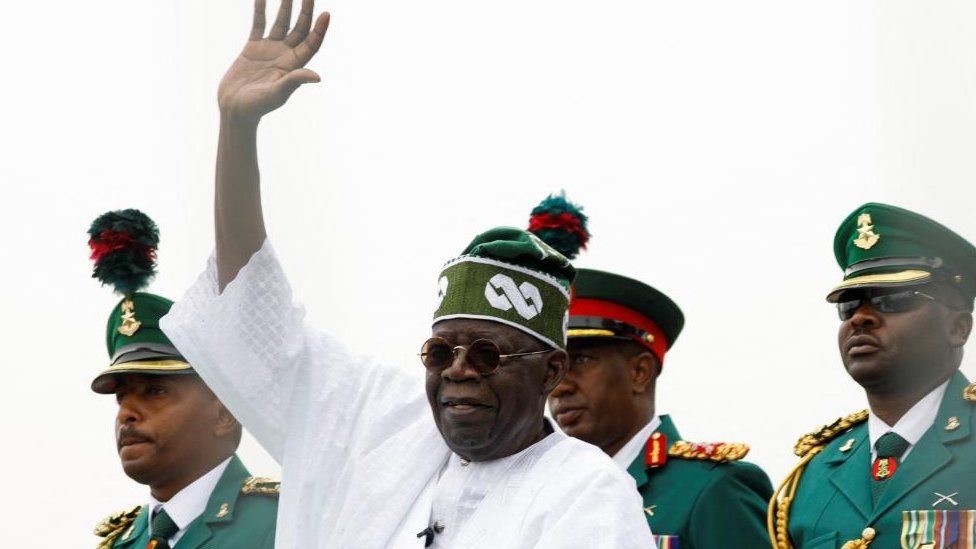
Believe it or not, President Bola Ahmed Tinubu GCFR is the current president of the federal republic of Nigeria as he was duly sworn in earlier today into that office and he will continue to be the president of Nigeria unless he is sacked by the court, he dies or he is impeached by the lawmakers. We can all wake up now, accept this as the new reality or keep living in denial.
These shenanigans going around in social media where they are declaring another person the president of the federal republic of Nigeria is a treasonable felony. When you say that another person is your president other than who has been sworn in by the Chief Justice of Nigeria it then appears that you want to form a parallel government that will run side by side with the lawfully constituted one and that amounts to the offence of treason.
Treason when loosely defined is the crime of betraying one’s country, especially by attempting to kill or overthrow the sovereign government or a duly constituted government or form a parallel government and this is treated as a serious offence.
We cannot have two presidents of the federal republic of Nigeria at the same time. Obidient should not allow their emotions and sentiments to take the better part of them or becloud their sense of reason as that will lead them to cause a serious problem for themselves.
Yes, we know that there were numerous pronounced challenges with the past presidential elections that ushered in President Bola Ahmed Tinubu, yes we have heard that there are allegations of rigging of the election and stealing of mandate but who are we to impose until the court makes pronouncement on it. If you want to act as a jury and executioner you will best get yourself arrested, detained and charged for incitement and breach of peace.
As much as I hate to say it, Peter Obi is not the president of the federal republic of Nigeria as of this day, he was not the person that was sworn in today at eagles square by the Chief Justice of Nigeria as the president of the federal republic of Nigeria, therefore, all these social media trends of “Peter Obi is our president” is treasonable.
We have laws and the constitution in place and every action and reaction must be in accordance with the constitution or we will turn this country into a banana republic.
FIRST INAUGURAL ADDRESS BY PRESIDENT BOLA AHMED TINUBU 29 MAY 2023
THE NIGERIAN IDEAL
My Fellow Citizens,
I stand before you honoured to assume the sacred mandate you have given me. My love for this nation is abiding. My confidence in its people, unwavering. And my faith in God Almighty, absolute. I know that His hand shall provide the needed moral strength and clarity of purpose in those instances when we seem to have reached the limits of our human capacity.
This day is bold and majestic yet bright and full of spirit, as is our precious nation.
As a nation, we have long ago decided to march beyond the dimness of night into the open day of renewed national hope.
The question we now ask ourselves is whether to remain faithful to the work inherent in building a better society or retreat into the shadows of our unmet potential.
For me, there is but one answer. We are too great a nation and too grounded as a people to rob ourselves of our finest destiny.
This nation’s journey has been shaped by the prayers of millions, and the collective sacrifices of us all.
We have endured hardships that would have made other societies crumble.
Yet, we have shouldered the heavy burden to arrive at this SUBLIME moment where the prospect of a better future merges with our improved capacity to create that future.
To the surprise of many but not to ourselves, we have more firmly established this land as a democracy in both word and deed.
The peaceful transition from one government to another is now our political tradition. This handover symbolizes our trust in God, our enduring faith in representative governance and our belief in our ability to reshape this nation into the society it was always meant to be.
Here, permit me to say a few words to my predecessor, President Muhammadu Buhari. Mr President, you have been an honest, patriotic leader who has done his best for the nation you love. On a more personal note, you are a worthy partner and friend. May History be kind to you.
For many years, Nigeria’s critics have trafficked the rumour that our nation will break apart, even perish.
Yet here we are. We have stumbled at times, but our resilience and diversity have kept us going.
Our burdens may make us bend at times, but they shall never break us.
Instead, we stand forth as Africa’s most populous nation and as the best hope and strongest champion of the Black Race.
As citizens, we declare as one unified people devoted to one unified national cause, that as long as this world exists, NIGERIA SHALL EXIST.
Today, Fate and Destiny join together to place the torch of human progress in our very hands. We dare not let it slip.
We lift high this torch so that it might shine on every household and in every heart that calls itself Nigerian. We hold this beam aloft because it lights our path with compassion, brotherhood, and peace. May this great light never EXTINGUISH.
Our administration shall govern on your behalf but never rule over you. We shall consult and dialogue but never dictate. We shall reach out to all but never put down a single person for holding views contrary to our own.
We are here to further mend and heal this nation, not tear and injure it.
In this vein, may I offer a few comments regarding the election that brought us to this juncture. It was a hard fought contest. And it was also fairly won. Since the advent of the Fourth Republic, Nigeria has not held an election of better quality.
The outcome reflected the will of the people. However, my victory does not render me any more Nigerian than my opponents. Nor does it render them any less patriotic.
They shall forever be my fellow compatriots. And I will treat them as such. They represent important constituencies and concerns that wisdom dare not ignore.
They have taken their concerns to court. Seeking legal redress is their right and I fully defend their exercise of this right. This is the essence of the rule of law.
Over six decades ago, our founding fathers gave bravely of themselves to place Nigeria on the map as an independent nation.
We must never allow the labor of those who came before us to wither in vain but to blossom and bring forth a better reality.
Let us take the next great step in the journey they began and believed in.
Today, let us recommit our very selves to placing Nigeria in our hearts as the indispensable home for each and every one of us regardless of creed, ethnicity, or place of birth.
My supporters, I thank you. To those who voted otherwise, I extend my hand across the political divide. I ask you to grasp it in national affinity and brotherhood. For me, political coloration has faded away. All I see are Nigerians.
May we uphold these fitting and excellent notions as the new Nigerian ideal.
My fellow compatriots,
The Nigerian ideal which I speak of is more than just an improvement in economic and other statistics. These things are important; but they can never convey the fullness of our story.
Our mission is to improve our way of life in a manner that nurtures our humanity, encourages compassion toward one another, and duly rewards our collective effort to resolve the social ills that seek to divide us.
Our constitution and laws give us a nation on paper. We must work harder at bringing these noble documents to life by strengthening the bonds of economic collaboration, social cohesion, and cultural understanding. Let us develop a shared sense of fairness and equity.
The South must not only seek good for itself but must understand that its interests are served when good comes to the North. The North must see the South likewise.
Whether from the winding creeks of the Niger Delta, the vastness of the northern savannah, the boardrooms of Lagos, the bustling capital of Abuja, or the busy markets of Onitsha, you are all my people. As your president, I shall serve with prejudice toward none but compassion and amity towards all.
In the coming days and weeks, my team will publicly detail key aspects of our programme. Today, permit me to outline in broad terms a few initiatives that define our concept of progressive good governance in furtherance of the Nigerian ideal:
The principles that will guide our administration are simple:
Nigeria will be impartially governed according to the constitution and the rule of law.
We shall defend the nation from terror and all forms of criminality that threaten the peace and stability of our country and our subregion.
We shall remodel our economy to bring about growth and development through job creation, food security and an end of extreme poverty.
In our administration, Women and youth will feature prominently.
Our government will continue to take proactive steps such as championing a credit culture to discourage corruption while strengthening the effectiveness and efficiency of the various anti-corruption agencies.
SECURITY
Security shall be the top priority of our administration because neither prosperity nor justice can prevail amidst insecurity and violence.
To effectively tackle this menace, we shall reform both our security DOCTRINE and its ARCHITECTURE.
We shall invest more in our security personnel, and this means more than an increase in number. We shall provide, better training, equipment, pay and firepower.
THE ECONOMY
On the economy, we target a higher GDP growth and to significantly reduce unemployment.
We intend to accomplish this by taking the following steps:
First, budgetary reform stimulating the economy without engendering inflation will be instituted.
Second, industrial policy will utilize the full range of fiscal measures to promote domestic manufacturing and lessen import dependency.
Third, electricity will become more accessible and affordable to businesses and homes alike. Power generation should nearly double and transmission and distribution networks improved. We will encourage states to develop local sources as well.
I have a message for our investors, local and foreign: our government shall review all their complaints about multiple taxation and various anti-investment inhibitions.
We shall ensure that investors and foreign businesses repatriate their hard earned dividends and profits home.
JOBS
My administration must create meaningful opportunities for our youth. We shall honour our campaign commitment of one million new jobs in the digital economy.
Our government also shall work with the National Assembly to fashion an omnibus Jobs and Prosperity bill. This bill will give our administration the policy space to embark on labour-intensive infrastructural improvements, encourage light industry and provide improved social services for the poor, elderly and vulnerable.
AGRICULTURE
Rural incomes shall be secured by commodity exchange boards guaranteeing minimal prices for certain crops and animal products. A nationwide programme for storage and other facilities to reduce spoilage and waste will be undertaken.
Agricultural hubs will be created throughout the nation to increase production and engage in value-added processing. The livestock sector will be introduced to best modern practices and steps taken to minimize the perennial conflict over land and water resources in this sector.
Through these actions, food shall be made more abundant yet less costly. Farmers shall earn more while the average Nigerian pays less.
INFRASTRUCTURE
We shall continue the efforts of the Buhari administration on infrastructure. Progress toward national networks of roads, rail and ports shall get priority attention.
FUEL SUBSIDY
We commend the decision of the outgoing administration in phasing out the petrol subsidy regime which has increasingly favoured the rich more than the poor. Subsidy can no longer justify its ever-increasing costs in the wake of drying resources. We shall instead re-channel the funds into better investment in public infrastructure, education, health care and jobs that will materially improve the lives of millions.
MONETARY POLICY
Monetary policy needs thorough housecleaning. The Central Bank must work towards a unified exchange rate. This will direct funds away from arbitrage into meaningful investment in the plant, equipment and jobs that power the real economy.
Interest rates need to be reduced to increase investment and consumer purchasing in ways that sustain the economy at a higher level.
Whatever merits it had in concept, the currency swap was too harshly applied by the CBN given the number of unbanked Nigerians. The policy shall be reviewed. In the meantime, my administration will treat both currencies as legal tender.
FOREIGN POLICY
Given the world in which we reside, please permit a few comments regarding foreign policy.
The crisis in Sudan and the turn from democracy by several nations in our immediate neighbourhood are of pressing concern.
As such, my primary foreign policy objective must be the peace and stability of the West African subregion and the African continent. We shall work with ECOWAS, the AU and willing partners in the international community to end extant conflicts and to resolve new ones.
As we contain threats to peace, we shall also retool our foreign policy to more actively lead the regional and continental quest for collective prosperity.
CONCLUSION
This is the proudest day of my life. But this day does not belong to me. It belongs to you, the people of Nigeria.
On this day, Nigeria affirms its rightful place among the world’s great democracies. There, Nigeria shall reside forever.
The course of our past and the promise of the future have brought us to this exceptional moment.
In this spirit, I ask you to join me in making Nigeria a more perfect nation and democracy such that the Nigerian ideal becomes and forever remains the Nigerian reality.
With full confidence in our ability, I declare that these things are within our proximate reach because my name is Bola Ahmed Tinubu, and I am the President of the Federal Republic of Nigeria.
May God bless you and May He bless our beloved land.