DD
MM
YYYY

PAGES

DD
MM
YYYY

spot_img

PAGES

Home Blog Page 42

China Quietly Imposes 50% Domestic Equipment Rule on Chipmakers as Self-Reliance Drive Deepens

0

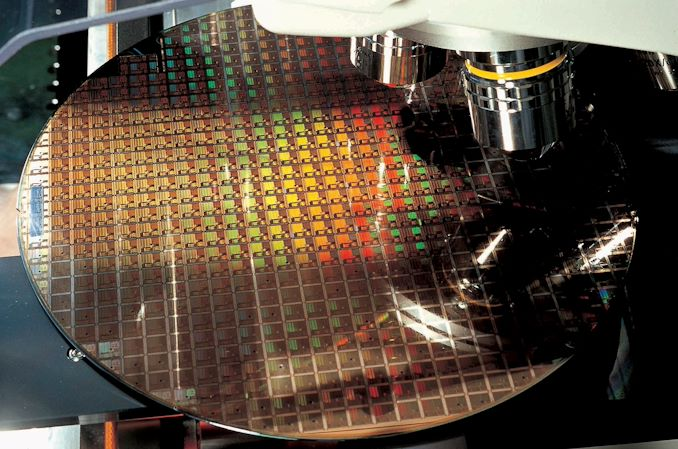
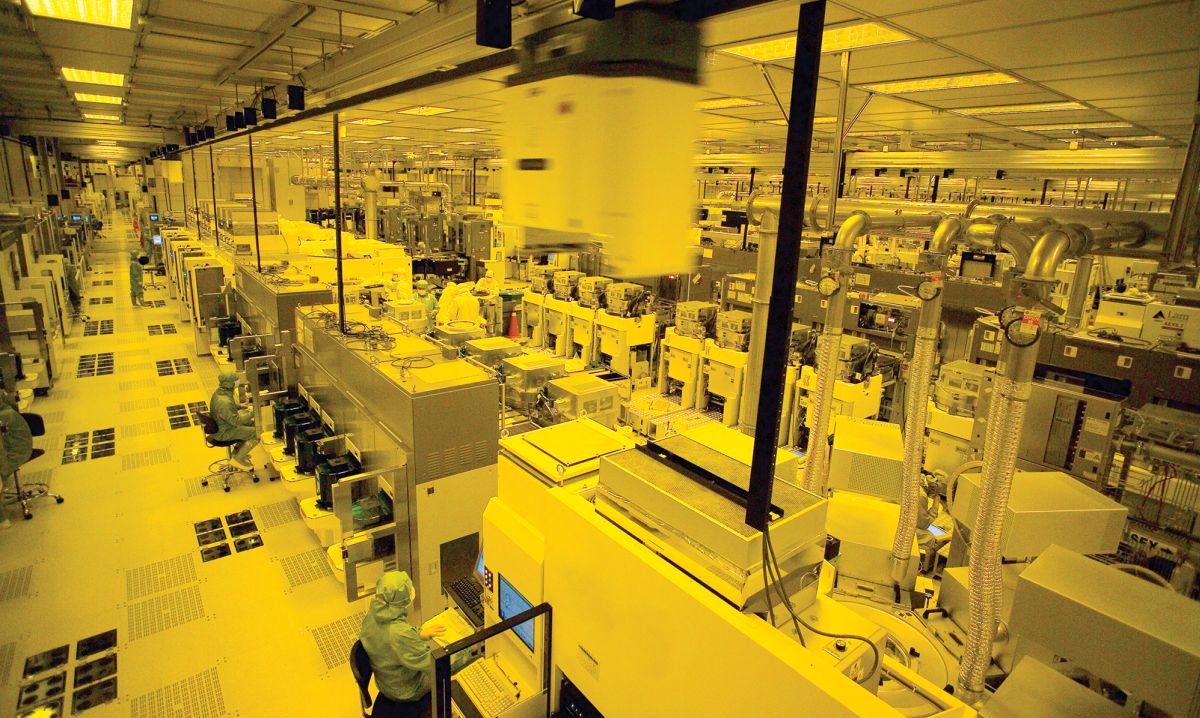
China has begun requiring semiconductor manufacturers to source at least half of the equipment used in new or expanded production lines from domestic suppliers, according to three people familiar with the policy, who spoke to Reuters.

The move marks one of Beijing’s most forceful steps yet to reduce reliance on foreign technology.

The requirement, which is not publicly documented, has been communicated directly to chipmakers seeking government approval for new fabs or capacity expansions. Companies are now expected to demonstrate through procurement tenders that a minimum of 50% of their equipment will be Chinese-made, the sources said. Projects that fail to meet the threshold are typically rejected, although regulators may show flexibility in cases where domestic alternatives are unavailable.

The measure underlines how China’s semiconductor strategy has shifted from encouragement to enforcement, particularly since Washington tightened export controls in 2023, barring the sale of advanced AI chips and key chipmaking tools to Chinese firms. While those U.S. restrictions cut off access to the most advanced equipment, the new rule goes further by actively steering manufacturers toward domestic suppliers even when foreign tools from the United States, Japan, South Korea, and Europe remain technically accessible.

“Authorities prefer if it is much higher than 50%,” one of the people said. “Eventually they are aiming for the plants to use 100% domestic equipment.”

China’s industry ministry did not respond to a request for comment. The sources asked not to be identified because the policy has not been formally announced.

The requirement fits squarely within President Xi Jinping’s call for a “whole nation” approach to building a self-sufficient semiconductor ecosystem, an effort that mobilizes state funding, research institutions, equipment makers, and chip fabs in tandem. Beijing has framed semiconductors as a strategic vulnerability, especially as technology rivalry with the United States intensifies.

That push spans the entire supply chain. Earlier this month, Reuters reported that Chinese scientists were working on a prototype machine capable of producing cutting-edge chips, an area Washington has spent years trying to keep out of China’s reach. At the same time, state-backed investors have continued to funnel capital into domestic champions through the so-called Big Fund, which launched a third phase in 2024 with 344 billion yuan ($49 billion) in fresh capital.

The impact of the 50% rule is already being felt on factory floors. Domestic fabs that once preferred established foreign suppliers are increasingly turning to Chinese equipment makers, sometimes out of necessity, sometimes under regulatory pressure.

“Before, domestic fabs like SMIC would prefer U.S. equipment and would not really give Chinese firms a chance,” said a former employee at Naura Technology, China’s largest chip equipment maker, referring to Semiconductor Manufacturing International Corporation. “But that changed starting with the 2023 U.S. export restrictions, when Chinese fabs had no choice but to work with domestic suppliers.”

Procurement data points to a surge in local demand. State-affiliated entities placed a record 421 orders this year for domestically produced lithography machines and components, worth around 850 million yuan, according to publicly available records. That wave of orders is helping accelerate learning curves for Chinese suppliers that had previously struggled to break into advanced manufacturing processes.

The policy is producing clear winners. Naura and smaller rival Advanced Micro-Fabrication Equipment (AMEC) are gaining ground in etching, a critical process that sculpts transistor structures on silicon wafers. Sources say Naura is now testing its etching tools on SMIC’s advanced 7-nanometre production line, an early-stage milestone that follows successful deployment at the 14-nanometre level.

Advanced etching equipment in China was long dominated by foreign firms such as Lam Research and Tokyo Electron. Under the new procurement regime, those tools are increasingly being replaced, at least partially, by domestic alternatives from Naura and AMEC.

Naura has also emerged as a key supplier to Chinese memory chipmakers, providing etching tools capable of supporting chips with more than 300 layers. In another sign of forced localization, the company developed electrostatic chucks to replace worn components in Lam Research equipment that could no longer be serviced after U.S. export controls took effect, according to people familiar with the matter.

None of Naura, AMEC, YTMC, SMIC, Lam Research, or Tokyo Electron responded to requests for comment.

The momentum is visible not only in factories but also in innovation metrics. Naura filed a record 779 patents in 2025, more than double its filings in 2020 and 2021. AMEC filed 259 patents over the same period, according to Anaqua’s AcclaimIP database, figures verified by Reuters. Financial performance has followed suit: Naura’s revenue jumped 30% in the first half of 2025 to 16 billion yuan, while AMEC reported a 44% increase to 5 billion yuan.

Analysts estimate that China has now reached around 50% self-sufficiency in photoresist-removal and cleaning equipment, a segment once dominated by Japanese suppliers but now increasingly led by domestic firms, particularly Naura.

“The domestic equipment market will be dominated by two to three major manufacturers, and Naura is definitely one of them,” a separate industry source said.

The trend is unsettling for global chip equipment makers. China has been one of their largest markets, and the quiet imposition of domestic sourcing thresholds threatens to erode that position further. However, the trade-off appears deliberate for Beijing: sacrificing short-term efficiency and choice in favor of long-term strategic autonomy, even if it means forcing domestic suppliers to learn on the job under intense pressure.


Octopus Energy to Spin Out Kraken Technologies After $1bn Funding, Paving Way for Potential IPO

0

British renewable energy group Octopus Energy is moving closer to a major corporate milestone after securing $1 billion in funding for its artificial intelligence and software arm, Kraken Technologies.

The deal values the business at $8.65 billion and lays the groundwork for a potential public listing by mid-2026.

The planned spin-out, confirmed late Monday by Origin Energy, one of Octopus’s largest shareholders, reflects the growing strategic importance of software and data-driven platforms in the global energy transition, as utilities race to modernize ageing systems and manage increasingly complex power networks.

Origin said the funding round marks Kraken’s first as a standalone business and included Daniel Sundheim’s hedge fund D1 Capital Partners alongside a “major Kraken customer,” which was not named. Origin itself will commit an additional $140 million, reinforcing its long-term bet on the technology platform.

Kraken’s valuation and capital raise underscore how far the unit has evolved from its origins as an internal technology tool within Octopus Energy. The platform now supplies cloud-based software to major utilities, including EDF and E.ON, supporting customer billing, energy trading, grid optimization, demand forecasting, and the integration of renewable energy and electric vehicles.

According to Origin, Kraken’s contracted annual recurring revenue has more than doubled over the past 18 months, driven by strong demand from utilities under pressure to decarbonize, comply with stricter regulations, and cope with volatile power markets. The company is now rapidly approaching its target of managing 100 million customer accounts globally.

“In signing this major new customer, Kraken is rapidly closing in on its 100 million customer account target well ahead of plan,” Origin chief executive Frank Calabria said, pointing to the scale and commercial momentum behind the business.

Under the proposed structure, Octopus Energy will retain a 13.7% stake in Kraken following the spin-out, while Origin’s interest will remain unchanged at 22.7%.

Calabria said the restructuring would give both companies greater financial and strategic flexibility.

“We believe these transactions put Octopus and Kraken in a strong position to unlock their next phase of growth, underpinned by the appropriate capital structure,” he said.

The move is part of Octopus’ broader effort to crystallize value from its technology assets while allowing the core energy supply business to focus on retail expansion and renewable generation. For Kraken, independence is expected to accelerate customer acquisition, attract new categories of investors, and sharpen its positioning as a pure-play software company rather than an in-house utility platform.

Kraken CEO Amir Orad has previously said the company benefited significantly from being incubated within Octopus, which first deployed the technology internally before licensing it to rival utilities. That strategy helped Kraken overcome one of the biggest barriers in the energy sector: persuading competitors to adopt software developed by a peer.

Over time, Kraken has emerged as what Orad has described as “the modern operating system for utilities,” offering an alternative to legacy IT systems that struggle to handle decentralized generation, real-time pricing, and the electrification of transport and heating.

The spin-out also sharpens the company’s path toward a stock market debut. Speaking to CNBC’s “Squawk Box Europe” earlier this year, Orad said Kraken already had a strong investor base focused on energy and utilities, but acknowledged that a separation from Octopus was necessary to attract a broader pool of late-stage, software-focused investors.

When asked in September about a potential IPO, Orad said the opportunity was “significant,” but stressed that Kraken needed to complete its transition into a fully independent software business.

“Over the years, we expect [the investor base] to evolve to be more software focused, given the separation,” he said.

The deal comes as investor interest in energy technology platforms intensifies, with utilities globally under pressure to digitize operations, improve customer engagement, and support net-zero targets. If completed as planned, Kraken’s spin-out would stand as one of the most prominent examples yet of a renewable-era technology platform breaking out as a standalone business. That will highlight how software and AI are becoming central to the future economics of the global energy industry.

Citi Board Clears Exit From Russia With $1.2bn Hit Following AO Citibank’s Sale Approval

0

Citigroup has moved closer to fully exiting Russia after its board approved the sale of AO Citibank, its Russian subsidiary, to investment firm Renaissance Capital, a deal that will crystallize a pre-tax loss of about $1.2 billion, largely driven by currency translation effects.

The U.S. lender said on Monday that the transaction is expected to close in the first half of 2026, subject to remaining regulatory and closing conditions, according to a filing with the U.S. Securities and Exchange Commission. The approval marks a significant milestone in Citi’s multi-year effort to unwind its presence in Russia following the invasion of Ukraine and the sweeping sanctions that followed.

Citi said the board approvals will result in a pre-tax loss being recognized in the fourth quarter of 2025. The bulk of the impact stems from cumulative currency translation adjustment (CTA) losses, which arise when the financial statements of a foreign subsidiary are converted into the parent company’s reporting currency.

“These approvals result in a pre-tax loss on the sale for the fourth quarter of 2025, largely related to the currency translation adjustment (CTA) losses that will also remain in Accumulated Other Comprehensive Income (AOCI) until closing,” the bank said in a separate statement.

CTA reflects gains or losses caused by exchange rate movements over time, while AOCI is a balance sheet equity account that holds certain unrealized gains and losses not recognized in net income. Citi noted that while the accounting loss is substantial, the cumulative impact of the transaction will be capital neutral to its common equity tier 1 (CET1) capital ratio, a key measure of bank solvency closely watched by regulators and investors.

The bank cautioned that the final loss could still change, depending on factors such as foreign exchange movements between now and the closing date.

As part of the transaction process, Citi said it will classify its remaining Russian operations as “held for sale” in the fourth quarter of 2025, an accounting step that reflects management’s intent to complete the disposal and further separates the unit from its ongoing operations.

The deal follows explicit approval from the Russian government. Last month, President Vladimir Putin authorized Renaissance Capital to acquire Citibank’s Russian operations, a necessary step given Moscow’s tight controls on foreign asset sales since the start of the war. Such transactions have often required presidential sign-off and have been subject to strict conditions, including pricing constraints and special levies.

Citi has been among the Western banks with the largest and most complex exposure to Russia, and its exit has taken longer than that of many of its peers. In August 2022, the bank announced it was winding down its consumer banking and local commercial banking businesses in the country as part of a broader strategy to reduce risk and simplify its global footprint.

Since then, Citi has continued to pare back activities, manage down assets, and navigate regulatory hurdles in order to leave the market in an orderly manner. The sale to Renaissance Capital represents one of the final steps in that process.

Also, the Russia exit fits into Citi’s wider overhaul under CEO Jane Fraser, who has been reshaping the bank to focus on core businesses and improve returns. While the $1.2 billion pre-tax loss underscores the financial cost of geopolitics and prolonged currency weakness, the bank has consistently argued that fully exiting Russia removes a source of operational, regulatory, and reputational risk.

Once completed, the transaction will effectively close the chapter on Citi’s decades-long presence in Russia, ending a withdrawal that has become emblematic of how deeply the war and sanctions regime have reshaped the global banking industry.

U.S. Grants Samsung and SK Hynix One-year License To Ship Chipmaking Tools to China

0

The U.S. government has granted Samsung Electronics and SK Hynix annual licenses allowing them to import American chip manufacturing equipment into their Chinese factories through 2026, offering limited relief to the South Korean chipmakers as Washington tightens its export control regime.

But the decision is believed to offer short-term operational certainty and signals a more restrictive and conditional phase in Washington’s technology policy toward Beijing.

According to people familiar with the matter who spoke to Reuters, the licenses follow Washington’s move earlier this year to revoke broad waivers that had allowed select global chipmakers to operate in China with minimal regulatory friction. Under the new system, approvals will be granted on a year-by-year basis, giving U.S. authorities greater leverage and oversight over the flow of sensitive semiconductor equipment into the country.

For Samsung and SK Hynix, the approval prevents an abrupt disruption to factories that play a crucial role in the global memory chip market. Both companies rely heavily on China as a production base for legacy memory chips, including DRAM and NAND, which are less advanced than cutting-edge logic chips but remain essential to smartphones, consumer electronics, and data centers. Demand for these products has surged alongside the rapid expansion of AI infrastructure, tightening supplies and lifting prices worldwide.

However, the shift away from the “validated end user” status represents a structural change rather than a temporary policy tweak. That privilege, which will expire on December 31, allowed firms such as Samsung, SK Hynix, and TSMC to import U.S.-origin tools without seeking case-by-case approval. Once it lapses, every shipment of American chipmaking equipment to their China facilities will require an export license, adding layers of uncertainty to routine operations such as tool replacement, capacity optimization, and yield improvements.

Industry executives and analysts say semiconductor manufacturing is uniquely sensitive to regulatory delays. Even mature-node fabs depend on a steady flow of spare parts, upgrades, and servicing tools to maintain efficiency. An annual approval regime means long-term investment decisions could increasingly hinge on geopolitical considerations rather than purely commercial logic.

The move also highlights the Trump administration’s effort to recalibrate U.S. export controls. Officials have been reviewing measures they believe did not go far enough in limiting China’s access to advanced American technology under the Biden administration. While the current licenses stop short of forcing South Korean firms to scale back their China operations, they reinforce a broader message that continued access to U.S. technology is conditional and revocable.

For South Korea, the issue carries economic and diplomatic weight. Samsung Electronics is the world’s largest memory chipmaker, while SK Hynix ranks second globally. Any prolonged disruption to their China operations could ripple through global supply chains and potentially inflate memory prices further, affecting downstream industries from smartphones to cloud computing.

At the same time, Washington appears keen to avoid an outright shock to the semiconductor ecosystem. Granting annual licenses allows the U.S. to tighten controls without immediately undermining allied firms or destabilizing markets. It also preserves negotiating leverage, giving regulators flexibility to adjust approvals based on evolving strategic priorities.

Looking ahead, analysts believe the licenses underscore a growing dilemma for global chipmakers: China remains too large and too deeply embedded in semiconductor supply chains to exit quickly, yet operating there now comes with rising political risk. For Samsung and SK Hynix, the one-year approvals buy time, but they also reinforce the need to diversify manufacturing footprints and reduce exposure to policy shifts.

SoftBank Completes $40bn OpenAI Bet, Cementing One of the Largest AI Investments in History

0

SoftBank has completed its sweeping $40 billion investment commitment to OpenAI, marking a defining moment in the global race to dominate artificial intelligence infrastructure and applications, sources familiar with the matter told CNBC.

According to people close to the transaction, the Japanese investment group transferred a final tranche of between $22 billion and $22.5 billion to the ChatGPT maker last week. The sources spoke on condition of anonymity because the details have not been publicly disclosed. Combined with earlier funding, the move lifts SoftBank’s total exposure to OpenAI above the $40 billion mark and gives the conglomerate a stake of more than 10% in the company.

SoftBank had previously invested $8 billion directly into OpenAI and syndicated an additional $10 billion alongside co-investors. CNBC reported in February that the group was finalizing the broader $40 billion investment at a pre-money valuation of about $260 billion, placing OpenAI among the most valuable private companies in the world, on par with the biggest names in global technology.

At the time, the funding was expected to be paid out over a 12- to 24-month period, with part of the capital earmarked for OpenAI’s expanding artificial intelligence infrastructure ambitions. That includes Stargate, a major joint venture involving OpenAI, Oracle, and SoftBank, designed to build massive computing capacity to meet soaring demand for advanced AI models.

The investment underscores the scale at which OpenAI is now operating. The company has committed more than $1.4 trillion in infrastructure spending over the coming years, according to CNBC, locking in long-term agreements with chipmakers including Nvidia, Advanced Micro Devices, and Broadcom. Those commitments reflect the enormous compute requirements of next-generation AI systems, as competition intensifies among tech giants and startups alike.

SoftBank’s move fits squarely within founder Masayoshi Son’s long-standing thesis that artificial intelligence will underpin the next phase of global economic growth. The group has a long history of bold technology bets and was an early investor in Nvidia, now one of the biggest beneficiaries of the AI boom. That relationship, however, has evolved. Last month, SoftBank liquidated its entire $5.8 billion stake in Nvidia, a decision that raised eyebrows given the chipmaker’s central role in AI computing.

A separate source familiar with the sale told CNBC that the Nvidia exit, along with other liquidity measures, was partly aimed at freeing up capital to support SoftBank’s massive OpenAI investment. This month, the conglomerate also agreed to pay $4 billion to acquire data center investment firm DigitalBridge, strengthening its control over the physical infrastructure required to power AI workloads.

For OpenAI, SoftBank’s backing adds to an already formidable roster of supporters. Microsoft remains a cornerstone investor and strategic partner, having poured billions into the company over several funding rounds. CNBC has also reported that OpenAI is exploring the possibility of securing more than $10 billion in additional funding from Amazon, further underscoring the intense competition among Big Tech firms to align themselves with the AI leader.

Beyond cloud and enterprise partnerships, OpenAI has been broadening its commercial reach. Disney recently invested $1 billion in the company, striking a deal that allows users of OpenAI’s video-generation tool Sora to create content featuring licensed characters such as Mickey Mouse. The agreement highlights how OpenAI’s technology is increasingly being woven into media, entertainment, and consumer-facing products.

The company is also widely expected to be laying the groundwork for a future initial public offering, though no timeline has been formally announced. If and when that happens, SoftBank’s $40 billion bet could become one of the most consequential wagers in its history, rivaling earlier high-profile investments that defined the group’s legacy.

The completed funding cements SoftBank’s position as one of OpenAI’s most influential backers, at least for now, and signals just how far investors are willing to go to secure a foothold in what many see as the most transformative technology wave of the century.