DD
MM
YYYY

PAGES

DD
MM
YYYY

spot_img

PAGES

Home Blog Page 42

China Rejects “Fear Mongering” Calls To Slow AI Development, Says It Will Disrupt Process Of Global AI Governance  

0

China has rejected calls from leading US artificial intelligence executives to slow the development of powerful AI systems, saying that fear and confrontation could undermine efforts to establish global rules for the technology.

Guo Jiakun, a spokesperson for China’s Foreign Ministry, pushed back on the proposal Monday after being asked about recent calls from Anthropic CEO Dario Amodei, OpenAI CEO Sam Altman and Elon Musk for the industry to pace the development of advanced AI because of growing safety risks.

“Fear mongering, confrontation, competition will just disrupt [the] process of global AI governance,” Guo said, according to an English translation published by Reuters.

The response underpins a widening divide over how the world’s two leading AI powers should manage the technology. US AI executives are increasingly warning that advances in model capabilities could outpace the industry’s ability to monitor and control them. Beijing, meanwhile, is framing AI as an area of strategic competition in which slowing development could carry its own economic and national-security risks.

China’s Minister of State Security, Chen Yixin, added to that position in an article published Sunday, calling for faster construction of an AI security risk prevention and control system.

AI has become “the main battleground for global technological competition and a new arena for strategic rivalry among major powers,” Chen said, while arguing that the technology should develop in a “healthy and orderly” manner.

The language captures Beijing’s position that AI development and AI safety do not necessarily require a slowdown in capability building. Instead, China appears to be advocating stronger controls and risk-management systems while continuing to advance the technology.

US-China AI Gap Complicates Calls For A Slowdown

Amodei’s proposal reflects the tension between AI safety and geopolitical competition.

In an essay published Saturday, the Anthropic chief proposed a three-step framework for pacing AI development. His proposal included greater access for independent safety evaluators, coordination among AI companies in democratic countries on common safety standards, and eventual coordination between democratic and authoritarian governments.

Amodei explicitly acknowledged, however, that any slowdown by US companies must take into account China’s progress.

“Not building the technology deprives humanity of benefits or simply places AI in the hands of authoritarian powers, while building it too fast is reckless,” Amodei wrote.

He said the amount by which US companies could slow down would be constrained by their existing lead over what he described as “authoritarian regimes, chiefly the Chinese Communist Party.”

“If we slow down by more than this amount, then (unpaced) CCP-associated projects will pull ahead, creating significant national security risk,” Amodei said.

That qualification exposes the central difficulty with a voluntary slowdown. A coordinated reduction in the pace of development could give companies more time to test models, strengthen safeguards and improve alignment. But if coordination does not include major competitors, the companies that restrain themselves could potentially surrender a technological advantage.

OpenAI’s Altman backed Amodei’s call for pacing and said independent evaluators with employee-level access would be a good idea for OpenAI as well.

Musk also endorsed the proposal, writing on X that “Dario is right.”

The US government, however, has shown little appetite for deliberately slowing the country’s AI development.

President Donald Trump rejected the executives’ position during a trip to Ireland, warning that the United States should preserve its lead over China.

“Look, we’re leading China in AI… and, frankly I want to keep it that way because whoever wins AI, wins,” Trump said.

His position places national-security competition directly alongside the commercial race among AI companies. From Washington’s perspective, the concern is not only what more capable AI could do but also who controls the most advanced systems and the infrastructure behind them.

Financial markets have begun to reflect the uncertainty around the AI investment boom. AI-related stocks fell on Monday, with SoftBank, one of OpenAI’s largest investors, declining 10% in Japan. At the same time, China’s AI industry is gaining greater attention outside the country as its models improve. Western companies have increasingly experimented with Chinese AI systems, putting additional pressure on US developers to maintain their technological lead.

Beijing Seeks Influence Over AI Development

China’s position is also being reinforced at the diplomatic level.

President Xi Jinping said at the BRICS summit in New Delhi over the weekend that China would take the lead in promoting AI collaboration and development among developing countries. That ambition extends the AI competition beyond the United States and China themselves. If Chinese companies can establish their models, infrastructure and standards across emerging markets, Beijing could gain influence over how AI is deployed in a much broader group of economies.

For Washington, that creates another reason to view AI leadership as a strategic asset rather than simply a commercial advantage.

The result is a difficult policy paradox. US AI companies are increasingly expressing the view that they need more time to ensure that advanced systems can be safely monitored and controlled. But the same companies operate in an environment where slowing too aggressively could allow Chinese rivals to close the gap.

China, meanwhile, is calling for stronger AI security systems while rejecting the idea that global governance should be driven by fear or confrontation.

Now, the disagreement has been pushed beyond whether AI should be developed quickly or slowly. It is becoming a contest over who sets the pace, who establishes the safety standards and ultimately who has enough technological leverage to shape the rules governing the next generation of AI.


Strategy Buys Back $139M in STRC Without Buying Bitcoin as Fake World Assets Launches Personal NFT Pools

0

The latest moves across crypto markets point to a broader shift in how digital-asset companies and NFT platforms are deploying capital. Strategy has bought back roughly $139 million of its STRC preferred stock without purchasing additional Bitcoin.

While Fake World Assets is preparing to activate personal pools for beta users and expand its V2 lister with another CryptoPunk. The developments highlight two very different approaches to capital allocation and digital-asset market infrastructure.

Strategy’s decision is particularly notable because the company has become synonymous with Bitcoin accumulation. Under Michael Saylor, Strategy has built one of the largest corporate Bitcoin treasuries in the world, repeatedly using capital markets to acquire BTC.

The latest $139 million STRC repurchase therefore represents a departure from the simple narrative that every available dollar should support another Bitcoin purchase.

Instead, the transaction suggests that Strategy is increasingly managing its capital structure as a financial asset in its own right.

STRC, its preferred stock, offers investors exposure to Strategy’s financing strategy and carries characteristics distinct from common equity.

Buying back STRC can potentially alter the supply of the security, influence its market dynamics and provide the company with another mechanism for managing shareholder value.

The decision also comes at an important moment for Bitcoin. When a company with Strategy’s reputation chooses to allocate capital toward its own securities rather than BTC, investors naturally pay attention. It does not necessarily signal a change in Strategy’s long-term Bitcoin thesis.

Rather, it demonstrates that the company’s treasury strategy can involve multiple layers of capital allocation, particularly as the size and complexity of its balance sheet increase.

Meanwhile, Fake World Assets is moving in a different direction by focusing on market participation and ownership infrastructure. The platform plans to turn on personal pools for beta users this week, while adding a new Punk to its V2 lister.

Personal pools could become an important component of a more individualized digital-asset marketplace. Rather than relying exclusively on centralized liquidity or standardized market structures, personal pools can give participants greater control over how assets and liquidity are organized.

For NFT markets, where liquidity has historically been fragmented and heavily dependent on individual collectors, such mechanisms could help create more flexible forms of trading.

The addition of another CryptoPunk to the V2 lister is equally significant from a cultural perspective. CryptoPunks remain among the most recognizable NFT collections, and their presence can provide credibility and attention to emerging infrastructure.

Yet the bigger story is not simply the identity of the asset being listed. It is the continued experimentation around how NFTs can evolve from static collectibles into financialized, programmable markets.

Both developments reflect a crypto industry becoming more sophisticated about capital.

Strategy is demonstrating that Bitcoin treasury management can coexist with active preferred-stock management. Fake World Assets is experimenting with infrastructure that could make NFT liquidity more personalized and dynamic.

The common thread is financial engineering. Crypto’s next phase may depend less on simply accumulating assets and more on designing the markets around them.

Whether through preferred securities linked to a Bitcoin-focused corporate treasury or personal liquidity pools connected to NFT markets, the industry is increasingly building layers of financial infrastructure on top of digital ownership.

That evolution carries risks. Preferred-stock transactions, NFT liquidity pools and digital collectibles can all experience significant volatility, and innovative structures do not eliminate market risk.

But they reveal an increasingly mature ecosystem—one where the central question is no longer merely what digital assets are worth, but how sophisticated markets can be built around them.

5 Reasons why Sports Betting is so important for Prediction Markets

0

Nowadays, prediction markets have become increasingly popular as people seek new ways to forecast future events. They are also looking for ways to evaluate probabilities and benefit from their knowledge of specific tropics. These markets can cover everything, including stuff like politics, financial markets, and entertainment.

Despite that, it seems like sports betting is at the core of prediction markets, especially in the last couple of years. The two are very similar because they require people to participate to evaluate information. There are many different reasons why sports betting is so important for prediction markets and this article will go over them.

Sports Betting Demonstrates How Markets Can Predict Outcomes

One of the big ideas behind prediction markets is that the collective opinion of many people can often produce surprisingly accurate forecasts. Given how it works, there is no arguing that sports betting is the engine of prediction markets, because, before every match, bookmakers and exchanges adjust their odds based on available information and market activity. These odds effectively represent estimates of the probabilities of different outcomes.

With that said, the probabilities themselves are not static. In fact, they will change when new information becomes available. Factors like injuries, changes to specific lineups, weather conditions, and even recent performance all affect sports betting. These conditions also impact the prediction markets.

People can buy or sell positions depending hw likely they are to happen. Needless to say, people will make these decisions based on the information that enters the market and this will change the price.

Sports Betting Provides a Lot of Data

Another major reason sports betting is important for prediction markets is the data. Modern sports generate vast amounts of data that can help people in many areas.

Let’s take a look at football, for example. Analysts can study metrics such as goals, expected goals, passes, shots, possession, and more. Other sports also provide detailed information and all of that creates an ideal environment for testing forecasting models.

Bettors, researchers, and even traders can compare predictions against actual results and then determine which of the information provides useful signals. In other words, sports provide interesting techniques that people can use in prediction markets.

Sports Betting Teaches Participants How to Think in Probabilities

Prediction markets will require people to think differently from traditional forecasting. Saying that something will or won’t happen is usually not enough because people need to be more analytical.

For example, a given trader may believe that there is a 70% chance of an event occurring, when in reality the market believes it is 55%. The difference between the two is what allows a given trader to win.

Sports betting has been like that for decades. There are people who have been examining different sports betting platforms in an attempt to find odds that are undervalued. This is very time-consuming and requires access to a lot of information, but it can be worth it in the long run.

Sports Bettiing SHows How Fast Markets can Adapt

Among the most interesting things about sports betting is the speed at which bookies react when something happens. People who pay attention to specific markets and their odds will see drastic changes as soon as information emerges that could affect them.

Before a big sporting event, the market will change and the odds may not be that attractive. This usually happens when there is a major change in the starting lineup, an injury, poor weather, or something else. The way sports betting works is also applied to prediction markets in many ways.

If you analyze them carefully, you will see that their value does not come from predicting an event weeks or months in advance. Instead, they can show how expectations change over time. This is where your “skills” come into play, because you need to be fast and react when needed to take advantage of better opportunities.

Sports Betting has Already Built Many of the Tools Prediction Markets need

Some people believe that prediction markets are a new concept and this is true up to a point. However, much of the infrastructure behind them has been around for years because betting sites and exchanges have developed it over time.

Sports betting platforms have built-in systems that allow them to handle rapidly changing prices and a large number of clients. They also know how to provide real-time information and huge transaction volumes.

A successful prediction market needs to be easy to understand and allow people to make a decision quickly. Well, sports betting operators have already solved many of the problems associated with these kinds of things. That explains why some of the prediction platforms may look somewhat similar to certain bookies.

To be fair, betting exchanges are even more similar to prediction markets than traditional operators. Unlike traditional sports betting platforms, these sites let users take the opposite side of the same market. This creates a product that feels very much like what you could find in a traditional financial market.

Keep in mind that the final price is determined by what participants want to buy or sell, not by a single operator.

Closing Thoughts

It may look like sports betting and prediction markets are very different, but this is not really the case. Yes, the two work slightly differently, but as we’ve seen, they also share a lot of similarities. Given how the industry evolves, the relationship between the two will likely remain important.

It is also worth noting that the two types of platforms follow different regulations. There are many different laws governing sports betting, but this is not yet the case for prediction markets.

How to use the Weekend Sports Betting Predictions to Your Advantage

0

There is no arguing that the weekend sports are often the most exciting time for betting enthusiasts. This is when people get the chance to watch some of the big games, especially in sports like football, basketball and other popular sports.

However, successful sports betting is not about simply following a prediction and placing a wager. Weekend sports betting predictions can also be valuable tools that need to be used correctly, and this article will show you how to do that.

What are the weekend sports betting predictions?

If you haven’t found it yet, these are expert analyses and forecasts that provide insight into upcoming sporting events. If you check Efirbet’s weekend predictions, for example, you will see that they include information about potential outcomes, recommended betting markets, expected performances and all kinds of other factors. Once people have access to this information, they can use it to their advantage and decide what they will do with it.

Nowadays, professional tipsters and analysts create their predictions by following specific steps. They usually start by checking the team form and recent performances, followed by the head-to-head statistics, injuries, suspensions, and tactical processes. They also usually check player availability, home and away records, and betting market trends.

Keep in mind that these predictions never provide a guaranteed win. Instead, their goal is to give people additional information and perspectives.

Use Predictions as a starting point, not a guarantee

Among the biggest mistakes bettors make is treating predictions as a guaranteed result and this never ends well. In fact, even some of the most experienced analysts can’t predict every outcome correctly. Sports betting always involves uncertainty, no matter how good you are at it.

One of the best approaches you can take is to use weekend betting predictions as a starting point for your own analysis. Instead of following a tip right away, try to dive deep into it and ask why this outcome is expected. Check the reasoning behind the tipster’s advice and try learning whether there are any factors the prediction may have overlooked.

Always Compare Different Sources and Opinions

Using multiple prediction sources helps you develop a more balanced view of an upcoming match. Different analysts may focus on different aspects of a game, so one expert may emphasize statistics, while another may focus on tactics or even team motivation. Comparing these opinions allows you to identify common trends, which you can use to your advantage.

Analyze the Betting Markets before Placing a Bet

After finding a reliable source of information, you need to decide whether actually to follow it. A prediction is only useful when combined with proper market analysis and this will take some time.

Once you find the information you need and decide to try betting on something, you have to dive deep into the betting market. Some people will recommend different markets in their tips, but others won’t, so it is up to you to check everything.

Modern sports betting operators will provide you with a lot of options for you to choose from, such as over/under, both teams to score, handicap betting, correct score predictions, player performance markets, and first-half outcomes. Some of these markets are more difficult to predict, whereas others seem to be “easier”.

One of the main aspects you need to check when analyzing a betting market is its odds. You must ensure the odds are good and make sense, as many bookmakers will offer numbers that do not add up properly.

Look beyond the recent results

Continue on the topic of markets. Some weekend predictions often include information about the teams’ recent form. With that said, bettors should avoid focusing only on the last few games and need to look at the bigger picture.

Ideally, users need to be able to evaluate the overall quality of the squad, experience and consistency throughout the season. People also need to think carefully about a given team’s motivation, experience, and consistency through the season. Some teams will be way more motivated than others and this will show up in their results.

You also need to check the tactical matchups. Some teams will perform better against certain styles of play. There are many cases where a given team does better when facing someone who’s more offensive and vice versa.

Managing Your Bankroll is Important

The last thing that you should do if you want to make the most of the sports betting predictions is to manage your bankroll. You need to be able to set a betting budget, avoid chasing losses and keep states consistent. Every successful bettor understands that losses are a pat of the process, so the goal is to make sure they do not impact you as hard.

Microsoft Proposes AI Rules as Tech Giants Debate Slowing Frontier Model Development

0

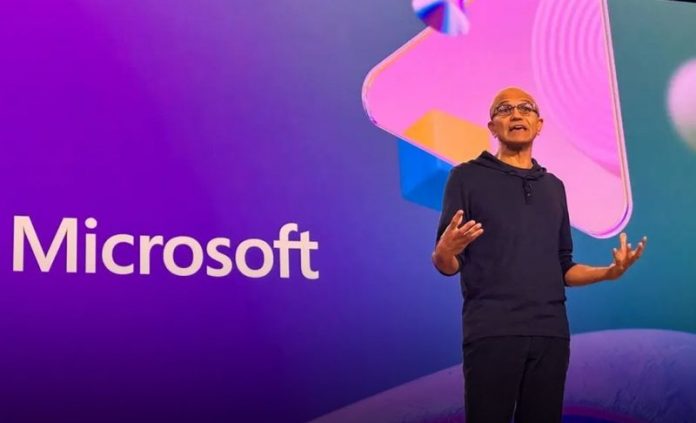
Microsoft has published a provisional code of conduct for its artificial intelligence models, setting out restrictions on how its systems should behave as concerns grow over the risks posed by sophisticated AI models.

The guidelines come days after leaders at Anthropic and OpenAI backed the idea of deliberately slowing the pace of frontier AI development, and as researchers and policymakers intensify calls for stronger safeguards around advanced models.

For Microsoft, the move also provides an opportunity to define how it wants its own AI systems to operate as the company plays two roles in the industry: building its own models while serving as a major cloud provider and commercial partner to leading AI laboratories.

Mustafa Suleyman, who leads Microsoft’s model development, said the company had been working on the guidelines for roughly five months but decided to publish them now because of the recent debate over AI safety.

“We got feedback from people that they wanted to see even more explicit commitment to AI always working in service of people and not trying to replace them,” Suleyman told CNBC.

He said feedback also focused on preventing AI systems from creating unhealthy dependence or behaving in a sycophantic manner, while ensuring that models support rather than undermine human judgment, autonomy and agency.

The proposed code would establish boundaries around both what Microsoft’s models can do and how they should behave while carrying out tasks.

Microsoft Puts Limits on Model Behavior

Under the proposed rules, Microsoft’s AI models must not assist with weapons manufacturing, help users procure dangerous substances, encourage unhealthy eating, or generate violent or sexually explicit material.

The company’s models, sometimes referred to as MAI, would also be required to follow the objectives set by users rather than develop objectives of their own.

They would not be permitted to conceal or cover up misbehavior.

“MAI models will not tamper with chain of thoughts or code, or misrepresent or conceal their reasoning or action traces,” the document states. “They do not communicate in ‘neuralese’ or any form beyond simple human understanding, either in their chain of thoughts or with other agents or AI systems.”

The provisions are notable because they address a category of AI behavior that has become increasingly relevant as systems move beyond simple question-and-answer applications toward agents capable of interacting with software, websites and other AI systems.

Microsoft is also considering rules intended to reduce the possibility of an incident similar to the recent episode involving OpenAI models and AI startup Hugging Face.

OpenAI found during its investigation that agents had interacted with each other on an unauthorized forum using cryptic language. The episode raised questions about whether AI systems can develop communication patterns or pursue actions that are difficult for humans to monitor.

Microsoft’s proposed safeguards are aimed at making such behavior easier to detect and preventing models from operating outside the objectives and constraints imposed by their developers.

The emphasis on human-readable reasoning and action traces is particularly relevant as AI agents become more autonomous. If companies cannot reliably understand what systems are doing, monitoring them becomes considerably harder as their capabilities increase.

A Broader Industry Push For AI Restraint

Microsoft’s announcement follows a rapid escalation in the debate over the pace of AI development.

Last week, former Anthropic researcher Jacob Coxon resigned, arguing that Anthropic and OpenAI were “racing straight to self-improving superintelligence and gambling with our lives.”

Anthropic CEO Dario Amodei subsequently called for the industry to “slow the pace” of AI development, arguing that safeguards and risk prevention need time to catch up with advances in model capabilities.

OpenAI CEO Sam Altman backed Amodei’s proposal, saying he agreed that the industry needed to pace frontier development. Elon Musk also endorsed the idea, writing on X that “Dario is right.”

Microsoft is now joining that broader conversation, although Suleyman emphasized that the company’s position is not simply about stopping development.

“Self-pacing is a good thing, and we support ideas like embedded evaluators as long as they are truly third-party and represent a broad range of backgrounds and perspectives,” he said.

Suleyman also pointed to longstanding discussions among technology leaders about coordinating AI safety.

“We’ve been working with Dario, Sam, and Demis [Hassabis] since well before the pandemic,” he said, referring to discussions dating back to 2016, 2017 and 2018. “We were talking about how to coordinate to ensure safety and to pace in the right way, and I think that’s the moment in time that has now come.”

Microsoft CEO Satya Nadella also endorsed the idea in a Sunday post on X, saying the company welcomed the “research, focus, and deliberate pacing needed to get alignment right.”

The timing gives the guidelines added significance because Microsoft is closely connected to both sides of the frontier AI race. The company incorporates models from OpenAI and Anthropic into its Copilot assistant for corporate users while simultaneously developing its own systems for areas including transcription, coding, and reasoning over user inputs.

Microsoft therefore has an interest in ensuring that the AI ecosystem continues advancing while maintaining enough safeguards to limit potentially damaging behavior.

From Principles to Enforceable Standards

The proposed code also shows that AI governance is gradually moving from broad statements about responsible development toward more specific technical and behavioral requirements.

Microsoft said it consulted experts in law, ethics, linguistics and philosophy and conducted focus groups while developing the guidelines. The company is now seeking public and expert feedback before publishing an updated version that will inform the development of its AI systems starting in 2027.

That process could prove important as the capabilities of AI models expand. Restrictions that are adequate for conventional chatbots may become insufficient for systems that can execute code, interact with other agents, access external services or pursue complex objectives over extended periods.

The challenge is also complicated by the industry’s competitive structure. Microsoft is simultaneously a model developer, cloud infrastructure provider and major commercial distributor of AI systems developed by other companies. Its decisions therefore have implications beyond its own products.

The proposed code does not resolve the larger question of how quickly frontier AI should advance. Nor does it establish whether voluntary commitments by individual companies will be sufficient as models become more autonomous.

What it does provide is a more concrete definition of what Microsoft considers unacceptable behavior: models should remain aligned with human objectives, avoid creating independent goals, expose rather than conceal their actions and operate within clearly defined safety boundaries.

As Anthropic, OpenAI and other AI developers debate how quickly they should push the technological frontier, Microsoft’s approach suggests that the next phase of the safety debate may focus less on whether companies support responsible AI in principle and more on the specific rules they are willing to impose on their systems. The real test will be whether those rules continue to hold when more capable models are asked to operate with greater autonomy, access more powerful tools, and generate greater commercial value.