DD
MM
YYYY

PAGES

DD
MM
YYYY

spot_img

PAGES

Home Blog Page 4204

Digital Banking Platform Eyowo Lays Off 11% of Its Workforce, Debunks Shut Down Rumour

0

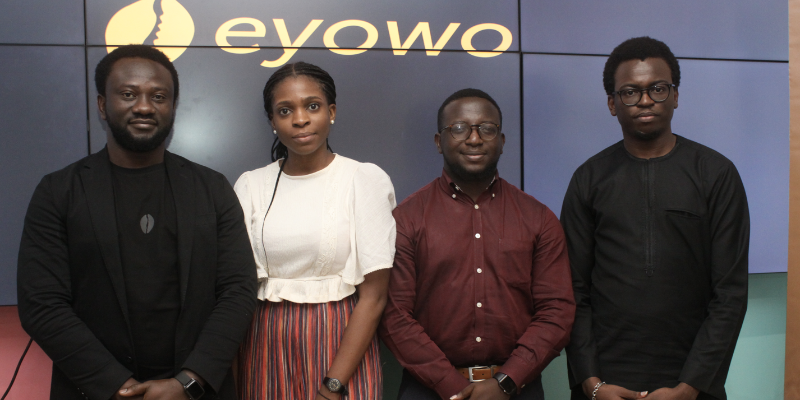
Nigerian digital banking platform Eyowo has laid off 11% of its workforce, which is about 13 employees, and has debunked rumors that it is shutting down operations.

In an official statement sent to employees, Eyowo’s executive informed them about the significant changes that will take place at the company.

The company’s executives clarified that the company is decommissioning a product—Kwiksell, a retail management tool and has let go of employees whose roles have consequently become redundant.

It further added that the new operating model will enable it to build an innovative product that will make money & life choices better, provide answers to people, and drive a scalable business model.

Part of the statement reads,

“We are pivoting into a financial technology platform that provides financial connectedness and intelligence for everyday money & living choices to everyone with a smartphone. This will mean we can deliver revenue to selected entrepreneurs and offer a personal financial and life guide to everyone with a smartphone.

“We want to prioritize providing intelligence for better decision-making to our users in their money and life choices, as such we would no longer offer the inventory capabilities of Kwiksell while its payment services remain the same. This change will NOT in any way affect our product (Eyowo X) in the market and the capabilities we currently provide our users including the ongoing improvements to restore all services.

“It will only enhance it with more intelligence. This new operating model will enable us to build an innovative product that will make money & life choices better, provide answers to people and drive a scalable business model. Our pivot in business and operating model will affect 11% of our workforce, whose work efforts are directly impacted by the new direction and internal changes”.

Eyowo executive team further added that the change implemented will now see the company function as a Human-to-Human company as all its products will be direct to consumers and selected entrepreneurs within its ecosystem of growth.

Through this, Eyowo looks forward to building a company that will leverage the advancements in science and engineering to enable connectedness and growth for all humans.

Recall that last month, the digital bank had its license revoked by the Central Bank of Nigeria (CBN), along with 46 other microfinance institutions.

According to the CBN, it revoked the licenses of these companies because they had either remained inactive, insolvent, failed to render returns or closed shop. This saw Eyowo disclose to its users that they won’t be able to transfer or receive money from their accounts for a while because of the restriction from the Apex Bank.

While noting that it is actively working with the apex bank to resolve the issue, the digital bank however assured customers that their money was still intact.

Notably, with the revocation of its license, the bank has been disconnected from other banks in the country. Hence, Eyowo said it is also working with its partner banks to fix the problem.
Why Buhari Did Not Remove Fuel Subsidy in Nigeria – Former Special Adviser

0

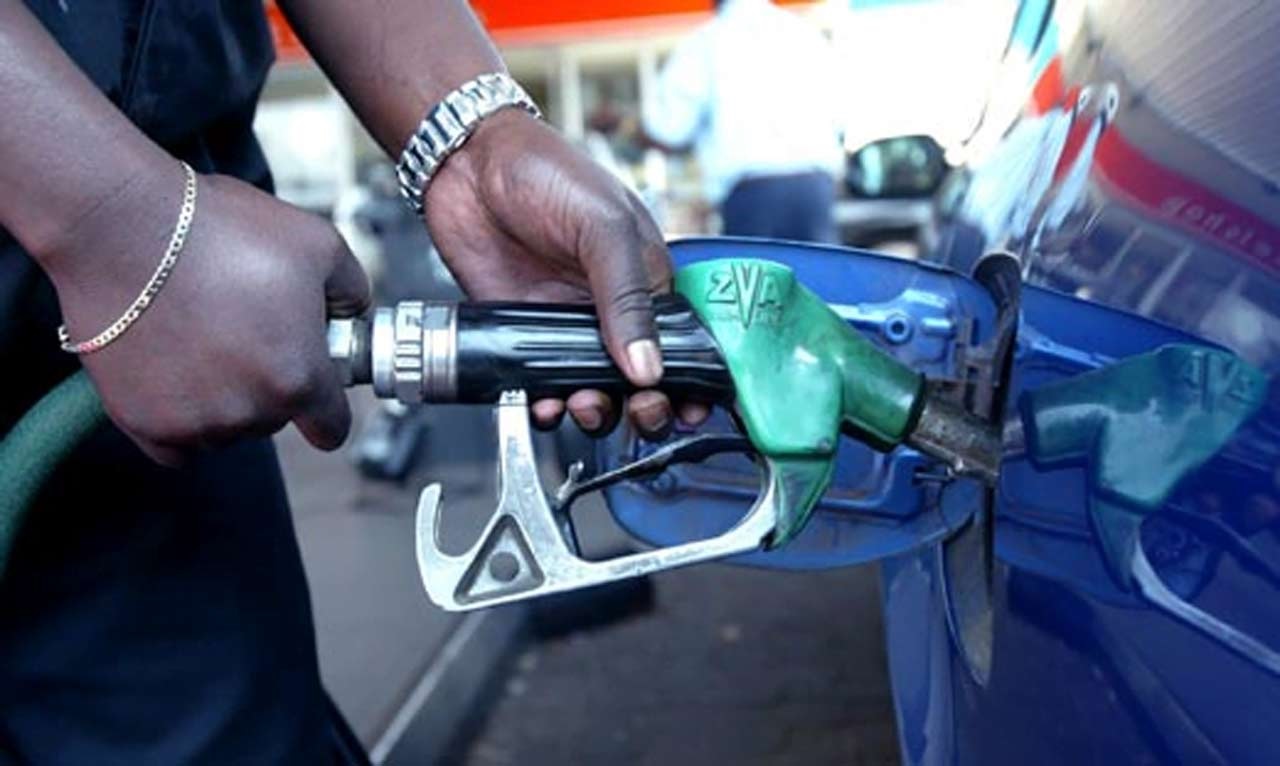
Former Special Adviser on Media & Publicity to former President Muhammadu Buhari, Garba Shehu, on Monday, tried to explain why the past government led by his principal did not remove fuel subsidy and other subsidies despite the financial burden it brought upon the federal government.

In a note titled: ‘Buhari Didn’t Fail To Remove Subsidy’, Shehu said the decision would have added fuel to the existing tension in the country – which would have cost the ruling All Progressive Congress (APC) the presidential election.

He explained that while Buhari did not remove fuel subsidy, he removed other budget-busting, egregious, economic-growth-crushing subsidy along the way. Shehu disclosed that the decision hung largely on vested party interest, resulting in a lack of political will from the president to act.
Amid claims that it was riddled with corruption, fuel subsidy gulped trillions of naira from 2015 to 2023, resulting in budget deficits despite the government’s borrowings to fund the subsidy.

Buhari’s administration had fixed early this year to remove the subsidy in line with the timeline of the Petroleum Industrial Act (PIA), but it was shifted to June. Without a provision for the payments of fuel subsidy in the 2023 Appropriation Act, the subsidy was inevitably removed by President Bola Tinubu last month.

Read Garba Shehu’s full note below:

Why did it take the new Tinubu/ Shettima presidency weeks to remove the petrol subsidy when Buhari didn’t do so for years fails to ask the right question.

The massive electricity subsidy. The fraudulent fertilizer subsidy. Hajj/Christian Pilgrim subsidies.
Remember them?

The diesel subsidy. The aviation fuel subsidy. LPFO. Kerosene. Cooking gas and the other subsidy policies we found in place and put them firmly on the ground. Remember them?

For those with short memories, many of those subsidies were all in place when President Buhari was elected to office in 2015: all those in place were gone by May 2023 – including the annual fertilizer subsidy that weighed 60-100 billion Naira (that’s
trillion naira in about 10 years – yes you read that right) heavy on the federal budget each year.

So no, Buhari didn’t remove the petrol subsidy – but in vitally important stages he removed every other budget-busting, egregious, economic-growth-crushing subsidy along the way.

So far I have refrained from answering these repeated questions on the removal in Nigeria of subsidies on Premium Motor Spirit, PMS, and that arising from the dual rates of the Naira in the Central Bank and the parallel market: Why did Buhari “fail” to do these?

First of all, my thinking is that instead of the former President answering this question, it is the Party, the All Progressives Congress, APC that is best suited to speak, and failing to do this, we are forced to say what will follow here.

Secondly, we are mindful of the fact that with a Tinubu/Shettima presidency now in place and for which there is a “New Sheriff in Town.”

We do not want to distract them from the onerous tasks facing them and the nation. Neither is it our wish to take the spotlight away from them in any way.

In terms of the timings of the decisions to remove fuel subsidy and unify the currency, the Tinubu/Shettima administration has done overwhelmingly well. Even more importantly, they have been most dexterous in managing the aftermath of the decisions by successfully avoiding any crisis.

To this extent, our wish and prayers are that fellow countrymen will continue to support the new leadership in these very laudable decisions and, in particular, for the Labour leadership and civil society to work with them to ensure that the palliative efforts as promised are successfully implemented.

The decision to remove subsidies, as in our case – and we believe in all situations – was not for the President to take all by himself.

That’s why it’s important to remind ourselves – and all those who have conveniently forgotten – that Buhari administration had been on this pathway from the very beginning in 2015.

Removing subsidies for the Naira and PMS was cued and put on hold. Look for example in the Petroleum Industry Act. The important decision was kept for a better time.

It could not have come at a time when tensions were high in the country and no responsible leader would have added fuel to the fire.

In the view of many-including those in the security circles- only a new administration with goodwill that fills a warehouse can attempt this, and here now comes in the wit and grit of the Tinubu government.

Finally, we must be politically honest with ourselves. The Buhari administration in its last days could not have gone the whole way because the APC had an election to win. And that would have been the case with any political party that was seeking election for another term with a new principal at its head.

Poll after poll showed that the party would have been thrown out of office if the decision as envisaged by the new Petroleum Industry Act was made.

Brazilian State of Rio Grande do Sul Now Accepts Crypto, NEAR Protocol Partners Alibaba Cloud

0

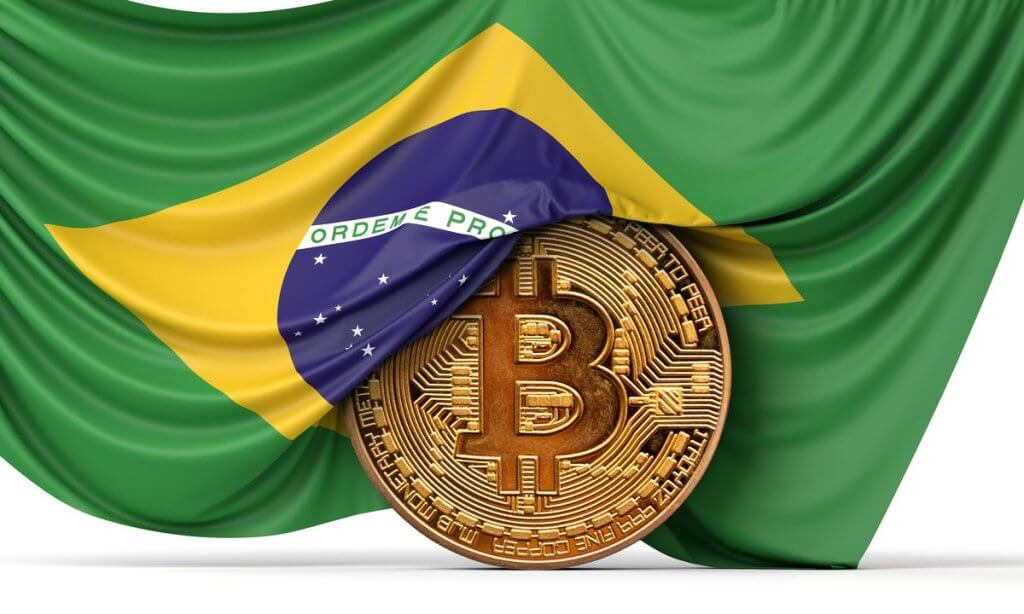
The Brazilian state of Rio Grande do Sul has become the first in the nation to accept crypto as a form of payment for public services. This is a major milestone for the adoption of digital currencies in the country and the region. According to a press release from the state government, the initiative was launched on June 1st, 2023, and allows citizens to pay their taxes, fees, fines, and other obligations with Bitcoin, Ethereum, and Litecoin. The payments are processed by a local fintech company called BitPay, which converts the crypto into Brazilian reais and transfers them to the state treasury.

The governor of Rio Grande do Sul, Eduardo Leite, said that the move was motivated by the growing demand for crypto among the population and the need to modernize the public administration. He also said that the state is open to exploring other innovative technologies that can improve the quality and efficiency of public services.

The crypto payment option is expected to benefit both the state and its citizens. For the state, it will reduce transaction costs, increase transparency, and attract more investment. For the citizens, it will offer more convenience, security, and financial inclusion.

Rio Grande do Sul is not the only Brazilian state that is embracing crypto. In April 2023, São Paulo announced that it will launch a pilot project to use blockchain technology to track the origin and quality of agricultural products. In May 2023, Minas Gerais revealed that it will create a digital identity platform based on blockchain to facilitate access to public services.

Brazil is also one of the leading countries in Latin America in terms of crypto adoption. According to a report by Chainalysis, Brazil ranked fourth in the world in terms of crypto usage in 2022, behind only Nigeria, Vietnam, and India. The report also estimated that Brazilians traded over $4 billion worth of crypto in 2022, up from $1.5 billion in 2021.

The acceptance of crypto by Rio Grande do Sul is a significant step forward for the development of the crypto ecosystem in Brazil and beyond. It shows that crypto is not only a speculative asset, but also a viable alternative for everyday transactions. It also demonstrates that governments can leverage crypto to enhance their public services and foster innovation.

NEAR Protocol Partners with Alibaba Cloud

NEAR Protocol, a scalable and decentralized platform for open web applications, has announced a strategic partnership with Alibaba Cloud, the digital technology and intelligence backbone of Alibaba Group. The partnership aims to accelerate the growth of web3 in Asia by providing developers with easy access to NEAR’s blockchain infrastructure and tools on Alibaba Cloud.

Web3 is a term that refers to the next generation of the internet, where applications are built on decentralized protocols and users have more control over their own data and identity. Web3 applications can offer benefits such as censorship resistance, transparency, security, and interoperability.

NEAR Protocol is one of the leading platforms for web3 development, offering a fast, user-friendly, and low-cost environment for building and deploying decentralized applications. NEAR leverages sharding and proof-of-stake consensus to achieve high scalability and performance, while maintaining decentralization and security. NEAR also supports cross-chain interoperability with other blockchains, such as Ethereum, through its Rainbow Bridge.

Alibaba Cloud is the largest cloud service provider in Asia and the third largest in the world, according to Gartner. Alibaba Cloud offers a comprehensive suite of cloud computing services, including elastic computing, database, storage, network, security, analytics, and artificial intelligence. Alibaba Cloud also has a strong presence in the blockchain space, having launched its own blockchain-as-a-service platform in 2018.

By partnering with Alibaba Cloud, NEAR Protocol hopes to expand its reach and adoption in the Asian market, especially in China, where web3 development is booming. Developers who use Alibaba Cloud will be able to easily deploy and run NEAR-based applications on the cloud platform, without having to worry about the technical details of setting up and maintaining their own nodes. This will lower the barriers to entry and encourage more innovation and experimentation on NEAR.

Additionally, NEAR Protocol and Alibaba Cloud will collaborate on various initiatives to promote web3 education and awareness in Asia, such as hosting hackathons, workshops, webinars, and meetups. The partnership will also explore opportunities to integrate NEAR’s technology with Alibaba Cloud’s existing products and services, such as its blockchain platform and its artificial intelligence solutions.

NEAR Protocol’s co-founder Illia Polosukhin said: “We are thrilled to partner with Alibaba Cloud, one of the most respected and influential cloud providers in the world. This partnership will enable us to bring the power and potential of web3 to millions of developers and users in Asia, who can benefit from the open, decentralized, and inclusive web that NEAR is building.”

Alibaba Cloud’s head of blockchain business unit Zhang Hui said: “We are excited to work with NEAR Protocol, one of the most innovative and promising platforms for web3 development. We believe that this partnership will enhance our capabilities and offerings in the blockchain space, as well as foster a more vibrant and diverse web3 ecosystem in Asia.”

Nigerian Government Suspends Works on Lagos-Ibadan Expressway to Allow Ease of Vehicular Movement During Sallah Break

0

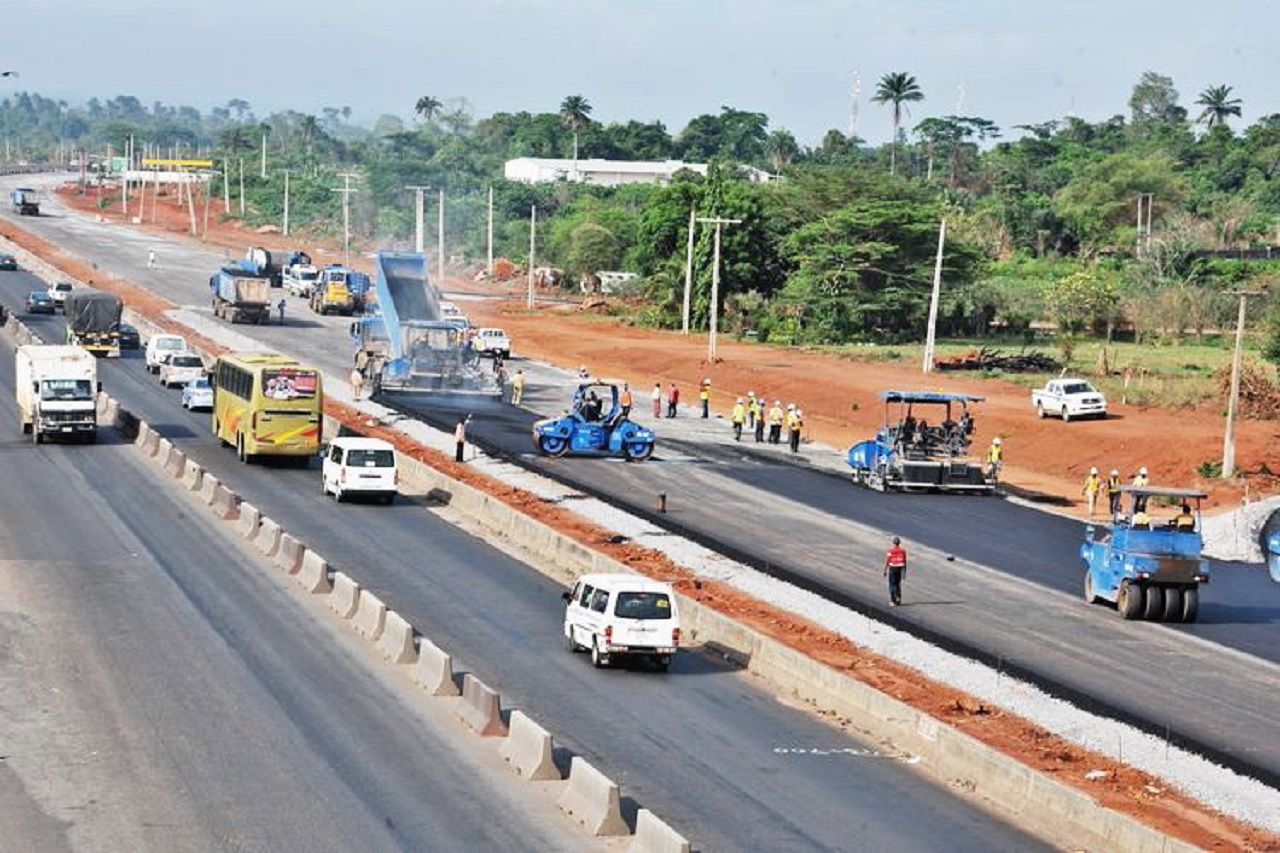
Ahead of the Eid Celebration, the Federal Government through the Federal Ministry of Works and Housing has announced the suspension of the ongoing reconstruction of the Lagos-Ibadan Expressway, from Tuesday June 27 to Sunday July 2 to allow travellers that will be taking the route for Sallah holiday easy access

This was made known in a statement released on Monday by the Federal Controller of Works, Lagos Engr. (Mrs) Olukorede Kesha.

The statement reads: “Due to the recent heavy traffic flow being experienced on the Lagos Shagamu route in the last couple of days, the inclement weather conditions, the forthcoming Eid Kabir, and the advice of the traffic management team deployed to manage traffic related issues on the project.

“Construction activities on this ever busy and very important highway will be suspended from Tuesday, 27 of June to Sunday, 2 of July 2023.

“This is to allow travellers easy passage during the Eid holiday and minimise the discomfort of traffic gridlock during this very important period.

“Travelers are advised to cooperate with Traffic Management Team deployed on the highway to manage traffic.”

Mrs Olukorede Kesha urged road users to plan their travels and keep to traffic laws now that the federal govt has decided to listen to the complaints of people requesting that work be put on hold during the festive period to allow people to travel.

The Three-Part Test Analysis of “Trinity Guy” Case

0

It is not news anymore that Abdullahi Maruff Adisa, popularly known as Trinity Guy, sexually abused and exploited a child in the Kuola area of Ibadan, Oyo State. Abdullahi asked the victim the colour of his penis, recording the scene and posting it on social media. However, information has it that Abdullahi paid the child, and the parents knew that it was a prank. In this piece, our analyst examines the legal implications of the skit maker’s action from national and state legal perspectives.

Firstly, Chapter IV (Section 33–46) of the 1999 Constitution of the Federal Republic of Nigeria (FRN) provides for the fundamental rights of every person, including children. This right must not be denied by anyone in any part of Nigeria. As the state prosecutor hinted during the first court proceeding on Monday, June 26, 2023, the offences are contrary to Section 35 (1) and punishable under Section 35 (2) of the Oyo State Child Rights Law, 2006.

The offences also contravened Section 516 of the Criminal Code Laws of Oyo State, 2000, which states that “Any person who conspires with another to commit any felony, or to do any act in any part of the world which if done in Nigeria would be a felony, and which is an offence under the laws in force in the place where it is proposed to be done, is guilty of a felony and is liable, if no other punishment is provided, to imprisonment for seven years, or, if the greatest punishment to which a person convicted of the felony in question is liable is less than imprisonment for seven years, then to such lesser punishment.”

According to Nigeria’s Child Rights Act 2003, as domesticated by the Oyo State Child Rights Law 2006, “Every child must be protected against all forms of exploitation, indecent, or degrading treatment, including child labour, abuse and torture, sexual exploitation, sale, abduction, and drug abuse.

“Every child should be protected from any act that interferes with his or her privacy, honour, and reputation in the homes, family, and school, provided that a parent or legal guardian shall have the right to exercise reasonable supervision over the conduct of their children.”

Looking at the gravity of the offences, it would be hard for the defendants, especially Abdullahi, to pray to the court that he is expressing his fundamental human rights and also exercising his rights to labour or work under the 1999 Constitution. This is hinged on the existing global three-part test tool for analysing cases like this. The tool states that interferences with freedom of expression are legitimate only if they (a) are prescribed by law; (b) pursue a legitimate aim; and (c) are “necessary in a democratic society.”

Purpose or Objective

From the 1999 Constitution to the sections of the Oyo State Child Rights Law, 2006, and Section 516 of the Criminal Code Laws of Oyo State, 2000 invoked by the state prosecutor in this case, it is a must to protect the rights and welfare of children in Oyo State. The law aims to safeguard children from various forms of abuse, including sexual abuse and exploitation. The objective is to provide a legal framework that ensures the well-being and protection of children in the state.

Rational Relationship

The next step is to assess whether there is a rational relationship between the actions of the skit maker and the objective of the law. In this case, Abdullahi, the skit maker, is accused of sexually abusing and exploiting a child by recording the incident and sharing it on social media. If proven true, these actions can be seen as violating the child’s rights and contravening the objective of the Child Rights Law, which seeks to prevent such abuses.

Proportionality

The third component involves examining the proportionality of the law’s impact on individual rights. The question here is whether the punishment prescribed by the Child Rights Law, which includes a potential sentence of 15 years imprisonment for the skit maker if found guilty, is proportional to the offense committed.

Overall, Abdullah cannot claim that he was pursuing legitimate means of livelihood at the detriment of a minor. The parents, who were also said to be aware, cannot claim ignorance by not knowing that their child should be protected from any form of exploitation. Therefore, prosecuting and sentencing the skit maker if found guilty is legitimate and “necessary in a democratic society.”