DD
MM
YYYY

PAGES

DD
MM
YYYY

spot_img

PAGES

Home Blog Page 4207

Comparing The 3 Meme Coins: Elon Musk Impact On Dogecoin, Shiba Inu, And DogeMiyagi

0

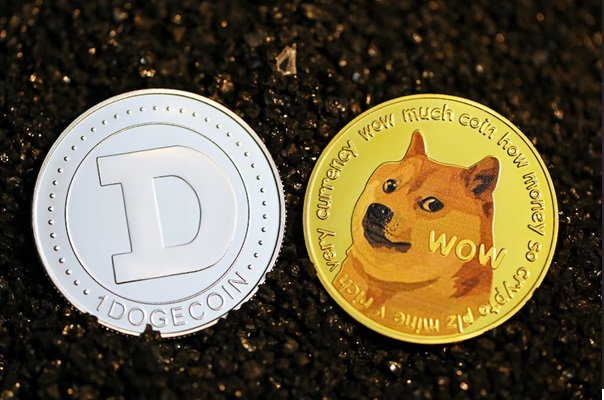
A recent statement by Elon Musk has sparked speculation and excitement among meme coin enthusiasts and followers of the tech mogul. Musk’s declaration that ‘X’ will not launch its token has led to discussions about the integration of meme coins like Dogecoin (DOGE), Shiba Inu (SHIB), and DogeMiyagi (MIYAGI) into the ‘X’ platform.

This comparative article delves into the potential implications for these tokens, analyzing their prospects and the possible price surges they could experience if integrated. Join us on this exploration of meme coin possibilities in the wake of Elon Musk’s influence.

Elon Musk Assertion and the Dogecoin

In a recent development, Elon Musk made it clear that ‘X’ has no intentions of launching its token. This news opens the door to speculation about the integration of existing meme coins onto the platform.

Commonly referred to as the “Dogefather,” Elon Musk captured widespread attention in the previous year through his audacious acquisition of Twitter for a staggering $44 billion. However, his influence didn’t stop at the acquisition itself. In a bold move, Musk replaced Twitter’s iconic blue-bird logo with an image of the Shiba Inu dog, an emblem closely associated with Dogecoin.

This seemingly playful alteration catalyzed a remarkable 20% surge in the token’s value, while simultaneously entangling Musk in a legal quagmire. The resulting $258 billion lawsuit alleges the billionaire’s involvement in insider trading and racketeering, casting a shadow over his crypto-related ventures. Nevertheless, if Dogecoin finds its way onto the ‘X’ platform, its integration could attract a fresh wave of users and investors, resulting in a potential price surge.

Shiba Inu: The Rising Contender

Shiba Inu (SHIB) emerged as a direct rival to Dogecoin, capitalizing on the meme coin trend. Its attention-grabbing mascot and impressive community-driven initiatives have garnered a substantial following. With its “woofpaper” and decentralized exchange, Shiba Inu aims to establish itself as more than just a meme.

Being integrated into ‘X’ could elevate Shiba Inu’s credibility, potentially leading to increased investor interest and a subsequent price surge. As Musk’s influence extends to new horizons, Shiba Inu could find itself in the spotlight once again.

DogeMiyagi: Innovation Meets Entertainment

DogeMiyagi (MIYAGI) takes the meme coin concept a step further by integrating entertainment and blockchain technology. Its Killer Swap Machine and NFT project showcase its commitment to innovation. With its energy-efficient approach and innovative features, DogeMiyagi offers a blend of technical advancements and meme culture.

This unique combination positions it as a contender for potential integration into ‘X.’

If ‘X’ chooses to embrace DogeMiyagi, its existing innovation and entertaining features could make it a standout choice. Musk’s endorsement, combined with the exposure from ‘X,’ could lead to significant growth and a potential price surge.

DogeMiyagi: A New Chapter for Meme Coins

As we examine the possible integration of DogeMiyagi (MIYAGI) into the ‘X’ platform, the potential implications for the token become clear. Elon Musk’s impact on the crypto market is undeniable, and his involvement could reshape the trajectory of this meme coin.

While the outcomes remain uncertain, the prospect of ‘X’ embracing DogeMiyagi could open new horizons for cryptocurrency. Whether you’re a dedicated meme coin enthusiast or a follower of Elon Musk’s endeavors, the convergence of technology and entertainment presents a thrilling chapter in the ongoing narrative of digital assets.

To Purchase MIYAGI Now, Click These:

 Website: https://dogemiyagi.com

Twitter: https://twitter.com/_Dogemiyagi_

Telegram: https://t.me/dogemiyagi

Elonator’s Community-Driven Model: A Shift Beyond PayPal Stable Coin & XRP in Crypto Payments

0

PayPal’s announcement lifted its shares by 2.66% on Monday, reflecting confidence in the troubled crypto market. Elonator’s (ETOR) development and its distinct community-driven, passive revenue model can potentially change the landscape of crypto payment systems.

In this article, let’s ponder on Elonator with PayPal’s stable coin PayPal USD (PYUSD) and Ripple’s native token (XRP), emphasizing its creative approach and outlining how it may foster wider crypto acceptance.

<< Click Here To Learn More About Elonator Presale >>

PayPal Rolls Out Its Stablecoins

PayPal introduced a US dollar stablecoin on August 7, 2023, becoming the first major financial technology corporation to accept digital currencies for payments and transfers. PayPal USD (PYUSD) is a payment system backed by extremely liquid and secure assets. While stablecoins have been available for years, they are yet to make inroads into the mainstream consumer payments sector.

You may exchange your PYUSD for US dollars whenever you want, and that’s not all. It may be used to obtain other cryptocurrencies from PayPal’s portfolio, such as Bitcoin. PYUSD is more than simply a token; it’s the beginning of a new era of dollars on the blockchain network. This isn’t simply a milestone for PayPal and Paxos, according to Paxos on the X messaging network; it’s “like dropping a beat that’ll get the entire financial industry grooving.”

Quick Transactions With XRP

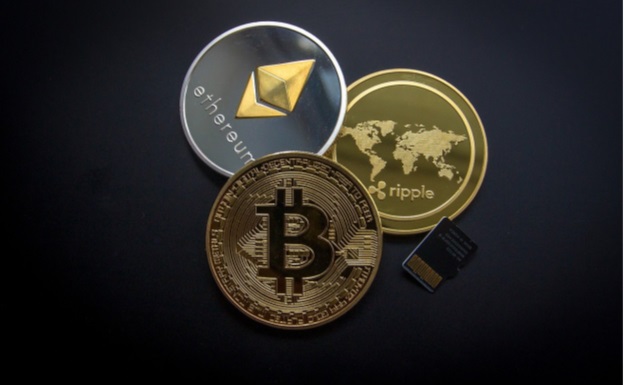
Ripple is a blockchain-based digital payment network and protocol, as well as the creator of its cryptocurrency, XRP. Rather than using blockchain mining, Ripple confirms transactions using a consensus method via a consortium of bank-owned computers. It securely and rapidly transfers payments across borders at a minimal cost. It acts as a bridge currency, allowing financial institutions to convert both crypto and fiat currencies at a lower cost.

In response to Bitcoin technology, Ripple Labs, a technology firm located in the United States, built Ripple’s blockchain architecture in 2012. The resultant payment network, RippleNet, was created to give banks a quicker, more cost-effective, and simplified option for completing cross-border transactions. RippleNet isn’t just the main event; it’s also the brain behind the XRP Ledger (XRPL), a genius system for settling real-time transactions and a snazzy currency exchange and remittance network.

Now Trace Transactions With Etor Tokens

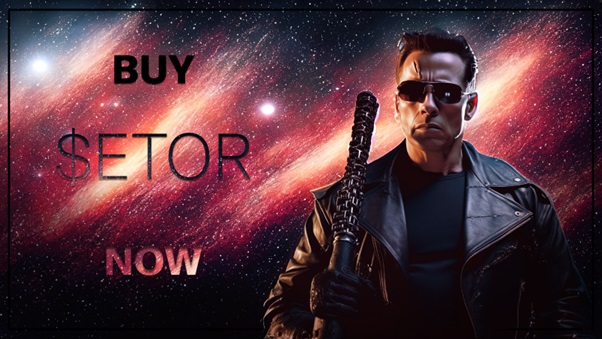
The Elonator Token is ready to take over the top crypto community. It is a wild fusion of Elon Musk’s cutting-edge intelligence with the Terminator’s uncompromising force from The Terminator movies. This game-changer is more than simply a token; it represents a completely new way of pondering about memes and money.

Elonator is a top crypto community-focused initiative that has been built and developed to empower as many people as possible..

<< Buy Into The Elonator Presale >>

It provides genuine value to investors by preserving openness and accessibility, allowing anybody to evaluate and verify the actions. Anyone having an ETOR contract address may simply trace transaction flows using the Ethereum blockchain explorer. Participating is made easy by holding the ETOR token (1 ETOR = 1 Vote). A liquidity lock is also implemented to maintain the stability and security of the ETOR token’s price and to avoid significant price volatility protecting the tokens.

It’s Time To Become An Elonator Presale Investor

PayPal rocks the boat with its Paypal stable coin PYUSD, a game-changer in the making. Ripple’s no stranger to the party either. With its XRP magic, it’s speeding up cross-border payments.

But the Elonator token is all set to mesmerize on the stage with its redefined crypto payments and transactions. It’s not just a token; it’s a new way of thinking.

Now is the time to invest in the Elonator presale and win exciting prizes.

For All Things Elonator, Including Its Presale:


Presale: https://buy.elonator.com/
Website: https://elonator.com

Telegram: https://t.me/ElonatorCoin

Twitter: https://twitter.com/ElonatorCoin

The Basics of Machine Learning, and AI in Business

0

Few innovations have captured the world’s imagination like Machine Learning (ML). This subset of Artificial Intelligence (AI) is transforming industries and reshaping the way we approach complex problems. But what exactly is machine learning, and how do algorithms learn and improve?

Intro to Machine Learning:

At its core, machine learning is the art and science of training computers to learn from data. Instead of being explicitly programmed to perform a task, machines are provided with data and algorithms that enable them to learn patterns and relationships within the data. Through this process, machines can make predictions, decisions, and identify insights that are often difficult for traditional rule-based systems to uncover.

Now if I tell you 2+2, you will reply 4. If I ask you 3+3, you will reply 6. If I ask 4+4, you will reply 8. Why do you think you know that? It’s because you have it in your memory.

That is what we call label builders. Those are structural labels that you already have in your head based on things you have learned in the past.

Now, let’s change it. if I tell you 1+1 = 3, 2+2 = 5, and then I ask you 5+5, what will you tell me? You will likely tell me 11. This is because you have studied the pattern.

So what happens is no magic. Machine learning learns through some structural data you have in the database or that you learn by possible access to data. The same way you study the trend and pattern to answer the question, that is what machine learning does. It is a subset of Artificial intelligence that mimicks the way the brain works.

The Building Blocks of Machine learning include:

Data: The foundation of machine learning is data. Quality data is essential for training algorithms effectively. This data can be structured (like tables in a database) or unstructured (like images, text, and videos). This data is what the AI learns and detects patterns and trends to reach future decisions.

Features: Features are the attributes or characteristics extracted from the data that the algorithm uses to make predictions. For instance, in an email spam detection system, features might include the frequency of certain words or the length of the email.

Model: The model is the heart of machine learning. It’s a mathematical representation that learns patterns and relationships from the provided data. Think of it as a set of rules that the algorithm refines as it processes more data. It is like trying to model real life situations, and giving the algorithm a set of rules on what to do when that happens.

Algorithm: Algorithms are the instructions that guide the learning process. They determine how the model is adjusted based on the provided data. Different algorithms are suited for different types of problems.

Here are some very interesting types of machine learning;

Supervised Learning: One of the most common types of machine learning is supervised learning. In this approach, the algorithm is trained on labeled data, meaning the input data is paired with the correct output. The algorithm learns the relationship between inputs and outputs, allowing it to make predictions on new, unseen data. A classic example is email spam detection, where the algorithm learns to distinguish between spam and legitimate emails.

Unsupervised Learning: Unsupervised learning involves training algorithms on data without labeled outputs. The goal is to discover hidden patterns, structures, or relationships within the data. Clustering and dimensionality reduction are common tasks in unsupervised learning. For example, clustering can group similar customers together for targeted marketing strategies.

Reinforcement Learning: This one takes inspiration from behavioral psychology. Algorithms learn to make a sequence of decisions to maximize a reward signal. It’s like training a dog to perform tricks by providing treats for desired behavior. Reinforcement learning powers applications like game-playing agents and autonomous robots.

What you should know

Machine learning is not a one-time process, not at all. It is a continuous learning loop. As new data becomes available, the algorithms adapt and update their models to improve accuracy and relevance. This process allows algorithms to handle changing patterns and ensure their predictions remain current. More interesting is that this happens at a pace that humans would ordinarily not be able to do, on their own.

There are countless ways to apply machine learning in business, across different sectors. And we will see more of that in the coming weeks.

AI in Business -Personalized and Engaging Customer Experience

In an era defined by rapid technological advancements, the intersection of artificial intelligence (AI) and customer experience has emerged as a game-changer for businesses across industries. AI-powered solutions, such as chatbots, virtual assistants, and recommendation engines, are revolutionizing the way companies interact with customers. But now, there is the question of whether AI will be capable of delivering highly personalized and engaging experiences tailored to individual customers?

The answer to the question is Yes. And here is how it works:

The Rise of AI-Powered Customer Interactions

AI-driven technologies have transcended their initial stages of development to become integral tools for enhancing customer interactions. It has gone way beyond the time of automated and monotone messages that bore customers. Chatbots and virtual assistants, often integrated into websites, applications, and messaging platforms, have evolved from scripted, rule-based systems to become intelligent entities capable of natural language processing and machine learning.

AI-powered chatbots excel in handling routine customer inquiries promptly and efficiently, giving humans room to attend to other things. They provide round-the-clock support, addressing customer concerns instantaneously without requiring human intervention. This is cheaper because not every business can afford to keep a staff on standby for 24 hours, every day of the year. With this, businesses can ensure consistent service delivery and immediate responses, ultimately leading to improved customer satisfaction and loyalty. After all, no customer wants to ask a question at 1am, and wait till 8am to receive a response.

Personalization at Scale: Tailoring Customer Experiences

One of the most significant contributions of AI to customer experience lies in its ability to deliver personalized interactions at scale. Traditional marketing and customer service approaches often struggle to tailor experiences to the unique preferences of each individual. This is understandable because there is only so much a human can do. AI changes this paradigm by analyzing vast amounts of data – from customer behavior and purchase history to browsing patterns and demographic information – to create detailed customer profiles.

Recommendation engines, powered by AI algorithms, leverage these profiles to suggest products, services, and content that align with customers’ interests. This personalization not only enhances engagement but also drives sales and conversions. For instance, platforms like Netflix and Amazon use recommendation engines to curate content and products, respectively, resulting in increased user engagement and customer satisfaction. In this way, if you have been recently searching for tips to keep your shoes looking new, you may get product recommendations ranging from shoe brush, to polish etc. If a human customer experience officer were to manually analyse a customers interest and make recommendations, it would take a sickening amount of time even if it were possible.

Seamless Customer Journeys with AI-Powered Insights

AI not only drives personalization but also aids in creating seamless customer journeys. By analyzing customer data and behavior, businesses can identify pain points and areas for improvement in their processes. This insight enables companies to optimize their customer journeys, ensuring a smooth transition from one touchpoint to another.

With AI-powered analytics, businesses can predict customer behavior and preferences, and proactively address their needs. For instance, e-commerce platforms can use AI to forecast inventory requirements based on historical purchasing patterns, ensuring that popular products are always in stock and ready to be delivered.

The Human-AI Collaboration

While AI enhances customer experiences, it’s important to note that successful implementation requires a delicate balance between automation and the human touch. AI is adept at handling routine queries and transactions, freeing up human agents to focus on complex issues that require empathy, creativity, and critical thinking.

By automating routine tasks, businesses can allocate their human resources more strategically. This combination of AI and human expertise results in a dynamic synergy that optimizes customer interactions across the board.

There is room for Continuous Innovation

The evolution of AI in customer experience may be impressive so far, but it is far from over. As technology advances, we can anticipate even more sophisticated applications of AI to enhance engagement and personalization. To be fair, there is no predicting just how far AI can go. What we can say for sure is that within the next decade, the natural language processing will have become more refined, enabling chatbots to understand context and sentiment better. Virtual assistants will integrate seamlessly into users’ lives, offering proactive suggestions and assistance based on user behavior and preferences.

Moreover, AI will continue to blur the lines between online and offline experiences. Facial recognition and customer sentiment analysis can even transform in-person interactions, allowing businesses to tailor services and offers in real time.

As AI technology continues to advance, businesses that embrace these innovations stand to gain a competitive edge, forging stronger connections with customers and driving long-term loyalty. The future of customer experience lies in the seamless integration of AI and human expertise, creating a harmonious blend that will elevate engagement and personalization to new heights.

Embracing Authenticity of Life

0

In today’s fast-paced world, it’s easy to fall into the trap of comparing our journey to that of others. We often regard life as a race, believing that our pursuits must align with the material and non-material values of those around us. However, this mindset leads us down a path of chasing someone else’s agenda, ultimately hindering our own growth and fulfillment.

Imagine life as a grand journey, with each individual following a unique and distinct path. When we begin to chase after objectives that mirror those of others, we inadvertently forsake our own aspirations and purpose. At first, this pursuit might seem innocuous, but over time, it becomes clear that we’re draining the value from our own experiences and potential.

Consider this: when we and another person reach the final destination of a shared journey simultaneously, we both find ourselves at a crossroads of realization. The mirage of success fades, revealing that we’ve invested precious time and energy in a pursuit that wasn’t genuinely aligned with our true selves. This is where the harm of pursuing another’s agenda becomes evident.

The solution lies in recognizing the significance of individuality. Our journeys are not meant to be standardized races; they’re unique growth routes that cater to our passions, strengths, and aspirations. By embracing our own purpose and nurturing it, we gain a sense of direction that aligns with our authentic selves. This personal alignment doesn’t just ensure our well-being but also contributes positively to the world around us.

Embracing your own purpose requires a conscious effort to steer away from the pathways of others. It’s easy to fall into the pattern of imitation, to conform at the cost of our authenticity. However, true growth and fulfillment emerge when we focus on our personal trajectory, regardless of how different it may be from those around us.

In a society that often emphasizes comparison and conformity, breaking free from the mold can be challenging. It requires a shift in perspective, acknowledging that the richness of life lies in diversity and individuality. This shift empowers us to honor our uniqueness, celebrating the fact that our path is uniquely our own.

So, as you stand at the crossroads of pursuing someone else’s objectives or following your own purpose, choose the latter. Choose the path that resonates with your inner self, the path that may not align with everyone else’s, but is a genuine reflection of who you are and what you aspire to become.

Let us cease the race to match the values and pursuits of others. Instead, let us embrace our own growth route and nurture our unique purpose. By doing so, we not only avoid the exhaustion of chasing someone else’s dreams but also contribute our authentic selves to the tapestry of life’s journey.

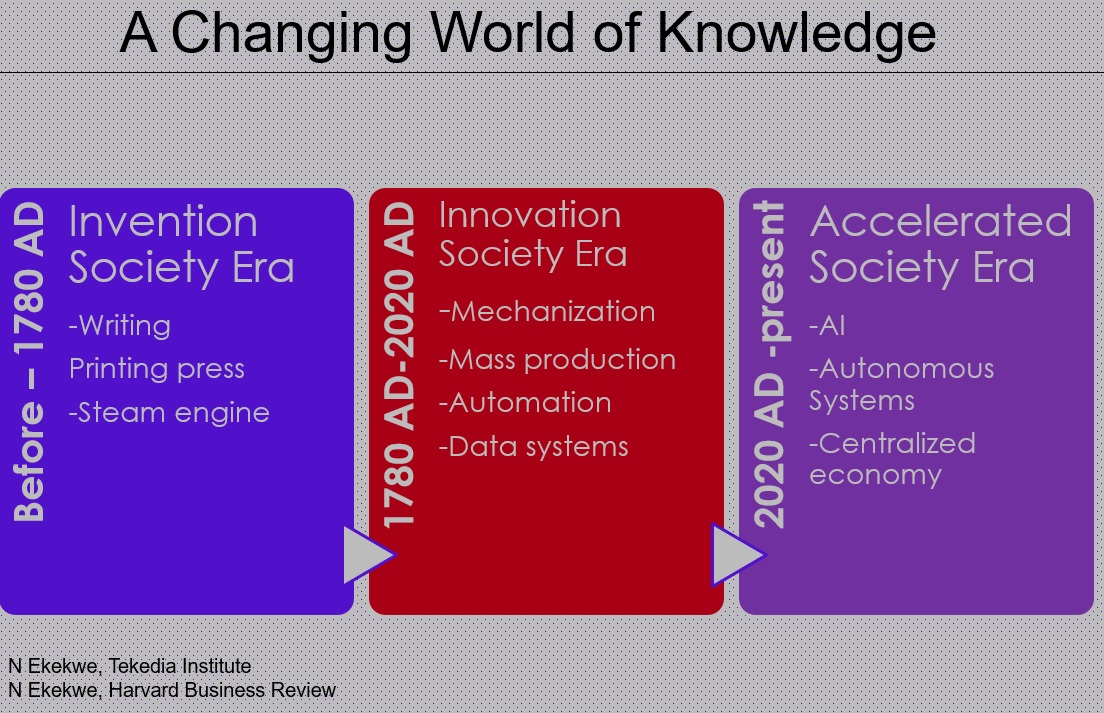
The Eras In Our World – Invention, Innovation and Accelerated Society Eras [video]

0

Listen to me three times weekly here . This is the Accelerated Society Era. That is what I have called it. Meet in class.